Introduction

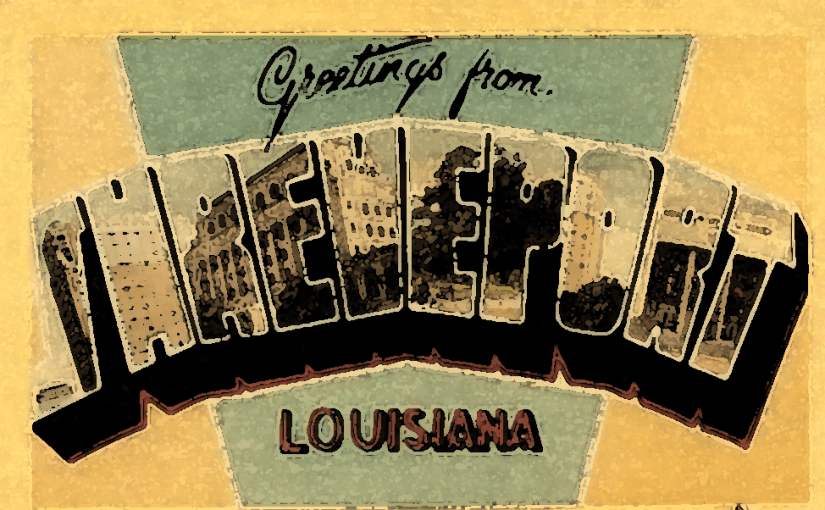
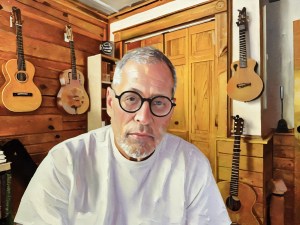
I’m David Leone, I’m a songwriter and storyteller, and I’d like to introduce you to Highway 80 Stories.  This ongoing project is a series of connected stories and songs about the region of the South that Highway 80 runs through in Texas, Louisiana, Mississippi, Alabama, and Georgia. I’m from Shreveport, Louisiana, and Highway 80 runs right through downtown.

Two of my favorite authors are William Faulkner and Larry McMurty, and I was inspired by their example to write about my region; its history and the people who settled this part of the South.

cropped-us-80-map.gif

There are songs and stories about Southern history and  culture, major issues like the Civil Rights Struggle, Slavery, and the Civil War, as well as stuff like moonshine and bootlegging. How this history impacted the lives of my fictional characters is the primary theme of my project.

And if you like what you hear and read, here’s how you can support Highway 80 Stories. You can download songs from Bandcamp or, better still, subscribe and receive unlimited streaming of the entire catalog as well as subscriber-only  features.

“To Pay the Debt”


LOCATION: Alabama; Texas
PERIOD: 1955-2015
DRAMATIS PERSONAE: Frank Roy “Th’ Cunn’l” Cooper (1823-1865); Luther “Luth” Cooper (1827-1876); Charles “Charlie” Cooper  (1918-2015); Lucas Keith Cooper (1897-1965); Luther “Sonny Boy” Cooper (1925-1965); Henry Barbour (1848-1924); Charles Thomas Barbour (1933-1955).


Charles “Charlie” Cooper  (1918-2013) was the oldest remaining link to a Cooper family dispute tht had raged for 100 years.  The patriarch of the family was Frank Roy “Th’ Cunn’l” Cooper (1823-1865), who fought and died in the Civil War.  He’d owned a slave, Henry Barbour (1848-1924), who was treated not as a slave but as Frank Cooper’s partner and trusted aide.  Cooper was an engineer, architect, and builder and Henry served as his construction foreman, overseeing all the work.

Frank Cooper was killed in the last battle of the war on April 14, 1865, a week after Lee surrendered at Appomattox, however word had not gotten to the western theater and fighting had continued. After Frank’s death, Henry managed the plantation, the various businesses, and supported Frank’s widow until she died.  Henry Barbour also erected a memorial gravestone, with the inscription “placed in lasting remembrance of the love and gratitude he felt for his lost friend and former master.”

Frank Cooper had a half brother, same father – different mother, Luther “Luth” Cooper (1827-1876).  Luth was nothing like Frank: intolerant, angry, resentful, and a racist – essentially the opposite of Frank Cooper.  Three generations later, Luther’s toxic line of the Cooper family would produce Luther “Sonny Boy” Cooper (1925-1965) who would unwittingly be among the mob that lynched Henry Barbour’s great-grandson, Charles Thomas Barbour (1933-1955) on the night of July 10, 1955.

A decade later, 100 years to the day that Frank Cooper died in the last battle of the Civil war, Lucas Cooper, who knew the whole history of the Barbour family and their importance to the Coopers, fought and killed Sonny Cooper, his cousin, as well as dying himself in the struggle.


TO PAY THE DEBT
(F. D. Leone, Jr.)

“I’m old and ornery, got a lot to say;
Be ninety-seven on my next birthday.
Went to prison, twenty-five to life;
Sheriff claimed I shot my wife.”

“After forty I was paroled,
By then I was seventy years old.
That’s when I chose to make my exit,
Left Alabama for West Texas.”

“Frank & Luther Cooper were half brothers,
But were nothing like each other.
Frank, The Cunn’l, was Luther’s opposite;
Luther resentful, The Cunn’l tolerant.”

“Henry Barbour was Cunn’l Cooper’s slave;
Cunn’l treated Henry equal all his days.
My daddy Lucas knew the good Henry done;
And how a Cooper killed his great-grandson.”

The cards have been dealt,
The devil took the bet;
It’s way too late today …
To pay the debt.

“Luth’s great-grandson Sonny was no good;
Ran around in a sheet and hood.
I’m going back to 1955,
That July night Charlie Barbour died.”

“He was lynched by the Klan,
Just because he was a black man.
My cousin Sonny drank whiskey to forget;
Some secrets can’t be kept.”

“Daddy swore to avenge Charlie’s death,
And he did when he got the chance.
He met Sonny on the 14th Street bridge;
Daddy was both jury and judge.”

“They fought and both tumbled down,
Into rushing water muddy brown.
Two Coopers lived; two Coopers died;
April 14, 1965.”

The cards have been dealt,
The devil took the bet;
It’s way too late today …
To pay the debt.

© 2025 Frank David Leone, Jr./Highway 80 Music (ASCAP). The songs and stories on the Highway 80 Stories website are works of fiction. Names, characters, businesses, places, events, locales, and incidents are either the products of the author’s imagination or used in a fictitious manner. Any resemblance to actual persons, living or dead, or actual events is purely coincidental.

“The Puppet”


LOCATION: Alabama
PERIOD: July, 1955
DRAMATIS PERSONAE: Lucas “Sonny Boy” Cooper (1925-1965); Charles Thomas Barbour (1933-1955); Jack Curry (1926-2014)


Lucas “Sonny Boy” Cooper (1925-1965) grew up in Jim Crow Alabama, 1940s-1950s and absorbed the prevailing attitudes about race, integration, and justice.  Most people of the time still harbored resentments about the outcome of the Civil War, Federal interference in their society, and African-Americans in general.

This song takes place in the summer of 1955 when a gang of whites, Sonny Cooper among them, kidnap Charlie Barbur, not yet 22 at the time, and hang him.  In 1955, 14-year-old Emmett Till was brutally murdered for allegedly flirting with a white woman. Till’s murder and subsequent injustice deeply affected the Black community and galvanized a young generation of Black people to join the Civil Rights Movement.

For the next ten years Sonny Cooper was haunted by this lynching, and would himself die in a violent attack in 1965; killed by his half cousin in a fight.


THE PUPPET
(F. D. Leone, Jr.)

A crow calls from somewhere,
Answered only by silence.
The peace that is out there,
Will soon be shattered by violence.
Sonny watches in the fading light,
Children playing in their yards.
Sonny won’t return until midnight;
Bitter, sad, scared, and scarred.

Jack arrives to pick him up,
Sonny hopes for the last time.
He joins the others in the truck,
Someone hands him a jar of moonshine.
They’re laughing, feeling good,
Excited in anticipation;
What they’re about is understood;
Sonny sweats in quiet resignation.

Sonny Cooper is a puppet,
Unsure of who’s pulling the strings.
He mostly avoids the subject;
It’s more complicated than it seems.
All his life Sonny’s heard:
“We must protect our culture;”
Charlie Barbour is a cardboard character,
“Just another black motherfucker.”

They were all pretty tight,
After drinking that whole jar.
Could hardly see the boy that night;
He looked blacker than a pot of tar.
They stop and jump out of the truck;
Grab him and tie his hands.
Just Charlie Barbour’s bad luck;
They could smell he shit his pants.

They found a tall oak tree,
Put a rope around Charlie’s neck.
The boy tried to break free;
Sonny’s nerves, by now, were a wreck.
It took longer than anyone had thought,
Seemed to take forever for him to die.
They stood and stared, no one talked;
1955, Alabama; July.

Sonny’s father and his father before him,
Taught Son what he should believe.
Sonny tries but can’t ignore them;
It’s a tragic inheritance he received.
Sonny won’t forget that tortured face,
The bulging eyes; the frozen grin.
It’s an image he can’t erase;
Sonny walks haunted by shame and sin.

© 2025 Frank David Leone, Jr./Highway 80 Music (ASCAP). The songs and stories on the Highway 80 Stories website are works of fiction. Names, characters, businesses, places, events, locales, and incidents are either the products of the author’s imagination or used in a fictitious manner. Any resemblance to actual persons, living or dead, or actual events is purely coincidental.
“Jay Cowan Comes of Age”


LOCATION: Longview, Texas
PERIOD: 1974-2025
DRAMATIS PERSONAE: Jasper “Jay” Cowan (1974); Jasper Cowan (1937-2025); Amy Casper (1928-1951); Casper “Cap” Cowan (1951-1988); Hugh Cowan (1925-2001).


Jasper “Jay” Cowan (1974) was haunted his entire life by two things: his father’s suicide and the information told to him by his namesake Jasper Cowan (1937-2025).

Casper Cowan’s mother, Amy Casper (1928-1951), died giving birth to him, causing his father, Hugh Cowan (1925-2001), to resent the innocent child and treat him in monstrous fashion his entire life.  Hugh’s youngest brother, Jasper Cowan (1937-2025), who is Jay Cowan’s namesake and at whose funeral the song begins, recounts the series of events which led to Casper’s suicide.

Jasper witnessed his brother’s abuse of his nephew, culminating with Casper being sent to a sanitarium for alcoholism and given electroshock therapy, which left him mentally unstable, and even worse off than he was as a mere alcoholic.

Eventually, after years of hallucinations and other forms of mental dementia, Casper committed suicide.

Casper’s son, named for his favorite uncle Jasper, is told most of this by his great-uncle the same day of his father’s funeral.  The memory of that funeral came back to Jay at this great-uncle’s funeral and burial.


JAY COWAN COMES OF AGE
(F. D. Leone, Jr.)

We buried Jasper Cowan,
My great-uncle and namesake.
He lived a long good life,
Died in his sleep, at ninety-eight.
I thought of the day,
My daddy was laid in the ground.
Uncle Jasper came around,
And just started talking.
 
“My brother blamed your father,
For your grandma’s death in childbirth,
He never let up on the boy;
Cap got involved with the church.
Your grandpa made fun of him,
His crucifix and rosary beads;
Called him a little prissy priest,
My brother could be a sumbitch.”
 
“He basically disowned his son;
Those doctors he sent Cap to,
Let him deny what he was doing;
It was torture what they put Cap through.
He wasn’t the same after that,
Cap had always been soft,
After those treatments, just lost;
Then we lost him completely.”

“Your father left a note;
I picked it up and put it in my pocket.
The sheriff wouldn’t approve,
But I didn’t want your mama to see it.
It was a lot of Catholic nonsense:
Martyrs and saints,
There was even snakes;
I thought it best to just take it.”
 
I’ve been going to my daddy’s grave,
Spending time with him.
As far as the Cowan’s?
Well, I want nothing to do with them.
But, I’ll visit Uncle Jasper’s too,
And just stand there with them;
I’ll never forget ’em,
Then get busy livin’, not dyin’.

© 2025 Frank David Leone, Jr./Highway 80 Music (ASCAP). The songs and stories on the Highway 80 Stories website are works of fiction. Names, characters, businesses, places, events, locales, and incidents are either the products of the author’s imagination or used in a fictitious manner. Any resemblance to actual persons, living or dead, or actual events is purely coincidental.

“The Ballad of Cunn’l Cooper”


LOCATION: Russell County, Alabama; Columbus, GA; Girard, AL
PERIOD: 1850s-1960s
DRAMATIS PERSONAE: Roy Cooper (1794-1858); Mary O’Neill (1801-1826); Edith Carter (1799-1872); Frank Roy “Th’ Cunn’l” Cooper (1823-1865); Luther “Sonny Ray” Cooper (1827-1876); Lucas Keith Cooper (1887-1965); Henry Barbour (1848-1924); Charles Thomas Barbour (1933-1955).


Henry Barbour was part Black and part Catawba Indian was brought as a slave to eastern Alabama by his owner Frank Roy “Th’ Cunn’l” Cooper. Cooper fought and died in the last battle of the War Between the States, which took place near the 14th Street Bridge across the Chattahoochee River on April 16th, 1865. The news of Lee’s surrender at Appomattox a week earlier had not reached Alabama yet.

Th’ Cunn’l was a contractor and builder, and Barbour was his labor foreman, constructing most of the first houses of Columbus, Georgia and Girard, Alabama. After Th ‘Cunn’l’s death, Barbour provided for his widow as long as she lived.

During Reconstruction, Barbour served in the Alabama legislature as a representative from Russell County. Over his former owner’s grave, Barbour erected a shaft with an inscription stating that the stone was placed by Henry Barbour in lasting remembrance of the love and gratitude he felt for his lost friend and former master.

Roy Cooper (1794-1858), Th’ Cunn’l’s father, had a second wife, Edith Carter (1799-1872), who he married after his first wife, Mary O’Neill (1801-1826), died giving birth to his second son, Lucas Neil Cooper (1826-1901).  This second family would produce Frank’s half brother, Luther “Sonny Ray” Cooper (1827-1876).

“Sonny Ray”  rode with Bedford Forrest, and together after the war, they were early members of the Ku Klux Klan (KKK), which was formed by six veterans of the Confederate Army in Pulaski, Tennessee, during the spring of 1866.  Two years after Appomattox, Forrest was reincarnated as grand wizard of the Ku Klux Klan. As the Klan’s first national leader, he became the Lost Cause of the Confederacy’s avenging angel, galvanizing a loose collection of boyish secret social clubs into a reactionary instrument of terror.

But their activities were mostly limited to harassing Federal troops attempting to enforce the new laws of Reconstruction (1865-1877). Forrest also hoped to persuade black voters that returning to their pre-war state of bondage was in their best interest.

Because of the essentially ungovernability of the larger membership of the KKK, and a number of what Forrest thought of as counterproductive violent attacks and lynchings, he announced the dissolution of the organization, and officially left the group. The Klan remained mostly dormant until the early 1910s.

This second iteration of the Klan was the first to use cross burnings and standardized white-hooded robes. The KKK of the 1920s had a nationwide membership in the millions and reflected a cross-section of the native born white Protestant population. The third and current Klan formed in the mid 20th century, was largely a reaction to the growing civil rights movement. It used murder and bombings to achieve its aims.

Each  generation of the Cooper family, after  Lucas “Sonny Ray” Cooper were sympathetic to the Klan,imbibed it’s racist ideology, and were mostly white supremacists.  It was Sonny Ray’s great-grandson, Lucas “Sonny Boy” Cooper (1935-1965), who would be among the mob that lynched Henry Barbour’s great-grandson, Charles Thomas Barbour (1933-1955) in 1955.

Ten years later, the narrator of this song, Lucas Keith Cooper (1887-1965), would confront Sonny Boy. They would fight, both dying from their wounds – 100 years to the day of the death of Frank Roy Cooper.


THE BALLAD OF CUNN’L COOPER
(F. D. Leone, Jr.)

My name is Lucas Cooper;
I died in 1965.
Hundred years from the day,
My grandpa Frank died.
Th’ Cunn’l was killed,
16th of April.
The last battle of the war,
A final betrayal.
 
Way down;
Way down.
Soldier fights a cause lost,
On bloody Southern ground.
Way down;
Way down.
All the rest is talk,
An empty sound; way down.
 
Henry Barbour was a slave;
Part Black, part Catawba Injun.
Worked for Th’ Cunn’l,
Supervising construction.
Provided for his widow,
Long as she was livin’.
Carved grandpa’s tombstone,
With a loving inscription.
 
Way down;
Way down.
Folks will surprise you,
Step out from the crowd.
Way down;
Way down.
Stand beside you,
On common ground; way down.

Grandpa had a half-brother,
Cut from a different cloth.
Th’ Cunn’l was a Christian;
Luther had no god or law.
That’s what he passed down,
Till it produced the one,
Who was in the mob that hanged,
Henry Barbour’s great-grandson.
 
Way down;
Way down.
Destiny foretold,
Around a neck a noose is wound.
Way down;
Way down.
History is a long road,
Twisting around; way down.
 
That fella, Sonny Boy Cooper,
Lived ’til 1965.
When he stumbled cross my path;
We fought; we died.
Sank like lead,
The die had been cast.
The past ain’t dead,
It ain’t even past.
 
Way down;
Way down.
Our stars crossed;
In an Alabama town.
Way down;
Way down.
Battles had been fought,
Been lost; been found; way down.

© 2025 Frank David Leone, Jr./Highway 80 Music (ASCAP). The songs and stories on the Highway 80 Stories website are works of fiction. Names, characters, businesses, places, events, locales, and incidents are either the products of the author’s imagination or used in a fictitious manner. Any resemblance to actual persons, living or dead, or actual events is purely coincidental.

“Dirty Dog World”


LOCATION: East Texas; Shreveport, Louisiana
PERIOD: 1815-1889
DRAMATIS PERSONAE: Earland McLemore (1816-ca. 1861); Leeland McLemore (1816-1889); Owen McLemore (1791-1868); Doak Walker (1820-1905).


Earland McLemore (1816-1864) and Leeland McLemore (1816-1889) were twins, tow of seven sons of Owen McLemore (1791-1868) and Anabel March (1796-1832) who died in childbirth with the youngest son at age 36.

Earl was one minute older than Lee and lorded this over his very slightly younger brother. This was the start of intense jealousy on the part of Lee, who as the song begins, fantasizes about killing his twin brother.

Although they look identical, it was not hard to tell them apart since their personalities were opposite: Earl out-going, charismatic, and with many friends; Lee moody, stand-offish, and a loner.

While Earl mixed well with other men, he didn’t always display good judgment being too quick to trust someone and become the best of friends and even going into business with a man he hardly knew.  This is what happened when Doak Walker (1820-1905) came to Texas to collect a string of ponies to sell to the Confederate army in 1861.

While Earl joined up with Walker with no hesitation, Lee was skeptical and watched from the sidelines, a position he was comfortable taking since it had been his habit from the time he was a small boy.  Some how, at some point, the partnership went sour, and it was assumed that Doak Walker killed Earl McLemore, although there was no actual proof.  Earl’s body was not found until near the end of the war in 1864.

In 1889, his approaching last days, Lee told the story, if he is to be believed, how Doak Walker murdered his brother. Lee, who had fantasized about that very thing since he was a young boy, admitted to nothing, leaving judgment in the hands of a Higher Authority.


DIRTY DOG WORLD
(F. D. Leone, Jr.)

Three shots pierce a gray winter morn;
The McLemore twins hunting at dawn;
Snow geese on the river, a cold steady rain.
One minute older, Earl made much of it;
All his life, Lee put up with that shit;
Raised his barrel at Earl’s head then dropped his aim.
 
Owen McLemore had seven living sons;
All except the youngest one;
They lost him when he was two years old.
His mama Anabel died in childbirth;
Mother and son buried in Tennessee dirt;
Owen took the rest to Texas and a bitter household.
 
It’s a dirty dog world,
Round a trigger a finger curls.
We are only as free,
As the secrets we keep.
 
The western sky black with a thunderhead;
Chink of bridle, drum of hoof tread;
Rain by nightfall, if the desert don’t drink it up.
Lee and Earl joined up after the Alamo;
To rip Texas from the grasp of Mexico;
Like the other young and strong Texas patriots.
 
Earl moved easy among the other men;
Joking and jostling, everyone his friend;
Lee kept to himself, separate from the rest.
Staring at Earl’s back Lee fantasized;
To remove Earl from his life;
A cold rage burned deep in his dark breast.

It’s a dirty dog world,
Round a trigger a finger curls.
We are only as free,
As the secrets we keep.
 
Doak Walker came with horses from Arkansas;
Sell ’em to the Feds, against the law;
This was 1861, April or May.
Doak and Earl hit it off when they met;
Lee didn’ trust Walker far as he could spit;
But Earl went on and threw in with Doak Walker anyway.
 
They never found Earl’s body ’til ’64;
A Tennessee cornfield at the end of the war;
Three .44 slugs blackened Earl’s bloody chest.
Lee swore to it in 1889;
To a Shreveport judge, just before he died;
“Doak Walker done it,” if you believe him, well, that’s what Lee said.
 
It’s a dirty dog world,
Round a trigger a finger curls.
We are only as free,
As the secrets we keep.

© 2023 Frank David Leone, Jr./Highway 80 Music (ASCAP). The songs and stories on the Highway 80 Stories website are works of fiction. Names, characters, businesses, places, events, locales, and incidents are either the products of the author’s imagination or used in a fictitious manner. Any resemblance to actual persons, living or dead, or actual events is purely coincidental.

“Dougie Dog Kinsella”


LOCATION: Greenwood, MIssissippi
PERIOD: 1949-1969
DRAMATIS PERSONAE: Beauchamp Raney (1917-1949); Douglas “Dougie Dog” Kinsella (1929-2000); Alice Sturgess (1919-1996)


Douglas Kinsella was bullied as a child by Beauchamp Raney, a scion of a family of moonshiners, and pretty bad character. They were distantly related, through Dougie’s maternal side, but the familes were nothing alike.  Dougie is mentored by the local school teacher, and eventually goes to college and becomes a successful writer of Southern fiction.


DOUGIE DOG KINSELLA
(F. D. Leone, Jr.)

When Dougie Dog Kinsella bought his book
He wrapped it in brown butcher paper
To keep anyone from grabbin’ a look
And think he was gettin’ above his raisin’
Alice Sturgess taught Dog to read
A fact that beggars belief
That’s how it started but not where it ended
Who coulda known then it was just beginnin’
 
We knew about the Raney family
Beauchamp Raney was a surly scofflaw
The rest was back woods moonshine people
Except for his maternal grampaw
Beauchamp was named after him
A hard shell Baptist preacher, and grim
Beauchamp’s blood took a hard left turn
His grampaw cursed him to hell to burn
 
Dougie was some distant kin
But while they were violent and hard
Dougie was nothin’ like them
Had a quality that set him apart
There was a look he’d get, a stare
Like he saw something in the air
What most folks mistook as simple
Alice Sturgess recognized potential
 
Dougie got his nickname as a child
When Beauchamp Raney would come around
Gave Dougie a dollar, stood back and smiled
Had him bay ‘n’ howl like his coonhound
As Dougie grew the name just stuck
He never acted like he cared that much
Greenwood folks saw it as more proof
That Dougie was different, a simple truth
 
Alice Sturgess was a widow woman
Been teaching school for more than ten years
Alice Sturgess was pretty good lookin’ 
Had the best farm for miles round here
Alice didn’t like to hear Dougie called Dog
She wouldn’t tolerate it at all
Alice would scowl when it was used
We all tried to do what she approved

But Beauchamp Raney was a sorry cuss
Didn’t like Alice taking Dougie’s side
He figured Alice was due her comeuppance
Beauchamp would be the one to provide
Dougie helped Alice with the chores
That was when he began his reading course
Beauchamp Raney waited for the day
When he could make Alice Sturgess pay
 
Beauchamp Raney started talkin’ trash
Spreadin’ gossip all over town
Late nights, the farm, Alice ‘n’ Dougie, don’t ask 
Beauchamp managed to raise some eyebrows
He drove out to the farm late one night
Alice Sturgess put up quite a fight
Fought him off best she could 
She wasn’t strong enough, it wasn’t good
 
Dougie had a cousin Lucas James
They’d played together when they were kids
Lucas knew about Dougie’s nickname 
Knew all what Beauchamp Raney did
When he heard about this latest crime
Lucas swore Beauchamp would pay this time
He would call that bully out
Beauchamp Raney called to account
 
Every Friday Beauchamp came to town
Get likkered up and make trouble
No one wanted to hang around
He had no friends not even his own people
Lucas hid behind the fillin’ station 
When Beauchamp walked by he’d be waitin’
Lucas used a pipe wrench from his truck
Beauchamp Raney never got back up
 
At first it was all we talked about
Most said Beauchamp got what he had comin’
The Sheriff investigated then announced
“Some fellas just needed killin'”
Alice Sturgess taught Dog to read
He went to Ol’ Miss got his degree
Dougie Dog became Douglas Kinsella
A Delta author, story teller

© 2022 Frank David Leone, Jr./Highway 80 Music (ASCAP). The songs and stories on the Highway 80 Stories website are works of fiction. Names, characters, businesses, places, events, locales, and incidents are either the products of the author’s imagination or used in a fictitious manner. Any resemblance to actual persons, living or dead, or actual events is purely coincidental.

“Water Fountains”


LOCATION: Shreveport, Louisiana
PERIOD: 1960s
DRAMATIS PERSONAE: Michael James “Sarge” Broussard (1948-2014); Cole Lucas “Luke” Broussard (1946-1965); Barney Ghio (1948-2019)


During Mike Broussard’s early childhood, his family lived in Shreveport, Louisiana, but later he moved to Vivian where he owned a business and lived out the remainder of his life.  The experience described in this song, when Mike was twelve years old, affected his attitude towards race relations from then on.

One of the oldest movie theaters in Shreveport was The Strand.  It had different entrances for blacks and whites and water fountains marked for the different races, as well.

During the ’60s, most southern cities had two simultaneous phenomena: demographically a significant percentage of the population was African-American (Shreveport was about 60% black) and as a consequence whites and blacks unofficially interacted a lot.  The other aspect was a policy of official segregation. This manifested itself in a myriad of ways beyond the obvious, e.g. separate drinking fountains and different entrances to movie theaters.  However, relationships between whites and blacks could be warm and friendly despite official segregation.

Into the demographic mix were other ingredients.  Louisiana had a relatively large number of Italian Americans, mostly Sicilians.  These immigrants also experienced some discrimination, and in general did not share the otherwise pervasive white attitudes about African-Americans.

When Mike Broussard served in Vietnam he met an African-American from Detroit, D.W. Washington, and they became life-long friends.  Mike and D.W. talked about their plans when their tours were over, and D.W. went back to Vivian with Mike and they operated a filling station and auto repair shop for more than forty years.  D.W. was Mike’s closest friend (see songs “Sarge“, “Mike & D.W.” and “Out on Cross Lake“).


WATER FOUNTAINS
(F. D. Leone, Jr.)

It was 1960, I was twelve years old
My brother and me went to the picture show
My mother dropped us off gave us each a dollar
To see John Wayne in “The Alamo”
Outside The Strand were two water fountains side by side
One was marked “Colored” the other one, “White”
 
I didn’t know Bobby Ghio all that well
He’d just moved to Shreveport that year
He was Sicilian, from New Orleans
And was different from the kids ‘round here
He went to the wrong fountain, he didn’t want to wait in line
My mouth was wide open, it kind of blew my mind
 
It was exceptional
Incredible
To question what we thought was unquestionable
Exceptional
Like climbing a mountain
Or just drinking from a water fountain
 
Big Mama raised three generations of Broussards
She seemed to me as old as Moses
Taught me right from wrong, and a lot of other stuff
She was black but I didn’t seem to notice
It was an age old line that Bobby Ghio crossed
But when he did it a light bulb went off
 
It was exceptional
Incredible
To question what we thought was unquestionable
Exceptional
Like climbing a mountain
Or just drinking from a water fountain
 
It was 1960, I was twelve years old
My brother and me went to the picture show

© 2019 Frank David Leone, Jr./Highway 80 Music (ASCAP). The songs and stories on the Highway 80 Stories website are works of fiction. Names, characters, businesses, places, events, locales, and incidents are either the products of the author’s imagination or used in a fictitious manner. Any resemblance to actual persons, living or dead, or actual events is purely coincidental.

“Vivian, Louisiana”


LOCATION: Vivian, Louisiana
PERIOD: 1960s
DRAMATIS PERSONAE: Michael James “Sarge” Broussard (1948-2014); D.W. Washington (1949-2011)


Home to Mike “Sarge” Broussard and D.W. Washington, Vivian is a moderately small town in Northwest Louisiana.  As is true for many small towns the people live basic lives, centered on family, work, and church.


VIVIAN, LOUISIANA
(F. D. Leone, Jr.)

Down on Pine St. folks will stop and say hello
To Sarge and D.W. at the Texaco
When Sarge lost Marie they all came by
With their fried chicken and strawberry pie
 
Big hearts in a small town
Big hearts beating on and on
Town seems bigger when they are around
Smaller when they’re gone
 
Vivian’s called the “Heart of the ArkLaTex”
Just a little town without enough paychecks
Louisiana Redbud Vivian celebrates
Every March with a parade and pancakes
 
Big hearts in a small town
Big hearts beating on and on
Town seems bigger when they are around
Smaller when they’re gone
 
Big hearts in a small town
Big hearts beating on and on
Town seems bigger when they are around
Smaller when they’re gone

© 2019 Frank David Leone, Jr./Highway 80 Music (ASCAP). The songs and stories on the Highway 80 Stories website are works of fiction. Names, characters, businesses, places, events, locales, and incidents are either the products of the author’s imagination or used in a fictitious manner. Any resemblance to actual persons, living or dead, or actual events is purely coincidental.

“Shreveport, 1963”


LOCATION: Shreveport, Louisiana
PERIOD: 1960s
DRAMATIS PERSONAE: Michael James “Sarge” Broussard (1948-2014); Cole Lucas “Luke” Broussard (1946-1965)


Mike Broussard recalls how he and his brother Luke spent summers in Shreveport during the 1960s.  Mike was 15 and Luke was 17, a few years before each would go off to fight in Vietnam.


SHREVEPORT, 1963
(F. D. Leone, Jr.)

Twenty-five cent a gallon gasoline
’53 Studebaker, three on the tree
The Kokomo drive-in onion rings
Shreveport, 1963
 
Strawberry icebox pie at Strawn’s
My big brother Luke and me
Southern Maid donuts at dawn
Shreveport, 1963
 
The radio dial was set to KEEL or KOKA
Windows down, crusin’ the streets
“Louie, Louie” and “Surfin’ USA”
Shreveport, 1963
 
The Cub drive-through liquor store
A couple of Coke’s and a pint of Jim Beam
Watchin’ the planes at the airport
Shreveport, 1963
 
My brother Luke died in ‘Nam
Time seemed to stop for me
No matter where I am
It’s Shreveport, 1963
 
The radio dial was set to KEEL or KOKA
Windows down, crusin’ the streets
“Louie, Louie” and “Surfin’ USA”
Shreveport, 1963

© 2018 Frank David Leone, Jr./Highway 80 Music (ASCAP). The songs and stories on the Highway 80 Stories website are works of fiction. Names, characters, businesses, places, events, locales, and incidents are either the products of the author’s imagination or used in a fictitious manner. Any resemblance to actual persons, living or dead, or actual events is purely coincidental.

“Out on Cross Lake”


LOCATION: Cross Lake, Shreveport, Louisiana
PERIOD: 2011
DRAMATIS PERSONAE: Michael James “Sarge” Broussard (1948-2014); D.W. Washington (1949-2011)


Mike Broussard and Jake McLemore were friends with D.W. Washington.  Today they are out at Cross Lake, just outside Shreveport, drinking, fishing, and remembering D.W. after burying their friend earlier that same day.


OUT ON CROSS LAKE
(F. D. Leone, Jr.)

Out on Cross Lake rain is fallin’ down
Today we laid D.W. in the ground
Out on Cross Lake rain is fallin’ down
 
Ol’ D.W. was a pretty good guy
No one can tell me why he had to die
Ol’ D.W. was a pretty good guy
 
Out on Cross Lake passin’ a bottle around
Today we laid D.W. in the ground
Out on Cross Lake passin’ a bottle around
 
D.W. worked for Mike forty year
Mike’s lookin’ in the tub for another beer
D.W. worked for Mike forty year
 
Out on Cross Lake th’ sun is goin’ down
Today we laid D.W. in the ground
Out on Cross Lake th’ sun is goin’ down
 
Now D.W. was a good ol’ boy
Yeah D.W. was a good ol’ boy
Even if he was born in Detroit
D.W. was a good ol’ boy
 
Out on Cross Lake rain is startin’ to pour
Might as well go in, they ain’ bitin’ no more
Out on Cross Lake rain is startin’ to pour

© 20185 Frank David Leone, Jr./Highway 80 Music (ASCAP). The songs and stories on the Highway 80 Stories website are works of fiction. Names, characters, businesses, places, events, locales, and incidents are either the products of the author’s imagination or used in a fictitious manner. Any resemblance to actual persons, living or dead, or actual events is purely coincidental.