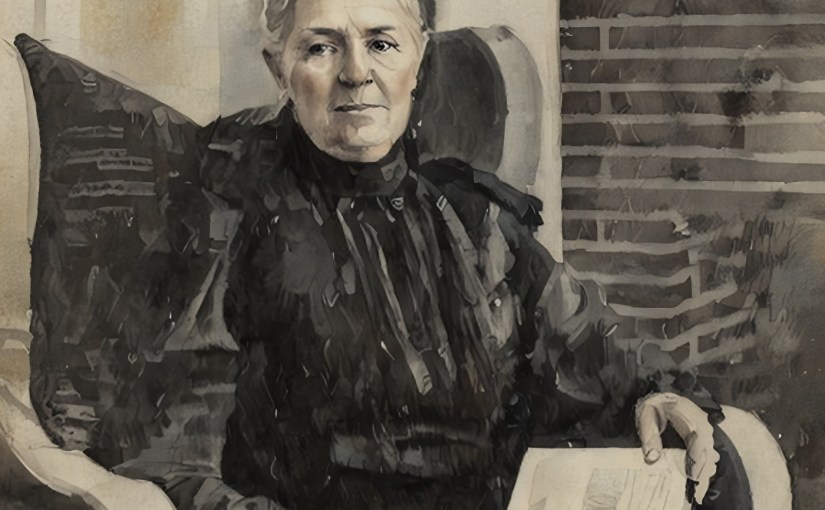
“Lamar and Katherine Fall in Love”

After Katherine pulled one of her disappearing acts, Lamar followed and found her in Tuscaloosa.  She’d been partying with a bunch of college kids, living life large. This was 1928, and for a couple of years, this was their life which was typical during the “Jazz Age.”

But since all good things must come to an end, so did this in October 1929, and The Depression.

Kathy and Lamar did what most young people do when trouble finds them: they went home, to Montgomery.  There Lamar went to work at his father’s mill, and Katherine settled into the life as wife and mother.


Location: Tuscaloosa, Montgomery, Alabama
Period: 1928-1931
Dramatis personae: Katherine George (1910); Lamar Hooper (1907-1969)


LAMAR AND KATHERINE FALL IN LOVE
(F. D. Leone, Jr.)

Lamar finally found Katherine;
On a barge, partyin’
Been goin’ for a couple of weeks;
It was nineteen and twenty eight;
Th’ height of the Jazz Age;
They hardly stop’d to eat or sleep.
Ain’ the way it’s spose to happen, but it did;
They fell in love.

Hung ‘roun Tuscaloosa awhile
Livin’ large, goin’ wild;
Drinkin’ too much, makin’ new friends.
Katherine led and Lamar tagged along,
Out every night dusk to dawn;
Burning their candle at both ends.
They were young, just a coupla kids;
When they fell in love.

You don’t choose,
The one who’ll break your heart;
All you can do,
Is play your little part.
Tha’s why they call it fallin’ when it does;
You’re in love.

Right about then the Depression hit,
These two kids hit the skids;
So they went back home to Magomry.
Lamar got a job at his daddy’s mill,
They lived in a little house on a hill;
Settled down and started a family.
Just the way it’s spose to happen, and it did;
They’re in love.
 
Lamar made a little bootleg shine,
But didn’t drink at all this time;
Katherine was famous for her fig preserves.
She called him Pop, he called her Mother;
Had one child after another,
After three Kath still had her curves.
They were young, but no longer kids;
And they were in love.
 
You don’t choose,
The one who’ll break your heart;
All you can do,
Is play your little part.
Tha’s why they call it fallin’ when it does;
You’re in love.

© 2023 Frank David Leone, Jr./Highway 80 Music (ASCAP). The songs and stories on the Highway 80 Stories website are works of fiction. Names, characters, businesses, places, events, locales, and incidents are either the products of the author’s imagination or used in a fictitious manner. Any resemblance to actual persons, living or dead, or actual events is purely coincidental.

“Wanna Go to Jackson?”


LOCATION: Montgomery, Alabama; Jackson, Mississippi.
PERIOD: 1932-1933
DRAMATIS PERSONAE: Lamar Hooper (1907-1969); Katherine George (1910-1994);  Donald Motts (1909); Marjy Littlejohn (1911-1982); twins, Leon & Mary Hooper (1932); Mildred Motts (1934-2014).


Lamar and Katherine had been in Montgomery a little over a year, when Lamar gets a hankering to move. Kath was pregnant at the time, and told him, she’d move with him, but not until this baby was born and they were ready to travel.

When asked, Lamar informs her that their destination was Jackson, Mississippi. When asked why, he says he heard it was nice.

In Jackson the Hoopers meet the Motts and they become great friends, and eventually Leon Hooper marries Mildred Motts, bringing these two families officially together.


WANNA GO TO JACKSON?
(F. D. Leone, Jr.)

“Lemme ask you somthin’, Mama,
Are you happy in Magomry?
What would’ya think if we moved?”
“‘Magomry’s home; move where?”
“Jackson, M’sippy”
“Why there? I’m confused.”
“Someone said it was nice, and I thought,
Things jus’ might improve.”
 
“Well, that’s fine, Lamar,
When were you thinking we’d start?”
“Right now, if you ain’ busy?”
“Lamar, I’m kinda far along;
Cain’ we wait ’til this baby’s born?”
“Why sure, Kath, don’t get in a tizzy;
But as soon as y’all can travel,
I wanna go t’ Jackson, M’sippy.”
 
But it wasn’t just one baby,
In Katherine’s belly’;
It was twins tha’ she was havin’.
She named ’em Leon and Mary,
For her mama and daddy;
All the while, Lamar was packin’.
He put ’em in the car,
They all went down the highway to Jackson.

They rented a clapboard house,
5402 Highland;
An’ met the couple at 5401.
Donald and Marjy Motts,
And their daughter Mildred;
Who, one day, would marry Leon.
Friday they’d get together, an’
Play Moon and 7-Up fo fun.
 
Kath brought her fig preserves,
Some Fritos and Dr. Pepper;
Marjy’d serve pimento cheese on rye.
The guys would drink Jax beer,
Maybe a highball or two;
Sometimes Lamar got a little high.
Then he’d stand at the hearth, and
Sing Jimmie Rodgers all night.
 
Don got Lamar on at the oilfield,
They all became good friends;
Sairdy night they’d go out on Flowood Road.
Hot dogs ‘n’ fruit jar whiskey,
Live music at speakeasies;
They were in hog heaven, an’ it show’d.
The Motts and the Hoopers,
Never moved and together they grew old.

© 2023 Frank David Leone, Jr./Highway 80 Music (ASCAP). The songs and stories on the Highway 80 Stories website are works of fiction. Names, characters, businesses, places, events, locales, and incidents are either the products of the author’s imagination or used in a fictitious manner. Any resemblance to actual persons, living or dead, or actual events is purely coincidental.
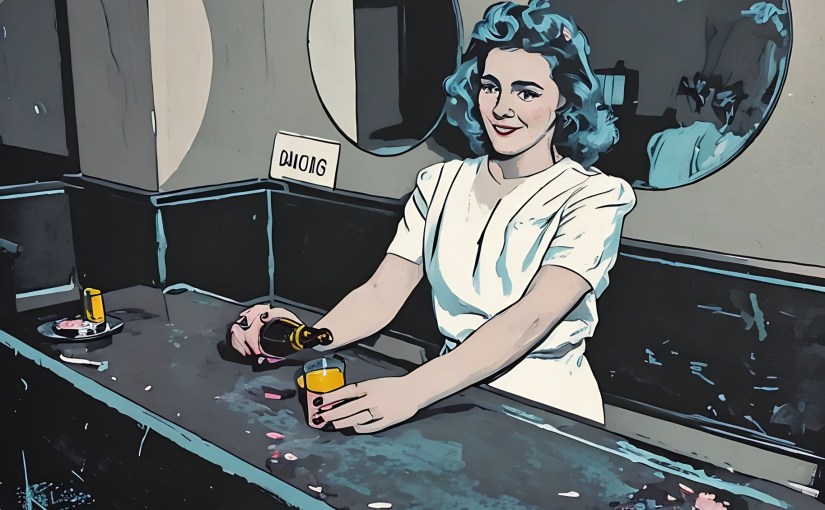
“When Vernon Raney Put Otis Odom Down”


LOCATION: Delta, Louisiana; Warren County, Mississippi; Vicksburg.
PERIOD: 1960
DRAMATIS PERSONAE: Molly Motts (1931-2014); Vernon Raney (1910-1997); Otis Odom (1914-1960); Donald Motts (1911-1977); Bessie Ferguson (1914-1966).


Donald Motts (1911-1977) and Bessie Ferguson (1914-1966) married in 1928, and then had a daughter, Molly, in 1931. However by this time Donald had begun an affair with another woman, and ended his marriage to Bessie shortly after Molly was born.

Not long after, Bessie married Otis Odom (1914-1960), a decent enough guy, but one with a nasty streak. Bessie thought he was a good man,. to raise a daughter by another man as his own. And because of this she was prone to accept behavior from Otis that otherwise would be unacceptable. Hence she looked the other way when she had suspicions that Otis paid a little too much attention to Molly as she grew older.

As soon as she was old enough, around the age of 15 or 16, Molly ran away from home in Delta, Louisiana, across the river to Vicksburg, Mississippi. Here she attracted the attention of one of the larger land-owners, Vernon Raney (1910-1997). The Raneys were an old Mississippi family, known primarily for their moonshine, but also as a large farming family.

Vernon loved Molly dearly and when she told him of the abuse she had suffered from Otis Odom, Vernon knew immediately that he would kill Odom, which he did in August, 1960.


WHEN VERNON RANEY PUT OTIS ODUM DOWN
(F. D. Leone, Jr.)

When Vernon learned about,
How Molly had been abused;
He swore to himself what he’d do.
He knew the one who done it,
Though it could not be proved;
He was sure, Molly told the truth.
Was an August afternoon,
Molly and Vern at the river;
When she began to talk.
Vernon did not interrupt her,
Just let Molly surrender
The whole sordid story as they walked.

Then she just stopped talkin’,
They stood at the shore;
The still air held her last words.
They turned for home and supper,
The scratch of knife and fork;
Was the only sound that they heard.
Vernon asked around Vicksburg,
Got the dope on Otis Odom;
He’d choose the right time and place.
Make it look like self defense,
Wouldn’t take much to goad him;
Knowin’ Otis, he’d wanna save face.

Vernon cleaned his .45,
Said, “I’ll be gone an hour;”
Set his jaw, an’ walked out to his truck.
Molly finished washin’ dishes,
It was full dark now;
Sat down wi’ th’ corn she’d set aside to husk.
Vern caught up with Odom,
At a dive bar in Vicksburg;
Vern smiled at his good luck.
“You’re Otis Odom, ain’t ya?”
“Yep, since my birth;”
“I’ve got somp’n for ya in my truck.”

Vern followed Otis out,
Grabbed a hay hook on some lumber;
Split th’ bastard’s skull in two.
Pulled Odom to his truck,
Chained him to the bumper;
Dragged th’ body to the bayou.
Tossed the hay hook out th’ windah,
Put his truck in reverse;
Then jus’ sat there, the engine runnin’.
After two weeks of lookin’,
Vern talked t’ th’ Shurf;
“This August heat sure is somp’n’.”

© 2023 Frank David Leone, Jr./Highway 80 Music (ASCAP). The songs and stories on the Highway 80 Stories website are works of fiction. Names, characters, businesses, places, events, locales, and incidents are either the products of the author’s imagination or used in a fictitious manner. Any resemblance to actual persons, living or dead, or actual events is purely coincidental.

“Sally Ann”


LOCATION: Rural Northwestern Louisiana
PERIOD: 1870s-1880s
DRAMATIS PERSONAE: Sally Ann Gray (1863-1954); Cristina “Cris” Fulco (1841-1922); Alfonso “Al” Graziano (Gray) (1832-1918); Samuel “Spooner” Magee (1826-1982).


You wouldn’t know it from her name, but Sally Ann Gray was full-bloodied Sicilian. Her father’s family had anglicized their Italian name of Graziano to Gray upon first emigrating to England in the 17th century, which was quite common. Her mother and father entered America at the port of New Orleans in 1859 shortly after they were married in Cefalu, a town on the northern coast of Sicily.

Sally inherited the immigrant dream of carving out a better life and dreamed of escaping the suffocating small town in northwestern Louisiana where the family ended up, and going west. A common ambition, but in her case, one supplied to her by an older friend of her father’s who filled her head with fancy images of San Francisco.


SALLY ANN
(F. D. Leone, Jr.)

Sally Ann had dreams she never talked about;
Dreams that would take her far away.
Livin’ in the shadow, of what she could only imagine.
She had grown accustomed to doing without;
Sleepwalkin’, in a kind of daze.
Still, she believed in magic that could suddenly happen.

It kept her yearnin’ heart strong;
It kept her just barely keepin’ on,
A tiny voice whispers, “believe, and it’s yours.”

Sally saw it in her mother’s immigrant eyes;
Who stood on a shore in Sicily,
Starin’ at th’ ocean thirstin’ for a second start.
Askin’ only for a chance at a better life;
Tradin’ all she knew for mystery;
Riskin’ all on somethin’ that seemed so far.

Goin’ where dreamers belong;
Hopin’ for a beckonin’ song;
A tiny voice whispers, “this can be yours.”

Sally Ann worked in a bar, th’ Faded Rose;
She would leap at th’ first chance to escape,
Th’ same old, same old, ev’ry night and mornin’.
One evenin’ as she was just about to close,
Spooner talked about his dream place;
That bar, that night, Sally saw California.

Where she was sure she could belong;
Where she’d hear a welcomin’ song,
A tiny voice whispers, “believe, and it’s yours.”

But Spoon was old and might not ever follow through,
Sally Ann would not be denied;
Some how, some way, she’d end up west.
Even if it all went bust, her heart had been tattoo’d;
Then Spooner said, “Sal, let’s go; let’s ride.”
Th’ best day of her life was th’ next day; they left.

Findin’ where she could belong;
It was there, drawin’ her on,
A tiny voice whispers, “this will be yours.”
A burstin’ heart beatin’ strong;
Finally to start, movin’ on.
Right then, right there, God’s green earth was hers.

David Leone: guitar, vocal
Tammy Rogers: fiddle

Related songs in chronological order:
“Ballad of Black Jack Kelley and Spooner Magee”
“Sally Ann”
“A Day in the Life of Spooner Magee”
“L’Maison d’Amour”
“Aftermath”

© 2023 Frank David Leone, Jr./Highway 80 Music (ASCAP). The songs and stories on the Highway 80 Stories website are works of fiction. Names, characters, businesses, places, events, locales, and incidents are either the products of the author’s imagination or used in a fictitious manner. Any resemblance to actual persons, living or dead, or actual events is purely coincidental.
“Copper Pot Still”

Lonsom Raney (1828-1923) learned how to make whiskey from his father Andrew Rainey (1799-1852), who in turn had learned from his father Macgregor “Mac” Raney (1765-1810). Family lore holds that they all used the same copper still that had been built by some even earlier Raney patriarch. Supposedly, this very copper pot had come to America with Maclen Rainey (1713-1765) in 1741 when he was 28 years of age. At least that was the story Lonsom had always swore to.

But there’s a bit more to this story, since Maclen and that copper pot were separated at sea when their ship was lost in a storm. Maclen hung on to a steamer trunk for three days until he and the trunk found land, as Lonsom told the story, it was Haiti, but who really knows. Lonsom never let the true facts hobble a good story.Because whiskey making was deep in the Raney blood, Maclen made sure to find a replacement for the lost ancestral still before he acquired passage on a freighter bound for Virginia. Which he did.
Now Vernon heard the truth from his grandfather Royal Raney (1868-1939) while they were in the woods cooking up another batch of their moonshine one crisp cool October morning.
But by now the replacement still was 179 years old itself, and had made hundreds of barrels of clear corn whiskey, and might as well have been the one from Scotland. For all Vernon knew, that one probably ended up floating to the same shore his 7th great-grandfather had, and some islander was making whiskey in it to this day, and spinning some colorful yarn about how he came to own it.

LOCATION: Georgia; Mississippi
PERIOD: 1741-1920
DRAMATIS PERSONAE: Maclen Rainey (1713-1765); Lonsom Raney (1828-1923); Royal Raney (1868-1939); Vernon Raney (1911-1997).


Copper Pot Still
(F. D. Leone, Jr.)

The rosy dawn crawls above the tree line
As Vernon slowly comes awake
Vernon! Get a move on;
Tend to the fire, for heaven sake.
Their second week at the still site,
Took em some days to find the spot.
Hidden near clean cold water,
But now the still was finally up.

Fast minutes of hard work,
Then slow hours of doing nothing;
Listenin’ to the birdsong and the wind,
Layin’ under live oak trees; napping.
Samplin’ the brew from time to time,
Tossin’ the heads and tails.
That still’s pretty old, ain’t it, grampa?
Royal took a deep breath and then exhaled.

That still; now there’s a story;
Vernon, I’m gonna tell you the truth,
But don’t you go an’ tell nobody,
Cept th’ son you deed the recipe to.
One of your ancient ancestors,
Brought that still here in 1741;
I was told it came all th’ way from Scotland,
But that ain’t exactly where it come from.

Black pools of water stood by the still;
A steady rain pierced the soft moonlight.
Damn this rain, Royal hissed,
I’m too old for this whiskey life.
Some check the proof with a gadget,
But I always just shook the jar;
When the beads are big an’ pop an’ dance on the surface;
A trained eye will git it right on the mark.

A copper pot was all Maclen Rainey took
Aboard a tall ship bound for this land.
Overnight a typhoon blew up;
Ship and still were never seen again.
Mac held onto a steamer trunk for three days,
Until ashore he and it were tossed.
The first thing he did was find a tradesman,
Who could build a still for the one he lost.

My grandpa, Lonsom, swore it was Haiti;
A Freanchman livin’ at the ship yard,
Who turned the copper sheets for this still;
Each Raney son would leave his mark.
The only thing to consider is,
A Rainey got here with a copper pot;
And began runnin’ untaxed whiskey,
Nine generations on, we still ain’t stopped.

So, pap, is it all a lie?
Vern, what’s true? What’s real?
The importance of family lore,
Aint if it’s fact, but how it makes us feel.
What endows a thing with meaning,
Is a history that’s been transformed;
If this pot is in fact not the first one,
It’s history, too, was lost in a storm.

Near dawn they heard dogs below;
Down the mountain distant dogbark.
Then fadin’ off when they coursed out,
Along some rocky draw in the dark.
Later they brought the truck around to the still site,
Loaded jars and pot into the bed;
Vernon was silent as they worked,
Thinkin’ bout all Royal Raney’d said.

© 2023 Frank David Leone, Jr./Highway 80 Music (ASCAP). The songs and stories on the Highway 80 Stories website are works of fiction. Names, characters, businesses, places, events, locales, and incidents are either the products of the author’s imagination or used in a fictitious manner. Any resemblance to actual persons, living or dead, or actual events is purely coincidental.

“Mama’s Thanksgiving”


LOCATION: Shreveport, Louisiana.
PERIOD: Thanksgiving, 1950s-1984.
DRAMATIS PERSONAE: Lue Ellen Knox (1900-1979); Benjamin MacCrae (1896-1969); John Henry MacCrae (1937); Alice MacCrae (1931); Benjamin John “B.J.” MacCrae (1967); Margaret Casey MacCrae (1970); Stephen Baker MacCrae (1972); Ann Ellen Martin (1963); Sarah Meredith Martin (1965); Jason MacCrae Martin (1970).


Five years after the death of their mother her children, John Henry MacCrae (1937) and Alice MacCrae Martin (1931), are talking about Thanksgiving, 1984.  They begin to reminisce about their parents and life growing up, and plan on making a meal just like the one their mother used to make when they were all at home.

This conversation is the first in which they confront the reality of their mother’s reclusive behavior after their father’s death from a sudden heart attack in 1969, her prescription pain medication addiction, and finally taking her own life in 1979.


MAMA’S THANKSGIVING
(F. D. Leone, Jr.)

This year let’s make Thanksgiving,
Like Mama used to do:
Turkey and cornbread dressing,
And rice dressing too,
English peas with pearl onions,
Spiced peaches and candied yams,
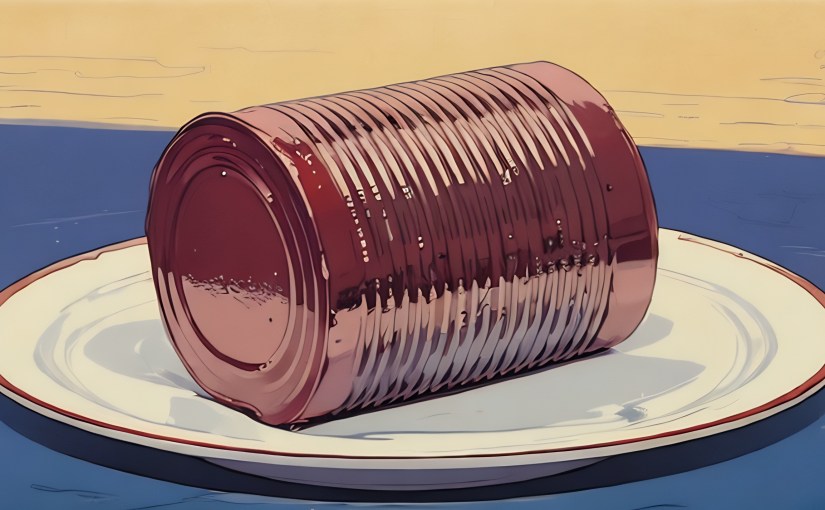
Cranberry sauce on a plate,
With th’ outline of the can.
 
I loved Shreveport in November,
Clay pigeons at The Place with Daddy;
You would ride Big Red,
I’d do my best on Lady.
I remember playing catch with him,
In the soft glow of sunset;
The only sound you could hear,
Was th’ pop of th’ ball in’ th’ mitt.
 
After Daddy in died,
Mama wasn’t the same no more;
She complained of a back pain,
That she never had before.
She got some pills from Dr. Thomas,
And took to her bed;
She went into a haze and hardly came out, 
No matter what we said.

But she loved her grandkids,
For them, she really tried;
They’re the only ones who could
Touch her right mind.
But even they could tell,
Somethin’ wasn’t right with gramaw;
They would get upset those times,
When she didn’t know ’em at all.
 
I spoke to mama that week,
But didn’t get a clue;
Where she was headin’,
Or what she would do.
Over those last ten years,
She lived in her memories.
Was in th’ kitchen when the phone rang;
It was Aunt Emmalee.
 
This year let’s make Thanksgiving,
Like Mama used to do:
Turkey and cornbread dressing,
And rice dressing too.
English peas with pearl onions,
Spiced peaches and candied yams,
Cranberry sauce on a plate,
With th’ outline of the can.

© 2023 Frank David Leone, Jr./Highway 80 Music (ASCAP). The songs and stories on the Highway 80 Stories website are works of fiction. Names, characters, businesses, places, events, locales, and incidents are either the products of the author’s imagination or used in a fictitious manner. Any resemblance to actual persons, living or dead, or actual events is purely coincidental.

“Three Loves of Lue Ellen Knox”


LOCATION: Texarkana, Arkansas; Shreveport, Louisiana.
PERIOD
: 1919-1979
DRAMATIS PERSONAE: Lue Ellen Knox (1900-1979); Johnny “Jack” Stone (1899-1973); Richard Wesley Bryant (1885-1930); Benjamin MacCrae (1896-1969).


Lue Ellen Knox, Texarkana native, met Johnny “Jack” Stone in 1919 at a dance given for the soldiers returning from having served in World War I. She and Johnny had a night of romance and continued their affair for a few weeks. But it ultimately fizzled out, leaving Johnny feeling rejected and disappointed.

Almost a decade later, December of 1928, Lue Ellen started dating Richard Wesley Bryant, fifteen years her senior. Wesley was the oldest son of a wealthy Shreveport family, in the oil and gas business, and he was very wealthy. He had previously been married but his wife had died several years prior to their meeting. Wesley wooed Lue Ellen with expensive gifts, jewelry, furs,, haute couture, and was on the verge of proposing to Lue Ellen when the stock market crashed in October, 1929, leaving Wesley near bankruptcy. Shortly after breaking off their engagement, Wesley lept to his death, unable to face the shame of being broke and consequent loss of social standing.

Again, almost a decade later, spring of 1938, Lue Ellen came into contact with a navy man just back from the sea, retired, Benjamin MacCrae. He was a romantic and charmed her with a single red rose each day. They fell truly in love and their marriage lasted for thirty years before Ben suffered a fatal heart attack in 1969.

Lue Ellen lived on, alone, for another ten years but finally succumbed to her depression, and loneliness, and took her own life, at age 79, holding a photograph of Ben and with a bundle of dried roses by her side having lived a full life and loved three men.


THREE LOVES OF LUE ELLEN KNOX
(F.D. Leone, Jr.)

A bundle of dried roses by her side,
The night Lue Ellen Knox died.
Once, she was a happy bride;
Twice, happiness was stolen from her.
In her life, Lue Ellen loved three men:
Johnny, Wesley, and Ben.
After tonight she won’t love again;
That part of her story is over.

Johnny was just back from The Great War,
When he met Lue at a “coming home” dance.
Lips brush a cheek, fingertips touch an arm;
Summer kisses under rice paper lamps.
Johnny needed someone, he was haunted,
He thought Lue was who he wanted,
But Johnny ended up disappointed;
Their love flared hot then it was over.

Wesley was wealthy and older;
Since his wife died his heart had grown colder.
Lue Ellen made the embers smoulder;
Wesley felt like a new man.
He used his money to impress:
Cartier bracelet, Chanel evening dress.
On one knee he asked Lue Ellen to say yes;
The market crashed; Wesley was ruined.

Ben sent Lulu a rose every day,
Home from the sea he captured her heart.
A small wedding was planned for May;
Honeymoon in the Ozarks.
Ben loved Lulu from the day they met,
For thirty years they shared the same bed.
Then suddenly her Ben was dead;
Their time together seemed cut short.

A bundle of dried roses by her side,
It’s been ten years since Ben died.
She remembered her three loves and cried;
It had all gone by so fast.
With Ben’s photograph in her hand,
Whiskey and pills on the bedstand;
The last few months Lue Ellen planned,
To say goodbye to it all at last.
 
Ben’s death, the last cruel twist of fate;
Third time around Lue Ellen found true love.
The other two were not mistakes;
Each one perfect, for what it was.
Whiskey spilled as her head collapsed;
A few pills scattered as her hand relaxed.
The final curtain closed on her third act;
Lulu is with Ben forever after.

© 2023 Frank David Leone, Jr./Highway 80 Music (ASCAP). The songs and stories on the Highway 80 Stories website are works of fiction. Names, characters, businesses, places, events, locales, and incidents are either the products of the author’s imagination or used in a fictitious manner. Any resemblance to actual persons, living or dead, or actual events is purely coincidental.

“On the Road To Old Mexico”


LOCATION: Texas; Mexico
PERIOD: 1919
DRAMATIS PERSONAE: Homer Hardin (1902-1985); Virgil Hardin (1902-1992); Henry “Mack” Adams (1850-1919); Mamie Adams (1884-1970); John Henry Hardin (1878-1949)


Homer and Virgil Hardin lived with their maternal grandfather on his ranch in West Texas. Ten years previously, their parents divorced and their father moved to town, whom they saw occasionally; but they hadn’t seen their mother since she moved to San Antonio shortly after the divorce.

Their grandfather was the oldest of eight boys and the only one to live past the age of twenty-five. That was in eighteen sixty-six. In that same year the first cattle were driven through what was still Bexar County and across the north end of the ranch and on to Fort Sumner and Denver.

He was a crusty old cob, but a good man, and he had taught them the important things about being a man. This song takes place in 1919 after this grandfather passed on. Homer and Virgil’s mother did not want to live on the ranch, nor to even keep it, and put it up for sale.

This was when they decided to go down to Mexico and have an adventure.


ON THE ROAD TO OLD MEXICO
(F. D. Leone, Jr.)

Ever think about dyin?
Yeah, some. You?
Think there’s a heaven?
People think what they want to.
Why you think she sold granpa’s land?
Guess she preferred city livin’.
For some, a West Texas cattle ranch,
Ain’t the next best thing to heaven.

My name’s Homer Hardin,
Our ma’s been gone bout ten years.
She left this place an’ us like we was nothin;
Granpa, Virg, an’ me been here.
Then after granpa had died,
She sold his ranch lock, stock, an’ barrel;
That’s what caused me and Virg to decide,
To grab our horses and saddles.
On the road to Old Mexico.

They rode all day and the day after,
South through dusty flatland;
Distant mesas capped with cedar;
They had direction, but no plan.
Hom, why you think she left pa?
Guess her feelin’ for him ‘n’ us had dimmed.
Couldn’t he convince her to call it off?
Naw, he signed whatever she put in front of him.

Virg took a coal from the fire,
And lit a cigarette.
The sparks rose red among the stars;
Their two forms, a silhouette.
Virgil grinned;, damn we done it for sure,
You think they’ll be huntin’ us?
I don’t know. What for?
Just seemed too easy, I guess.
On the road to Old Mexico.

If Pa hadn’t run off when he was small,
We’d of been born in Tennessee.
“We” wouldnt of been born at all.
Why, Hom? That’s crazy.
Cause our mama’s from San Angelo,
And he never would’ve met her.
He’d of met somebody an’ so’d she … So?
Would not’ve been “us” they had in Tennessee or Texas.

Wonder what they’re doin’ back home?
Homer leaned, spat, and looked around;
Probably havin’ the biggest time they’ve known.
Probably struck oil; pickin’ out new cars in town.
Ever get ill at ease, Virgil said.
I don’t know. Whaddya mean?
Y’know, jus’ something youve misread.
Sure. Like a place you ain’t spose to be?
On the road to Old Mexico.

They dismounted, uncinched their saddles;
Sat down beside a copse of willows;
Ate Vienna sausages and crackers;
Feelin’ like a-cupla cowboy heros.
Beneath a silver moon the water shimmered;
They rode across naked and cold.
The horses arose from the river,
Think they got Vienna sausages in Mexico?

They looked back at the country they’d left.
Got dressed in slience, no more chatting.
Put their horses into a gallop,
Hats in the air, laughin’.
Sat their horses in the moonlight,
Goddamn, you know where we’re at?
They paused in the cool of the night;
Then rode south into scrubland, dry and flat.
On the road to Old Mexico.

© 2023 Frank David Leone, Jr./Highway 80 Music (ASCAP). The songs and stories on the Highway 80 Stories website are works of fiction. Names, characters, businesses, places, events, locales, and incidents are either the products of the author’s imagination or used in a fictitious manner. Any resemblance to actual persons, living or dead, or actual events is purely coincidental.

“L’Maison d’Amour”

Location: San Francisco
Period: 1879-1886
Dramatis personae: Sally Ann Gray; patrons of brothel.


After Sally Ann and Spooner made it out to San Francisco, Spooner went back to Louisiana after a month or so, but Sally Ann stayed behind.

Initially she got work in a bar/brothel as a bartender, something she had been back home.  The madam, Marie LaBlanc, another Louisiana transplant, took Sally under her wing, and eventually gave her more and more responsibilities until Sally Ann was essentially her second in command.  While she did do some work as a prostitute, early on, over time she maneuvered herself more and more into management and took over upon Marie’s death, who had been killed by an obsessively jealous patron.

Sally spent seven years in San Francisco, and this song describes a typical night in which she verbally spars with a regular customer, who, while she fends of his advances, she acknowledges that he is certainly not the worst kind of man who visits the “house of love”.


L’MAISON D’AMOUR
(F. D. Leone, Jr.)

“Sally gal
Come over here
Sit in my lap
Whisper in my ear.
You know I love you,
Like a daughter;
Not like those other fellas,
Who don’t treat you like they oughta.”

“Harvey, get on,
You ol’ pervert;
You don’ smell good,
An ‘ need to change your shirt.
“Sally gal,
You used t’ be so prim ‘n’ proper;
You were as green,
As a grasshopper.”

“Didn’t take you long,
Before you learned th’ ropes;
Now you give us crusty buzzards,
Th’ straight dope;
Sally gal,
Come on ‘n’ sit in my lap.
Aw now, girl,
Don’t look at me like that.”

Next mornin’ now;
Outside a soft grey drizzle.
Sally is wonderin’,
How a dream can fizzle.
No time for that, no, no no;
No second or third thoughts.
Sally don’ waste time,
Dwellin’ on what she lost.

One by one,
Her girls come downstairs,
As usual, complainin’;
Sally silently swears.
She’s still young ‘n’ pretty,
But not a girl no more.
She’s th’ madam now:
L’maison d’amour.

Well, ol’ Harvey,
He ain’ so bad,
Better’n most of ’em;
He makes her laugh.
“Mary, ya’ll get started, and
Wash your coffee cups.
Get yourselves together, b’fore
They start showin’ up.”


CREDITS:
David Leone: guitar, vocal
Tammy Rogers: fiddle

Related songs in chronological order:
“Ballad of Black Jack Kelley and Spooner Magee”
“Sally Ann”
“A Day in the Life of Spooner Magee”
“L’Maison d’Amour”
“Aftermath”

© 2023 Frank David Leone, Jr./Highway 80 Music (ASCAP). The songs and stories on the Highway 80 Stories website are works of fiction. Names, characters, businesses, places, events, locales, and incidents are either the products of the author’s imagination or used in a fictitious manner. Any resemblance to actual persons, living or dead, or actual events is purely coincidental.

“Savannah, 1903”


LOCATION: Savannah, Georgia
PERIOD: 1903-1904
DRAMATIS PERSONAE: Lucas Wilson Robison (1859-1918); Nora Corbyn Sprague (1876-1955); Isaac “Ike” Jones (1834-1925)


When Nora Sprague Robison was 27 years old, she noticed a hard cyst on her face.  She thought it would resolve itself, but it only got harder.  She went to her doctor in Savannah who wanted to surgically remove it, since he was afraid it might become cancerous otherwise.  The Robison family was an old Georgia clan, and there was an old veteran of the Civil War, Isaac “Ike” Jones, who would visit from time to time, he possessed a trove of stories about Lucas’s father, the “Cunnel.”

Ike lived about five miles outside of town in a crude cabin in the hills surrounding Savannah.  He regularly would walk into town, and would stop at the Robison house.  Nora usually had two things for him: chewing tobacco and two complete sets of clothes.  On Ike’s most recent visit, he happened to see  “the wen” on her face: “I will come back in a week to look at it, and when it’s ripe, I’ll dose it twice with my salve.  It will fall off after the second dose, abot ten days.”

Of course, Lucas doesn’t put any stock in Ike’s folk remedies, and insisted, supported by Doc Brady, that Nora ought to see a real doctor, someone who knows about cancer.  So they go to Atlanta for a consult.

Source material for this song includes the novels, Flags in the Dust: The complete text of Faulkner’s third novel, which appeared in a cut version as Sartoris (Vintage International) by William Faulkner; and Stegner W. A. Williams T. T. & Watkins T. H. (2007). Crossing to safety. Random House Publishing Group.


SAVANNAH, 1903
(F. D. Leone, Jr.)

It was supposed to be just a routine visit,
Let Doc Brady look at her cheek;
“Ike Jones said he can cure it.”
Doc smiled, “let’s have a peek.
Naw, Nora, we won’t let ol’ Ike
Put his dope on this wart;
His salve is fine for livestock an’ th’ like,
But we won’t let him reach this far.”

“I can have it out this afternoon,
You’ll never know it was ever there.
But we best do something pretty soon;
Left untreated it could come to cancer.”
That was the last day she was happy,
Th’ last time Nora’s life was carefree.
She bought a bag a peppermint candy;
Savannah, 1903.

“Nora, you’re stubborn as a settin’ hen,
I don’t waste time hurtin’ folks;”
Ike patted his salve onto the wen,
With small practiced strokes.
“It’ll turn black tomorrah,
Long’s it’s black, it’s workin’.
Don’ put no water
On yo’ face befo’ mawnin’.”

“In ten days I’ll come back
To apply another dose;
On the ninth day of July,
Thereabouts, it’ll drop off.”
After old man Jones had left,
Nora touched the spot, but softly;
Rememberin’ what Ike had said:
Savannah, 1903.

Her husband, Lucas, and Doc Brady,
Put Nora on the train to Atlanta;
And sat her down to wait in the lobby,
Of th’ expert Brady’d found on cancer.
He marched through the door briskly,
“Havin’ lunch downtown, can’t delay;
Sir, are you the patient? Are you ready?”
“No. You’re to see my wife today”

“What’s that on her face?” he demands,
As he touched the dark smudge on her cheek.
The thing came off in his hand;
Exposing baby pink skin beneath.
On the train that evening Nora squint her eye,
“What’s today’s date, tell me?”
“The ninth,” Lucas answered, “of July?”
Savannah, 1903.

© 2023 Frank David Leone, Jr./Highway 80 Music (ASCAP). The songs and stories on the Highway 80 Stories website are works of fiction. Names, characters, businesses, places, events, locales, and incidents are either the products of the author’s imagination or used in a fictitious manner. Any resemblance to actual persons, living or dead, or actual events is purely coincidental.