“McLemore’s”


Jake McLemore’s father, Charlie McLemore, was small businessman at the J.M. Guffey Petroleum Company of Oil City, Louisiana where Jake was born in 1959 and where he spent his early life. Charlie moved the family to Shreveport in 1968 after he got a job at United Gas Corporation. Shreveport would be Jake’s home until he graduated high school, and went to Vanderbilt University in Nashville, Tennessee.

Jake decided to stay in Nashville after graduating from Vandy with a degree in Business Administration. After investing in several businesses, he came to own a bar, which he had won in a poker game. He promptly changed the name and settled down as proprietor of McLemore’s Bar in 1985 (see song, “McLemore’s“).

By that time Jake had already married and had a son, Lee, in 1983. But Jake’s happiness and home were shattered when his wife, Amelia, was killed in a car accident when a drunk driver ran a red light, leaving Jake to raise his son alone. Soon after graduating from high school, Lee McLemore enlisted in the army and was deployed to Iraq.

But before he left for Iraq, in July 2003, Lee’s girlfriend Ellen Brewer gave birth to a son whom they named Charles after his grandfather Charlie McLemore. Lee and Ellen secretly married shortly before Lee shipped out for Iraq that December. Jake knew nothing of this son and lost touch with Ellen Brewer. It was only much later that, largely out of curiosity, Charles looked Jake up and established contact.

On March 31, 2004, five U.S. soldiers were killed by a large IED on a road a few miles outside of Fallujah, one of the soldiers who died that day was Lee McLemore.

Jake kept the bar going for several years after Lee died but ended up selling it in 2007 and bought some land outside of Shreveport, Louisiana not far from Oil City. He had fond memories of fishing on Caddo Lake with his father and settled into that kind of life again.

It didn’t take long for Jake to become bored with retirement, and he bought a diner in Shreveport where Pearl Robison happened to enter one day in January 2010 (see song, “Pearl + Jake“). For five years Jake and Pearl had a turbulent romantic relationship, before Pearl took to the road again (see song “Hit the Road“), heading west on U.S. 80, leaving Jake heart broken at 56 (see songs, “The River and Jake” and “The Red River Flows“).

Unbeknownst to him Pearl was pregnant when she left, and gave birth to a daughter, Sadie Jo Robison. Pearl initially had no intention of letting Jake know about this child, but she eventually did tell Jake (see song “Terrell“), however, nearly two years after she had left Shreveport. Jake immediately proposed to Pearl, and they got married and moved back to Shreveport to raise Sadie Jo together.

Jake hired someone to run the diner and went back to a life of fishing and shooting the breeze with his friend Mike Broussard and other men from the area. Then one day in 2016 his grandson, Charles, walked into his life.

Jake is currently living with Pearl and Sadie Jo outside Shreveport, Louisiana, and maintaining a close relationship with Charles, helping him to grow into a sturdy young man in the long line of McLemore men.


McLemore’s
(F. D. Leone, Jr.)

Walked in there first time in aught-four
Took a stool by the pinball machine
Come to know the owner Jake McLemore
Dropping by each day became routine

He looked to be about my dad’s age
If my dad ain’t died in ninety-three
Jake was always adopting things
Like a three-legged dog and me

Time seemed to pass a little slower
Behind soft country music and bumper pool
The world looked a whole lot better
From where I sat on that bar stool

Pickled eggs and pigs feet in a jar
Antique cash register, black dial phone
Scratches an’ nicks in a hickory bar
Left by those who are never really gone

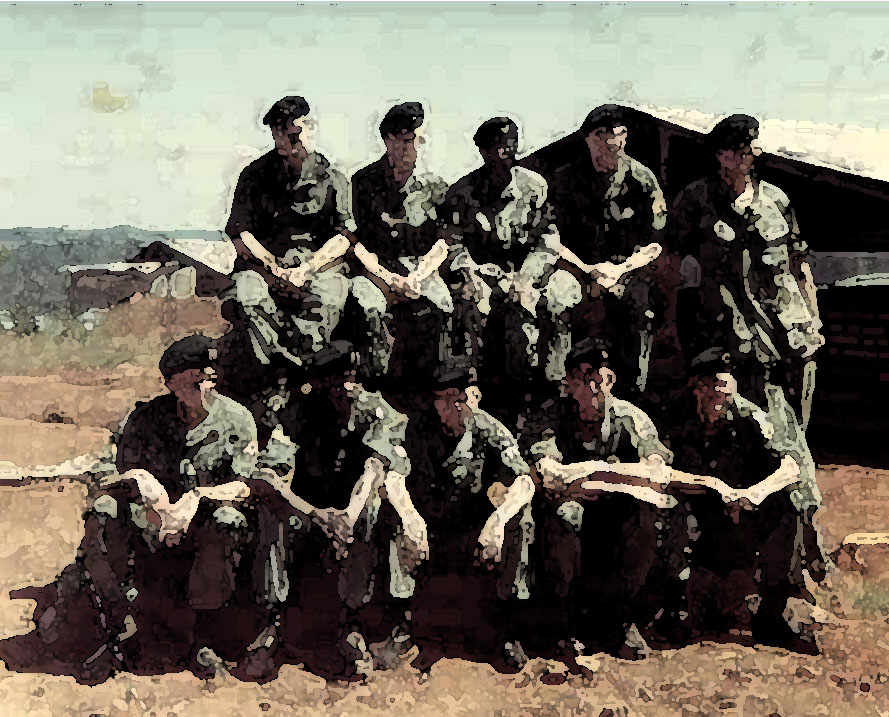
He pointed to a snapshot of some soldiers
Leaning on a tank in Iraq
“They call my son a hero,” Jake told me
“Would’ve preferred if he’d just made it back.”

Time seemed to pass a little slower
Behind soft country music and bumper pool
The world looked a whole lot better
From where I sat on that bar stool

Jake sold out last year with a big payday
Bought 26 acres outside Shreveport
I don’t drink much anymore and anyway
Can’t find a bar like McLemore’s
No, there ain’t no place like McLemore’s

© 2017 Frank David Leone, Jr./Highway 80 Music (ASCAP). The songs and stories on the Highway 80 Stories website are works of fiction. Names, characters, businesses, places, events, locales, and incidents are either the products of the author’s imagination or used in a fictitious manner. Any resemblance to actual persons, living or dead, or actual events is purely coincidental.

Related songs in chronological order:
McLemore’s
Between Here and Gone
Pearl and Jake
Hit the Road
The River and Jake
Terrell
The Red River Flows
Sadie Jo
Pearl Robison (1973- )

Pearl Robison comes from a fractured family line going back before the Civil War, and her life has carved a jagged line as well.  She is related through her father, Jason Jones Robison (1946- ) to Ruby Robison (1843-1933), who was the sister of Marcus Walsh Robison (1836-1897) Pearl’s great-great-great-grandfather.  Ruby Robison was a young prostitute in Shreveport who gave birth to a Civil War soldier’s child, the first Pearl Robison (see songs, “Fannin Street” and “Levi Motts is My Name“).

In 1973 Pearl Robison was born in Conyers, Georgia but we first meet Pearl when she is managing a dollar store in Macon.  One January day in 2010, sitting in her car before opening up, she decides to leave town and head west on U.S. 80 (see song, “Between Here and Gone“).

She ends up in Shreveport, Louisiana, when she stops at an all night diner and Jake McLemore enters her life.  They live together for five years before Pearl’s wanderlust overtakes her again and she leaves, this time heading for Fort Worth (see song, “Pearl + Jake“).  She does not know at the time that she is pregnant, but when she discovers this fact, she waits almost two years before deciding it is best to let Jake know he is a father (see song “Terrell”)

She gives birth in 2015 to a baby girl whom she names Sadie Jo Robison, after her parents, Jason Jones Robison and Sadie Boone. Pearl and Jake get married in 2018 and raise Sadie Jo together.


Macon, Georgia

Macon, Georgia is important to the Highway 80 narrative as the place to which Pearl Robison moved after she graduated from Rockdale high school in Conyers, Georgia, the place of her birth. Once there she worked at number of jobs until becoming the store manager at Dollar Town.  After about 15 years in Macon, Pearl began to feel stranded and purposeless there, consequently Pearl just picks up and leaves, driving west on U.S. 80.

Macon lies on the site of the Ocmulgee Old Fields, where the Creek Indians lived in the 18th century. Their predecessors, the Mississippian culture, built a powerful chiefdom (950–1100 AD) based on an agricultural village and constructed earthwork mounds for ceremonial, burial, and religious purposes. The areas along the rivers in the Southeast had been inhabited by indigenous peoples for 13,000 years before Europeans arrived.

Macon developed at the site of Fort Benjamin Hawkins, built in 1809 at the fall line of the Ocmulgee River to protect the community and to establish a trading post with Native Americans. The fort was named in honor of Benjamin Hawkins, Superintendent of Indian Affairs for the Southeast territory south of the Ohio River for over 20 years. He lived among the Creek and was married to a Creek woman.

The fort served as a major military distribution point during the War of 1812 against Great Britain and also during the Creek War of 1813. Afterward, the fort was used as a trading post for several years and was garrisoned until 1821. It was decommissioned about 1828 and later burned to the ground. A replica of the southeast blockhouse was built in 1938 and still stands today on a hill in east Macon.

As many Europeans had already begun to move into the area, they renamed Fort Hawkins “Newtown.” After the organization of Bibb County in 1822, the city was chartered as the county seat in 1823 and officially named Macon. This was in honor of the North Carolina statesman Nathaniel Macon, because many of the early residents of Georgia hailed from North Carolina.

As of the official 2010 U.S. Census, the population of Macon was 91,351. The racial makeup of the city was 68% African American, 29% White.

In 2012, voters in Macon and Bibb County approved a new consolidated government between the city and county, making the city’s new boundary lines the same as the county’s and deannexing a small portion of the city that once lay in Jones County.

Conyers, Georgia

(Information taken from Wikipedia)

Conyers is the only city in Rockdale County, Georgia. The city is twenty-four miles east of Atlanta. As of the 2010 census, the city population was 15,195.

Between 1816 and 1821, the area known as Rockdale was open for settlement. John Holcomb, a blacksmith, was the first settler in what is now Conyers. He settled where the current Rockdale County Courthouse is located, in the middle of Conyers on Main Street.

Eventually, there was pressure for a railroad to cross Georgia; the railroad was intended to run from Augusta, through neighboring Covington to Marthasville (now known as Atlanta). John Holcomb was against the railroad and refused to sell his land, and threatened to shoot anyone from the railroad who came onto his property.

Dr. W. D. Conyers, a banker from Covington, eventually persuaded John Holcomb into selling his land for $700. Dr. Conyers then sold the land to the Georgia Railroad. What is now Conyers began as a watering post along this line, named after Dr. Conyers. By 1845, the railroad was in full operation. By 1854, nearly 400 residents lived around the watering post, and Conyers was incorporated.

Conyers has been nearly destroyed several times by fire. It is said that it survived Sherman’s March to the Sea thanks to a friend of Sherman’s who lived in the area between Conyers and Covington. The story goes that the houses were spared because Sherman was uncertain where his friend lived.

Owen McLemore (1791-1868)

Owen McLemore was born in Tennessee, but his family originally came from Ulster Ireland, Scots-Irish, landing in North Carolina in the mid-18th century. Owen’s grandfather, Allen McLemore came to North Carolina as a young boy in 1854, he stayed there acquiring some land not far from his father’s farm and also lived as a sustenance farmer. His son, Jason was the McLemore who left North Carolina , crossing the Appalachian mountains and making his way to middle Tennessee by 1788.

Owen McLemore was born in 1791, the second child to Jason and wife Lucy; a girl had been born in 1789, but only lived a few months. Owen grew up on his father farm and learned everything he needed to become a farmer himself before marrying Anabel March in 1812. Together they worked a sustenance farm in Tennessee and began to build  seeing their first son Allen McLemore come into the world on Christmas Day 1812.

Anabel gave birth to six other sons: Jason (1813-1876); twins Edward (1815-1861) and Leeland (1815-1887); Jacob (1818-1863); Donald (1824-1884) and Arthur (1832-1834),  before dying in 1832.  After Donald’s death in 1834 the family migrated to West Texas where Owen died in 1868 at the age of 77 (see songs “Blinkin’ Back a Tear” and “My Anabel“).

Sam Summers McLemore (1852-1878)

Sam Summers McLemore (1852-1878) lived a violent and short life as an outlaw and gunfighter in Texas.  His father fought and died in the Civil War, leaving Sam at age 12 without much direction.  He occupied his time by practicing drawing and shooting the pistol that he inherited from his father.

At age 18 he was part of a cattle drive, and when some of the wranglers went into town, he was called out for cheating at cards.  He wasn’t cheating but had to defend his honor and killed his first man.  From then on, he found himself having to kill more men who challenged him (see song “The Ballad of Sam McLemore“).

Being a gunfighter was never clearly articulated in his mind, but his life took on a momentum of its own, with him being thrust in the position of defending himself from those who wished to make their own reputations.  For the better part of a decade he lived this kind of life, before taking up with a young prostitute, Sally McCune, rooming with her in the saloon/brothel in West Texas where she worked.

His last fight took place in the dusty street outside this saloon, when he was outgunned by a younger gunslinger and died on that street, age 26.  He did not know it at the time but Sally was carrying his child, Jacob Mac McLemore.

Sally would joke that since her father, a hard shell Baptist minister, was named Horace it was only natural that she took to whorin’.  But once she had the boy, she swore that she’d get out of that life and raise him up right.  And this she did, eventually owning and operating a boarding house in Fort Worth.  This is where Jacob grew up, until he turned 15 and took off for Corsicana when he heard about the oil strike there in 1894.

Jacob Mac McLemore (1879-1977)

Jacob Mac McLemore made and lost more money than any of the McLemore men. When he was fifteen he heard about the 1894 oil strike in East Texas. He started at the bottom working any job he could get, eventually learning enough to strike out on his own.


Jacob Mac McLemore never knew his father, who had been an outlaw-gunslinger who died a few months before he was born.  Sam Summers McLemore (1852-1878) never even knew the 16-year old whore, Sally McCune, he was living with was pregnant when he went out in the street to face a younger and what turned out to be faster boy.  Jacob was raised by Sally, who eventually was able to quit the life and lived out her days running a boarding house in Fort Worth.   There’s some who say it was more than a boarding house, but others deny those rumors.

Indians found oil seeping from the soils of Texas long before the first Europeans arrived. They told explorers that the fluid had medicinal values. The first record of Europeans using crude oil, however, was for the caulking of boats in 1543 by survivors of the DeSoto expedition near Sabine Pass.

Melrose, in Nacogdoches County, was the site in 1866 of the first drilled well to produce oil in Texas. Other oil was found in crudely dug wells in Bexar County in 1889 and in Hardin County in 1893. But it was not until June 9, 1894, that Texas had a major discovery. This occurred in the drilling of a water well for the city of Corsicana. Oil caused that well to be abandoned, but a company formed in 1895 drilled several producing oil wells.

Jacob Mac was 15 when the Corsicana oil came in, and for the next sixty years he chased strikes all over Texas and Louisiana. He might make some money here, then invest it somewhere else only to see his investment evaporate in the dusty Texas wind.


Jacob was married and divorced four times, the last near the end of his life and the one which really broke him. Of the four marriages, only the first produced any children, one boy, Lee Allen (1903-1989), and a girl, Aurelia.  Lee Allen was Jake McLemore’s grandfather.

If you were to ask those who knew him, what they would tell you about Jacob Mac McLemore was that, first and foremost, he was a decent man whose word was his bond. No one ever knew him to brag or lie and that he never made a deal that he did not keep, and usually made his partners money.

He died at the age of 98, dying peacefully in his sleep in an Odessa, Texas hospital room with his great-grandson, Jake, by his side. You might say that Jacob Mac lived an interesting life, but despite not enjoying consistent good luck he was always in good humor and very good company.

Mike “Sarge” Broussard (1948-2014)

Mike “Sarge” Broussard  (1948-2014).  Great-great grandson of Coleman Broussard (1842-1910).  Born in Vivian, Louisiana then his family moved to Shreveport in 1953. He had one brother, Cole Lucas Broussard (1946-1965), who was two years older than Mike.  They spent time in Shreveport before Luke was drafted and went off to Vietnam, where he was killed (see song “Shreveport, 1963“).  Prior to leaving for his overseas tour of duty, Luke married Cherie Shnexnaidre and had a son, Cody Cole (1965), who turned to Mike as a surrogate father figure.

Mike also served in the Vietnam War, 1966-1968, without incident and was honorably discharged with the rank of sergeant.  He owned a filing station/auto repair shop in Vivian.  Has a daughter, Rosalie Broussard (1969).

Mike comes from an old Louisianan Cajun family that first settled in Natchitoches, Louisiana in the late 18th century.  Later the family made its way north to Shreveport, then Vivian.  Coleman Broussard, Mike’s great-great-grandfather, was the cousin of Levi Motts who died during the Civil war, at the Battle of Mansfield, leaving behind his pregnant fiancée, Ruby Robison.  Coleman decides to ask Ruby to marry, a proposal she accepts, in order to legitimize his cousin’s child and they go on to have several more children.  These were Mike’s direct ancestors.

The Acadians, who descended from sturdy French peasant stock, originated during the sixteenth and seventeenth centuries in a colony known as Acadia in the present-day Canadian province of Nova Scotia. By the time Acadia fell to British control in 1713, the Acadians had become a close-knit, clannish, and culturally distinct group of French-speaking folk who had fashioned their own identity. But once the Acadians became British subjects, and for decades thereafter, they experienced continuing problems with their British overlords. In an effort to end these difficulties, Great Britain began a forced exportation program after the Acadians refused to take oaths of allegiance. The authorities relocated thousands of Acadians against their will in various colonies, including those of the Atlantic coast and the Caribbean. This mass movement, known in Acadian history as the dérangement, separated entire families.

cajun dispersion map

The migrating Acadians did not arrive in Louisiana as their initial destination, but some of them eventually found their way to the lower Mississippi from other New World colonies to which they had been exiled by the British. Thousands of Acadians arrived in Louisiana during the 1770s and 1780s. The Spanish government provided them with material assistance in establishing their farms. Most of the Acadians settled to the west of the Mississippi River in the bayou areas along the southwestern prairie. There they soon developed a unique rural lifestyle based on hunting and farming. The French inhabitants already in the colony shunned them, most likely because the Acadians appeared to them as unsophisticated and simple folk. These Acadians became the forebears of today’s Louisiana Cajuns.

Mike Broussard enlisted in the army during the Vietnam war and rose to the rank of sergeant.  He was good with cars and was assigned to the transport unit and served with distinction.  After the war he came back to Vivian and opened a Texaco filling station and repair shop, which he ran for over forty years (see song, “Sarge“).  Mike was married to Marie Martin.  They were married for 15 years before she was diagnosed with lung cancer and died in 1981 (see song “Mike & D.W.“).

He had one daughter, Rosalie, with whom he became estranged but not because of anything he did.  However, he did have a loving relationship with her son, James.  Rosalie had James when she was sixteen and Mike and his wife second wife Nina raised him.  When James was around ten, he and Mike would go in the back yard and play catch (see songs, “Jenny or James” and “Catch“).

Sarge lived a long and productive life, consistently honoring the service of military vets, dying in 2014.

D.W. Washington (1949-2011)

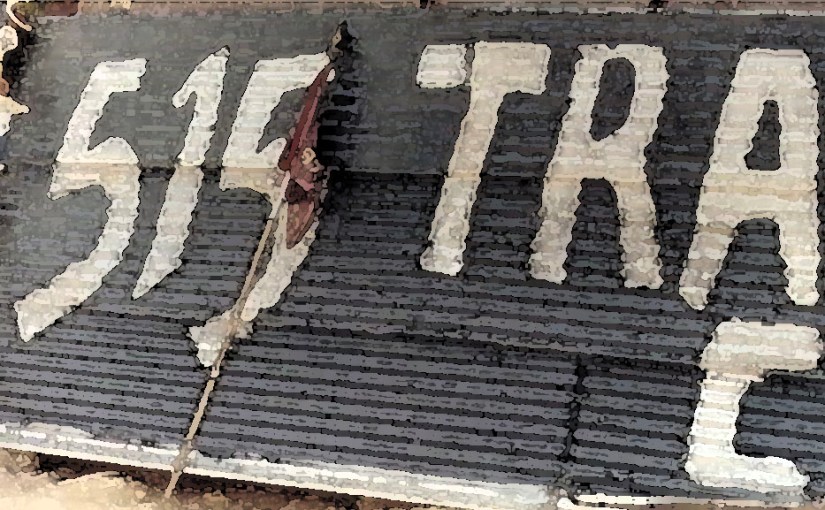
Dwight Wayne Washington was born and spent his early life in Detroit, Michigan. He was drafted into the Army in 1967 when he turned 18 and was sent to Vietnam.  Eventually he was assigned to the 515th Transportation Company in Cam Ranh Bay under Sergeant Mike Broussard.  Here he learned just about all there was to know about repairing cars and motors.

D.W. Washington2


Instead of going back to Detroit, D.W. decided to move to Vivian and continued to work for Mike in his filling station and auto repair shop for the next 40 years.  D.W. and Mike were best friends despite D.W.’s tendency to get drunk most weekends forcing Mike to drive by his house on Monday morning and get him up for another week of work (see song, “D.W.“).

D.W. died in 2011 shortly before his sixty-fifth birthday from congestive heart failure (see song “Out on Cross Lake“).

Vivian, Louisiana

1024px-Vivian_water_tower_IMG_5196

(Information taken from Wikipedia)

Vivian is a town in Caddo Parish, Louisiana, United States and is home to the Red Bud Festival. The population was 3,671 at the 2010 census, down from 4,031 in 2000.

Vivian is fifty miles from Texarkana, and that was about as close as you could get and still be in Louisiana. Vivian [is] surrounded by the smaller towns of Rodessa, Ida, Oil City, Belcher, Gilliam, and Hosston. Vivian was the ‘urban center’ where citizens from the smaller towns came to shop, go to the movies, join in the excitement of city life as it was. For local residents, Vivian was the hub of the universe. At least it was the ‘Heart of the ArkLaTex,’ as folks down there liked to claim.