“To Pay the Debt”


LOCATION: Alabama; Texas
PERIOD: 1955-2015
DRAMATIS PERSONAE: Frank Roy “Th’ Cunn’l” Cooper (1823-1865); Luther “Luth” Cooper (1827-1876); Charles “Charlie” Cooper  (1918-2015); Lucas Keith Cooper (1897-1965); Luther “Sonny Boy” Cooper (1925-1965); Henry Barbour (1848-1924); Charles Thomas Barbour (1933-1955).


Charles “Charlie” Cooper  (1918-2013) was the oldest remaining link to a Cooper family dispute tht had raged for 100 years.  The patriarch of the family was Frank Roy “Th’ Cunn’l” Cooper (1823-1865), who fought and died in the Civil War.  He’d owned a slave, Henry Barbour (1848-1924), who was treated not as a slave but as Frank Cooper’s partner and trusted aide.  Cooper was an engineer, architect, and builder and Henry served as his construction foreman, overseeing all the work.

Frank Cooper was killed in the last battle of the war on April 14, 1865, a week after Lee surrendered at Appomattox, however word had not gotten to the western theater and fighting had continued. After Frank’s death, Henry managed the plantation, the various businesses, and supported Frank’s widow until she died.  Henry Barbour also erected a memorial gravestone, with the inscription “placed in lasting remembrance of the love and gratitude he felt for his lost friend and former master.”

Frank Cooper had a half brother, same father – different mother, Luther “Luth” Cooper (1827-1876).  Luth was nothing like Frank: intolerant, angry, resentful, and a racist – essentially the opposite of Frank Cooper.  Three generations later, Luther’s toxic line of the Cooper family would produce Luther “Sonny Boy” Cooper (1925-1965) who would unwittingly be among the mob that lynched Henry Barbour’s great-grandson, Charles Thomas Barbour (1933-1955) on the night of July 10, 1955.

A decade later, 100 years to the day that Frank Cooper died in the last battle of the Civil war, Lucas Cooper, who knew the whole history of the Barbour family and their importance to the Coopers, fought and killed Sonny Cooper, his cousin, as well as dying himself in the struggle.


TO PAY THE DEBT
(F. D. Leone, Jr.)

“I’m old and ornery, got a lot to say;
Be ninety-seven on my next birthday.
Went to prison, twenty-five to life;
Sheriff claimed I shot my wife.”

“After forty I was paroled,
By then I was seventy years old.
That’s when I chose to make my exit,
Left Alabama for West Texas.”

“Frank & Luther Cooper were half brothers,
But were nothing like each other.
Frank, The Cunn’l, was Luther’s opposite;
Luther resentful, The Cunn’l tolerant.”

“Henry Barbour was Cunn’l Cooper’s slave;
Cunn’l treated Henry equal all his days.
My daddy Lucas knew the good Henry done;
And how a Cooper killed his great-grandson.”

The cards have been dealt,
The devil took the bet;
It’s way too late today …
To pay the debt.

“Luth’s great-grandson Sonny was no good;
Ran around in a sheet and hood.
I’m going back to 1955,
That July night Charlie Barbour died.”

“He was lynched by the Klan,
Just because he was a black man.
My cousin Sonny drank whiskey to forget;
Some secrets can’t be kept.”

“Daddy swore to avenge Charlie’s death,
And he did when he got the chance.
He met Sonny on the 14th Street bridge;
Daddy was both jury and judge.”

“They fought and both tumbled down,
Into rushing water muddy brown.
Two Coopers lived; two Coopers died;
April 14, 1965.”

The cards have been dealt,
The devil took the bet;
It’s way too late today …
To pay the debt.

© 2025 Frank David Leone, Jr./Highway 80 Music (ASCAP). The songs and stories on the Highway 80 Stories website are works of fiction. Names, characters, businesses, places, events, locales, and incidents are either the products of the author’s imagination or used in a fictitious manner. Any resemblance to actual persons, living or dead, or actual events is purely coincidental.
“The Puppet”


LOCATION: Alabama
PERIOD: July, 1955
DRAMATIS PERSONAE: Lucas “Sonny Boy” Cooper (1925-1965); Charles Thomas Barbour (1933-1955); Jack Curry (1926-2014)


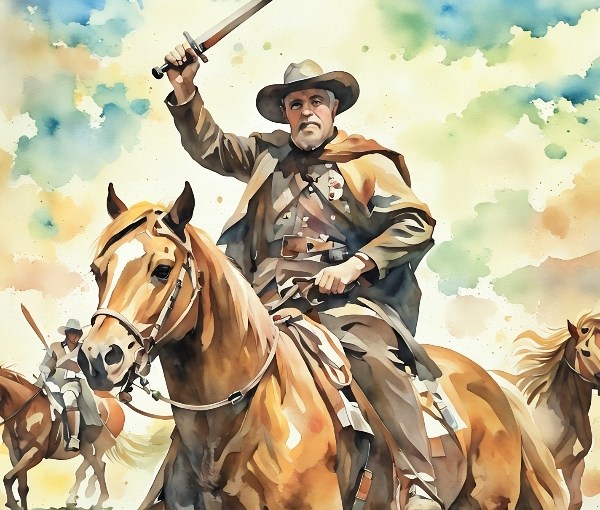
Lucas “Sonny Boy” Cooper (1925-1965) grew up in Jim Crow Alabama, 1940s-1950s and absorbed the prevailing attitudes about race, integration, and justice.  Most people of the time still harbored resentments about the outcome of the Civil War, Federal interference in their society, and African-Americans in general.

This song takes place in the summer of 1955 when a gang of whites, Sonny Cooper among them, kidnap Charlie Barbur, not yet 22 at the time, and hang him.  In 1955, 14-year-old Emmett Till was brutally murdered for allegedly flirting with a white woman. Till’s murder and subsequent injustice deeply affected the Black community and galvanized a young generation of Black people to join the Civil Rights Movement.

For the next ten years Sonny Cooper was haunted by this lynching, and would himself die in a violent attack in 1965; killed by his half cousin in a fight.


THE PUPPET
(F. D. Leone, Jr.)

A crow calls from somewhere,
Answered only by silence.
The peace that is out there,
Will soon be shattered by violence.
Sonny watches in the fading light,
Children playing in their yards.
Sonny won’t return until midnight;
Bitter, sad, scared, and scarred.

Jack arrives to pick him up,
Sonny hopes for the last time.
He joins the others in the truck,
Someone hands him a jar of moonshine.
They’re laughing, feeling good,
Excited in anticipation;
What they’re about is understood;
Sonny sweats in quiet resignation.

Sonny Cooper is a puppet,
Unsure of who’s pulling the strings.
He mostly avoids the subject;
It’s more complicated than it seems.
All his life Sonny’s heard:
“We must protect our culture;”
Charlie Barbour is a cardboard character,
“Just another black motherfucker.”

They were all pretty tight,
After drinking that whole jar.
Could hardly see the boy that night;
He looked blacker than a pot of tar.
They stop and jump out of the truck;
Grab him and tie his hands.
Just Charlie Barbour’s bad luck;
They could smell he shit his pants.

They found a tall oak tree,
Put a rope around Charlie’s neck.
The boy tried to break free;
Sonny’s nerves, by now, were a wreck.
It took longer than anyone had thought,
Seemed to take forever for him to die.
They stood and stared, no one talked;
1955, Alabama; July.

Sonny’s father and his father before him,
Taught Son what he should believe.
Sonny tries but can’t ignore them;
It’s a tragic inheritance he received.
Sonny won’t forget that tortured face,
The bulging eyes; the frozen grin.
It’s an image he can’t erase;
Sonny walks haunted by shame and sin.

© 2025 Frank David Leone, Jr./Highway 80 Music (ASCAP). The songs and stories on the Highway 80 Stories website are works of fiction. Names, characters, businesses, places, events, locales, and incidents are either the products of the author’s imagination or used in a fictitious manner. Any resemblance to actual persons, living or dead, or actual events is purely coincidental.

“The Ballad of Cunn’l Cooper”


LOCATION: Russell County, Alabama; Columbus, GA; Girard, AL
PERIOD: 1850s-1960s
DRAMATIS PERSONAE: Roy Cooper (1794-1858); Mary O’Neill (1801-1826); Edith Carter (1799-1872); Frank Roy “Th’ Cunn’l” Cooper (1823-1865); Luther “Sonny Ray” Cooper (1827-1876); Lucas Keith Cooper (1887-1965); Henry Barbour (1848-1924); Charles Thomas Barbour (1933-1955).


Henry Barbour was part Black and part Catawba Indian was brought as a slave to eastern Alabama by his owner Frank Roy “Th’ Cunn’l” Cooper. Cooper fought and died in the last battle of the War Between the States, which took place near the 14th Street Bridge across the Chattahoochee River on April 16th, 1865. The news of Lee’s surrender at Appomattox a week earlier had not reached Alabama yet.

Th’ Cunn’l was a contractor and builder, and Barbour was his labor foreman, constructing most of the first houses of Columbus, Georgia and Girard, Alabama. After Th ‘Cunn’l’s death, Barbour provided for his widow as long as she lived.

During Reconstruction, Barbour served in the Alabama legislature as a representative from Russell County. Over his former owner’s grave, Barbour erected a shaft with an inscription stating that the stone was placed by Henry Barbour in lasting remembrance of the love and gratitude he felt for his lost friend and former master.

Roy Cooper (1794-1858), Th’ Cunn’l’s father, had a second wife, Edith Carter (1799-1872), who he married after his first wife, Mary O’Neill (1801-1826), died giving birth to his second son, Lucas Neil Cooper (1826-1901).  This second family would produce Frank’s half brother, Luther “Sonny Ray” Cooper (1827-1876).

“Sonny Ray”  rode with Bedford Forrest, and together after the war, they were early members of the Ku Klux Klan (KKK), which was formed by six veterans of the Confederate Army in Pulaski, Tennessee, during the spring of 1866.  Two years after Appomattox, Forrest was reincarnated as grand wizard of the Ku Klux Klan. As the Klan’s first national leader, he became the Lost Cause of the Confederacy’s avenging angel, galvanizing a loose collection of boyish secret social clubs into a reactionary instrument of terror.

But their activities were mostly limited to harassing Federal troops attempting to enforce the new laws of Reconstruction (1865-1877). Forrest also hoped to persuade black voters that returning to their pre-war state of bondage was in their best interest.

Because of the essentially ungovernability of the larger membership of the KKK, and a number of what Forrest thought of as counterproductive violent attacks and lynchings, he announced the dissolution of the organization, and officially left the group. The Klan remained mostly dormant until the early 1910s.

This second iteration of the Klan was the first to use cross burnings and standardized white-hooded robes. The KKK of the 1920s had a nationwide membership in the millions and reflected a cross-section of the native born white Protestant population. The third and current Klan formed in the mid 20th century, was largely a reaction to the growing civil rights movement. It used murder and bombings to achieve its aims.

Each  generation of the Cooper family, after  Lucas “Sonny Ray” Cooper were sympathetic to the Klan,imbibed it’s racist ideology, and were mostly white supremacists.  It was Sonny Ray’s great-grandson, Lucas “Sonny Boy” Cooper (1935-1965), who would be among the mob that lynched Henry Barbour’s great-grandson, Charles Thomas Barbour (1933-1955) in 1955.

Ten years later, the narrator of this song, Lucas Keith Cooper (1887-1965), would confront Sonny Boy. They would fight, both dying from their wounds – 100 years to the day of the death of Frank Roy Cooper.


THE BALLAD OF CUNN’L COOPER
(F. D. Leone, Jr.)

My name is Lucas Cooper;
I died in 1965.
Hundred years from the day,
My grandpa Frank died.
Th’ Cunn’l was killed,
16th of April.
The last battle of the war,
A final betrayal.
 
Way down;
Way down.
Soldier fights a cause lost,
On bloody Southern ground.
Way down;
Way down.
All the rest is talk,
An empty sound; way down.
 
Henry Barbour was a slave;
Part Black, part Catawba Injun.
Worked for Th’ Cunn’l,
Supervising construction.
Provided for his widow,
Long as she was livin’.
Carved grandpa’s tombstone,
With a loving inscription.
 
Way down;
Way down.
Folks will surprise you,
Step out from the crowd.
Way down;
Way down.
Stand beside you,
On common ground; way down.

Grandpa had a half-brother,
Cut from a different cloth.
Th’ Cunn’l was a Christian;
Luther had no god or law.
That’s what he passed down,
Till it produced the one,
Who was in the mob that hanged,
Henry Barbour’s great-grandson.
 
Way down;
Way down.
Destiny foretold,
Around a neck a noose is wound.
Way down;
Way down.
History is a long road,
Twisting around; way down.
 
That fella, Sonny Boy Cooper,
Lived ’til 1965.
When he stumbled cross my path;
We fought; we died.
Sank like lead,
The die had been cast.
The past ain’t dead,
It ain’t even past.
 
Way down;
Way down.
Our stars crossed;
In an Alabama town.
Way down;
Way down.
Battles had been fought,
Been lost; been found; way down.

© 2025 Frank David Leone, Jr./Highway 80 Music (ASCAP). The songs and stories on the Highway 80 Stories website are works of fiction. Names, characters, businesses, places, events, locales, and incidents are either the products of the author’s imagination or used in a fictitious manner. Any resemblance to actual persons, living or dead, or actual events is purely coincidental.

“Let Her Run”


LOCATION: Bellamy, Alabama and surrounding area
PERIOD: 1990s
DRAMATIS PERSONAE: Rosalie Broussard (1969); Tullison “”Tully”” Tate (1965-1993); Tammy Tate (1991); Michelle Tate (1991)


Rosalie Broussard was a restless girl from a very young age. She would often wander off, not telling her parents anything, causing them to worry. Rosalie was precocious, sexually mature for her age. She got herself pregnant before she was sixteen and decided to have the baby, a boy, whom she chose to name James (b. 1985).

Rosalie married Tully Tate, and they went to live in Bellamy, Alabama, leaving James behind with Rosalie’s father. Rosalie and Tully had twin girls a few years later.

Throughout these early years of her marriage, Rosalie would run off from time to time, forcing Tully to find her and bring her back, only to run off again a few weeks later.

Finally, Tully just gave up on her and let Rosalie run.


LET HER RUN
(F. D. Leone, Jr.)

Rosalie Broussard just turned sixteen
She likes movie magazines
Spends hours in her room alone
But Rosalie’s barely hanging on
 
She hasn’t told her parents yet
Robert Abbott said it’s either him or it
Under her pillow there’s a list of names
She circled in red Jenny and James
 
Tully Tate drove a log truck
From Hosston to Bastrop
Rosalie met Tully one Friday night
For once everything felt just right
 
Tully was from Alabama
He and Rosalie left Louisiana
Got in his truck and drove all night
After leaving James with her daddy Mike
 
Rosalie’s restless as it gets dark
Listening to the wind outside and a dog bark
She’s stir crazy in that little town
Bellamy, Alabama’s all shut down
 
Tully works at the WestRock paper plant
Rosalie’ll wander off when she feels trapped
Leaving eggs frying in the pan
Tully just can’t understand
 
Rosalie don’t know why she has to roam
Tully always found her and brought her home
Later she hates the harm she’s done
One day Tully’s just gonna let her run 

© 2020 Frank David Leone, Jr./Highway 80 Music (ASCAP). The songs and stories on the Highway 80 Stories website are works of fiction. Names, characters, businesses, places, events, locales, and incidents are either the products of the author’s imagination or used in a fictitious manner. Any resemblance to actual persons, living or dead, or actual events is purely coincidental.

“James”


LOCATION: Vivian, Louisiana
PERIOD: 1993
DRAMATIS PERSONAE: James Michael Broussard (1985); Rosalie Broussard (1969); Robert Abbott (1965); Michael James “Sarge” Broussard (1948-2014); MaeAnn Murphy (1956)


Rosalie Broussard found her self pregnant a week after turning sixteen (see song “Jenny or James“).  Though her boyfriend wanted her to have an abortion, and even offered her the money, she refused, because Rosalie had a naive understanding about what having a baby really meant, and also because she just didn’t like the idea.  However, she eventually realized she couldn’t handle the responsibility and when James was three she handed him over to her father and his second wife, MaeAnn.

When Rosalie was twenty she left Vivian, Louisiana and married Tully Tate, a man she met while waitressing at a truck stop.  They had twin girls and lived in Mobile, Alabama.  But Rosalie never could make peace with domestic life and would run off from time to time, ech time Tully would find and bring her back home (see song “What Tully’s Done“).  But eventually he grew tired of chasing after his runaway wife and Rosalie finally left that family as well (see song “Rosalie“).

Mike and MaeAnn dearly loved James since they saw that his mother had not shown him the natural love of a mother.  But James still felt an emptiness which was only relieved when he played catch with his grandpa.


JAMES
(F. D. Leone, Jr.)

James was Wednesday’s child, full of woe
His mama left when he was just three years old
Rosalie was only sixteen when she had him
Left him with her parents; he was raised by them
 
James grew up wondering if he’d done something wrong
That made his mama leave him at his grandpa’s home
His father was a shadow, a name that wasn’t said
But Mike and MaeAnn did their best
 
When James played catch with Mike
For a little while everything seemed alright
A peaceful feeling settled in with the dimming light
On those summer days when James played catch with Mike
 
He overheard bits and pieces about his mama’s life
She was living in Mobile, a truck driver’s wife
At Christmas she might visit but wouldn’t stay too long
Gave James some toy he’d long ago outgrown
 
MaeAnn said he had twin sisters in Mobile
James really hoped that they had a better deal
But soon Rosalie would run off from them too
It seemed that’s all his mama was cut out to do
 
When James played catch with Mike
For a little while everything seemed alright
A peaceful feeling settled in with the dimming light
On those summer days when James played catch with Mike

© 2019 Frank David Leone, Jr./Highway 80 Music (ASCAP). The songs and stories on the Highway 80 Stories website are works of fiction. Names, characters, businesses, places, events, locales, and incidents are either the products of the author’s imagination or used in a fictitious manner. Any resemblance to actual persons, living or dead, or actual events is purely coincidental.

“The Black Belt”


LOCATION: Marengo County, Alabama
PERIOD: 1965
DRAMATIS PERSONAE: Billy Joe Sparks (1930-1999); Mason Sparks (1899-1956); Mary Hooper (1932); Archie Lee Sparks (1815-1887); Harold Lamont Sparks (1842-1901); Mason Sparks (1899-1956)


Billy Joe Sparks (1930-1999) was thirty-five when this song is set.  His family has been share-cropping the same land for five generations going back to his G-G-Grandfather, Archie Lee Sparks (1815-1887).  This land was rich, dark, and provided a decent living for all those generations of the Spaks family.

So, during the fifties and sixties when the Civil Rights Movement began to fill the newspapers and finally reaching Marengo County, Alabama, certain resentments appeared in Billy Joe’s mind.

Billy Joe’s G-Grandfather, Harold Lamont Sparks (1842-1901), fought in the Civil war, and was among the first members of the Ku Klux Klan, ridding along  with Nathan Bedfor Forrest – never surrendering to the Yankees. And his father Mason Sparks (1899-1956) was killed in a KKK raid in 1956, and Billy Joe absorbed all of this history, although he did not think of himself as a racist.


THE BLACK BELT
(F. D. Leone, Jr.)

The Black Belt is known for the richest dirt
But it’s drenched in a history of hurt
Cotton is king and defines life round here
Row after row under the gun of an overseer
The Black Belt runs across this whole state
The Alabama River carries tons of freight
Down to Mobile and the markets cross the seas
The Black Belt reaches 360 degrees

The Black Belt got its name from the color of the soil
But also by the color of the skin of those who toil
Lincoln freed the slaves in 1863
But a hundred years later looks ’bout the same to me

I’m white and poor as they come
I ain’t got nothin’ but I ain’t dumb
I know that just by being white I’ve have more
Than what a better black man can ever hope for

The Black Belt got its name from the color of the soil
But also by the color of the skin of those who toil
Lincoln freed the slaves in1863
But a hundred years later looks about the same to me
A hundred years later looks about the same to me

© 2022 Frank David Leone, Jr./Highway 80 Music (ASCAP). The songs and stories on the Highway 80 Stories website are works of fiction. Names, characters, businesses, places, events, locales, and incidents are either the products of the author’s imagination or used in a fictitious manner. Any resemblance to actual persons, living or dead, or actual events is purely coincidental.
“Magomry”


LOCATION: Montgomery County, Alabama, along US 80
PERIOD: 1923
DRAMATIS PERSONAE: Maclin Hooper (1877-1955), Lamar Hooper (1907-1969)


Mac Hooper was a tenant farmer in Montgomery County, Alabama, growing cotton, corn, and sorghum. He depended upon his son, Lamar, to help with the farm work, but Lamar hated farm work and couldn’t wait to take off for the nearest city, Montgomery which was about 50 miles down Highway 80 East.

Lamar Hooper was Levi Hooper’s grandfather.


MAGOMERY
(F. D. Leone, Jr.)

I been dreamin’ about Magomry
This stinkin’ farm is his, and he can have it
My hands are calloused, and ugly
I want my own life, that’s all I’m askin’
I’m sixteen and I made a choice
It’s branded on my heart, and in my soul
I’ve had my fill of my father’s voice
There’s a fire in me, I can’t control
 
Magomry is just down the road 
Where I wanna be, where I need to go 
Gonna get out from under my old man
Magomry is the answer to who I am
 
I guess my dad once had dreams
Somewhere along the way he give up on them
Now he looks around for someone to blame
And I sure don’t want to end up like him
In Magomry the first thing I’ll do
I take a long walk down those wide sunny streets
I’m sure in a week or two
Get me a good job and it’ll be sweet
 
Magomry is just down the road 
Where I wanna be, where I need to go 
Gonna get out from under my old man
Magomry is the answer to who I am
Gonna get out while I still can
Magomry is the answer to who I am
 
My father left all his dreams behind
He’s doing his best to kill mine too
When I see that city limit sign
My dreams will start, coming true

© 2022 Frank David Leone, Jr./Highway 80 Music (ASCAP). The songs and stories on the Highway 80 Stories website are works of fiction. Names, characters, businesses, places, events, locales, and incidents are either the products of the author’s imagination or used in a fictitious manner. Any resemblance to actual persons, living or dead, or actual events is purely coincidental.

“Tuscaloosa”


LOCATION: Montgomery County, Alabama; Tuscaloosa.
PERIOD: 1928-1931
DRAMATIS PERSONAE: Lamar Hooper (1907-1969); Katherine George (1910-1994)


Lamar Hooper grew up on a farm in Montgomery County Alabama, but was a restless teenager whop left home at 15 and went to the “big city” of Montgomery.  After a few years he met a young lady, Katherine George, and they began dating. But Katherine was also restless, and she would often take off for parts unknown.

This song is about one of her escapades in Tuscaloosa, where life was a bit more exciting, what with the college there and plenty of young folk, who were living the life in the Jazz Age.

Lamar would dutifully trail after Katherine.

Lamar and Katherine hung around Tuscaloosa, where their romance blossomed and they fell deeply in love.  Eventually they would would return to Montgomery and their more conventional lifestyle.  These little adventures would cease once the Depression hit, when merely surviving took all their energies and attention.

They married in 1931, and had three children, the oldest, Leon Hooper (1933-1975) was the father of Levi Hooper (1973) (more of whom can be learned about in several other Highway 80 songs).

By the time Leon was born Lamar and Katherine had relocated to Jackson, Mississippi, in the constant pursuit of employment and a better life.


TUSCALOOSA
(F. D. Leone, Jr.)

8th of May,
Katherine fled,
Tuscaloosa.
I coulda stayed,
Hit the road instead;
Tuscaloosa.
A place, a time,
The scene of a crime;
It all remains,
In my head;
Tuscaloosa.

Keep my pride
Hidden away;
Thought I knew her.
Dawn sky;
Iron grey,
Tuscaloosa.
I wonder if Katherine was,
Ever, really, in love?
Overnight,
Frost on the clay;
Tuscaloosa.

Downhill;
A road alone,
Don’ wanna lose her.
Whippoorwill’s
Lonesome song;
Tuscaloosa.
Sun’s going down,
Another dirt road town.
I’ll drive until,
She’s too far gone;
Tuscaloosa.

White line,
Leads to a door;
Straight to her.
City sign,
Ten miles more;
Tuscaloosa.
An ashtray was left,
Full of lipstick tipped cigarettes;
In our two-lane
Motel court;
Tuscaloosa.

© 2023 Frank David Leone, Jr./Highway 80 Music (ASCAP). The songs and stories on the Highway 80 Stories website are works of fiction. Names, characters, businesses, places, events, locales, and incidents are either the products of the author’s imagination or used in a fictitious manner. Any resemblance to actual persons, living or dead, or actual events is purely coincidental.

“Lamar and Katherine Fall in Love”


LOCATION: Tuscaloosa, Montgomery, Alabama
PERIOD: 1928-1931
DRAMATIS PERSONAE: Katherine George (1910); Lamar Hooper (1907-1969)


After Katherine pulled one of her disappearing acts, Lamar followed and found her in Tuscaloosa.  She’d been partying with a bunch of college kids, living life large. This was 1928, and for a couple of years, this was their life which was typical during the “Jazz Age.”

But since all good things must come to an end, so did this in October 1929, and The Depression.

Kathy and Lamar did what most young people do when trouble finds them: they went home, to Montgomery.  There Lamar went to work at his father’s mill, and Katherine settled into the life as wife and mother.


LAMAR AND KATHERINE FALL IN LOVE
(F. D. Leone, Jr.)

Lamar finally found Katherine;
On a barge, partyin’
Been goin’ for a couple of weeks;
It was nineteen and twenty eight;
Th’ height of the Jazz Age;
They hardly stop’d to eat or sleep.
Ain’ the way it’s spose to happen, but it did;
They fell in love.

Hung ‘roun Tuscaloosa awhile
Livin’ large, goin’ wild;
Drinkin’ too much, makin’ new friends.
Katherine led and Lamar tagged along,
Out every night dusk to dawn;
Burning their candle at both ends.
They were young, just a coupla kids;
When they fell in love.

You don’t choose,
The one who’ll break your heart;
All you can do,
Is play a little part.
Tha’s why they call it fallin’ when it does;
You’re in love.

Right about then the Depression hit,
These two kids hit the skids;
So they went back home to Magomry.
Lamar got a job at his daddy’s mill,
They lived in a little house on a hill;
Settled down and started a family.
Just the way it’s spose to happen, and it did;
They’re in love.

Lamar made a little bootleg shine,
But didn’t drink at all this time;
Katherine was known for her fig preserves.
She called him Pop, he called her Mother;
Had one child after another,
After three Kath still had her curves.
They were young, but no longer kids;
And they were in love.

You don’t choose,
The one who’ll break your heart;
All you can do,
Is play a little part.
Tha’s why they call it fallin’ when it does;
You’re in love.

© 2025 Frank David Leone, Jr./Highway 80 Music (ASCAP). The songs and stories on the Highway 80 Stories website are works of fiction. Names, characters, businesses, places, events, locales, and incidents are either the products of the author’s imagination or used in a fictitious manner. Any resemblance to actual persons, living or dead, or actual events is purely coincidental.

“Tuskegee”


LOCATION: Tuskegee, Alabama
PERIOD: 1933-1963
DRAMATIS PERSONAE: Luther Harper (1898-1963); Louise Stoner (1900-1953)


The Tuskegee Syphilis Study was a study conducted between 1932 and 1972 by the United States Public Health Service (PHS) and the Centers for Disease Control and Prevention (CDC) on a group of nearly 400 African American men with syphilis. The purpose of the study was to observe the effects of the disease when untreated, though by the end of the study medical advancements meant it was entirely treatable. The men were not informed of the nature of the experiment, and more than 100 died as a result.

Luther Harper was one of these men. He contracted the disease while serving in the Navy in the Pacific islands.  Ironically he did not die from it, although he accidentally infected his wife who did succumb to the disease.


TUSKEGEE
(F. D. Leone, Jr.)

Luther picked at the scab on his palm
As he softly chanted the 23rd psalm
He’d been at his hand with his pocketknife
Making the marks of the crucified Christ
Luther reads his Bible everyday
Calls it reading but he just stares at the page
A sister lady taught him from the book
She also got him work as a fry cook

That was before Tuskegee
March 23rd, 1933
Which is why that psalm is the one he knew
Luther honed his blade on the sole of his shoe

The doctors said they could heal him
But Luther believed they would kill him
His father’d said you can’t trust a white man
Luther softly hummed and dug at his hand
He relied on his wife, sweet Louise
She died this year from his disease
Luther wonders why her, and not him
He recites the words to his psalm again

That was after Tuskegee
March 23rd, 1953
Which is why that psalm is the one he sang
Luther used his blade and climbed into the pain

Luther picked at the scab on his palm
His wife had always been like a balm
He lived ten more years but succumbed to the disease
The last word on his lips was Louise
He cursed himself, the doctors, and Tuskegee
But the last word on his lips was Louise

© 2022 Frank David Leone, Jr./Highway 80 Music (ASCAP). The songs and stories on the Highway 80 Stories website are works of fiction. Names, characters, businesses, places, events, locales, and incidents are either the products of the author’s imagination or used in a fictitious manner. Any resemblance to actual persons, living or dead, or actual events is purely coincidental.