“Rosalie”


LOCATION: Mobile, Alabama
PERIOD: 1980s-90s
DRAMATIS PERSONAE: Rosalie Broussard (1967); Tullison “Tully” Tate (1965-1993)


Rosalie Broussard Tate has a history of running away from any relationship she is in.  This time she has run from her marriage leaving her husband Tully Tate and their twin girls at home.


ROSALIE
(F. D. Leone, Jr.)

In a cocktail lounge in Mobile
Just about closing time
Empty shot glass on her table
Rosalie shuts her eyes

Tully would always find her
Bring her home in the past
Rosalie looks around her
Guess he gave up at last

Anytime anyone loves her
Soon she’ll be gone
To the dim lights of a barroom
Where she feels she belongs
Mistrusting human kindness
She’d rather be alone
Telling herself she’s free
Rosalie, ah, Rosalie

She’d like to kick the habit
Always choosing to run
Since she was sixteen
It’s what she’s relied upon

There’s a devil lying to her
Whispering in her ear
She wants to ignore it, but
It’s the strongest voice she hears

Anytime anyone loves her
Soon she’ll be gone
To the dim lights of a barroom
Where she feels she belongs
Mistrusting human kindness
She’d rather be alone
Telling herself she’s free
Rosalie, ah, Rosalie

© 2018 Frank David Leone, Jr./Highway 80 Music (ASCAP). The songs and stories on the Highway 80 Stories website are works of fiction. Names, characters, businesses, places, events, locales, and incidents are either the products of the author’s imagination or used in a fictitious manner. Any resemblance to actual persons, living or dead, or actual events is purely coincidental.

“Demopolis, Alabama”


LOCATION: Demopolis, Alabama; Shreveport, Louisiana
PERIOD: 2016-2018
DRAMATIS PERSONAE: James Matt Broussard (1985); Michael James “Sarge” Broussard (1948-2014); Rosalie Broussard (1969)


James Matt Broussard (1985) is the grandson of Michael James “Sarge” Broussard (1948-2014), whose daughter Rosalie Broussard (1969) gave birth to James when she was sixteen (see song “James“).

Even though Rosalie Broussard was from Vivian, Louisiana, she had James in Shreveport, where she lived initially after giving birth. Eventually she left James with her parents and went to Alabama with a guy she ended up marrying, Tully Tate.

Once James turned 18 he also moved to Shreveport.  This song describes a two-year period, from 2016 to 2018, when James lived in Demopolis, Alabama.  He was interested in Alabama since that was where he thought his mother was.  He had taken up with a woman in Shreveport who was from Demopolis and she convinced him to move to Alabama with her.

That relationship didn’t last, but James didn’t immediately leave Demopolis. Maybe, he had in the back of his mind that he might get back together with the woman. But once James realized that he didn’t even like the woman, he finally decides to leave Alabama and return to Shreveport.

James enjoyed shooting guns; something about shooting lifted his spirits. So, on his way out of town he stops at a pawn shop to see what kind of guns they had, but unbeknownst to James there was a robbery in progress. James instinctively tries to stop the holdup but the robber panics, takes a shot at James, missing by a wide margin.

That was enough for James, who runs to his truck and tears off on US 80 West to Shreveport. The robber also exits the pawn shop, ignorant of the fact that his getaway car has a bad fuel pump. He doesn’t get very far before it breaks down and he is apprehended without much trouble by a Marengo County Sheriff’s Deputy.


DEMOPOLIS, ALABAMA
(F. D. Leone, Jr.)

I was born in Shreveport, Louisiana
But for about the last two years now
Been living in Demopolis, Alabama
It ain’t never felt like home somehow

I came here on account of a woman
But we didn’t last too long
Stuck around, I guess, looking for something
Months ago I should’ve been gone

Gonna get my gun, get my gun
Wanna shoot some, shoot some
Buy some more, at the range
A pump shotgun, a thirty eight

There’s a market with a wooden Indian out front
An old man we called Shakespeare was the owner
It’s been there since the fifties, untouched
I put some pork rinds and a beer on the counter

Handed Shakespeare the cash for my provisions
I remarked that the Indian was a little weird
He said, “ain’t you ever heard of Hank Williams,
‘ Kaw-Liga’ was a pretty big hit ‘round here”

Gonna get my gun, get my gun
Wanna shoot some, shoot some
Gonna get my gun, change my mood
Wanna shoot some, improve my attitude

I’m sitting in my truck outside her house
She’s got a new boyfriend, from Alabama
I watch him take all her garbage out
Guess I’ll head on back to Louisiana

But before I do I stop at a pawn shop
A guy had a gun, “gimme all the cash,” he said
Without thinking I yell, “hey fella, stop”
He whirled around, threw a shot at at my head

Gonna get my gun, get my gun
Wanna shoot some, shoot some
Gonna get my gun, that’s what I’ll do
Put Demopolis, Alabama in my rear view

© 2020 Frank David Leone, Jr./Highway 80 Music (ASCAP). The songs and stories on the Highway 80 Stories website are works of fiction. Names, characters, businesses, places, events, locales, and incidents are either the products of the author’s imagination or used in a fictitious manner. Any resemblance to actual persons, living or dead, or actual events is purely coincidental.

“Levi, Ruby, and Cole”


LOCATION: Northwest Louisiana
PERIOD: 1860s
DRAMATIS PERSONAE: Levi Motts (1843-1864); Ruby Robison (1845-1933 ); Coleman Broussard (1842-1910)


Levi Motts and Coleman Broussard were cousins, and each one loved Ruby Robison and she loved them both, as well. Levi and Cole were Confederates, and fought at Mansfield. But Levi died that afternoon, leaving Ruby and Cole to carry on together.


LEVI, RUBY, AND COLE
(F. D. Leone, Jr.)

Cole was strong and steady
Straight as a rail
Levi was born ready
Always raisin’ hell
Ruby loved Levi all the way
But Cole was who she chose
Levi might grow up some day
But, who knows

Ruby knew Cole loved her
But Levi charmed her heart
Cole was down to earth
Levi sparkled like a star

The War broke this trio up
Only one came back home
Ruby had two loves
Levi and Cole

Cole knew he and Ruby
Would never have
The kind of magic love
She and Levi had
Just taking care of her
For Cole, it was enough
He ain’ the apple of her youth
But theirs was also love

Ruby knew Cole loved her
But Levi charmed her heart
Cole was down to earth
Levi sparkled like a star

© 2018 Frank David Leone, Jr./Highway 80 Music (ASCAP). The songs and stories on the Highway 80 Stories website are works of fiction. Names, characters, businesses, places, events, locales, and incidents are either the products of the author’s imagination or used in a fictitious manner. Any resemblance to actual persons, living or dead, or actual events is purely coincidental.
“Levi Motts Is My Name”


LOCATION: Northwest Louisiana
PERIOD: 1864
DRAMATIS PERSONAE: Levi Motts (1843-1864); Coleman Broussard (1842-1910); Ruby Robison (1845-1933); Pearl Robison (1864-1944)


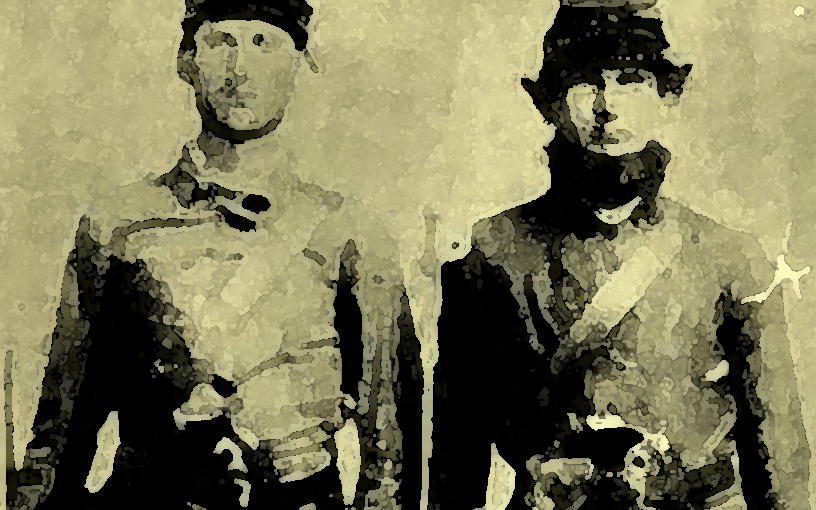
Mustering out of Monroe, Louisiana Levi and his cousin Coleman Broussard joined up with in Colonel Henry Gray’s brigade, the Louisiana Gray’s. It did not take them long to find their way to the burgeoning red light district of Shreveport. There Levi met and took up with one of the young sporting girls there, Ruby Robison. Cole was also smitten and Ruby seeing Levi for what he was, a rake and leaky vessel for her to place her future, encouraged Cole in his romantic dreams. They were a inseparable trio, the two kinsmen and the beautiful and fragile young whore hedging her bets, so to speak.

Despite Coleman’s obvious romantic aspirations, Ruby couldn’t deny her stronger feelings for Levi. Defying the conventions of the time she and Levi made plans for marriage as soon as the war was over. However, the Louisiana Grays were called up to confront the Union troops already marching towards Louisiana after conquering Vicksburg. Gray’s brigade is one of the units in Gen. Robert Taylor’s army tasked with stopping the Trans-Mississippi Campaign of Nathaniel Bank’s invading force at Mansfield.

While the Battle of Mansfield was a Confederate victory, Levi Motts was one of only about a hundred Southern men who died there on April 8, 1864. When he went into battle, Levi knew that Ruby was pregnant with their child. This child, a girl Ruby named Pearl, is born in late December of 1864. Because of her illegitimate status Pearl chose to use the name Robison for most of her life.


LEVI MOTTS IS MY NAME
(F. D. Leone, Jr.)

Levi Motts is my name
Come from Northwest Louisiana
I joined up with Colonel Gray
He said be ready to march today
Don’t know when I’ll be back again
If this war will ever end

Ruby Robison is my gal
Keeps a room down in the bottoms
We talked of gettin’ out of there
Make a new life anywhere
Don’t know when I’ll be back again
If this war will ever end

Ruby wrote me a letter
We were waitin’ outside Mansfield
Wrote there’s a baby on the way
We fought the Yankees April Eighth
Don’t know when I’ll be back again
If this war will ever end

Levi Motts is my name
Come from Northwest Louisiana
Lead ball went through my neck
That afternoon I bled to death
Don’t know when I’ll be back again
If this war will ever end

© 2017 Frank David Leone, Jr./Highway 80 Music (ASCAP). The songs and stories on the Highway 80 Stories website are works of fiction. Names, characters, businesses, places, events, locales, and incidents are either the products of the author’s imagination or used in a fictitious manner. Any resemblance to actual persons, living or dead, or actual events is purely coincidental.

“Fannin Street”


LOCATION: Shreveport, Louisiana: St. Paul’s Bottoms
PERIOD: 1860s
DRAMATIS PERSONAE: Ruby Robison (1845-1933); Levi Motts (1845-1864); Coleman Broussard (1842-1910); Pearl Robison (1864-1936); Lucas Broussard (1866-1934)


Ruby Robison (1845-1933), young prostitute on Fannin Street; has daughter, Pearl, with Confederate soldier Levi Motts. After learning that Levi is killed at the Battle of Mansfield in April, 1864, Ruby marries his cousin Coleman Broussard and has four other children.

Ruby came to Shreveport during the Civil War, perhaps with Union troops up the Red River from New Orleans following the occupation of that city. Born in Ireland in 1845, her family may have been among the large numbers of Irish immigrants who sought refuge in America during the potato famines of the mid-nineteenth century. She most likely resorted to prostitution as a means of survival.

Ruby had a room in one of the dozens of brothels in downtown Shreveport area around Fannin Street, but her life took an unexpected turn when she met Levi Motts. Ruby and Levi began to have serious feelings for each other and Levi swore that he would find a way to get her out of the life she’d known as a prostitute. But the war got in the way, sending Levi off to fight and die in the Battle of Mansfield (see songs, “Fannin Street” and “Levi Motts is My Name“).

Ruby had let Levi know of her pregnancy and she gave birth to a daughter in 1865, whom she named Pearl. Levi’s cousin, Coleman Broussard chose to marry Ruby and they had four children together. Their first son, Lucas was the great-grandfather of Mike “Sarge” Broussard.

Ruby lived to age of 88, living to see not only her daughter grow up, get married, and have children of her own, but well into the lives of her great-grandchildren.


FANNIN STREET
(F. D. Leone, Jr.)

On Fannin Street, Fannin Street
There’s a room upstairs for the men she meets
She’s not theirs and never was,
Just what she does
On Fannin Street

There was one boy, fine and sweet
Not like the rest of Fannin Street
The only one she ever loved
In the room above
Fannin Street

On Fannin Street, Fannin Street
There’s a room upstairs for the men she meets
She’s not theirs and never was,
Just what she does
On Fannin Street

The boy he said he’d take her away
From the life she led one day
He left for Mansfield to the restless beat
Of Marching feet
In columns of grey

On Fannin Street, Fannin Street
There’s a room upstairs for the men she meets
She’s not theirs and never was,
Just what she does
On Fannin Street

In her room alone Ruby Robison
Heard that the Rebels had won
She went to Mansfield but there she cried
For the baby inside
And the boy who was gone

On Fannin Street, Fannin Street
There’s a room upstairs for the men she meets
She’s not theirs and never was,
Just what she does
On Fannin Street

© 2017 Frank David Leone, Jr./Highway 80 Music (ASCAP). The songs and stories on the Highway 80 Stories website are works of fiction. Names, characters, businesses, places, events, locales, and incidents are either the products of the author’s imagination or used in a fictitious manner. Any resemblance to actual persons, living or dead, or actual events is purely coincidental.

“Hosston to Bastrop”


LOCATION: North Louisiana: Hosston, Springhill, Coushatta, Powhattan
PERIOD: 1990s
DRAMATIS PERSONAE: Tullison “Tully” Tate (1965-2013); Rosalie Broussard (1967); Sonny Tate (1936-1980)


Tully’s father was country singer Sonny Tate. Tully married Rosalie Broussard (born Vivian, LA; father, Mike “Sarge” Broussard) who was an unstable woman and runs off repeatedly from the family home. Initially after his marriage Tully and Rosalie lived in Mobile, Alabama but then they moved with their twin girls to Hosston, Louisiana. There he works at the Springhill pulp paper mill driving a timber truck and reconnects with his boyhood friends the Broussard and Thibodaux families.

Tully is a decent, hard-working, family man but who also likes to drink and party on occasion. His primary worry in life is his wife, Rosalie, who will disappear from time to time, leaving the twins unsupervised. For a while, Tully would track her down and bring her back home until, finally, he gives up and let’s her go.

Although his job in Springhill ended when they shut down the paper mill, he and his girls remained in Hosston until his death in 2013 after a short illness.


HOSSTON TO BASTROP
(F. D. Leone, Jr.)

I used to make my living driving a log truck
Hauling timber for the pulp paper mill
Take Highway 2, Hosston to Bastrop
Double back and unload at Springhill

The paper mill shut down, jobs all dried up
That stink it made, naw we sure don’t miss
Hear they gonna bring in a cross tie plant
Now we can smell them creosote pits

A case of beer on a Friday night
Fill a washtub with boiled shrimp and ice
We sure like get drunk and try to dance
We may be way up north but it’s still Louisian’

Gets real hot ’round here in the summer
August heat will melt the asphalt
Didn’t even hurt Randy Butcher when he got run’d over
His head was hard, the road was soft

A case of beer on a Friday night
Fill a washtub with boiled shrimp and ice
We sure like get drunk and try to dance
We may be way up north but it’s still Louisian’

Like to take my truck out One-Fifty-Seven
Stop at the Shongaloo Dairy Cup
Three-Seventy-One to Coushatta, then One to Powhatan
Just drive around where my daddy grew up

A case of beer on a Friday night
Fill a washtub with boiled shrimp and ice
We sure like get drunk and try to dance
We may be way up north but it’s still Louisian’

Betty Broussard brought her fiddle and bow
Someone gave a washboard to Greg Thibodeaux,
We sure like get drunk and try to dance
We may be way up north but it’s still Louisian’

© 2017 Frank David Leone, Jr./Highway 80 Music (ASCAP). The songs and stories on the Highway 80 Stories website are works of fiction. Names, characters, businesses, places, events, locales, and incidents are either the products of the author’s imagination or used in a fictitious manner. Any resemblance to actual persons, living or dead, or actual events is purely coincidental.

“James”

Rosalie Broussard found herself pregnant a week after turning sixteen (see song “Jenny or James“).  Though her boyfriend wanted her to have an abortion, and even offered her the money, she refused, because Rosalie had a naive understanding about what having a baby really meant, and also because she just didn’t like the idea.  However, she eventually realized she couldn’t handle the responsibility and when James was three she handed him over to her father and his second wife, MaeAnn.

When Rosalie was twenty she left Vivian, Louisiana and married Tully Tate, a man she met while waitressing at a truck stop.  They had twin girls and lived in Mobile, Alabama.  But Rosalie never could make peace with domestic life and would run off from time to time, each time Tully would find and bring her back home (see song “What Tully’s Done“).  But eventually he grew tired of chasing after his runaway wife and Rosalie finally left that family as well (see song “Rosalie“).

Mike and MaeAnn dearly loved James since they saw that his mother had not shown him the natural love of a mother.  But James still felt an emptiness which was only relieved when he played catch with his grandpa.

JAMES
(F.D. Leone, Jr.)

James was Wednesday’s child, full of woe
His mama left when he was just three years old
Rosalie was only sixteen when she had him
Left him with her parents; he was raised by them

James grew up wondering if he’d done something wrong
That made his mama leave him at his grandpa’s home
His father was a shadow, a name that wasn’t said
But Mike and MaeAnn did their best

When James played catch with Mike
For a little while everything seemed alright
A peaceful feeling settled in with the dimming light
On those summer days when James played catch with Mike

He overheard bits and pieces about his mama’s life
She was living in Mobile, a truck driver’s wife
At Christmas she might visit but wouldn’t stay too long
Gave James some toy he’d long ago outgrown

MaeAnn said he had twin sisters in Mobile
James really hoped that they had a better deal
But soon Rosalie would run off from them too
It seemed that’s all his mama was cut out to do

When James played catch with Mike
For a little while everything seemed alright
A peaceful feeling settled in with the dimming light
On those summer days when James played catch with Mike

© 2019 Frank David Leone, Jr./Highway 80 Music (ASCAP). The songs and stories on the Highway 80 Stories website are works of fiction. Names, characters, businesses, places, events, locales, and incidents are either the products of the author’s imagination or used in a fictitious manner. Any resemblance to actual persons, living or dead, or actual events is purely coincidental.

Cole Lucas Broussard (1946-1965)

Cole Lucas “Luke” Broussard was the older brother of Mike Broussard, and both were born in Vivian, Louisiana; Luke two years older than Mike. Luke and Mike were descendants of Confederate soldier Coleman Broussard (1842-1910).

Although they were born in Vivian their father moved the family moved to the “big city” of Shreveport in 1953, and one of the first things their father did was buy a new car, a Studebaker Champion.

Studebaker

As soon as he could, Luke learned to drive that car and he would drive around Shreveport, often taking his younger brother Mike along. Coming from Vivian, Shreveport offered what seemed to them a world of exciting things to do, and Luke introduced most of them to Mike (see song “Shreveport, 1963“).

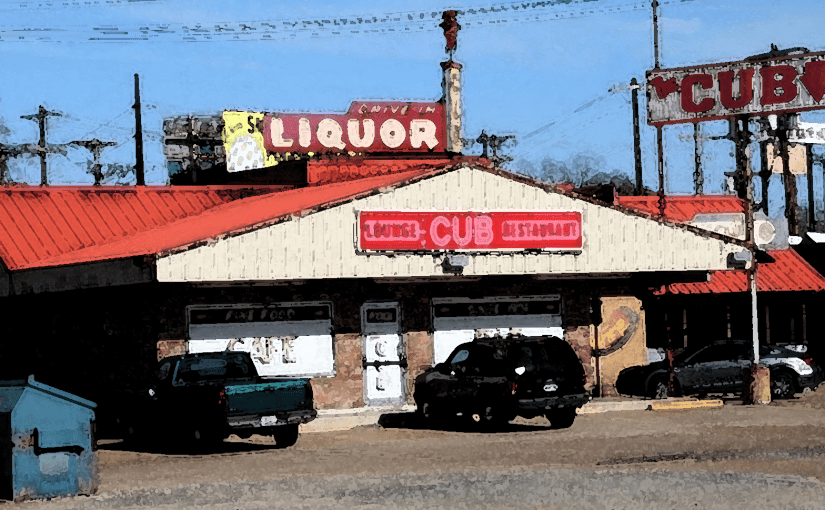
Things like going to the Cub drive-through liquor store and buying some whiskey which they’d put in a Coke. I guess the Cub’s management figured if you were old enough to drive, then you were old enough to drink.  However, in Shreveport in 1963, a sixteen year old was old enough to drive.

Luke and Mike would also cross the Red River and go to the Bossier strip because of all the bars and clubs.  Places like the Orbit Lounge, the Kickapoo, the Shindig, Sak’s Whisk-A-Go-Go, and many offered exotic dancers.  During the ’50s and ’60s it was a little Las Vegas.

One of the milder things they’d do was play pool, their favorite game was “cutthroat”.  Cutthroat involves three players who each divide up the balls 1-5, 6-10, 11-15 and the first to sink the other two player’s balls, while keeping his on the table, wins.  They got pretty good at hustling guys from Barksdale Air Force base, who never seemed to catch on to the fact that Mike and Luke were brothers, playing two against one.

They also loved eating the local foods, onion rings at the Kokomo, Strawn’s strawberry icebox pie and Southern Maid donuts.

If they had nothing else to do they would park out at the airport and watch the planes take off and land, and if they were really bored they’d drive to Longview, Texas, late at night.  Mike loved it when out of nowhere they’d see the Eastman chemical refinery all lit up like a magical city, reflected in the reservoir water.

Both Luke and Mike served in Vietnam, Luke received his induction notice shortly after turning eighteen.  He had been dating a girl, Cherie Shnexnaidre, but they had not married yet.  Just before reporting Luke and Cherie visited a justice of the peace and tied the knot. Cherie had gotten pregnant and they wanted to be married when she gave birth.  A son, Cody Cole, was born in 1965 just before Cherie got the telegram informing her of Luke’s death.

Mike was also drafted two years later, but he came back unharmed and lived a long life back in Vivian where he operated a Texaco gas station and repair shop. Mike took up the role of surrogate father to Cody Cole and later, when Cody was around sixteen, hired him to work at the filling station (see the song “Sarge“).

Mike never forgot those Shreveport summers and that was how he chose to remember his big brother Luke.

© 2018 Frank David Leone. The songs and stories on the Highway 80 Stories website are works of fiction. Names, characters, businesses, places, events, locales, and incidents are either the products of the author’s imagination or used in a fictitious manner. Any resemblance to actual persons, living or dead, or actual events is purely coincidental.
Coleman Broussard (1842-1910)

Coleman Broussard was a first cousin to Levi Motts and both fought for the Confederacy.  They also shared a love for Ruby Robison, fragile young prostitute in Shreveport.

Coleman was older than Levi by three years, and almost the complete opposite in character.  Levi was a rake and rounder whereas Cole was sober and straight-forward.  However, they both fell in love with Ruby, and the love was reciprocated by her to both, although Levi excited her imagination while Cole represented husband material.

Cole and Levi both joined up with the Rebels in Shreveport as soon as the war commenced. But while Levi saw the war as a great adventure, Cole was more clear-eyed about it and joined the fight out of a sense of duty but really to keep an eye on Levi.

Sadly, Levi died on the field at Mansfield, leaving Cole to return, alone, to Ruby, whom he married (see song “Levi, Ruby & Cole“).  He knew she was pregnant with Levi’s baby, and took on the responsibility of raising this baby girl, Pearl.  He and Ruby enjoyed a long marriage, having four children of their own and celebrating their 56th anniversary shortly before Cole died in 1910.

Mike “Sarge” Broussard (1948-2014)

Mike “Sarge” Broussard  (1948-2014).  Great-great grandson of Coleman Broussard (1842-1910).  Born in Vivian, Louisiana then his family moved to Shreveport in 1953. He had one brother, Cole Lucas Broussard (1946-1965), who was two years older than Mike.  They spent time in Shreveport before Luke was drafted and went off to Vietnam, where he was killed (see song “Shreveport, 1963“).  Prior to leaving for his overseas tour of duty, Luke married Cherie Shnexnaidre and had a son, Cody Cole (1965), who turned to Mike as a surrogate father figure.

Mike also served in the Vietnam War, 1966-1968, without incident and was honorably discharged with the rank of sergeant.  He owned a filing station/auto repair shop in Vivian.  Has a daughter, Rosalie Broussard (1969).

Mike comes from an old Louisianan Cajun family that first settled in Natchitoches, Louisiana in the late 18th century.  Later the family made its way north to Shreveport, then Vivian.  Coleman Broussard, Mike’s great-great-grandfather, was the cousin of Levi Motts who died during the Civil war, at the Battle of Mansfield, leaving behind his pregnant fiancée, Ruby Robison.  Coleman decides to ask Ruby to marry, a proposal she accepts, in order to legitimize his cousin’s child and they go on to have several more children.  These were Mike’s direct ancestors.

The Acadians, who descended from sturdy French peasant stock, originated during the sixteenth and seventeenth centuries in a colony known as Acadia in the present-day Canadian province of Nova Scotia. By the time Acadia fell to British control in 1713, the Acadians had become a close-knit, clannish, and culturally distinct group of French-speaking folk who had fashioned their own identity. But once the Acadians became British subjects, and for decades thereafter, they experienced continuing problems with their British overlords. In an effort to end these difficulties, Great Britain began a forced exportation program after the Acadians refused to take oaths of allegiance. The authorities relocated thousands of Acadians against their will in various colonies, including those of the Atlantic coast and the Caribbean. This mass movement, known in Acadian history as the dérangement, separated entire families.

cajun dispersion map

The migrating Acadians did not arrive in Louisiana as their initial destination, but some of them eventually found their way to the lower Mississippi from other New World colonies to which they had been exiled by the British. Thousands of Acadians arrived in Louisiana during the 1770s and 1780s. The Spanish government provided them with material assistance in establishing their farms. Most of the Acadians settled to the west of the Mississippi River in the bayou areas along the southwestern prairie. There they soon developed a unique rural lifestyle based on hunting and farming. The French inhabitants already in the colony shunned them, most likely because the Acadians appeared to them as unsophisticated and simple folk. These Acadians became the forebears of today’s Louisiana Cajuns.

Mike Broussard enlisted in the army during the Vietnam war and rose to the rank of sergeant.  He was good with cars and was assigned to the transport unit and served with distinction.  After the war he came back to Vivian and opened a Texaco filling station and repair shop, which he ran for over forty years (see song, “Sarge“).  Mike was married to Marie Martin.  They were married for 15 years before she was diagnosed with lung cancer and died in 1981 (see song “Mike & D.W.“).

He had one daughter, Rosalie, with whom he became estranged but not because of anything he did.  However, he did have a loving relationship with her son, James.  Rosalie had James when she was sixteen and Mike and his wife second wife Nina raised him.  When James was around ten, he and Mike would go in the back yard and play catch (see songs, “Jenny or James” and “Catch“).

Sarge lived a long and productive life, consistently honoring the service of military vets, dying in 2014.