“L’Maison d’Amour”

Location: San Francisco
Period: 1879-1886
Dramatis personae: Sally Ann Gray; patrons of brothel.


After Sally Ann and Spooner made it out to San Francisco, Spooner went back to Louisiana after a month or so, but Sally Ann stayed behind.

Initially she got work in a bar/brothel as a bartender, something she had been back home.  The madam, Marie LaBlanc, another Louisiana transplant, took Sally under her wing, and eventually gave her more and more responsibilities until Sally Ann was essentially her second in command.  While she did do some work as a prostitute, early on, over time she maneuvered herself more and more into management and took over upon Marie’s death, who had been killed by an obsessively jealous patron.

Sally spent seven years in San Francisco, and this song describes a typical night in which she verbally spars with a regular customer, who, while she fends of his advances, she acknowledges that he is certainly not the worst kind of man who visits the “house of love”.


L’MAISON D’AMOUR
(F. D. Leone, Jr.)

“Sally gal
Come over here
Sit in my lap
Whisper in my ear.
You know I love you,
Like a daughter;
Not like those other fellas,
Who don’t treat you like they oughta.”

“Harvey, get on,
You ol’ pervert;
You don’ smell good,
An ‘ need to change your shirt.
“Sally gal,
You used t’ be so prim ‘n’ proper;
You were as green,
As a grasshopper.”

“Didn’t take you long,
Before you learned th’ ropes;
Now you give us crusty buzzards,
Th’ straight dope;
Sally gal,
Come on ‘n’ sit in my lap.
Aw now, girl,
Don’t look at me like that.”

Next mornin’ now;
Outside a soft grey drizzle.
Sally is wonderin’,
How a dream can fizzle.
No time for that, no, no no;
No second or third thoughts.
Sally don’ waste time,
Dwellin’ on what she lost.

One by one,
Her girls come downstairs,
As usual, complainin’;
Sally silently swears.
She’s still young ‘n’ pretty,
But not a girl no more.
She’s th’ madam now:
L’maison d’amour.

Well, ol’ Harvey,
He ain’ so bad,
Better’n most of ’em;
He makes her laugh.
“Mary, ya’ll get started, and
Wash your coffee cups.
Get yourselves together, b’fore
They start showin’ up.”


CREDITS:
David Leone: guitar, vocal
Tammy Rogers: fiddle

Related songs in chronological order:
“Ballad of Black Jack Kelley and Spooner Magee”
“Sally Ann”
“A Day in the Life of Spooner Magee”
“L’Maison d’Amour”
“Aftermath”

© 2023 Frank David Leone, Jr./Highway 80 Music (ASCAP). The songs and stories on the Highway 80 Stories website are works of fiction. Names, characters, businesses, places, events, locales, and incidents are either the products of the author’s imagination or used in a fictitious manner. Any resemblance to actual persons, living or dead, or actual events is purely coincidental.

“Molly’s Got a Secret”


LOCATION: Delta, Louisiana; Vicksburg, Mississippi
PERIOD: 1943-2014
DRAMATIS PERSONAE: Molly Motts (1931-2014); Lamar Odom (1914-1960); Bessie Ferguson (1914-1966); Donald Motts  (1911-1977); Vernon Raney (1903-1987)


Molly Motts was sexually molested by her step-father in Delta, Louisiana from the age of 12. But Molly is resilient and refuses to identify herself as a victim. As soon as she was grown up enough she crossed the river to Vicksburg and attracted the attention of a prominent Mississippi man, Vernon Raney. Molly marries him and over time becomes the matriarchal figure of the Raney family whose criminal enterprises began with bootlegging and under Molly’s leadership branched out into marijuana and pills.


MOLLY’S GOT A SECRET
(F. D. Leone, Jr.)

Molly’s got a secret, a deep dark secret
She ain’t told, but don’t know if she can keep it
It’s burn’d a hole in her heart, all the way up to the skin
Once it’s out, it can’t be put back again

She’s protected him for so long
She knows he hurt her, knows it was wrong
She still feels guilty all the same
Even though she knows he’s the only one to blame

Molly’s got a secret, a deep dark secret
She ain’t told, but don’t know if she can keep it
It’s burn’d a hole in her heart, all the way up to the skin
Once it’s out, it can’t be put back again

Molly’s got a secret from years before
She can’t forget it, can’t live with it no more
She drinks a little too much, laughs a little too loud
When his name comes up she don’t wanna be around

Molly’s got a secret, a deep dark secret
She ain’t told, but don’t know if she can keep it
It’s burn’d a hole in her heart, all the way up to the skin
Once it’s out, it can’t be put back again

First chance she got she put Delta behind her
Won’t let what that man did define her
What happened in Delta she’s buried it deep
Her skin is thicker now, it’s a secret she can keep

Molly’s got a secret, a deep dark secret
She ain’t told, but don’t know if she can keep it
It’s burn’d a hole in her heart, all the way up to the skin
Once it’s out, it can’t be put back again

© 2019 Frank David Leone, Jr./Highway 80 Music (ASCAP). The songs and stories on the Highway 80 Stories website are works of fiction. Names, characters, businesses, places, events, locales, and incidents are either the products of the author’s imagination or used in a fictitious manner. Any resemblance to actual persons, living or dead, or actual events is purely coincidental.

Cole Lucas Broussard (1946-1965)

Cole Lucas “Luke” Broussard was the older brother of Mike Broussard, and both were born in Vivian, Louisiana; Luke two years older than Mike. Luke and Mike were descendants of Confederate soldier Coleman Broussard (1842-1910).

Although they were born in Vivian their father moved the family moved to the “big city” of Shreveport in 1953, and one of the first things their father did was buy a new car, a Studebaker Champion.

Studebaker

As soon as he could, Luke learned to drive that car and he would drive around Shreveport, often taking his younger brother Mike along. Coming from Vivian, Shreveport offered what seemed to them a world of exciting things to do, and Luke introduced most of them to Mike (see song “Shreveport, 1963“).

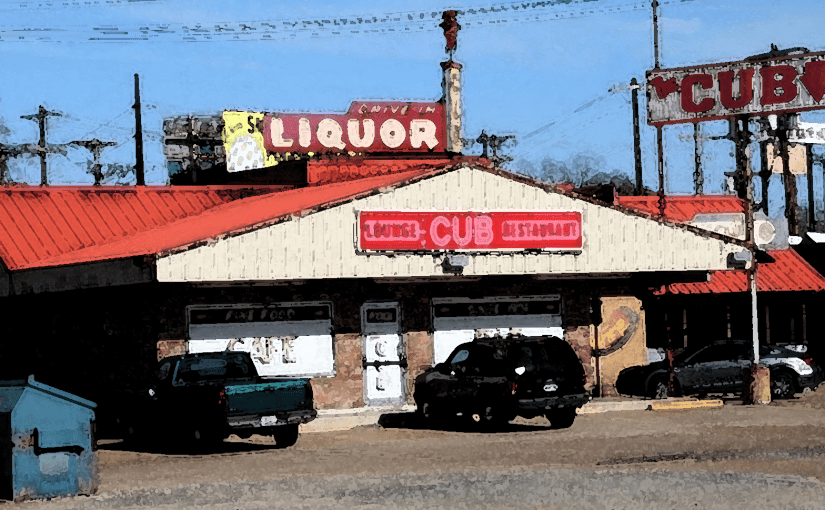
Things like going to the Cub drive-through liquor store and buying some whiskey which they’d put in a Coke. I guess the Cub’s management figured if you were old enough to drive, then you were old enough to drink.  However, in Shreveport in 1963, a sixteen year old was old enough to drive.

Luke and Mike would also cross the Red River and go to the Bossier strip because of all the bars and clubs.  Places like the Orbit Lounge, the Kickapoo, the Shindig, Sak’s Whisk-A-Go-Go, and many offered exotic dancers.  During the ’50s and ’60s it was a little Las Vegas.

One of the milder things they’d do was play pool, their favorite game was “cutthroat”.  Cutthroat involves three players who each divide up the balls 1-5, 6-10, 11-15 and the first to sink the other two player’s balls, while keeping his on the table, wins.  They got pretty good at hustling guys from Barksdale Air Force base, who never seemed to catch on to the fact that Mike and Luke were brothers, playing two against one.

They also loved eating the local foods, onion rings at the Kokomo, Strawn’s strawberry icebox pie and Southern Maid donuts.

If they had nothing else to do they would park out at the airport and watch the planes take off and land, and if they were really bored they’d drive to Longview, Texas, late at night.  Mike loved it when out of nowhere they’d see the Eastman chemical refinery all lit up like a magical city, reflected in the reservoir water.

Both Luke and Mike served in Vietnam, Luke received his induction notice shortly after turning eighteen.  He had been dating a girl, Cherie Shnexnaidre, but they had not married yet.  Just before reporting Luke and Cherie visited a justice of the peace and tied the knot. Cherie had gotten pregnant and they wanted to be married when she gave birth.  A son, Cody Cole, was born in 1965 just before Cherie got the telegram informing her of Luke’s death.

Mike was also drafted two years later, but he came back unharmed and lived a long life back in Vivian where he operated a Texaco gas station and repair shop. Mike took up the role of surrogate father to Cody Cole and later, when Cody was around sixteen, hired him to work at the filling station (see the song “Sarge“).

Mike never forgot those Shreveport summers and that was how he chose to remember his big brother Luke.

© 2018 Frank David Leone. The songs and stories on the Highway 80 Stories website are works of fiction. Names, characters, businesses, places, events, locales, and incidents are either the products of the author’s imagination or used in a fictitious manner. Any resemblance to actual persons, living or dead, or actual events is purely coincidental.
“Louanne in Vicksburg”


Louanne Murphy Bowden (1967- ) comes from an old Texas family, descendants of Archibald Edward Burden (1802-1859), one of The Old Three Hundred and the first Burden to live in Texas.

The name Burden was changed to Bowden by Henry Baxter (Burden) Bowden (1829-1913) because he did not share his family’s politics prior to and during ther Civil War.  Feelings ran high during this period and Henry thought it best to make a clean break with the Burdens.

The Bowdens became quite wealthy during the first decade of the 20th century when Louanne’s great-great-grandfather, Jonus Caldwell Bowden (1860-1914), struck oil on his ranch, before dying of a stroke. The ranch and oil wells went to his son, James Neal Bowden (1889-1961), who proved himself more than a competent steward of the family’s burgeoning wealth.

By the time Louanne was born the family had been living for decades in Dallas, the “old-money” part of town, Highland Park. As was true for many kids who grew up during the Seventies, of privilege, Louanne’s idea of rebellion centered upon hanging out with kids from “the wrong side of the tracks”, and in general, frustrating her parents’ ideas about whom she ought to date, i.e. a nice boy from the club. When it came time for Louanne to go off to college, she chose the University of Mississippi in Oxford because she had heard from some friends in Baton Rouge that it was an even bigger party school than LSU (see song, “Louanne in Vicksburg“).

In her first semester at Ol’ Miss, Louanne met a good-looking fellow, Ronnie Raney, who definitely was not a boy from the club, and not even enrolled at the university. His main preoccupation appeared to be selling quality weed to fraternity boys. One thing led to another and soon Louanne and Ronnie began dating, ending up with Louanne unofficially dropping out of school and moving to Vicksburg with him.

Louanne did not fully appreciate what she was getting into, since unbeknownst to her, Ronnie’s little pot business was only the tip of the criminal iceberg run by Ronnie’s mother, Molly Raney. The Raney family led by Molly had a strong hold on the political and judicial levers of power in Warren County, and in fact, exerted influence and received protection from prosecution from Natchez to Memphis.

For a while Louanne partnered with Ronnie in the marijuana distribution enterprise, but her main occupation was managing the bar owned by the Raney family. However, after few years, even getting married to Ronnie, she got tired of Ronnie’s habit of becoming violent when he’d had too much to drink, which was often. She finally found the nerve to shoot him while he sat at their dinner table eating a slice of chess pie with a beer (see song, “One Time Too Many“).

She did not even attempt to flee the jurisdiction nor avoid prosecution for this crime. She was well aware that Ronnie’s older brother, Lonnie, sheriff of the county, would make sure that her justifiable homicide defense at trial would not convince the jury. In short order Louanne was found guilty of second degree murder and sentenced to twenty years to be served at the Central Mississippi Correctional Facility.

While at CMCF, Louanne developed an exemplary record of good behavior including mentoring several other young female prisoners. For example, about half way through her sentence, a young woman, Lucy Cooper, was sent to CMCF on a drug charge, given eighteen months. Lucy was a funny, bright, and street smart but fragile woman who simply could not do the time for her crime. Despite being taken under Louanne’s wing, Lucy became increasingly more and more despondent, eventually suiciding from an overdose – within weeks of her release (see song, “When Louanne Met Lucy in Prison“).

Not long after this tragedy Louanne’s case was reviewed by a judge who ruled that hers was a case of justified homicide and her sentence was commuted to time served. These events coincided with the death of her grandmother in 2015, when she was released after serving about 60% of her original sentence. She returned to Texas for her grandmother’s funeral and remained there with her mother, to live once again in Highland Park, however, now in somewhat reduced grandeur (see song, “A Waxahachie Funeral“).


LOUANNE IN VICKSBURG
(F. D. Leone, Jr.)

Louanne came from Dallas money
A mansion in Highland Park
Brought julips to her daddy on the veranda
While fireflies flickered in the dark
A summer of magnolia ‘n’ mimosa
Sweet perfume on the heavy August air
Louanne left for college, Oxford Mi’sippy
Ronnie Raney was what she’d find there

When you don’t hear what momma says
And don’t think daddy knows best
If nothin’ is all they’re owed
You’re headed down your own road

Ronnie Raney was the perfect antidote
For Louanne’s Highland Park innocence
They traded Ol’ Miss for a shotgun house in Vicksburg
With no thought to consequence
Molly Raney was Ronnie’s mother
His brother Lonnie was shurf
The Raneys sold drugs from Natchez to Memphis
You get in their way, you got hurt

When you don’t hear what momma says
And don’t think daddy knows best
If nothin’ is all they’re owed
You’re headed down your own road

November and an iron sky
Fields of skeleton cotton and corn
Louanne was tryin’ to drive back to Dallas
To the one she was when she was born
At a Pak-a-Sak this side of Waskom
Standing at the Texas line
Drizzlin’ rain fallin’ steady since she left Monroe
She ain’t ready to leave Vicksburg behind

© 2017 Frank David Leone, Jr./Highway 80 Music (ASCAP). The songs and stories on the Highway 80 Stories website are works of fiction. Names, characters, businesses, places, events, locales, and incidents are either the products of the author’s imagination or used in a fictitious manner. Any resemblance to actual persons, living or dead, or actual events is purely coincidental.