
Lucy Bess Cooper (1980-2015)

Parents: Mae Grant Walker (1957- ) & Frank Wes Cooper (1951-1993).  Grandparents: Lucy Calhoun Keith (1921) & Joseph Cowan Cooper (1913-1995) on her father’s side;  Bessie Grant (1932- ) & Walter Calahan Walker (1931-2001) on her mother’s side.

Lucy Cooper comes from an old Mississippi family.  Roy Cooper entered the state in 1794 and gradually purchased enough land to have a small sustenance farm but no slaves.  His son, Frank Roy Cooper was 38 when the War Between the Sates broke out and enlisted and was made a colonel of a local regiment, and served until the very end at which time he was one of last men to fall in May of 1865. One of her great-great-grandfathers, Charles “Charley” Wooley Cooper, was ten years old at the end of the Civil War, fatherless, devoted his activities to causing as much mischief for the Reconstruction politicians in and around Jackson, Mississippi, as was possible for a small boy.  So, you could say that Lucy comes from a long line of hell-raisers and people with a strong disregard for authority, however, possessing a lot of respect for their Mississippi heritage.  The women in Lucy’s family were no more timid, several generations of women lived lives outside the traditional role of women, and more than one resorted to violence to solve her problems (see song, “Lucy’s Grandma on Her Momma’s Side“).

Jackson MS editedLucy was in her 30s, living in Jackson, Mississippi, supporting herself with a small marijuana dealing business.  Across the street from her was a bachelor, Levi Hooper, who fell in love with her, which was not entirely unrequited (see song, “Levi + Lucy“).  She had been a small time drug dealer for the last decade primarily using marijuana but she also had done harder drugs, Dilaudid and cocaine.  Levi had been coming around and she began to feel a desire to change her life around due to his overall wholesomeness and positive influence on her.  See could imagine herself getting clean and starting a new life with Levi.  However, one of her old friends got picked up for his own drug issues, and in order to lessen his sentence gave Lucy up as his dealer.

Lucy's PrisonShe was arrested and convicted for possession and distribution of marijuana and sentenced to 18 months at the Central Mississippi Correctional Facility (her friends incorrectly referring to  it  as Parchman Farm).

She knew she was pregnant when she went in, but had not informed the father, Levi Hooper.  After a little over six months she gave birth to a baby boy, whom the prison authorities promptly took from her and put into foster care.  She became more and more despondent and depressed and began again using Dilaudid, not orally as designed but crushing the pills and dissolving them in water for injection (“shake and bake”).  She died as a result of an overdose 11 months into her sentence, and only weeks before possibly being paroled (see song, “When Louanne Met Lucy in Prison“).
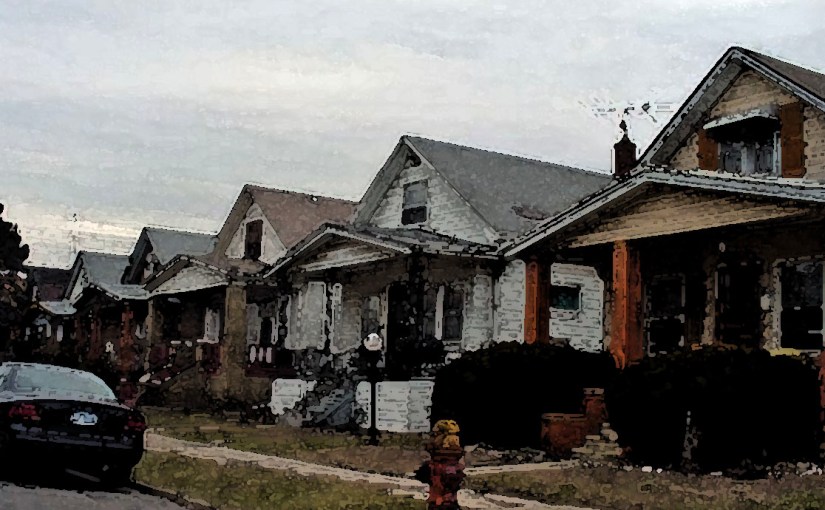
“Levi and Lucy”


LOCATION: Jackson, Mississippi
PERIOD: 2012-2015
DRAMATIS PERSONAE: Levi Hooper (1973); Lucy Bess Cooper (1980-2015)


The romance of Levi Hooper and Lucy Cooper was an unlikely union; absolutely, an attraction of opposites.

They met while living across the street from one another in Jackson, Mississippi.   Lucy was a hell-raising rebel and Levi was a church-going, salt-of-the-earth young man.  Lucy was attracted to Levi mainly because he was nothing like the people she’d been involved with up to then, and Lucy had grown tired of her life and was ripe for a change.

Levi was attracted to Lucy because, well, for one thing, she was a very sexy lady, but more importantly he intuitively felt that she wanted more out of life than her drinking, drugging and wild partying.

Theirs was a true love which they both felt strongly, but a love that was destined to be cut off far too early, its potential left unfulfilled.


LEVY AND LUCY
(F.D. Leone, Jr.)

Lucy Cooper cussed the hammer that struck her thumb
Sent it sailing to kingdom come
Grabbed a whiskey bottle and marched out to her front porch
Found a roach and lit it with a butane torch

Levi Hooper watched from across the street
Wonderin’ how they might come to meet
He strolled out real slow looked in his mailbox
Lucy called out,”hey, hotshot”

Love can’t be controlled
Can’t be foretold
If you can explain it
It ain’ it

Love can’t be fenced
Or convinced
If you can explain it
It ain’ it

Every Sunday Levi would stop by on his way to church
Look at his feet with each of Lucy’s cuss words
Levi hoped she might want to come with him sometime
But he tried to push that thought out of his mind

Lucy had no luck at tryin’ to settle down
Her old friends always kept coming around
Lucy got busted they sent her to the prison farm
Where she put that stuff all up her arm

Love can’t be controlled
Can’t be foretold
If you can explain it
It ain’ it

Love can’t be fenced
Or convinced
If you can explain it
It ain’ it

© 2018 Frank David Leone, Jr./Highway 80 Music (ASCAP). The songs and stories on the Highway 80 Stories website are works of fiction. Names, characters, businesses, places, events, locales, and incidents are either the products of the author’s imagination or used in a fictitious manner. Any resemblance to actual persons, living or dead, or actual events is purely coincidental.

Bessie Carson Grant (1932)

Bessie Carson Grant was born during the Great Depression to a bootlegger and his wife, pilot car driver Millie Carson Sparks. Shortly after Bessie was born Millie gradually made fewer and fewer trips running her husband’s contraband whiskey. But despite quitting the bootlegging life she still had to give testimony in the great whiskey trial of 1935, which she did with little Bessie on her lap, as a three year old toddler (see song, “Lucy’s Grandma on Her Momma’s Side“.

During the Great Depression, children suffered a lot. They no longer had the joys and freedoms of childhood, and often shared their parents’ burdens and issues on money. For Christmas and birthdays, very few children were able to have fancy toy. Some families made gifts themselves, but many others could not afford food at all. For most people, the only way to celebrate holidays with gifts, were to window-shop. Since children lacked food, they often suffered from malnutrition.

There are two schools of thought about the impact of the Great Depression on children. One school holds that the hard times left young people physically damaged and psychologically scarred. The other insists that the decade of dire want and desperate wandering served to strengthen their character and forge what became America’s “greatest generation” of the World War II era. In fact, children’s experience of the depression varied widely, depending on their age, race, sex, region, and individual family circumstances. Nevertheless, certain patterns have emerged. Demographically, birthrates fell during the decade to a low of 18 births per 1,000 population, and children’s health declined due to the poorer nutrition and health care available.

Economically, many children worked both inside and outside the home; girls babysat or cleaned house, boys hustled papers or shined shoes, and both ran errands and picked crops. Yet the scarcity of jobs led record numbers of children to remain in school longer. Socially, high school became a typical teenage experience for the first time. A record 65 percent of teens attended high school in 1936; they spent the better part of their days together, forming their own cliques and looking to each other for advice and approval. Thus arose the idea of a separate, teenage generation.

This is the sociological phenomenon that formed Bessie Grant. Yes, she was tempered in the crucible of economic hardship, but at the same time it caused her to develop an almost pathological concern for financial security. As an adult,a  mother and wife, Bessie was prone to be frugal to the point of denying herself and her family any kind of “luxury item,” which might include a book, or candy, or anything that might represent fun.

Gradually she softened up, especially once she came to trust on the capability of her husband Walter Calahan Walker who was a hard worked and good provider. While Bessie may have scrimped on her children, of which she had four, she doted on her grandchildren. Bessie’s children were often heard to jokingly complain about how she never allowed them such-and-such that she happily acquiesced to when it concerned one of her grandchildren.

Bessie’s favorite grandchild was Lucy Bess Cooper, the youngest girl of her second child, Mae Ella. When she found out what happened to Lucy, it broke her heart and she never forgave Mae Ella for keeping so much of Lucy’s life secret from her (see song, “When Louanne Met Lucy in Prison“).

Bessie has seen her children grow up and their children grow up into fine people. She enjoys helping Mae Ella raise Lucy’s boy, McCoy, the one Lucy had in prison (see song, “Lucy’s Grandma“).

After Walter passed away in 2001, Mae Ella invited Bessie to move in with her, which she did.

Mae Ella Cooper (1957)

Mae Ella Cooper (1957) got her mother’s good looks, but did not inherit her mother’s obsessive concern for security. Bessie Grant Walker, as a child of the Great Depression had a healthy suspicion of good news. But as she got older and the Depression faded further in her memory, she learned how to have good time when she wanted to. Still, she took nothing for granted, was frugal to the point of self-denial, and denial to her family. Whatever generosity Bessie Grant was capable of was directed not towards her children but skipped a generation and rested on her grandchildren.

As Bessie’s oldest daughter, Mae Ella could not help but rebel against this kind of upbringing and from the time she could think for herself decided to deny herself nothing.

The first thing she did was run off with Frank Wes Cooper when she was sixteen. They stood in front of the first man qualified to pronounce them husband and wife and promptly began setting up house together. Her father, Walter Calahan Walker came after her, but realizing he was too late to bring her home reconciled himself to the situation, but knew it would be difficult pacifying Bessie.

Things improved somewhat when Mae Ella announced that she was pregnant with their first grandchild, which turned out to be a boy that she named after her father, Calahan Cooper. Mae Ella and Frank went on to have four more children, the youngest being Lucy Bess Cooper, grudingly honoring Mae’s mother.

As the kids grew up and one by one left home, Mae Ella began to look for something to occupy her time and creative impulses. What she did was open a bar, juke joint, with music, illegal whiskey, dancing and other things not exactly legal. This did not sit well with her husband and Frank began to simmer with a brooding resentment over the late nights she spent away from home.

Lucy, her youngest, pretty much grew up in the bar, which contributed to her developing a wild streak.

One night after having too much to drink, Frank decided he’d had enough and attempted to burn the bar down. This caused Mae Ella to seek a divorce, of sorts. Telling him to pack up and leave, punctuating her demand with a .38 pointed at his face.

Later, after Lucy was sent to prison and dying there of an overdose, Mae Ella was informed that Lucy had given birth to a boy. This child had been put into foster care, but Mae Ella moved heaven and earth to uncover where he was, petitioned the state for custody, and by pure dent of will power, wrangled him out of the foster home, and brought him home with her (see songs “Lucy’s Grandma” and “When Louanne Met Lucy in Prison“).

She named him McCoy and raised him, doting on him, spoiling him completely.

Millie Carson Sparks (1899-1985)

THE MAY 24, 1935, Roanoke Times headline read: Woman Pilot of Whiskey Cars Is Placed On Stand. Millie Carson Sparks testified on May 23 for a half hour. “So great was the interest with which her appearance has been awaited that it served to overshadow a full day of varied testimony . . .” The experience was a disappointing one for most, including Anderson, who saw his hopes of a great mountain heroine die with her appearance on the witness stand. “Mrs. Carson, whose name became so widely known here in the palmy [sic] days of the bootleggers during Prohibition, appeared minus the diamond that once gleamed in her teeth. She was dressed in a white outfit with hat and shoes to match, the dress having brown ruffled sleeves and collar gathered in front with a large cameo pin.

Mildred “Millie” Sparks was a tall, thin and sophisticated young woman whose appearance and mien belied her Southwestern Virginia upbringing. Sparks had originally married a big-shot bootlegger and soon became the principal driver for the operation, driving pilot cars as the caravans of booze careened and smashed their way through the hills of rural towns and into the conduits of the major cities, becoming a celebrity in the process. They said Sparks had movie-star looks and diamonds set in her teeth.

The woman she presented to the world gave no indication of the kind of upbringing she experienced as a girl.

She would have been out of bed at dawn. Summers came on the mountain farm then winters. From the time she was six or seven, she went, for a few months each winter, to a mountain school.

From the time when she was tall enough to stand up to the stove she got up and got the breakfast. In the winter there were corn bread and hot hog meat, and in the summer there were greens. Then she had to clean up the dishes and sweep out the house. She said that the house had no floor. There was just the hard earth, clay she said, made hard and even shiny by much tramping of bare and unwashed feet. To sweep out the house with a homemade broom her father had made, to wash the dishes – mend and wash her father’s clothes.

To school for a few months each winter, for four or five years – to learn anyway to read and write. Spring, summer, fall, and winter. There were plenty of creeping crawling things. “We had lice and bedbugs,” she said. She thought, when she was a child, they were companions every one had.

When she was sixteen she decided she could take no more of the life of back-breaking work and ran off to Raleigh and found work in one of the textile mills. Eventually she met the men involved in the bootlegging and married one.

No one around called the thing “bootlegging.” That might as well have been a foreign word. “You mean blockadin’, sir? What blockades?” Nobody ever said “moonshine” either. White Lightning. White Mule. Moon. Stump Whiskey. Mountain Dew. Squirrel Whiskey. Fire Water.

She had a little girl, Bessie, and chose to retire from her husband’s business, which was becoming increasingly dangerous and unprofitable by the early ’30s.  It wasn’t long before the Feds shut down the entire enterprise, culminating with the longest trial in state history.  She died 50 years after giving testimony in that trial at the age of 86.


“When Louanne Met Lucy in Prison”


LOCATION: Mississippi Penitentiary for Women, Rankin County, MIssissippi
PERIOD: 2015
DRAMATIS PERSONAE: Lucy Bess Cooper (1980-2015); Louanne Murray Bowden (1967)


Louanne Bowden was sent to the Mississippi Penitentiary for Women after being convicted of murdering her husband, Ronnie Raney (see song, “One Time Too Many“). Prison was an unlikely place for someone of Louanne’s background to end up, but there she was (see song, “Louanne in Vicksburg“). The fact that she killed Ronnie as a result of his constant physical abuse did not mitigate the verdict. Only years later would her case be reviewed and she would be released for time served when the charge was changed from murder to justifiable homicide (see song “A Waxahachie Funeral“).

However, while Louanne was serving her twenty year sentence Lucy Cooper was also sent to this prison on an 18 month sentence for distribution of controlled substance, marijuana. Although Lucy put up a brash and strong front, she was in fact a fragile woman, unable to cope with life behind bars. Shortly before being considered and most likely to be released on parole, a little shy of 12 months into her sentence, Lucy succumbed to depression and killed herself with an heroin overdose (see also song, “Levi and Lucy“).


WHEN LOUANNE MET LUCY IN PRISON
(F. D. Leone, Jr.)

When Louanne met Lucy in prison
Lou was halfway through her twenty
For killin’ Ronnie Raney
Who hit her once too many
Lucy would talk all about Levi
In words tender and soft
It was old friends and old sins
Got Lucy caught

Ain’t that how it is sometimes?
You’re on the verge of change
Life sends you the same ol’ same

They gave Lucy eighteen months
Easy time for most but for Lucy hard
Day by day she faded away
Behind stone walls and steel bars
Louanne tried to keep an eye on Lucy
Easy in there to come to harm
August night when they found her
Needle was still in Lucy’s arm

Ain’t that how it is sometimes …

Louanne got word to Levi
Said it best she knew how
Lucy only had six weeks left
She ain’ never gettin’ out
Levi read that letter and then
Put it in his dresser drawer
Got drunk in Vicksburg went a little further
Did a little more

© 2017 Frank David Leone, Jr./Highway 80 Music (ASCAP). The songs and stories on the Highway 80 Stories website are works of fiction. Names, characters, businesses, places, events, locales, and incidents are either the products of the author’s imagination or used in a fictitious manner. Any resemblance to actual persons, living or dead, or actual events is purely coincidental.

Parchman Farm (Mississippi State Penitentiary)

(Information taken from Wikipedia)

Mississippi State Penitentiary (MSP), also known as Parchman Farm, is a prison farm, the oldest prison, and the only maximum security prison for men in the state of Mississippi.

Begun with four stockades in 1901, the Mississippi Department of Corrections facility was constructed largely by state prisoners. It is located on about 28 square miles (73 km2) in unincorporated Sunflower County, in the Mississippi Delta region.

It has beds for 4,840 inmates. Inmates work on the prison farm and in manufacturing workshops. It holds male offenders classified at all custody levels—A and B custody (minimum and medium security) and C and D custody (maximum security). It also houses the male death row—all male offenders sentenced to death in Mississippi are held in MSP’s Unit 29—and the state execution chamber.

Female prisoners are not usually assigned to MSP; Central Mississippi Correctional Facility (CMFC), also the location of the female death row, is the only state prison in Mississippi designated as a place for female prisoners.

CMCF opened in January 1986 with a capacity of 667 prisoners. CMCF was the first prison facility of the Mississippi Department of Corrections outside of the Mississippi State Penitentiary (MSP) in Sunflower County. Upon the opening of CMCF, female prisoners were transferred from MSP to CMCF; previously women were held in MSP Camp 25.

“Levi After Lucy”


LOCATION: Mississippi: Vicksburg, Greenwood, Greenville
PERIOD: 2015-16
DRAMATIS PERSONAE: Levi Hooper (1973); Lucy Cooper (1980-2015)In the aftermath of Lucy


Cooper‘s either accidental overdose or intentional suicide while incarcerated in the Louisiana Prison for Women, Levi Hooper went on something of a bender. Levi was not normally a drinker, but he felt despondent over Lucy’s death and did the only thing he knew how in order to deal with the set of emotions he felt: anger, shock, frustration.

Lucy had not done any drugs or much drinking for weeks prior to being arrested. That arrest was in itself was another case of bad timing: someone she thought was a friend flipped when arrested and gave Lucy up as his dealer (see song, “Levi and Lucy“. The reason Levi did not wish to believe that Lucy had committed suicide was because often when a former user has not done any narcotics for a while, if they relapse at their last dosage, their body cannot tolerate what it once did.

In any event, Lucy had been in the process of turning her life around at the time of her arrest, and her death while serving a relatively short sentence, 18 months, was hard for Levi to take (see songs, “Ready for Change” and “When Louanne Met Lucy in Prison“).

His binge begins in bars around Vicksburg, then he hits the road, to Greenwood, and Greenville, ending up at a small Catholic church in Lake Providence, Louisiana. Levi does not wish to be rude to the priest, he is simply exhausted both mentally and physically, and after this experience, Levi goes back home, devotes himself once again to helping his mother and begin to pick up the pieces of his life.


LEVI AFTER LUCY
(F. D. Leone, Jr.)

Levi staggered up the stone church steps
A slice of moon hung above a wooden cross
Inside the door he stared at a concrete font
Then walked down the aisle, drunk and lost

He eased himself into a pew and sat
Musty scent of incense hung in the air
Worn leather knee-benches underfoot
Levi tried to find the words of a prayer

Vicksburg, Greenwood, Greenville
Gone down many roads, travelin’ still
Pavement, gravel, then dirt
But what he’s lookin’ for ain’t in this church

His head sank to his chest; he slept
A priest shook him; he struggled to his feet
The priest asked him, “Do I know ye?”
“No,” Levi said. “You don’ know me.”

Vicksburg, Greenwood, Greenville …

“Please, Lord, please keep me still
From sinkin’ lower an’ blowin’ away
I’ll straighten out I swear I will
Least that’s how I feel today”

Priest looked him over and said
“Were you waiting to see me?”
Woman was dustin’ the altar with a rag
“No, sir, I just fell asleep.”

Vicksburg, Greenwood, Greenville …

© 2018 Frank David Leone, Jr./Highway 80 Music (ASCAP). The songs and stories on the Highway 80 Stories website are works of fiction. Names, characters, businesses, places, events, locales, and incidents are either the products of the author’s imagination or used in a fictitious manner. Any resemblance to actual persons, living or dead, or actual events is purely coincidental.