“Out on Cross Lake”


LOCATION: Cross Lake, Shreveport, Louisiana
PERIOD: 2011
DRAMATIS PERSONAE: Michael James “Sarge” Broussard (1948-2014); D.W. Washington (1949-2011)


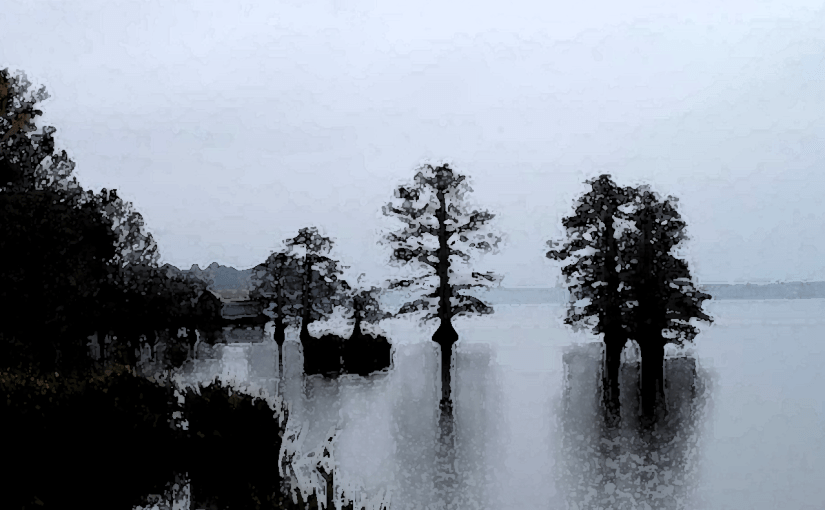
Mike Broussard and Jake McLemore were friends with D.W. Washington.  Today they are out at Cross Lake, just outside Shreveport, drinking, fishing, and remembering D.W. after burying their friend earlier that same day.


OUT ON CROSS LAKE
(F. D. Leone, Jr.)

Out on Cross Lake rain is fallin’ down
Today we laid D.W. in the ground
Out on Cross Lake rain is fallin’ down
 
Ol’ D.W. was a pretty good guy
No one can tell me why he had to die
Ol’ D.W. was a pretty good guy
 
Out on Cross Lake passin’ a bottle around
Today we laid D.W. in the ground
Out on Cross Lake passin’ a bottle around
 
D.W. worked for Mike forty year
Mike’s lookin’ in the tub for another beer
D.W. worked for Mike forty year
 
Out on Cross Lake th’ sun is goin’ down
Today we laid D.W. in the ground
Out on Cross Lake th’ sun is goin’ down
 
Now D.W. was a good ol’ boy
Yeah D.W. was a good ol’ boy
Even if he was born in Detroit
D.W. was a good ol’ boy
 
Out on Cross Lake rain is startin’ to pour
Might as well go in, they ain’ bitin’ no more
Out on Cross Lake rain is startin’ to pour

© 20185 Frank David Leone, Jr./Highway 80 Music (ASCAP). The songs and stories on the Highway 80 Stories website are works of fiction. Names, characters, businesses, places, events, locales, and incidents are either the products of the author’s imagination or used in a fictitious manner. Any resemblance to actual persons, living or dead, or actual events is purely coincidental.

“Mike and D.W.”


LOCATION: Vivian, Louisiana; Vietnam
PERIOD: 1965-2011
DRAMATIS PERSONAE: Michael James “Sarge” Broussard (1948-2014) ; D.W. Washington (1949-2011); Marie Arceneaux (1952-1981)


Mike Broussard and D.W. Washington met and became lifelong friends during the Vietnam War. Actually, it was more than that, if not for  D.W, Mike would not have come home from Vietnam. Mike. never forgot the debt he owned D.W., but their relationship took a tragic turn after more than twenty years of friendship.

After the war, Mike returned to Vivian, Louisiana, where he owned and operated a filling station and repair shop. D.W. followed when he was discharged and worked there with Mike for four decades. The only thing that came between them was how Mike’s wife, Marie, handled her late stage cancer, and the role D.W. played.


MIKE AND D.W.
(F. D. Leone, Jr.)

D.W. Washington worked for Mike Broussard
Mike was his sergeant back in the war
They been best friends since 1965
But ain’t spoke a word since Marie died
 
Mike owned a filling station and repair shop
Mike worked on the cars, D.W. worked the pump
D.’d go to Bossier Fridays and get a little drunk
Monday mornin’ Mike’d roll by and pick him up
 
Marie was the only love of Mike’s life
D.W. was her friend, but she was Mike’s wife
They weren’t romantic but she and D were close
She’d tell things to him she’d never want Mike to know
 
As the cancer took its toll Marie made up her mind
She had D.W. swear to help her if it came time
Marie hid from Mike what was in her heart
But made sure that D.W. would do his part
 
Mike never forgave him for his role at the end
He didn’t blame Marie, no, he blamed his friend
Mike wanted every minute there was with Marie
D.W. robbed him just like that disease
 
Thirty years went by without a single word
Then D.W. got “old-timers”, was what Mike heard
Mike set aside his pride, set aside the past
Two old friends shared a bottle and a few laughs
 
Marie was the only love of Mike’s life
D.W. was her friend, but she was Mike’s wife
They weren’t romantic but she and D were close
She’d tell things to him she’d never want Mike to know
 
D.W. Washington worked for Mike Broussard
Mike was his sergeant back in the war

© 2025 Frank David Leone, Jr./Highway 80 Music (ASCAP). The songs and stories on the Highway 80 Stories website are works of fiction. Names, characters, businesses, places, events, locales, and incidents are either the products of the author’s imagination or used in a fictitious manner. Any resemblance to actual persons, living or dead, or actual events is purely coincidental.

“I’m Still in Love With You”


LOCATION: Vivian, Louisiana
PERIOD: 1981-1984
DRAMATIS PERSONAE: Michael James “Sarge” Broussard (1948-2014) ; Marie Arceneaux (1952-1981); D.W. Washington (1949-2011)


Mike Broussard has never come to grips with his wife Marie’s suicide. Part of it is because she chose to confide in his friend D.W. and not him. Part of it is the fact that she most likely would have lived some months longer, giving him more time to accept her passing. But the suddenness of her death left him with feelings he can’t quite get a hold of.

At first he blamed his friend for helping her, but then he got mad at her. They had never gone to bed angry and were always able to talk out their differences.  But left alone like this, he feels betrayed and can’t accept her loss.


I’M STILL IN LOVE WITH YOU
(F. D. Leone, Jr.)

I want to forgive you
But I can’t
I want to forget you
But I ain’t
I’m still in love with you

I want to hate you
But I don’t
Move on and replace you
But I won’t
I’m still in love with you

If you were still around
We would talk it out
And set it right as the sun came up
But I’m here all alone
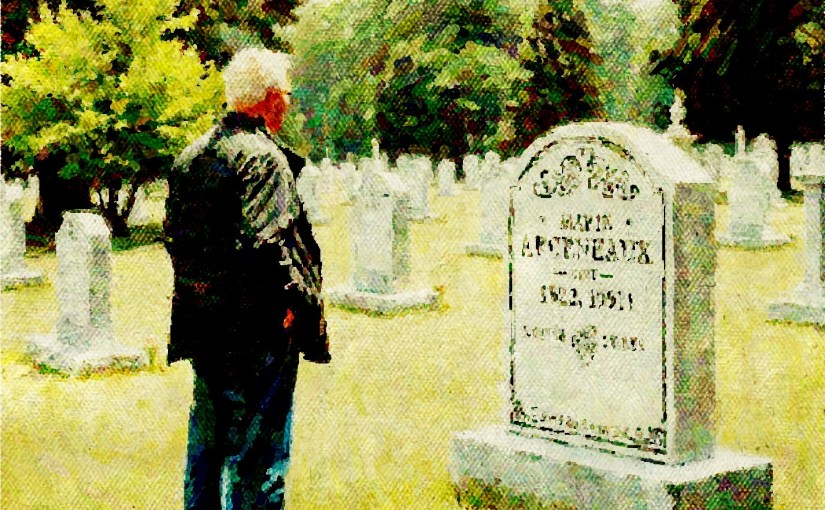
Staring at a cold headstone
And then I’ll climb back in my truck

Someday I’ll forgive you
But I ain’t ready yet
I’ll never forget you
Long as I draw breath
I’m still in love with you

© 2019 Frank David Leone, Jr./Highway 80 Music (ASCAP). The songs and stories on the Highway 80 Stories website are works of fiction. Names, characters, businesses, places, events, locales, and incidents are either the products of the author’s imagination or used in a fictitious manner. Any resemblance to actual persons, living or dead, or actual events is purely coincidental.
“Riding Shotgun in Phenix City”


LOCATION: Phenix City, Alabama
PERIOD: 2002
DRAMATIS PERSONAE: Josh Tate Campbell (1985); Sally Anderson(1985-2002)


Josh Tate Campbell (1985), Tully Tate’s nephew, the son of his sister Ruth, was born in 1985 in Phenix City, Alabama.  This song is a coming of age story, describing Josh’s first two loves: his girlfriend Sally Anderson and his car, a 1978 Chevelle.

Josh and Sally met in high school and were best friends which developed into their first experience with love.  As soon as he could Josh saved up and bought a 1978 Chevelle, which he worked on and got running.  With his new drivers license in hand he and Sally would go driving on Highway 80 outside of Phenix City.

Until the summer night that changed Josh’s life.


RIDING SHOTGUN IN PHENIX CITY
(F. D. Leone, Jr.)

Phenix City, Alabama
We were in high school
Talked like we were slick
Walked like we were cool

I got my drivers license
Summer of 2001
Bought a green ’78 Chevelle
You rode shotgun

Didn’t know how brief
Our time would be
That summer was sweet
You rode shotgun with me

We rolled the windows down
Laughin’ in the wind
I’ve never loved anyone
Like I loved you then

Never knew what hit us
80 at Evans Road
A little cross stands at that corner
The Chevelle was sold

Didn’t know how brief
Our time would be
That summer was sweet
You rode shotgun with me
That summer was sweet
You rode shotgun with me

Phenix City, Alabama
We were in high school

© 2020 Frank David Leone, Jr./Highway 80 Music (ASCAP). The songs and stories on the Highway 80 Stories website are works of fiction. Names, characters, businesses, places, events, locales, and incidents are either the products of the author’s imagination or used in a fictitious manner. Any resemblance to actual persons, living or dead, or actual events is purely coincidental.

“Down 80 East”


LOCATION: Vicksburg, Mississippi
PERIOD: 2015
DRAMATIS PERSONAE: Levi Hooper (1973); Lucy Cooper (1980-2015)


Upon hearing of Lucy Cooper‘s death while in prison, Levi Hooper went on a bender. Getting in his truck and driving through Mississippi: Greenwood, Greenville, Vicksburg and even into Louisiana. He drank until drunk in small bars along the way (see songs, “When Louanne Met Lucy in Prison” and “Levi After Lucy“).

This behavior was certainly unusual for Levi, normally a down-to-earth, church-going man who spent much of his spare time helping his mother, Mildred Motts Hooper, with her house and business. She had turned her home into a thrift shop a year after her husband passed on (see song, “Mildred’s House of Values“).

This drinking road trip only lasted a little over a week, but it was enough for Levi’s mother, to become concerned. So it was with relief that he finally came home, and things returned to normal without Levi offering up any explanation as to the reason for his absence.


DOWN 80 EAST
(F. D. Leone, Jr.)

Levi woke up on the wrong side of the road
Sitting on the side of 80 East
Last thing he remembered was stumbling out that old church
Pressing a wrinkled twenty on the priest

Time to go back, runnin’ wild has run its course
He can’t run away from the grief
He needs a shave, a strong cup of coffee
Time to go back, down 80 East

He don’t understand why Lucy did what she did
She was so close to getting her parole
But this drinking and running has gone on long enough
What he’s looking for ain’t down this road

Time to go back, runnin’ wild has run its course
He can’t run away from the grief
He needs a shave, a strong cup of coffee
Time to go back, down 80 East

All along Levi thought it too good to be true
Doubted he and Lucy would last
But it looked like she was headed in the right direction
In the end she just ran out of gas

Time to go back, runnin’ wild has run its course
He can’t run away from the grief
He needs a shave, a strong cup of coffee
Time to go back, down 80 East

© 2019 Frank David Leone, Jr./Highway 80 Music (ASCAP). The songs and stories on the Highway 80 Stories website are works of fiction. Names, characters, businesses, places, events, locales, and incidents are either the products of the author’s imagination or used in a fictitious manner. Any resemblance to actual persons, living or dead, or actual events is purely coincidental.

“My Anabel”


LOCATION: Tennessee; Texas
PERIOD: 1754-1868
DRAMATIS PERSONAE: Owen McLemore (1791-1868); Anabel March (1796-1832)


The memory of his wife, Anabel, is kindled by an old friend’s letter that Owen McLemore has kept all these years. Alone and peering into the West Texas prairie he relives the grief of his wife’s passing, and friends and a life lost to time.

Owen McLemore was born in Tennessee, but his family originally came from Ulster Ireland, Scots-Irish, landing in North Carolina in the mid-18th century. Owen’s grandfather, Allen McLemore came to North Carolina as a young boy in 1754, he stayed there acquiring some land not far from his father’s farm and also lived as a sustenance farmer. His son, Jason was the McLemore who left North Carolina , crossing the Appalachian mountains and making his way to middle Tennessee by 1788.

Owen McLemore was born in 1791, the second child to Jason and wife Lucy; a girl had been born in 1789, but only lived a few months. Owen grew up on his father farm and learned everything he needed to become a farmer himself before marrying Anabel March in 1812. Together they worked a sustenance farm in Tennessee and began to build seeing their first son Allen McLemore come into the world on Christmas Day 1812.

Anabel gave birth to six other sons: Jason (1813-1876); twins Edward (1815-1861) and Leeland (1815-1887); Jacob (1818-1863); Donald (1824-1884) and Arthur (1832-1834), before dying in 1832. After Donald’s death in 1834 the family migrated to West Texas where Owen died in 1868 at the age of 77 (see songs “Blinkin’ Back a Tear”).


MY ANABEL
(F. D. Leone, Jr.)

It’s a cold December day
The light is slowly sinkin’ away
What I feel I can’t hardly tell
Oh Anabel, my Anabel

Holdin’ a letter from an old friend
Golden leaves dance in the wind
Somethin’ broke in me, aw hell
Oh Anabel, my Anabel

Piece of paper creased and soft
Watery lines almost worn off
Raindrops spittin’ in an empty well
Oh Anabel, my Anabel

That dusty road is still the same
The prairie wind still carries a name
The tolling of a distant steeple’s knell
Oh Anabel, my Anabel

© 2018 Frank David Leone, Jr./Highway 80 Music (ASCAP). The songs and stories on the Highway 80 Stories website are works of fiction. Names, characters, businesses, places, events, locales, and incidents are either the products of the author’s imagination or used in a fictitious manner. Any resemblance to actual persons, living or dead, or actual events is purely coincidental.

“I Didn’t Know What Else To Do”


LOCATION: Texas
PERIOD: 1856-1888
DRAMATIS PERSONAE: Jedadiah Phelps (1856-1888?); Nellie Phelps (1855-1922)


Jed Phelps was the younger brother of Nellie Phelps, the grandmother of Earl Bowden’s maternal grandmother.  Earl Bowden was Louanne Bowden’s father, which makes Jed Phelps her great-great-great-granduncle.

By the time Jed was six he’d lost his older brother Burch and his mother.  Ten years later his father died leaving his sister and him alone on the family farm in Tennessee.  Nellie married Robert Dorsey the son of a wealthy Texas rancher when she was 17, in 1873.  Dorsey brought Nellie and Jed with him back to his family’s Texas ranch, which was rather large.  Dorsey land stretched between what would become the future cities of Monahans and Abilene.

Abilene was established by cattlemen such as Charles Dorsey, Bob’s father, as a stock shipping point on the Texas and Pacific Railway in 1881. Monahans grew up around a deep water well dug a few years later when the railroad surveyors discovered that the lack of water for the laying crew and their animals would slow down construction of the rail.  Monahans’ digging of a water well produced an abundance of good water and the town would thrive.

Jed was a disgruntled young man, at sixteen he didn’t much like being bossed around by Bob Dorsey.  Having an active imagination Jed dreamed of joining the Texas Rangers whose fame of heroic deeds fighting the Indians and Mexicans he’d heard all about in the bunkhouse.  And so, that’s what he did as soon as he turned nineteen.

But by then the Indians had been run off and the Mexicans no longer posed much of a threat.  Mainly the Rangers were a mercenary band supporting the ranchers whose barbed wire fences were an obstacle for the old cattle drovers accustomed to driving their herds north unobstructed.

There had been a fence war raging between the cattlemen taking large herds across Texas to places like Kansas City and the ranchers who tried to preserve the integrity of their ranches.  This conflict eventually petered out when the railroad was completed since it made no sense to drive the herds north when they could much easier be loaded onto a train.

Disenchanted with this life, in 1888 Jed decided to return to Tennessee and the family  farm to see what was there.  More disappointment awaited him, and so he rode off again, never to be heard from again (see song “A Rusted Plow“).


I DIDN’T KNOW WHAT ELSE TO DO
(F. D. Leone, Jr.)

Got the lantern, walked out to the barn
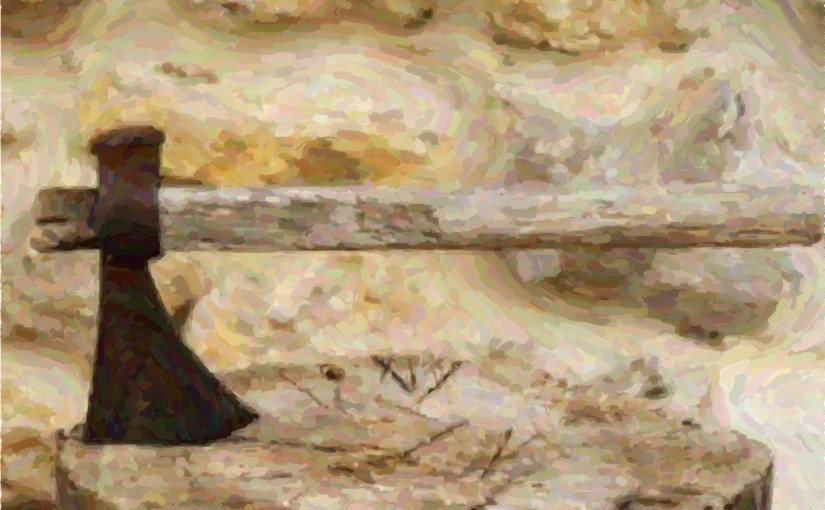
Raised the axe, split a log in two
Much as I hated splitin’ wood
I didn’t know what else to do
 
Wasn’t that long ago that Pa could lift
Hunderd pound sack under each arm
He looked tiny now under all those quilts
Still, Nellie couldn’t keep him warm
 
Was about six when we lost Burch
Can’t hardly see his face at all
Ma went to bed and never got back up
Now ten years later, looks like it’s Pa
 
The torn wood smelled green and sour
I started feelin’ pretty loose and relaxed
I’m sixteen and figure it’ll fall to me
Even if he got better Pa won’t ever be back
 
I looked up, Nellie was on the porch
Asked her, “How’s he?” She said, “Pa’s dead.”
We buried Pa next to Ma and Burch
I found a field stone and set it at th’ head
 
I swung the axe it stuck in the wood
Raised it again split that log in two
We had plenty wood already in the shed
I didn’t know what else to do

© 2018 Frank David Leone, Jr./Highway 80 Music (ASCAP). The songs and stories on the Highway 80 Stories website are works of fiction. Names, characters, businesses, places, events, locales, and incidents are either the products of the author’s imagination or used in a fictitious manner. Any resemblance to actual persons, living or dead, or actual events is purely coincidental.
“The River and Jake”


LOCATION: Northwest Louisiana; north of Shreveport; Red River
PERIOD: 2015
DRAMATIS PERSONAE: Jacob “Jake” Tyler McLemore (1959); Pearl Boone Robison (1973)


An American historian in the 19th century described the frontier vanguard in the following words:

“Thus the backwoodsmen lived on the clearings they had hewed out of the everlasting forest; a grim, stern people, strong and simple, powerful for good and evil, swayed by gusts of stormy passion, the love of freedom rooted in their hearts’ core. Their lives were harsh and narrow; they gained their bread by their blood and sweat, in the unending struggle with the wild ruggedness of nature. They suffered terrible injuries at the hands of the red men, and on their foes they waged a terrible warfare in return. They were relentless, revengeful, suspicious, knowing neither ruth nor pity; they were also upright, resolute, and fearless, loyal to their friends, and devoted to their country. In spite of their many failings, they were of all men the best fitted to conquer the wilderness and hold it against all comers.

The Anglo-American 18th-century frontier, like that of the Spanish, was one of war. The word “Texan” was not yet part of the English language. But in the bloody hills of Kentucky and on the middle border of Tennessee the type of man was already made. ”

These were the McLemores who left Tennessee for Texas.

It didn’t take long for Jake to become bored with retirement, and he bought a diner in Shreveport where Pearl Robison happened to enter one day in January 2010 (see song, “Pearl + Jake“). For five years Jake and Pearl had a turbulent romantic relationship, before Pearl took to the road again (see song “Hit the Road“), heading west on U.S. 80, leaving Jake heart broken at 56.

Jake loved to fish, and to take his mind off Pearl, he’d go to the river and see if they were biting.


THE RIVER AND JAKE
(F. D. Leone, Jr.)

Long as I can remember
When Jake was sad he would go
On down to The River
With some bait and a pole

It’s the place he wants to be
When he needs to be alone
Jake’s gone down to The River
Every day since Pearl’s been gone

You can ask him where they’re biting
Or what he used for bait
Just don’t ask him anything about her
That’s between The River and Jake

Soon his mind will grow empty
With each cast he’ll forget
All the worries he brought with him
They’ll all fade with the sunset

You can ask him where they’re biting
Or what he used for bait
Just don’t ask him anything about her
That’s between The River and Jake

© 2017 Frank David Leone, Jr./Highway 80 Music (ASCAP). The songs and stories on the Highway 80 Stories website are works of fiction. Names, characters, businesses, places, events, locales, and incidents are either the products of the author’s imagination or used in a fictitious manner. Any resemblance to actual persons, living or dead, or actual events is purely coincidental.

“Blinkin’ Back a Tear”


LOCATION: Odessa, Texas
PERIOD: 1977
DRAMATIS PERSONAE: Jacob “Christmas” McLemore (1818-1863); Jacob Mac McLemore (1879-1977); Jake McLemore (1959).


Jacob Mac McLemore made and lost more money than any of the McLemore men. When he was fifteen he heard about the 1894 oil strike in East Texas. He started at the bottom working any job he could get, eventually learning enough to strike out on his own.

Jacob Mac McLemore never knew his father, who had been an outlaw-gunslinger who died a few months before he was born. Sam Summers McLemore (1852-1878) never even knew the 16-year old whore, Sally McCune, he was living with was pregnant when he went out in the street to face a younger and what turned out to be faster boy. Jacob was raised by Sally, who eventually was able to quit the life and lived out her days running a boarding house in Fort Worth. There’s some who say it was more than a boarding house, but others deny those rumors.

Indians found oil seeping from the soils of Texas long before the first Europeans arrived. They told explorers that the fluid had medicinal values. The first record of Europeans using crude oil, however, was for the caulking of boats in 1543 by survivors of the DeSoto expedition near Sabine Pass.

Melrose, in Nacogdoches County, was the site in 1866 of the first drilled well to produce oil in Texas. Other oil was found in crudely dug wells in Bexar County in 1889 and in Hardin County in 1893. But it was not until June 9, 1894, that Texas had a major discovery. This occurred in the drilling of a water well for the city of Corsicana. Oil caused that well to be abandoned, but a company formed in 1895 drilled several producing oil wells.

Jacob Mac was 15 when the Corsicana oil came in, and for the next sixty years he chased strikes all over Texas and Louisiana. He might make some money here, then invest it somewhere else only to see his investment evaporate in the dusty Texas wind.

Jacob was married and divorced four times, the last near the end of his life and the one which really broke him. Of the four marriages, only the first produced any children, one boy, Lee Allen (1903-1989), and a girl, Aurelia. Lee Allen was Jake McLemore’s grandfather.

If you were to ask those who knew him, what they would tell you about Jacob Mac McLemore was that, first and foremost, he was a decent man whose word was his bond. No one ever knew him to brag or lie and that he never made a deal that he did not keep, and usually made his partners money.

He died at the age of 98, dying peacefully in his sleep in an Odessa, Texas hospital room with his great-grandson, Jake, by his side. You might say that Jacob Mac lived an interesting life, but despite not enjoying consistent good luck he was always in good humor and very good company.


BLINKIN’ BACK A TEAR
(F. D. Leone, Jr.)

Just before his great-grandpa went in
The hospital for the last time
He told Jake the stories of their kin
A life that was all but left behind

Clear whiskey, flatfoot dancing at jamborees
Frontier women and the men they loved
One by one he handed down his memories
Jake was eighteen, couldn’t get enough

Under a clear blue West Texas sky
A bluetick hound layin’ at his feet
A single tear in the corner of Jake’s eye
He blinked it back from fallin’ down his cheek

Owen McLemore was born in 1791
In Tennessee he married Anabel
Before she died she gave him seven sons
He went to Texas then he went to hell

Owen’s great-grandson was Jake’s namesake
He made some money chasin’ the oil boom
There wuddn’t be nothin’ left for Jake
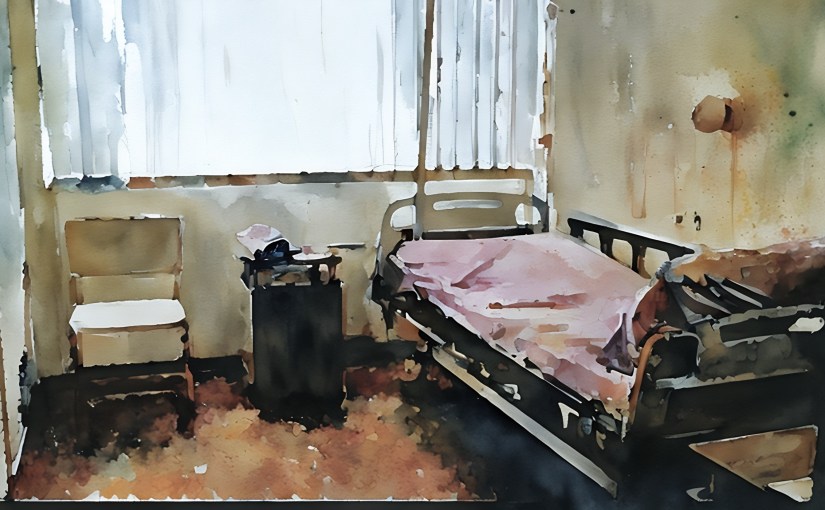
‘Cept this empty hospital room

Under a clear blue West Texas sky
A bluetick hound layin’ at his feet
A single tear in the corner of Jake’s eye
He blinked it back from fallin’ down his cheek

© 2018 Frank David Leone, Jr./Highway 80 Music (ASCAP). The songs and stories on the Highway 80 Stories website are works of fiction. Names, characters, businesses, places, events, locales, and incidents are either the products of the author’s imagination or used in a fictitious manner. Any resemblance to actual persons, living or dead, or actual events is purely coincidental.
“Tick Burden’s Dream”

Tucker “Tick” Burden (1937-2019) came from an old Texas family, of Scottish descent. The patriarch Charles Owen Burden (1776-1834) came to America in 1800 at the age of 24, at a time of high confidence after defeating the great British Empire. His son, Edward Burden (1802-1836), produced Tick’s great-great-grandfather who retained the name whereas his brother, Henry Baxter Bowden (1829-1863), altered it to Bowden so that he would avoid the obvious negative association with the name Burden.

This created a schism among the family with the Burdens (the smaller branch) hardly socializing with the Bowdens.

Tick grew up in relative comfort, his father Albert Burden (1910-1986) having had a successful career as a cattle agent, not raising them himself but arranging auctions and large stock sales in North Central Texas.

However, from an early age, Tick was a dreamer and ne’er-do-well. As soon as he could Tick ran off, working only when he had to at various menial jobs: day laborer, miner, even an itinerant gambler for a short while. He enlisted in the army to avoid criminal charges but then deserted four months later.

He went north and got involved with a bootlegger, learning how to distill moonshine in the process, which came in handy. However, he missed Texas and made his way back south, getting a job in a tavern outside of Dallas on Highway 80.

The owner, Henrietta Tate (1916-2008), was a widow woman with a daughter, Alma Tate (1940-1978), a few years younger than Tick, who was around 30 by this time. Tick must have appeared dashing to the young and inexperienced girl who fell for him, and gave herself to him, getting herself pregnant. As soon as Tick heard the girl’s naive romantic dreams of running off, he did what he always did when he found himself facing consequences he would rather not, run.

Tick’s story is told in two parts, the second half of the song tells in straight-forward fashion Tick’s life up to the point of him abandoning Alma. The first half describes Tick on the road (presumably after he runs from the Tates), experiencing some cryptic dreams and ending up at a cemetery, either physically at Alma’s grave or dreaming he was.


LOCATION: Texas; Oklahoma, Missouri, Illinois
PERIOD: 1950s-1980s
DRAMATIS PERSONAE: Tucker “Tick” Burden (1937-2019); Henrietta Tate (1916-2008); Alma Tate (1940-1978).


TICK BURDEN’S DREAM
(F. D. Leone, Jr.)

My name is Tick Burden, got a hobo soul;
Cutting’ and running has taken a toll.
One did love me, but I chose a train to ride;
Been ten years since that one died.

Grey moon above me, skirted by a cloud;
I trudge through the’ mist, and overgrown ground.
Come to a bridge, crawl underneath;
A storm gathers darkly; I go to sleep.

Seven gray sisters, all in a row;
Whisper foreign words, I do not know.
When I awake the rain has stopped;
The air is electric, humid and hot.

Thunder shakes the ground, lightning zigzags;
On my tongue I can taste something like brass.
Seven grey sisters, all dressed in blue;
The dream nags at me like a pebble in my shoe.

I’m standing at a grave, among ancient headstones,
Praying for forgiveness from one who is gone.
The living carry death, until the final surrender;
The void is not a curse, the dead do not remember.

Toppled markers look like melted candle wax;
I sit bolt upright as a tree limb snaps.
Somewhere in the dark, a banjo and fiddle;
Haunted midnight music, the hour of the devil.

I look up the slope to a wet yellow sedge,
And see a grove where went I can lay my head.
I dream of a black snake coiled at my feet;
Three eggs in its belly; my journey’s almost complete.

The seven blue sisters appear to glow,
Phantoms dancing like ghoulish scarecrows;
Chanting strange curses with crooked fingers raised,
They mock me with their laughter; I run from this place.

He ran to Oklahoma and then Missouri,
Crossed to Illinois on a Mississippi ferry.
A bootlegger in Chicago and Detroit;
Sold moonshine whiskey in a Negro juke joint.

A gambler, prospector, hired out on day labor;
Enlisted in the army; deserted four months later.
Lived on cheap food, endless coffee, and cigarettes;
His clothes smelled of whiskey, tobacco, and sweat.

Late summer sun, August turns to September,
Cooling days fade like coal fire embers.
A job at a tavern out on old Highway 80,
Run by a widow, a Dallas Jew lady.

That’s when he met Henrietta and Alma Tate;
The violent summer of 1968.
Alma was the daughter, an only child, like he;
She left scented notes in the hollow of a tree.

His idea of love came from a magazine;
Alma’s eyes followed him, but he had never seen.
One night she gave herself for him to cherish;
Then spoke suddenly and wildly of marriage.

She pleaded that they could run off together;
Dreamed of a life far away from her mother;
Spoke of the child in her belly and there placed his hand;
A cold fear gripped him; and so, Tick Burden ran.

The grade crested where the northbound freights slowed,
To a crawling gait so that a man could grab ahold.
Tick reached for a boxcar and held the ladder fast;
In an icy rain the gray sisters stood as he passed.

His name was Tick Burden, a vagabond;
Seen most of this country and places beyond.
Slept uncertain under willow and pin oak,
Came and went like autumn woodsmoke.

© 2024 Frank David Leone, Jr./Highway 80 Music (ASCAP). The songs and stories on the Highway 80 Stories website are works of fiction. Names, characters, businesses, places, events, locales, and incidents are either the products of the author’s imagination or used in a fictitious manner. Any resemblance to actual persons, living or dead, or actual events is purely coincidental.