“Getting Sober in Dallas”

Louanne Bowden came from an old money section of Dallas. Her family was one of a couple of dozen Texas people whose history in Texas go back before statehood. The Bowden money originally came from cattle, but then oil, her father was an executive in the petroleum industry, and Louanne grew up in comfort. Louanne’s rebellion took the form of a bad marriage to Ronnie Raney, whom she met while at Ole Miss.

Ronnie Raney would show up at football games with a few gallons of moonshine whiskey, which his family sold all around Mississippi. He’d fill pint bottles for the college boys, $5 each; and usually sold out before the game was over.

Ronnie Raney was no good, and would often drink and when Louanne would say something that got him riled up, he’d hit her. Still she left school and followed him to Vicksburg where they rented a shotgun house.

One evening, she’d finally had enough of his drinking and violence, and shot him dead. She never denied it, and was convicted and sent to prison, sentenced to 20 years. However, after serving 12, a judge commuted her sentence to time served, ruling what she’d done was justified homicide. The catalyst to this decision was the death of Louanne’s grandmother, and because of the time of the season, and this particular judge feeling generous allowed mercy to inform the better part of his judgment.


She came back home when her grandmother died, but couldn’t fit back in the society of Highland Park, and began drinking pretty heavily.

Charlie Bennett was four years older than Louanne, and had gone to the same high school. He was a star football player and went to University of Texas on a full athletic scholarship. However during his third game, he suffered a career ending knee injury. It was at this point that Charlie began partying, drinking, and in general drowning his frustration and grief over his lost football future, and performed poorly at school. However, he managed to graduate with a business administration degree, and ended up in Dallas, as a former high school star, selling cars at one of the larger Chevrolet dealerships.

He married his high school girlfriend, and they promptly had two children, two boys two years apart. Although Charlie was fairly successful as a car salesman, his drinking only got worse, leading finally to tragic results. One day, he was supposed to pick up his sons at school. Charlie was in no condition to drive, and after picking up the boys, crossed the double line, and plowing into a moving truck going 60 mph.


Charlie emerged from the accident with minor injuries, however the boys were seriously injured, the youngest one dying from his injuries. This effectively ended his marriage, and sent Charlie to prison. After serving five years he was ready when an old high school friend suggested that Charlie accompany him to an A.A. meeting.


LOCATION: Dallas, Texas
PERIOD: 2005-2016
DRAMATIS PERSONAE: Louanne Bowden Raney (1967); Rita Daley (1962); Charles Bennett (1963); Ronnie Raney (1962-2001)


GETTING SOBER IN DALLAS
(F. D. Leone, Jr.)

(2015)
Springtime in Highland Park,

The scent of new mown grass.
Every night Louanne comes home drunk;
Her mama’s been on her ass.
“Rita, bourbon rocks, splash of water.”
“Louanne, I done made last call.”
“You do know I been to prison for murder.”
“Hon, you’ve had enough, that’s all.”

Louanne unsteady as she arose
“Girl, tomorrow I’ll get my tab.”
“You sure you can make it home alone?
Why not let me call you a cab?”
“Naw, I’ll get her home, just gimme a minute.”
Louanne turned an’ snarled, “who the hell are you?”
“Lu, hon, you know Charlie; Charlie Bennett.”
“Yeah, okay, Charlie – Charlie who?”

(2005)
Lush green lawns turn to brown;

No rain for weeks, 100 plus degrees.
Ten months back, Charles was let out;
He’s in sweating in bed, alone with his disease.
Thinking about his glory days,
Football star; high school fame.
Texas gave him a full ride to play;
Blew his knee out his third game.

He married his high school sweetheart,
They had two sons in three years.
You can find him every night in a bar,
Replaying each touchdown and how they cheered.
He don’t remember the wreck;
Just his youngest son did not survive.
His marriage ended before his five year stretch;
He’s picking up the pieces of a broken life.

(2015)
The week before Halloween,

Louanne poured her whiskey down the drain.
The day after Thanksgiving,
She picked up a chip for 30 days.
She had found a nearby meeting,
Highland Park Presbyterian.
Louanne hears herself start talking,
“I’m a drunk, my name’s Louanne.”

“Ronnie would drink and then beat me;
For some years I let him.
Then one night I got th’ gun while he was eatin’,
I shot him; should’ve just left him.”
“Spent 12 years in a Mississippi prison,
Til some judge decided to let me go.
Said what I done was within reason;
My grandma’s funeral brought me home.”

(2016)
January morning, cold and raining,

Slowly turning to sleet.
The peace is shattered by a tree limb breakin’;
Louanne hears it from across the street.
Used to be Louanne would sit on the porch,
With a bottle of booze and a stick of pot.
Now the dawn sounds reinforce,
For Louanne the presence of God.

In a booth across from each other;
Louanne and Charlie sit face to face.
Charles has five years sober,
Louanne’s coming up on 90 days.
Two lives intersect,
According to some hidden plan;
Living one day at a time, not the next;
Sober in Dallas, Charlie and Louanne.

© 2024 Frank David Leone, Jr./Highway 80 Music (ASCAP). The songs and stories on the Highway 80 Stories website are works of fiction. Names, characters, businesses, places, events, locales, and incidents are either the products of the author’s imagination or used in a fictitious manner. Any resemblance to actual persons, living or dead, or actual events is purely coincidental.

The Story of Lucy Cooper, Levi Hooper and Louanne Bowden

Mildred’s House of Values
(F.D. Leone, Jr.)


Mildred Motts Hooper was born in Tallulah, Louisiana in 1944, the half sister of Molly Motts Raney. Mildred married Leon Hooper and had one son, Levi Hooper, and passed away in 2014 at the age of 69 just before her 70th birthday.

Mildred liked to cook and crochet and was happy as a homemaker.  One of her favorite dishes to prepare was baked cheese grits which she would serve with breaded pork chops and homemade rolls.

She and Leon were married in 1963 shortly before Leon was shipped off to Vietnam.  When Leon returned from his tour of service they settled down in Jackson, Mississippi where Leon worked as a welder and they raised their only son, Levi, who was born in 1973.

However, Leon only lived another two years, dying in 1975, and Levi had no memories of his father.  To help make ends meet Mildred began to sell items from her home, establishing a thrift store at her residence (see song, “Mildred’s House of Values“).

Mildred passed away in 2014 after suffering a stroke.


Mildred’s “House of Values,” on a corner lot
A price tag hung from every table and chair
Things for sale like any other shop
But it was Mildred’s home and she still lived there

Her son Levi would come by and do odd jobs
Help his momma with what she needed done
Rustin’ on blocks, a ’68 Dodge
Levi never could get to run

A person does all they can do
Full time job just gettin’ through
Rise in the morning, close your eyes at night
In between, try to get it right

Mildred was widowed nineteen-seventy-five
Leon Hooper was a good man
Price tags went up, year after he died
Life don’ turn out nothin’ like we plan

The ’68 Dodge, last car Leon bought
Rest of his stuff, sittin’ in a shed
You can see in Levi, Leon’s walk
Are the ones we love ever really dead?

A person does all they can do …

Mildred’s “House of Values,” on a corner lot
From every stick of furniture a price tag hung
A ‘68 Dodge rustin’ on blocks
Levi never could get to run

© 2017 Frank David Leone, Jr./Highway 80 Music (ASCAP). The songs and stories on the Highway 80 Stories website are works of fiction. Names, characters, businesses, places, events, locales, and incidents are either the products of the author’s imagination or used in a fictitious manner. Any resemblance to actual persons, living or dead, or actual events is purely coincidental.



Levi and Lucy
(F.D. Leone, Jr.)

The romance of Levi Hooper and Lucy Cooper was an unlikely union; absolutely, an attraction of opposites.

They met while living across the street from one another in Jackson, Mississippi.   Lucy was a hell-raising rebel and Levi was a church-going, salt-of-the-earth young man.  Lucy was attracted to Levi mainly because he was nothing like the people she’d been involved with up to then, and Lucy had grown tired of her life and was ripe for a change.

Levi was attracted to Lucy because, well, for one thing, she was a very sexy lady, but more importantly he intuitively felt that she wanted more out of life than her drinking, drugging and wild partying.

Theirs was a true love which they both felt strongly, but a love that was destined to be cut off far too early, its potential left unfulfilled.


Lucy Cooper cussed the hammer that struck her thumb
Sent it sailing to kingdom come
Grabbed a whiskey bottle and marched out to her front porch
Found a roach and lit it with a butane torch

Levi Hooper watched from across the street
Wonderin’ how they might come to meet
He strolled out real slow looked in his mailbox
Lucy called out,”hey, hotshot”

Love can’t be controlled
Can’t be foretold
If you can explain it
It ain’ it

Love can’t be fenced
Or convinced
If you can explain it
It ain’ it

Every Sunday Levi would stop by on his way to church
Look at his feet with each of Lucy’s cuss words
Levi hoped she might want to come with him sometime
But he tried to push that thought out of his mind

Lucy had no luck at tryin’ to settle down
Her old friends always kept coming around
Lucy got busted they sent her to the prison farm
Where she put that stuff all up her arm

Love can’t be controlled
Can’t be foretold
If you can explain it
It ain’ it

Love can’t be fenced
Or convinced
If you can explain it
It ain’ it

© 2017 Frank David Leone, Jr./Highway 80 Music (ASCAP). The songs and stories on the Highway 80 Stories website are works of fiction. Names, characters, businesses, places, events, locales, and incidents are either the products of the author’s imagination or used in a fictitious manner. Any resemblance to actual persons, living or dead, or actual events is purely coincidental.


Louanne in Vicksburg
(F. D. Leone, Jr.)


Louanne Murphy Bowden (1967- ) comes from an old Texas family, descendants of Thomas Bowden (1802-1836), one of The Old Three Hundred and the first Bowden to live in Texas. The Bowdens became quite wealthy during the first decade of the 20th century when Louanne’s great-great-grandfather, Jonus Caldwell Bowden (1860-1914), struck oil on his ranch, before dying of a stroke. The ranch and oil wells went to his son, James Neal Bowden (1889-1961), who proved himself more than a competent steward of the family’s burgeoning wealth.

By the time Louanne was born the family had been living for decades in Dallas, the “old-money” part of town, Highland Park. As was true for many kids who grew up during the Seventies, of privilege, Louanne’s idea of rebellion centered upon hanging out with kids from “the wrong side of the tracks”, and in general, frustrating her parents’ ideas about whom she ought to date, i.e. a nice boy from the club. When it came time for Louanne to go off to college, she chose the University of Mississippi in Oxford because she had heard from some friends in Baton Rouge that it was an even bigger party school than LSU (see song, “Louanne in Vicksburg“).

In her first semester at Ol’ Miss, Louanne met a good-looking fellow, Ronnie Raney, who definitely was not a boy from the club, and not even enrolled at the university. His main preoccupation appeared to be selling quality weed to fraternity boys. One thing led to another and soon Louanne and Ronnie began dating, ending up with Louanne unofficially dropping out of school and moving to Vicksburg with him.

Louanne did not fully appreciate what she was getting into, since unbeknownst to her, Ronnie’s little pot business was only the tip of the criminal iceberg run by Ronnie’s mother, Molly Raney. The Raney family led by Molly had a strong hold on the political and judicial levers of power in Warren County, and in fact, exerted influence and received protection from prosecution from Natchez to Memphis.

For a while Louanne partnered with Ronnie in the marijuana distribution enterprise, but her main occupation was managing the bar owned by the Raney family. However, after few years, even getting married to Ronnie, she got tired of Ronnie’s habit of becoming violent when he’d had too much to drink, which was often. She finally found the nerve to shoot him while he sat at their dinner table eating a slice of chess pie with a beer (see song, “One Time Too Many“).

She did not even attempt to flee the jurisdiction nor avoid prosecution for this crime. She was well aware that Ronnie’s older brother, Lonnie, sheriff of the county, would make sure that her justifiable homicide defense at trial would not convince the jury. In short order Louanne was found guilty of second degree murder and sentenced to twenty years to be served at the Central Mississippi Correctional Facility.

While at CMCF, Louanne developed an exemplary record of good behavior including mentoring several other young female prisoners. For example, about half way through her sentence, a young woman, Lucy Cooper, was sent to CMCF on a drug charge, given eighteen months. Lucy was a funny, bright, and street smart but fragile woman who simply could not do the time for her crime. Despite being taken under Louanne’s wing, Lucy became increasingly more and more despondent, eventually suiciding from an overdose – within weeks of her release (see song, “When Louanne Met Lucy in Prison“).

Not long after this tragedy Louanne’s case was reviewed by a judge who ruled that hers was a case of justified homicide and her sentence was commuted to time served. These events coincided with the death of her grandmother in 2015, when she was released after serving about 60% of her original sentence. She returned to Texas for her grandmother’s funeral and remained there with her mother, to live once again in Highland Park, however, now in somewhat reduced grandeur (see song, “A Waxahachie Funeral“).


Louanne came from Dallas money
A mansion in Highland Park
Brought julips to her daddy on the veranda
While fireflies flickered in the dark
A summer of magnolia ‘n’ mimosa
Sweet perfume on the heavy August air
Louanne left for college, Oxford Mi’sippy
Ronnie Raney was what she’d find there

When you don’t hear what momma says
And don’t think daddy knows best
If nothin’ is all they’re owed
You’re headed down your own road

Ronnie Raney was the perfect antidote
For Louanne’s Highland Park innocence
They traded Ol’ Miss for a shotgun house in Vicksburg
With no thought to consequence
Molly Raney was Ronnie’s mother
His brother Lonnie was shurf
The Raneys sold drugs from Natchez to Memphis
You get in their way, you got hurt

When you don’t hear what momma says …

November and an iron sky
Fields of skeleton cotton and corn
Louanne was tryin’ to drive back to Dallas
To the one she was when she was born
At a Pak-a-Sak this side of Waskom
Standing at the Texas line
Drizzlin’ rain fallin’ steady since she left Monroe
She ain’t ready to leave Vicksburg behind

© 2017 Frank David Leone, Jr./Highway 80 Music (ASCAP). The songs and stories on the Highway 80 Stories website are works of fiction. Names, characters, businesses, places, events, locales, and incidents are either the products of the author’s imagination or used in a fictitious manner. Any resemblance to actual persons, living or dead, or actual events is purely coincidental.

Ready For Change
(F. D. Leone, Jr.)


Lucy Cooper and Levi Hooper met in Jackson, Mississippi when they lived across the street from each other (see song “Levi and Lucy”). They became involved in a relationship, something of an attraction of opposites: Levi was a church-going, salt of the earth type, whereas Lucy was a hell-raising rebel, who was no stranger to a variety of mind-altering substances.

However, Lucy had begun to feel that she had reached a dead end with her life, and was looking, most likely subconsciously, for new direction, one which seemed to be provided by Levi.

Unfortunately, Levi came along too late for Lucy, who was overtaken by the momentum and trajectory of her past life. One of her marijuana customers offered her name as his dealer, in exchange for a suspended sentence for simple possession. Lucy was arrested and convicted for distribution and sent to prison, where after a year into her 18 month sentence, she succumbed to depression and committed suicide (see song, “When Louanne Met Lucy in Prison”).

Levi was left to pick up the pieces as best he could in the wake of this aborted relationship (see song, “Levi After Lucy”).


When Lucy and Levi met
Lucy wasn’t ready yet
To turn over a new leaf
But she really wanted to
To do what she had to do
Her life had mostly brought her grief

The mirror Lucy looked in
Showed her where she had been
But not where she wanted to go to
Levi was steady, Levi was strong
Someone Lucy could rely upon
Change ain’t what you want but what you do

Lucy wasn’t sure how to start
But something was cooking in her heart
Pushing her past the life she had known
Levi was the catalyst
Even so it was hit or miss
All he could do was cheer Lucy on

The mirror Lucy looked in
Showed her where she had been
But not where she wanted to go to
Levi was steady, Levi was strong
Someone Lucy could rely upon
Change ain’t what you want but what you do

It’ll take some time
For Lucy to leave behind
The people and things that were holding her back
But with Live by her side
Lucy thought she could get by
But things didn’t turn out like that

The mirror Lucy looked in
Showed her where she had been
But not where she wanted to go to
Levi was steady, Levi was strong
Someone Lucy could rely upon
Change ain’t what you want but what you do

© 2017 Frank David Leone, Jr./Highway 80 Music (ASCAP). The songs and stories on the Highway 80 Stories website are works of fiction. Names, characters, businesses, places, events, locales, and incidents are either the products of the author’s imagination or used in a fictitious manner. Any resemblance to actual persons, living or dead, or actual events is purely coincidental.

One Time Too Many
(F. D. Leone, Jr.)


In a disastrous act of rebellion from her upper crust background, Louanne Bowden began dating and ultimately married Ronnie Raney whom sehe met while attending the University of Mississippi in Oxford (see song, “Louanne in Vicksburg“).

The Raney family under the leadership of matriarch Molly Motts Raney transitioned from bootlegging moonshine whiskey to distributing marijuana, pills and eventually funding methamphetamine labs. Ronnie was the second oldest son, acting as his mother’s right hand operations manager, his older brother Lonnie was sheriff of Warren County, offering protection for the entire enterprise.

After suffering years of Ronnie drunken abuse, Louanne and finding no relief from the corrupt legal system in Warren County, took matters into her own hands and shot Ronnie with a deer rifle as he sat at the kitchen table eating a slice of her homemade peach pie.

Although she knew she was justified in killing him, she fatalistically accepted her conviction of murder and the twenty year sentence that went with it. Only much later was she vindicated and released for time served (see song, “A Waxahachie Funeral“).


She’d like to fix up her dinette
Yellow wallpaper with nosegays
A hard wood floor would do the trick
Those stains’ll take more than paint

A buzzer spoils this daydream
Lights out and the bars clang shut
It’ll have to wait twenty years
This cell is where she’ll stay put

She’d had enough
Taken too much
He treated her rough one time too many
She did the crime
She’ll do the time
Regrets? No, she don’t have any

She brought him his beer and a slice of pie
Then shot him with his deer gun
It was worth it just to see him surprised
Once he realized just what she’d done

She’d had enough …

His brother was sheriff of Warren County
There was no doubt the fix was in
A jury of his peers showed no mercy
But if she could she’d do it again

She’d had enough …

© 2017 Frank David Leone, Jr./Highway 80 Music (ASCAP). The songs and stories on the Highway 80 Stories website are works of fiction. Names, characters, businesses, places, events, locales, and incidents are either the products of the author’s imagination or used in a fictitious manner. Any resemblance to actual persons, living or dead, or actual events is purely coincidental.

When Louanne Met Lucy in Prison
(F. D. Leone, Jr.)


Louanne Bowden was sent to the Mississippi Penitentiary for Women after being convicted of murdering her husband, Ronnie Raney (see song, “One Time Too Many“). Prison was an unlikely place for someone of Louanne’s background to end up, but there she was (see song, “Louanne in Vicksburg“). The fact that she killed Ronnie as a result of his constant physical abuse did not mitigate the verdict. Only years later would her case be reviewed and she would be released for time served when the charge was changed from murder to justifiable homicide (see song “A Waxahachie Funeral“).

However, while Louanne was serving her twenty year sentence Lucy Cooper was also sent to this prison on an 18 month sentence for distribution of controlled substance, marijuana. Although Lucy put up a brash and strong front, she was in fact a fragile woman, unable to cope with life behind bars. Shortly before being considered and most likely to be released on parole, a little shy of 12 months into her sentence, Lucy succumbed to depression and killed herself with an heroin overdose (see also song, “Levi and Lucy“).


When Louanne met Lucy in prison
Lou was halfway through her twenty
For killin’ Ronnie Raney
Who hit her once too many
Lucy would talk all about Levi
In words tender and soft
It was old friends and old sins
Got Lucy caught

Ain’t that how it is sometimes?
You’re on the verge of change
Life sends you the same ol’ same

They gave Lucy eighteen months
Easy time for most but for Lucy hard
Day by day she faded away
Behind stone walls and steel bars
Louanne tried to keep an eye on Lucy
Easy in there to come to harm
August night when they found her
Needle was still in Lucy’s arm

Ain’t that how it is sometimes …

Louanne got word to Levi
Said it best she knew how
Lucy only had six weeks left
She ain’ never gettin’ out
Levi read that letter and then
Put it in his dresser drawer
Got drunk in Vicksburg went a little further
Did a little more

© 2017 Frank David Leone, Jr./Highway 80 Music (ASCAP). The songs and stories on the Highway 80 Stories website are works of fiction. Names, characters, businesses, places, events, locales, and incidents are either the products of the author’s imagination or used in a fictitious manner. Any resemblance to actual persons, living or dead, or actual events is purely coincidental.

Levi After Lucy
(F. D. Leone, Jr.)


In the aftermath of Lucy Cooper‘s either accidental overdose or intentional suicide while incarcerated in the Louisiana Prison for Women, Levi Hooper went on something of a bender. Levi was not normally a drinker, but he felt despondent over Lucy’s death and did the only thing he knew how in order to deal with the set of emotions he felt: anger, shock, frustration.

Lucy had not done any drugs or much drinking for weeks prior to being arrested. That arrest was in itself was another case of bad timing: someone she thought was a friend flipped when arrested and gave Lucy up as his dealer (see song, “Levi and Lucy“. The reason Levi did not wish to believe that Lucy had committed suicide was because often when a former user has not done any narcotics for a while, if they relapse at their last dosage, their body cannot tolerate what it once did.

In any event, Lucy had been in the process of turning her life around at the time of her arrest, and her death while serving a relatively short sentence, 18 months, was hard for Levi to take (see songs, “Ready for Change” and “When Louanne Met Lucy in Prison“).

His binge begins in bars around Vicksburg, then he hits the road, to Greenwood, and Greenville, ending up at a small Catholic church in Lake Providence, Louisiana. Levi does not wish to be rude to the priest, he is simply exhausted both mentally and physically, and after this experience, Levi goes back home, devotes himself once again to helping his mother and begin to pick up the pieces of his life.


Levi staggered up the stone church steps
A slice of moon hung above a wooden cross
Inside the door he stared at a concrete font
Then walked down the aisle, drunk and lost

He eased himself into a pew and sat
Musty scent of incense hung in the air
Worn leather knee-benches underfoot
Levi tried to find the words of a prayer

Vicksburg, Greenwood, Greenville
Gone down many roads, travelin’ still
Pavement, gravel, then dirt
But what he’s lookin’ for ain’t in this church

His head sank to his chest; he slept
A priest shook him; he struggled to his feet
The priest asked him, “Do I know ye?”
“No,” Levi said. “You don’ know me.”

Vicksburg, Greenwood, Greenville …

“Please, Lord, please keep me still
From sinkin’ lower an’ blowin’ away
I’ll straighten out I swear I will
Least that’s how I feel today”

Priest looked him over and said
“Were you waiting to see me?”
Woman was dustin’ the altar with a rag
“No, sir, I just fell asleep.”

Vicksburg, Greenwood, Greenville …

© 2018 Frank David Leone, Jr./Highway 80 Music (ASCAP). The songs and stories on the Highway 80 Stories website are works of fiction. Names, characters, businesses, places, events, locales, and incidents are either the products of the author’s imagination or used in a fictitious manner. Any resemblance to actual persons, living or dead, or actual events is purely coincidental.


Down 80 East
(F. D. Leone, Jr.)


Upon hearing of Lucy Cooper‘s death while in prison, Levi Hooper went on a bender. Getting in his truck and driving through Mississippi: Greenwood, Greenville, Vicksburg and even into Louisiana. He drank until drunk in small bars along the way (see songs, “When Louanne Met Lucy in Prison” and “Levi After Lucy“).

This behavior was certainly unusual for Levi, normally a down-to-earth, church-going man who spent much of his spare time helping his mother, Mildred Motts Hooper, with her house and business. She had turned her home into a thrift shop a year after her husband passed on (see song, “Mildred’s House of Values“).

This drinking road trip only lasted a little over a week, but it was enough for Levi’s mother, to become concerned. So it was with relief that he finally came home, and things returned to normal without Levi offering up any explanation as to the reason for his absence.


Levi woke up on the wrong side of the road
Sitting on the side of 80 East
Last thing he remembered was stumbling out that old church
Pressing a wrinkled twenty on the priest

Time to go back, runnin’ wild has run its course
He can’t run away from the grief
He needs a shave, a strong cup of coffee
Time to go back, down 80 East

He don’t understand why Lucy did what she did
She was so close to getting her parole
But this drinking and running has gone on long enough
What he’s looking for ain’t down this road

Time to go back, runnin’ wild has run its course
He can’t run away from the grief
He needs a shave, a strong cup of coffee
Time to go back, down 80 East

All along Levi thought it too good to be true
Doubted he and Lucy would last
But it looked like she was headed in the right direction
In the end she just ran out of gas

Time to go back, runnin’ wild has run its course
He can’t run away from the grief
He needs a shave, a strong cup of coffee
Time to go back, down 80 East

© 2019 Frank David Leone, Jr./Highway 80 Music (ASCAP). The songs and stories on the Highway 80 Stories website are works of fiction. Names, characters, businesses, places, events, locales, and incidents are either the products of the author’s imagination or used in a fictitious manner. Any resemblance to actual persons, living or dead, or actual events is purely coincidental.


Lucy’s Grandma On Her Momma’s Side
(F. D. Leone, Jr.)


The May 24, 1935, Roanoke Times headline read: Woman Pilot of Whiskey Cars Is Placed On Stand. Millie Carson Sparks testified on May 23 for a half hour. “So great was the interest with which her appearance has been awaited that it served to overshadow a full day of varied testimony . . .” The experience was a disappointing one for most, including Anderson, who saw his hopes of a great mountain heroine die with her appearance on the witness stand. “Mrs. Carson, whose name became so widely known here in the palmy [sic] days of the bootleggers during Prohibition, appeared minus the diamond that once gleamed in her teeth. She was dressed in a white outfit with hat and shoes to match, the dress having brown ruffled sleeves and collar gathered in front with a large cameo pin.

Mildred “Millie” Sparks was a tall, thin and sophisticated young woman whose appearance and mien belied her Southwestern Virginia upbringing. Sparks had originally married a big-shot bootlegger and soon became the principal driver for the operation, driving pilot cars as the caravans of booze careened and smashed their way through the hills of rural towns and into the conduits of the major cities, becoming a celebrity in the process. They said Sparks had movie-star looks and diamonds set in her teeth.

The woman she presented to the world gave no indication of the kind of upbringing she experienced as a girl.

She would have been out of bed at dawn. Summers came on the mountain farm then winters. From the time she was six or seven, she went, for a few months each winter, to a mountain school.

From the time when she was tall enough to stand up to the stove she got up and got the breakfast. In the winter there were corn bread and hot hog meat, and in the summer there were greens. Then she had to clean up the dishes and sweep out the house. She said that the house had no floor. There was just the hard earth, clay she said, made hard and even shiny by much tramping of bare and unwashed feet. To sweep out the house with a homemade broom her father had made, to wash the dishes – mend and wash her father’s clothes.

To school for a few months each winter, for four or five years – to learn anyway to read and write. Spring, summer, fall, and winter. There were plenty of creeping crawling things. “We had lice and bedbugs,” she said. She thought, when she was a child, they were companions every one had.

When she was sixteen she decided she could take no more of the life of back-breaking work and ran off to Raleigh and found work in one of the textile mills. Eventually she met the men involved in the bootlegging and married one.

No one around called the thing “bootlegging.” That might as well have been a foreign word. “You mean blockadin’, sir? What blockades?” Nobody ever said “moonshine” either. White Lightning. White Mule. Moon. Stump Whiskey. Mountain Dew. Squirrel Whiskey. Fire Water.

She had a little girl, Bessie, and chose to retire from her husband’s business, which was becoming increasingly dangerous and unprofitable by the early ’30s. It wasn’t long before the Feds shut down the entire enterprise, culminating with the longest trial in state history. She died 50 years after giving testimony in that trial at the age of 86.


Lucy’s grandma on her momma’s side
Was still around when Lucy died
Bessie Grant was born in the Depression
Had a hard life but was full of fun
Lucy was her favorite one
They never told her Lucy died in prison

Bessie’s momma was a blockader
Revenuers could never fade her
When she drove her fast pilot car
Millie Sparks had a diamond in her teeth
Ever’ thing she did was for keeps
Wore a camel coat; smoked a cigar

A long line of strong women
Tough as nails every one
They were here before this land was named
None of ’em was ever tamed
There ain’ ’nuff time to tell what all they done

Lucy’s momma Mae had a juke joint
Over by Friar’s Point
Where the all the old blues men played
Lucy’s daddy Frank burned it down
Bragged he was tired of her runnin’ around
‘Til he met the business end of a .38

A long line of strong women …

Maybe you heard about Lucy’s end
But six months after she went in
She had a baby, a little boy
They took the child and sent him off
Did it all without a second thought
Momma Mae found him, raised him up as McCoy

A long line of strong women …

© 2018 Frank David Leone, Jr./Highway 80 Music (ASCAP). The songs and stories on the Highway 80 Stories website are works of fiction. Names, characters, businesses, places, events, locales, and incidents are either the products of the author’s imagination or used in a fictitious manner. Any resemblance to actual persons, living or dead, or actual events is purely coincidental.

A Waxahachie Funeral
(F. D. Leone, Jr.)


While at CMCF, Louanne developed an exemplary record of good behavior including mentoring several other young female prisoners. For example, about half way through her sentence, a young woman, Lucy Cooper, was sent to CMCF on a drug charge, given eighteen months. Lucy was a funny, bright, and street smart but fragile woman who simply could not do the time for her crime. Despite being taken under Louanne’s wing, Lucy became increasingly more and more despondent, eventually suiciding from an overdose – within weeks of her release (see song, “When Louanne Met Lucy in Prison“).

Not long after this tragedy Louanne’s case was reviewed by a judge who ruled that hers was a case of justified homicide and her sentence was commuted to time served. These events coincided with the death of her grandmother in 2015, when she was released after serving about 60% of her original sentence. She returned to Texas for her grandmother’s funeral and remained there with her mother, to live once again in Highland Park, however, now in somewhat reduced grandeur (see song, “A Waxahachie Funeral“).

© 2018 Frank David Leone, Jr./Highway 80 Music (ASCAP). The songs and stories on the Highway 80 Stories website are works of fiction. Names, characters, businesses, places, events, locales, and incidents are either the products of the author’s imagination or used in a fictitious manner. Any resemblance to actual persons, living or dead, or actual events is purely coincidental.

A call from that charity lawyer
Words like “justifiable homicide”
She heard him say the phrase “time served”
Then a thirty hour Greyhound ride

Twelve years in Louanne walked out of prison
In a blue dress and a brand new pair of shoes
Destination: a Waxahachie funeral
Her grandma dead at a hunderd ‘n’ two

Standin’ with her people among weathered stones
Stiff new shoes powdered with red dirt
Back home to witness a tough ol’ Texas woman
Laid into a plot of Texas earth

Her daddy died five years before
That was a funeral Louanne had to miss
It’s just her and her Neiman Marcus mother
Left behind to make some sense of this

They climb inside a shiny black Lincoln
Go back to that big old empty house
Their polite Highland Park friends
Don’t know how to talk to her now

Standin’ with her people among weathered stones …

Louanne and momma sit in the kitchen
Mute and surrounded by their ghosts
They stare across a walnut table
A cup of coffee and a slice of melba toast

Louanne remembers another August
That magic summer of eighteen
When her life seemed so full of promise
Magnolias and September dreams

Standin’ with her people among weathered stones …

© 2018 Frank David Leone, Jr./Highway 80 Music (ASCAP). The songs and stories on the Highway 80 Stories website are works of fiction. Names, characters, businesses, places, events, locales, and incidents are either the products of the author’s imagination or used in a fictitious manner. Any resemblance to actual persons, living or dead, or actual events is purely coincidental.

Love and Loss During the Gold Rush

The Ballad of Black Jack Kelley and Spooner Magee


Location: North Central Louisiana
Period: 1849
Dramatis personae: “Black Jack” Kelley; Spooner Magee; the Stranger.

Jack Kelley (1824-1886) married into the Magee family, marrying Margaret Magee (1824-1896) in 1841. Jack and her brother, Spooner Magee (1826-1902), became best friends and would often go hunting together as well as drinking and getting into a variety of mishaps and adventures.

On the night this song describes, Jack and Spooner were at a local watering hole when Jack offers Spooner the idea of going out to California, this was 1849 when the gold rush was the rage. However, Jack proposed that they not try their luck at gold prospecting, instead to open a general mercantile storefront and sell necessaries to those with a greedier nature. Jack thought it more reliably lucrative, as he says, “fleecing the suckers.”

But while this discussion was taking place, of which Spooner remained unconvinced of the venture, a stranger interrupted them and the night took a somewhat violent and unfortunate detour.

Jack and Spoon never did make it out to California. In fact, the idea was never broached again.


A Day In The Life of Spooner Magee


Location: Northwestern Louisiana, between Monroe and Shreveport.
Period: 1879
Dramatis personae: Spooner Magee (1826-1886); Sally Ann Gray (1863-1954); Jack Kelley (1824-1869).

It’s been ten years since Jack Kelley, Spooner’s brother-in-law and best friend, died. They had shared many adventures and good times, and Spooner missed him sorely. Jack had married Spooner’s sister Margaret, and entered the Magee family as a second son. He and Spooner quickly became great running buddies. But Jack’s nature was more searching, seeking new experiences and driven by an urge to break out of the confines of rural Northwestern Louisiana. As Spooner said, “Oh, he was a rascal for sure.”

This adventurous urge is best typified by Jack’s brainstorm during the Gold Rush for he and Spooner to go out to California and set up a store to sell necessaries to the miners. A plan which was thwarted by an encounter with a sheriff’s deputy in a bar. But, Jack had planted the idea into Spooner’s brain to go out west, and Spooner never really gave up on that dream.

This song describes Spooner, late in life, reminiscing about old times with his best friend, Black Jack Kelley, and still dreaming of California.

The song takes place over the course of one day in 1879 with Spooner in the bar, the Faded Rose, talking to the bartender, Sally Ann Gray. Spooner is trying to convince her to make this far-fetched trip to California until, finally, she decides to do it.

At the end, they made it to the Pacific Ocean.


Sally Ann


Location: San Francisco, California, Monroe, Louisiana
Period: 1886-1954
Dramatis personae: Sam “Spooner” Magee (1826-1886); Sally Ann Gray (1863-1954); Sam “Teaspoon” Magee (1862-1946); Henry Olson Magee (1853-1932).


You wouldn’t know it from her name, but Sally Ann Gray was full-bloodied Sicilian. Her father’s family had anglicized their Italian name of Graziano to Gray upon first emigrating to England in the 17th century, which was quite common. Her mother and father entered America at the port of New Orleans in 1859 shortly after they were married in Cefalu, a town on the northern coast of Sicily.

Sally inherited the immigrant dream of carving out a better life and dreamed of escaping the suffocating small town in northwestern Louisiana where the family ended up, and going west. A common ambition, but in her case, one supplied to her by an older friend of her father’s who filled her head with fancy images of San Francisco.


L’Maison d’Amour


Location: San Francisco
Period: 1879-1886
Dramatis personae: Sally Ann Gray; patrons of brothel.


After Sally Ann and Spooner made it out to San Francisco, Spooner went back to Louisiana after a month or so, but Sally Ann stayed behind.

Initially she got work in a bar/brothel as a bartender, something she had been back home.  The madam, Marie LaBlanc, another Louisiana transplant, took Sally under her wing, and eventually gave her more and more responsibilities until Sally Ann was essentially her second in command.  While she did do some work as a prostitute, early on, over time she maneuvered herself more and more into management and took over upon Marie’s death, who had been killed by an obsessively jealous patron.

Sally spent seven years in San Francisco, and this song describes a typical night in which she verbally spars with a regular customer, who, while she fends of his advances, she acknowledges that he is certainly not the worst kind of man who visits the “house of love”.


Aftermath


 Location: San Francisco, California, Monroe, Louisiana
Period: 1886-1954
Dramatis personae: Sam “Spooner” Magee (1826-1886); Sally Ann Gray (1863-1954); Sam “Teaspoon” Magee (1862-1946); Henry Olson Magee (1853-1932).

Sally Ann Gray had been in San Francisco, the madam of a brothel, for the last seven years, when she gets the news that Spooner Magee has died. Spooner and Sally had come out to California in 1879 on a lark, and Sally just stayed. She comes back home to Louisiana for his funeral, and reconnects with Sam “Teaspoon” Magee, Spooner’s youngest son, whom she knew all through her childhood and high school years.

Sally and Teaspoon end up getting married, having six children, and happily living out their lives in this part of Louisiana. Teaspoon never asked about her life in California, and wouldn’t care in any event.


“Aftermath”


LOCATION: San Francisco, California, Monroe, Louisiana
PERIOD: 1886-1954
DRAMATIS PERSONAE: Sam “Spooner” Magee (1826-1886); Sally Ann Gray (1863-1954); Sam “Teaspoon” Magee (1862-1946); Henry Olson Magee (1853-1932).


Sally Ann Gray had been in San Francisco, the madam of a brothel, for the last seven years, when she gets the news that Spooner Magee has died. Spooner and Sally had come out to California in 1879 on a lark, and Sally just stayed. She comes back home to Louisiana for his funeral, and reconnects with Sam “Teaspoon” Magee, Spooner’s youngest son, whom she knew all through her childhood and high school years.

Sally and Teaspoon end up getting married, having six children, and happily living out their lives in this part of Louisiana. Teaspoon never asked about her life in California, and wouldn’t care in any event.


AFTERMATH
(F. D. Leone, Jr.)

I got the news on a Fridy,
Spooner Magee had died.
Been years since I seen him,
I don’ say that wi’ pride.
Spooner’s how I got to Frisco,
It was his hare-brained scheme.
Well, that’s not exactly true,
He just fanned the flames of my own dream.

I never planned on staying,
But I did, seven years.
Nice bein’ back home again;
Tha’ Louisiana drawl in my ears.
Fried chicken, corn, ‘n’ creamed potatoes,
Folks gatherin’ outta the rain.
Teaspoon brought a plate over
Said, “I’m so glad you came.”

“Y’know, y’meant the worl’ to Daddy;
He talked ’bout you all th’ time.
He never quite believed you were ‘Eye-talian,’
But swore that’s why y’shined.”
“Was just 16 when we rode west;
Y’know, I’ve changed a lot since.”
“Y’made it back for the funeral;
“Look’s like Henry’s ready to commence.”

Sam Lee’s been preachin’ for decades,
He’s got sof’ words for grief.
He touched on Spooner’s highlights
Then testified to Spoon’s belief.
That sure was news to me;
On our trip west, th’ whole four months,
Spoon never ceased talkin’,
Didn’t mention God even once.

I felt someone siddle up next t’ me,
Teaspoon; in the near dusk.
I smiled and wiped away his tear;
That’s how it started for us.
We were married 64 years,
Raised six kids together.
Of course, one was named for Spooner;
Th’ spittin’ image, an’ so clever.

I got the news on a Fridy,
Spooner Magee was dead.
Been years since I seen him,
Such was the life I led.
Tea pass’d in ’46: his liver;
He lies next to Spoon; dust t’ dust.
I’m with them, too, by the river,
A cyprus watches over us.

David Leone: guitar, vocal
Tammy Rogers: fiddle

Related songs in chronological order:
“Ballad of Black Jack Kelley and Spooner Magee”
“Sally Ann”
“A Day in the Life of Spooner Magee”
“L’Maison d’Amour”
“Aftermath”

© 2023 Frank David Leone, Jr./Highway 80 Music (ASCAP). The songs and stories on the Highway 80 Stories website are works of fiction. Names, characters, businesses, places, events, locales, and incidents are either the products of the author’s imagination or used in a fictitious manner. Any resemblance to actual persons, living or dead, or actual events is purely coincidental.

“Mama’s Thanksgiving”


LOCATION: Shreveport, Louisiana.
PERIOD: Thanksgiving, 1950s-1984.
DRAMATIS PERSONAE: Lue Ellen Knox (1900-1979); Benjamin MacCrae (1896-1969); John Henry MacCrae (1937); Alice MacCrae (1931); Benjamin John “B.J.” MacCrae (1967); Margaret Casey MacCrae (1970); Stephen Baker MacCrae (1972); Ann Ellen Martin (1963); Sarah Meredith Martin (1965); Jason MacCrae Martin (1970).


Five years after the death of their mother her children, John Henry MacCrae (1937) and Alice MacCrae Martin (1931), are talking about Thanksgiving, 1984.  They begin to reminisce about their parents and life growing up, and plan on making a meal just like the one their mother used to make when they were all at home.

This conversation is the first in which they confront the reality of their mother’s reclusive behavior after their father’s death from a sudden heart attack in 1969, her prescription pain medication addiction, and finally taking her own life in 1979.


MAMA’S THANKSGIVING
(F. D. Leone, Jr.)

This year let’s make Thanksgiving,
Like Mama used to do:
Turkey and cornbread dressing,
And rice dressing too,
English peas with pearl onions,
Spiced peaches and candied yams,
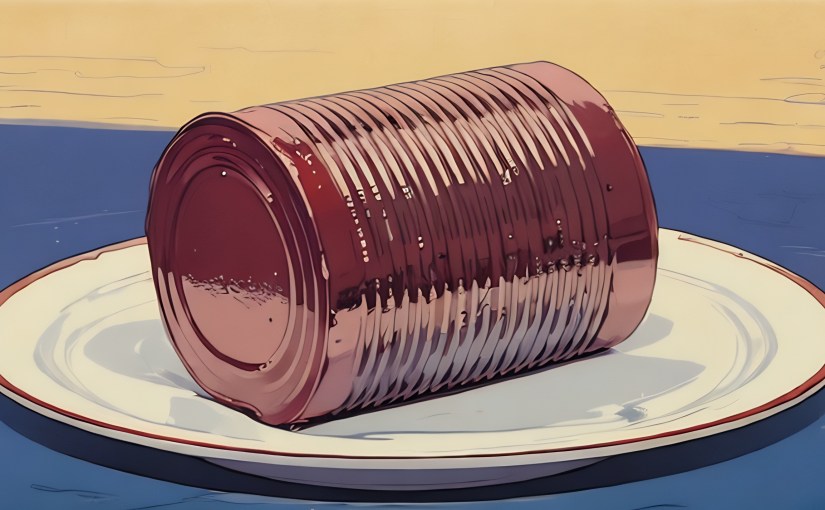
Cranberry sauce on a plate,
With th’ outline of the can.
 
I loved Shreveport in November,
Clay pigeons at The Place with Daddy;
You would ride Big Red,
I’d do my best on Lady.
I remember playing catch with him,
In the soft glow of sunset;
The only sound you could hear,
Was th’ pop of th’ ball in’ th’ mitt.
 
After Daddy in died,
Mama wasn’t the same no more;
She complained of a back pain,
That she never had before.
She got some pills from Dr. Thomas,
And took to her bed;
She went into a haze and hardly came out, 
No matter what we said.

But she loved her grandkids,
For them, she really tried;
They’re the only ones who could
Touch her right mind.
But even they could tell,
Somethin’ wasn’t right with gramaw;
They would get upset those times,
When she didn’t know ’em at all.
 
I spoke to mama that week,
But didn’t get a clue;
Where she was headin’,
Or what she would do.
Over those last ten years,
She lived in her memories.
Was in th’ kitchen when the phone rang;
It was Aunt Emmalee.
 
This year let’s make Thanksgiving,
Like Mama used to do:
Turkey and cornbread dressing,
And rice dressing too.
English peas with pearl onions,
Spiced peaches and candied yams,
Cranberry sauce on a plate,
With th’ outline of the can.

© 2023 Frank David Leone, Jr./Highway 80 Music (ASCAP). The songs and stories on the Highway 80 Stories website are works of fiction. Names, characters, businesses, places, events, locales, and incidents are either the products of the author’s imagination or used in a fictitious manner. Any resemblance to actual persons, living or dead, or actual events is purely coincidental.

“The Orphan Son”


LOCATION: North Georgia
PERIOD: 1874-1934
DRAMATIS PERSONAE: Wyatt Raney (1874-1934); Isaac “Ike” Raney (1848-1874); Eleanor “Ella” McLemore (1848-1874);Ransom Raney (1848-1905)


Wyatt Raney (1874-1934) was the son of Isaac “Ike” Raney (1848-1874) and Martha “Mattie” McLemore (1848-1874).  He was orphaned when his father murdered his mother because of jealousy.

After being orphaned, Wyatt was taken in by his uncle, Ransom Raney (1847-1929), and spent most of his time with his cousin, August Raney (1875-1898). They hunted in the Fannin County, Georgia hills, until they were old enough at which time they both enlisted and fought in the 1898 Mexican-American War.  At the Battle of San Juan Hill both cousins were wounded, Wyatt losing a leg, but August dying from his wound.

Wyatt went home to Georgia and married his sweetheart, Belinda Barnes (1880-1902) and they had two children, Charles and Charlotte. When Charles was old enough he joined up to fight in World War I, but by that time Wyatt had seen the folly in war, and did not understand his son’s desire to run off and fight.  Wyatt’s fears were fulfilled when Charles was killed, and buried along with other Raney dead.

After losing his wife during the birth of his daughter, Wyatt retreated from the world, until his death in 1934, using his last words and breath to curse God.

THE ORPHAN SON
(F. D. Leone, Jr.)

My name is Wyatt Raney
I’m an orphan son
They hanged my Pa for killing Ma
When I was a child of one
Raised by my uncle Ransom
Some said he was really my Pa
That talk made Pa angry
Was why he shot my Ma
I’m an orphan son

Grew up with my cousin August
In the Fannin County hills
Up and down the hollers
We honed our hunting skills
Spring we went for turkey
Deer in the fall
Summers we’d help wi’ th’ whiskey
Th’ most fun of all

I’m an orphan son
Orphaned by a gun
I am but one
An orphan son

1898 me and August
Fought at San Juan Hill
I lost my left leg
But August he was killed
I limped back to Georgia
To Belinda I’d left behind
Our first son Charles was born
In 1899
I’m an orphan son

Charles was just like Ransom
He was his grandpa’s son
Spending weeks out hunting
Always with his gun
That stubborn Raney streak
Just like Ransom and Pa
Brothers, fathers, ‘n’ bad blood
Like a natural law

I’m an orphan son
Orphaned by a gun
I am but one
An orphan son

Charles joined up in ’17
What was he was fighting for
After Vicksburg and Gettysburg
Where’s the glory in war
He’s buried there on the hill
Another Raney sacrifice
My forebears fought for honor
And were proud to pay the price
I’m an orphan son

When I came into this world
Death defined my life
When my daughter Charlotte was born
I lost my wife
1934 and I’m tired
Ready to leave this world behind
If there’s a god in heaven
He’s deaf, dumb, and blind

I’m an orphan son
Orphaned by a gun
I am but one
An orphan son

.© 2022 Frank David Leone, Jr./Highway 80 Music (ASCAP). The songs and stories on the Highway 80 Stories website are works of fiction. Names, characters, businesses, places, events, locales, and incidents are either the products of the author’s imagination or used in a fictitious manner. Any resemblance to actual persons, living or dead, or actual events is purely coincidental.

“Jess Harper Returns to Macon”


LOCATION: San Francisco, California; Macon, Georgia
PERIOD: 1967-2007
DRAMATIS PERSONAE: Jess Harper (1949); Dooley Johnson (1949-2007)


Jess Harper (1949) and Dooley Johnson (1949) grew up in Macon, Georgia in the 1950s. During this decade the civil rights movement was gathering momentum, but it would still take a decade or more before a change in consciousness, especially in the South, would coalesce and the culture would begin to change. This process was helped along by the participation of progressive Southern intellectuals, like the family that produced Dooley Johnson, who offered their support to African American leaders by writing editorials, raising money and pressuring local elected officials.

Dooley and Jess met in grade school and grown up together forming a close friendship which by the time they were teenagers deepened into a romantic relationship. However, interracial dating was considered taboo, particularly in Macon, Georgia, in the Sixties.

Jess was 18 in 1967, the Summer of Love, and had heard about all the exciting things going on in California, Haight-Ashbury, and elsewhere. She desired to escape the claustrophobic racism of Georgia and the lure of California was strong. Despite her young love for Dooley she reluctantly began to believe that their relationship was doomed and chose instead to try her luck in San Francisco. This song is a flashback to the day she left Macon soon after graduating from high school.

Dooley who had been interested in history as a small child, reading about the early settlement of Georgia and forming a critical opinion about the treatment of Native Americans as well as the racial reality of his state. Dooley remained in Georgia where he pursued a degree in history eventually earning a doctorate and becoming a tenured professor of history at Mercer University in Macon.

Jess spent two years just hanging out in San Francisco until she learned that the University of California-Berkeley had created an African American Studies program. She realized that this is what she wanted to do with her life and enrolled in 1970.

She kept up on news from Macon through her mother, and when she learned of Dooley’s death in 2007 she made the long trip back to Macon for his funeral.


JESS HARPER RETURNS TO MACON
(F. D. Leone, Jr.)

Jess Harper threw some clothes into a suitcase
Took what she could but left a lot behind
She’s been thinking ‘bout leaving Macon
Got an early start ‘fore she changed her mind
She didn’t tell nobody not even her mama
Just got on 80 heading west
She’ll try and call Dooley from Alabama
The first chance that she gets

Her mama said they were asking for trouble
She could love a black boy just as easy as one who’s white
Plenty of Georgia don’t like to see a mixed couple
Jess began to think her mama was right

Jess met Dooley Johnson in first grade
They’ve been best friends ever since
He opened up her mind to new things
Like no other boy ever did
When Dooley was sixteen and had his license
He took Jess to see the Indian mounds
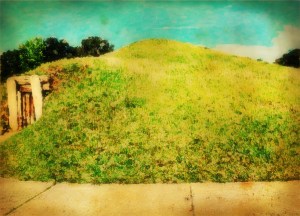
Left there by the great Mississippian people
A thousand years before the white man was around

Many nights Dooley told Jess stories
About the Choctaw and the Creek and their fate
Dooley’s family’s been in Georgia for generations
Jess knows Dooley’ll never leave this state

Jess pulls off the highway at Columbus
Stands at the river as a warm rain starts to fall
Her destination remains undecided
Dooley never did get that call
Forty years will pass before Jess returns to Macon
From California back to the land of her birth
In his Georgia drawl Jess hears Dooley talking
As they lower his body into the blood-red earth

© 2020 Frank David Leone, Jr./Highway 80 Music (ASCAP). The songs and stories on the Highway 80 Stories website are works of fiction. Names, characters, businesses, places, events, locales, and incidents are either the products of the author’s imagination or used in a fictitious manner. Any resemblance to actual persons, living or dead, or actual events is purely coincidental.

Ruby Jones Robison (1955)

Ruby Jones Robison is Pearl Robison’s aunt, on her father’s side. Ruby was also from Conyers, Georgia and for whatever reason, wanted to get as far away as she could. She chose Texas Tech in Lubbock, Texas when she went off to school, over 1,100 miles away.

She was a freshman when she met Darrel Haynes, a senior and with his wiry frame, Restitol hat and slow Texas drawl, he swept her off her feet. He was an engineering student and had a job in hand upon graduation at Baker Oil in Midland, Texas.

Ruby just managed to graduate before marrying Darrel in 1977.  An engineer at Baker Oil makes good money, and compared to her upbringing, Ruby felt like she was rich.  They lived in a 3,000 square foot house, to her a mansion, and she drove a Mercedes Benz. They had a good life and were happy for the first few years, but things started to sour when it became obvious that marriage was not enough to keep Darrel from succumbing to the attractions of single women in the local bars.

When Ruby lost their first baby, a little girl, and Darrel’s reaction was crudely insensitive, the next piece of evidence that she found of his cheating pushed Ruby over the edge and out the door. It took some courage for Ruby to walk away from the kind of life she had, but she was made of strong stuff.

She rode a bus the entire 1,000 mile journey back to Conyers, nursing a bottle of bourbon the whole time. By the time she got back home she had pretty much put Darrel behind her. What she grieved over more than anything was the loss of her little girl, whom she named Catherine Jane after her mother and grandmother.

Ruby stayed in Conyers and went to work for an attorney, who later proposed, and remained a close confidant to Pearl. Eventually Ruby told the story of the failure of her first marriage to her sister Ruth Ann Robison long after the fact (see song “Feel Like Dirt“).


“Mildred’s House of Values”


LOCATION: Jackson ,Mississippi
PERIOD: 1944-2014
DRAMATIS PERSONAE: Mildred Motts Hooper (1944-2014); Leon Hooper (1933-1975); Levi Hooper (1973)


Mildred Motts Hooper was born in Tallulah, Louisiana in 1944, the half sister of Molly Motts Raney. Mildred married Leon Hooper and had one son, Levi Hooper.

Mildred liked to cook and crochet and was happy as a homemaker.  One of her favorite dishes to prepare was baked cheese grits which she would serve with breaded pork chops and homemade rolls.

She and Leon were married in 1963 shortly before Leon was shipped off to Vietnam.  When Leon returned from his tour of service they settled down in Jackson, Mississippi where Leon worked as a welder and they raised their only son, Levi, who was born in 1973.

However, Leon only lived another two years, dying in 1975, and Levi had no memories of his father.  To help make ends meet Mildred began to sell items from her home, establishing a thrift store at her residence (see song, “Mildred’s House of Values“).

Mildred passed away in 2014 after suffering a stroke.


MILDRED’S HOUSE OF VALUES
(F.D. Leone, Jr.)

Mildred’s “House of Values,” on a corner lot
A price tag hung from every table and chair
Things for sale like any other shop
But it was Mildred’s home and she still lived there

Her son Levi would come by and do odd jobs
Help his momma with what she needed done
Rustin’ on blocks, a ’68 Dodge
Levi never could get to run

A person does all they can do
Full time job just gettin’ through
Rise in the morning, close your eyes at night
In between, try to get it right

Mildred was widowed nineteen-seventy-five
Leon Hooper was a good man
Price tags went up, year after he died
Life don’ turn out nothin’ like we plan

The ’68 Dodge, last car Leon bought
Rest of his stuff, sittin’ in a shed
You can see in Levi, Leon’s walk
Are the ones we love ever really dead?

A person does all they can do
Full time job just gettin’ through
Rise in the morning, close your eyes at night
In between, try to get it right

Mildred’s “House of Values,” on a corner lot
From every stick of furniture a price tag hung
A ‘68 Dodge rustin’ on blocks
Levi never could get to run

© 2017 Frank David Leone, Jr./Highway 80 Music (ASCAP). The songs and stories on the Highway 80 Stories website are works of fiction. Names, characters, businesses, places, events, locales, and incidents are either the products of the author’s imagination or used in a fictitious manner. Any resemblance to actual persons, living or dead, or actual events is purely coincidental.

“Levi After Lucy”


LOCATION: Mississippi: Vicksburg, Greenwood, Greenville
PERIOD: 2015-16
DRAMATIS PERSONAE: Levi Hooper (1973); Lucy Cooper (1980-2015)In the aftermath of Lucy


Cooper‘s either accidental overdose or intentional suicide while incarcerated in the Louisiana Prison for Women, Levi Hooper went on something of a bender. Levi was not normally a drinker, but he felt despondent over Lucy’s death and did the only thing he knew how in order to deal with the set of emotions he felt: anger, shock, frustration.

Lucy had not done any drugs or much drinking for weeks prior to being arrested. That arrest was in itself was another case of bad timing: someone she thought was a friend flipped when arrested and gave Lucy up as his dealer (see song, “Levi and Lucy“. The reason Levi did not wish to believe that Lucy had committed suicide was because often when a former user has not done any narcotics for a while, if they relapse at their last dosage, their body cannot tolerate what it once did.

In any event, Lucy had been in the process of turning her life around at the time of her arrest, and her death while serving a relatively short sentence, 18 months, was hard for Levi to take (see songs, “Ready for Change” and “When Louanne Met Lucy in Prison“).

His binge begins in bars around Vicksburg, then he hits the road, to Greenwood, and Greenville, ending up at a small Catholic church in Lake Providence, Louisiana. Levi does not wish to be rude to the priest, he is simply exhausted both mentally and physically, and after this experience, Levi goes back home, devotes himself once again to helping his mother and begin to pick up the pieces of his life.


LEVI AFTER LUCY
(F. D. Leone, Jr.)

Levi staggered up the stone church steps
A slice of moon hung above a wooden cross
Inside the door he stared at a concrete font
Then walked down the aisle, drunk and lost

He eased himself into a pew and sat
Musty scent of incense hung in the air
Worn leather knee-benches underfoot
Levi tried to find the words of a prayer

Vicksburg, Greenwood, Greenville
Gone down many roads, travelin’ still
Pavement, gravel, then dirt
But what he’s lookin’ for ain’t in this church

His head sank to his chest; he slept
A priest shook him; he struggled to his feet
The priest asked him, “Do I know ye?”
“No,” Levi said. “You don’ know me.”

Vicksburg, Greenwood, Greenville …

“Please, Lord, please keep me still
From sinkin’ lower an’ blowin’ away
I’ll straighten out I swear I will
Least that’s how I feel today”

Priest looked him over and said
“Were you waiting to see me?”
Woman was dustin’ the altar with a rag
“No, sir, I just fell asleep.”

Vicksburg, Greenwood, Greenville …

© 2018 Frank David Leone, Jr./Highway 80 Music (ASCAP). The songs and stories on the Highway 80 Stories website are works of fiction. Names, characters, businesses, places, events, locales, and incidents are either the products of the author’s imagination or used in a fictitious manner. Any resemblance to actual persons, living or dead, or actual events is purely coincidental.