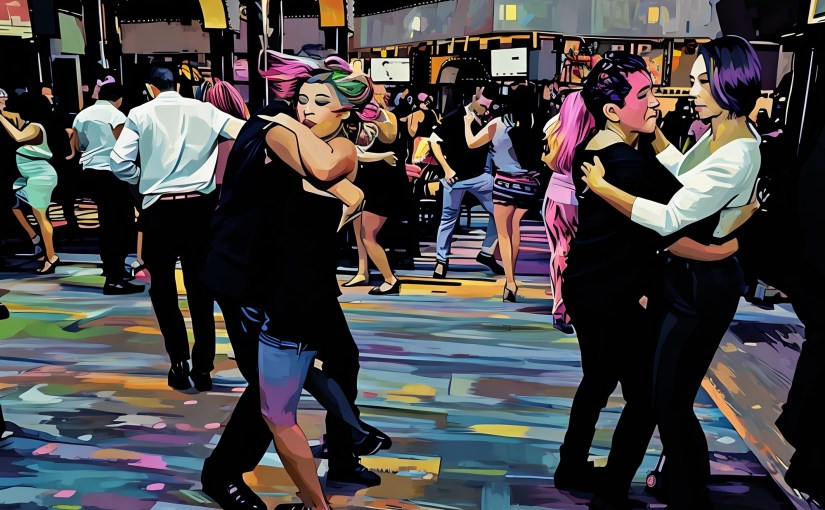
“Mama’s Thanksgiving”


LOCATION: Shreveport, Louisiana.
PERIOD: Thanksgiving, 1950s-1984.
DRAMATIS PERSONAE: Lue Ellen Knox (1900-1979); Benjamin MacCrae (1896-1969); John Henry MacCrae (1937); Alice MacCrae (1931); Benjamin John “B.J.” MacCrae (1967); Margaret Casey MacCrae (1970); Stephen Baker MacCrae (1972); Ann Ellen Martin (1963); Sarah Meredith Martin (1965); Jason MacCrae Martin (1970).


Five years after the death of their mother her children, John Henry MacCrae (1937) and Alice MacCrae Martin (1931), are talking about Thanksgiving, 1984.  They begin to reminisce about their parents and life growing up, and plan on making a meal just like the one their mother used to make when they were all at home.

This conversation is the first in which they confront the reality of their mother’s reclusive behavior after their father’s death from a sudden heart attack in 1969, her prescription pain medication addiction, and finally taking her own life in 1979.


MAMA’S THANKSGIVING
(F. D. Leone, Jr.)

This year let’s make Thanksgiving,
Like Mama used to do:
Turkey and cornbread dressing,
And rice dressing too,
English peas with pearl onions,
Spiced peaches and candied yams,
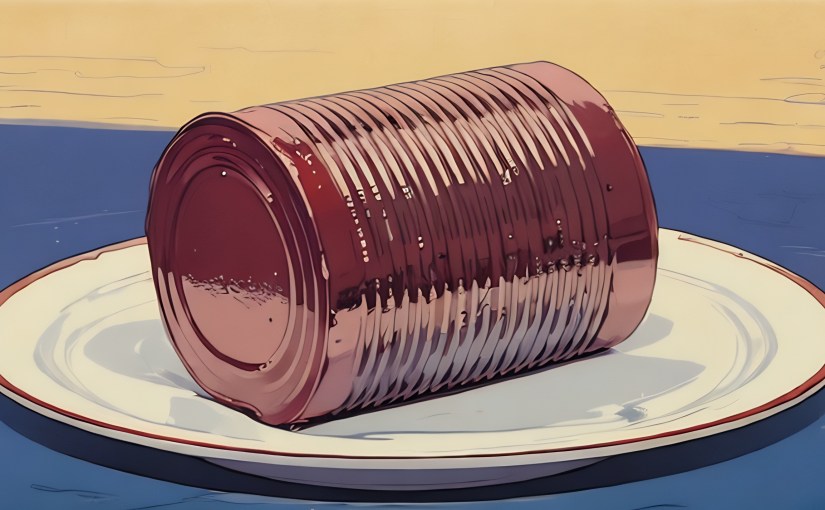
Cranberry sauce on a plate,
With th’ outline of the can.
 
I loved Shreveport in November,
Clay pigeons at The Place with Daddy;
You would ride Big Red,
I’d do my best on Lady.
I remember playing catch with him,
In the soft glow of sunset;
The only sound you could hear,
Was th’ pop of th’ ball in’ th’ mitt.
 
After Daddy in died,
Mama wasn’t the same no more;
She complained of a back pain,
That she never had before.
She got some pills from Dr. Thomas,
And took to her bed;
She went into a haze and hardly came out, 
No matter what we said.

But she loved her grandkids,
For them, she really tried;
They’re the only ones who could
Touch her right mind.
But even they could tell,
Somethin’ wasn’t right with gramaw;
They would get upset those times,
When she didn’t know ’em at all.
 
I spoke to mama that week,
But didn’t get a clue;
Where she was headin’,
Or what she would do.
Over those last ten years,
She lived in her memories.
Was in th’ kitchen when the phone rang;
It was Aunt Emmalee.
 
This year let’s make Thanksgiving,
Like Mama used to do:
Turkey and cornbread dressing,
And rice dressing too.
English peas with pearl onions,
Spiced peaches and candied yams,
Cranberry sauce on a plate,
With th’ outline of the can.

© 2023 Frank David Leone, Jr./Highway 80 Music (ASCAP). The songs and stories on the Highway 80 Stories website are works of fiction. Names, characters, businesses, places, events, locales, and incidents are either the products of the author’s imagination or used in a fictitious manner. Any resemblance to actual persons, living or dead, or actual events is purely coincidental.

“Three Loves of Lue Ellen Knox”


LOCATION: Texarkana, Arkansas; Shreveport, Louisiana.
PERIOD
: 1919-1979
DRAMATIS PERSONAE: Lue Ellen Knox (1900-1979); Johnny “Jack” Stone (1899-1973); Richard Wesley Bryant (1885-1930); Benjamin MacCrae (1896-1969).


Lue Ellen Knox, Texarkana native, met Johnny “Jack” Stone in 1919 at a dance given for the soldiers returning from having served in World War I. She and Johnny had a night of romance and continued their affair for a few weeks. But it ultimately fizzled out, leaving Johnny feeling rejected and disappointed.

Almost a decade later, December of 1928, Lue Ellen started dating Richard Wesley Bryant, fifteen years her senior. Wesley was the oldest son of a wealthy Shreveport family, in the oil and gas business, and he was very wealthy. He had previously been married but his wife had died several years prior to their meeting. Wesley wooed Lue Ellen with expensive gifts, jewelry, furs,, haute couture, and was on the verge of proposing to Lue Ellen when the stock market crashed in October, 1929, leaving Wesley near bankruptcy. Shortly after breaking off their engagement, Wesley lept to his death, unable to face the shame of being broke and consequent loss of social standing.

Again, almost a decade later, spring of 1938, Lue Ellen came into contact with a navy man just back from the sea, retired, Benjamin MacCrae. He was a romantic and charmed her with a single red rose each day. They fell truly in love and their marriage lasted for thirty years before Ben suffered a fatal heart attack in 1969.

Lue Ellen lived on, alone, for another ten years but finally succumbed to her depression, and loneliness, and took her own life, at age 79, holding a photograph of Ben and with a bundle of dried roses by her side having lived a full life and loved three men.


THREE LOVES OF LUE ELLEN KNOX
(F.D. Leone, Jr.)

A bundle of dried roses by her side,
The night Lue Ellen Knox died.
Once, she was a happy bride;
Twice, happiness was stolen from her.
In her life, Lue Ellen loved three men:
Johnny, Wesley, and Ben.
After tonight she won’t love again;
That part of her story is over.

Johnny was just back from The Great War,
When he met Lue at a “coming home” dance.
Lips brush a cheek, fingertips touch an arm;
Summer kisses under rice paper lamps.
Johnny needed someone, he was haunted,
He thought Lue was who he wanted,
But Johnny ended up disappointed;
Their love flared hot then it was over.

Wesley was wealthy and older;
Since his wife died his heart had grown colder.
Lue Ellen made the embers smoulder;
Wesley felt like a new man.
He used his money to impress:
Cartier bracelet, Chanel evening dress.
On one knee he asked Lue Ellen to say yes;
The market crashed; Wesley was ruined.

Ben sent Lulu a rose every day,
Home from the sea he captured her heart.
A small wedding was planned for May;
Honeymoon in the Ozarks.
Ben loved Lulu from the day they met,
For thirty years they shared the same bed.
Then suddenly her Ben was dead;
Their time together seemed cut short.

A bundle of dried roses by her side,
It’s been ten years since Ben died.
She remembered her three loves and cried;
It had all gone by so fast.
With Ben’s photograph in her hand,
Whiskey and pills on the bedstand;
The last few months Lue Ellen planned,
To say goodbye to it all at last.
 
Ben’s death, the last cruel twist of fate;
Third time around Lue Ellen found true love.
The other two were not mistakes;
Each one perfect, for what it was.
Whiskey spilled as her head collapsed;
A few pills scattered as her hand relaxed.
The final curtain closed on her third act;
Lulu is with Ben forever after.

© 2023 Frank David Leone, Jr./Highway 80 Music (ASCAP). The songs and stories on the Highway 80 Stories website are works of fiction. Names, characters, businesses, places, events, locales, and incidents are either the products of the author’s imagination or used in a fictitious manner. Any resemblance to actual persons, living or dead, or actual events is purely coincidental.

“L’Maison d’Amour”

Location: San Francisco
Period: 1879-1886
Dramatis personae: Sally Ann Gray; patrons of brothel.


After Sally Ann and Spooner made it out to San Francisco, Spooner went back to Louisiana after a month or so, but Sally Ann stayed behind.

Initially she got work in a bar/brothel as a bartender, something she had been back home.  The madam, Marie LaBlanc, another Louisiana transplant, took Sally under her wing, and eventually gave her more and more responsibilities until Sally Ann was essentially her second in command.  While she did do some work as a prostitute, early on, over time she maneuvered herself more and more into management and took over upon Marie’s death, who had been killed by an obsessively jealous patron.

Sally spent seven years in San Francisco, and this song describes a typical night in which she verbally spars with a regular customer, who, while she fends of his advances, she acknowledges that he is certainly not the worst kind of man who visits the “house of love”.


L’MAISON D’AMOUR
(F. D. Leone, Jr.)

“Sally gal
Come over here
Sit in my lap
Whisper in my ear.
You know I love you,
Like a daughter;
Not like those other fellas,
Who don’t treat you like they oughta.”

“Harvey, get on,
You ol’ pervert;
You don’ smell good,
An ‘ need to change your shirt.
“Sally gal,
You used t’ be so prim ‘n’ proper;
You were as green,
As a grasshopper.”

“Didn’t take you long,
Before you learned th’ ropes;
Now you give us crusty buzzards,
Th’ straight dope;
Sally gal,
Come on ‘n’ sit in my lap.
Aw now, girl,
Don’t look at me like that.”

Next mornin’ now;
Outside a soft grey drizzle.
Sally is wonderin’,
How a dream can fizzle.
No time for that, no, no no;
No second or third thoughts.
Sally don’ waste time,
Dwellin’ on what she lost.

One by one,
Her girls come downstairs,
As usual, complainin’;
Sally silently swears.
She’s still young ‘n’ pretty,
But not a girl no more.
She’s th’ madam now:
L’maison d’amour.

Well, ol’ Harvey,
He ain’ so bad,
Better’n most of ’em;
He makes her laugh.
“Mary, ya’ll get started, and
Wash your coffee cups.
Get yourselves together, b’fore
They start showin’ up.”


CREDITS:
David Leone: guitar, vocal
Tammy Rogers: fiddle

Related songs in chronological order:
“Ballad of Black Jack Kelley and Spooner Magee”
“Sally Ann”
“A Day in the Life of Spooner Magee”
“L’Maison d’Amour”
“Aftermath”

© 2023 Frank David Leone, Jr./Highway 80 Music (ASCAP). The songs and stories on the Highway 80 Stories website are works of fiction. Names, characters, businesses, places, events, locales, and incidents are either the products of the author’s imagination or used in a fictitious manner. Any resemblance to actual persons, living or dead, or actual events is purely coincidental.

“The Ballad of Black Jack Kelley and Spooner Magee”


LOCATION: North Central Louisiana
PERIOD: 1849
DRAMATIS PERSONAE: “Black” Jack Kelley (1824-1872); Sam “Spooner” Magee (1826-1882); the Stranger.


Jack Kelley (1824-1872) married into the Magee family, marrying Margaret Magee (1824-1896) in 1841. Jack and her brother, Spooner Magee (1826-1882), became best friends and would often go hunting together as well as drinking and getting into a variety of mishaps and adventures.

The Kelleys and Magees were also related through marriage.  Spooner Magee’s mother was Sarah Motts (1805-1890), whose brother Lucas Motts (1792-1822) married Rachel Ross (1799-1877). After Rachel was widowed in 1822 she re-married in 1824 to Stephen Kelley (1797-1866) who was Jack Kelley’s father. So, Spooner and Margaret were half-cousins to Jack, if such a term exists.

On the night this song describes, Jack and Spooner were at a local watering hole when Jack offers Spooner the idea of going out to California, this was 1849 when the gold rush was the rage. However, Jack proposed that they not try their luck at gold prospecting, instead to open a general mercantile storefront and sell necessaries to those with a greedier nature. Jack thought it more reliably lucrative, as he says, “fleecing the suckers.”

But while this discussion was taking place, of which Spooner remained unconvinced of the venture, a stranger interrupted them and the night took a somewhat violent and unfortunate detour.

Jack and Spoon never did make it out to California. In fact, the idea was never broached again.


BALLAD OF BLACK JACK KELLEY AND SPOONER MAGEE
(F. D. Leone, Jr.)

Black Jack and Spooner; Red Ball Saloon:
“There’s gold in Californy, let’s go, Spoon.”
“Californy is a long way, why not just Shreveport?”
“Cuz there ain’t no gold in Shreveport, just whiskey, an’ whores.”
“Hey bud, come over here, set us up again:
Two whiskeys for me, and a beer for my friend.
Let’s find a table, Spoon, an’ talk some more;
A quiet little corner, there, away from the door.”

“Jack, I dunno, I ain’t grasped it jes’ yet,
It all sounds to me awful far-fetched.”
“Spoon, it’s a simple plan, just grab a’hold;
Those busters jump at any little whisper of gold.
They need their spade and pan to feed the fever dream.
Spoon, we’ll start a store; fleece those suckers clean.
“We won’t do any panning, that’s to much like work.
Won’t get rich as miners, but make a fortune as clerks.”

The Stranger walked in and interrupted them;
He had trouble written all over him.
“Friends, you look like a couple of sportin’ blokes,”
He sat right down and asked, “do you mind if I smoke?”
“Not if you’ll share one of them fine cigars.
What’re you drinkin’? I was jus’ headed to the bar.”
“Whiskey. I couldn’t help but overhear
Your extravagant plan of gettin’ rich on the frontier.”

“Frankly, son, y’all don’t appear to have the grit
To execute your plan and make a go of it.”
“Fella, you sound schooled so you oughta know
You can’t take the measure of a man by the cut of his clothes.”
“Brother, it ain’t your clothes that give you away,
It’s how you been actin’ and little things you say.”
“Well, I’ve had enough of your jawin’; best you move on,
Before I give you some choice words to chew on.”

“Neighbor, you’re foolish and I think you’re crude,
You’re a little off key and need to change your tune.
I don’t tolerate behavior that I find rude.
There’s your words, freshly chewed.”
“Mister, now you’ve gone and made me mad,
An’ I hope fancy words ain’t all you have.”
Jack kicked back his chair and threw two quick jabs.
The Stranger dodged ‘em both and that’s when Jack saw the badge.

Jes ‘bout that time Spooner went for the door
He didn’t look, Jack was with him, he was sure.
When he got home and Jack was nowhere about,
He went down to the jail house and bailed Jack out.
After this, Jack’s gold talk came to an end;
He never spoke of California to Spooner again.
They remained good buddies, despite this interlude;
But, Jack improved his manners and was hardly ever rude.

David Leone: guitar, vocal
Tammy Rogers: fiddle

Related songs in chronological order:
“Ballad of Black Jack Kelley and Spooner Magee”
“Sally Ann”
“A Day in the Life of Spooner Magee”
“L’Maison d’Amour”
“Aftermath”

© 2023 Frank David Leone, Jr./Highway 80 Music (ASCAP). The songs and stories on the Highway 80 Stories website are works of fiction. Names, characters, businesses, places, events, locales, and incidents are either the products of the author’s imagination or used in a fictitious manner. Any resemblance to actual persons, living or dead, or actual events is purely coincidental.

“Texarkana 1984”


LOCATION: Texarkana, Arkansas; Shreveport, Louisiana; Dallas, Texas
PERIOD: 1980s
DRAMATIS PERSONAE:  Maxine “Maxie” Broussard; Lily Broussard; Rocky Rhodes; Duane Dickson (1949)


Maxine “Maxie” Broussard was the younger sister of Mike “Sarge” Broussard. Mike and Maxie were born and grew up in Vivian, Louisiana, but when their parents separated Maxie went with her mother to Texarkana, Arkansas. Lily was born, unplanned, the result of a one night stand with a guy, Rocky Rhodes, she hardly wanted, and never saw again, meaning she raised Lily by herself. When Lily was 15, they left Texarkana and went to Shreveport, then Dallas where this story takes place.


TEXARKANA 1984
(F. D. Leone, Jr.)

The shoulder pads from her mama’s jacket
Lily stuffed into her bra
Fixed her hair, and did her makeup
Left no trace of Arkansas
In a little black sequined clutch,
She had a condom she’d kept there f’months
She was fifteen, but so much more
Texarkana 1984

When her mama, Maxine, met Duane
She thought he might be her ticket out
He promised her Dallas, then claimed
“I wanna try Shreveport for now”
Maxine did the one thing she knew
She an’ Lily left in Duane’s Subaru
Hell bent for Dallas in a thunderstorm
Texarkana 1984

Jésus could mambo and cha-cha-cha
He had all the right moves
The salsa girls cooed ooh-la-la
Jésus was black satin smooth
He saw Lily swaying by the bandstand
Danced over and took her by the hand
They were magic on the disco floor
Texarkana 1984

Duane, who Maxine left behind
Came to Dallas for his Subaru
How hard could Maxine be to find?
Duane was nobody’s stooge
Maxine was workin’ at a Deep Ellum bar
That’s where Duane saw his car
His luck was improvin’ for sure
Texarkana 1984

Duane staked out Maxine
Tailed her everywhere she’d go
Took notes on her routine
Where she went, what she did, he’d know
He showed up at the salsa club
Drank too much to build his courage up
He wasn’t sure like he was before
Texarkana 1984

Jésus was standing in the way
This Latin guy might give him trouble
Duane was just about to make his play
When Maxine sat down at his table
She said “Duane, here, take your keys,
I’m sorry, but I just had to leave.
I dreamed of this and so much more.”
Texarkana 1984

Maxine dealt blackjack in Reno, Nevada
Jésus and Lily ran the salsa club
Duane had a car lot in Texarkana
Sold the Subaru for $500 bucks
Their dreams partly came true
Funny, how they sometimes do
One by one they knew the score
Texarkana 1984
They got about what they bargained for
Texarkana 1984

.© 2022 Frank David Leone, Jr./Highway 80 Music (ASCAP). The songs and stories on the Highway 80 Stories website are works of fiction. Names, characters, businesses, places, events, locales, and incidents are either the products of the author’s imagination or used in a fictitious manner. Any resemblance to actual persons, living or dead, or actual events is purely coincidental.

“Elegy for Dred Scot Lee”


LOCATION: Bossier City, Louisiana; Shreveport, Louisiana
PERIOD: 1903-2023
DRAMATIS PERSONAE: Joy Brown; Dred Scot Lee; Gaither Luther Motts (1883-1971); Earl “Dooky” Ford


From 1882 to 1968, 4,743 lynchings occurred in the U.S., according to records maintained by NAACP. Other accounts, including the Equal Justice Initiative’s extensive report on lynching, count slightly different numbers, but it’s impossible to know for certain how many lynchings occurred because there was no formal tracking. Many historians believe the true number is underreported.

The highest number of lynchings during that time period occurred in Mississippi, with 581 recorded. Georgia was second with 531, and Texas was third with 493. Lynchings did not occur in every state. There are no recorded lynchings in Arizona, Idaho, Maine, Nevada, South Dakota, Vermont, and Wisconsin.

Black people were the primary victims of lynching: 3,446, or about 72 percent of the people lynched, were Black. But they weren’t the only victims of lynching. Some white people were lynched for helping Black people or for being anti-lynching. Immigrants from Mexico, China, Australia, and other countries were also lynched. [Staff writer NAACP. “History of Lynching in America”. In NAACP History Explained. Web. Retrieved on May 9, 2023, from https://naacp.org/find-resources/history-explained/history-lynching-america.%5D

Joy Brown met Dred Scot Lee in 1903 when they happen to share a Coke.  At this time it was prohibited to drink after a black person, hence the existence of separate water fountains, and so, drinking from the same bottle was quite rebellious. They began to see each other, meeting in secret and hiding their friendship. And, it was only a friendship.

However, Joy did experience sexual intercourse when she was raped by her maternal uncle, Gaither Motts. It was obvious to her parents that Joy had been attacked, and after some intense questioning Joy admitted to having been raped. But instead of accusing her uncle, her mother’s brother, she named Dred – a defenseless negro boy.

During the Jim row era, a negro was often lynched for merely looking at a white woman.  It was assumed any negro, even a boy, accused of rape was certain to be hung – which Dred was.

His body was left for two days. People took pictures, and some had post cards made up which were mailed to friends and family across the country. Until finally, his mama had him cut him down and buried in a nearby field behind her house. They put a wooden cross to mark his grave but after his mama died, no one tended the grave and it was not long before there was nothing left to mark his grave.

Feeling ashamed over being raped and guilty for accusing an innocent negro boy, Joy dropped out of school and began drinking and doing anything to blot the entire chain of events out of her mind. Her uncle too, regretted his crime and that an innocent black boy was killed for it. But kept his secret for nearly 70 years until his death in 1971.

Joy went to Shreveport, and found herself on Fannin Street and became a working girl and heroin addict. Joy was taken over by a pimp, Dooky Ford, who as was his custom, also raped her. But this time, Joy was already pregnant with Gaither’s child.

Dooky let her know that as long as she was pregnant, her duties in the brothel would not include seeing clients. But Dooky told her, “If you can’t fuck you got to clean and cook.” Which she did, happily. However, when the child was born, a boy, she decided that she had to get away from there. She drowned the boy in the bathtub and in remorse intentionally overdosed herself.

More than 100 years later, and after being petitioned for decades by his family, the governor of Louisiana pardoned Dred Scot Lee. Pardoned is not accurate since Dred had not actually been convicted of raping Joy Brown. But it was a long overdue attempt to wash the stain off Dred Scot Lee’s name, as well as trying to retrieve some dignity for the people of north Louisiana.

A slate plaque was erected at the site of his hanging, a nondescript field outside of Bossier on Highway 80. On the stone were carved these words: “Dred Scot Lee / Hung in 1896 / For something he never done / He was 15.”


ELEGY FOR DRED SCOT LEE
(F. D. Leone, Jr.)

Bossier City nineteen-aught-three
Joy Brown met Dred Scot Lee
Forbidden love never seemed so right
They saw each other despite the risk
Only when they wouldn’t be missed
‘Cuz Dred was black and Joy was white

It began when they shared a Coke
The glacial ice was broke
They crossed a line and could not go back
When her lips touched where Dred’s had been
She felt a thrill, a first taste of sin
Their lives were changed with that one act

Joy was ashamed about who had raped her
Never said it was Uncle Gaither
She named the only negro boy she knew
Silhouetted in the setting sun
For two days Dred Scot Lee hung
And into a darkness Joy withdrew

Fannin Street, nineteen-aught-four
Dooky turned Joy into a whore
When her belly began to swell up
Dooky said, “if you can’t earn on your back,
You have to pick up the slack
Changin’ chamber pots, pushin’ a mop”

Gaither’s boy looked at Joy and laughed
Then she drowned him in his bath
Lit a candle and stared at the flame
The water was cold, the boy was blue
She boiled double junk in her spoon
Thought of what Gaither done and who she named

Before he died at age eighty-eight
Gaither had to set the record straight
Finally tell the truth about Joy
Slowly in a shaky scrawl
He wrote his story, told it all
“It was me who raped that girl, not that nigra boy”

Gaither despised the man he’d been
Did what he could to make amends
For the rape and his role in the mob
Donated the money he had saved
What he owed could not be paid
He did his best to get right with God

Bossier City twenty-twenty-three
A marker was placed beneath a tree
These words were carved into the slate:
“Here Dred Scot Lee was hung
For something he never done
Lynching Number 328

© 2025 Frank David Leone, Jr./Highway 80 Music (ASCAP). The songs and stories on the Highway 80 Stories website are works of fiction. Names, characters, businesses, places, events, locales, and incidents are either the products of the author’s imagination or used in a fictitious manner. Any resemblance to actual persons, living or dead, or actual events is purely coincidental.

“Hit the Road”


After five years, Pearl decides to leave Jake and Shreveport. She doesn’t know she is pregnant when she leaves for Texas where her sister is living.

Pearl Robison comes from a fractured family line going back before the Civil War, and her life has carved a jagged line as well. She is related through her father, Jason Jones Robison (1946- ) to Ruby Robison (1843-1933), who was the sister of Marcus Walsh Robison (1836-1897) Pearl’s great-great-great-grandfather. Ruby Robison was a young prostitute in Shreveport who gave birth to a Civil War soldier’s child, the first Pearl Robison (see songs, “Fannin Street” and “Levi Motts is My Name“).


HIT THE ROAD
(F. D. Leone, Jr.)

Last five years been a good run
She hates to see it end like this
She can tell it’s coming undone
Can’t say just why that is

It’s the longest she’s stayed in one place
This leaving feeling is one she knows
She don’t want to see the hurt on his face
Best thing for her to do is just go

Gonna hit the road
It’s what she knows
When her back’s against the wall she goes
Gonna pack it in
Once again
When that old feeling grows
It’s time to hit the road

Got a sister in Fort Worth
Been years since she’d seen her mama and them
‘Bout three hours from Shreveport
She sure hates to run from him

Gonna hit the road
It’s what she knows
When her back’s against the wall she goes
Gonna pack it in
Once again
When that old feeling grows
It’s time to hit the road
When that old feeling grows
It’s time to hit the road

© 2023 Frank David Leone, Jr./Highway 80 Music (ASCAP). The songs and stories on the Highway 80 Stories website are works of fiction. Names, characters, businesses, places, events, locales, and incidents are either the products of the author’s imagination or used in a fictitious manner. Any resemblance to actual persons, living or dead, or actual events is purely coincidental.


Related songs in chronological order:
McLemore’s
Between Here and Gone
Pearl and Jake
Hit the Road
The River and Jake
Terrell
The Red River Flows
Sadie Jo

“James”

Rosalie Broussard found herself pregnant a week after turning sixteen (see song “Jenny or James“).  Though her boyfriend wanted her to have an abortion, and even offered her the money, she refused, because Rosalie had a naive understanding about what having a baby really meant, and also because she just didn’t like the idea.  However, she eventually realized she couldn’t handle the responsibility and when James was three she handed him over to her father and his second wife, MaeAnn.

When Rosalie was twenty she left Vivian, Louisiana and married Tully Tate, a man she met while waitressing at a truck stop.  They had twin girls and lived in Mobile, Alabama.  But Rosalie never could make peace with domestic life and would run off from time to time, each time Tully would find and bring her back home (see song “What Tully’s Done“).  But eventually he grew tired of chasing after his runaway wife and Rosalie finally left that family as well (see song “Rosalie“).

Mike and MaeAnn dearly loved James since they saw that his mother had not shown him the natural love of a mother.  But James still felt an emptiness which was only relieved when he played catch with his grandpa.

JAMES
(F.D. Leone, Jr.)

James was Wednesday’s child, full of woe
His mama left when he was just three years old
Rosalie was only sixteen when she had him
Left him with her parents; he was raised by them

James grew up wondering if he’d done something wrong
That made his mama leave him at his grandpa’s home
His father was a shadow, a name that wasn’t said
But Mike and MaeAnn did their best

When James played catch with Mike
For a little while everything seemed alright
A peaceful feeling settled in with the dimming light
On those summer days when James played catch with Mike

He overheard bits and pieces about his mama’s life
She was living in Mobile, a truck driver’s wife
At Christmas she might visit but wouldn’t stay too long
Gave James some toy he’d long ago outgrown

MaeAnn said he had twin sisters in Mobile
James really hoped that they had a better deal
But soon Rosalie would run off from them too
It seemed that’s all his mama was cut out to do

When James played catch with Mike
For a little while everything seemed alright
A peaceful feeling settled in with the dimming light
On those summer days when James played catch with Mike

© 2019 Frank David Leone, Jr./Highway 80 Music (ASCAP). The songs and stories on the Highway 80 Stories website are works of fiction. Names, characters, businesses, places, events, locales, and incidents are either the products of the author’s imagination or used in a fictitious manner. Any resemblance to actual persons, living or dead, or actual events is purely coincidental.

“The Red River Flows”


LOCATION: Shreveport, Louisiana; Terrell, Texas
PERIOD: 2015-2019
DRAMATIS PERSONAE: Jacob “Jake” Tyler McLemore (1959); Pearl Boone Robison (1973); Sadie Jo Robison McLemore (2015)


Jake McLemore had owned a bar in Nashville, but sold it and bought a parcel of land between Shreveport and Vivian, Louisiana (see song “McLemore’s“). The Red River flowed through his land, and he built a small cabin there. In this song, Jake is contemplating life in the wake of the failure of his latest relationship.

But he hears from Pearl again, who tells him that she gave birth to their daughter, Sadie Jo, who is now one year old, with her living in Terrell, Texas.


THE RED RIVER FLOWS
(F. D. Leone, Jr.)

I’m out on the porch
It’s about ten to four
The Red River flows
It just goes and goes

Dickel is what I sip
A Lucky is on my lip
The Red River flows
It just goes rolling on

There was a woman, but she left
Wasn’t the worst, wasn’t the best
No note, no goodbye
But I don’t even wonder why

The rain softly falls
A morning dove softly calls
The Red River flows
It just goes and goes

Yesterday I heard from Pearl
Told me about our little girl
Her name is Sadie Jo
The Red River flows and flows
Her name is Sadie Jo
That Red River goes rolling on

© 2019 Frank David Leone, Jr./Highway 80 Music (ASCAP). The songs and stories on the Highway 80 Stories website are works of fiction. Names, characters, businesses, places, events, locales, and incidents are either the products of the author’s imagination or used in a fictitious manner. Any resemblance to actual persons, living or dead, or actual events is purely coincidental.


Related songs in chronological order:
McLemore’s
Between Here and Gone
Pearl and Jake
Hit the Road
The River and Jake
Terrell
The Red River Flows
Sadie Jo

“Molly’s Got a Secret”


LOCATION: Delta, Louisiana; Vicksburg, Mississippi
PERIOD: 1943-2014
DRAMATIS PERSONAE: Molly Motts (1931-2014); Lamar Odom (1914-1960); Bessie Ferguson (1914-1966); Donald Motts  (1911-1977); Vernon Raney (1903-1987)


Molly Motts was sexually molested by her step-father in Delta, Louisiana from the age of 12. But Molly is resilient and refuses to identify herself as a victim. As soon as she was grown up enough she crossed the river to Vicksburg and attracted the attention of a prominent Mississippi man, Vernon Raney. Molly marries him and over time becomes the matriarchal figure of the Raney family whose criminal enterprises began with bootlegging and under Molly’s leadership branched out into marijuana and pills.


MOLLY’S GOT A SECRET
(F. D. Leone, Jr.)

Molly’s got a secret, a deep dark secret
She ain’t told, but don’t know if she can keep it
It’s burn’d a hole in her heart, all the way up to the skin
Once it’s out, it can’t be put back again

She’s protected him for so long
She knows he hurt her, knows it was wrong
She still feels guilty all the same
Even though she knows he’s the only one to blame

Molly’s got a secret, a deep dark secret
She ain’t told, but don’t know if she can keep it
It’s burn’d a hole in her heart, all the way up to the skin
Once it’s out, it can’t be put back again

Molly’s got a secret from years before
She can’t forget it, can’t live with it no more
She drinks a little too much, laughs a little too loud
When his name comes up she don’t wanna be around

Molly’s got a secret, a deep dark secret
She ain’t told, but don’t know if she can keep it
It’s burn’d a hole in her heart, all the way up to the skin
Once it’s out, it can’t be put back again

First chance she got she put Delta behind her
Won’t let what that man did define her
What happened in Delta she’s buried it deep
Her skin is thicker now, it’s a secret she can keep

Molly’s got a secret, a deep dark secret
She ain’t told, but don’t know if she can keep it
It’s burn’d a hole in her heart, all the way up to the skin
Once it’s out, it can’t be put back again

© 2019 Frank David Leone, Jr./Highway 80 Music (ASCAP). The songs and stories on the Highway 80 Stories website are works of fiction. Names, characters, businesses, places, events, locales, and incidents are either the products of the author’s imagination or used in a fictitious manner. Any resemblance to actual persons, living or dead, or actual events is purely coincidental.