Shreveport, Louisiana

(Information taken from Wikipedia)

Shreveport is the third-largest city in the state of Louisiana and is the seat of Caddo Parish. It extends along the Red River into neighboring Bossier Parish; Shreveport and Bossier City are separated by the Red River. The Shreveport-Bossier City metropolitan area had a population exceeding 441,000 in 2010, and has remained the third most populous metropolitan area in Louisiana.

Jake McLemore spent a good portion of his childhood in Shreveport since his father moved the family there upon starting to work for the United Gas Corporation. Levi Motts and Ruby Robison met in Shreveport, in one of the brothels in the St. Paul’s Bottoms. Vivian, Louisiana is not far from Shreveport and Mike Broussard and D.W. Washington often went there, D.W. more than Mike. After Tully Tate moved to Hosston and started working the job at the pulp paper mill, Shreveport-Bossier was the place to go to let off steam and party.

Shreveport was founded in 1836 by the Shreve Town Company, a corporation established to develop a town at the juncture of the newly navigable Red River and the Texas Trail, an overland route into the newly independent Republic of Texas and, prior to that time, into Mexico. The city grew throughout the 20th century and became a center for the oil industry throughout the United States. Standard Oil of Louisiana (absorbed by Standard Oil of New Jersey and now part of ExxonMobil) and United Gas Corporation (now part of Pennzoil) were headquartered in the city.

During the American Civil War, Shreveport was the capital of Louisiana from 1863 to 1865, having succeeded Baton Rouge and Opelousas after each fell under Union control. The city was a Confederate stronghold throughout the war and was the site of the headquarters of the Trans-Mississippi Department of the Confederate Army. Fort Albert Sidney Johnston was built on a ridge northwest of the city. Because of limited development in that area, the site is relatively undisturbed.

Isolated from events in the east, the Civil War continued in the Trans-Mississippi theater for several weeks after Robert E. Lee’s surrender in April 1865, and the Trans-Mississippi was the last Confederate command to surrender, on May 26, 1865. Confederate President Jefferson Davis tried to flee to Shreveport, intending to go down the Mississippi, when he left Richmond but was captured en route in Irwinville, Georgia.

The Red River, which had been opened by Shreve in the 1830s, remained navigable throughout the Civil War. Water levels got so low at one point that Union Admiral David Dixon Porter was trapped with his gunboats north of Alexandria. His engineers quickly constructed a temporary dam to raise the water level and free his fleet.

By 1914, neglect and lack of use due to diversion of freight traffic to railroad lines resulted in the Red River becoming unnavigable. In 1994, the United States Army Corps of Engineers restored navigability by completion of a series of lock-and-dam structures and a navigation channel.

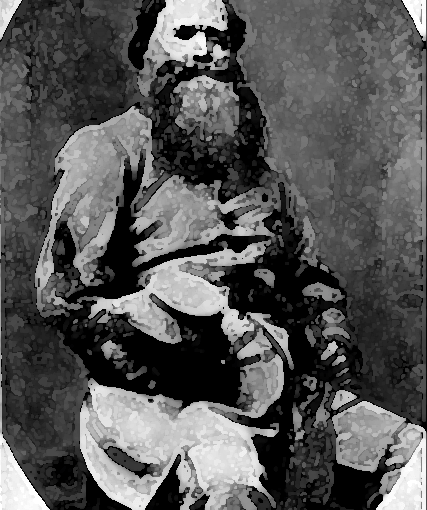
Coleman Broussard (1842-1910)

Coleman Broussard was a first cousin to Levi Motts and both fought for the Confederacy.  They also shared a love for Ruby Robison, fragile young prostitute in Shreveport.

Coleman was older than Levi by three years, and almost the complete opposite in character.  Levi was a rake and rounder whereas Cole was sober and straight-forward.  However, they both fell in love with Ruby, and the love was reciprocated by her to both, although Levi excited her imagination while Cole represented husband material.

Cole and Levi both joined up with the Rebels in Shreveport as soon as the war commenced. But while Levi saw the war as a great adventure, Cole was more clear-eyed about it and joined the fight out of a sense of duty but really to keep an eye on Levi.

Sadly, Levi died on the field at Mansfield, leaving Cole to return, alone, to Ruby, whom he married (see song “Levi, Ruby & Cole“).  He knew she was pregnant with Levi’s baby, and took on the responsibility of raising this baby girl, Pearl.  He and Ruby enjoyed a long marriage, having four children of their own and celebrating their 56th anniversary shortly before Cole died in 1910.

Confederate Colonel Henry Gray (1816-1892)

Henry Gray, Jr. (January 19, 1816 – December 11, 1892) was an American lawyer and politician who served in the state legislatures of Mississippi and then Louisiana. During the American Civil War, he was a general in the Confederate Army and subsequently served in the Confederate States Congress.

Gray was born to a military family in the Laurens District of South Carolina. He was a son of Henry Gray (a captain in the United States Army during the War of 1812) and Elvira Flanagan Gray. His grandfather Fredrick Gray had been a captain in the American Revolutionary War.

At the beginning of the Civil War, Gray enlisted as a private in a Mississippi infantry regiment in January 1861,until his friend Jefferson Davis called him to go back to Louisiana to raise a regiment. In April and early May 1862, Gray organized the 28th Louisiana Infantry at Camp Taylor and was elected as its colonel. He and his men were mustered into the Confederate Army on May 2.

On April 14, 1863 Gray was wounded in the fighting near Bayou Teche, Louisiana. Department commander Edmund Kirby Smith ordered his promotion to brigadier general on April 8, however the Confederate Congress disallowed it. Gray was given brigade command in Polignac’s Division in April.

Gray saw action around Vicksburg and in various battles within Louisiana while leading his brigade. He assumed the command of a division during the Battle of Mansfield on April 8, 1864, following the mortal wounding of Alfred Mouton.

Gray was elected to represent his northwestern Louisiana congressional district to the Second Confederate Congress, a position he had not sought nor had any knowledge of until notified of his election. He subsequently left the army in camp at Camden, Arkansas, and traveled to Richmond, Virginia. He was promoted to brigadier general on March 17, 1865, backdated to the Mansfield fight, and Gray rejoined his brigade in Polignac’s Division until the end of the war. There is no record of his being paroled from the U.S. Government.

Margaret “Molly” Motts (1937- )

Margaret “Molly” Motts Raney (1937- ).  Half-sister of Mildred Motts Hooper; aunt of Levi Hooper; wife of Vernon Raney; mother of Lonnie, Ronnie and Ginny Raney.

Delta_Farms_signMolly Motts was born in Delta, Louisiana, a tiny hamlet at the Louisiana-Mississippi border,  just across the river from Vicksburg.  Because of a difficult home life, she often dreamed of getting out of Delta.  Vicksburg just across the river looked like a dream garden to her and she thought she’d do anything to get there.  She did: marrying Vernon Raney, more than twice her age, but a good husband to her (see song, “When Molly Motts Married Vernon Raney“) .

They had three children, Lonnie, Ronnie and Ginny.  Molly was an ambitious girl and decided early on to piggy-back a drug distribution business onto Vernon’s already prospering bootlegging enterprise (see song, “’57 Fleetwood to Memphis“).  After all, bootleg whiskey was going out of style since by the mid-‘60s, liquor by the drink was legal and there was little demand for bootleg whiskey except out of nostalgia.

Molly got her oldest son, Lonnie elected sheriff as a way to offer protection to her and her second son, Ronnie, as they operating the drug business with little interference from law enforcement. This they did and quickly established a distribution network of dealers from Natchez to Memphis (see song, “Louanne in Vicksburg“).

Molly lived to see both of her sons die violent deaths: Ronnie was murdered by his wife, Louanne Borden, and Lonnie was killed in a violent stand-off with DEA agents.  As the drug network wound down, Molly grew into her role as grandmother to Ginny’s children, living a quiet life in Vicksburg.

“When Molly Motts Married Vernon Raney”


LOCATION: Delta, Louisiana; Vicksburg, Mississippi
PERIOD: 1948-2014
DRAMATIS PERSONAE: Molly Motts (1931-2014); Vernon Raney (1903-1987)


Molly Motts was born in Delta, Louisiana, a tiny hamlet at the Louisiana-Mississippi border, just across the river from Vicksburg. Because of a difficult home life, she often dreamed of getting out of Delta. Vicksburg just across the river looked like a dream garden to her and she thought she’d do anything to get there. She did: marrying Vernon Raney, more than twice her age, but a good husband to her (see song, “When Molly Motts Married Vernon Raney“) .

They had three children, Lonnie, Ronnie and Ginny. Molly was an ambitious girl and decided early on to piggy-back a drug distribution business onto Vernon’s already prospering bootlegging enterprise (see song, “’57 Fleetwood to Memphis“). After all, bootleg whiskey was going out of style since by the mid-‘60s, liquor by the drink was legal and there was little demand for bootleg whiskey except out of nostalgia.

Molly got her oldest son, Lonnie elected sheriff as a way to offer protection to her and her second son, Ronnie, as they operating the drug business with little interference from law enforcement. This they did and quickly established a distribution network of dealers from Natchez to Memphis (see song, “Louanne in Vicksburg“).

Molly lived to see both of her sons die violent deaths: Ronnie was murdered by his wife, Louanne Borden, and Lonnie was killed in a violent stand-off with DEA agents. As the drug network wound down, Molly grew into her role as grandmother to Ginny’s children, living a quiet life in Vicksburg.


WHEN MOLLY MOTTS MARRIED VERNON RANEY
(F. D. Leone, Jr.)

From her bedroom in Delta, Louisiana
Molly Motts could see the Vicksburg lights
She thought they looked like stars in the River
A just out of reach paradise

About two hundred people live in Delta
Vicksburg has a hundred times more than that
Molly would close her eyes and dream her future
Leaving Delta and never lookin’ back

Home is a place that’s supposed to be safe
And not what you have to run from
But when home is the place that you must escape
Then it’s just where you come from

When Molly Motts married Vernon Raney
Vern was more than fifty years old
He was Lonsom Raney‘s great-great-grandson
The first to age the Raney clear to gold

Molly was three months along with little Lonnie
Vern was glad to finally be a dad at last
Molly sure won’t miss that Delta bedroom
Or her step-dad and what her momma never asked

Home is a place that’s supposed to be safe
And not what you have to run from
But when home is the place that you must escape
Then it’s just where you come from

© 2017 Frank David Leone, Jr./Highway 80 Music (ASCAP). The songs and stories on the Highway 80 Stories website are works of fiction. Names, characters, businesses, places, events, locales, and incidents are either the products of the author’s imagination or used in a fictitious manner. Any resemblance to actual persons, living or dead, or actual events is purely coincidental.

Delta, Louisiana

(Information taken from Wikipedia)

Delta is a village in Madison Parish, Louisiana, United States. The population was 239 at the 2000 census. It is part of the Tallulah Micropolitan Statistical Area.

As the birthplace of Madam C.J. Walker, the first African-American woman to become a millionaire by her own business achievements, it has been included as one of 26 featured sites on the Louisiana African American Heritage Trail.

Mildred Motts Hooper (1944-2014) )

Mildred Motts Hooper was born in Tallulah, Louisiana in 1944, the half sister of Molly Motts Raney. Mildred married Leon Hooper and had one son, Levi Hooper, and passed away in 2014 at the age of 69 just before her 70th birthday.

Mildred liked to cook and crochet and was happy as a homemaker.  One of her favorite dishes to prepare was baked cheese grits which she would serve with breaded pork chops and homemade rolls.

She and Leon were married in 1963 shortly before Leon was shipped off to Vietnam.  When Leon returned from his tour of service they settled down in Jackson, Mississippi where Leon worked as a welder and they raised their only son, Levi, who was born in 1973.

However, Leon only lived another two years, dying in 1975, and Levi had no memories of his father.  To help make ends meet Mildred began to sell items from her home, establishing a thrift store at her residence (see song, “Mildred’s House of Values“).

Mildred passed away in 2014 after suffering a stroke.

Jake McLemore (1959- )

An American historian in the 19th century described the frontier vanguard in the following words:

“Thus the backwoodsmen lived on the clearings they had hewed out of the everlasting forest; a grim, stern people, strong and simple, powerful for good and evil, swayed by gusts of stormy passion, the love of freedom rooted in their hearts’ core. Their lives were harsh and narrow; they gained their bread by their blood and sweat, in the unending struggle with the wild ruggedness of nature. They suffered terrible injuries at the hands of the red men, and on their foes they waged a terrible warfare in return. They were relentless, revengeful, suspicious, knowing neither ruth nor pity; they were also upright, resolute, and fearless, loyal to their friends, and devoted to their country. In spite of their many failings, they were of all men the best fitted to conquer the wilderness and hold it against all comers.

The Anglo-American 18th-century frontier, like that of the Spanish, was one of war. The word “Texan” was not yet part of the English language. But in the bloody hills of Kentucky and on the middle border of Tennessee the type of man was already made. ”

These were the McLemores who left Tennessee for Texas.

Owen McLemore was born in 1791 in Tennessee and married Anabel March in 1812.  Together they worked a sustenance farm in Tennessee and began to build a family in East Tennessee, seeing their first son Jacob McLemore come into the world on Christmas Day 1818.  Anabel gave birth to six other sons before dying during childbirth 1832 at which time, Owen took his six surviving sons to West Texas (see songs, “Blinkin’ Back a Tear” and “My Anabel“).

Jacob “Christmas” McLemore, as he was known his entire life, was Jake McLemore’s great-great-great-grandfather. There was another Jacob McLemore, “Christmas” McLemore’s grandson, Jacob Mac McLemore (1879-1977), who first got oil fever when he was 15 running off to the 1894 oil strike in Corsicana. Next was Oil City in 1906, where made a killing, lost it, made and lost other fortunes before ultimately dying at the ripe old age of 98 without a cent to his name, but rich in memories which was all he handed down to his great-grandson and namesake, Jake McLemore.

Jake McLemore’s father, Charlie McLemore, was small businessman at the J.M. Guffey Petroleum Company of Oil City, Louisiana where Jake was born in 1959 and where he spent his early life. Charlie moved the family to Shreveport in 1968 after he got a job at United Gas Corporation. Shreveport would be Jake’s home until he graduated high school, and went to Vanderbilt University in Nashville, Tennessee.

Jake decided to stay in Nashville after graduating from Vandy with a degree in Business Administration. After investing in several businesses, he came to own a bar, which he had won in a poker game. He promptly changed the name and settled down as proprietor of McLemore’s Bar in 1985 (see song, “McLemore’s“).

By that time Jake had already married and had a son, Lee, in 1983. But Jake’s happiness and home were shattered when his wife, Amelia, was killed in a car accident when a drunk driver ran a red light, leaving Jake to raise his son alone. Soon after graduating from high school, Lee McLemore enlisted in the army and was deployed to Iraq.

But before he left for Iraq, in July 2003, Lee’s girlfriend Ellen Brewer gave birth to a son whom they named Charles after his grandfather Charlie McLemore. Lee and Ellen secretly married shortly before Lee shipped out for Iraq that December. Jake knew nothing of this son and lost touch with Ellen Brewer. It was only much later that, largely out of curiosity, Charles looked Jake up and established contact.

On March 31, 2004, five U.S. soldiers were killed by a large IED on a road a few miles outside of Fallujah, one of the soldiers who died that day was Lee McLemore.

Jake kept the bar going for several years after Lee died but ended up selling it in 2007 and bought some land outside of Shreveport, Louisiana not far from Oil City. He had fond memories of fishing on Caddo Lake with his father and settled into that kind of life again.

It didn’t take long for Jake to become bored with retirement, and he bought a diner in Shreveport where Pearl Robison happened to enter one day in January 2010 (see song, “Pearl + Jake“). For five years Jake and Pearl had a turbulent romantic relationship, before Pearl took to the road again (see song “Hit the Road“), heading west on U.S. 80, leaving Jake heart broken at 56 (see songs, “The River and Jake” and “The Red River Flows“).

Unbeknownst to him Pearl was pregnant when she left, and gave birth to a daughter, Sadie Jo Robison. Pearl initially had no intention of letting Jake know about this child, but she eventually did tell Jake (see song “Terrell“), however, nearly two years after she had left Shreveport. Jake immediately proposed to Pearl, and they got married and moved back to Shreveport to raise Sadie Jo together.

Jake hired someone to run the diner and went back to a life of fishing and shooting the breeze with his friend Mike Broussard and other men from the area. Then one day in 2016 his grandson, Charles, walked into his life.

Jake is currently living with Pearl and Sadie Jo outside Shreveport, Louisiana, and maintaining a close relationship with Charles, helping him to grow into a sturdy young man in the long line of McLemore men.

“McLemore’s”


Jake McLemore’s father, Charlie McLemore, was small businessman at the J.M. Guffey Petroleum Company of Oil City, Louisiana where Jake was born in 1959 and where he spent his early life. Charlie moved the family to Shreveport in 1968 after he got a job at United Gas Corporation. Shreveport would be Jake’s home until he graduated high school, and went to Vanderbilt University in Nashville, Tennessee.

Jake decided to stay in Nashville after graduating from Vandy with a degree in Business Administration. After investing in several businesses, he came to own a bar, which he had won in a poker game. He promptly changed the name and settled down as proprietor of McLemore’s Bar in 1985 (see song, “McLemore’s“).

By that time Jake had already married and had a son, Lee, in 1983. But Jake’s happiness and home were shattered when his wife, Amelia, was killed in a car accident when a drunk driver ran a red light, leaving Jake to raise his son alone. Soon after graduating from high school, Lee McLemore enlisted in the army and was deployed to Iraq.

But before he left for Iraq, in July 2003, Lee’s girlfriend Ellen Brewer gave birth to a son whom they named Charles after his grandfather Charlie McLemore. Lee and Ellen secretly married shortly before Lee shipped out for Iraq that December. Jake knew nothing of this son and lost touch with Ellen Brewer. It was only much later that, largely out of curiosity, Charles looked Jake up and established contact.

On March 31, 2004, five U.S. soldiers were killed by a large IED on a road a few miles outside of Fallujah, one of the soldiers who died that day was Lee McLemore.

Jake kept the bar going for several years after Lee died but ended up selling it in 2007 and bought some land outside of Shreveport, Louisiana not far from Oil City. He had fond memories of fishing on Caddo Lake with his father and settled into that kind of life again.

It didn’t take long for Jake to become bored with retirement, and he bought a diner in Shreveport where Pearl Robison happened to enter one day in January 2010 (see song, “Pearl + Jake“). For five years Jake and Pearl had a turbulent romantic relationship, before Pearl took to the road again (see song “Hit the Road“), heading west on U.S. 80, leaving Jake heart broken at 56 (see songs, “The River and Jake” and “The Red River Flows“).

Unbeknownst to him Pearl was pregnant when she left, and gave birth to a daughter, Sadie Jo Robison. Pearl initially had no intention of letting Jake know about this child, but she eventually did tell Jake (see song “Terrell“), however, nearly two years after she had left Shreveport. Jake immediately proposed to Pearl, and they got married and moved back to Shreveport to raise Sadie Jo together.

Jake hired someone to run the diner and went back to a life of fishing and shooting the breeze with his friend Mike Broussard and other men from the area. Then one day in 2016 his grandson, Charles, walked into his life.

Jake is currently living with Pearl and Sadie Jo outside Shreveport, Louisiana, and maintaining a close relationship with Charles, helping him to grow into a sturdy young man in the long line of McLemore men.


McLemore’s
(F. D. Leone, Jr.)

Walked in there first time in aught-four
Took a stool by the pinball machine
Come to know the owner Jake McLemore
Dropping by each day became routine

He looked to be about my dad’s age
If my dad ain’t died in ninety-three
Jake was always adopting things
Like a three-legged dog and me

Time seemed to pass a little slower
Behind soft country music and bumper pool
The world looked a whole lot better
From where I sat on that bar stool

Pickled eggs and pigs feet in a jar
Antique cash register, black dial phone
Scratches an’ nicks in a hickory bar
Left by those who are never really gone

He pointed to a snapshot of some soldiers
Leaning on a tank in Iraq
“They call my son a hero,” Jake told me
“Would’ve preferred if he’d just made it back.”

Time seemed to pass a little slower
Behind soft country music and bumper pool
The world looked a whole lot better
From where I sat on that bar stool

Jake sold out last year with a big payday
Bought 26 acres outside Shreveport
I don’t drink much anymore and anyway
Can’t find a bar like McLemore’s
No, there ain’t no place like McLemore’s

© 2017 Frank David Leone, Jr./Highway 80 Music (ASCAP). The songs and stories on the Highway 80 Stories website are works of fiction. Names, characters, businesses, places, events, locales, and incidents are either the products of the author’s imagination or used in a fictitious manner. Any resemblance to actual persons, living or dead, or actual events is purely coincidental.

Related songs in chronological order:
McLemore’s
Between Here and Gone
Pearl and Jake
Hit the Road
The River and Jake
Terrell
The Red River Flows
Sadie Jo

Mike “Sarge” Broussard (1948-2014)

Mike “Sarge” Broussard  (1948-2014).  Great-great grandson of Coleman Broussard (1842-1910).  Born in Vivian, Louisiana then his family moved to Shreveport in 1953. He had one brother, Cole Lucas Broussard (1946-1965), who was two years older than Mike.  They spent time in Shreveport before Luke was drafted and went off to Vietnam, where he was killed (see song “Shreveport, 1963“).  Prior to leaving for his overseas tour of duty, Luke married Cherie Shnexnaidre and had a son, Cody Cole (1965), who turned to Mike as a surrogate father figure.

Mike also served in the Vietnam War, 1966-1968, without incident and was honorably discharged with the rank of sergeant.  He owned a filing station/auto repair shop in Vivian.  Has a daughter, Rosalie Broussard (1969).

Mike comes from an old Louisianan Cajun family that first settled in Natchitoches, Louisiana in the late 18th century.  Later the family made its way north to Shreveport, then Vivian.  Coleman Broussard, Mike’s great-great-grandfather, was the cousin of Levi Motts who died during the Civil war, at the Battle of Mansfield, leaving behind his pregnant fiancée, Ruby Robison.  Coleman decides to ask Ruby to marry, a proposal she accepts, in order to legitimize his cousin’s child and they go on to have several more children.  These were Mike’s direct ancestors.

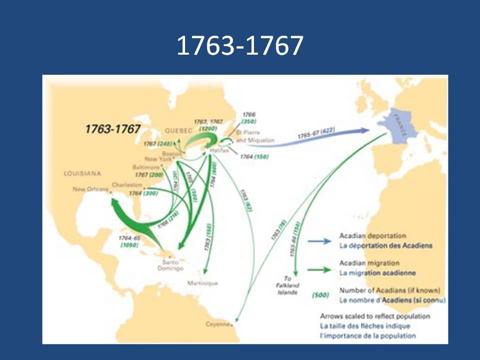
The Acadians, who descended from sturdy French peasant stock, originated during the sixteenth and seventeenth centuries in a colony known as Acadia in the present-day Canadian province of Nova Scotia. By the time Acadia fell to British control in 1713, the Acadians had become a close-knit, clannish, and culturally distinct group of French-speaking folk who had fashioned their own identity. But once the Acadians became British subjects, and for decades thereafter, they experienced continuing problems with their British overlords. In an effort to end these difficulties, Great Britain began a forced exportation program after the Acadians refused to take oaths of allegiance. The authorities relocated thousands of Acadians against their will in various colonies, including those of the Atlantic coast and the Caribbean. This mass movement, known in Acadian history as the dérangement, separated entire families.

cajun dispersion map

The migrating Acadians did not arrive in Louisiana as their initial destination, but some of them eventually found their way to the lower Mississippi from other New World colonies to which they had been exiled by the British. Thousands of Acadians arrived in Louisiana during the 1770s and 1780s. The Spanish government provided them with material assistance in establishing their farms. Most of the Acadians settled to the west of the Mississippi River in the bayou areas along the southwestern prairie. There they soon developed a unique rural lifestyle based on hunting and farming. The French inhabitants already in the colony shunned them, most likely because the Acadians appeared to them as unsophisticated and simple folk. These Acadians became the forebears of today’s Louisiana Cajuns.

Mike Broussard enlisted in the army during the Vietnam war and rose to the rank of sergeant.  He was good with cars and was assigned to the transport unit and served with distinction.  After the war he came back to Vivian and opened a Texaco filling station and repair shop, which he ran for over forty years (see song, “Sarge“).  Mike was married to Marie Martin.  They were married for 15 years before she was diagnosed with lung cancer and died in 1981 (see song “Mike & D.W.“).

He had one daughter, Rosalie, with whom he became estranged but not because of anything he did.  However, he did have a loving relationship with her son, James.  Rosalie had James when she was sixteen and Mike and his wife second wife Nina raised him.  When James was around ten, he and Mike would go in the back yard and play catch (see songs, “Jenny or James” and “Catch“).

Sarge lived a long and productive life, consistently honoring the service of military vets, dying in 2014.