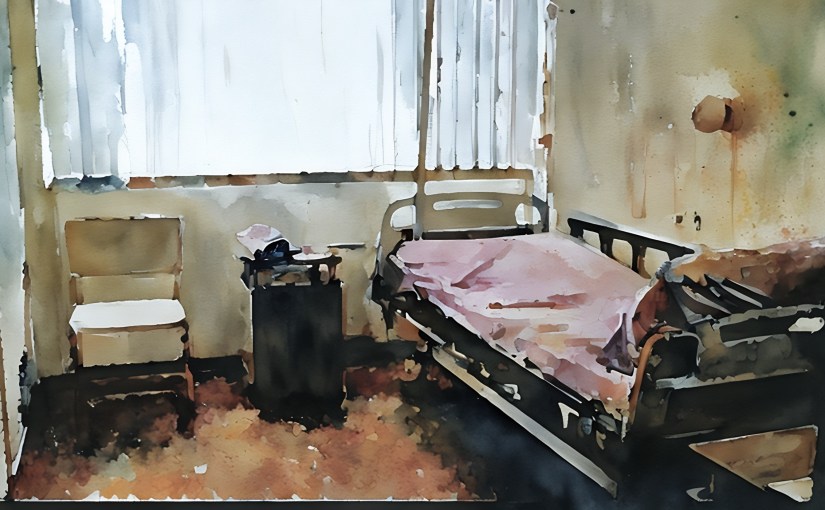
“Sadie Jo”


LOCATION: Terrell, Texas, Shreveport, Louisiana
PERIOD: 2015-2019
DRAMATIS PERSONAE: Jacob “Jake” Tyler McLemore (1959); Pearl Boone Robison (1973); Sadie Jo Robison McLemore (2015)


It didn’t take long for Jake to become bored with retirement, and he bought a diner in Shreveport where Pearl Robison happened to enter one day in January 2010 (see song, “Pearl and Jake”). For five years Jake and Pearl had a turbulent romantic relationship,  before Pearl took to the road again (see song “Hit the Road”), heading west on U.S. 80, leaving Jake heartbroken at 56  (see songs, “The River and Jake” and “The Red River Flows”).

Unbeknownst to him Pearl was pregnant when she left, and gave birth to a daughter, Sadie Jo Robison.  Pearl initially had no intention of letting Jake know about this child, but she eventually did tell Jake (see song “Terrell”), however, nearly two years after she had left Shreveport.  Jake immediately proposed to Pearl, and they got married and moved back to Shreveport to raise Sadie Jo together.


SADIE JO
(F. D. Leone, Jr.)

Sadie Jo, I love you so
For the rest of my days, I’ll keep you safe,
Watching you grow
Your mama, Pearl, and my baby girl
Everything is brand new since you
Entered my world

Lost my first wife
To a damn drunk
He blew through a light
In a rusted out truck

I lost my son
In a pointless war
What your mama done, she gave me a someone
To love once more

Sadie Jo, I love you so
For the rest of my days, I’ll keep you safe,
Watching you grow
Your mama, Pearl, and my baby girl
Everything is brand new since you
Entered my world

I’m a tough old cob
To be a new daddy now
Wanna do a better job
This time around

A new baby and wife
Were not in my plans
I thank God every night for blessing my life
With this second chance

Sadie Jo, I love you so
For the rest of my days, I’ll keep you safe,
Watching you grow
Your mama, Pearl, and my baby girl
Everything is brand new since you
Entered my world

© 2019 Frank David Leone, Jr./Highway 80 Music (ASCAP). The songs and stories on the Highway 80 Stories website are works of fiction. Names, characters, businesses, places, events, locales, and incidents are either the products of the author’s imagination or used in a fictitious manner. Any resemblance to actual persons, living or dead, or actual events is purely coincidental.

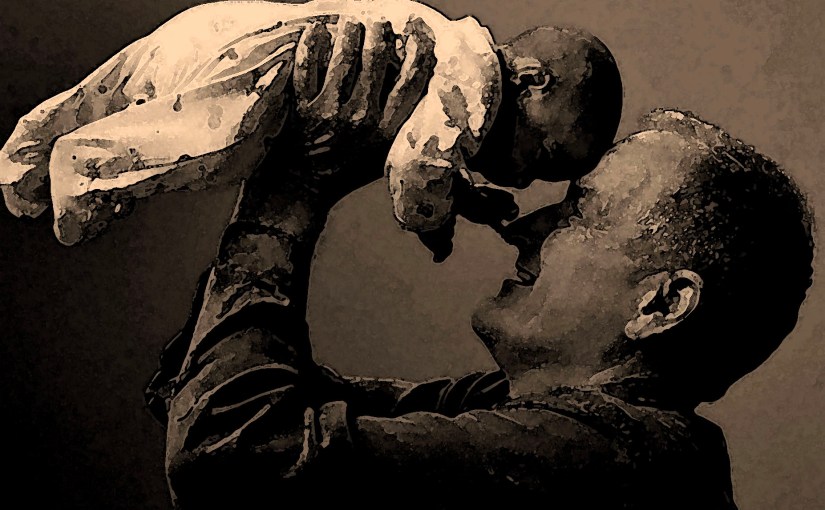
“The Ballad of Sam McLemore”


LOCATION: West Texas
PERIOD: 1870s
DRAMATIS PERSONAE: Sam Summers McLemore (1852-1878); Sally McCune Cummings (1854-1912); Jacob “Mac” McLemore (1879-1977)


Sam Summers McLemore (1852-1878) lived a violent and short life as an outlaw and gunfighter in Texas.  His father fought and died in the Civil War, leaving Sam at age 12 without much direction.  He occupied his time by practicing drawing and shooting the pistol that he inherited from his father.

At age 18 he was part of a cattle drive, and when some of the wranglers went into town, he was called out for cheating at cards.  He wasn’t cheating but had to defend his honor and killed his first man.  From then on, he found himself having to kill more men who challenged him (see song “The Ballad of Sam McLemore“).

Being a gunfighter was never clearly articulated in his mind, but his life took on a momentum of its own, with him being thrust in the position of defending himself from those who wished to make their own reputations.  For the better part of a decade he lived this kind of life, before taking up with a young prostitute, Sally McCune, rooming with her in the saloon/brothel in West Texas where she worked.

His last fight took place in the dusty street outside this saloon, when he was outgunned by a younger gunslinger and died on that street, age 26.  He did not know it at the time but Sally was carrying his child, Jacob Mac McLemore.

Sally would joke that since her father, a hard shell Baptist minister, was named Horace it was only natural that she took to whorin’.  But once she had the boy, she swore that she’d get out of that life and raise him up right.  And this she did, eventually owning and operating a boarding house in Fort Worth.  This is where Jacob grew up, until he turned 15 and took off for Corsicana when he heard about the oil strike there in 1894.


THE BALLAD OF SAM MCLEMORE
(F. D. Leone, Jr.)

He can’t say how it started
One day he killed a man
It was in self defense
Still they called him the devil’s hand
 
That one became ten
Songs were sung in saloons
He couldn’t hang up his gun
There was always something to prove
 
No wife no home no one that he could trust
A gunslinger can’t outrun his fame
He’s called out, draws and falls down in the dust
Shot by a boy who wants to make a name
 
At first it was thrilling
He was fast as the wind
Those who challenged him
Wouldn’t challenge no one again
 
Then he was older, they were bolder
And knew he wasn’t as fast
He was still tough but all bluff
A shadow of his past
 
No wife no home no one that he could trust
A gunslinger can’t outrun his fame
He’s called out, draws and falls down in the dust
Shot by a boy who wants to make a name

© 2018 Frank David Leone, Jr./Highway 80 Music (ASCAP). The songs and stories on the Highway 80 Stories website are works of fiction. Names, characters, businesses, places, events, locales, and incidents are either the products of the author’s imagination or used in a fictitious manner. Any resemblance to actual persons, living or dead, or actual events is purely coincidental.

“My Anabel”


LOCATION: Tennessee; Texas
PERIOD: 1754-1868
DRAMATIS PERSONAE: Owen McLemore (1791-1868); Anabel March (1796-1832)


The memory of his wife, Anabel, is kindled by an old friend’s letter that Owen McLemore has kept all these years. Alone and peering into the West Texas prairie he relives the grief of his wife’s passing, and friends and a life lost to time.

Owen McLemore was born in Tennessee, but his family originally came from Ulster Ireland, Scots-Irish, landing in North Carolina in the mid-18th century. Owen’s grandfather, Allen McLemore came to North Carolina as a young boy in 1754, he stayed there acquiring some land not far from his father’s farm and also lived as a sustenance farmer. His son, Jason was the McLemore who left North Carolina , crossing the Appalachian mountains and making his way to middle Tennessee by 1788.

Owen McLemore was born in 1791, the second child to Jason and wife Lucy; a girl had been born in 1789, but only lived a few months. Owen grew up on his father farm and learned everything he needed to become a farmer himself before marrying Anabel March in 1812. Together they worked a sustenance farm in Tennessee and began to build seeing their first son Allen McLemore come into the world on Christmas Day 1812.

Anabel gave birth to six other sons: Jason (1813-1876); twins Edward (1815-1861) and Leeland (1815-1887); Jacob (1818-1863); Donald (1824-1884) and Arthur (1832-1834), before dying in 1832. After Donald’s death in 1834 the family migrated to West Texas where Owen died in 1868 at the age of 77 (see songs “Blinkin’ Back a Tear”).


MY ANABEL
(F. D. Leone, Jr.)

It’s a cold December day
The light is slowly sinkin’ away
What I feel I can’t hardly tell
Oh Anabel, my Anabel

Holdin’ a letter from an old friend
Golden leaves dance in the wind
Somethin’ broke in me, aw hell
Oh Anabel, my Anabel

Piece of paper creased and soft
Watery lines almost worn off
Raindrops spittin’ in an empty well
Oh Anabel, my Anabel

That dusty road is still the same
The prairie wind still carries a name
The tolling of a distant steeple’s knell
Oh Anabel, my Anabel

© 2018 Frank David Leone, Jr./Highway 80 Music (ASCAP). The songs and stories on the Highway 80 Stories website are works of fiction. Names, characters, businesses, places, events, locales, and incidents are either the products of the author’s imagination or used in a fictitious manner. Any resemblance to actual persons, living or dead, or actual events is purely coincidental.

“Oil City”


Charles Taylor McLemore (1921-2001), Jacob “Jake” Tyler McLemore’s (1959) father, talks about growing up in his hometown of Oil City, Louisiana. During the first decades of the 20th century oil was discovered in Texas and Louisiana and until the Depression forced the speculation to pause, fortunes were made and lost. Oil City and the McLemore family were a small part of that history.

Jacob “Mac” McLemore (1879-1977) made and lost more money than any of the McLemore men. When he was fifteen he heard about the 1894 oil strike in East Texas. He started at the bottom working any job he could get, eventually learning enough to strike out on his own.

Jacob Mac McLemore never knew his father, who had been an outlaw-gunslinger who died a few months before he was born.  Sam Summers McLemore (1852-1878) never even knew the 16-year old whore, Sally McCune, he was living with was pregnant when he went out in the street to face a younger and what turned out to be faster boy.  Jacob was raised by Sally, who eventually was able to quit the life and lived out her days running a boarding house in Fort Worth.   There’s some who say it was more than a boarding house, but others deny those rumors.

Indians found oil seeping from the soils of Texas long before the first Europeans arrived. They told explorers that the fluid had medicinal values. The first record of Europeans using crude oil, however, was for the caulking of boats in 1543 by survivors of the DeSoto expedition near Sabine Pass.

Melrose, in Nacogdoches County, was the site in 1866 of the first drilled well to produce oil in Texas. Other oil was found in crudely dug wells in Bexar County in 1889 and in Hardin County in 1893. But it was not until June 9, 1894, that Texas had a major discovery. This occurred in the drilling of a water well for the city of Corsicana. Oil caused that well to be abandoned, but a company formed in 1895 drilled several producing oil wells.

Jacob Mac was 15 when the Corsicana oil came in, and for the next sixty years he chased strikes all over Texas and Louisiana. He might make some money here, then invest it somewhere else only to see his investment evaporate in the dusty Texas wind.

Jacob was married and divorced four times, the last near the end of his life and the one which really broke him. Of the four marriages, only the first produced any children, one boy, Lee Allen (1903-1989), and a girl, Aurelia.  Lee Allen was Jake McLemore’s grandfather.

If you were to ask those who knew him, what they would tell you about Jacob Mac McLemore was that, first and foremost, he was a decent man whose word was his bond. No one ever knew him to brag or lie and that he never made a deal that he did not keep, and usually made his partners money.

He died at the age of 98, dying peacefully in his sleep in an Odessa, Texas hospital room with his great-grandson, Jake, by his side. You might say that Jacob Mac lived an interesting life, but despite not enjoying consistent good luck he was always in good humor and very good company.


OIL CITY
(F. D. Leone, Jr.)

Oil City is my home
Ain’ pretty but I belong
Grey and gritty, right or wrong
Oil City is my home

Aught-five oil came from the ground
Oil City was a wildcat town
Wooden sidewalks and hitching posts
Boom towns ain’ got no ghosts

Aught-six grandpa McLemore
Had a little money but wanted more
Oil City was where grandpa came
Gamblin’ on the big oil game

Oil City is my home
Ain’ pretty but I belong
Grey and gritty, right or wrong
Oil City is my home
Oil City is my home …

Few years pass and the fever died
Were other towns, other strikes
1917 it almost burned down
The whores all left town

Dad went to work at J.M Guffey
We stayed in Oil City
Grandpa went broke in the Depression
Kept chasin’ oil, died in Odessa

© 2018 Frank David Leone, Jr./Highway 80 Music (ASCAP). The songs and stories on the Highway 80 Stories website are works of fiction. Names, characters, businesses, places, events, locales, and incidents are either the products of the author’s imagination or used in a fictitious manner. Any resemblance to actual persons, living or dead, or actual events is purely coincidental.
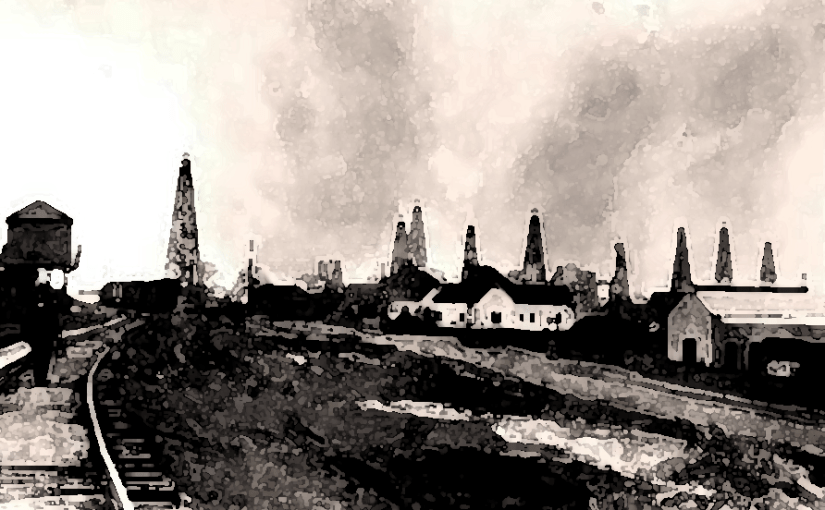
“My Pocketknife”


It took a couple of years longer than in other towns, but The Great Depression finally hit Oil City, Louisiana in 1932. The price of oil plummeted and work ground to a stop. They capped the wells and hauled the rigs away, to wait for better times. In 1934, out of all other options, Lee Allen McLemore and his thirteen year old son Charlie hit the road looking for work, and like many others head west to California.

Jake McLemore’s father was Charles Taylor “Charlie” McLemore.

Charlie grew up during the depression, traveling with his father, Lee Allen, on trains, with other hobos, with the putative goal of finding work. When the crash hit the oil industry, it took longer than for most other industries, but eventually the bottom fell out of the oil business in 1932. The wells were capped and the rigs hauled away, leaving the men who had depended upon the work stranded in small oil patch towns with no other opportunities for work. Many of them joined the large numbers of itinerant men riding the rails. Some looked for work but many had given up and made do as best they could.

But when we think of hobos riding in boxcars we don’t usually think of children doing the same thing. But when families had no money, little food and nothing on the horizon, they simply sent their children away to fend for themselves, as best they could.

“At the height of the Depression, as many as a million teenagers traveled the rails looking for work and community, moving in vagabond packs and living in hobo jungles, finding both charity and brutality in the broken-back cities of America. They crowded the cars and hid down in the tenders where the coal and water were stored; they squeezed between cars and clung atop their bucking roofs. In 1932, about 75 percent of the nearly six hundred thousand transients on the Southern Pacific line through Texas, New Mexico, and Arizona were under the age of twenty-five.”

“Fathers, and sometimes sons, stayed in the network of “jungles” along the route, tucked amid the timber and hidden from view. Each camp had its own division of labor—one person went into town to find a potato for soup while another brought salt or an extra spoon. Pots and pans hung from tree branches; crude shelters were made from cardboard or tin scrap and sometimes built up in the trees. Pocketknives were like gold in the jungles. Blades were “hired out” in exchange for soap or a bowl of stew. In a pinch, a knife could be traded for a pair of shoes or sold for cash. Men cooked possums and jackrabbits caught in snares along the brush lines and traded their hides for food.” (Mealer, Bryan. The Kings of Big Spring: God, Oil, and One Family’s Search for the American Dream. 2018.)

This was the kind of life Charlie McLemore lived during his childhood.

Charlie and his father worked picking cotton in California for a few weeks and also fruit when they could. They managed to work just enough to feed themselves, as well as, put a little aside. Eventually they got back to Oil City just as things were starting to come back.

By the time World War II started, and a need for oil exploded, Charlie was in his late teens. His father got work immediately at a refinery and from then on, the Lee McLemore family did okay.

Charlie went into the oil business as well, but oil was not the only resource product that supported the Oil City economy. Natural gas was even more abundant and Charlie got a job at United Gas Corporation, headquartered in Shreveport, Louisiana, and moved his family there in 1960 a year after Jake was born.

Charlie worked at United Gas and survived the hostile takeover by Pennzoil in 1968, and became part of the management of Pennzoil United, Inc. He did pretty well, well enough to send his son Jake to Vanderbilt University in Nashville.

Retiring at the age of 70 in 1991, Charlie lived long enough to see Jake get married and have children. Charles Taylor McLemore died in 2001 at the age of 80 from a heart attack a few months before 9/11, and several years before his grandson Lee’s death in 2004 in Iraq.

Despite surviving the Great Depression by riding the rails with his father, he was among the generation that experienced the economic boom after WWII. Charlie McLemore saw nothing in his lifetime that undermined his faith in the American Dream. A dream he lived out to the fullest.


MY POCKETKNIFE
(F. D. Leone, Jr.)

Charlie and his father crawl up the embankment
Hidden by the bend they crouch and wait
The train’ll have to slow down maybe just enough
With any luck they’ll grab that freight

Charlie and his father left Oil City at dawn
Somethin’ called The Depression had arrived
Work was for the takin’ out in California
Pickin’ cotton under sunny skies

Long as I have my pocketknife
I’ll be alright, be alright
I can make it through the coldest night
Long as I have my pocketknife

Charlie and his father join a migrant army
Ride the rails with tramps an’ hoboes
Tent camps were jungles, danger everywhere
Do your best to hang on to your coat

Charlie and his father dodge a railroad bull
Hidin’ in the tender ’til he’s gone
A man was crumpled in the corner, frozen overnight
It’s a damp and cold L.A. dawn

Long as I have my pocketknife
I’ll be alright, be alright
I can make it through the coldest night
Long as I have my pocketknife

© 2018 Frank David Leone, Jr./Highway 80 Music (ASCAP). The songs and stories on the Highway 80 Stories website are works of fiction. Names, characters, businesses, places, events, locales, and incidents are either the products of the author’s imagination or used in a fictitious manner. Any resemblance to actual persons, living or dead, or actual events is purely coincidental.

“Pearl and Jake”


LOCATION: Shreveport, Louisiana; Fort Worth, Texas
PERIOD: January, 2010-May, 2015
DRAMATIS PERSONAE: Pearl Boone Robison (1973); Jacob “Jake” Tyler McLemore (1959).


In 1973 Pearl Robison was born in Conyers, Georgia but we first meet Pearl when she is managing a dollar store in Macon. One January day in 2010, sitting in her car before opening up, she decides to leave town and head west on U.S. 80 (see song, “Between Here and Gone“).

She ends up in Shreveport, Louisiana, when she stops at an all night diner and Jake McLemore enters her life. They live together for five years before Pearl’s wanderlust overtakes her again and she leaves, this time heading for Fort Worth (see song, “Pearl + Jake“). She does not know at the time that she is pregnant, but when she discovers this fact, she waits almost two years before deciding it is best to let Jake know he is a father (see song “Terrell”)

She gives birth in 2015 to a baby girl whom she names Sadie Jo Robison, after her parents, Jason Jones Robison and Sadie Boone. Pearl and Jake get married in 2018 and raise Sadie Jo together.


PEARL AND JAKE
(F. D. Leone, Jr.)

Snowed all day in Macon when Pearl left for the last time
Al’bam, Mizsippy, Luziana; Georgia felt far enough behind
Creosote, cottonseed, Shree’port – hit her like a cinder block
Lights of an all-nite diner; Pearl coasted to a stop

Jake behind the counter, white apron little paper hat
Slid some coffee before her, quiet as an alley cat
Pearl pulled a pint from somewhere, tipped it over her cup
Jake lit a cigarette; the sun came up

Lovin’ her is what he meant to do
Even if it broke his heart in two
He played life like a game of horseshoes
Ah, but, lovin’ her was what he meant to do

Jake bought this diner after selling McLemore’s
Pearl was stranded in Macon managing a dollar store
They met on Jewella Avenue both lookin’ for a new start
Jake gave her some food and every one of his scars

Lovin’ her is what he meant to do
Even if it broke his heart in two
He played life like a game of horseshoes
Ah, but, lovin’ her was what he meant to do

Jake didn’t want to come home stinkin’ of cigarettes, beer and perfume
Five years passed by as he walked from room to empty room
Pearl was runnin’ away that first day he met her
She’d been leavin’ ever since, Jake finally found a way to let her

© 2018 Frank David Leone, Jr./Highway 80 Music (ASCAP). The songs and stories on the Highway 80 Stories website are works of fiction. Names, characters, businesses, places, events, locales, and incidents are either the products of the author’s imagination or used in a fictitious manner. Any resemblance to actual persons, living or dead, or actual events is purely coincidental.

“The Laughing Man at the Door”


LOCATION: Monroe, Louisiana
PERIOD: 1970s-1990s
DRAMATIS PERSONAE: James “Jamie” Lamar Halladay (1973); Frank Halladay (1938-1993); Ann Marie Halliday (1974); Lee Ann Lucas (1953)


James “Jamie” Lamar Halladay was born in Monroe, Louisiana, in 1973. His father was a musician, guitar player, Frank Halladay, who played in a series of bands, traveling Texas, Louisiana and eventually Nashville. By the time Jamie was four, Frank Halladay stopped living with the family, which also included Jamie’s younger sister, Ann Marie, although not out of their lives altogether. He would show up on birthdays and Christmas, when he could.

James Charles Halladay (1913-1995), Jamie Halladay’s grandfather, was a fighter pilot who served with distinction in the Army Air Corps during WWII. He learned to fly as a crop dusting pilot for the Huff Daland Dusters, as part of the eradication of the boll weevil. This company, moved from Macon Georgia to Monroe Louisiana, in 1925 but Charlie didn’t hire on until 1933, but stayed with the company as it became a regional commercial carrier, which eventually became Delta Airlines.

Hi son Frank showed a talent for music early on and learned to play the guitar listening to the Grand Ole Opry and especially Hank Williams when he was still pretty small. While in high school he started a band with some of his friends and they got pretty good. Good enough to become the backup band for Webb Pierce and played on the Louisiana Hayride.

It while he was playing with Webb Pierce that Frank met the woman who was to eventually become his wife and Jamie’s mother, Lee Ann Lucas. But while Frank and Lee Ann were in love and did get married, the itinerant lifestyle of a musician did not make for a stable home life and the marriage failed. Frank tried to see his kids as much as he could, but was not a regular presence in their lives.

Nevertheless, he did have an impact on Jamie’s life.

On his twelfth birthday, Frank gave Jamie a guitar and taught him a few chords, but that was just the start for Jamie. He eventually got good enough to move to Nashville and get some gigs there playing behind country stars. He ended up breaking into the studio scene and became a member of the “A list” players, i.e. first call musicians for recording sessions.

It was while he was living in Nashville that Jamie began visiting a bar, McLemore’s, and became friends with the owner Jake McLemore (see song “McLemore’s“). In 2003, he would marry Jake’s daughter, Mercedes “Mercy”, and have a son whom he named Jacob Frank, after Jake and his father.


THE LAUGHING MAN AT THE DOOR
(F. D. Leone, Jr.)

In Monroe, Louisiana, standing at a window
A four year old sees his father drive away
Cowboy hat on his head, six gun on his hip
Jamie waves goodbye until his next birthday

Say goodbye to a man you hardly know
As tail lights disappear down the road
Say goodbye, watch him go
On a gray December day in Monroe

His daddy plays guitar in a traveling country band
And don’ live with them in Monroe anymore
Jamie has a sister, eighteen months old
Who don’t remember the laughing man at the door

Say goodbye to a man you hardly know
As tail lights disappear down the road
Say goodbye, watch him go
On a gray December day in Monroe

When Jamie turned twelve his dad gave him a guitar
Showed him where to put his fingers for his first chord
His dad died in ’93, when Jamie was nineteen
But who played better than the laughing man at the door

Say goodbye to a man you hardly know
As tail lights disappear down the road
Say goodbye, watch him go
On a gray December day in Monroe

© 2018 Frank David Leone, Jr./Highway 80 Music (ASCAP). The songs and stories on the Highway 80 Stories website are works of fiction. Names, characters, businesses, places, events, locales, and incidents are either the products of the author’s imagination or used in a fictitious manner. Any resemblance to actual persons, living or dead, or actual events is purely coincidental.
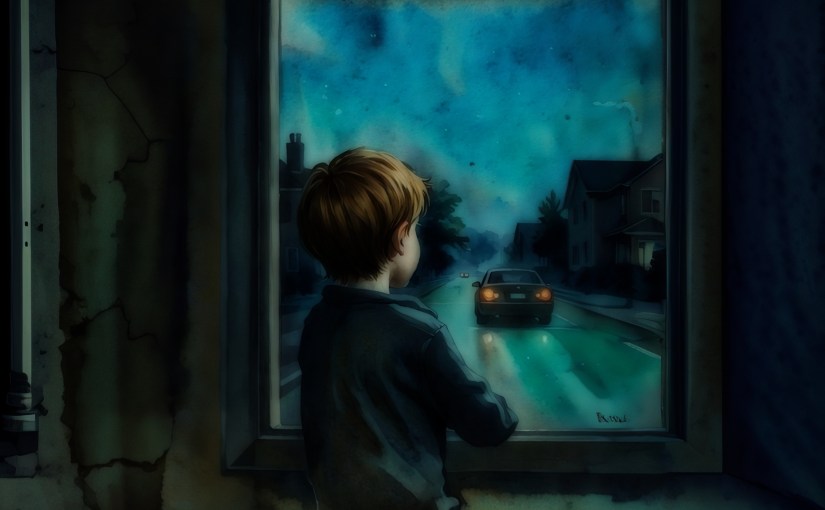
“1951”


LOCATION: Shreveport & Bossier, Louisiana
PERIOD: 1950s-2016
DRAMATIS PERSONAE: Luther Lee McLemore (1951); Agnes Tyler (1920-2005); Dorothy “DiDi” Baxter (1952); Charlie McLemore (1973); Sarah McLemore (1975)


Luther Lee McLemore was Jake McLemore‘s older brother. Born in 1951, Luther came of age during the turbulent period of the Sixties. This song has him looking back on those times in 2019 as a retired mailman living in his hometown, Shreveport, Louisiana.

Luther’s most vivid memories are from his teenage years, living through the assassinations of JFK, Martin Luther King and Bobby Kennedy, and the Vietnam War. However, Lyndon Johnson had created draft deferments for anyone in college, as well as a variety of minor medical conditions which could qualify as an exemption. This policy ultimately meant that while most Middle Class young men eligible for the draft had several avenues to avoid service, those from less affluent families were caught up in the war.

Luther was just young enough that his four years in college effectively placed him out of range of the draft, since by 1973 the US was deescalating the war effort, bringing soldiers home instead of sending more over.

After he graduated, Luther worked a number of dead-end jobs, but eventually took and passed the civil service exam. In 1976 he began working as a postman, which he did for the next forty years, retiring in 2016. But those forty years seem like a blur, overshadowed by his formative years during the Sixties.


1951
(F. D. Leone, Jr.)

My name is Luther McLemore
1951 is the year I was born
It made me who I am
Taught to say, “no, sir” and “yes, ma’am”

Was eleven in ’63
Saw my mother cryin’ at the TV
Mama said someone shot the president
I didn’t know then what it meant

Was in high school in ’68
The streets were filled with so much hate
They killed Martin Luther King
Then Bobby Kennedy, and a dream

Graduated in ’69
A man from the army tried to get me to sign
But I was lucky and got in a university
Plenty of others weren’t lucky like me

’76 I took the civil service exam
A post office in Bossier hired me as a mailman
Loved one woman, we had a couple of kids
But by ’88, we’d hit the skids

I’m retired now, living in Shreveport
I like a beer, sitting on my porch
Last forty years seem like a blur
Mostly I think about how things were
Last forty years seem like a blur
Mostly I think about how things were

© 2020 Frank David Leone, Jr./Highway 80 Music (ASCAP). The songs and stories on the Highway 80 Stories website are works of fiction. Names, characters, businesses, places, events, locales, and incidents are either the products of the author’s imagination or used in a fictitious manner. Any resemblance to actual persons, living or dead, or actual events is purely coincidental.

“The River and Jake”


LOCATION: Northwest Louisiana; north of Shreveport; Red River
PERIOD: 2015
DRAMATIS PERSONAE: Jacob “Jake” Tyler McLemore (1959); Pearl Boone Robison (1973)


An American historian in the 19th century described the frontier vanguard in the following words:

“Thus the backwoodsmen lived on the clearings they had hewed out of the everlasting forest; a grim, stern people, strong and simple, powerful for good and evil, swayed by gusts of stormy passion, the love of freedom rooted in their hearts’ core. Their lives were harsh and narrow; they gained their bread by their blood and sweat, in the unending struggle with the wild ruggedness of nature. They suffered terrible injuries at the hands of the red men, and on their foes they waged a terrible warfare in return. They were relentless, revengeful, suspicious, knowing neither ruth nor pity; they were also upright, resolute, and fearless, loyal to their friends, and devoted to their country. In spite of their many failings, they were of all men the best fitted to conquer the wilderness and hold it against all comers.

The Anglo-American 18th-century frontier, like that of the Spanish, was one of war. The word “Texan” was not yet part of the English language. But in the bloody hills of Kentucky and on the middle border of Tennessee the type of man was already made. ”

These were the McLemores who left Tennessee for Texas.

It didn’t take long for Jake to become bored with retirement, and he bought a diner in Shreveport where Pearl Robison happened to enter one day in January 2010 (see song, “Pearl + Jake“). For five years Jake and Pearl had a turbulent romantic relationship, before Pearl took to the road again (see song “Hit the Road“), heading west on U.S. 80, leaving Jake heart broken at 56.

Jake loved to fish, and to take his mind off Pearl, he’d go to the river and see if they were biting.


THE RIVER AND JAKE
(F. D. Leone, Jr.)

Long as I can remember
When Jake was sad he would go
On down to The River
With some bait and a pole

It’s the place he wants to be
When he needs to be alone
Jake’s gone down to The River
Every day since Pearl’s been gone

You can ask him where they’re biting
Or what he used for bait
Just don’t ask him anything about her
That’s between The River and Jake

Soon his mind will grow empty
With each cast he’ll forget
All the worries he brought with him
They’ll all fade with the sunset

You can ask him where they’re biting
Or what he used for bait
Just don’t ask him anything about her
That’s between The River and Jake

© 2017 Frank David Leone, Jr./Highway 80 Music (ASCAP). The songs and stories on the Highway 80 Stories website are works of fiction. Names, characters, businesses, places, events, locales, and incidents are either the products of the author’s imagination or used in a fictitious manner. Any resemblance to actual persons, living or dead, or actual events is purely coincidental.

“Blinkin’ Back a Tear”


LOCATION: Odessa, Texas
PERIOD: 1977
DRAMATIS PERSONAE: Jacob “Christmas” McLemore (1818-1863); Jacob Mac McLemore (1879-1977); Jake McLemore (1959).


Jacob Mac McLemore made and lost more money than any of the McLemore men. When he was fifteen he heard about the 1894 oil strike in East Texas. He started at the bottom working any job he could get, eventually learning enough to strike out on his own.

Jacob Mac McLemore never knew his father, who had been an outlaw-gunslinger who died a few months before he was born. Sam Summers McLemore (1852-1878) never even knew the 16-year old whore, Sally McCune, he was living with was pregnant when he went out in the street to face a younger and what turned out to be faster boy. Jacob was raised by Sally, who eventually was able to quit the life and lived out her days running a boarding house in Fort Worth. There’s some who say it was more than a boarding house, but others deny those rumors.

Indians found oil seeping from the soils of Texas long before the first Europeans arrived. They told explorers that the fluid had medicinal values. The first record of Europeans using crude oil, however, was for the caulking of boats in 1543 by survivors of the DeSoto expedition near Sabine Pass.

Melrose, in Nacogdoches County, was the site in 1866 of the first drilled well to produce oil in Texas. Other oil was found in crudely dug wells in Bexar County in 1889 and in Hardin County in 1893. But it was not until June 9, 1894, that Texas had a major discovery. This occurred in the drilling of a water well for the city of Corsicana. Oil caused that well to be abandoned, but a company formed in 1895 drilled several producing oil wells.

Jacob Mac was 15 when the Corsicana oil came in, and for the next sixty years he chased strikes all over Texas and Louisiana. He might make some money here, then invest it somewhere else only to see his investment evaporate in the dusty Texas wind.

Jacob was married and divorced four times, the last near the end of his life and the one which really broke him. Of the four marriages, only the first produced any children, one boy, Lee Allen (1903-1989), and a girl, Aurelia. Lee Allen was Jake McLemore’s grandfather.

If you were to ask those who knew him, what they would tell you about Jacob Mac McLemore was that, first and foremost, he was a decent man whose word was his bond. No one ever knew him to brag or lie and that he never made a deal that he did not keep, and usually made his partners money.

He died at the age of 98, dying peacefully in his sleep in an Odessa, Texas hospital room with his great-grandson, Jake, by his side. You might say that Jacob Mac lived an interesting life, but despite not enjoying consistent good luck he was always in good humor and very good company.


BLINKIN’ BACK A TEAR
(F. D. Leone, Jr.)

Just before his great-grandpa went in
The hospital for the last time
He told Jake the stories of their kin
A life that was all but left behind

Clear whiskey, flatfoot dancing at jamborees
Frontier women and the men they loved
One by one he handed down his memories
Jake was eighteen, couldn’t get enough

Under a clear blue West Texas sky
A bluetick hound layin’ at his feet
A single tear in the corner of Jake’s eye
He blinked it back from fallin’ down his cheek

Owen McLemore was born in 1791
In Tennessee he married Anabel
Before she died she gave him seven sons
He went to Texas then he went to hell

Owen’s great-grandson was Jake’s namesake
He made some money chasin’ the oil boom
There wuddn’t be nothin’ left for Jake
‘Cept this empty hospital room

Under a clear blue West Texas sky
A bluetick hound layin’ at his feet
A single tear in the corner of Jake’s eye
He blinked it back from fallin’ down his cheek

© 2018 Frank David Leone, Jr./Highway 80 Music (ASCAP). The songs and stories on the Highway 80 Stories website are works of fiction. Names, characters, businesses, places, events, locales, and incidents are either the products of the author’s imagination or used in a fictitious manner. Any resemblance to actual persons, living or dead, or actual events is purely coincidental.