
Lucy Bess Cooper (1980-2015)

Parents: Mae Grant Walker (1957- ) & Frank Wes Cooper (1951-1993).  Grandparents: Lucy Calhoun Keith (1921) & Joseph Cowan Cooper (1913-1995) on her father’s side;  Bessie Grant (1932- ) & Walter Calahan Walker (1931-2001) on her mother’s side.

Lucy Cooper comes from an old Mississippi family.  Roy Cooper entered the state in 1794 and gradually purchased enough land to have a small sustenance farm but no slaves.  His son, Frank Roy Cooper was 38 when the War Between the Sates broke out and enlisted and was made a colonel of a local regiment, and served until the very end at which time he was one of last men to fall in May of 1865. One of her great-great-grandfathers, Charles “Charley” Wooley Cooper, was ten years old at the end of the Civil War, fatherless, devoted his activities to causing as much mischief for the Reconstruction politicians in and around Jackson, Mississippi, as was possible for a small boy.  So, you could say that Lucy comes from a long line of hell-raisers and people with a strong disregard for authority, however, possessing a lot of respect for their Mississippi heritage.  The women in Lucy’s family were no more timid, several generations of women lived lives outside the traditional role of women, and more than one resorted to violence to solve her problems (see song, “Lucy’s Grandma on Her Momma’s Side“).

Jackson MS editedLucy was in her 30s, living in Jackson, Mississippi, supporting herself with a small marijuana dealing business.  Across the street from her was a bachelor, Levi Hooper, who fell in love with her, which was not entirely unrequited (see song, “Levi + Lucy“).  She had been a small time drug dealer for the last decade primarily using marijuana but she also had done harder drugs, Dilaudid and cocaine.  Levi had been coming around and she began to feel a desire to change her life around due to his overall wholesomeness and positive influence on her.  See could imagine herself getting clean and starting a new life with Levi.  However, one of her old friends got picked up for his own drug issues, and in order to lessen his sentence gave Lucy up as his dealer.

Lucy's PrisonShe was arrested and convicted for possession and distribution of marijuana and sentenced to 18 months at the Central Mississippi Correctional Facility (her friends incorrectly referring to  it  as Parchman Farm).

She knew she was pregnant when she went in, but had not informed the father, Levi Hooper.  After a little over six months she gave birth to a baby boy, whom the prison authorities promptly took from her and put into foster care.  She became more and more despondent and depressed and began again using Dilaudid, not orally as designed but crushing the pills and dissolving them in water for injection (“shake and bake”).  She died as a result of an overdose 11 months into her sentence, and only weeks before possibly being paroled (see song, “When Louanne Met Lucy in Prison“).

“Levi and Lucy”


LOCATION: Jackson, Mississippi
PERIOD: 2012-2015
DRAMATIS PERSONAE: Levi Hooper (1973); Lucy Bess Cooper (1980-2015)


The romance of Levi Hooper and Lucy Cooper was an unlikely union; absolutely, an attraction of opposites.

They met while living across the street from one another in Jackson, Mississippi.   Lucy was a hell-raising rebel and Levi was a church-going, salt-of-the-earth young man.  Lucy was attracted to Levi mainly because he was nothing like the people she’d been involved with up to then, and Lucy had grown tired of her life and was ripe for a change.

Levi was attracted to Lucy because, well, for one thing, she was a very sexy lady, but more importantly he intuitively felt that she wanted more out of life than her drinking, drugging and wild partying.

Theirs was a true love which they both felt strongly, but a love that was destined to be cut off far too early, its potential left unfulfilled.


LEVY AND LUCY
(F.D. Leone, Jr.)

Lucy Cooper cussed the hammer that struck her thumb
Sent it sailing to kingdom come
Grabbed a whiskey bottle and marched out to her front porch
Found a roach and lit it with a butane torch

Levi Hooper watched from across the street
Wonderin’ how they might come to meet
He strolled out real slow looked in his mailbox
Lucy called out,”hey, hotshot”

Love can’t be controlled
Can’t be foretold
If you can explain it
It ain’ it

Love can’t be fenced
Or convinced
If you can explain it
It ain’ it

Every Sunday Levi would stop by on his way to church
Look at his feet with each of Lucy’s cuss words
Levi hoped she might want to come with him sometime
But he tried to push that thought out of his mind

Lucy had no luck at tryin’ to settle down
Her old friends always kept coming around
Lucy got busted they sent her to the prison farm
Where she put that stuff all up her arm

Love can’t be controlled
Can’t be foretold
If you can explain it
It ain’ it

Love can’t be fenced
Or convinced
If you can explain it
It ain’ it

© 2018 Frank David Leone, Jr./Highway 80 Music (ASCAP). The songs and stories on the Highway 80 Stories website are works of fiction. Names, characters, businesses, places, events, locales, and incidents are either the products of the author’s imagination or used in a fictitious manner. Any resemblance to actual persons, living or dead, or actual events is purely coincidental.

Bessie Carson Grant (1932)

Bessie Carson Grant was born during the Great Depression to a bootlegger and his wife, pilot car driver Millie Carson Sparks. Shortly after Bessie was born Millie gradually made fewer and fewer trips running her husband’s contraband whiskey. But despite quitting the bootlegging life she still had to give testimony in the great whiskey trial of 1935, which she did with little Bessie on her lap, as a three year old toddler (see song, “Lucy’s Grandma on Her Momma’s Side“.

During the Great Depression, children suffered a lot. They no longer had the joys and freedoms of childhood, and often shared their parents’ burdens and issues on money. For Christmas and birthdays, very few children were able to have fancy toy. Some families made gifts themselves, but many others could not afford food at all. For most people, the only way to celebrate holidays with gifts, were to window-shop. Since children lacked food, they often suffered from malnutrition.

There are two schools of thought about the impact of the Great Depression on children. One school holds that the hard times left young people physically damaged and psychologically scarred. The other insists that the decade of dire want and desperate wandering served to strengthen their character and forge what became America’s “greatest generation” of the World War II era. In fact, children’s experience of the depression varied widely, depending on their age, race, sex, region, and individual family circumstances. Nevertheless, certain patterns have emerged. Demographically, birthrates fell during the decade to a low of 18 births per 1,000 population, and children’s health declined due to the poorer nutrition and health care available.

Economically, many children worked both inside and outside the home; girls babysat or cleaned house, boys hustled papers or shined shoes, and both ran errands and picked crops. Yet the scarcity of jobs led record numbers of children to remain in school longer. Socially, high school became a typical teenage experience for the first time. A record 65 percent of teens attended high school in 1936; they spent the better part of their days together, forming their own cliques and looking to each other for advice and approval. Thus arose the idea of a separate, teenage generation.

This is the sociological phenomenon that formed Bessie Grant. Yes, she was tempered in the crucible of economic hardship, but at the same time it caused her to develop an almost pathological concern for financial security. As an adult,a  mother and wife, Bessie was prone to be frugal to the point of denying herself and her family any kind of “luxury item,” which might include a book, or candy, or anything that might represent fun.

Gradually she softened up, especially once she came to trust on the capability of her husband Walter Calahan Walker who was a hard worked and good provider. While Bessie may have scrimped on her children, of which she had four, she doted on her grandchildren. Bessie’s children were often heard to jokingly complain about how she never allowed them such-and-such that she happily acquiesced to when it concerned one of her grandchildren.

Bessie’s favorite grandchild was Lucy Bess Cooper, the youngest girl of her second child, Mae Ella. When she found out what happened to Lucy, it broke her heart and she never forgave Mae Ella for keeping so much of Lucy’s life secret from her (see song, “When Louanne Met Lucy in Prison“).

Bessie has seen her children grow up and their children grow up into fine people. She enjoys helping Mae Ella raise Lucy’s boy, McCoy, the one Lucy had in prison (see song, “Lucy’s Grandma“).

After Walter passed away in 2001, Mae Ella invited Bessie to move in with her, which she did.

Mae Ella Cooper (1957)

Mae Ella Cooper (1957) got her mother’s good looks, but did not inherit her mother’s obsessive concern for security. Bessie Grant Walker, as a child of the Great Depression had a healthy suspicion of good news. But as she got older and the Depression faded further in her memory, she learned how to have good time when she wanted to. Still, she took nothing for granted, was frugal to the point of self-denial, and denial to her family. Whatever generosity Bessie Grant was capable of was directed not towards her children but skipped a generation and rested on her grandchildren.

As Bessie’s oldest daughter, Mae Ella could not help but rebel against this kind of upbringing and from the time she could think for herself decided to deny herself nothing.

The first thing she did was run off with Frank Wes Cooper when she was sixteen. They stood in front of the first man qualified to pronounce them husband and wife and promptly began setting up house together. Her father, Walter Calahan Walker came after her, but realizing he was too late to bring her home reconciled himself to the situation, but knew it would be difficult pacifying Bessie.

Things improved somewhat when Mae Ella announced that she was pregnant with their first grandchild, which turned out to be a boy that she named after her father, Calahan Cooper. Mae Ella and Frank went on to have four more children, the youngest being Lucy Bess Cooper, grudingly honoring Mae’s mother.

As the kids grew up and one by one left home, Mae Ella began to look for something to occupy her time and creative impulses. What she did was open a bar, juke joint, with music, illegal whiskey, dancing and other things not exactly legal. This did not sit well with her husband and Frank began to simmer with a brooding resentment over the late nights she spent away from home.

Lucy, her youngest, pretty much grew up in the bar, which contributed to her developing a wild streak.

One night after having too much to drink, Frank decided he’d had enough and attempted to burn the bar down. This caused Mae Ella to seek a divorce, of sorts. Telling him to pack up and leave, punctuating her demand with a .38 pointed at his face.

Later, after Lucy was sent to prison and dying there of an overdose, Mae Ella was informed that Lucy had given birth to a boy. This child had been put into foster care, but Mae Ella moved heaven and earth to uncover where he was, petitioned the state for custody, and by pure dent of will power, wrangled him out of the foster home, and brought him home with her (see songs “Lucy’s Grandma” and “When Louanne Met Lucy in Prison“).
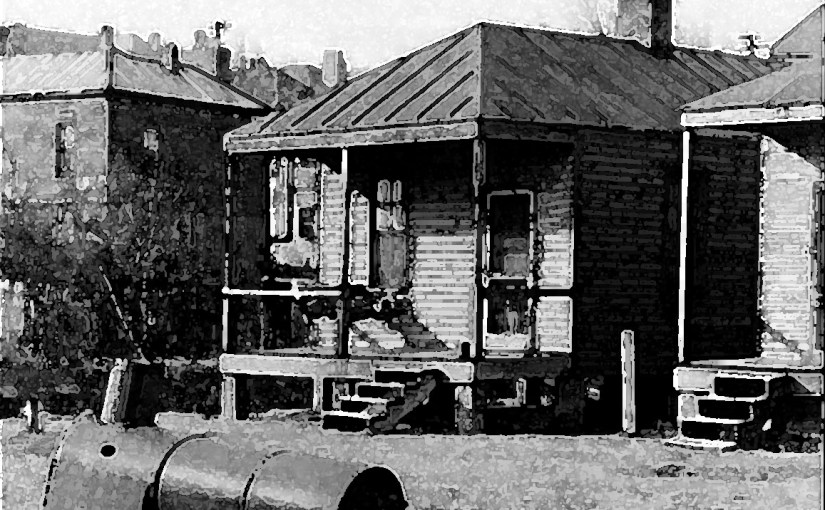
She named him McCoy and raised him, doting on him, spoiling him completely.

Ronnie Raney (1962-2004)

Ronnie Raney (1962-2004).  Middle son of Vernon and Margaret “Molly” Raney in Vicksburg, Mississippi.  Married to and murdered by Louanne Bowden (Raney).  His brother Lonnie is sheriff of Warren County.  He has a younger sister, Ginny.

Ronnie works for his mother distributing drugs and in general running the business.  He started out dealing at University of Mississippi where he meets and seduces Louanne.  They begin living together in a shotgun house in Vicksburg and as Ronnie becomes more and more responsible for the operations of the Raney drug enterprise, Louanne also becomes involved in running a bar and trailer where her girls turn tricks.

Ronnie is a basically a “good ol’ boy” and means well, but has trouble controlling his temper. Because he feels intimidated by Louanne’s intelligence and background (she comes from a well-to-do Dallas family) he often resorts to threatening behavior, and even physical violence, when he is at a loss for any other way of controlling a situation.

After suffering from this kind of behavior for years, in 2004 Louanne kills Ronnie for continuing to get drunk and raise his hand to her. She was tried and convicted of second degree murder (unjustly) and was sentenced to twenty years at the Mississippi state penitentiary for women (see song, “One Time Too Many“).

“One Time Too Many”


LOCATION: Vicksburg, Mississippi
PERIOD: 1985-2004
DRAMATIS PERSONAE: Louanne Murray Bowden (1967); Ronnie Raney (1962-2004)


In a disastrous act of rebellion from her upper crust background, Louanne Bowden began dating and ultimately married Ronnie Raney whom sehe met while attending the University of Mississippi in Oxford.

The Raney family under the leadership of matriarch Molly Motts Raney transitioned from bootlegging moonshine whiskey to distributing marijuana, pills and eventually funding methamphetamine labs. Ronnie was the second oldest son, acting as his mother’s right hand operations manager, his older brother Lonnie was sheriff of Warren County, offering protection for the entire enterprise.

After suffering years of Ronnie drunken abuse, Louanne and finding no relief from the corrupt legal system in Warren County, took matters into her own hands and shot Ronnie with a deer rifle as he sat at the kitchen table eating a slice of her homemade peach pie.

Although she knew she was justified in killing him, she fatalistically accepted her conviction of murder and the twenty year sentence that went with it. Only much later was she vindicated and released for time served.


ONE TIME TOO MANY
(F. D. Leone, Jr.)

She’d like to fix up her dinette
Yellow wallpaper with nosegays
A hard wood floor would do the trick
Those stains’ll take more than paint
 
A buzzer spoils this daydream
Lights out and the bars clang shut
It’ll have to wait twenty years
This cell is where she’ll stay put
 
She’d had enough
Taken too much
He treated her rough one time too many
She did the crime
She’ll do the time
Regrets? No, she don’t have any
 
She brought him his beer and a slice of pie
Then shot him with his deer gun
It was worth it just to see him surprised
Once he realized just what she’d done
 
She’d had enough
Taken too much
He treated her rough one time too many
She did the crime
She’ll do the time
Regrets? No, she don’t have any
 
His brother was sheriff of Warren County
There was no doubt the fix was in
A jury of his peers showed no mercy
But if she could she’d do it again
 
She’d had enough
Taken too much
He treated her rough one time too many
She did the crime
She’ll do the time
Regrets? No, she don’t have any

© 2017 Frank David Leone, Jr./Highway 80 Music (ASCAP). The songs and stories on the Highway 80 Stories website are works of fiction. Names, characters, businesses, places, events, locales, and incidents are either the products of the author’s imagination or used in a fictitious manner. Any resemblance to actual persons, living or dead, or actual events is purely coincidental.

Lonnie Raney (1958-2006)

Lonnie Raney (1958-2006).  Oldest son of Vernon and Molly Raney; brother of Ronnie and Ginny Raney.  Elected sheriff of Warren County (Vicksburg, county seat) and is generally a well-liked but corrupted law enforcement officer.  One of his prime responsibilities was protecting his mother and brother in the pursuit of their marijuana growing and drug business.

Although sister-in-law Louanne Borden Raney murders his brother Ronnie, and is convicted of second degree murder (see song, “One Time Too Many“), she later refuses cut a deal in an DEA investigation into the Raney family criminal activities and instead warns Lonnie of the investigation.

In 2006 Lonnie is killed in a shootout while attempting to protect his mother and the drug business when the DEA comes to serve warrants for their arrest.

Warren County, Mississippi

(Information taken from Wikipedia)

Warren County is a county located in the U.S. state of Mississippi. As of the 2010 census, the population was 48,773.  Its county seat is Vicksburg.[2] Created by legislative act of 22 December 1809, Warren County is named for American Revolutionary War officer Joseph Warren.

Part of the Mississippi Delta and the historic cotton culture, Warren County is included in the Vicksburg, MS Micropolitan Statistical Area, which is also included in the Jackson-Vicksburg-Brookhaven, MS Combined Statistical Area.

“When Louanne Met Lucy in Prison”


LOCATION: Mississippi Penitentiary for Women, Rankin County, MIssissippi
PERIOD: 2015
DRAMATIS PERSONAE: Lucy Bess Cooper (1980-2015); Louanne Murray Bowden (1967)


Louanne Bowden was sent to the Mississippi Penitentiary for Women after being convicted of murdering her husband, Ronnie Raney (see song, “One Time Too Many“). Prison was an unlikely place for someone of Louanne’s background to end up, but there she was (see song, “Louanne in Vicksburg“). The fact that she killed Ronnie as a result of his constant physical abuse did not mitigate the verdict. Only years later would her case be reviewed and she would be released for time served when the charge was changed from murder to justifiable homicide (see song “A Waxahachie Funeral“).

However, while Louanne was serving her twenty year sentence Lucy Cooper was also sent to this prison on an 18 month sentence for distribution of controlled substance, marijuana. Although Lucy put up a brash and strong front, she was in fact a fragile woman, unable to cope with life behind bars. Shortly before being considered and most likely to be released on parole, a little shy of 12 months into her sentence, Lucy succumbed to depression and killed herself with an heroin overdose (see also song, “Levi and Lucy“).


WHEN LOUANNE MET LUCY IN PRISON
(F. D. Leone, Jr.)

When Louanne met Lucy in prison
Lou was halfway through her twenty
For killin’ Ronnie Raney
Who hit her once too many
Lucy would talk all about Levi
In words tender and soft
It was old friends and old sins
Got Lucy caught

Ain’t that how it is sometimes?
You’re on the verge of change
Life sends you the same ol’ same

They gave Lucy eighteen months
Easy time for most but for Lucy hard
Day by day she faded away
Behind stone walls and steel bars
Louanne tried to keep an eye on Lucy
Easy in there to come to harm
August night when they found her
Needle was still in Lucy’s arm

Ain’t that how it is sometimes …

Louanne got word to Levi
Said it best she knew how
Lucy only had six weeks left
She ain’ never gettin’ out
Levi read that letter and then
Put it in his dresser drawer
Got drunk in Vicksburg went a little further
Did a little more

© 2017 Frank David Leone, Jr./Highway 80 Music (ASCAP). The songs and stories on the Highway 80 Stories website are works of fiction. Names, characters, businesses, places, events, locales, and incidents are either the products of the author’s imagination or used in a fictitious manner. Any resemblance to actual persons, living or dead, or actual events is purely coincidental.

Parchman Farm (Mississippi State Penitentiary)

(Information taken from Wikipedia)

Mississippi State Penitentiary (MSP), also known as Parchman Farm, is a prison farm, the oldest prison, and the only maximum security prison for men in the state of Mississippi.

Begun with four stockades in 1901, the Mississippi Department of Corrections facility was constructed largely by state prisoners. It is located on about 28 square miles (73 km2) in unincorporated Sunflower County, in the Mississippi Delta region.

It has beds for 4,840 inmates. Inmates work on the prison farm and in manufacturing workshops. It holds male offenders classified at all custody levels—A and B custody (minimum and medium security) and C and D custody (maximum security). It also houses the male death row—all male offenders sentenced to death in Mississippi are held in MSP’s Unit 29—and the state execution chamber.

Female prisoners are not usually assigned to MSP; Central Mississippi Correctional Facility (CMFC), also the location of the female death row, is the only state prison in Mississippi designated as a place for female prisoners.

CMCF opened in January 1986 with a capacity of 667 prisoners. CMCF was the first prison facility of the Mississippi Department of Corrections outside of the Mississippi State Penitentiary (MSP) in Sunflower County. Upon the opening of CMCF, female prisoners were transferred from MSP to CMCF; previously women were held in MSP Camp 25.