“Savannah, 1903”


LOCATION: Savannah, Georgia
PERIOD: 1903-1904
DRAMATIS PERSONAE: Lucas Wilson Robison (1859-1918); Nora Corbyn Sprague (1876-1955); Isaac “Ike” Jones (1834-1925)


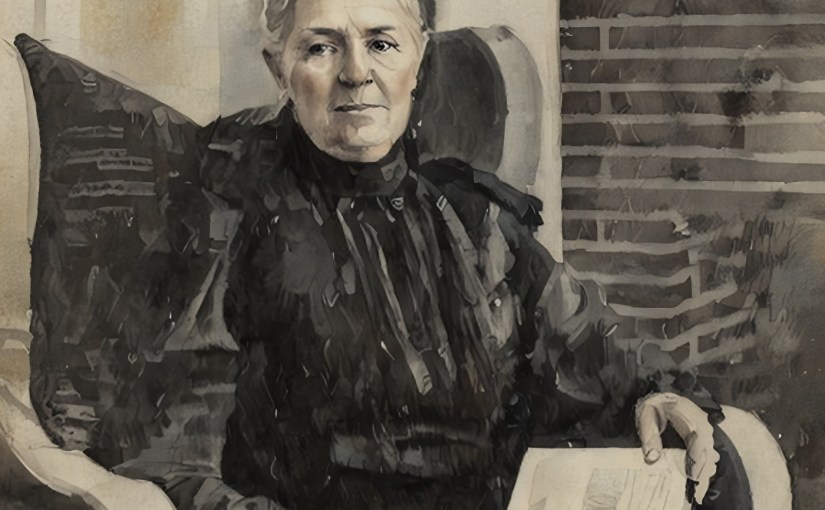
When Nora Sprague Robison was 27 years old, she noticed a hard cyst on her face.  She thought it would resolve itself, but it only got harder.  She went to her doctor in Savannah who wanted to surgically remove it, since he was afraid it might become cancerous otherwise.  The Robison family was an old Georgia clan, and there was an old veteran of the Civil War, Isaac “Ike” Jones, who would visit from time to time, he possessed a trove of stories about Lucas’s father, the “Cunnel.”

Ike lived about five miles outside of town in a crude cabin in the hills surrounding Savannah.  He regularly would walk into town, and would stop at the Robison house.  Nora usually had two things for him: chewing tobacco and two complete sets of clothes.  On Ike’s most recent visit, he happened to see  “the wen” on her face: “I will come back in a week to look at it, and when it’s ripe, I’ll dose it twice with my salve.  It will fall off after the second dose, abot ten days.”

Of course, Lucas doesn’t put any stock in Ike’s folk remedies, and insisted, supported by Doc Brady, that Nora ought to see a real doctor, someone who knows about cancer.  So they go to Atlanta for a consult.

Source material for this song includes the novels, Flags in the Dust: The complete text of Faulkner’s third novel, which appeared in a cut version as Sartoris (Vintage International) by William Faulkner; and Stegner W. A. Williams T. T. & Watkins T. H. (2007). Crossing to safety. Random House Publishing Group.


SAVANNAH, 1903
(F. D. Leone, Jr.)

It was supposed to be just a routine visit,
Let Doc Brady look at her cheek;
“Ike Jones said he can cure it.”
Doc smiled, “let’s have a peek.
Naw, Nora, we won’t let ol’ Ike
Put his dope on this wart;
His salve is fine for livestock an’ th’ like,
But we won’t let him reach this far.”

“I can have it out this afternoon,
You’ll never know it was ever there.
But we best do something pretty soon;
Left untreated it could come to cancer.”
That was the last day she was happy,
Th’ last time Nora’s life was carefree.
She bought a bag a peppermint candy;
Savannah, 1903.

“Nora, you’re stubborn as a settin’ hen,
I don’t waste time hurtin’ folks;”
Ike patted his salve onto the wen,
With small practiced strokes.
“It’ll turn black tomorrah,
Long’s it’s black, it’s workin’.
Don’ put no water
On yo’ face befo’ mawnin’.”

“In ten days I’ll come back
To apply another dose;
On the ninth day of July,
Thereabouts, it’ll drop off.”
After old man Jones had left,
Nora touched the spot, but softly;
Rememberin’ what Ike had said:
Savannah, 1903.

Her husband, Lucas, and Doc Brady,
Put Nora on the train to Atlanta;
And sat her down to wait in the lobby,
Of th’ expert Brady’d found on cancer.
He marched through the door briskly,
“Havin’ lunch downtown, can’t delay;
Sir, are you the patient? Are you ready?”
“No. You’re to see my wife today”

“What’s that on her face?” he demands,
As he touched the dark smudge on her cheek.
The thing came off in his hand;
Exposing baby pink skin beneath.
On the train that evening Nora squint her eye,
“What’s today’s date, tell me?”
“The ninth,” Lucas answered, “of July?”
Savannah, 1903.

© 2023 Frank David Leone, Jr./Highway 80 Music (ASCAP). The songs and stories on the Highway 80 Stories website are works of fiction. Names, characters, businesses, places, events, locales, and incidents are either the products of the author’s imagination or used in a fictitious manner. Any resemblance to actual persons, living or dead, or actual events is purely coincidental.

“Sing With th’ Devil in Hell”


LOCATION: Farmland in Macon-Bibb County, Georgia
PERIOD: 1872-1933
DRAMATIS PERSONAE: Bethuel “Buel” Sutton (1874-1956); May “Maysee” Sutton (1872-1879); Silas Sutton (1845-1924); Zachary Sutton (1823-1889); Richard McQuayle (1836-1933)


Richard “Slick Dick” McQuayle came from a prominent land-owning family in central Georgia. He was the heir of over 50,000 acres of rich farming land which he had partialed out to several sharecropping families. One of which was the Sutton family: Zachary (“Pap”), Silas (“Pa), and their five children/grandchildren, of four boys, Zach, Jr., Lucas, Levi, Bethuiel, and one daughter, Maysee, named for her mother’s family, the Mays.

(The Sutton’s were distant kin to Pearl Robison (see songs “Between Here and Gone” and “Pearl and Jake“).)

From all accounts Dick McQuayle was a bully and misanthrope, who ruled over his sharecroppers with an iron fist.

Zachary Sutton and McQuayle often butted heads, and this song is about a case where the Sutton’s were unable to pay the third of the harvest to McQuayle and he told them to get off his land if they couldn’t raise a decent crop. He underscored this command by saying that if they didn’t get off his land quick enough he’d burn them out.

The Suttons were hard scrabble folk and had no intention of abandoning the farm they’d worked for at least three generations under successive McQuayles. They didn’t put much stock in Slick Dick’s threat.

Their second youngest, Maysee, was a dreamy child. She loved to read books of adventure and fantasy, which she would do in her “secret place” in the hayloft of the barn. It was a quiet place where she could read unobserved and unbothered by her three older brothers. Her younger brother, Bethuel, was her favorite, and she often took him along with her into the woods for story-telling, and just poking around.

However, Dick McQuayle’s threat was not idle, and when the Suttons failed to pay him his share of the harvest, he did indeed pay a visit to the farm when he knew they would be out in the field and the barn (he thought) abandoned, which he proceeded to set ablaze. Not knowing that Maysee was reading in the loft, he pushed the door shut and closed the latch, making it harder to enter and save.

Bethuel grew up hating McQuayle for murdering his sister (a murder for which Dick McQuayle was never convicted) – swearing to himself that one day he would exact revenge. For thirty years, he lived with this oath, his passion for justice only getting stronger with each passing decade.


SING WITH THE DEVIL IN HELL
(F. D. Leone, Jr.)

Shotgun shells
In my vest
Tonight Richard McQuayle
Will meet his death
Blood feud
Decades old
My resolve is shrewd
My blood is cold

His belly out
Thumbs in his bib
Wanted us out
Burnt the corn crib

Pap was a poor man
Him and Pa
Farmed McQuayle land
Who made their own law
My sister, Maysee
We’d run to the trees
Eyes wide with stories
Sacred mysteries

How hard we worked
The crop still failed
Didn’t pay the third
We owed to McQuayle

Might of been sincere
Claimed he didn’t know
The loft was where
Lil’ Maysee would go
A private nook
Away from the boys
With her book
Away from the noise

Burnt up
Along with the corn
McQuayle’ll know what
When you burn a barn

The start of a tale
Tonight it’ll end
Richard McQuayle
Will meet my friend
Pap’s 12 gauge
It’s old but it works
Buck shot sprayed
Across his night shirt

Tonight, I swear,
Richard McQuayle
Gonna send you there
To sing with th’ Devil in Hell

Night air blazes
Black powder smell
Justice for Maysee, and
Slick Dick McQuayle

.© 2023 Frank David Leone, Jr./Highway 80 Music (ASCAP). The songs and stories on the Highway 80 Stories website are works of fiction. Names, characters, businesses, places, events, locales, and incidents are either the products of the author’s imagination or used in a fictitious manner. Any resemblance to actual persons, living or dead, or actual events is purely coincidental.

“Jess Harper Returns to Macon”


LOCATION: San Francisco, California; Macon, Georgia
PERIOD: 1967-2007
DRAMATIS PERSONAE: Jess Harper (1949); Dooley Johnson (1949-2007)


Jess Harper (1949) and Dooley Johnson (1949) grew up in Macon, Georgia in the 1950s. During this decade the civil rights movement was gathering momentum, but it would still take a decade or more before a change in consciousness, especially in the South, would coalesce and the culture would begin to change. This process was helped along by the participation of progressive Southern intellectuals, like the family that produced Dooley Johnson, who offered their support to African American leaders by writing editorials, raising money and pressuring local elected officials.

Dooley and Jess met in grade school and grown up together forming a close friendship which by the time they were teenagers deepened into a romantic relationship. However, interracial dating was considered taboo, particularly in Macon, Georgia, in the Sixties.

Jess was 18 in 1967, the Summer of Love, and had heard about all the exciting things going on in California, Haight-Ashbury, and elsewhere. She desired to escape the claustrophobic racism of Georgia and the lure of California was strong. Despite her young love for Dooley she reluctantly began to believe that their relationship was doomed and chose instead to try her luck in San Francisco. This song is a flashback to the day she left Macon soon after graduating from high school.

Dooley who had been interested in history as a small child, reading about the early settlement of Georgia and forming a critical opinion about the treatment of Native Americans as well as the racial reality of his state. Dooley remained in Georgia where he pursued a degree in history eventually earning a doctorate and becoming a tenured professor of history at Mercer University in Macon.

Jess spent two years just hanging out in San Francisco until she learned that the University of California-Berkeley had created an African American Studies program. She realized that this is what she wanted to do with her life and enrolled in 1970.

She kept up on news from Macon through her mother, and when she learned of Dooley’s death in 2007 she made the long trip back to Macon for his funeral.


JESS HARPER RETURNS TO MACON
(F. D. Leone, Jr.)

Jess Harper threw some clothes into a suitcase
Took what she could but left a lot behind
She’s been thinking ‘bout leaving Macon
Got an early start ‘fore she changed her mind
She didn’t tell nobody not even her mama
Just got on 80 heading west
She’ll try and call Dooley from Alabama
The first chance that she gets

Her mama said they were asking for trouble
She could love a black boy just as easy as one who’s white
Plenty of Georgia don’t like to see a mixed couple
Jess began to think her mama was right

Jess met Dooley Johnson in first grade
They’ve been best friends ever since
He opened up her mind to new things
Like no other boy ever did
When Dooley was sixteen and had his license
He took Jess to see the Indian mounds
Left there by the great Mississippian people
A thousand years before the white man was around

Many nights Dooley told Jess stories
About the Choctaw and the Creek and their fate
Dooley’s family’s been in Georgia for generations
Jess knows Dooley’ll never leave this state

Jess pulls off the highway at Columbus
Stands at the river as a warm rain starts to fall
Her destination remains undecided
Dooley never did get that call
Forty years will pass before Jess returns to Macon
From California back to the land of her birth
In his Georgia drawl Jess hears Dooley talking
As they lower his body into the blood-red earth

© 2020 Frank David Leone, Jr./Highway 80 Music (ASCAP). The songs and stories on the Highway 80 Stories website are works of fiction. Names, characters, businesses, places, events, locales, and incidents are either the products of the author’s imagination or used in a fictitious manner. Any resemblance to actual persons, living or dead, or actual events is purely coincidental.

“Terrell”


LOCATION: Shreveport, Louisiana; Forth Worth, Texas; Terrell, Texas
PERIOD: 2015-2019
DRAMATIS PERSONAE: Pearl Boone Robison (1973); Jake McLemore (1959); Sadie Jo Robison McLemore (2015)


The stories of Jake McLemore and Pearl Robison are told in a group of songs that describe their lives before and after they meet and then their relationship together.

Jake is introduced with the song “McLemore’s“, which tells about his bar in Nashville and describes his character as seen through the eyes of young man. At the end of the song, Jake has sold his bar and moved outside Shreveport, Louisiana.

The song “Between Here and Gone” is our first exposure to Pearl, when she is in Macon, Georgia, contemplating leaving a dead end job. She travels west on Highway 80 to Shreveport where she stops at an all night diner and Jake McLemore enters her life (see song, “Pearl and Jake“) .

They live together for five years before Pearl chooses to leave when their relationship stagnates. She heads further west on 80, this time heading for Fort Worth to camp out with with her sister while she attempts to get back on her feet (see song “Hit the Road“).

The songs “The River and Jake” and “The Red River Flows” address Jake’s confusion and sadness after Pearl’s seemingly unexplained disappearance.

When she leaves Shreveport, Pearl is not yet aware that she is carrying Jake’s baby, but while she is living with her sister it soon becomes obvious. She ends up getting her own place and prepares for the baby’s arrival, but chooses not to inform Jake immediately.

Pearl gives birth in 2015 to a baby girl whom she names Sadie Jo, after her parents, Jason Jones Robison and Sadie Boone. About two years after leaving Shreveport Pearl calls Jake and, in her first contact since she left, tells him he is a new father.

Pearl and Jake get married in 2018 and raise Sadie Jo McLemore together.


TERRELL
(F. D. Leone, Jr.)

All Pearl knew, she was heading to Texas
When she packed up and left Shreveport
She didn’t know then she was pregnant
When she landed on her sister’s porch

Six months later, Myrna asked if she’d thought about
How she planned on raising this baby alone
Her brother-in-law said it was time for her to move out
Pearl needed a place of her own

Terrell, Texas
Where Pearl calls home
Terrell, Texas
Where Pearl lives alone

Year later, Pearl was working at the Donut Hole
Which made her think of Jake
Sadie Jo’s his, he deserves to know
Not telling him was a mistake

That weekend Pearl prayed for the courage
And help to find the right words to say
Knowing Jake, he might speak of marriage
And Pearl just might say okay

Terrell, Texas
Where Pearl calls home
Terrell, Texas
Where Pearl lives alone

© 2019 Frank David Leone, Jr./Highway 80 Music (ASCAP). The songs and stories on the Highway 80 Stories website are works of fiction. Names, characters, businesses, places, events, locales, and incidents are either the products of the author’s imagination or used in a fictitious manner. Any resemblance to actual persons, living or dead, or actual events is purely coincidental.


Related songs in chronological order:
McLemore’s
Between Here and Gone
Pearl and Jake
Hit the Road
The River and Jake
Terrell
The Red River Flows
Sadie Jo

“Hit the Road”


After five years, Pearl decides to leave Jake and Shreveport. She doesn’t know she is pregnant when she leaves for Texas where her sister is living.

Pearl Robison comes from a fractured family line going back before the Civil War, and her life has carved a jagged line as well. She is related through her father, Jason Jones Robison (1946- ) to Ruby Robison (1843-1933), who was the sister of Marcus Walsh Robison (1836-1897) Pearl’s great-great-great-grandfather. Ruby Robison was a young prostitute in Shreveport who gave birth to a Civil War soldier’s child, the first Pearl Robison (see songs, “Fannin Street” and “Levi Motts is My Name“).


HIT THE ROAD
(F. D. Leone, Jr.)

Last five years been a good run
She hates to see it end like this
She can tell it’s coming undone
Can’t say just why that is

It’s the longest she’s stayed in one place
This leaving feeling is one she knows
She don’t want to see the hurt on his face
Best thing for her to do is just go

Gonna hit the road
It’s what she knows
When her back’s against the wall she goes
Gonna pack it in
Once again
When that old feeling grows
It’s time to hit the road

Got a sister in Fort Worth
Been years since she’d seen her mama and them
‘Bout three hours from Shreveport
She sure hates to run from him

Gonna hit the road
It’s what she knows
When her back’s against the wall she goes
Gonna pack it in
Once again
When that old feeling grows
It’s time to hit the road
When that old feeling grows
It’s time to hit the road

© 2023 Frank David Leone, Jr./Highway 80 Music (ASCAP). The songs and stories on the Highway 80 Stories website are works of fiction. Names, characters, businesses, places, events, locales, and incidents are either the products of the author’s imagination or used in a fictitious manner. Any resemblance to actual persons, living or dead, or actual events is purely coincidental.


Related songs in chronological order:
McLemore’s
Between Here and Gone
Pearl and Jake
Hit the Road
The River and Jake
Terrell
The Red River Flows
Sadie Jo

Clara Sprague Robison (1911-1993)

Clara Sprague Robison was born in the mountains of north Georgia, in early 1911.  Her father was a sustenance farmer but after a series of deaths from influenza in the early 1920s, first her younger brother then her father, the family fell on hard times. Eventually, a fellow from off the mountain heard about their situation and stopped by their farm one day on his way back after delivering a piece of furniture to offer this help.  This was Johnny Campbell, a local carpenter and general handyman who lived in the valley.

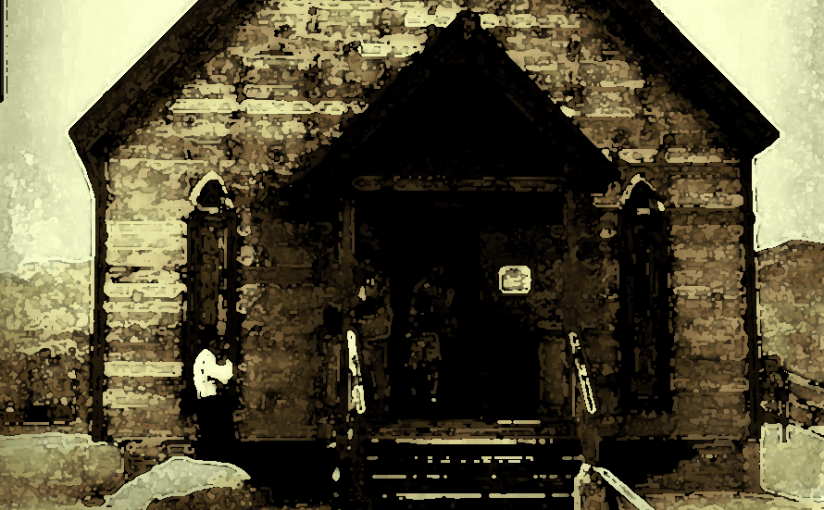
There was an attraction felt immediately between Clara and Johnny but they did nothing to act on what they both felt, initially somewhat scared of the power of the emotions.  It wasn’t until he came to her mountain church, a not insignificant journey, did Clara allow her feelings to grow into love (see song “A River Running Wild“).

Clara and Johnny would soon marry and have three children, Marcus, Nora and Emily before Johnny is killed in WWII.

Clara is the great-grandaunt of Pearl Robison.

© 2018 Frank David Leone. The songs and stories on the Highway 80 Stories website are works of fiction. Names, characters, businesses, places, events, locales, and incidents are either the products of the author’s imagination or used in a fictitious manner. Any resemblance to actual persons, living or dead, or actual events is purely coincidental.

“A River Runnin’ Wild”

This story takes place in the north Georgia mountains, early 1933.  Clara Sprague Robison (1911-1993) sees her future husband, Johnny Campbell (1905-1944), at church one Sunday.  Clara had met Johnny before, but only briefly, and she knew he lived off the mountain. The fact that he came to her church, as opposed to the one he regularly attended, was significant to her, letting her know that he made the trip specifically to see her.  

Clara is the great-grandaunt of Pearl Robison. Clara and Johnny would have three children, Marcus, Nora and Emily before Johnny is killed in WWII.

A RIVER RUNNIN' WILD
(F.D. Leone, Jr.)

Johnny came to Clara’s church that Sunday,
Him on the mountain was a surprise
She’d have to walk right past him
Lord she thought she just might die

She seen the look in his eye
Like there was no one, just them two
Something rose up in her heart
Like a river runnin’ wild busting loose

Johnny touched his new wool cap
As Clara hurried past him up the steps
All through the preachin’ she felt his eyes
On the back of her neck

She seen the look in his eye …

Soon as the service was over
Clara felt her face burnin’ red
Johnny took her hand, they went walkin’
She couldn’t tell you a word of what they said

She seen the look in his eye …

© 2018 Frank David Leone, Jr./Highway 80 Music (ASCAP). The songs and stories on the Highway 80 Stories website are works of fiction. Names, characters, businesses, places, events, locales, and incidents are either the products of the author’s imagination or used in a fictitious manner. Any resemblance to actual persons, living or dead, or actual events is purely coincidental.

Tullison Monroe Tate (1866-1948)

Tullison Monroe “Tully”Tate was the direct descendant of the major landowner and planter of Perry County Alabama, Thomas William Monroe but was not considered an heir because he was an illegitimate offspring.  Tully was just another cotton sharecropper, on his grandfather’s land with no more status than any other black farmer  in Alabama around the turn of the 20th century.  The reason he was not acknowledged as a true Monroe heir was not simply because he was born outside of marriage, but more importantly, because his grandmother was a slave whom Will Monroe had impregnated in 1844.  The result of this miscegenation was Tully’s mother Celsie Monroe.

Celsie was briefly married to a white man, Joshua Tate, and Tully was their only child before separating. Josh Tate was unusual for that time, he was sympathetic to the plight of negroes and his marriage to Celsie was one of love.  After the war the years of Reconstruction were hardly less violent than the war itself. Joshua Tate wished to see the local political power elites toppled and sought to help the Republican elect suitable progressive candidates, including whenever possible negro men.  And he was shot down in 1867 at one of these elections when he confronted a mob that was attempting to control who was allowed to vote.

Tully was a cotton farmer whose status within the community was complicated by the fact of his heritage, which everyone knew, calling him Monroe’s Tully (see song “King Cotton“). After leaving Tully’s father, Celsie would go on to marry Mingo Harper, also a former slave, and they would have four other children, two of whom would play a not insignificant role in the civil rights struggles of the 1950s and ’60s.

Tully Tate would marry Pearl Robison, the daughter of Ruby Robison and Levi Motts resulting in the birth of Hazel Tate.  Hazel would in turn marry Virgil Raney, descendant of Lonsom Raney producing a son, Vernon Raney, husband of Molly Motts. This created the complicated reality that Tullison Monroe Tate’s mixed blood ran through the various strands of the Tate, Raney, Motts and Robison families.

Almost exactly one century later there would be another Tully Tate, the son of a country singer in Louisiana.

Ruby Jones Robison (1955)

Ruby Jones Robison is Pearl Robison’s aunt, on her father’s side. Ruby was also from Conyers, Georgia and for whatever reason, wanted to get as far away as she could. She chose Texas Tech in Lubbock, Texas when she went off to school, over 1,100 miles away.

She was a freshman when she met Darrel Haynes, a senior and with his wiry frame, Restitol hat and slow Texas drawl, he swept her off her feet. He was an engineering student and had a job in hand upon graduation at Baker Oil in Midland, Texas.

Ruby just managed to graduate before marrying Darrel in 1977.  An engineer at Baker Oil makes good money, and compared to her upbringing, Ruby felt like she was rich.  They lived in a 3,000 square foot house, to her a mansion, and she drove a Mercedes Benz. They had a good life and were happy for the first few years, but things started to sour when it became obvious that marriage was not enough to keep Darrel from succumbing to the attractions of single women in the local bars.

When Ruby lost their first baby, a little girl, and Darrel’s reaction was crudely insensitive, the next piece of evidence that she found of his cheating pushed Ruby over the edge and out the door. It took some courage for Ruby to walk away from the kind of life she had, but she was made of strong stuff.

She rode a bus the entire 1,000 mile journey back to Conyers, nursing a bottle of bourbon the whole time. By the time she got back home she had pretty much put Darrel behind her. What she grieved over more than anything was the loss of her little girl, whom she named Catherine Jane after her mother and grandmother.

Ruby stayed in Conyers and went to work for an attorney, who later proposed, and remained a close confidant to Pearl. Eventually Ruby told the story of the failure of her first marriage to her sister Ruth Ann Robison long after the fact (see song “Feel Like Dirt“).


“Levi Motts Is My Name”

LEVI MOTTS IS MY NAME
(F.D. Leone, Jr.)

Levi Motts is my name
Come from Northwest Louisiana
I joined up with Colonel Gray
He said be ready to march today
Don’t know when I’ll be back again
If this war will ever end

Ruby Robison is my gal
Keeps a room down in the bottoms
We talked of gettin’ out of there
Make a new life anywhere
Don’t know when I’ll be back again
If this war will ever end

Ruby wrote me a letter
We were waitin’ outside Mansfield
Wrote there’s a baby on the way
We fought the Yankees April Eighth
Don’t know when I’ll be back again
If this war will ever end

Levi Motts is my name
Come from Northwest Louisiana
Lead ball went through my neck
That afternoon I bled to death
Don’t know when I’ll be back again
If this war will ever end

© 2017 Frank David Leone, Jr./Highway 80 Music (ASCAP). The songs and stories on the Highway 80 Stories website are works of fiction. Names, characters, businesses, places, events, locales, and incidents are either the products of the author’s imagination or used in a fictitious manner. Any resemblance to actual persons, living or dead, or actual events is purely coincidental.