Lonsom Raney (1828-1923)
Lonsom Raney is the son of Scots-Irish immigrants to this country in the early 18th century. Originally the family spelled their name “Rainey” but Lonsom chose to drop the “i” and spell his name “Raney”.
In Colonial America, a whiskey-making tradition came ready-made with the arrival of Scots-Irish settlers from Northern Ireland’s Ulster region, beginning in the 1700s. They brought with them their taste for the drink and an understanding of how to make it. Lonsom Raney’s grandfather had always made his own whisky back in Scotland, and brought his still with him wherever he moved: first to Ireland then across the ocean to Virginia.
When Lonsom was a child, moonshine doubled as a cough suppressant and sore-throat treatment. To get little ones to tolerate whiskey, adults added something special to the cup: “It was pretty common with everybody in the mountains to put the old-fashioned peppermint-stick candy in it,” says Vernon Raney, Lonsom’s great-great-grandson.
Lonsom claimed to drink corn whiskey nearly every day of his life, often telling anyone in his vicinity, that moonshine was the only thing that kept him alive. He started making it while still a child. “I went to helpin’ my daddy make likker when I wuddn’t but nine years old,” he told Vernon. “My daddy just let me go to the still with him and I watched him and learnt it myself.”
Over the years, the law mostly left the Raneys alone. But Lonsom wasn’t always lucky. On at least four occasions, he served time in jail and in prison for violating liquor laws and evading taxes. But as it turned out, being locked up wasn’t bad for business. “That’s a good place to get customers,” Vernon said of his great-great-granddad’s time behind bars. “He would just take orders and fill them when he got out.”
Lonsom Raney died in 1923 at the age of 95. He had four descendants who carried on the Raney whisky tradition: Ransom (son), Royal (grandson), Virgil (great-grandson) and Vernon (great-great-grandson). Vernon would marry Molly Motts, who would later transition their bootlegging business into a drug enterprise (see songs “’57 Fleetwood to Memphis” and “Molly on the Mountain“).
Lonsom Raney 1828
(F.D. Leone, Jr)
1828 Lonsom Raney was born
Had a copper still an’ made clear corn
His great-granddad brought it from Scotland
Hid it in the hills on this Georgia mountain
Help’d his daddy make likker, Lonsom told
When he wuddn’t but nine years old
They’d load the wagon right at the still
Run that shine all through those hills
“Let me be, my sons and me
I’m just doing what I can
Let me be, my boys ‘n’ me
I’m just livin’ off the land”
He made it himself when his daddy died
Drank corn whiskey every day of his life
Claimed moonshine was what kept him alive
Lonsom Raney lived to ninety-five
“Let me be, my sons and me …
Five generations used that still
From Ransom to Royal, then Virgil
Lonsom died in nineteen twenty-three
Now it’s Vernon’s time with the recipe
“Let me be, my sons and me
I’m just doing what I can
Let me be, th’ boys ‘n’ me
I’m just livin’ off the land
I’m just doing what I can
Lemme be free Mr. Gov’mint man”
© 2017 Frank David Leone, Jr./Highway 80 Music (ASCAP). The songs and stories on the Highway 80 Stories website are works of fiction. Names, characters, businesses, places, events, locales, and incidents are either the products of the author’s imagination or used in a fictitious manner. Any resemblance to actual persons, living or dead, or actual events is purely coincidental.
Ransom Raney (1848-1905)
Ransom Raney (1848-1905) was the oldest son born to Lonsom Raney (1828-1923) and was the first child born to the Raney family on their new mountain home in North Georgia after moving from southwestern North Carolina. Originally from Scotland the Raneys were one of many families who were encouraged to move from southern Scotland to northern Ireland, the Ulster region.
These people have been called Scots-Irish and made up a significant number of the immigrants to America in the 17th and 18th centuries. They brought with them much of their way of life, including distilling whiskey in copper stills, with the idea that this was their right, one for which they would not tolerate any infringement from government.
Scots-Irish tended to be impetuous and hotheaded, having been marginalized back in Ulster, they defied any easy definition. In fact, they bristled at others’ labels for them—”Irish,” “Irish Presbyterians,” “Northern Irish,” or even “Wild Irish.” Already twice transplanted, they had acquired a migratory habit. Once acquired, such habits are liable to persist; when the constraints of government caught up with them, these wayfarers often chose to move on.
This trait did not evaporate once they were in America and often they would keep moving west, keeping just ahead of civilization and legal constraints on their way of life.
This song is about three things: 1) the resilient nature of the Scots-Irish of the Appalachian mountains, 2) making whiskey and in general living off the land, and 3) fighting to preserve their way of life, not as part of a larger cause but for fiercely personal reasons.
Ransom Raney
(F.D.Leone, Jr.)
This is the tale of a mountain man
Lot of grit, lot of sand
Ransom Raney’s his name
From Scotland his people came
He was Lonsom Raney’s oldest son
1848 he was born
Stood at his daddy’s right hand
Taught to be a mountain man
Keep your mouth shut, your head down
Live off what comes from the ground
Make your shine, dig ginseng root
Live your own truth
When he was fifteen he went to war
Butternut was his uniform
Fought for what he could understand
Get the blue basterds off his land
Chickamauga; Second Vicksburg
Mansfield was the call he heard
But Ransom slipped away
From the fighting of the blue and grey
His year was up so he went back home
Grateful to get through it whole
In the winter of ’64
Ransom Raney was done with war
Back at the farm what he found
It had been burned to the ground
His daddy rebuilt the barn
While the ground was still warm
Lonsom had buried his copper still
Set it back up on same hill
The first batch after the war
Was his best he swore
The Raneys are a real hard bunch
Won’t be stopped, not by much
A war ain’t nearly enough
The Raneys are a hard bunch
Ransom Raney loved one wife
She gave his seven children life
He taught his two eldest sons
To do what their grandpa done
He lived long enough to see
A brand new century
He was satisfied
In 1905 he died
Ransom Raney stood alone
But he could be counted on
When you needed a friend
Against flatlanders or gov’mint men
© 2019 Frank David Leone, Jr./Highway 80 Music (ASCAP). The songs and stories on the Highway 80 Stories website are works of fiction. Names, characters, businesses, places, events, locales, and incidents are either the products of the author’s imagination or used in a fictitious manner. Any resemblance to actual persons, living or dead, or actual events is purely coincidental.
Isaac “Ike” Raney (1848-1874)
Lonsom Raney (1828-1923) had two sons, Ransom (1847-1929) and Isaac “Ike” (1848-1874). Ransom, as the oldest, was heir to the copper pot his grandfather had brought from Scotland and the Raney whiskey recipe and Ike was called to preach. Ransom was hard, a mountain man who spent his time in the woods making whisky and hunting, trapping, and fishing, and a silent brooding hard man. Ike was his opposite and idealistic.
The next farm over was the McLemore place. Charles McLemore (1824-1904) had a daughter, Eleanor “Ella” McLemore (1848-1874), who was a sweet and beautiful young girl. Charles had often thought that of all the Raney boys, Ike was the best husband material for his daughter. For one thing, Ike was not involved in the Raney family moonshine business, and he was religious as well.
So Charlie McLemore made sure to find ways to get his daughter and Ike Raney together. And Ella and Ike Raney began to court, and eventually married in 1869.
They were happy for a while, Charlie built them a nice cabin, and a church for Ike to preach in. But Ella found herself fascinated by Ike’s brother Ransom, who was very different from her husband, who at times she tought of as weak.
Over time, this fascination matured into a romantic infatuation. Ransom Raney was a man, and could see that Ella was ripe for the picking, and without any thought of his brother proceeded to lure her into the sin of adultery.
Ike was simple, honest, but no fool. He could tell that someething wasn’t right at his home, between himself and his wife. Ella would spend more and more time “taking walks” and one day Ike followed her.
The rest is told in the song.
Lyin’ in Bed
(F.D. Leone, Jr.)
After this winter it’s nice to see some green
The season could be turning to spring
But there’s something I can’t shake from my head
It’s a feeling she been lying in bed
When I met her she had an innocent smile
In the ways of the world she was but a child
But she grew up fast and it all went to her head
Now I’m feeling she been lying in bed
Lying in bed
Lying in bed
My soul is filled with a cold dread
Can’t put my finger on it
Ain’t nothing she said
Just a feeling she been lying in bed
I saw her getting close to my brother Ransom
She always said she thought he was handsome
It wasn’t something that I misread
It’s a feeling she been lying in bed
I ain’t real sure what I will do
I sure don’t like being played for a fool
Then an idea came busting in my head
I told the Sheriff I left her lying in bed
Lying in bed
Lying in bed
My soul is filled with a cold dread
Can’t put my finger on it
Ain’t nothing she said
Just a feeling she been lying in bed
They’re gonna hang me a week from today
I won’t have any last words to say
But when we meet in hell and we’re both dead
I’ll tell her we’re here ’cause she was lying in bed
© 2022 Frank David Leone, Jr./Highway 80 Music (ASCAP). The songs and stories on the Highway 80 Stories website are works of fiction. Names, characters, businesses, places, events, locales, and incidents are either the products of the author’s imagination or used in a fictitious manner. Any resemblance to actual persons, living or dead, or actual events is purely coincidental.
Wyatt Raney (1874-1934)
Wyatt Raney (1874-1934) was the son of Isaac “Ike” Raney (1848-1874) and Martha “Mattie” McLemore (1848-1874). He was orphaned when his father murdered his mother because of jealousy.
After being orphaned, Wyatt moved in with his uncle, Ransom Raney (1847-1929), and spent most of his time with his cousin, August Raney (1875-1898). They hunted in the Fannin County, Georgia hills, until they were old enough at which time they both enlisted and fought in the 1898 Mexican-American War. At the Battle of San Juan Hill both cousins were wounded, Wyatt losing a leg, but August dying from his wound.
Wyatt went home to Georgia and married his sweetheart, Belinda Barnes (1880-1902) and they had two children, Charles and Charlotte. When Charles was old enough he joined up to fight in World War I, but by that time Wyatt had seen the folly in war, and did not understand his son’s desire to run off and fight. Wyatt’s fears were fulfilled when Charles was killed, and buried along with other Raney dead.
After losing his wife during the birth of his daughter, Wyatt retreated from the world, until his death in 1934, using his last words and breath to curse God.
The Orphan Son
(F.D. Leone, Jr.)
My name is Wyatt Raney
I’m an orphan son
They hanged my Pa for killing Ma
When I was a child of one
Raised by my uncle Ransom
Some said he was really my Pa
That talk made Pa angry
Was why he shot my Ma
I’m an orphan son
Grew up with my cousin August
In the Fannin County hills
Up and down the hollers
We honed our hunting skills
Spring we went for turkey
Deer in the fall
Summers we’d help wi’ th’ whiskey
Th’ most fun of all
I’m an orphan son
Orphaned by a gun
I am but one
An orphan son
1898 me and August
Fought at San Juan Hill
I lost my left leg
But August he was killed
I limped back to Georgia
To Belinda I’d left behind
Our first son Charles was born
In 1899
I’m an orphan son
Charles was just like Ransom
He was his grandpa’s son
Spending weeks out hunting
Always with his gun
That stubborn Raney streak
Just like Ransom and Pa
Brothers, fathers, ‘n’ bad blood
Like a natural law
I’m an orphan son
Orphaned by a gun
I am but one
An orphan son
Charles joined up in ’17
What was he was fighting for
After Vicksburg and Gettysburg
Where’s the glory in war
He’s buried there on the hill
Another Raney sacrifice
My forebears fought for honor
And were proud to pay the price
I’m an orphan son
When I came into this world
Death defined my life
When my daughter Charlotte was born
I lost my wife
1934 and I’m tired
Ready to leave this world behind
If there’s a god in heaven
He’s deaf, dumb, and blind
I’m an orphan son
Orphaned by a gun
I am but one
An orphan son
© 2022 Frank David Leone, Jr./Highway 80 Music (ASCAP). The songs and stories on the Highway 80 Stories website are works of fiction. Names, characters, businesses, places, events, locales, and incidents are either the products of the author’s imagination or used in a fictitious manner. Any resemblance to actual persons, living or dead, or actual events is purely coincidental.
Ransom and Ike: Abel and Cain
Ransom Raney (1847-1929) and Isaac “Ike” Raney (1848-1874) were the oldest sons of Lonsom Raney (1828-1923), the patriarch of the Raney family and moonshine dynasty. As Ike used to say, ‘me and Ransom are like Abel and Cain.’
Where Ransom loved to outdoors hunting and fishing, Ike was a farmer and was dedicated to raising a fine crop of corn and beans. But Ransom was somewhat of a bully and looked down on farming, seeing it as less manly than hunting. He would show this disrespect by harming Ike’s field by dragging one of his dead deers through the crop.
As this went on Ike knew he had to put some distance between himself and Ransom, so he built a little cabin and staked off a nice sized field on the river side of the Raney land, which covered a sizable acreage. After getting his farm going, and a couple of years, in 1869, Ike married Martha “Mattie” McLemore (1848-1874) a beautiful and innocently shy young woman.
Initially things went well, Mattie enjoyed life at the farm despite the seclusion and did not feel lonely. And when they had their forst two children, Charles (1871) and Charlotte (1873), even the solitude was improved. But eventually she began to want more.
Although she did love Ike, his personality was quiet, soft, and even passive. As a farmer he long ago accepted the vicissitudes of weather with an equanimity that she did not quite understand. It was almost like he accepted failure too easily. Ransom on the other hand was strong, and in control of the forces in his life. She found his roughness very attractive. Soon she was fantasizing about a closer relationship with her brother-in-law.
Mattie’s desire did not go unnoticed by Ransom, who saw how easily he could destroy Ike simply by letting nature take its course.
Over those first four years, Mattie and Ike grew further and further apart. Mattie continued to do her chores, cooking, cleaning, and bearing children. She always had a meal waiting for Ike when he came in from the field, but often would not sit at the table with him, excusing herself with the excuse she wanted to walk around the property. Ike knew she had come from a large family and no doubt missed the companionship of her siblings. He indulged her in these walks, but when they began to happen more frequently he became suspicious.
One day he decided to follow her to satisfy his curiosity about where she went. To his horror, he followed her to the river where Ransom had set up one of his deer blinds. Ike, hiding some brush, watched as they embraced, and then entered the small shack. Ike was devastated and trudged home despondent not knowing how to respond.
He wanted to give it time in order to see if Mattie would come to her senses, or if Ransom would grow tired of her. Ransom was not known to sustain long involvements with women. Usually he sought the company of prostitutes, those who could make no claim on him. And maybe he thought that as a married woman, neither would Mattie.
However, they continued to see each other, even as Mattie was pregnant with Ike’s third child.
This was too much for Ike. He waited until after she gave birth, and wanted to give her one last chance to come back to him, completely, before he did or said something he could not take back. However, she went back to Ransom and Ike made his decision.
My Brother Ransom
(F.D. Leone, Jr.)
My brother Ransom was older than me
He’d inherit Grandpa’s recipe
We both helped Pap make our shine
Ransom was ten, I was nine
Handed down, father to son
Our copper pot came all the way from Scotland
Family is everything to us
Blood is only thing you can trust
Ransom liked to hunt and fish
Chewed ginseng like licorice
He was rough and pretty wild
My brother Ransom was a mountain child
Each year I’d plow a patch of land
Squash and beans the work of my hands
Ransom might come back with a buck he’d killed
Drag that carcass through my plowed field
Ransom looked at my farmin’ with disdain
He and I were Abel and Cain
If I stayed I knew we’d come to fight
I had to move and did one night
For a few years I did fine
Worked the land and made it mine
I married Mattie and brought her home
But Ransom wouldn’t leave her alone
Mattie was a sweet, innocent child
Melt your heart with her mysterious smile
I was never sure what she saw in me
I guess for her I was security
But Ransom was always there
Like a shadow everywhere
Her softness was drawn to his strength
Her eyes followed wherever he went
Mattie changed bit by bit
She became remote and distant
I gave her time hoping it would pass
I didn’t know how or what to ask
Side by side in bed we lay like logs
I couldn’t name it but something was wrong
She told me it was all in my head
But I didn’t believe a word she said
It got so we would hardly talk
She spent time taking long walks
One day I thought I’d spy out where she went
And discover her devilment
There’s a river that borders my land
Where Ransom built a deer stand
Could that really be her destination
Why that place in all of creation?
The answer was soon to be known
Ransom drank her in like she was all his own
She ran and leapt into his arms
And offered him every one of her charms
I stood there rooted like a tree
Afraid of what I might see
I watched her walk into his shack
And with a bitter heart I turned back
Best place for thinking is behind a plow
I sure had things to think about now
How would I act, what could I ask?
Too late to stop her from slippin’ from my grasp
She came home to the same routine
Living the lie as if I’d never seen
What I saw was seared on my brain
When I close my eyes the images remain
Ransom needed me for a whiskey run
I wouldn’t let on I knew what they’d done
Knowing Ransom he’d not feel any guilt
He wasn’t one to cry over spilt milk
Back home I got my rat gun
I shot Mattie, that’s what I done
Sent for the sheriff and waited there
Never denied what I did to her
I was hanged in 1874
I killed my wife for acting a whore
Not Ransom; it was her I shot
Ransom was blood, and she was not
.© 2022 Frank David Leone, Jr./Highway 80 Music (ASCAP). The songs and stories on the Highway 80 Stories website are works of fiction. Names, characters, businesses, places, events, locales, and incidents are either the products of the author’s imagination or used in a fictitious manner. Any resemblance to actual persons, living or dead, or actual events is purely coincidental.
Royal Raney (1868-1939)
Royal Raney was the grandson of Lonsom Raney, legendary moonshiner and general hell-raiser of the North Georgia mountains. Here, Lonsom is with a young Royal, spending some time on the family farm telling some history of their clan and in general initiating him into the Raney fold.
Say Roy
(F.D. Leone, Jr.)
Say Roy, get my walking stick
I want to take a look around the place
Get up boy, and you best be quick
I’m old ‘n’ ain’ got time to waste
Come on Roy, find your sense
I want to see that stretch o’ fence
Did you mend it right?
Let’s go, it’s almost light
Get up and make your bed
Boy don’ keep me waitin’ long
Ain’ you heard a single word I sed?
I want to sweep off your Grandma’s headstone
It looks like it might storm
Gonna stick my head in the barn
Did you milk the cow?
I wanna go and go now
I can see it just like yesterday
Walkin’ with my pap just like this
I was just about your age
And wanted a walkin’ stick just like his
Pap cut a branch, gave it to me
He cut it from a hickory tree
Said, “when that dries it’ll be good”
We’re standing where that hickory stood
Say Roy, let’s head back home
I done looked around the place
Come on boy, get a move on
I’m old ‘n’ ain’ got time to waste
Light the lamp, trim the wick
Here, take this walkin’ stick
It’ll be yours from now on
Come on Roy, let’s go home
© 2019 Frank David Leone, Jr./Highway 80 Music (ASCAP). The songs and stories on the Highway 80 Stories website are works of fiction. Names, characters, businesses, places, events, locales, and incidents are either the products of the author’s imagination or used in a fictitious manner. Any resemblance to actual persons, living or dead, or actual events is purely coincidental.
The Raney Still
Lonsom Raney (1828-1923) learned how to mnake whiskey from his father Andrew Rainey (1799-1852), who inturn had learned from his father Macgregor “Mac” Raney (1765-1810). Family lore holds that they all used the same copper still that had been built by some even earlier Raney patriarch. Supposedly, this very copper pot had come to America with Maclen Rainey (1713-1765) in 1741 when he was 28 years of age. At leeast that was the story Lonsom had always swore to.
But there’s a bit more to this story, since Maclen and that copper pot were separated at sea when their ship was lost in a storm. Maclen hung on to a steamer trunk for three days until he and the trunk found land, as Lonsom told the story, it was Haiti, but who really knows. Lonsom never let the true facts hobble a good story.
Because whiskey making was deep in the Raney blood, Maclen made sure to find a replacement for the lost ancestral still before he acquired passage on a freighter bound for Virginia. Which he did.
Now Vernon heard the truth from his grandfather Royal Raney (1868-1939) whlle they were in the woods cooking up another batch of their monshine one crisp cool October morning.
But by now the replacement still was 179 years old itself, and had made hundreds of barrels of clear corn whiskey, and might as well have been the one from Scotland. For all Vernon knew, that one probably ended up floating to the same shore his 7th great-grandfather had, and some islander was making whiskey in it to this day, and spinning some colorful yarn about how he came to own it.
Copper Pot Still
(F.D. Leone, Jr.)
The rosy dawn crawls above the tree line
As Vernon slowly comes awake
Vernon! Get a move on;
Tend to the fire, for heaven sake.
Their second week at the still site,
Took em some days to find the spot.
Hidden near clean cold water,
But now the still was finally up.
Fast minutes of hard work,
Then slow hours of doing nothing;
Listenin’ to the birdsong and the wind,
Layin’ under live oak trees; napping.
Samplin’ the brew from time to time,
Tossin’ the heads and tails.
That still’s pretty old, ain’t it, grampa?
Royal took a deep breath and then exhaled.
That still; now there’s a story;
Vernon, I’m gonna tell you the truth,
But don’t you go an’ tell nobody,
Cept th’ son you deed the recipe to.
One of your ancient ancestors,
Brought that still here in 1741;
I was told it came all th’ way from Scotland,
But that ain’t exactly where it come from.
Black pools of water stood by the still;
A steady rain pierced the soft moonlight.
Damn this rain, Royal hissed,
I’m too old for this whiskey life.
Some check the proof with a gadget,
But I always just shook the jar;
When the beads are big an’ pop an’ dance on the surface;
A trained eye will git it right on the mark.
A copper pot was all Maclen Rainey took
Aboard a tall ship bound for this land.
Overnight a typhoon blew up;
Ship and still were never seen again.
Mac held onto a steamer trunk for three days,
Until ashore he and it were tossed.
The first thing he did was find a tradesman,
Who could fabricate another still for the one he lost.
My grandpa, Lonsom, swore it was Haiti;
A Freanchman livin’ at the ship yard,
Who turned the copper sheets for this still;
Each Raney son would leave his mark.
The only thing to consider is,
A Rainey got here with a copper pot;
And began runnin’ untaxed whiskey,
Nine generations on, we still ain’t stopped.
So, pap, is it all a lie?
Vern, what’s true? What’s real?
The importance of family lore,
Aint if it’s fact, but how it makes us feel.
What endows a thing with meaning,
Is a history that’s been transformed;
If this pot is in fact not the first one,
It’s history, too, was lost in a storm.
Near dawn they heard dogs below;
Down the mountain distant dogbark.
Then fadin’ off when they coursed out,
Along some rocky draw in the dark.
Later they brought the truck around to the still site,
Loaded jars and pot into the bed;
Vernon was silent as they worked,
Thinkin’ bout all Royal Raney’d said.
© 2023 Frank David Leone, Jr./Highway 80 Music (ASCAP). The songs and stories on the Highway 80 Stories website are works of fiction. Names, characters, businesses, places, events, locales, and incidents are either the products of the author’s imagination or used in a fictitious manner. Any resemblance to actual persons, living or dead, or actual events is purely coincidental.
Belinda Barnes and Wyatt Raney
Belinda Barnes (1880-1902) grew up in the north Georgia hills and loved the outdoors. She was something of a tomboy, and was considered a ittle strange by her community. Because she felt ostrasized she ended up spending most of the days alone, wlaking the hills, doign a little hunting and fishing, and generally living as most boys her age did.
An unfortuante event occurred in which she was molested by her uncle which only served to cause her to retreat further inward. But since by now her sexuality had been awakened, albeit in a negative fashion, she still began seeking out expereinces with other men
This continued for a few years until she met a young man from a neighboring family, Wyatt Raney (1874-1934).
After being orphaned, Wyatt was taken in by his uncle, Ransom Raney (1847-1929), and spent most of his time with his cousin, August Raney (1875-1898). They hunted in the Fannin County, Georgia hills, until they were old enough at which time they both enlisted and fought in the 1898 Mexican-American War. At the Battle of San Juan Hill both cousins were wounded, Wyatt losing a leg, but August dying from his wound.
Wyatt went home to Georgia and married his sweetheart, Belinda and they had two children, Charles and Charlotte. After losing Belinda during the birth of his daughter, Wyatt retreated from the world, until his death in 1934.
Winter Turns to Spring
(F.D. Leone, Jr.)
Belinda Barnes wasn’t like other girls;
Folks called her a tomboy,
Said she looked like a farm boy.
Wore a hunting cap, boots and overalls;
Could get the best of any boy her size.
There was a sadness behind her eyes.
She kept hidden a soft tender side,
She yearned to be touched;
Just not in her uncle’s truck.
Winter turns to spring
Barren trees will be green
Midnight will see the dawn
We press on
A cold hard look kept most folks at bay;
But she would lay with any man, anywhere;
People talked; but Belinda didn’t seem to care.
Then she met a boy who could really see her,
He saw her demons and tamed ’em quiet.
Belinda let her guard down with Wyatt.
The Raneys were rough mountain bootleg people;
Wyatt worried about Belinda.
Would they accept her; befriend her.
Winter turns to spring
Barren trees will be green
Midnight will see the dawn
We press on
When he was one, Wyatt was orphaned;
They hung his father for killin’ his mother.
Raised by his uncle, his cousin Augie, like a brother.
Then, 1898 and San Juan Hill,
Wyatt and August chose to enlist;
The Raneys said, “fightin’ for Yankees was foolish.”
A cannonball took Wyatt’s leg;
Augie came back home to be buried.
Belinda and Wyatt married.
Winter turns to spring
Barren trees will be green
Midnight will see the dawn
We press on
They had two kids, Charles and Charlotte
But Belinda? Wyatt lost her,
Giving birth to his daughter.
1918 Charles went to war;
Wyatt did his best to dissuade him,
But Charlie would not obey him.
Wyatt closed his eyes, went home and raised his daughter.
Instead of honor, Charlie found death;
Wyatt cursed God with his last breath.
Winter turns to spring
Barren trees will be green
Midnight will see the dawn
We press on
© 2024 Frank David Leone, Jr./Highway 80 Music (ASCAP). The songs and stories on the Highway 80 Stories website are works of fiction. Names, characters, businesses, places, events, locales, and incidents are either the products of the author’s imagination or used in a fictitious manner. Any resemblance to actual persons, living or dead, or actual events is purely coincidental.
Wyatt Raney, Epilogue
Wyatt Raney (1874-1934) was the son of Isaac “Ike” Raney (1848-1874) and Martha “Mattie” McLemore (1848-1874). He was orphaned when his father murdered his mother because of jealousy.
After being orphaned, Wyatt moved in with his uncle, Ransom Raney (1847-1929), and spent most of his time with his cousin, August Raney (1875-1898). They hunted in the Fannin County, Georgia hills, until they were old enough at which time they both enlisted and fought in the 1898 Mexican-American War. At the Battle of San Juan Hill both cousins were wounded, Wyatt losing a leg, but August dying from his wound.
Wyatt went home to Georgia and married his sweetheart, Belinda Barnes (1880-1902) and they had two children, Charles and Charlotte. When Charles was old enough he joined up to fight in World War I, but by that time Wyatt had seen the folly in war, and did not understand his son’s desire to run off and fight. Wyatt’s fears were fulfilled when Charles was killed, and buried along with other Raney dead.
After losing his wife during the birth of his daughter, Wyatt retreated from the world, until his death in 1934, using his last words and breath to curse God.
The North Georgia Hills
(F.D. Leone, Jr.)
He ain’t Joe Hill;
He ain’t John Henry.
Just a hillbilly,
With a long mem’ry.
He don’t carry a grudge,
Ain’t about getting even.
When his mind is made up,
You better believe him.
He’s Scots-Irish,
A code from the old hills.
Tobacco and ginseng root;
Runnin’ whiskey stills.
His grampaw taught him the life;
Lonsom said, “you, grandson,
If they bring a knife;
You bring a gun.”
The north Georgia hills;
Brown November fields.
His people came from Scotland,
Across the Appalachian mountains,
To the north Georgia hills;
The north Georgia hills.
The law hung his father,
For killin’ his mother.
Orphaned by violence;
Hi anger smolders.
His people are bootleggers,
Living outside the law.
He barely knows his letters;
Don’t slow him down at all.
The north Georgia hills;
Brown November fields.
His people came from Scotland,
Across the Appalachian mountains,
To the north Georgia hills;
The north Georgia hills.
© 2024 Frank David Leone, Jr./Highway 80 Music (ASCAP). The songs and stories on the Highway 80 Stories website are works of fiction. Names, characters, businesses, places, events, locales, and incidents are either the products of the author’s imagination or used in a fictitious manner. Any resemblance to actual persons, living or dead, or actual events is purely coincidental


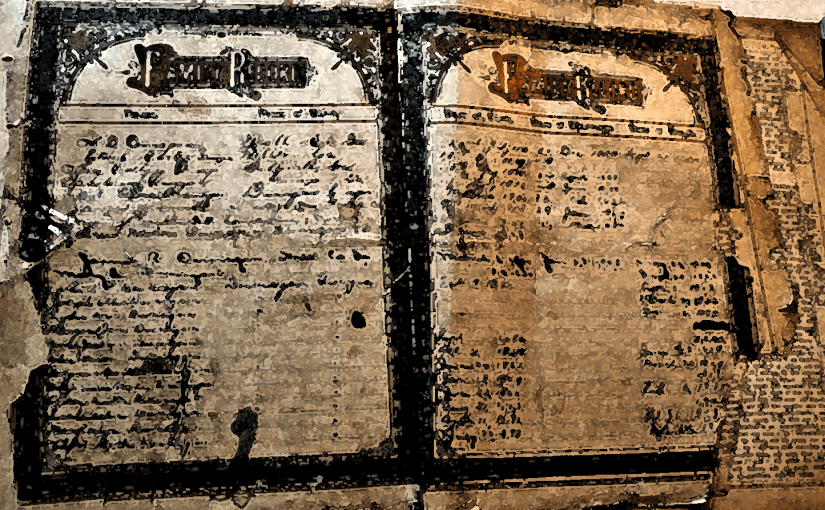


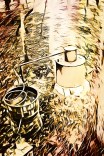 But there’s a bit more to this story, since Maclen and that copper pot were separated at sea when their ship was lost in a storm. Maclen hung on to a steamer trunk for three days until he and the trunk found land, as Lonsom told the story, it was Haiti, but who really knows. Lonsom never let the true facts hobble a good story.Because whiskey making was deep in the Raney blood, Maclen made sure to find a replacement for the lost ancestral still before he acquired passage on a freighter bound for Virginia. Which he did.
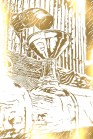 Now Vernon heard the truth from his grandfather Royal Raney (1868-1939) while they were in the woods cooking up another batch of their moonshine one crisp cool October morning.


 Molly Raney was an ambitious young woman, seeing that the bootlegging business was doomed as liquor laws were repealed making it easy to purchase whiskey. She also realized that the younger generation was interested in marijuana and other recreational drugs. Her oldest, Lonnie, became the county sheriff, the other son,

 Highway 80 Stories