Mae Ella Cooper (1957)

Mae Ella Cooper (1957) got her mother’s good looks, but did not inherit her mother’s obsessive concern for security. Bessie Grant Walker, as a child of the Great Depression had a healthy suspicion of good news. But as she got older and the Depression faded further in her memory, she learned how to have good time when she wanted to. Still, she took nothing for granted, was frugal to the point of self-denial, and denial to her family. Whatever generosity Bessie Grant was capable of was directed not towards her children but skipped a generation and rested on her grandchildren.

As Bessie’s oldest daughter, Mae Ella could not help but rebel against this kind of upbringing and from the time she could think for herself decided to deny herself nothing.

The first thing she did was run off with Frank Wes Cooper when she was sixteen. They stood in front of the first man qualified to pronounce them husband and wife and promptly began setting up house together. Her father, Walter Calahan Walker came after her, but realizing he was too late to bring her home reconciled himself to the situation, but knew it would be difficult pacifying Bessie.

Things improved somewhat when Mae Ella announced that she was pregnant with their first grandchild, which turned out to be a boy that she named after her father, Calahan Cooper. Mae Ella and Frank went on to have four more children, the youngest being Lucy Bess Cooper, grudingly honoring Mae’s mother.

As the kids grew up and one by one left home, Mae Ella began to look for something to occupy her time and creative impulses. What she did was open a bar, juke joint, with music, illegal whiskey, dancing and other things not exactly legal. This did not sit well with her husband and Frank began to simmer with a brooding resentment over the late nights she spent away from home.

Lucy, her youngest, pretty much grew up in the bar, which contributed to her developing a wild streak.

One night after having too much to drink, Frank decided he’d had enough and attempted to burn the bar down. This caused Mae Ella to seek a divorce, of sorts. Telling him to pack up and leave, punctuating her demand with a .38 pointed at his face.

Later, after Lucy was sent to prison and dying there of an overdose, Mae Ella was informed that Lucy had given birth to a boy. This child had been put into foster care, but Mae Ella moved heaven and earth to uncover where he was, petitioned the state for custody, and by pure dent of will power, wrangled him out of the foster home, and brought him home with her (see songs “Lucy’s Grandma” and “When Louanne Met Lucy in Prison“).

She named him McCoy and raised him, doting on him, spoiling him completely.

Millie Carson Sparks (1899-1985)

THE MAY 24, 1935, Roanoke Times headline read: Woman Pilot of Whiskey Cars Is Placed On Stand. Millie Carson Sparks testified on May 23 for a half hour. “So great was the interest with which her appearance has been awaited that it served to overshadow a full day of varied testimony . . .” The experience was a disappointing one for most, including Anderson, who saw his hopes of a great mountain heroine die with her appearance on the witness stand. “Mrs. Carson, whose name became so widely known here in the palmy [sic] days of the bootleggers during Prohibition, appeared minus the diamond that once gleamed in her teeth. She was dressed in a white outfit with hat and shoes to match, the dress having brown ruffled sleeves and collar gathered in front with a large cameo pin.

Mildred “Millie” Sparks was a tall, thin and sophisticated young woman whose appearance and mien belied her Southwestern Virginia upbringing. Sparks had originally married a big-shot bootlegger and soon became the principal driver for the operation, driving pilot cars as the caravans of booze careened and smashed their way through the hills of rural towns and into the conduits of the major cities, becoming a celebrity in the process. They said Sparks had movie-star looks and diamonds set in her teeth.

The woman she presented to the world gave no indication of the kind of upbringing she experienced as a girl.

She would have been out of bed at dawn. Summers came on the mountain farm then winters. From the time she was six or seven, she went, for a few months each winter, to a mountain school.

From the time when she was tall enough to stand up to the stove she got up and got the breakfast. In the winter there were corn bread and hot hog meat, and in the summer there were greens. Then she had to clean up the dishes and sweep out the house. She said that the house had no floor. There was just the hard earth, clay she said, made hard and even shiny by much tramping of bare and unwashed feet. To sweep out the house with a homemade broom her father had made, to wash the dishes – mend and wash her father’s clothes.

To school for a few months each winter, for four or five years – to learn anyway to read and write. Spring, summer, fall, and winter. There were plenty of creeping crawling things. “We had lice and bedbugs,” she said. She thought, when she was a child, they were companions every one had.

When she was sixteen she decided she could take no more of the life of back-breaking work and ran off to Raleigh and found work in one of the textile mills. Eventually she met the men involved in the bootlegging and married one.

No one around called the thing “bootlegging.” That might as well have been a foreign word. “You mean blockadin’, sir? What blockades?” Nobody ever said “moonshine” either. White Lightning. White Mule. Moon. Stump Whiskey. Mountain Dew. Squirrel Whiskey. Fire Water.

She had a little girl, Bessie, and chose to retire from her husband’s business, which was becoming increasingly dangerous and unprofitable by the early ’30s.  It wasn’t long before the Feds shut down the entire enterprise, culminating with the longest trial in state history.  She died 50 years after giving testimony in that trial at the age of 86.


Ronnie Raney (1962-2004)

Ronnie Raney (1962-2004).  Middle son of Vernon and Margaret “Molly” Raney in Vicksburg, Mississippi.  Married to and murdered by Louanne Bowden (Raney).  His brother Lonnie is sheriff of Warren County.  He has a younger sister, Ginny.

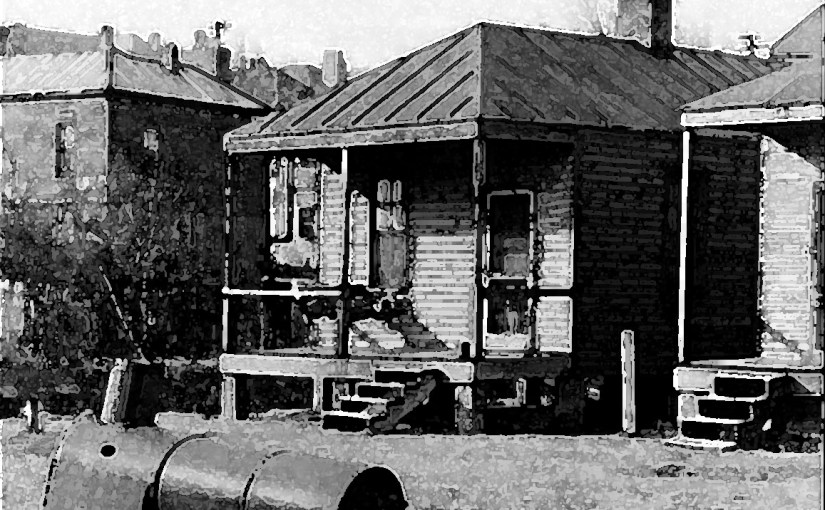
Ronnie works for his mother distributing drugs and in general running the business.  He started out dealing at University of Mississippi where he meets and seduces Louanne.  They begin living together in a shotgun house in Vicksburg and as Ronnie becomes more and more responsible for the operations of the Raney drug enterprise, Louanne also becomes involved in running a bar and trailer where her girls turn tricks.

Ronnie is a basically a “good ol’ boy” and means well, but has trouble controlling his temper. Because he feels intimidated by Louanne’s intelligence and background (she comes from a well-to-do Dallas family) he often resorts to threatening behavior, and even physical violence, when he is at a loss for any other way of controlling a situation.

After suffering from this kind of behavior for years, in 2004 Louanne kills Ronnie for continuing to get drunk and raise his hand to her. She was tried and convicted of second degree murder (unjustly) and was sentenced to twenty years at the Mississippi state penitentiary for women (see song, “One Time Too Many“).

“One Time Too Many”


LOCATION: Vicksburg, Mississippi
PERIOD: 1985-2004
DRAMATIS PERSONAE: Louanne Murray Bowden (1967); Ronnie Raney (1962-2004)


In a disastrous act of rebellion from her upper crust background, Louanne Bowden began dating and ultimately married Ronnie Raney whom sehe met while attending the University of Mississippi in Oxford.

The Raney family under the leadership of matriarch Molly Motts Raney transitioned from bootlegging moonshine whiskey to distributing marijuana, pills and eventually funding methamphetamine labs. Ronnie was the second oldest son, acting as his mother’s right hand operations manager, his older brother Lonnie was sheriff of Warren County, offering protection for the entire enterprise.

After suffering years of Ronnie drunken abuse, Louanne and finding no relief from the corrupt legal system in Warren County, took matters into her own hands and shot Ronnie with a deer rifle as he sat at the kitchen table eating a slice of her homemade peach pie.

Although she knew she was justified in killing him, she fatalistically accepted her conviction of murder and the twenty year sentence that went with it. Only much later was she vindicated and released for time served.


ONE TIME TOO MANY
(F. D. Leone, Jr.)

She’d like to fix up her dinette
Yellow wallpaper with nosegays
A hard wood floor would do the trick
Those stains’ll take more than paint
 
A buzzer spoils this daydream
Lights out and the bars clang shut
It’ll have to wait twenty years
This cell is where she’ll stay put
 
She’d had enough
Taken too much
He treated her rough one time too many
She did the crime
She’ll do the time
Regrets? No, she don’t have any
 
She brought him his beer and a slice of pie
Then shot him with his deer gun
It was worth it just to see him surprised
Once he realized just what she’d done
 
She’d had enough
Taken too much
He treated her rough one time too many
She did the crime
She’ll do the time
Regrets? No, she don’t have any
 
His brother was sheriff of Warren County
There was no doubt the fix was in
A jury of his peers showed no mercy
But if she could she’d do it again
 
She’d had enough
Taken too much
He treated her rough one time too many
She did the crime
She’ll do the time
Regrets? No, she don’t have any

© 2017 Frank David Leone, Jr./Highway 80 Music (ASCAP). The songs and stories on the Highway 80 Stories website are works of fiction. Names, characters, businesses, places, events, locales, and incidents are either the products of the author’s imagination or used in a fictitious manner. Any resemblance to actual persons, living or dead, or actual events is purely coincidental.

Lonnie Raney (1958-2006)

Lonnie Raney (1958-2006).  Oldest son of Vernon and Molly Raney; brother of Ronnie and Ginny Raney.  Elected sheriff of Warren County (Vicksburg, county seat) and is generally a well-liked but corrupted law enforcement officer.  One of his prime responsibilities was protecting his mother and brother in the pursuit of their marijuana growing and drug business.

Although sister-in-law Louanne Borden Raney murders his brother Ronnie, and is convicted of second degree murder (see song, “One Time Too Many“), she later refuses cut a deal in an DEA investigation into the Raney family criminal activities and instead warns Lonnie of the investigation.

In 2006 Lonnie is killed in a shootout while attempting to protect his mother and the drug business when the DEA comes to serve warrants for their arrest.

Warren County, Mississippi

(Information taken from Wikipedia)

Warren County is a county located in the U.S. state of Mississippi. As of the 2010 census, the population was 48,773.  Its county seat is Vicksburg.[2] Created by legislative act of 22 December 1809, Warren County is named for American Revolutionary War officer Joseph Warren.

Part of the Mississippi Delta and the historic cotton culture, Warren County is included in the Vicksburg, MS Micropolitan Statistical Area, which is also included in the Jackson-Vicksburg-Brookhaven, MS Combined Statistical Area.

“When Louanne Met Lucy in Prison”


LOCATION: Mississippi Penitentiary for Women, Rankin County, MIssissippi
PERIOD: 2015
DRAMATIS PERSONAE: Lucy Bess Cooper (1980-2015); Louanne Murray Bowden (1967)


Louanne Bowden was sent to the Mississippi Penitentiary for Women after being convicted of murdering her husband, Ronnie Raney (see song, “One Time Too Many“). Prison was an unlikely place for someone of Louanne’s background to end up, but there she was (see song, “Louanne in Vicksburg“). The fact that she killed Ronnie as a result of his constant physical abuse did not mitigate the verdict. Only years later would her case be reviewed and she would be released for time served when the charge was changed from murder to justifiable homicide (see song “A Waxahachie Funeral“).

However, while Louanne was serving her twenty year sentence Lucy Cooper was also sent to this prison on an 18 month sentence for distribution of controlled substance, marijuana. Although Lucy put up a brash and strong front, she was in fact a fragile woman, unable to cope with life behind bars. Shortly before being considered and most likely to be released on parole, a little shy of 12 months into her sentence, Lucy succumbed to depression and killed herself with an heroin overdose (see also song, “Levi and Lucy“).


WHEN LOUANNE MET LUCY IN PRISON
(F. D. Leone, Jr.)

When Louanne met Lucy in prison
Lou was halfway through her twenty
For killin’ Ronnie Raney
Who hit her once too many
Lucy would talk all about Levi
In words tender and soft
It was old friends and old sins
Got Lucy caught

Ain’t that how it is sometimes?
You’re on the verge of change
Life sends you the same ol’ same

They gave Lucy eighteen months
Easy time for most but for Lucy hard
Day by day she faded away
Behind stone walls and steel bars
Louanne tried to keep an eye on Lucy
Easy in there to come to harm
August night when they found her
Needle was still in Lucy’s arm

Ain’t that how it is sometimes …

Louanne got word to Levi
Said it best she knew how
Lucy only had six weeks left
She ain’ never gettin’ out
Levi read that letter and then
Put it in his dresser drawer
Got drunk in Vicksburg went a little further
Did a little more

© 2017 Frank David Leone, Jr./Highway 80 Music (ASCAP). The songs and stories on the Highway 80 Stories website are works of fiction. Names, characters, businesses, places, events, locales, and incidents are either the products of the author’s imagination or used in a fictitious manner. Any resemblance to actual persons, living or dead, or actual events is purely coincidental.

Parchman Farm (Mississippi State Penitentiary)

(Information taken from Wikipedia)

Mississippi State Penitentiary (MSP), also known as Parchman Farm, is a prison farm, the oldest prison, and the only maximum security prison for men in the state of Mississippi.

Begun with four stockades in 1901, the Mississippi Department of Corrections facility was constructed largely by state prisoners. It is located on about 28 square miles (73 km2) in unincorporated Sunflower County, in the Mississippi Delta region.

It has beds for 4,840 inmates. Inmates work on the prison farm and in manufacturing workshops. It holds male offenders classified at all custody levels—A and B custody (minimum and medium security) and C and D custody (maximum security). It also houses the male death row—all male offenders sentenced to death in Mississippi are held in MSP’s Unit 29—and the state execution chamber.

Female prisoners are not usually assigned to MSP; Central Mississippi Correctional Facility (CMFC), also the location of the female death row, is the only state prison in Mississippi designated as a place for female prisoners.

CMCF opened in January 1986 with a capacity of 667 prisoners. CMCF was the first prison facility of the Mississippi Department of Corrections outside of the Mississippi State Penitentiary (MSP) in Sunflower County. Upon the opening of CMCF, female prisoners were transferred from MSP to CMCF; previously women were held in MSP Camp 25.

“Levi After Lucy”


LOCATION: Mississippi: Vicksburg, Greenwood, Greenville
PERIOD: 2015-16
DRAMATIS PERSONAE: Levi Hooper (1973); Lucy Cooper (1980-2015)In the aftermath of Lucy


Cooper‘s either accidental overdose or intentional suicide while incarcerated in the Louisiana Prison for Women, Levi Hooper went on something of a bender. Levi was not normally a drinker, but he felt despondent over Lucy’s death and did the only thing he knew how in order to deal with the set of emotions he felt: anger, shock, frustration.

Lucy had not done any drugs or much drinking for weeks prior to being arrested. That arrest was in itself was another case of bad timing: someone she thought was a friend flipped when arrested and gave Lucy up as his dealer (see song, “Levi and Lucy“. The reason Levi did not wish to believe that Lucy had committed suicide was because often when a former user has not done any narcotics for a while, if they relapse at their last dosage, their body cannot tolerate what it once did.

In any event, Lucy had been in the process of turning her life around at the time of her arrest, and her death while serving a relatively short sentence, 18 months, was hard for Levi to take (see songs, “Ready for Change” and “When Louanne Met Lucy in Prison“).

His binge begins in bars around Vicksburg, then he hits the road, to Greenwood, and Greenville, ending up at a small Catholic church in Lake Providence, Louisiana. Levi does not wish to be rude to the priest, he is simply exhausted both mentally and physically, and after this experience, Levi goes back home, devotes himself once again to helping his mother and begin to pick up the pieces of his life.


LEVI AFTER LUCY
(F. D. Leone, Jr.)

Levi staggered up the stone church steps
A slice of moon hung above a wooden cross
Inside the door he stared at a concrete font
Then walked down the aisle, drunk and lost

He eased himself into a pew and sat
Musty scent of incense hung in the air
Worn leather knee-benches underfoot
Levi tried to find the words of a prayer

Vicksburg, Greenwood, Greenville
Gone down many roads, travelin’ still
Pavement, gravel, then dirt
But what he’s lookin’ for ain’t in this church

His head sank to his chest; he slept
A priest shook him; he struggled to his feet
The priest asked him, “Do I know ye?”
“No,” Levi said. “You don’ know me.”

Vicksburg, Greenwood, Greenville …

“Please, Lord, please keep me still
From sinkin’ lower an’ blowin’ away
I’ll straighten out I swear I will
Least that’s how I feel today”

Priest looked him over and said
“Were you waiting to see me?”
Woman was dustin’ the altar with a rag
“No, sir, I just fell asleep.”

Vicksburg, Greenwood, Greenville …

© 2018 Frank David Leone, Jr./Highway 80 Music (ASCAP). The songs and stories on the Highway 80 Stories website are works of fiction. Names, characters, businesses, places, events, locales, and incidents are either the products of the author’s imagination or used in a fictitious manner. Any resemblance to actual persons, living or dead, or actual events is purely coincidental.

Nellie Phelps (1855-1922)

Eleanor “Nellie” Davis (1923-2007) was Louanne Bowden’s paternal grandmother.  She was named Eleanor and called Nellie for her own great-grandmother, Nellie Phelps (1855-1922).  Nellie Phelps had died the year prior to Louanne’s grandmother’s birth.

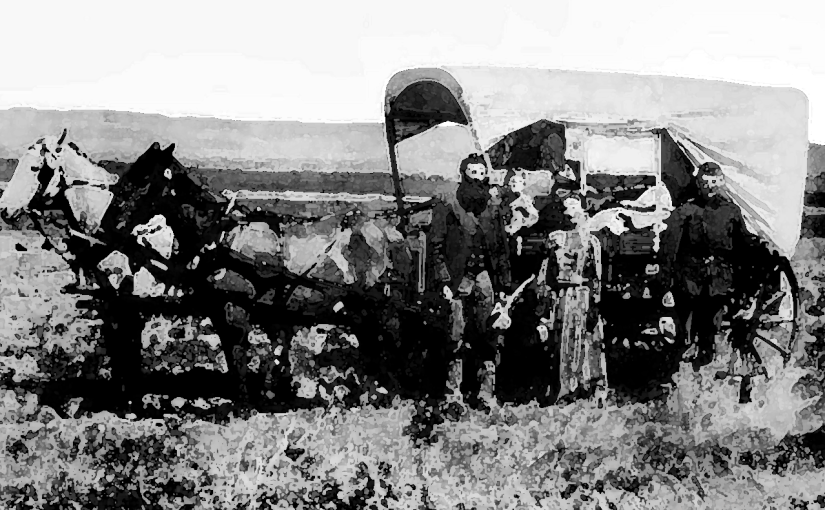
The Phelps family had come from England to America in the 1690s, the first Phelps born in Pennsylvania was William Phelps (1721).  From Pennsylvania the family went to Tennessee and began farming.  Nellie Phelps had two brothers, Burch and Jethro (“Jed”).  Their parents, were another William Phelps (1834-1872) and his wife Martha Massey (1835-1862).  Martha died when Nellie was eight, probably from some kind of “heart sickness” after Burch, their oldest, had died from a fever.  She had never been happy on the frontier anyway, and just went to bed one day and never got up.

Nellie and her brother Jed were left with their father to tend to the farm, which they did for nearly a decade before William, too, got sick with consumption.  He died when Nellie was 17 and Jed only sixteen (see song “I Didn’t Know What Else to Do”).  When Nellie got married the next year to Robert Abbott, they and Jed all went to Texas where the Abbotts had a nice sized ranch.

Nellie lived a long life in Texas, but Jed died young, only 32, as a Texas Ranger in the Indian wars.