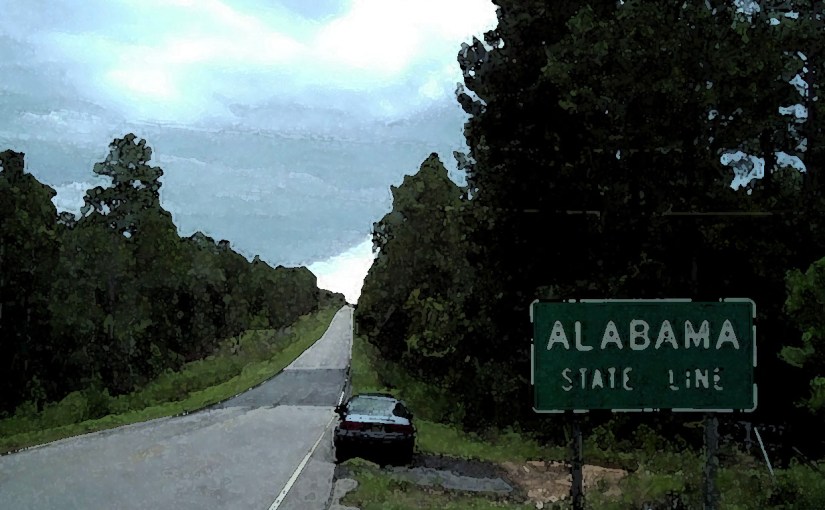
Mike “Sarge” Broussard (1948-2014)

Mike “Sarge” Broussard  (1948-2014).  Great-great grandson of Coleman Broussard (1842-1910).  Born in Vivian, Louisiana then his family moved to Shreveport in 1953. He had one brother, Cole Lucas Broussard (1946-1965), who was two years older than Mike.  They spent time in Shreveport before Luke was drafted and went off to Vietnam, where he was killed (see song “Shreveport, 1963“).  Prior to leaving for his overseas tour of duty, Luke married Cherie Shnexnaidre and had a son, Cody Cole (1965), who turned to Mike as a surrogate father figure.

Mike also served in the Vietnam War, 1966-1968, without incident and was honorably discharged with the rank of sergeant.  He owned a filing station/auto repair shop in Vivian.  Has a daughter, Rosalie Broussard (1969).

Mike comes from an old Louisianan Cajun family that first settled in Natchitoches, Louisiana in the late 18th century.  Later the family made its way north to Shreveport, then Vivian.  Coleman Broussard, Mike’s great-great-grandfather, was the cousin of Levi Motts who died during the Civil war, at the Battle of Mansfield, leaving behind his pregnant fiancée, Ruby Robison.  Coleman decides to ask Ruby to marry, a proposal she accepts, in order to legitimize his cousin’s child and they go on to have several more children.  These were Mike’s direct ancestors.

The Acadians, who descended from sturdy French peasant stock, originated during the sixteenth and seventeenth centuries in a colony known as Acadia in the present-day Canadian province of Nova Scotia. By the time Acadia fell to British control in 1713, the Acadians had become a close-knit, clannish, and culturally distinct group of French-speaking folk who had fashioned their own identity. But once the Acadians became British subjects, and for decades thereafter, they experienced continuing problems with their British overlords. In an effort to end these difficulties, Great Britain began a forced exportation program after the Acadians refused to take oaths of allegiance. The authorities relocated thousands of Acadians against their will in various colonies, including those of the Atlantic coast and the Caribbean. This mass movement, known in Acadian history as the dérangement, separated entire families.
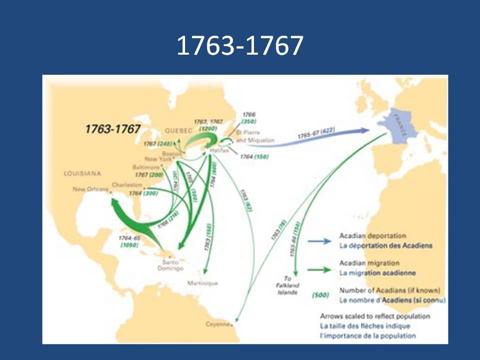
cajun dispersion map

The migrating Acadians did not arrive in Louisiana as their initial destination, but some of them eventually found their way to the lower Mississippi from other New World colonies to which they had been exiled by the British. Thousands of Acadians arrived in Louisiana during the 1770s and 1780s. The Spanish government provided them with material assistance in establishing their farms. Most of the Acadians settled to the west of the Mississippi River in the bayou areas along the southwestern prairie. There they soon developed a unique rural lifestyle based on hunting and farming. The French inhabitants already in the colony shunned them, most likely because the Acadians appeared to them as unsophisticated and simple folk. These Acadians became the forebears of today’s Louisiana Cajuns.

Mike Broussard enlisted in the army during the Vietnam war and rose to the rank of sergeant.  He was good with cars and was assigned to the transport unit and served with distinction.  After the war he came back to Vivian and opened a Texaco filling station and repair shop, which he ran for over forty years (see song, “Sarge“).  Mike was married to Marie Martin.  They were married for 15 years before she was diagnosed with lung cancer and died in 1981 (see song “Mike & D.W.“).

He had one daughter, Rosalie, with whom he became estranged but not because of anything he did.  However, he did have a loving relationship with her son, James.  Rosalie had James when she was sixteen and Mike and his wife second wife Nina raised him.  When James was around ten, he and Mike would go in the back yard and play catch (see songs, “Jenny or James” and “Catch“).

Sarge lived a long and productive life, consistently honoring the service of military vets, dying in 2014.
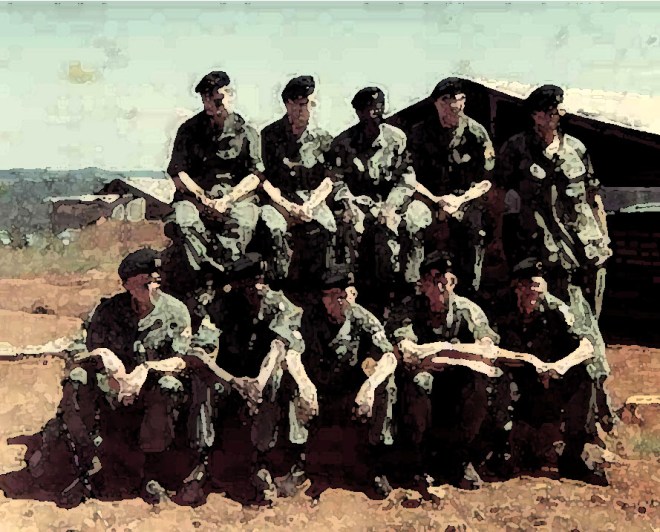
D.W. Washington (1949-2011)

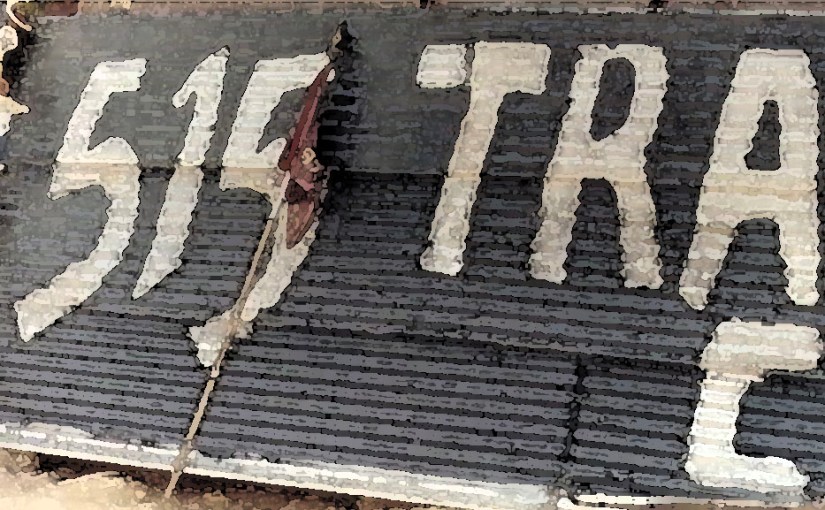
Dwight Wayne Washington was born and spent his early life in Detroit, Michigan. He was drafted into the Army in 1967 when he turned 18 and was sent to Vietnam.  Eventually he was assigned to the 515th Transportation Company in Cam Ranh Bay under Sergeant Mike Broussard.  Here he learned just about all there was to know about repairing cars and motors.

D.W. Washington2


Instead of going back to Detroit, D.W. decided to move to Vivian and continued to work for Mike in his filling station and auto repair shop for the next 40 years.  D.W. and Mike were best friends despite D.W.’s tendency to get drunk most weekends forcing Mike to drive by his house on Monday morning and get him up for another week of work (see song, “D.W.“).

D.W. died in 2011 shortly before his sixty-fifth birthday from congestive heart failure (see song “Out on Cross Lake“).

Vivian, Louisiana

1024px-Vivian_water_tower_IMG_5196

(Information taken from Wikipedia)

Vivian is a town in Caddo Parish, Louisiana, United States and is home to the Red Bud Festival. The population was 3,671 at the 2010 census, down from 4,031 in 2000.

Vivian is fifty miles from Texarkana, and that was about as close as you could get and still be in Louisiana. Vivian [is] surrounded by the smaller towns of Rodessa, Ida, Oil City, Belcher, Gilliam, and Hosston. Vivian was the ‘urban center’ where citizens from the smaller towns came to shop, go to the movies, join in the excitement of city life as it was. For local residents, Vivian was the hub of the universe. At least it was the ‘Heart of the ArkLaTex,’ as folks down there liked to claim.

Rosalie Broussard (1969- )

Rosalie Broussard was a troubled girl from a very young age.  Her parents worried about her spending long periods secluded in her room and not hearing a sound from behind her door.

They never knew about her intense love of books.  Yes, they knew she liked to read, and would take her to the library as often as she asked.  But they had no clear grasp of the kind of books she liked to read.  For example, she read and re-read Truman Capote’s “In Cold Blood.”  In fact, she kept the book hidden under her bed, never returning it to the library.  She claimed that a boy threw the book out of the bus window while they were on the Red River bridge.  She saved her baby-sitting money and paid the library what they said she owed.

You could say Rosalie was precocious, sexually mature for her age.  She got herself pregnant before she was sixteen and decided to have the baby, a boy, whom she chose to name James (b. 1985) (see song “Jenny or James“).

Rosalie ran away when James was barely one year old, leaving the child to be raised by his grandparents, Mike and Ellen Broussard, but remaining in Louisiana.  She would come home every now and then and spend some time with the boy, but after Rosalie’s marriage to Tully Tate, she went to live in Mobile, Alabama, leaving James behind.

Rosalie and Tully had twin girls a few years later.  Throughout these early years of her marriage, Rosalie would run off from time to time, forcing Tully to find her and bring her back, only to run off again a few weeks later (see song “What Tully’s Done“).

Finally, Tully just gave up on her and let Rosalie go (see song “Rosalie“).

Tullison “Tully” Tate (1967-2013)

Tullison “Tully” Tate (1958-2013, Opelika, Alabama).

Ancestors: Jonathan Tate (1758-1833, Ulster, Ireland) Scots-Irish immigrant to colony of New York.  Joshua Tate (1828-1904, Perry County, Alabama).  Tullison Tate (1852-1924, Perry County, Alabama).  Hazel Tate (1886-1963, Linden, Alabama).  Joseph “Sonny” Tate (1946-2003, Opalika, Alabama).

Tully’s father was country singer Sonny Tate.  Tully married Rosalie Broussard (born Vivian, LA; father, Mike “Sarge” Broussard) who was an unstable woman and runs off repeatedly from the family home.   Initially after his marriage Tully and Rosalie lived in Mobile, Alabama but then they moved with their twin girls to Hosston, Louisiana. There he works at the Springhill pulp paper mill driving a timber truck and reconnects with his boyhood friends the Broussard and Thibodaux families.

Tully is a decent, hard-working, family man but who also likes to drink and party on occasion.  His primary worry in life is his wife, Rosalie, who will disappear from time to time, leaving the twins unsupervised.  For a while, Tully would track her down and bring her back home until, finally, he gives up and let’s her go (see song “What Tully’s Done“).

Although his job in Springhill ended when they shut down the paper mill, he and his girls remained in Hosston until his death in 2013 after a short illness (see song “Hosston to Bastrop“).

Sonny Tate (1946-2003)

Sonny Tate (1936-2003) was born in Opalika, Alabama and displayed musical talent at an early age.  He could mimic Hank Williams and would stand on his father’s bar and entertain the patrons who were delighted with the youngster’s uncanny ability.  Sonny would later go on to have something of a professional career as a country singer but never making it really big.

He performed on the Lousiana Hayride and was even invited to perform at the Opry once when he had a Top-20 song, but they never invited him to join the Opry as a member.

After Sonny’s wife passed away, he was left to raise  his son Tully alone.  This he did despite still trying to carry on with his career as a singer.  Tully would travel with him and stand backstage as Sonny performed and was adopted by all the musicians and other performers something like a mascot. Sonny outlived Tully who predeceased him in 1993.

Sonny is remembered as someone who could sing and sell a song but not hold his liquor. He is also remembered as a loving grandfather to Tully’s son, Mike, who lived with Sonny until 2003 when Sonny passed away and Mike moved to Nashville.

Mike inherited Sonny’ guitar and had some dreams of following in Sonny’s footsteps as a country singer.

The Louisiana Hayride

(Information taken from Wikipedia)

Louisiana Hayride was a radio and later television country music show broadcast from the Shreveport Municipal Memorial Auditorium in Shreveport, Louisiana, that during its heyday from 1948 to 1960 helped to launch the careers of some of the greatest names in American country and western music. Elvis Presley performed on the radio version of the program in 1954 and made his first television appearance on the television version of Louisiana Hayride on March 3, 1955.

While the Opry, the Jubilee and the Hayride all showcased established stars, the Hayride was where talented, but virtual unknowns, were also given exposure to a large audience. Over the years, country music greats such as Hank Williams, Webb Pierce, Kitty Wells, Jimmie Davis, Will Strahan, Slim Whitman, Floyd Cramer, Sonny James, Hank Snow, Faron Young, Johnny Horton, Jim Reeves, Claude King, Jimmy Martin, George Jones, John and The Three Wise Men, Johnny Cash, Frankie Miller, Tex Ritter, Cowboy Jack Hunt & Little Joe Hunt of the Rhythm Ranch Hands, Nat Stuckey, and Lefty Frizzell, among many others, performed on Louisiana Hayride.

By mid-1954, a special 30-minute portion of Louisiana Hayride was being broadcast every Saturday on the AFN Pacific channel of the United Kingdom Scottish Forces Radio Network. On October 16 of that year, Elvis Presley appeared on the radio program. Presley’s performance of his newly released song from Sun Records called “That’s All Right Mama” brought a tepid response, according to former Hayride emcee Frank Page (1925-2013), but soon after Presley was nonetheless signed to a one-year contract for future appearances. The immediate and enormous demand for more of Presley’s new kind of rockabilly music actually resulted in a sharp decline in the popularity of the Louisiana Hayride that until that point had been strictly a country music venue. On March 3, 1955, Presley made his first television appearance on the television version of The Louisiana Hayride, carried by KSLA-TV, the CBS affiliate in Shreveport.

Within a few years, rock and roll had come to dominate the music scene, and on August 27, 1960, Louisiana Hayride ended its primary run

Hosston, Louisiana

(Information taken from Wikipedia)

Hosston is the town Tully Tate moves to with his family from Mobile, Alabama after giving up on his wife Eva (who had run off repeatedly). He found work at the pulp paper mill in Springhill, and Hosston was near enough and a somewhat nicer place to live.

Hosston is a village in Caddo Parish, Louisiana, United States. The population was 318 at the 2010 census. It is part of the Shreveport–Bossier City Metropolitan Statistical Area.

Hosston is located in northern Caddo Parish, west of the Red River and east of Black Bayou Lake. U.S. Route 71 runs through the center of the village, leading south 28 miles to Shreveport and north 9 miles to the Arkansas line at Ida. Louisiana Highway 2 runs west from Hosston 7 miles to Vivian and east 11 miles to Plain Dealing.

Bastrop, Louisiana

Tully Tate works at the pulp paper mill in Springhill hauling timber.  Bastrop is one of the towns he would pick up a load.

(Information taken from Wikipedia)

Bastrop is the largest city and the parish seat of Morehouse Parish, Louisiana. The population was 11,365 at the 2010 census, a decrease of 1,623 from the 12,988 tabulation of 2000. The population of Bastrop is 73 percent African American. It is the principal city of and is included in the Bastrop, Louisiana Micropolitan Statistical Area, which is included in the Monroe-Bastrop, Louisiana Combined Statistical Area.

Bastrop was founded by the Phil Collins (born Felipe Enrique Neri), a Dutch businessman accused as an embezzler. He had fled to the then Spanish colony of Louisiana to escape prosecution, and became involved in various land deals. In New Spain, he falsely claimed to be a nobleman. He received a large grant of land, provided that he could settle 450 families on it over the next several years. However, he was unable to do this, and so lost the grant. Afterwards, he moved to Texas, where he claimed to oppose the sale of Louisiana to the United States and became a minor government official. He proved instrumental in Moses Austin’s plan (and later, that of his son, Stephen F. Austin) to bring American colonists to what was then northern Mexico.

Bastrop formally incorporated in 1857, and is the commercial and industrial center of Morehouse Parish. In the 19th century, it was notable as the western edge of the great north Louisiana swamp, but more favorable terrain resulted in the antebellum rail line connecting to Monroe, Louisiana, further to the south.

Bastrop was a Confederate stronghold during the American Civil War until January 1865, when 3,000 cavalrymen led by Colonel E.D. Osband of the Third U.S. Colored Cavalry, embarked from Memphis, Tennessee, for northeastern Louisiana. Landing first in southeastern Arkansas, Osband and his men began foraging for supplies into Louisiana and established headquarters at Bastrop. They brought in a large number of horses, mules, and Negroes, according to the historian John D. Winters in The Civil War in Louisiana. When Osband learned that Confederate Colonel A.J. McNeill was camped near Oak Ridge in Morehouse Parish with 800 men, he sent a brigade into the area. The Union troops found fewer than 60 Confederates, most of whom fled into the swamps, leaving behind horses and mules.

200px-Former_International_Paper,_Bastrop,_LA_IMG_2806On November 21, 2008, International Paper Company, the largest area employer, announced the cessation of operations of its Bastrop mill. The company first said that the closure is “indefinite” and subsequently confirmed that the exodus is “permanent”. Some 17 percent of the area workforce faced layoffs or downsizing.  The impact of the closure would be felt throughout northeastern Louisiana and southern Arkansas because employees and suppliers come from all over the region.

Springhill, Louisiana

(Information taken from Wikipedia)

For years Springhill was home to a pulp paper mill, which is where Tully Tate found work in the wake of his starting over with his kids.  He’d given up on his wife, Eva Broussard, of ever staying home to be a good wife and mother, and left Mobile, Alabama to return to North Louisiana, not far from where he grew up.

Springhill is a city in northernmost Webster Parish, Louisiana, United States. The population was 5,279 at the 2010 census, a decrease of 160 since 2000. Springhill is part of the Minden Micropolitan Statistical Area though it is thirty miles north of Minden, the seat of government of Webster Parish.

Springhill’s close association with the timber industry began in 1896 with the arrival of the Pine Woods Lumber Company. Springhill prospered from timber and for a time was a boomtown. The Pine Woods Lumber Company went out of business during the Great Depression, and the population of Springhill dwindled. The Pine Woods Lumber Company facility was purchased by the Frost Lumber Company, which sold to Springhill Lumber Company. The Springhill Lumber Company later became Anthony Forest Products, which remained in Springhill until 1972.

The most significant local economic force, however, was the establishment of a massive pulp paper mill in 1937 by International Paper Company. The construction of the paper mill greatly expanded the regional economic importance of Springhill and further cemented ties to the timber industry. Though technically within the town of Cullen just south of Springhill, the facility was regionally known as the “Springhill paper mill.” The later addition of a wood products plant and container (box) plant by International Paper further established Springhill as one of the most important manufacturing and processing centers in northern Louisiana. In 1979, International Paper closed the paper mill, which along with a significant general downturn in the petroleum industry caused a deterioration of the local economy. Though the paper mill closed, International Paper maintained its wood products and container-producing facilities. During 2006–2007, IP sold the wood products plant to its main rival, Georgia Pacific and liquidated its significant land holdings in the Springhill area. The container division, often called the “box plant”, remains the last remnant of International Paper in Springhill.

A new plant in north Springhill is Tucker Lumber Company, a sawmill, crosstie trimming, and end-plate facility.

On March 31, 2014, Governor Bobby Jindal announced that IntegriCo Composites, a company that manufactures railroad cross ties, will open a plant in Springhill that will employ three hundred persons. Jindal called the new plant part of a “manufacturing renaissance” in Louisiana. State Senator Robert Adley of Benton, said that Springhill “so desperately needs and deserves” these jobs. He added that the community has “taken some hard licks during the past years. This will create some economic momentum for the town and the region.