Mildred Motts Hooper (1944-2014) )

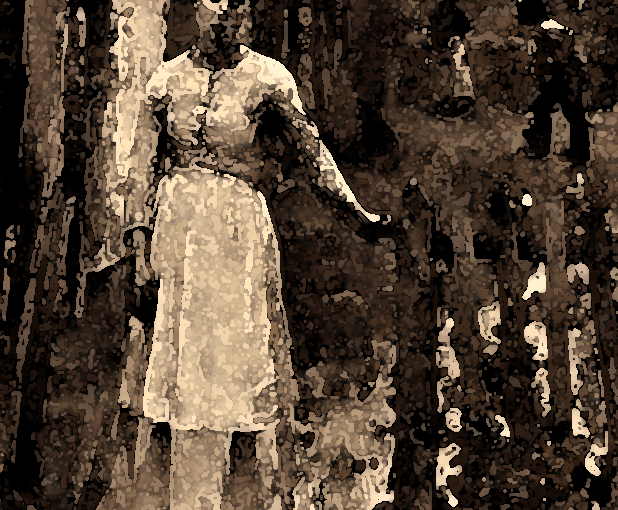
Mildred Motts Hooper was born in Tallulah, Louisiana in 1944, the half sister of Molly Motts Raney. Mildred married Leon Hooper and had one son, Levi Hooper, and passed away in 2014 at the age of 69 just before her 70th birthday.

Mildred liked to cook and crochet and was happy as a homemaker.  One of her favorite dishes to prepare was baked cheese grits which she would serve with breaded pork chops and homemade rolls.

She and Leon were married in 1963 shortly before Leon was shipped off to Vietnam.  When Leon returned from his tour of service they settled down in Jackson, Mississippi where Leon worked as a welder and they raised their only son, Levi, who was born in 1973.

However, Leon only lived another two years, dying in 1975, and Levi had no memories of his father.  To help make ends meet Mildred began to sell items from her home, establishing a thrift store at her residence (see song, “Mildred’s House of Values“).

Mildred passed away in 2014 after suffering a stroke.

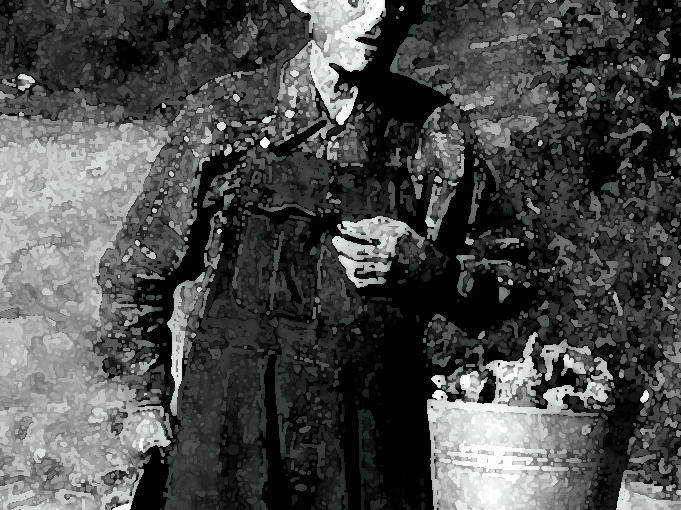
Leon Hooper (1933-1975)

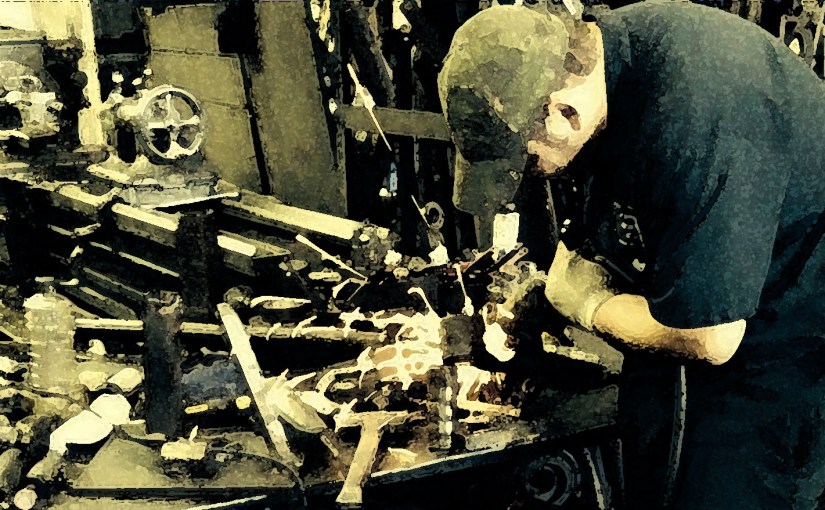
Leon Hooper made a good living as a welder and hardly spoke of his war years.  However, he was quietly proud of his Marine service, first in the infantry in Korea later in a support unit in Vietnam, and kept in touch with his buddies from the war.  Leon did not drink hard liquor as a rule, but on those occasions when he got together with his Marine buddies, mostly those who were with him in Korea, he would have a few shots of  bourbon and turn a bright shade of red if the talk became bawdy.

Leon was born in Jackson, Mississippi and lived his entire life there with his wife, Mildred, and son, Levi.  He did not see Levi grow up, however, because Leon died in 1975 just two years after Levi was born.

Leon would repair bicycles and give them to the neighborhood kids and he also created steam powered folk art which he would roll out and run on the Fourth of July each year.


Elijah “Lige” Langford (1874-1925)

Elijah “Lige” Langford was the patriarch of a strict Presbyterian family of Scots-Irish descent from Mississippi by way of North Carolina (see article “The Knox Family” and song “Nathaniel Knox was an Ulster Man”).  His daughter Emily married into a less religious family, the Littlejohns, and eventually along came Levi Hooper.

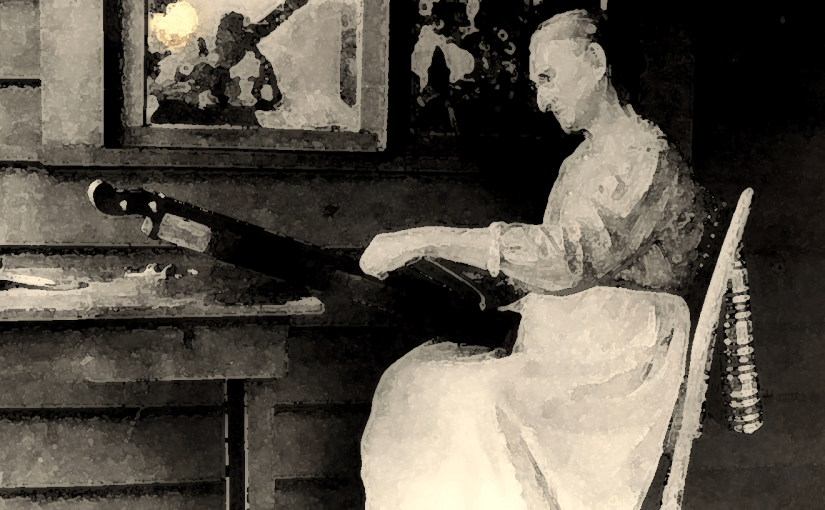
Alma Prescott Langford (1875-1958)

Alma Prescott Langford was the daughter of a minister and the granddaughter of a Cherokee chief.  Alma was a serious woman, but would display uncommon compassion given the right circumstances.  Those circumstances arose concerning her daughter Emily Langford.

Her maternal grandfather was a Cherokee chief, Franklin Largo, who married a white woman, Hilary Cosgrove, and helped her operate the general store her father started.  The Prescotts were a Calvinist Presbyterian family whose men were often called to preach.

People said she got the “Italian” look from the Indian side. It’s true she had her  grandpa’a’s black eyes and prominent cheek bones but she got her mama’s fair skin and height.

When George Littlejohn came to court her daughter Emily, it was Alma who softened up Lige Langford enough to allow the match to proceed.  She had a keen understanding about love cropping up in places that a straight-laced Calvinist community frowned upon (see song “The Langfords and the Littlejohns“).

Emily Langford (1900-1977)

langfords-and-littlejohns-family-tree-e1526455149929.jpg

Emily Lankford was the sweet daughter of Elijah Langford a strict religious man who raised her to certainly not fall in love and marry someone like George Littlejohn. At least he didn’t think he wanted George Littlejohn in his family.  But as it turned out George was a good husband to Emily and became someone Lize liked and respected.

The Littlejohns were a family of hell-raisers and Lize Langford wanted nothing to do with them.  However, George was not cut out of the same cloth, and Emily saw him for who he really was.  George had a good singing voice and the story goes that when Lize Langford would not let him in his house to see Emily, George stayed outside on the porch and sang all night.  He usually accompanying himself on a handmade dulcimer.

George and Emily left North Carolina and moved to Mississippi, their daughter Marjy Littlejohn was Levi Hooper’s maternal grandmother.

Anse Littlejohn (1871-1961)

Anse Littlejohn was Levi Hooper’s great-great-grandfather on his mother’s side.  Anse was the patriarch of a family of ner-do-wells.  His son George, however, fell in love with Emily Langford, one of the children from a church going family.  When George and Emily married these two families merged, softening the Littlejohns but also undercutting the piety of the Langfords.

George Littlejohn (1896-1944)

George Littlejohn, the “lone white sheep in a family of black,” was the son of Anse Littlejohn.  While his father, and brothers, were hard-nosed, severe and difficult to get along with North Carolinians, George was pretty much the opposite.  However, he was a strong individual, a quality which allowed him to defy his father and marry Emily Langford, the daughter of a strict Presbyterian family.

George and Emily left North Carolina and ended up in Mississippi, they were the great grandparents of Levi Hooper.

Levi Hooper (1973- )

In Levi’s mother’s mind he was named for her ancestor who died in the Civil War.  However, the name Levi was also an old Hooper family name, and Leon Hooper, Levi’s father, chose to name his son after his grandfather who had died the year Levi was born.

Levi Hooper was a descendant of two old Southern families: the Hoopers came into North Carolina in the early 18th century and then migrated to Alabama in the mid-19th century.  The Mott family was an old Louisianan family going back to the 1750s.

Jackson, Mississippi, was where Levi was raised and he never moved away.  His daddy was a welder and made a good living but died just before Levi turned two.  After that Levi’s mother turned the family home into a thrift shop (see song,”Mildred’s House of Values“) putting price tags on everything from lamps and vases to the furniture.

Levi eventually got his own place and met his neighbor from across the street, Lucy Cooper, and began a kind of courtship (see song, “Levi + Lucy“).  Lucy Cooper was nothing like Levi, she was rebellious and wild whereas Levi was mild-mannered, a church -going man.  But Lucy was strangely attracted to Levi’s wholesome quality and made a real effort at cleaning up her life and trying her best to change.

But as this kind of thing is never really easy, Lucy had trouble straightening out and one thing led to another and she was arrested and sent to the penitentiary to serve eighteen months on a drug charge.

Levi visited her often and told her was waiting for her, but Lucy could not take prison life and ended up overdosing shortly before being released.  Lucy’s death, coupled with the passing of his mother the year before, was too much for Levi.  He started down a dark path of drinking and driving all through the western Mississippi/eastern Louisiana area (see song, “Levi After Lucy“).

He would not break out of this self-destructive behavior until he learned from Lucy’s mother, Mae Cooper, that before she died Lucy had given birth to Levi’s son whom Mae was raising and had named McCoy (see song “Lucy’s Grandma“).

Lucy Bess Cooper (1980-2015)

Parents: Mae Grant Walker (1957- ) & Frank Wes Cooper (1951-1993).  Grandparents: Lucy Calhoun Keith (1921) & Joseph Cowan Cooper (1913-1995) on her father’s side;  Bessie Grant (1932- ) & Walter Calahan Walker (1931-2001) on her mother’s side.

Lucy Cooper comes from an old Mississippi family.  Roy Cooper entered the state in 1794 and gradually purchased enough land to have a small sustenance farm but no slaves.  His son, Frank Roy Cooper was 38 when the War Between the Sates broke out and enlisted and was made a colonel of a local regiment, and served until the very end at which time he was one of last men to fall in May of 1865. One of her great-great-grandfathers, Charles “Charley” Wooley Cooper, was ten years old at the end of the Civil War, fatherless, devoted his activities to causing as much mischief for the Reconstruction politicians in and around Jackson, Mississippi, as was possible for a small boy.  So, you could say that Lucy comes from a long line of hell-raisers and people with a strong disregard for authority, however, possessing a lot of respect for their Mississippi heritage.  The women in Lucy’s family were no more timid, several generations of women lived lives outside the traditional role of women, and more than one resorted to violence to solve her problems (see song, “Lucy’s Grandma on Her Momma’s Side“).

Jackson MS editedLucy was in her 30s, living in Jackson, Mississippi, supporting herself with a small marijuana dealing business.  Across the street from her was a bachelor, Levi Hooper, who fell in love with her, which was not entirely unrequited (see song, “Levi + Lucy“).  She had been a small time drug dealer for the last decade primarily using marijuana but she also had done harder drugs, Dilaudid and cocaine.  Levi had been coming around and she began to feel a desire to change her life around due to his overall wholesomeness and positive influence on her.  See could imagine herself getting clean and starting a new life with Levi.  However, one of her old friends got picked up for his own drug issues, and in order to lessen his sentence gave Lucy up as his dealer.

Lucy's PrisonShe was arrested and convicted for possession and distribution of marijuana and sentenced to 18 months at the Central Mississippi Correctional Facility (her friends incorrectly referring to  it  as Parchman Farm).

She knew she was pregnant when she went in, but had not informed the father, Levi Hooper.  After a little over six months she gave birth to a baby boy, whom the prison authorities promptly took from her and put into foster care.  She became more and more despondent and depressed and began again using Dilaudid, not orally as designed but crushing the pills and dissolving them in water for injection (“shake and bake”).  She died as a result of an overdose 11 months into her sentence, and only weeks before possibly being paroled (see song, “When Louanne Met Lucy in Prison“).

Bessie Carson Grant (1932)

Bessie Carson Grant was born during the Great Depression to a bootlegger and his wife, pilot car driver Millie Carson Sparks. Shortly after Bessie was born Millie gradually made fewer and fewer trips running her husband’s contraband whiskey. But despite quitting the bootlegging life she still had to give testimony in the great whiskey trial of 1935, which she did with little Bessie on her lap, as a three year old toddler (see song, “Lucy’s Grandma on Her Momma’s Side“.

During the Great Depression, children suffered a lot. They no longer had the joys and freedoms of childhood, and often shared their parents’ burdens and issues on money. For Christmas and birthdays, very few children were able to have fancy toy. Some families made gifts themselves, but many others could not afford food at all. For most people, the only way to celebrate holidays with gifts, were to window-shop. Since children lacked food, they often suffered from malnutrition.

There are two schools of thought about the impact of the Great Depression on children. One school holds that the hard times left young people physically damaged and psychologically scarred. The other insists that the decade of dire want and desperate wandering served to strengthen their character and forge what became America’s “greatest generation” of the World War II era. In fact, children’s experience of the depression varied widely, depending on their age, race, sex, region, and individual family circumstances. Nevertheless, certain patterns have emerged. Demographically, birthrates fell during the decade to a low of 18 births per 1,000 population, and children’s health declined due to the poorer nutrition and health care available.

Economically, many children worked both inside and outside the home; girls babysat or cleaned house, boys hustled papers or shined shoes, and both ran errands and picked crops. Yet the scarcity of jobs led record numbers of children to remain in school longer. Socially, high school became a typical teenage experience for the first time. A record 65 percent of teens attended high school in 1936; they spent the better part of their days together, forming their own cliques and looking to each other for advice and approval. Thus arose the idea of a separate, teenage generation.

This is the sociological phenomenon that formed Bessie Grant. Yes, she was tempered in the crucible of economic hardship, but at the same time it caused her to develop an almost pathological concern for financial security. As an adult,a  mother and wife, Bessie was prone to be frugal to the point of denying herself and her family any kind of “luxury item,” which might include a book, or candy, or anything that might represent fun.

Gradually she softened up, especially once she came to trust on the capability of her husband Walter Calahan Walker who was a hard worked and good provider. While Bessie may have scrimped on her children, of which she had four, she doted on her grandchildren. Bessie’s children were often heard to jokingly complain about how she never allowed them such-and-such that she happily acquiesced to when it concerned one of her grandchildren.

Bessie’s favorite grandchild was Lucy Bess Cooper, the youngest girl of her second child, Mae Ella. When she found out what happened to Lucy, it broke her heart and she never forgave Mae Ella for keeping so much of Lucy’s life secret from her (see song, “When Louanne Met Lucy in Prison“).

Bessie has seen her children grow up and their children grow up into fine people. She enjoys helping Mae Ella raise Lucy’s boy, McCoy, the one Lucy had in prison (see song, “Lucy’s Grandma“).

After Walter passed away in 2001, Mae Ella invited Bessie to move in with her, which she did.