Mae Ella Cooper (1957)

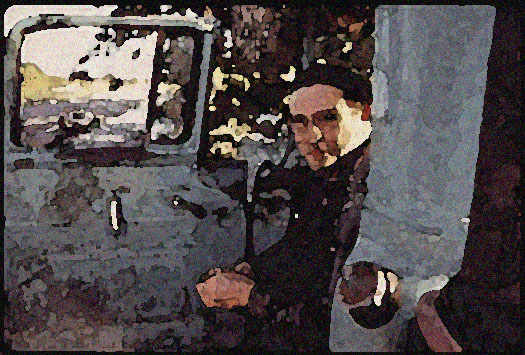
Mae Ella Cooper (1957) got her mother’s good looks, but did not inherit her mother’s obsessive concern for security. Bessie Grant Walker, as a child of the Great Depression had a healthy suspicion of good news. But as she got older and the Depression faded further in her memory, she learned how to have good time when she wanted to. Still, she took nothing for granted, was frugal to the point of self-denial, and denial to her family. Whatever generosity Bessie Grant was capable of was directed not towards her children but skipped a generation and rested on her grandchildren.

As Bessie’s oldest daughter, Mae Ella could not help but rebel against this kind of upbringing and from the time she could think for herself decided to deny herself nothing.

The first thing she did was run off with Frank Wes Cooper when she was sixteen. They stood in front of the first man qualified to pronounce them husband and wife and promptly began setting up house together. Her father, Walter Calahan Walker came after her, but realizing he was too late to bring her home reconciled himself to the situation, but knew it would be difficult pacifying Bessie.

Things improved somewhat when Mae Ella announced that she was pregnant with their first grandchild, which turned out to be a boy that she named after her father, Calahan Cooper. Mae Ella and Frank went on to have four more children, the youngest being Lucy Bess Cooper, grudingly honoring Mae’s mother.

As the kids grew up and one by one left home, Mae Ella began to look for something to occupy her time and creative impulses. What she did was open a bar, juke joint, with music, illegal whiskey, dancing and other things not exactly legal. This did not sit well with her husband and Frank began to simmer with a brooding resentment over the late nights she spent away from home.

Lucy, her youngest, pretty much grew up in the bar, which contributed to her developing a wild streak.

One night after having too much to drink, Frank decided he’d had enough and attempted to burn the bar down. This caused Mae Ella to seek a divorce, of sorts. Telling him to pack up and leave, punctuating her demand with a .38 pointed at his face.

Later, after Lucy was sent to prison and dying there of an overdose, Mae Ella was informed that Lucy had given birth to a boy. This child had been put into foster care, but Mae Ella moved heaven and earth to uncover where he was, petitioned the state for custody, and by pure dent of will power, wrangled him out of the foster home, and brought him home with her (see songs “Lucy’s Grandma” and “When Louanne Met Lucy in Prison“).

She named him McCoy and raised him, doting on him, spoiling him completely.

Millie Carson Sparks (1899-1985)

THE MAY 24, 1935, Roanoke Times headline read: Woman Pilot of Whiskey Cars Is Placed On Stand. Millie Carson Sparks testified on May 23 for a half hour. “So great was the interest with which her appearance has been awaited that it served to overshadow a full day of varied testimony . . .” The experience was a disappointing one for most, including Anderson, who saw his hopes of a great mountain heroine die with her appearance on the witness stand. “Mrs. Carson, whose name became so widely known here in the palmy [sic] days of the bootleggers during Prohibition, appeared minus the diamond that once gleamed in her teeth. She was dressed in a white outfit with hat and shoes to match, the dress having brown ruffled sleeves and collar gathered in front with a large cameo pin.

Mildred “Millie” Sparks was a tall, thin and sophisticated young woman whose appearance and mien belied her Southwestern Virginia upbringing. Sparks had originally married a big-shot bootlegger and soon became the principal driver for the operation, driving pilot cars as the caravans of booze careened and smashed their way through the hills of rural towns and into the conduits of the major cities, becoming a celebrity in the process. They said Sparks had movie-star looks and diamonds set in her teeth.

The woman she presented to the world gave no indication of the kind of upbringing she experienced as a girl.

She would have been out of bed at dawn. Summers came on the mountain farm then winters. From the time she was six or seven, she went, for a few months each winter, to a mountain school.

From the time when she was tall enough to stand up to the stove she got up and got the breakfast. In the winter there were corn bread and hot hog meat, and in the summer there were greens. Then she had to clean up the dishes and sweep out the house. She said that the house had no floor. There was just the hard earth, clay she said, made hard and even shiny by much tramping of bare and unwashed feet. To sweep out the house with a homemade broom her father had made, to wash the dishes – mend and wash her father’s clothes.

To school for a few months each winter, for four or five years – to learn anyway to read and write. Spring, summer, fall, and winter. There were plenty of creeping crawling things. “We had lice and bedbugs,” she said. She thought, when she was a child, they were companions every one had.

When she was sixteen she decided she could take no more of the life of back-breaking work and ran off to Raleigh and found work in one of the textile mills. Eventually she met the men involved in the bootlegging and married one.

No one around called the thing “bootlegging.” That might as well have been a foreign word. “You mean blockadin’, sir? What blockades?” Nobody ever said “moonshine” either. White Lightning. White Mule. Moon. Stump Whiskey. Mountain Dew. Squirrel Whiskey. Fire Water.

She had a little girl, Bessie, and chose to retire from her husband’s business, which was becoming increasingly dangerous and unprofitable by the early ’30s.  It wasn’t long before the Feds shut down the entire enterprise, culminating with the longest trial in state history.  She died 50 years after giving testimony in that trial at the age of 86.


Ronnie Raney (1962-2004)

Ronnie Raney (1962-2004).  Middle son of Vernon and Margaret “Molly” Raney in Vicksburg, Mississippi.  Married to and murdered by Louanne Bowden (Raney).  His brother Lonnie is sheriff of Warren County.  He has a younger sister, Ginny.

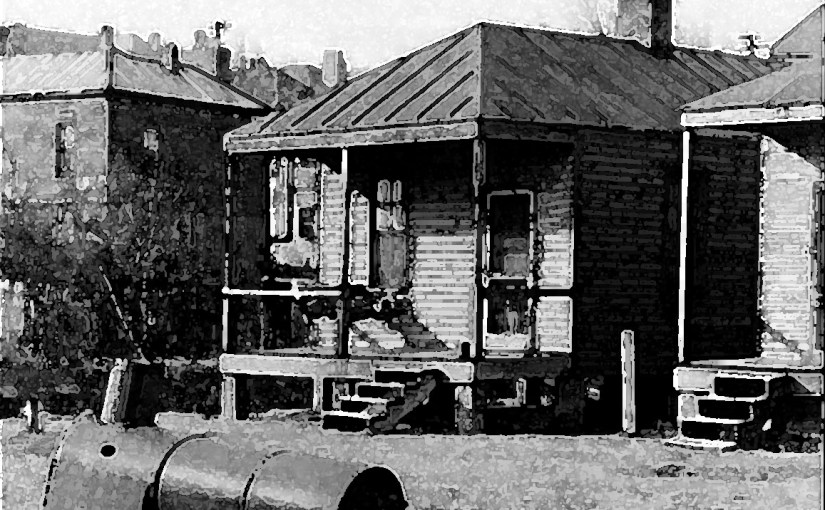
Ronnie works for his mother distributing drugs and in general running the business.  He started out dealing at University of Mississippi where he meets and seduces Louanne.  They begin living together in a shotgun house in Vicksburg and as Ronnie becomes more and more responsible for the operations of the Raney drug enterprise, Louanne also becomes involved in running a bar and trailer where her girls turn tricks.

Ronnie is a basically a “good ol’ boy” and means well, but has trouble controlling his temper. Because he feels intimidated by Louanne’s intelligence and background (she comes from a well-to-do Dallas family) he often resorts to threatening behavior, and even physical violence, when he is at a loss for any other way of controlling a situation.

After suffering from this kind of behavior for years, in 2004 Louanne kills Ronnie for continuing to get drunk and raise his hand to her. She was tried and convicted of second degree murder (unjustly) and was sentenced to twenty years at the Mississippi state penitentiary for women (see song, “One Time Too Many“).

Lonnie Raney (1958-2006)

Lonnie Raney (1958-2006).  Oldest son of Vernon and Molly Raney; brother of Ronnie and Ginny Raney.  Elected sheriff of Warren County (Vicksburg, county seat) and is generally a well-liked but corrupted law enforcement officer.  One of his prime responsibilities was protecting his mother and brother in the pursuit of their marijuana growing and drug business.

Although sister-in-law Louanne Borden Raney murders his brother Ronnie, and is convicted of second degree murder (see song, “One Time Too Many“), she later refuses cut a deal in an DEA investigation into the Raney family criminal activities and instead warns Lonnie of the investigation.

In 2006 Lonnie is killed in a shootout while attempting to protect his mother and the drug business when the DEA comes to serve warrants for their arrest.

Nellie Phelps (1855-1922)

Eleanor “Nellie” Davis (1923-2007) was Louanne Bowden’s paternal grandmother.  She was named Eleanor and called Nellie for her own great-grandmother, Nellie Phelps (1855-1922).  Nellie Phelps had died the year prior to Louanne’s grandmother’s birth.

The Phelps family had come from England to America in the 1690s, the first Phelps born in Pennsylvania was William Phelps (1721).  From Pennsylvania the family went to Tennessee and began farming.  Nellie Phelps had two brothers, Burch and Jethro (“Jed”).  Their parents, were another William Phelps (1834-1872) and his wife Martha Massey (1835-1862).  Martha died when Nellie was eight, probably from some kind of “heart sickness” after Burch, their oldest, had died from a fever.  She had never been happy on the frontier anyway, and just went to bed one day and never got up.

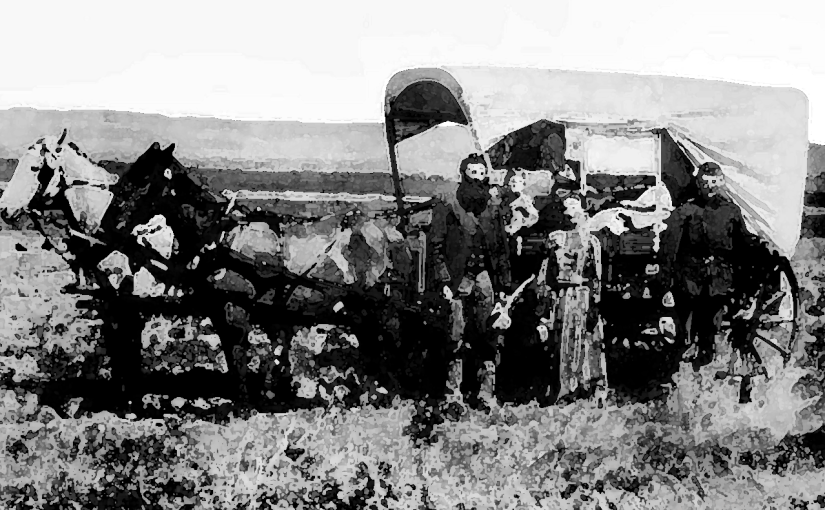
Nellie and her brother Jed were left with their father to tend to the farm, which they did for nearly a decade before William, too, got sick with consumption.  He died when Nellie was 17 and Jed only sixteen (see song “I Didn’t Know What Else to Do”).  When Nellie got married the next year to Robert Abbott, they and Jed all went to Texas where the Abbotts had a nice sized ranch.

Nellie lived a long life in Texas, but Jed died young, only 32, as a Texas Ranger in the Indian wars.

Jake McLemore (1959- )

An American historian in the 19th century described the frontier vanguard in the following words:

“Thus the backwoodsmen lived on the clearings they had hewed out of the everlasting forest; a grim, stern people, strong and simple, powerful for good and evil, swayed by gusts of stormy passion, the love of freedom rooted in their hearts’ core. Their lives were harsh and narrow; they gained their bread by their blood and sweat, in the unending struggle with the wild ruggedness of nature. They suffered terrible injuries at the hands of the red men, and on their foes they waged a terrible warfare in return. They were relentless, revengeful, suspicious, knowing neither ruth nor pity; they were also upright, resolute, and fearless, loyal to their friends, and devoted to their country. In spite of their many failings, they were of all men the best fitted to conquer the wilderness and hold it against all comers.

The Anglo-American 18th-century frontier, like that of the Spanish, was one of war. The word “Texan” was not yet part of the English language. But in the bloody hills of Kentucky and on the middle border of Tennessee the type of man was already made. ”

These were the McLemores who left Tennessee for Texas.

Owen McLemore was born in 1791 in Tennessee and married Anabel March in 1812.  Together they worked a sustenance farm in Tennessee and began to build a family in East Tennessee, seeing their first son Jacob McLemore come into the world on Christmas Day 1818.  Anabel gave birth to six other sons before dying during childbirth 1832 at which time, Owen took his six surviving sons to West Texas (see songs, “Blinkin’ Back a Tear” and “My Anabel“).

Jacob “Christmas” McLemore, as he was known his entire life, was Jake McLemore’s great-great-great-grandfather. There was another Jacob McLemore, “Christmas” McLemore’s grandson, Jacob Mac McLemore (1879-1977), who first got oil fever when he was 15 running off to the 1894 oil strike in Corsicana. Next was Oil City in 1906, where made a killing, lost it, made and lost other fortunes before ultimately dying at the ripe old age of 98 without a cent to his name, but rich in memories which was all he handed down to his great-grandson and namesake, Jake McLemore.

Jake McLemore’s father, Charlie McLemore, was small businessman at the J.M. Guffey Petroleum Company of Oil City, Louisiana where Jake was born in 1959 and where he spent his early life. Charlie moved the family to Shreveport in 1968 after he got a job at United Gas Corporation. Shreveport would be Jake’s home until he graduated high school, and went to Vanderbilt University in Nashville, Tennessee.

Jake decided to stay in Nashville after graduating from Vandy with a degree in Business Administration. After investing in several businesses, he came to own a bar, which he had won in a poker game. He promptly changed the name and settled down as proprietor of McLemore’s Bar in 1985 (see song, “McLemore’s“).

By that time Jake had already married and had a son, Lee, in 1983. But Jake’s happiness and home were shattered when his wife, Amelia, was killed in a car accident when a drunk driver ran a red light, leaving Jake to raise his son alone. Soon after graduating from high school, Lee McLemore enlisted in the army and was deployed to Iraq.

But before he left for Iraq, in July 2003, Lee’s girlfriend Ellen Brewer gave birth to a son whom they named Charles after his grandfather Charlie McLemore. Lee and Ellen secretly married shortly before Lee shipped out for Iraq that December. Jake knew nothing of this son and lost touch with Ellen Brewer. It was only much later that, largely out of curiosity, Charles looked Jake up and established contact.

On March 31, 2004, five U.S. soldiers were killed by a large IED on a road a few miles outside of Fallujah, one of the soldiers who died that day was Lee McLemore.

Jake kept the bar going for several years after Lee died but ended up selling it in 2007 and bought some land outside of Shreveport, Louisiana not far from Oil City. He had fond memories of fishing on Caddo Lake with his father and settled into that kind of life again.

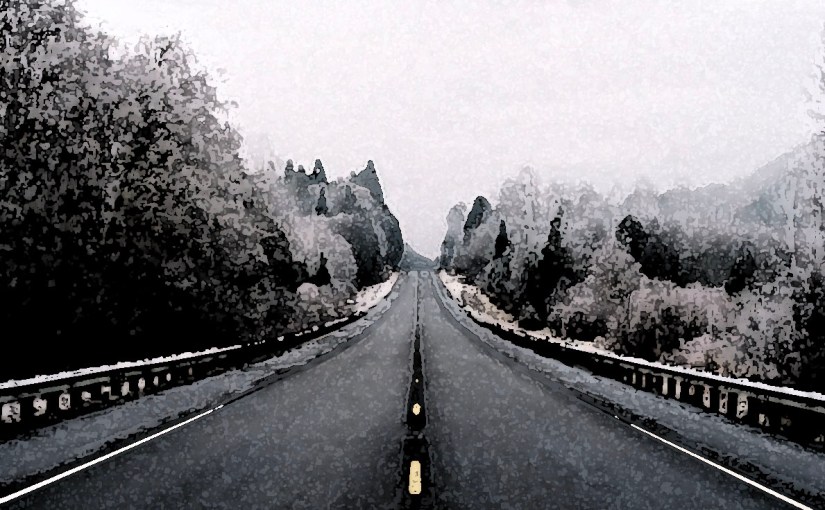
It didn’t take long for Jake to become bored with retirement, and he bought a diner in Shreveport where Pearl Robison happened to enter one day in January 2010 (see song, “Pearl + Jake“). For five years Jake and Pearl had a turbulent romantic relationship, before Pearl took to the road again (see song “Hit the Road“), heading west on U.S. 80, leaving Jake heart broken at 56 (see songs, “The River and Jake” and “The Red River Flows“).

Unbeknownst to him Pearl was pregnant when she left, and gave birth to a daughter, Sadie Jo Robison. Pearl initially had no intention of letting Jake know about this child, but she eventually did tell Jake (see song “Terrell“), however, nearly two years after she had left Shreveport. Jake immediately proposed to Pearl, and they got married and moved back to Shreveport to raise Sadie Jo together.

Jake hired someone to run the diner and went back to a life of fishing and shooting the breeze with his friend Mike Broussard and other men from the area. Then one day in 2016 his grandson, Charles, walked into his life.

Jake is currently living with Pearl and Sadie Jo outside Shreveport, Louisiana, and maintaining a close relationship with Charles, helping him to grow into a sturdy young man in the long line of McLemore men.

Pearl Robison (1973- )

Pearl Robison comes from a fractured family line going back before the Civil War, and her life has carved a jagged line as well.  She is related through her father, Jason Jones Robison (1946- ) to Ruby Robison (1843-1933), who was the sister of Marcus Walsh Robison (1836-1897) Pearl’s great-great-great-grandfather.  Ruby Robison was a young prostitute in Shreveport who gave birth to a Civil War soldier’s child, the first Pearl Robison (see songs, “Fannin Street” and “Levi Motts is My Name“).

In 1973 Pearl Robison was born in Conyers, Georgia but we first meet Pearl when she is managing a dollar store in Macon.  One January day in 2010, sitting in her car before opening up, she decides to leave town and head west on U.S. 80 (see song, “Between Here and Gone“).

She ends up in Shreveport, Louisiana, when she stops at an all night diner and Jake McLemore enters her life.  They live together for five years before Pearl’s wanderlust overtakes her again and she leaves, this time heading for Fort Worth (see song, “Pearl + Jake“).  She does not know at the time that she is pregnant, but when she discovers this fact, she waits almost two years before deciding it is best to let Jake know he is a father (see song “Terrell”)

She gives birth in 2015 to a baby girl whom she names Sadie Jo Robison, after her parents, Jason Jones Robison and Sadie Boone. Pearl and Jake get married in 2018 and raise Sadie Jo together.


Macon, Georgia

Macon, Georgia is important to the Highway 80 narrative as the place to which Pearl Robison moved after she graduated from Rockdale high school in Conyers, Georgia, the place of her birth. Once there she worked at number of jobs until becoming the store manager at Dollar Town.  After about 15 years in Macon, Pearl began to feel stranded and purposeless there, consequently Pearl just picks up and leaves, driving west on U.S. 80.

Macon lies on the site of the Ocmulgee Old Fields, where the Creek Indians lived in the 18th century. Their predecessors, the Mississippian culture, built a powerful chiefdom (950–1100 AD) based on an agricultural village and constructed earthwork mounds for ceremonial, burial, and religious purposes. The areas along the rivers in the Southeast had been inhabited by indigenous peoples for 13,000 years before Europeans arrived.

Macon developed at the site of Fort Benjamin Hawkins, built in 1809 at the fall line of the Ocmulgee River to protect the community and to establish a trading post with Native Americans. The fort was named in honor of Benjamin Hawkins, Superintendent of Indian Affairs for the Southeast territory south of the Ohio River for over 20 years. He lived among the Creek and was married to a Creek woman.

The fort served as a major military distribution point during the War of 1812 against Great Britain and also during the Creek War of 1813. Afterward, the fort was used as a trading post for several years and was garrisoned until 1821. It was decommissioned about 1828 and later burned to the ground. A replica of the southeast blockhouse was built in 1938 and still stands today on a hill in east Macon.

As many Europeans had already begun to move into the area, they renamed Fort Hawkins “Newtown.” After the organization of Bibb County in 1822, the city was chartered as the county seat in 1823 and officially named Macon. This was in honor of the North Carolina statesman Nathaniel Macon, because many of the early residents of Georgia hailed from North Carolina.

As of the official 2010 U.S. Census, the population of Macon was 91,351. The racial makeup of the city was 68% African American, 29% White.

In 2012, voters in Macon and Bibb County approved a new consolidated government between the city and county, making the city’s new boundary lines the same as the county’s and deannexing a small portion of the city that once lay in Jones County.

Owen McLemore (1791-1868)

Owen McLemore was born in Tennessee, but his family originally came from Ulster Ireland, Scots-Irish, landing in North Carolina in the mid-18th century. Owen’s grandfather, Allen McLemore came to North Carolina as a young boy in 1854, he stayed there acquiring some land not far from his father’s farm and also lived as a sustenance farmer. His son, Jason was the McLemore who left North Carolina , crossing the Appalachian mountains and making his way to middle Tennessee by 1788.

Owen McLemore was born in 1791, the second child to Jason and wife Lucy; a girl had been born in 1789, but only lived a few months. Owen grew up on his father farm and learned everything he needed to become a farmer himself before marrying Anabel March in 1812. Together they worked a sustenance farm in Tennessee and began to build  seeing their first son Allen McLemore come into the world on Christmas Day 1812.

Anabel gave birth to six other sons: Jason (1813-1876); twins Edward (1815-1861) and Leeland (1815-1887); Jacob (1818-1863); Donald (1824-1884) and Arthur (1832-1834),  before dying in 1832.  After Donald’s death in 1834 the family migrated to West Texas where Owen died in 1868 at the age of 77 (see songs “Blinkin’ Back a Tear” and “My Anabel“).

Sam Summers McLemore (1852-1878)

Sam Summers McLemore (1852-1878) lived a violent and short life as an outlaw and gunfighter in Texas.  His father fought and died in the Civil War, leaving Sam at age 12 without much direction.  He occupied his time by practicing drawing and shooting the pistol that he inherited from his father.

At age 18 he was part of a cattle drive, and when some of the wranglers went into town, he was called out for cheating at cards.  He wasn’t cheating but had to defend his honor and killed his first man.  From then on, he found himself having to kill more men who challenged him (see song “The Ballad of Sam McLemore“).

Being a gunfighter was never clearly articulated in his mind, but his life took on a momentum of its own, with him being thrust in the position of defending himself from those who wished to make their own reputations.  For the better part of a decade he lived this kind of life, before taking up with a young prostitute, Sally McCune, rooming with her in the saloon/brothel in West Texas where she worked.

His last fight took place in the dusty street outside this saloon, when he was outgunned by a younger gunslinger and died on that street, age 26.  He did not know it at the time but Sally was carrying his child, Jacob Mac McLemore.

Sally would joke that since her father, a hard shell Baptist minister, was named Horace it was only natural that she took to whorin’.  But once she had the boy, she swore that she’d get out of that life and raise him up right.  And this she did, eventually owning and operating a boarding house in Fort Worth.  This is where Jacob grew up, until he turned 15 and took off for Corsicana when he heard about the oil strike there in 1894.