“When Molly Motts Married Vernon Raney”


LOCATION: Delta, Louisiana; Vicksburg, Mississippi
PERIOD: 1948-2014
DRAMATIS PERSONAE: Molly Motts (1931-2014); Vernon Raney (1903-1987)


Molly Motts was born in Delta, Louisiana, a tiny hamlet at the Louisiana-Mississippi border, just across the river from Vicksburg. Because of a difficult home life, she often dreamed of getting out of Delta. Vicksburg just across the river looked like a dream garden to her and she thought she’d do anything to get there. She did: marrying Vernon Raney, more than twice her age, but a good husband to her (see song, “When Molly Motts Married Vernon Raney“) .

They had three children, Lonnie, Ronnie and Ginny. Molly was an ambitious girl and decided early on to piggy-back a drug distribution business onto Vernon’s already prospering bootlegging enterprise (see song, “’57 Fleetwood to Memphis“). After all, bootleg whiskey was going out of style since by the mid-‘60s, liquor by the drink was legal and there was little demand for bootleg whiskey except out of nostalgia.

Molly got her oldest son, Lonnie elected sheriff as a way to offer protection to her and her second son, Ronnie, as they operating the drug business with little interference from law enforcement. This they did and quickly established a distribution network of dealers from Natchez to Memphis (see song, “Louanne in Vicksburg“).

Molly lived to see both of her sons die violent deaths: Ronnie was murdered by his wife, Louanne Borden, and Lonnie was killed in a violent stand-off with DEA agents. As the drug network wound down, Molly grew into her role as grandmother to Ginny’s children, living a quiet life in Vicksburg.


WHEN MOLLY MOTTS MARRIED VERNON RANEY
(F. D. Leone, Jr.)

From her bedroom in Delta, Louisiana
Molly Motts could see the Vicksburg lights
She thought they looked like stars in the River
A just out of reach paradise

About two hundred people live in Delta
Vicksburg has a hundred times more than that
Molly would close her eyes and dream her future
Leaving Delta and never lookin’ back

Home is a place that’s supposed to be safe
And not what you have to run from
But when home is the place that you must escape
Then it’s just where you come from

When Molly Motts married Vernon Raney
Vern was more than fifty years old
He was Lonsom Raney‘s great-great-grandson
The first to age the Raney clear to gold

Molly was three months along with little Lonnie
Vern was glad to finally be a dad at last
Molly sure won’t miss that Delta bedroom
Or her step-dad and what her momma never asked

Home is a place that’s supposed to be safe
And not what you have to run from
But when home is the place that you must escape
Then it’s just where you come from

© 2017 Frank David Leone, Jr./Highway 80 Music (ASCAP). The songs and stories on the Highway 80 Stories website are works of fiction. Names, characters, businesses, places, events, locales, and incidents are either the products of the author’s imagination or used in a fictitious manner. Any resemblance to actual persons, living or dead, or actual events is purely coincidental.

“’57 Fleetwood to Memphis”


LOCATION: Vicksburg, Mississippi; Memphis, Tennessee
PERIOD: 1950s
DRAMATIS PERSONAE: Vernon Raney (1903-1987)


Vernon was the first Raney to grow to adulthood in Mississippi, the rest of the Raney family settled in north Georgia as early as 1748 when Thomas Rainey, Lonsom’s grandfather was born (Lonsom would later change the spelling, dropping the “i” from the name).

The first Raney, Lonegan, a Scots-Irish immigrant, entered colonial America in 1741 at Virginia as an indentured servant. As soon as he was released from his labor, five years later, he traveled, with his pregnant wife, through the Appalachian mountains eventually settling in the north Georgia mountains. His first son, Thomas, was born in a small log cabin in December 1748. The Raney family always made whiskey and in fact the copper bowl still they used was brought to America by Lonegan (see song, “Lonsom Raney 1828“).

Vernon made one major change in the moonshine, he began to age it in oak barrels, producing a more refined product which he sold to Memphis big shots at a premium price. Vernon remained a bachelor until the age of 49 when he married Molly Motts, just 23 years old, and pregnant with their first son, Lonsom, or Lonnie as he was known.

Molly Raney was an ambitious young woman, seeing that the bootlegging business was doomed as liquor laws were repealed making it easy to purchase whiskey. She also realized that the younger generation was interested in marijuana and other recreational drugs. Her oldest, Lonnie, became the county sheriff, the other son, Ronnie became Maggie’s right hand man in their drug distribution business. Molly oversaw the entire distribution network as Ronnie handled the day-to-day operations. They moved large amounts of pot, pills, and narcotics all through Mississippi and Memphis, with Lonnie responsible for insulating the enterprise from law enforcement (see song, “Louanne in Vicksburg“).

Over the decades from 1957 through the ‘70s Vernon became more and more detached from day-to-day reality, turning a blind eye to Molly’s drug business while he continued to make small batches of his whiskey and selling a little but mainly giving it away to a group of his old friends who would gather at his old mountain cabin drinking, playing cards or dominoes; smoking cigars or spitting tobacco juice on pot-bellied stove and telling tall tales.

In the spring of 1997, at the age of 85 Vernon Raney died in his sleep after producing the last of his tobacco gold whiskey.


’57 FLEETWOOD TO MEMPHIS
(F. D. Leone, Jr.)

Vernon took pride in his small batch corn whiskey
Made it in his great-great-granddaddy‘s copper bowl
He would age it five years in oak barrels
It came out tobacco gold

He sold it to Memphis judges and politicians
Hundred dollar bottles in back alley deals
Come a long way from his great-great-granddaddy
And those Ulster hills

On and on and on and on it goes
They are tryin’ to get somewhere
On and on and on and on it goes
They just know they ain’ quite there

1741 his people came to Virginia
Indentured servants just tryin’ to stay alive
Seven long years they learned one hard lesson
Do what you have to: survive

On and on and on and on it goes
They are tryin’ to get somewhere
On and on and on and on it goes
They just know they ain’ quite there

Vern drove a ’57 Fleetwood to Memphis
Tailgate riding low with gallon cans and Mason jars
Coming back empty he’d open up that Caddy
Just to hear the V8 roar

On and on and on and on it goes
They are tryin’ to get somewhere
On and on and on and on it goes
They just know they ain’ quite there

© 2017 Frank David Leone, Jr./Highway 80 Music (ASCAP). The songs and stories on the Highway 80 Stories website are works of fiction. Names, characters, businesses, places, events, locales, and incidents are either the products of the author’s imagination or used in a fictitious manner. Any resemblance to actual persons, living or dead, or actual events is purely coincidental.

“Louanne in Vicksburg”


Louanne Murphy Bowden (1967- ) comes from an old Texas family, descendants of Archibald Edward Burden (1802-1859), one of The Old Three Hundred and the first Burden to live in Texas.

The name Burden was changed to Bowden by Henry Baxter (Burden) Bowden (1829-1913) because he did not share his family’s politics prior to and during ther Civil War.  Feelings ran high during this period and Henry thought it best to make a clean break with the Burdens.

The Bowdens became quite wealthy during the first decade of the 20th century when Louanne’s great-great-grandfather, Jonus Caldwell Bowden (1860-1914), struck oil on his ranch, before dying of a stroke. The ranch and oil wells went to his son, James Neal Bowden (1889-1961), who proved himself more than a competent steward of the family’s burgeoning wealth.

By the time Louanne was born the family had been living for decades in Dallas, the “old-money” part of town, Highland Park. As was true for many kids who grew up during the Seventies, of privilege, Louanne’s idea of rebellion centered upon hanging out with kids from “the wrong side of the tracks”, and in general, frustrating her parents’ ideas about whom she ought to date, i.e. a nice boy from the club. When it came time for Louanne to go off to college, she chose the University of Mississippi in Oxford because she had heard from some friends in Baton Rouge that it was an even bigger party school than LSU (see song, “Louanne in Vicksburg“).

In her first semester at Ol’ Miss, Louanne met a good-looking fellow, Ronnie Raney, who definitely was not a boy from the club, and not even enrolled at the university. His main preoccupation appeared to be selling quality weed to fraternity boys. One thing led to another and soon Louanne and Ronnie began dating, ending up with Louanne unofficially dropping out of school and moving to Vicksburg with him.

Louanne did not fully appreciate what she was getting into, since unbeknownst to her, Ronnie’s little pot business was only the tip of the criminal iceberg run by Ronnie’s mother, Molly Raney. The Raney family led by Molly had a strong hold on the political and judicial levers of power in Warren County, and in fact, exerted influence and received protection from prosecution from Natchez to Memphis.

For a while Louanne partnered with Ronnie in the marijuana distribution enterprise, but her main occupation was managing the bar owned by the Raney family. However, after few years, even getting married to Ronnie, she got tired of Ronnie’s habit of becoming violent when he’d had too much to drink, which was often. She finally found the nerve to shoot him while he sat at their dinner table eating a slice of chess pie with a beer (see song, “One Time Too Many“).

She did not even attempt to flee the jurisdiction nor avoid prosecution for this crime. She was well aware that Ronnie’s older brother, Lonnie, sheriff of the county, would make sure that her justifiable homicide defense at trial would not convince the jury. In short order Louanne was found guilty of second degree murder and sentenced to twenty years to be served at the Central Mississippi Correctional Facility.

While at CMCF, Louanne developed an exemplary record of good behavior including mentoring several other young female prisoners. For example, about half way through her sentence, a young woman, Lucy Cooper, was sent to CMCF on a drug charge, given eighteen months. Lucy was a funny, bright, and street smart but fragile woman who simply could not do the time for her crime. Despite being taken under Louanne’s wing, Lucy became increasingly more and more despondent, eventually suiciding from an overdose – within weeks of her release (see song, “When Louanne Met Lucy in Prison“).

Not long after this tragedy Louanne’s case was reviewed by a judge who ruled that hers was a case of justified homicide and her sentence was commuted to time served. These events coincided with the death of her grandmother in 2015, when she was released after serving about 60% of her original sentence. She returned to Texas for her grandmother’s funeral and remained there with her mother, to live once again in Highland Park, however, now in somewhat reduced grandeur (see song, “A Waxahachie Funeral“).


LOUANNE IN VICKSBURG
(F. D. Leone, Jr.)

Louanne came from Dallas money
A mansion in Highland Park
Brought julips to her daddy on the veranda
While fireflies flickered in the dark
A summer of magnolia ‘n’ mimosa
Sweet perfume on the heavy August air
Louanne left for college, Oxford Mi’sippy
Ronnie Raney was what she’d find there

When you don’t hear what momma says
And don’t think daddy knows best
If nothin’ is all they’re owed
You’re headed down your own road

Ronnie Raney was the perfect antidote
For Louanne’s Highland Park innocence
They traded Ol’ Miss for a shotgun house in Vicksburg
With no thought to consequence
Molly Raney was Ronnie’s mother
His brother Lonnie was shurf
The Raneys sold drugs from Natchez to Memphis
You get in their way, you got hurt

When you don’t hear what momma says
And don’t think daddy knows best
If nothin’ is all they’re owed
You’re headed down your own road

November and an iron sky
Fields of skeleton cotton and corn
Louanne was tryin’ to drive back to Dallas
To the one she was when she was born
At a Pak-a-Sak this side of Waskom
Standing at the Texas line
Drizzlin’ rain fallin’ steady since she left Monroe
She ain’t ready to leave Vicksburg behind

© 2017 Frank David Leone, Jr./Highway 80 Music (ASCAP). The songs and stories on the Highway 80 Stories website are works of fiction. Names, characters, businesses, places, events, locales, and incidents are either the products of the author’s imagination or used in a fictitious manner. Any resemblance to actual persons, living or dead, or actual events is purely coincidental.
“Mildred’s House of Values”


LOCATION: Jackson ,Mississippi
PERIOD: 1944-2014
DRAMATIS PERSONAE: Mildred Motts Hooper (1944-2014); Leon Hooper (1933-1975); Levi Hooper (1973)


Mildred Motts Hooper was born in Tallulah, Louisiana in 1944, the half sister of Molly Motts Raney. Mildred married Leon Hooper and had one son, Levi Hooper.

Mildred liked to cook and crochet and was happy as a homemaker.  One of her favorite dishes to prepare was baked cheese grits which she would serve with breaded pork chops and homemade rolls.

She and Leon were married in 1963 shortly before Leon was shipped off to Vietnam.  When Leon returned from his tour of service they settled down in Jackson, Mississippi where Leon worked as a welder and they raised their only son, Levi, who was born in 1973.

However, Leon only lived another two years, dying in 1975, and Levi had no memories of his father.  To help make ends meet Mildred began to sell items from her home, establishing a thrift store at her residence (see song, “Mildred’s House of Values“).

Mildred passed away in 2014 after suffering a stroke.


MILDRED’S HOUSE OF VALUES
(F.D. Leone, Jr.)

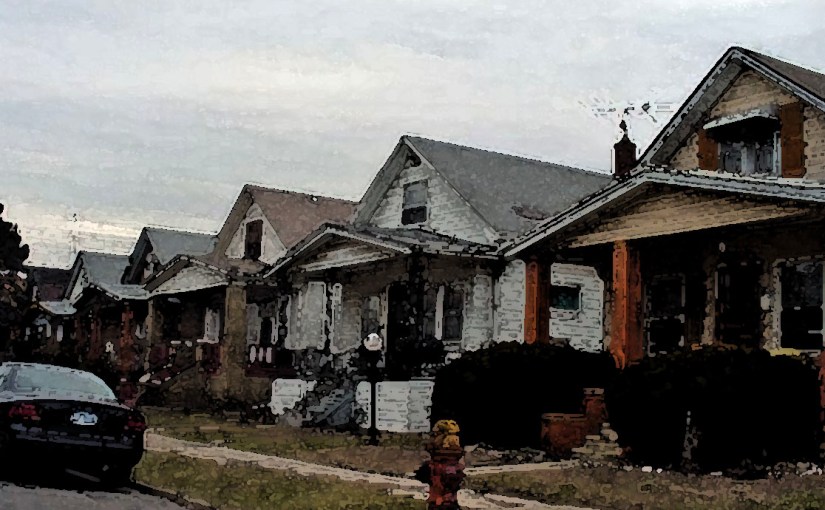
Mildred’s “House of Values,” on a corner lot
A price tag hung from every table and chair
Things for sale like any other shop
But it was Mildred’s home and she still lived there

Her son Levi would come by and do odd jobs
Help his momma with what she needed done
Rustin’ on blocks, a ’68 Dodge
Levi never could get to run

A person does all they can do
Full time job just gettin’ through
Rise in the morning, close your eyes at night
In between, try to get it right

Mildred was widowed nineteen-seventy-five
Leon Hooper was a good man
Price tags went up, year after he died
Life don’ turn out nothin’ like we plan

The ’68 Dodge, last car Leon bought
Rest of his stuff, sittin’ in a shed
You can see in Levi, Leon’s walk
Are the ones we love ever really dead?

A person does all they can do
Full time job just gettin’ through
Rise in the morning, close your eyes at night
In between, try to get it right

Mildred’s “House of Values,” on a corner lot
From every stick of furniture a price tag hung
A ‘68 Dodge rustin’ on blocks
Levi never could get to run

© 2017 Frank David Leone, Jr./Highway 80 Music (ASCAP). The songs and stories on the Highway 80 Stories website are works of fiction. Names, characters, businesses, places, events, locales, and incidents are either the products of the author’s imagination or used in a fictitious manner. Any resemblance to actual persons, living or dead, or actual events is purely coincidental.

“Levi and Lucy”


LOCATION: Jackson, Mississippi
PERIOD: 2012-2015
DRAMATIS PERSONAE: Levi Hooper (1973); Lucy Bess Cooper (1980-2015)


The romance of Levi Hooper and Lucy Cooper was an unlikely union; absolutely, an attraction of opposites.

They met while living across the street from one another in Jackson, Mississippi.   Lucy was a hell-raising rebel and Levi was a church-going, salt-of-the-earth young man.  Lucy was attracted to Levi mainly because he was nothing like the people she’d been involved with up to then, and Lucy had grown tired of her life and was ripe for a change.

Levi was attracted to Lucy because, well, for one thing, she was a very sexy lady, but more importantly he intuitively felt that she wanted more out of life than her drinking, drugging and wild partying.

Theirs was a true love which they both felt strongly, but a love that was destined to be cut off far too early, its potential left unfulfilled.


LEVY AND LUCY
(F.D. Leone, Jr.)

Lucy Cooper cussed the hammer that struck her thumb
Sent it sailing to kingdom come
Grabbed a whiskey bottle and marched out to her front porch
Found a roach and lit it with a butane torch

Levi Hooper watched from across the street
Wonderin’ how they might come to meet
He strolled out real slow looked in his mailbox
Lucy called out,”hey, hotshot”

Love can’t be controlled
Can’t be foretold
If you can explain it
It ain’ it

Love can’t be fenced
Or convinced
If you can explain it
It ain’ it

Every Sunday Levi would stop by on his way to church
Look at his feet with each of Lucy’s cuss words
Levi hoped she might want to come with him sometime
But he tried to push that thought out of his mind

Lucy had no luck at tryin’ to settle down
Her old friends always kept coming around
Lucy got busted they sent her to the prison farm
Where she put that stuff all up her arm

Love can’t be controlled
Can’t be foretold
If you can explain it
It ain’ it

Love can’t be fenced
Or convinced
If you can explain it
It ain’ it

© 2018 Frank David Leone, Jr./Highway 80 Music (ASCAP). The songs and stories on the Highway 80 Stories website are works of fiction. Names, characters, businesses, places, events, locales, and incidents are either the products of the author’s imagination or used in a fictitious manner. Any resemblance to actual persons, living or dead, or actual events is purely coincidental.

“One Time Too Many”


LOCATION: Vicksburg, Mississippi
PERIOD: 1985-2004
DRAMATIS PERSONAE: Louanne Murray Bowden (1967); Ronnie Raney (1962-2004)


In a disastrous act of rebellion from her upper crust background, Louanne Bowden began dating and ultimately married Ronnie Raney whom sehe met while attending the University of Mississippi in Oxford.

The Raney family under the leadership of matriarch Molly Motts Raney transitioned from bootlegging moonshine whiskey to distributing marijuana, pills and eventually funding methamphetamine labs. Ronnie was the second oldest son, acting as his mother’s right hand operations manager, his older brother Lonnie was sheriff of Warren County, offering protection for the entire enterprise.

After suffering years of Ronnie drunken abuse, Louanne and finding no relief from the corrupt legal system in Warren County, took matters into her own hands and shot Ronnie with a deer rifle as he sat at the kitchen table eating a slice of her homemade peach pie.

Although she knew she was justified in killing him, she fatalistically accepted her conviction of murder and the twenty year sentence that went with it. Only much later was she vindicated and released for time served.


ONE TIME TOO MANY
(F. D. Leone, Jr.)

She’d like to fix up her dinette
Yellow wallpaper with nosegays
A hard wood floor would do the trick
Those stains’ll take more than paint
 
A buzzer spoils this daydream
Lights out and the bars clang shut
It’ll have to wait twenty years
This cell is where she’ll stay put
 
She’d had enough
Taken too much
He treated her rough one time too many
She did the crime
She’ll do the time
Regrets? No, she don’t have any
 
She brought him his beer and a slice of pie
Then shot him with his deer gun
It was worth it just to see him surprised
Once he realized just what she’d done
 
She’d had enough
Taken too much
He treated her rough one time too many
She did the crime
She’ll do the time
Regrets? No, she don’t have any
 
His brother was sheriff of Warren County
There was no doubt the fix was in
A jury of his peers showed no mercy
But if she could she’d do it again
 
She’d had enough
Taken too much
He treated her rough one time too many
She did the crime
She’ll do the time
Regrets? No, she don’t have any

© 2017 Frank David Leone, Jr./Highway 80 Music (ASCAP). The songs and stories on the Highway 80 Stories website are works of fiction. Names, characters, businesses, places, events, locales, and incidents are either the products of the author’s imagination or used in a fictitious manner. Any resemblance to actual persons, living or dead, or actual events is purely coincidental.

“When Louanne Met Lucy in Prison”


LOCATION: Mississippi Penitentiary for Women, Rankin County, MIssissippi
PERIOD: 2015
DRAMATIS PERSONAE: Lucy Bess Cooper (1980-2015); Louanne Murray Bowden (1967)


Louanne Bowden was sent to the Mississippi Penitentiary for Women after being convicted of murdering her husband, Ronnie Raney (see song, “One Time Too Many“). Prison was an unlikely place for someone of Louanne’s background to end up, but there she was (see song, “Louanne in Vicksburg“). The fact that she killed Ronnie as a result of his constant physical abuse did not mitigate the verdict. Only years later would her case be reviewed and she would be released for time served when the charge was changed from murder to justifiable homicide (see song “A Waxahachie Funeral“).

However, while Louanne was serving her twenty year sentence Lucy Cooper was also sent to this prison on an 18 month sentence for distribution of controlled substance, marijuana. Although Lucy put up a brash and strong front, she was in fact a fragile woman, unable to cope with life behind bars. Shortly before being considered and most likely to be released on parole, a little shy of 12 months into her sentence, Lucy succumbed to depression and killed herself with an heroin overdose (see also song, “Levi and Lucy“).


WHEN LOUANNE MET LUCY IN PRISON
(F. D. Leone, Jr.)

When Louanne met Lucy in prison
Lou was halfway through her twenty
For killin’ Ronnie Raney
Who hit her once too many
Lucy would talk all about Levi
In words tender and soft
It was old friends and old sins
Got Lucy caught

Ain’t that how it is sometimes?
You’re on the verge of change
Life sends you the same ol’ same

They gave Lucy eighteen months
Easy time for most but for Lucy hard
Day by day she faded away
Behind stone walls and steel bars
Louanne tried to keep an eye on Lucy
Easy in there to come to harm
August night when they found her
Needle was still in Lucy’s arm

Ain’t that how it is sometimes …

Louanne got word to Levi
Said it best she knew how
Lucy only had six weeks left
She ain’ never gettin’ out
Levi read that letter and then
Put it in his dresser drawer
Got drunk in Vicksburg went a little further
Did a little more

© 2017 Frank David Leone, Jr./Highway 80 Music (ASCAP). The songs and stories on the Highway 80 Stories website are works of fiction. Names, characters, businesses, places, events, locales, and incidents are either the products of the author’s imagination or used in a fictitious manner. Any resemblance to actual persons, living or dead, or actual events is purely coincidental.

“Levi After Lucy”


LOCATION: Mississippi: Vicksburg, Greenwood, Greenville
PERIOD: 2015-16
DRAMATIS PERSONAE: Levi Hooper (1973); Lucy Cooper (1980-2015)In the aftermath of Lucy


Cooper‘s either accidental overdose or intentional suicide while incarcerated in the Louisiana Prison for Women, Levi Hooper went on something of a bender. Levi was not normally a drinker, but he felt despondent over Lucy’s death and did the only thing he knew how in order to deal with the set of emotions he felt: anger, shock, frustration.

Lucy had not done any drugs or much drinking for weeks prior to being arrested. That arrest was in itself was another case of bad timing: someone she thought was a friend flipped when arrested and gave Lucy up as his dealer (see song, “Levi and Lucy“. The reason Levi did not wish to believe that Lucy had committed suicide was because often when a former user has not done any narcotics for a while, if they relapse at their last dosage, their body cannot tolerate what it once did.

In any event, Lucy had been in the process of turning her life around at the time of her arrest, and her death while serving a relatively short sentence, 18 months, was hard for Levi to take (see songs, “Ready for Change” and “When Louanne Met Lucy in Prison“).

His binge begins in bars around Vicksburg, then he hits the road, to Greenwood, and Greenville, ending up at a small Catholic church in Lake Providence, Louisiana. Levi does not wish to be rude to the priest, he is simply exhausted both mentally and physically, and after this experience, Levi goes back home, devotes himself once again to helping his mother and begin to pick up the pieces of his life.


LEVI AFTER LUCY
(F. D. Leone, Jr.)

Levi staggered up the stone church steps
A slice of moon hung above a wooden cross
Inside the door he stared at a concrete font
Then walked down the aisle, drunk and lost

He eased himself into a pew and sat
Musty scent of incense hung in the air
Worn leather knee-benches underfoot
Levi tried to find the words of a prayer

Vicksburg, Greenwood, Greenville
Gone down many roads, travelin’ still
Pavement, gravel, then dirt
But what he’s lookin’ for ain’t in this church

His head sank to his chest; he slept
A priest shook him; he struggled to his feet
The priest asked him, “Do I know ye?”
“No,” Levi said. “You don’ know me.”

Vicksburg, Greenwood, Greenville …

“Please, Lord, please keep me still
From sinkin’ lower an’ blowin’ away
I’ll straighten out I swear I will
Least that’s how I feel today”

Priest looked him over and said
“Were you waiting to see me?”
Woman was dustin’ the altar with a rag
“No, sir, I just fell asleep.”

Vicksburg, Greenwood, Greenville …

© 2018 Frank David Leone, Jr./Highway 80 Music (ASCAP). The songs and stories on the Highway 80 Stories website are works of fiction. Names, characters, businesses, places, events, locales, and incidents are either the products of the author’s imagination or used in a fictitious manner. Any resemblance to actual persons, living or dead, or actual events is purely coincidental.

“A Waxahachie Funeral”


LOCATION: Whitfield MIssissippi; Waxahachie, Texas
PERIOD: 2015
DRAMATIS PERSONAE: Louanne Murray Bowden (1967); Constance Maddox Haynes (1913-2015, 102); Helen Haynes Murray (1947)


While at CMCF, Louanne developed an exemplary record of good behavior including mentoring several other young female prisoners. For example, about half way through her sentence, a young woman, Lucy Cooper, was sent to CMCF on a drug charge, given eighteen months. Lucy was a funny, bright, and street smart but fragile woman who simply could not do the time for her crime. Despite being taken under Louanne’s wing, Lucy became increasingly more and more despondent, eventually suiciding from an overdose – within weeks of her release (see song, “When Louanne Met Lucy in Prison“).

Not long after this tragedy Louanne’s case was reviewed by a judge who ruled that hers was a case of justified homicide and her sentence was commuted to time served. These events coincided with the death of her grandmother in 2015, when she was released after serving about 60% of her original sentence. She returned to Texas for her grandmother’s funeral and remained there with her mother, to live once again in Highland Park, however, now in somewhat reduced grandeur.


A Waxahachie Funeral
(F. D. Leone, Jr.)

A call from that charity lawyer,
Words like “justifiable homicide”.
She heard him say the phrase “time served”;
Then a thirty hour Greyhound ride.
Twelve years in, Louanne walked out of prison;
In a blue dress and a brand new pair of shoes.
Destination: a Waxahachie funeral;
Her grandma dead at a hunderd ‘n’ two.

Standin’ with her people among weathered stones;
Stiff new shoes powdered with red dirt.
Back home to witness a tough ol’ Texas woman,
Laid into a plot of Texas earth.

Her daddy died five years before;
That was a funeral Louanne had to miss.
It’s just her and her Neiman Marcus mother,
Left behind to make some sense of this.
They climb inside a shiny black Lincoln;
Go back to that big old empty house.
Their polite Highland Park friends,
Don’t know how to talk to her now.

Standin’ with her people among weathered stones;
Stiff new shoes powdered with red dirt.
Back home to witness a tough ol’ Texas woman,
Laid into a plot of Texas earth.

Louanne and momma sit in the kitchen;
Mute and surrounded by their ghosts.
They stare across a walnut table;
A cup of coffee and a slice of melba toast.
Louanne remembers another August;
That magic summer when she turned eighteen.
When her life seemed so full of promise;
Magnolias and September dreams.

Standin’ with her people among weathered stones;
Stiff new shoes powdered with red dirt.
Back home to witness a tough ol’ Texas woman,
Laid into a plot of Texas earth.

© 2018 Frank David Leone, Jr./Highway 80 Music (ASCAP). The songs and stories on the Highway 80 Stories website are works of fiction. Names, characters, businesses, places, events, locales, and incidents are either the products of the author’s imagination or used in a fictitious manner. Any resemblance to actual persons, living or dead, or actual events is purely coincidental.

“McLemore’s”


Jake McLemore’s father, Charlie McLemore, was small businessman at the J.M. Guffey Petroleum Company of Oil City, Louisiana where Jake was born in 1959 and where he spent his early life. Charlie moved the family to Shreveport in 1968 after he got a job at United Gas Corporation. Shreveport would be Jake’s home until he graduated high school, and went to Vanderbilt University in Nashville, Tennessee.

Jake decided to stay in Nashville after graduating from Vandy with a degree in Business Administration. After investing in several businesses, he came to own a bar, which he had won in a poker game. He promptly changed the name and settled down as proprietor of McLemore’s Bar in 1985 (see song, “McLemore’s“).

By that time Jake had already married and had a son, Lee, in 1983. But Jake’s happiness and home were shattered when his wife, Amelia, was killed in a car accident when a drunk driver ran a red light, leaving Jake to raise his son alone. Soon after graduating from high school, Lee McLemore enlisted in the army and was deployed to Iraq.

But before he left for Iraq, in July 2003, Lee’s girlfriend Ellen Brewer gave birth to a son whom they named Charles after his grandfather Charlie McLemore. Lee and Ellen secretly married shortly before Lee shipped out for Iraq that December. Jake knew nothing of this son and lost touch with Ellen Brewer. It was only much later that, largely out of curiosity, Charles looked Jake up and established contact.

On March 31, 2004, five U.S. soldiers were killed by a large IED on a road a few miles outside of Fallujah, one of the soldiers who died that day was Lee McLemore.

Jake kept the bar going for several years after Lee died but ended up selling it in 2007 and bought some land outside of Shreveport, Louisiana not far from Oil City. He had fond memories of fishing on Caddo Lake with his father and settled into that kind of life again.

It didn’t take long for Jake to become bored with retirement, and he bought a diner in Shreveport where Pearl Robison happened to enter one day in January 2010 (see song, “Pearl + Jake“). For five years Jake and Pearl had a turbulent romantic relationship, before Pearl took to the road again (see song “Hit the Road“), heading west on U.S. 80, leaving Jake heart broken at 56 (see songs, “The River and Jake” and “The Red River Flows“).

Unbeknownst to him Pearl was pregnant when she left, and gave birth to a daughter, Sadie Jo Robison. Pearl initially had no intention of letting Jake know about this child, but she eventually did tell Jake (see song “Terrell“), however, nearly two years after she had left Shreveport. Jake immediately proposed to Pearl, and they got married and moved back to Shreveport to raise Sadie Jo together.

Jake hired someone to run the diner and went back to a life of fishing and shooting the breeze with his friend Mike Broussard and other men from the area. Then one day in 2016 his grandson, Charles, walked into his life.

Jake is currently living with Pearl and Sadie Jo outside Shreveport, Louisiana, and maintaining a close relationship with Charles, helping him to grow into a sturdy young man in the long line of McLemore men.


McLemore’s
(F. D. Leone, Jr.)

Walked in there first time in aught-four
Took a stool by the pinball machine
Come to know the owner Jake McLemore
Dropping by each day became routine

He looked to be about my dad’s age
If my dad ain’t died in ninety-three
Jake was always adopting things
Like a three-legged dog and me

Time seemed to pass a little slower
Behind soft country music and bumper pool
The world looked a whole lot better
From where I sat on that bar stool

Pickled eggs and pigs feet in a jar
Antique cash register, black dial phone
Scratches an’ nicks in a hickory bar
Left by those who are never really gone

He pointed to a snapshot of some soldiers
Leaning on a tank in Iraq
“They call my son a hero,” Jake told me
“Would’ve preferred if he’d just made it back.”

Time seemed to pass a little slower
Behind soft country music and bumper pool
The world looked a whole lot better
From where I sat on that bar stool

Jake sold out last year with a big payday
Bought 26 acres outside Shreveport
I don’t drink much anymore and anyway
Can’t find a bar like McLemore’s
No, there ain’t no place like McLemore’s

© 2017 Frank David Leone, Jr./Highway 80 Music (ASCAP). The songs and stories on the Highway 80 Stories website are works of fiction. Names, characters, businesses, places, events, locales, and incidents are either the products of the author’s imagination or used in a fictitious manner. Any resemblance to actual persons, living or dead, or actual events is purely coincidental.

Related songs in chronological order:
McLemore’s
Between Here and Gone
Pearl and Jake
Hit the Road
The River and Jake
Terrell
The Red River Flows
Sadie Jo