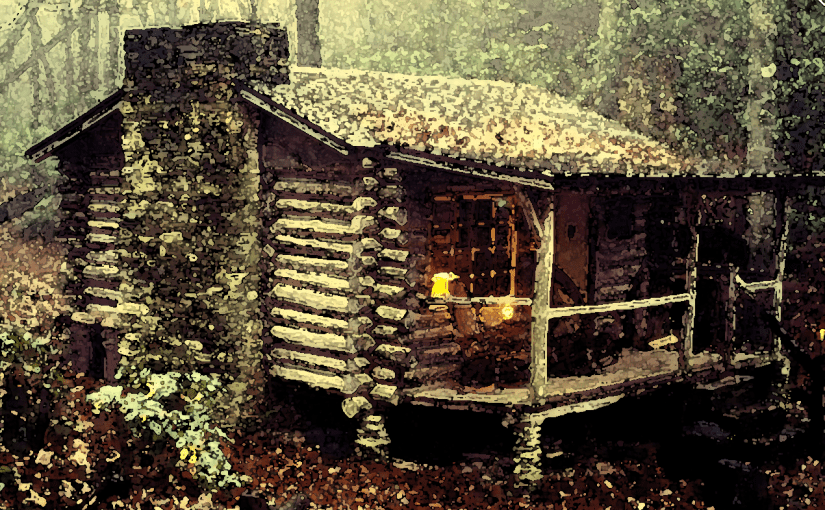
“Molly on the Mountain”


LOCATION: Vicksburg, MIssissippi and surrounding area
PERIOD: 1943-2014
DRAMATIS PERSONAE: Molly Motts (1931-2014); Lonnie Raney (1958-2006); Ronnie Raney (1962-2004); Ginny Raney (1966- ); Vernon Raney (1903-1987)


Molly Motts was born in Delta, Louisiana, a tiny hamlet at the Louisiana-Mississippi border, just across the river from Vicksburg. Because of a difficult home life, she often dreamed of getting out of Delta. Vicksburg just across the river looked like a dream garden to her and she thought she’d do anything to get there. She did: marrying Vernon Raney, bootlegger, more than twice her age; but a good husband to her (see song, “When Molly Motts Married Vernon Raney“) .

They had three children, Lonnie, Ronnie and Ginny. Molly was an ambitious girl and decided early on to piggy-back a drug distribution business onto Vernon’s already prospering bootlegging enterprise (see song, “’57 Fleetwood to Memphis“).

Despite the repeal of Prohibition in 1933, many states continued to outlaw alcohol for several more decades. But bootleg whiskey began going out of style in the mid-‘60s, by which time liquor by the drink had become legal in most states, and there was less and less demand for moonshine except out of nostalgia. Transitioning, first, to marijuana and then harder drugs, seemed to make good business sense to Molly.

Molly got her oldest son, Lonnie elected sheriff as a way to offer protection to her and her second son, Ronnie, as they operating the drug business with little interference from law enforcement. This they did and quickly established a lucrative distribution network of dealers from Natchez to Memphis (see song, “Louanne in Vicksburg“).

Molly lived to see both of her sons die violent deaths: Ronnie was murdered by his wife, Louanne Bowden, and Lonnie was killed in a stand-off with U.S. Marshalls and DEA agents. As the drug network wound down, Molly grew into her role as grandmother to Ginny’s children, living a quiet life in Vicksburg.

The second summer after they were married, Vernon built Molly a small cabin in the north Georgia mountains, on a section of the old Raney homestead (see song “Lonsom Raney 1828“). Molly would often go there as a retreat. This song describes her last visit there, when she looks back on her life and contemplates the impact on her family of the choices she has made.


MOLLY ON THE MOUNTAIN
(F. D. Leone, Jr.)

Molly was at her cabin on the mountain
Thinking ‘bout her life, and all she’d done
A jelly glass of Vernon’s tobacco whiskey
Sparkled in the late October sun
She thought back to the day she married Vernon Raney
Not yet 21, June of ‘58
Three months pregnant, walking down the aisle
To a man more than twice her age

Molly on the mountain, don’t wanna come down
Molly on the mountain, don’t wanna be found
Molly on the mountain, gonna leave it all behind
Molly on the mountain, knows it’s time

The cabin had a chill, she built a fire
With the last of the wood Lonnie’d split
Lonnie’s gone, his brother Ronnie too
Molly blamed herself for all of it
She’d grown harder through the years from that life
Harder, than she could describe
The pot and drugs, the men she fought, some she killed
All she’d ever done was survive

Molly on the mountain, don’t wanna come down
Molly on the mountain, don’t wanna be found
Molly on the mountain, gonna leave it all behind
Molly on the mountain, knows it’s time

Ginny was the one who turned out okay
Molly sure loves those three grandkids
She made sure to keep Ginny away from it all
That’s one good thing that she did
Lonnie’s Donald and Vern, went to East Mississippi
Took off when things got hot in Vicksburg
They’re selling pills and meth to the kids at Starkville
That’s what they learned from her

Molly on the mountain, don’t wanna come down
Molly on the mountain, don’t wanna be found
Molly on the mountain, gonna leave it all behind
Molly on the mountain, knows it’s time

Molly’s great grandma, Mamie, was a conjure woman
She knew plants for curing or killing dead
Mamie passed it down to Molly’s grandpa Motts
That’s where Molly got it, was what they said
Molly pressed the jelly glass against her cheek
It was time to drink that whiskey down
She looked into the woods, found that old maple tree
Watched a yellow leaf drift to the ground

Molly on the mountain, don’t wanna come down
Molly on the mountain, don’t wanna be found
Molly on the mountain, gonna leave it all behind
Molly on the mountain, knows it’s time

© 2019 Frank David Leone, Jr./Highway 80 Music (ASCAP). The songs and stories on the Highway 80 Stories website are works of fiction. Names, characters, businesses, places, events, locales, and incidents are either the products of the author’s imagination or used in a fictitious manner. Any resemblance to actual persons, living or dead, or actual events is purely coincidental.

“Meridian”


LOCATION: Starkville and Meridian, Mississippi
PERIOD: 2007
DRAMATIS PERSONAE: Celsie Crawford Monroe (1844-1936); Jessie Crawford (1828-1905); Joshua Tate (1828-1867); Jesse Harper (1850-1922); William Crawford Harper (1942-2001); Vernon Raney (1984); Donald Raney (1986); Crawford Harper (1987)


The lineage of Crawford Harper and the Donald and Vern Raney, is a little complicated. They were distantly related to each other, although they did not know it at the time of the events described in this song. In order to set the stage we have to go back to Alabama, before the Civil war.

Celsie Crawford Monroe (1844-1936) was born into slavery but was freed by Will Monroe, her father, a wealthy white planter, in 1863 as a result of Abraham Lincoln’s Emancipation Proclamation.

Celsie’s mother, Jessie Crawford (1828-1905), was a slave from a neighboring plantation of whom Will Monroe had grown quite fond. Monroe made sure Jessie was provided for and also insisted that she be freed in 1863 by paying off her owner Carson Crawford.

Celsie was what was called a “yellow gal”, and quite beautiful. Once she was freed at age 19, Celsie began seeing a white man, Joshua Tate (1828-1867), and their relationship developed into a common law marriage, although the possibility of such a union being recognized was not possible at the time. They had one child, a son, Tullison Tate, “Monroe’s Tully” (see song “King Cotton“).

In 1872 Celsie’s first actual marriage was to a African-American man, Jesse Harper (1850-1922), and Celsie and Jesse enjoyed a long and happy union, raising four children, seven grandchildren, and many great-grandchildren. However, Celsie’s oldest child, Tully, was raised by his spinster Aunt Ruth, his father’s sister.

Donald and Vernon Raney were distant descendants of Tully Tate, his daughter marrying Virgil Raney, whose son Vernon was Donald and Vernon’s grandfather. Their father Lonnie Raney, had been a crooked Warren County sheriff, who was killed in a shootout with U.S. Marshalls, during a drug raid. The Raneys were descendants of Lonsom Raney, longtime moonshiner in North Georgia (see song “Lonsom Raney 1828“).

Lonnie’s generation of Raneys had become major players in the drug trade stretching from Memphis to Natchez, with Lonnie’s mother Molly Motts Raney acting as matriarch of the family drug enterprise (see songs “When Molly Motts Married Vernon Raney” and “Louanne in Vicksburg“). Donald and Vernon were Molly’s grandchildren, who were trying to carry on the family business, albeit on a much smaller scale, in Meridian, Mississippi.

One of Celsie Monroe’s great-grandchildren, William Crawford Harper (1942-2001), had marched from Selma to Montgomery in 1965 (see song “Crossin’ the Edmund Pettus Bridge“). Crawford Harper was Willie’s grandson, and this song describes the events of Crawford’s first summer home from college, when he visited his grandpa in Meridian, Mississippi.


MERIDIAN
(F. D. Leone, Jr.)

Crawford Harper was in Starkville
Mississippi State
He’d be the first in the Harper family
Who might graduate

His Grandpa Willie lived in Meridian
Crawford spent the summer, wanting to earn
He’d heard about two fellas with a business
That’s how Crawford met Donald and Vern

The Raneys were from North Georgia
Moonshiners back in the hills
When they came down off that mountain
They were selling pot and pills

When Crawford met up with the Raneys
Vern gave him a duffle bag full of meth
Told him how much money to deliver
Crawford could keep the rest

One night Grandpa Willie found his stash
Asked him, “where’d you get this money?”
Crawford said, “don’t worry, old man,
I got it working for somebody”

Willie Harper had marched at Selma
Five miles from the same plantation
Where his ancestor had been a slave
Going back six generations

Willie asked, if that somebody
Might be named Donald and Vern
Crawford grabbed his duffel bag
Told him, “it ain’t none of your concern”

But see, Willie’d had a visit
From the Raneys late one night
Crawford owed them money
That had to be made right

Willie Harper was a welder
Vern said, “you’re gonna have a partner”
Willie looked at him with stone cold eyes
Said, “only name on that sign is Harper”

Under his welding gloves
Willie kept his service forty-five
He told Vern, “if you think I won’t use it,
You’re in for a surprise”

When Crawford came home, his grandpa told him
“The Raneys won’t be ‘round no more”
He took that duffel bag and torched it
Into a pile of ashes on the floor

Crawford Harper was back in Starkville
Mississippi State
He was the first in the Harper family
To graduate


© 2019 Frank David Leone, Jr./Highway 80 Music (ASCAP). The songs and stories on the Highway 80 Stories website are works of fiction. Names, characters, businesses, places, events, locales, and incidents are either the products of the author’s imagination or used in a fictitious manner. Any resemblance to actual persons, living or dead, or actual events is purely coincidental.

“Hit the Road”


After five years, Pearl decides to leave Jake and Shreveport. She doesn’t know she is pregnant when she leaves for Texas where her sister is living.

Pearl Robison comes from a fractured family line going back before the Civil War, and her life has carved a jagged line as well. She is related through her father, Jason Jones Robison (1946- ) to Ruby Robison (1843-1933), who was the sister of Marcus Walsh Robison (1836-1897) Pearl’s great-great-great-grandfather. Ruby Robison was a young prostitute in Shreveport who gave birth to a Civil War soldier’s child, the first Pearl Robison (see songs, “Fannin Street” and “Levi Motts is My Name“).


HIT THE ROAD
(F. D. Leone, Jr.)

Last five years been a good run
She hates to see it end like this
She can tell it’s coming undone
Can’t say just why that is

It’s the longest she’s stayed in one place
This leaving feeling is one she knows
She don’t want to see the hurt on his face
Best thing for her to do is just go

Gonna hit the road
It’s what she knows
When her back’s against the wall she goes
Gonna pack it in
Once again
When that old feeling grows
It’s time to hit the road

Got a sister in Fort Worth
Been years since she’d seen her mama and them
‘Bout three hours from Shreveport
She sure hates to run from him

Gonna hit the road
It’s what she knows
When her back’s against the wall she goes
Gonna pack it in
Once again
When that old feeling grows
It’s time to hit the road
When that old feeling grows
It’s time to hit the road

© 2023 Frank David Leone, Jr./Highway 80 Music (ASCAP). The songs and stories on the Highway 80 Stories website are works of fiction. Names, characters, businesses, places, events, locales, and incidents are either the products of the author’s imagination or used in a fictitious manner. Any resemblance to actual persons, living or dead, or actual events is purely coincidental.


Related songs in chronological order:
McLemore’s
Between Here and Gone
Pearl and Jake
Hit the Road
The River and Jake
Terrell
The Red River Flows
Sadie Jo

“James”

Rosalie Broussard found herself pregnant a week after turning sixteen (see song “Jenny or James“).  Though her boyfriend wanted her to have an abortion, and even offered her the money, she refused, because Rosalie had a naive understanding about what having a baby really meant, and also because she just didn’t like the idea.  However, she eventually realized she couldn’t handle the responsibility and when James was three she handed him over to her father and his second wife, MaeAnn.

When Rosalie was twenty she left Vivian, Louisiana and married Tully Tate, a man she met while waitressing at a truck stop.  They had twin girls and lived in Mobile, Alabama.  But Rosalie never could make peace with domestic life and would run off from time to time, each time Tully would find and bring her back home (see song “What Tully’s Done“).  But eventually he grew tired of chasing after his runaway wife and Rosalie finally left that family as well (see song “Rosalie“).

Mike and MaeAnn dearly loved James since they saw that his mother had not shown him the natural love of a mother.  But James still felt an emptiness which was only relieved when he played catch with his grandpa.

JAMES
(F.D. Leone, Jr.)

James was Wednesday’s child, full of woe
His mama left when he was just three years old
Rosalie was only sixteen when she had him
Left him with her parents; he was raised by them

James grew up wondering if he’d done something wrong
That made his mama leave him at his grandpa’s home
His father was a shadow, a name that wasn’t said
But Mike and MaeAnn did their best

When James played catch with Mike
For a little while everything seemed alright
A peaceful feeling settled in with the dimming light
On those summer days when James played catch with Mike

He overheard bits and pieces about his mama’s life
She was living in Mobile, a truck driver’s wife
At Christmas she might visit but wouldn’t stay too long
Gave James some toy he’d long ago outgrown

MaeAnn said he had twin sisters in Mobile
James really hoped that they had a better deal
But soon Rosalie would run off from them too
It seemed that’s all his mama was cut out to do

When James played catch with Mike
For a little while everything seemed alright
A peaceful feeling settled in with the dimming light
On those summer days when James played catch with Mike

© 2019 Frank David Leone, Jr./Highway 80 Music (ASCAP). The songs and stories on the Highway 80 Stories website are works of fiction. Names, characters, businesses, places, events, locales, and incidents are either the products of the author’s imagination or used in a fictitious manner. Any resemblance to actual persons, living or dead, or actual events is purely coincidental.

“The Red River Flows”


LOCATION: Shreveport, Louisiana; Terrell, Texas
PERIOD: 2015-2019
DRAMATIS PERSONAE: Jacob “Jake” Tyler McLemore (1959); Pearl Boone Robison (1973); Sadie Jo Robison McLemore (2015)


Jake McLemore had owned a bar in Nashville, but sold it and bought a parcel of land between Shreveport and Vivian, Louisiana (see song “McLemore’s“). The Red River flowed through his land, and he built a small cabin there. In this song, Jake is contemplating life in the wake of the failure of his latest relationship.

But he hears from Pearl again, who tells him that she gave birth to their daughter, Sadie Jo, who is now one year old, with her living in Terrell, Texas.


THE RED RIVER FLOWS
(F. D. Leone, Jr.)

I’m out on the porch
It’s about ten to four
The Red River flows
It just goes and goes

Dickel is what I sip
A Lucky is on my lip
The Red River flows
It just goes rolling on

There was a woman, but she left
Wasn’t the worst, wasn’t the best
No note, no goodbye
But I don’t even wonder why

The rain softly falls
A morning dove softly calls
The Red River flows
It just goes and goes

Yesterday I heard from Pearl
Told me about our little girl
Her name is Sadie Jo
The Red River flows and flows
Her name is Sadie Jo
That Red River goes rolling on

© 2019 Frank David Leone, Jr./Highway 80 Music (ASCAP). The songs and stories on the Highway 80 Stories website are works of fiction. Names, characters, businesses, places, events, locales, and incidents are either the products of the author’s imagination or used in a fictitious manner. Any resemblance to actual persons, living or dead, or actual events is purely coincidental.


Related songs in chronological order:
McLemore’s
Between Here and Gone
Pearl and Jake
Hit the Road
The River and Jake
Terrell
The Red River Flows
Sadie Jo

“Molly’s Got a Secret”


LOCATION: Delta, Louisiana; Vicksburg, Mississippi
PERIOD: 1943-2014
DRAMATIS PERSONAE: Molly Motts (1931-2014); Lamar Odom (1914-1960); Bessie Ferguson (1914-1966); Donald Motts  (1911-1977); Vernon Raney (1903-1987)


Molly Motts was sexually molested by her step-father in Delta, Louisiana from the age of 12. But Molly is resilient and refuses to identify herself as a victim. As soon as she was grown up enough she crossed the river to Vicksburg and attracted the attention of a prominent Mississippi man, Vernon Raney. Molly marries him and over time becomes the matriarchal figure of the Raney family whose criminal enterprises began with bootlegging and under Molly’s leadership branched out into marijuana and pills.


MOLLY’S GOT A SECRET
(F. D. Leone, Jr.)

Molly’s got a secret, a deep dark secret
She ain’t told, but don’t know if she can keep it
It’s burn’d a hole in her heart, all the way up to the skin
Once it’s out, it can’t be put back again

She’s protected him for so long
She knows he hurt her, knows it was wrong
She still feels guilty all the same
Even though she knows he’s the only one to blame

Molly’s got a secret, a deep dark secret
She ain’t told, but don’t know if she can keep it
It’s burn’d a hole in her heart, all the way up to the skin
Once it’s out, it can’t be put back again

Molly’s got a secret from years before
She can’t forget it, can’t live with it no more
She drinks a little too much, laughs a little too loud
When his name comes up she don’t wanna be around

Molly’s got a secret, a deep dark secret
She ain’t told, but don’t know if she can keep it
It’s burn’d a hole in her heart, all the way up to the skin
Once it’s out, it can’t be put back again

First chance she got she put Delta behind her
Won’t let what that man did define her
What happened in Delta she’s buried it deep
Her skin is thicker now, it’s a secret she can keep

Molly’s got a secret, a deep dark secret
She ain’t told, but don’t know if she can keep it
It’s burn’d a hole in her heart, all the way up to the skin
Once it’s out, it can’t be put back again

© 2019 Frank David Leone, Jr./Highway 80 Music (ASCAP). The songs and stories on the Highway 80 Stories website are works of fiction. Names, characters, businesses, places, events, locales, and incidents are either the products of the author’s imagination or used in a fictitious manner. Any resemblance to actual persons, living or dead, or actual events is purely coincidental.
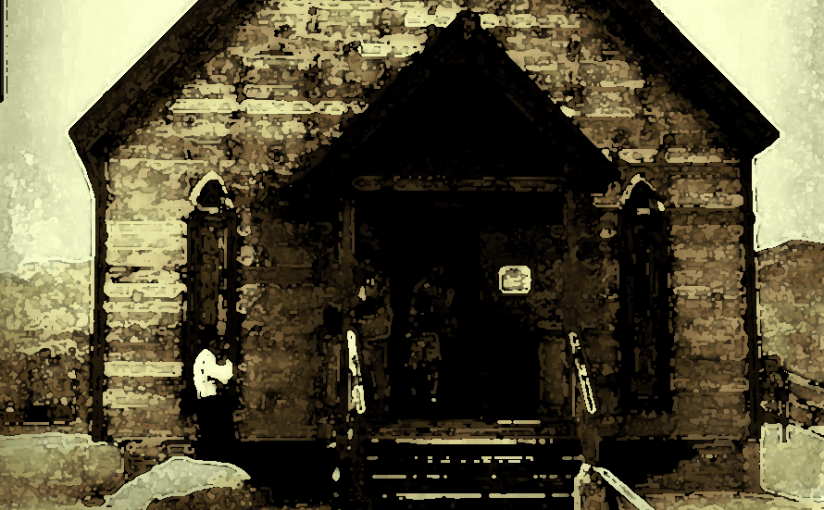
“A River Runnin’ Wild”

This story takes place in the north Georgia mountains, early 1933.  Clara Sprague Robison (1911-1993) sees her future husband, Johnny Campbell (1905-1944), at church one Sunday.  Clara had met Johnny before, but only briefly, and she knew he lived off the mountain. The fact that he came to her church, as opposed to the one he regularly attended, was significant to her, letting her know that he made the trip specifically to see her.  

Clara is the great-grandaunt of Pearl Robison. Clara and Johnny would have three children, Marcus, Nora and Emily before Johnny is killed in WWII.

A RIVER RUNNIN' WILD
(F.D. Leone, Jr.)

Johnny came to Clara’s church that Sunday,
Him on the mountain was a surprise
She’d have to walk right past him
Lord she thought she just might die

She seen the look in his eye
Like there was no one, just them two
Something rose up in her heart
Like a river runnin’ wild busting loose

Johnny touched his new wool cap
As Clara hurried past him up the steps
All through the preachin’ she felt his eyes
On the back of her neck

She seen the look in his eye …

Soon as the service was over
Clara felt her face burnin’ red
Johnny took her hand, they went walkin’
She couldn’t tell you a word of what they said

She seen the look in his eye …

© 2018 Frank David Leone, Jr./Highway 80 Music (ASCAP). The songs and stories on the Highway 80 Stories website are works of fiction. Names, characters, businesses, places, events, locales, and incidents are either the products of the author’s imagination or used in a fictitious manner. Any resemblance to actual persons, living or dead, or actual events is purely coincidental.

“My Pocketknife”

It took a couple of years longer than in other towns, but The Great Depression finally hit Oil City, Louisiana in 1932.  The price of oil plummeted and work ground to a stop.  They capped the wells and hauled the rigs away, to wait for better times.  In 1934, out of all other options, Lee Allen McLemore and his thirteen year old son Charlie hit the road looking for work, and like many others head west to California.

MY POCKETKNIFE
(F.D. Leone, Jr.)

Charlie and his father crawl up the embankment
Hidden by the bend they crouch and wait
The train’ll have to slow down maybe just enough
With any luck they’ll grab that freight

Charlie and his father left Oil City at dawn
Somethin’ called The Depression had arrived
Work was for the takin’ out in California
Pickin’ cotton under sunny skies

Long as I have my pocketknife
I’ll be alright, be alright
I can make it through the coldest night
Long as I have my pocketknife

Charlie and his father join a migrant army
Ride the rails with tramps an’ hoboes
Tent camps were jungles, danger everywhere
Do your best to hang on to your coat

Charlie and his father dodge a railroad bull
Hidin’ in the tender ’til he’s gone
A man was crumpled in the corner, frozen overnight
It’s a damp and cold L.A. dawn

Long as I have my pocketknife …

© 2018 Frank David Leone, Jr./Highway 80 Music (ASCAP). The songs and stories on the Highway 80 Stories website are works of fiction. Names, characters, businesses, places, events, locales, and incidents are either the products of the author’s imagination or used in a fictitious manner. Any resemblance to actual persons, living or dead, or actual events is purely coincidental.
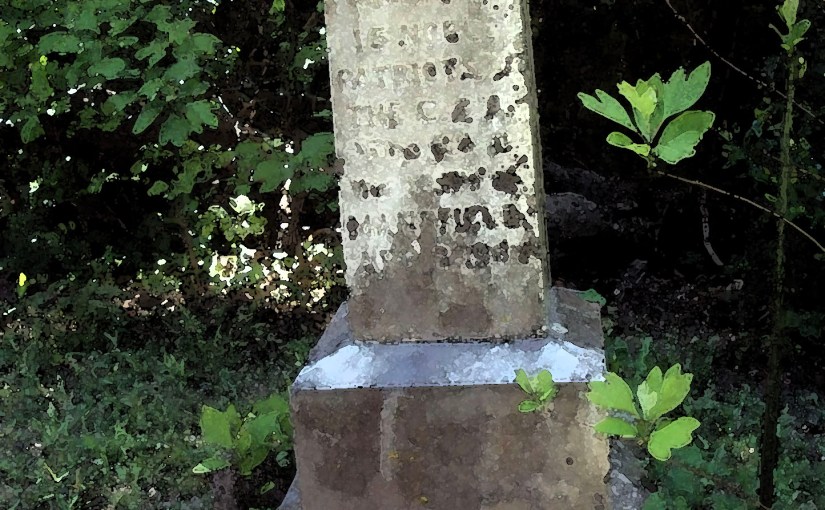
“Levi Motts Is My Name”

LEVI MOTTS IS MY NAME
(F.D. Leone, Jr.)

Levi Motts is my name
Come from Northwest Louisiana
I joined up with Colonel Gray
He said be ready to march today
Don’t know when I’ll be back again
If this war will ever end

Ruby Robison is my gal
Keeps a room down in the bottoms
We talked of gettin’ out of there
Make a new life anywhere
Don’t know when I’ll be back again
If this war will ever end

Ruby wrote me a letter
We were waitin’ outside Mansfield
Wrote there’s a baby on the way
We fought the Yankees April Eighth
Don’t know when I’ll be back again
If this war will ever end

Levi Motts is my name
Come from Northwest Louisiana
Lead ball went through my neck
That afternoon I bled to death
Don’t know when I’ll be back again
If this war will ever end

© 2017 Frank David Leone, Jr./Highway 80 Music (ASCAP). The songs and stories on the Highway 80 Stories website are works of fiction. Names, characters, businesses, places, events, locales, and incidents are either the products of the author’s imagination or used in a fictitious manner. Any resemblance to actual persons, living or dead, or actual events is purely coincidental.

“Lonsom Raney 1828”

Lonsom Raney is the son of Scots-Irish immigrants to this country in the early 18th century. Originally the family spelled their name “Rainey” but Lonsom chose to drop the “i” and spell his name “Raney”.

In Colonial America, a whiskey-making tradition came ready-made with the arrival of Scots-Irish settlers from Northern Ireland’s Ulster region, beginning in the 1700s. They brought with them their taste for the drink and an understanding of how to make it. Lonsom Raney’s grandfather had always made his own whisky back in Scotland, and brought his still with him wherever he moved: first to Ireland then across the ocean to Virginia.

When Lonsom was a child, moonshine doubled as a cough suppressant and sore-throat treatment. To get little ones to tolerate whiskey, adults added something special to the cup: “It was pretty common with everybody in the mountains to put the old-fashioned peppermint-stick candy in it,” says Vernon Raney, Lonsom’s great-great-grandson.

Lonsom claimed to drink corn whiskey nearly every day of his life, often telling anyone in his vicinity, that moonshine was the only thing that kept him alive. He started making it while still a child. “I went to helpin’ my daddy make likker when I wuddn’t but nine years old,” he told Vernon. “My daddy just let me go to the still with him and I watched him and learnt it myself.”

Over the years, the law mostly left the Raneys alone. But Lonsom wasn’t always lucky. On at least four occasions, he served time in jail and in prison for violating liquor laws and evading taxes. But as it turned out, being locked up wasn’t bad for business. “That’s a good place to get customers,” Vernon said of his great-great-granddad’s time behind bars. “He would just take orders and fill them when he got out.”

Lonsom Raney died in 1923 at the age of 95. He had four descendants who carried on the Raney whisky tradition: Ransom (son), Royal (grandson), Virgil (great-grandson) and Vernon (great-great-grandson). Vernon would marry Molly Motts, who would later transition their bootlegging business into a drug enterprise (see songs “’57 Fleetwood to Memphis” and “Molly on the Mountain“).

LONSOM RANEY 1828
(F.D. Leone, Jr.)

1828 Lonsom Raney was born
Had a copper still an’ made clear corn
His great-granddad brought it from Scotland
Hid it in the hills on this Georgia mountain

Help’d his daddy make likker, Lonsom told
When he wuddn’t but nine years old
They’d load the wagon right at the still
Run that shine all through those hills

“Let me be, my sons and me
I’m just doing what I can
Let me be, my boys ‘n’ me
I’m just livin’ off the land”

He made it himself when his daddy died
Drank corn whiskey every day of his life
Claimed moonshine was what kept him alive
Lonsom Raney lived to ninety-five

“Let me be, my sons and me …

Five generations used that still
From Ransom to Royal, then Virgil
Lonsom died in nineteen twenty-three
Now it’s Vernon’s time with the recipe

“Let me be, my sons and me
I’m just doing what I can
Let me be, th’ boys ‘n’ me
I’m just livin’ off the land
I’m just doing what I can
Lemme be free Mr. Gov’mint man”

© 2017 Frank David Leone, Jr./Highway 80 Music (ASCAP). The songs and stories on the Highway 80 Stories website are works of fiction. Names, characters, businesses, places, events, locales, and incidents are either the products of the author’s imagination or used in a fictitious manner. Any resemblance to actual persons, living or dead, or actual events is purely coincidental.