The Story of Jake McLemore and Pearl Robison

Jake McLemore’s father, Charlie McLemore, was mid-level executive at the J.M. Guffey Petroleum Company of Oil City, Louisiana where Jake was born in 1959 and where he spent his early life. 

Charlie moved the family to Shreveport in 1968 after he got a job at United Gas Corporation.  Shreveport would be Jake’s home until he graduated high school, and went to Vanderbilt University in Nashville, Tennessee. Jake decided to stay in Nashville after graduating from Vandy with a degree in Business Administration. 

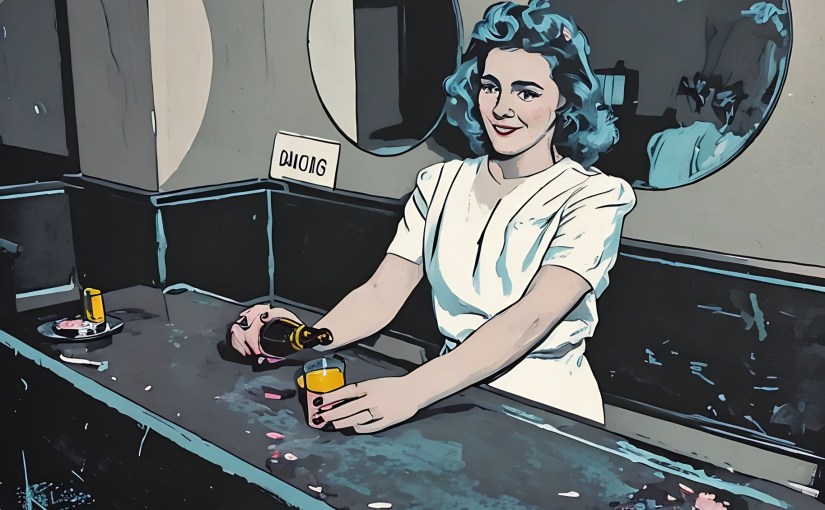
After investing in several businesses, he came to own a bar, which he had won in a poker game.   He promptly changed the name and settled down as proprietor of McLemore’s Bar in 1985.

McLemore’s
(F. D. Leone, Jr.)

Walked in there first time in aught-four
Took a stool by the pinball machine
Come to know the owner Jake McLemore
Dropping by each day became routine

He looked to be about my dad’s age
If my dad ain’t died in ninety-three
Jake was always adopting things
Like a three-legged dog and me

Time seemed to pass a little slower
Behind soft country music and bumper pool
The world looked a whole lot better
From where I sat on that bar stool

Pickled eggs and pigs feet in a jar
Antique cash register, black dial phone
Scratches an’ nicks in a hickory bar
Left by those who are never really gone

He pointed to a snapshot of some soldiers
Leaning on a tank in Iraq
“They call my son a hero,” Jake told me
“Would’ve preferred if he’d just made it back.”

Time seemed to pass a little slower
Behind soft country music and bumper pool
The world looked a whole lot better
From where I sat on that bar stool

Jake sold out last year with a big payday
Bought 26 acres outside Shreveport
I don’t drink much anymore and anyway
Can’t find a bar like McLemore’s
No, there ain’t no place like McLemore’s

© 2017 Frank David Leone, Jr./Highway 80 Music (ASCAP). The songs and stories on the Highway 80 Stories website are works of fiction. Names, characters, businesses, places, events, locales, and incidents are either the products of the author’s imagination or used in a fictitious manner. Any resemblance to actual persons, living or dead, or actual events is purely coincidental.


Pearl Robison comes from a fractured family line going back before the Civil War, and her life has carved a jagged line as well.  She is related through her father, Jason Jones Robison (1946- ) to Ruby Robison (1843-1933), who was the sister of Marcus Walsh Robison (1836-1897) Pearl’s great-great-great-grandfather.  Ruby Robison was a young prostitute in Shreveport who gave birth to a Civil War soldier’s child, the first Pearl Robison (see songs, “Fannin Street” and “Levi Motts is My Name“).

In 1973 Pearl Robison was born in Conyers, Georgia but we first meet Pearl when she is managing a dollar store in Macon.  One January day in 2010, sitting in her car before opening up, she decides to leave town and head west on U.S. 80.

Between Here and Gone
(F. D. Leone, Jr.)

No one dreams of bein’ manager at Dollar Town,
But life happens, there’s worse around.
A stick of peppermint’ll hide whiskey on her breath,
Might as well open up, she’s out of cigarettes.

Snowed eight inches overnight, the air is crystal clear;
They’ll be buyin’ extra bread and eggs and beer.
Just sittin’ and thinkin’ in her car out there alone,
She’s stranded between here and gone.

She could just drive away free as the breeze,
Start over somewhere, just leave.
Don’t matter no more what’s right or wrong,
She’s stranded between here and gone.

Checking here makeup she sees a new grey hair,
She don’t know that woman who returns her stare.
The day’s first shopper pulls into the parking lot;
She still has time for one more shot.

There’s nothing in this town for her to stay;
She used to find little things that kept that thought away.
Like goin’ to the Blue Bonnet for a lemon custard cone;
She’s stranded between here and gone.

She could just drive away free as the breeze,
Start over somewhere, just leave.
Don’t matter no more what’s right or wrong,
She’s stranded between here and gone.

© 2017 Frank David Leone, Jr./Highway 80 Music (ASCAP). The songs and stories on the Highway 80 Stories website are works of fiction. Names, characters, businesses, places, events, locales, and incidents are either the products of the author’s imagination or used in a fictitious manner. Any resemblance to actual persons, living or dead, or actual events is purely coincidental.


By the time Jake had opened the bar, he had already married and had a son, Lee, in 1983. But Jake’s happiness and home were shattered when his wife, Amelia, was killed in a car accident when a drunk driver ran a red light, leaving Jake to raise his son alone. 

Soon after graduating from high school, Lee McLemore enlisted in the army and was deployed to Iraq. But before he left for Iraq, in July 2003, Lee’s girlfriend Ellen Brewer gave birth to a son whom they named Charles after his grandfather Charlie McLemore.  Lee and Ellen secretly married shortly before Lee shipped out for Iraq that December. 

Jake knew nothing of this son and lost touch with Ellen Brewer.  It was only much later that, largely out of curiosity, Charles looked Jake up and established contact.

On March 31, 2004, five U.S. soldiers were killed by a  IED on a road a few miles outside of Fallujah, one of the soldiers who died that day was Lee McLemore.

Jake kept the bar going for several years after Lee died but ended up selling it in 2007 and bought some land outside of Shreveport, Louisiana not far from Oil City.  He had fond memories of fishing on Caddo Lake with his father and settled into that kind of life again. It didn’t take long for Jake to become bored with retirement, and he bought a diner in Shreveport where Pearl Robison happened to enter one day in January 2010.

Pearl and Jake
(F. D. Leone, Jr.)

Snowed all night in Macon when Pearl left for the last time
Al’bam, Misippy, Luziana; Georgia felt far enough behind
Creosote, cottonseed, Shree’port – hit her like a cinder block
Lights of an all-nite diner; Pearl coasted to a stop

Jake behind the counter, white apron little paper hat
Slid some coffee before her, quiet as an alley cat
Pearl pulled a pint from somewhere, tipped it over her cup
Jake lit a cigarette; the sun came up

Lovin’ her is what he meant to do
Even if it broke his heart in two
He played life like a game of horseshoes
Ah, but, lovin’ her was what he meant to do

Jake bought this diner after selling McLemore’s
Pearl was stranded in Macon managing a dollar store
They met on Jewella Avenue both lookin’ for a new start
Jake gave her some food and his hidden heart

Lovin’ her is what he meant to do
Even if it broke his heart in two
He played life like a game of horseshoes
Ah, but, lovin’ her was what he meant to do

Jake didn’t want to come home stinkin’ of cigarettes, beer and perfume
Five years passed by as he walked from room to empty room
Pearl was runnin’ away that first day he met her
She’d been leavin’ ever since, Jake finally found a way to let her

© 2018 Frank David Leone, Jr./Highway 80 Music (ASCAP). The songs and stories on the Highway 80 Stories website are works of fiction. Names, characters, businesses, places, events, locales, and incidents are either the products of the author’s imagination or used in a fictitious manner. Any resemblance to actual persons, living or dead, or actual events is purely coincidental.


After five years, Pearl decides to leave Jake and Shreveport. She doesn’t know she is pregnant when she leaves for Texas where her sister is living.

Pearl Robison comes from a fractured family line going back before the Civil War, and her life has carved a jagged line as well. She is related through her father, Jason Jones Robison (1946- ) to Ruby Robison (1843-1933), who was the sister of Marcus Walsh Robison (1836-1897) Pearl’s great-great-great-grandfather. Ruby Robison was a young prostitute in Shreveport who gave birth to a Civil War soldier’s child, the first Pearl Robison (see songs, “Fannin Street” and “Levi Motts is My Name“).


Hit the Road
(F. D. Leone, Jr.)

Last five years been a good run
She hates to see it end like this
She can tell it’s coming undone
Can’t say just why that is

It’s the longest she’s stayed in one place
This leaving feeling is one she knows
She don’t want to see the hurt on his face
Best thing for her to do is just go

Gonna hit the road
It’s what she knows
When her back’s against the wall she goes
Gonna pack it in
Once again
When that old feeling grows
It’s time to hit the road

Got a sister in Fort Worth
Been years since she’d seen her mama and them
‘Bout three hours from Shreveport
She sure hates to run from him

Gonna hit the road
It’s what she knows
When her back’s against the wall she goes
Gonna pack it in
Once again
When that old feeling grows
It’s time to hit the road
When that old feeling grows
It’s time to hit the road

© 2023 Frank David Leone, Jr./Highway 80 Music (ASCAP). The songs and stories on the Highway 80 Stories website are works of fiction. Names, characters, businesses, places, events, locales, and incidents are either the products of the author’s imagination or used in a fictitious manner. Any resemblance to actual persons, living or dead, or actual events is purely coincidental.


An American historian in the 19th century described the frontier vanguard in the following words:

“Thus the backwoodsmen lived on the clearings they had hewed out of the everlasting forest; a grim, stern people, strong and simple, powerful for good and evil, swayed by gusts of stormy passion, the love of freedom rooted in their hearts’ core. Their lives were harsh and narrow; they gained their bread by their blood and sweat, in the unending struggle with the wild ruggedness of nature. They suffered terrible injuries at the hands of the red men, and on their foes they waged a terrible warfare in return. They were relentless, revengeful, suspicious, knowing neither ruth nor pity; they were also upright, resolute, and fearless, loyal to their friends, and devoted to their country. In spite of their many failings, they were of all men the best fitted to conquer the wilderness and hold it against all comers.

The Anglo-American 18th-century frontier, like that of the Spanish, was one of war. The word “Texan” was not yet part of the English language. But in the bloody hills of Kentucky and on the middle border of Tennessee the type of man was already made. ”

These were the McLemores who left Tennessee for Texas.

Pearl’s disappearance hit Jake very heard, and he had trouble accepting the fact that she had left withut warning, just disappearing. Men of his generation and culture did not seek professional counseling, sometimes they drank, usually they quietly brooded and with time eventually got over  the pain of abandonment.

Jake chose to go fishing. He found solace and peace on the river.


The River and Jake
(F. D. Leone, Jr.)

Long as I can remember
When Jake was sad he would go
On down to The River
With some bait and a pole

It’s the place he wants to be
When he needs to be alone
Jake’s gone down to The River
Every day since Pearl’s been gone

You can ask him where they’re biting
Or what he used for bait
Just don’t ask him anything about her
That’s between The River and Jake

Soon his mind will grow empty
With each cast he’ll forget
All the worries he brought with him
They’ll all fade with the sunset

You can ask him where they’re biting …

© 2019 Frank David Leone, Jr./Highway 80 Music (ASCAP). The songs and stories on the Highway 80 Stories website are works of fiction. Names, characters, businesses, places, events, locales, and incidents are either the products of the author’s imagination or used in a fictitious manner. Any resemblance to actual persons, living or dead, or actual events is purely coincidental.


Unbeknownst to him Pearl was pregnant when she left, and gave birth to a daughter, Sadie Jo Robison.  Pearl initially had no intention of letting Jake know about this child, wishing only to relocate to her sister’s house in ForthWorth Texas. After six months, Pearl realized that she had to find her own place, and start her life over again, and gave seriosu thought to informing Jake of the existence of their daughter, Sadie Jo.

Terrell
(F. D. Leone, Jr.)

All Pearl knew, she was heading to Texas
When she packed up and left Shreveport
She didn’t know then she was pregnant
When she landed on her sister’s porch

Six months later, Myrna asked if she’d thought about
How she planned on raising this baby alone
Her brother-in-law said it was time for her to move out
Pearl needed a place of her own

Terrell, Texas
Where Pearl calls home
Terrell, Texas
Where Pearl lives alone

Year later, Pearl was working at the Donut Hole
Which made her think of Jake
Sadie Jo’s his, he deserves to know
Not telling him was a mistake

That weekend Pearl prayed for the courage
And help to find the right words to say
Knowing Jake, he might speak of marriage
And Pearl just might say okay

Terrell, Texas …

© 2019 Frank David Leone, Jr./Highway 80 Music (ASCAP). The songs and stories on the Highway 80 Stories website are works of fiction. Names, characters, businesses, places, events, locales, and incidents are either the products of the author’s imagination or used in a fictitious manner. Any resemblance to actual persons, living or dead, or actual events is purely coincidental.


Jake McLemore had owned a bar in Nashville, but sold it and bought a 26-acre parcel of land between Shreveport and Vivian, Louisiana. The Red River ran through his land, and he built a small cabin there. In this song, Jake is contemplating life in the wake of the failure of his five year relationship with Pearl Robison.

But after more than a year since she left he gets a phone call from Pearl. She tells him that she gave birth to their daughter, Sadie Jo, who is now one year old, and living with Pearl in Terrell, Texas.

The Red River Flows
(F. D. Leone, Jr.)

I’m out on the porch
It’s about ten to four
The Red River flows
It just goes and goes

Dickel is what I sip
A Lucky is on my lip
The Red River flows
It just goes rolling on

There was a woman, but she left
Wasn’t the worst, wasn’t the best
No note, no goodbye
But I don’t even wonder why

The rain softly falls
A morning dove softly calls
The Red River flows
It just goes and goes

Yesterday I heard from Pearl
Told me about our little girl
Her name is Sadie Jo
The Red River flows and flows
Her name is Sadie Jo
That Red River goes rolling on

© 2019 Frank David Leone, Jr./Highway 80 Music (ASCAP). The songs and stories on the Highway 80 Stories website are works of fiction. Names, characters, businesses, places, events, locales, and incidents are either the products of the author’s imagination or used in a fictitious manner. Any resemblance to actual persons, living or dead, or actual events is purely coincidental.


Jake immediately left Shreveport for Terrell, Texas, and met his daughter. Both he and Pearl realized that they were destined for each other and Jake proposed, Pearl accepted, and they raised their daughter together.

Sadie Jo
(F. D. Leone, Jr.)

Sadie Jo, I love you so
For the rest of my days, I’ll keep you safe,
Watching you grow
Your mama, Pearl, and my baby girl
Everything is brand new since you
Entered my world

Lost my first wife
To a damn drunk
He blew through a light
In a rusted out truck

I lost my son
In a pointless war
What your mama done, she gave me a someone
To love once more

Sadie Jo, I love you so …

I’m a tough old cob
To be a new daddy now
Wanna do a better job
This time around

A new baby and wife
Were not in my plans
I thank God every night for blessing my life
With this second chance

Sadie Jo, I love you so …

© 2019 Frank David Leone, Jr./Highway 80 Music (ASCAP). The songs and stories on the Highway 80 Stories website are works of fiction. Names, characters, businesses, places, events, locales, and incidents are either the products of the author’s imagination or used in a fictitious manner. Any resemblance to actual persons, living or dead, or actual events is purely coincidental.


The Jake and Pearl songs in chronological order:
McLemore’s
Between Here and Gone
Pearl and Jake
Hit the Road
The River and Jake
Terrell
The Red River Flows
Sadie Jo

“A Day in the Life of Spooner Magee”


LOCATION: Northwestern Louisiana, between Monroe and Shreveport.
PERIOD: 1879
DRAMATIS PERSONAE: Spooner Magee (1826-1886); Sally Ann Gray (1863-1954); Jack Kelley (1824-1869).


It’s been ten years since Jack Kelley, Spooner’s brother-in-law and best friend, died. They had shared many adventures and good times, and Spooner missed him sorely. Jack had married Spooner’s sister Margaret, and entered the Magee family as a second son. He and Spooner quickly became great running buddies. But Jack’s nature was more searching, seeking new experiences and driven by an urge to break out of the confines of rural Northwestern Louisiana. As Spooner said, “Oh, he was a rascal for sure.”

This adventurous urge is best typified by Jack’s brainstorm during the Gold Rush for he and Spooner to go out to California and set up a store to sell necessaries to the miners. A plan which was thwarted by an encounter with a sheriff’s deputy in a bar. But, Jack had planted the idea into Spooner’s brain to go out west, and Spooner never really gave up on that dream.

This song describes Spooner, late in life, reminiscing about old times with his best friend, Black Jack Kelley, and still dreaming of California.

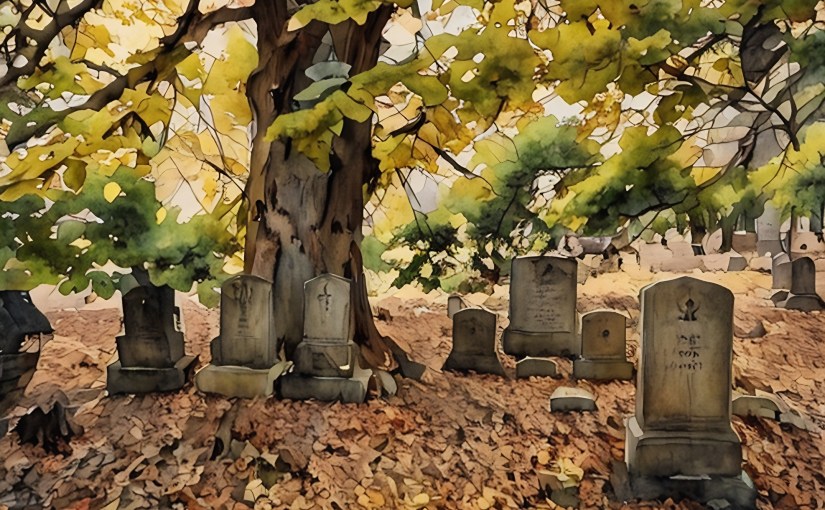
The song takes place over the course of one day in 1879 with Spooner in the bar, the Faded Rose, talking to the bartender, Sally Ann Gray. Spooner is trying to convince her to make this far-fetched trip to California until, finally, she decides to do it.

At the end, they made it to the Pacific Ocean.


A DAY IN THE LIFE OF SPOONER MAGEE
(F. D. Leone, Jr.)

“My Lord, Sally, you’re as pretty as th’ sunrise.”
“And you’re older than my father.”
“C’mon, now, I’s just tryin’ to be nice.”
“Old man, don’t even bother.”
Spooner met each day with good cheer;
He had high hopes for this new mornin’.
First stop: the Faded Rose and his first beer,
And flirtin’ with that sweet, young darlin’.
 
It’s been ten years since Jack passed on;
Time has passed, but hardly changed a thing.
Since then Spoon’s walked his path alone,
Haunted by a California dream.
“Before I die I’d like to see the ocean;
Stick my toe in it, if I can.
Most days, it’s hard to just get myself in motion.
Then you had to rub it in, callin’ me ‘ol’ man’.”
 
“Sally gal, you’re bigger than this place
You’re bigger than even Shreveport.
C’mon, Sal, we’ll stage a prison break;
Make a run for the golden western shore.
Won’t be easy gettin’ there, but I’ll find a way;
The last great adventure of my life.”
“Ah, Spooner, careful now, watch what you say.
Here; this one’s on me.  An’ jus’ be quiet.”

“Me an’ Jack almost went in ’49,
Long before you were ever born.
Frisco’s changed a lot since that time;
I’ll buy you a dress like you’ve never worn.
Did your daddy tell you stories about Black Jack?
Oh, he was a rascal for sure.”
“Spooner, oughten you be headin’ back,
It’s time for me to cash out an’ lock the door.”
 
“Jack had a plan to get rich in th’ Gold Rush
Said we’d make a fortune clerkin’ a store.
We never staked the cash, not nearly enough.
One day, he jus’ didn’t talk about it no more.”
“Spooner, that must’ve been more’n thirty years ago;
Wishin’ won’t bring those days back.”
“I know, Sally girl,  I surely know;
But those were the days for me an’ Jack.”
 
“Sally Ann, what’s holdin’ you here?
Except for you, there’s nothin’ for me anymore.
If we started now we’d be there in half a year;
No one from here’s done nothin’ like this before.”
“Spooner, I just might take you up on th’ offer;
Leavin’s all I think about some days.”
Standin’ in the tide knee-deep in salt water;
Sally said, “Spoon, I can’t believe those waves.”


Related songs in chronological order:
“Ballad of Black Jack Kelley and Spooner Magee”
“Sally Ann”
“A Day in the Life of Spooner Magee”
“L’Maison d’Amour”
“Aftermath”

© 2023 Frank David Leone, Jr./Highway 80 Music (ASCAP). The songs and stories on the Highway 80 Stories website are works of fiction. Names, characters, businesses, places, events, locales, and incidents are either the products of the author’s imagination or used in a fictitious manner. Any resemblance to actual persons, living or dead, or actual events is purely coincidental.

“Aftermath”


LOCATION: San Francisco, California, Monroe, Louisiana
PERIOD: 1886-1954
DRAMATIS PERSONAE: Sam “Spooner” Magee (1826-1886); Sally Ann Gray (1863-1954); Sam “Teaspoon” Magee (1862-1946); Henry Olson Magee (1853-1932).


Sally Ann Gray had been in San Francisco, the madam of a brothel, for the last seven years, when she gets the news that Spooner Magee has died. Spooner and Sally had come out to California in 1879 on a lark, and Sally just stayed. She comes back home to Louisiana for his funeral, and reconnects with Sam “Teaspoon” Magee, Spooner’s youngest son, whom she knew all through her childhood and high school years.

Sally and Teaspoon end up getting married, having six children, and happily living out their lives in this part of Louisiana. Teaspoon never asked about her life in California, and wouldn’t care in any event.


AFTERMATH
(F. D. Leone, Jr.)

I got the news on a Fridy,
Spooner Magee had died.
Been years since I seen him,
I don’ say that wi’ pride.
Spooner’s how I got to Frisco,
It was his hare-brained scheme.
Well, that’s not exactly true,
He just fanned the flames of my own dream.

I never planned on staying,
But I did, seven years.
Nice bein’ back home again;
Tha’ Louisiana drawl in my ears.
Fried chicken, corn, ‘n’ creamed potatoes,
Folks gatherin’ outta the rain.
Teaspoon brought a plate over
Said, “I’m so glad you came.”

“Y’know, y’meant the worl’ to Daddy;
He talked ’bout you all th’ time.
He never quite believed you were ‘Eye-talian,’
But swore that’s why y’shined.”
“Was just 16 when we rode west;
Y’know, I’ve changed a lot since.”
“Y’made it back for the funeral;
“Look’s like Henry’s ready to commence.”

Sam Lee’s been preachin’ for decades,
He’s got sof’ words for grief.
He touched on Spooner’s highlights
Then testified to Spoon’s belief.
That sure was news to me;
On our trip west, th’ whole four months,
Spoon never ceased talkin’,
Didn’t mention God even once.

I felt someone siddle up next t’ me,
Teaspoon; in the near dusk.
I smiled and wiped away his tear;
That’s how it started for us.
We were married 64 years,
Raised six kids together.
Of course, one was named for Spooner;
Th’ spittin’ image, an’ so clever.

I got the news on a Fridy,
Spooner Magee was dead.
Been years since I seen him,
Such was the life I led.
Tea pass’d in ’46: his liver;
He lies next to Spoon; dust t’ dust.
I’m with them, too, by the river,
A cyprus watches over us.

David Leone: guitar, vocal
Tammy Rogers: fiddle

Related songs in chronological order:
“Ballad of Black Jack Kelley and Spooner Magee”
“Sally Ann”
“A Day in the Life of Spooner Magee”
“L’Maison d’Amour”
“Aftermath”

© 2023 Frank David Leone, Jr./Highway 80 Music (ASCAP). The songs and stories on the Highway 80 Stories website are works of fiction. Names, characters, businesses, places, events, locales, and incidents are either the products of the author’s imagination or used in a fictitious manner. Any resemblance to actual persons, living or dead, or actual events is purely coincidental.

“Lamar and Katherine Fall in Love”

After Katherine pulled one of her disappearing acts, Lamar followed and found her in Tuscaloosa.  She’d been partying with a bunch of college kids, living life large. This was 1928, and for a couple of years, this was their life which was typical during the “Jazz Age.”

But since all good things must come to an end, so did this in October 1929, and The Depression.

Kathy and Lamar did what most young people do when trouble finds them: they went home, to Montgomery.  There Lamar went to work at his father’s mill, and Katherine settled into the life as wife and mother.


Location: Tuscaloosa, Montgomery, Alabama
Period: 1928-1931
Dramatis personae: Katherine George (1910); Lamar Hooper (1907-1969)


LAMAR AND KATHERINE FALL IN LOVE
(F. D. Leone, Jr.)

Lamar finally found Katherine;
On a barge, partyin’
Been goin’ for a couple of weeks;
It was nineteen and twenty eight;
Th’ height of the Jazz Age;
They hardly stop’d to eat or sleep.
Ain’ the way it’s spose to happen, but it did;
They fell in love.

Hung ‘roun Tuscaloosa awhile
Livin’ large, goin’ wild;
Drinkin’ too much, makin’ new friends.
Katherine led and Lamar tagged along,
Out every night dusk to dawn;
Burning their candle at both ends.
They were young, just a coupla kids;
When they fell in love.

You don’t choose,
The one who’ll break your heart;
All you can do,
Is play your little part.
Tha’s why they call it fallin’ when it does;
You’re in love.

Right about then the Depression hit,
These two kids hit the skids;
So they went back home to Magomry.
Lamar got a job at his daddy’s mill,
They lived in a little house on a hill;
Settled down and started a family.
Just the way it’s spose to happen, and it did;
They’re in love.
 
Lamar made a little bootleg shine,
But didn’t drink at all this time;
Katherine was famous for her fig preserves.
She called him Pop, he called her Mother;
Had one child after another,
After three Kath still had her curves.
They were young, but no longer kids;
And they were in love.
 
You don’t choose,
The one who’ll break your heart;
All you can do,
Is play your little part.
Tha’s why they call it fallin’ when it does;
You’re in love.

© 2023 Frank David Leone, Jr./Highway 80 Music (ASCAP). The songs and stories on the Highway 80 Stories website are works of fiction. Names, characters, businesses, places, events, locales, and incidents are either the products of the author’s imagination or used in a fictitious manner. Any resemblance to actual persons, living or dead, or actual events is purely coincidental.

“Wanna Go to Jackson?”


LOCATION: Montgomery, Alabama; Jackson, Mississippi.
PERIOD: 1932-1933
DRAMATIS PERSONAE: Lamar Hooper (1907-1969); Katherine George (1910-1994);  Donald Motts (1909); Marjy Littlejohn (1911-1982); twins, Leon & Mary Hooper (1932); Mildred Motts (1934-2014).


Lamar and Katherine had been in Montgomery a little over a year, when Lamar gets a hankering to move. Kath was pregnant at the time, and told him, she’d move with him, but not until this baby was born and they were ready to travel.

When asked, Lamar informs her that their destination was Jackson, Mississippi. When asked why, he says he heard it was nice.

In Jackson the Hoopers meet the Motts and they become great friends, and eventually Leon Hooper marries Mildred Motts, bringing these two families officially together.


WANNA GO TO JACKSON?
(F. D. Leone, Jr.)

“Lemme ask you somthin’, Mama,
Are you happy in Magomry?
What would’ya think if we moved?”
“‘Magomry’s home; move where?”
“Jackson, M’sippy”
“Why there? I’m confused.”
“Someone said it was nice, and I thought,
Things jus’ might improve.”
 
“Well, that’s fine, Lamar,
When were you thinking we’d start?”
“Right now, if you ain’ busy?”
“Lamar, I’m kinda far along;
Cain’ we wait ’til this baby’s born?”
“Why sure, Kath, don’t get in a tizzy;
But as soon as y’all can travel,
I wanna go t’ Jackson, M’sippy.”
 
But it wasn’t just one baby,
In Katherine’s belly’;
It was twins tha’ she was havin’.
She named ’em Leon and Mary,
For her mama and daddy;
All the while, Lamar was packin’.
He put ’em in the car,
They all went down the highway to Jackson.

They rented a clapboard house,
5402 Highland;
An’ met the couple at 5401.
Donald and Marjy Motts,
And their daughter Mildred;
Who, one day, would marry Leon.
Friday they’d get together, an’
Play Moon and 7-Up fo fun.
 
Kath brought her fig preserves,
Some Fritos and Dr. Pepper;
Marjy’d serve pimento cheese on rye.
The guys would drink Jax beer,
Maybe a highball or two;
Sometimes Lamar got a little high.
Then he’d stand at the hearth, and
Sing Jimmie Rodgers all night.
 
Don got Lamar on at the oilfield,
They all became good friends;
Sairdy night they’d go out on Flowood Road.
Hot dogs ‘n’ fruit jar whiskey,
Live music at speakeasies;
They were in hog heaven, an’ it show’d.
The Motts and the Hoopers,
Never moved and together they grew old.

© 2023 Frank David Leone, Jr./Highway 80 Music (ASCAP). The songs and stories on the Highway 80 Stories website are works of fiction. Names, characters, businesses, places, events, locales, and incidents are either the products of the author’s imagination or used in a fictitious manner. Any resemblance to actual persons, living or dead, or actual events is purely coincidental.

“When Vernon Raney Put Otis Odom Down”


LOCATION: Delta, Louisiana; Warren County, Mississippi; Vicksburg.
PERIOD: 1960
DRAMATIS PERSONAE: Molly Motts (1931-2014); Vernon Raney (1910-1997); Otis Odom (1914-1960); Donald Motts (1911-1977); Bessie Ferguson (1914-1966).


Donald Motts (1911-1977) and Bessie Ferguson (1914-1966) married in 1928, and then had a daughter, Molly, in 1931. However by this time Donald had begun an affair with another woman, and ended his marriage to Bessie shortly after Molly was born.

Not long after, Bessie married Otis Odom (1914-1960), a decent enough guy, but one with a nasty streak. Bessie thought he was a good man,. to raise a daughter by another man as his own. And because of this she was prone to accept behavior from Otis that otherwise would be unacceptable. Hence she looked the other way when she had suspicions that Otis paid a little too much attention to Molly as she grew older.

As soon as she was old enough, around the age of 15 or 16, Molly ran away from home in Delta, Louisiana, across the river to Vicksburg, Mississippi. Here she attracted the attention of one of the larger land-owners, Vernon Raney (1910-1997). The Raneys were an old Mississippi family, known primarily for their moonshine, but also as a large farming family.

Vernon loved Molly dearly and when she told him of the abuse she had suffered from Otis Odom, Vernon knew immediately that he would kill Odom, which he did in August, 1960.


WHEN VERNON RANEY PUT OTIS ODUM DOWN
(F. D. Leone, Jr.)

When Vernon learned about,
How Molly had been abused;
He swore to himself what he’d do.
He knew the one who done it,
Though it could not be proved;
He was sure, Molly told the truth.
Was an August afternoon,
Molly and Vern at the river;
When she began to talk.
Vernon did not interrupt her,
Just let Molly surrender
The whole sordid story as they walked.

Then she just stopped talkin’,
They stood at the shore;
The still air held her last words.
They turned for home and supper,
The scratch of knife and fork;
Was the only sound that they heard.
Vernon asked around Vicksburg,
Got the dope on Otis Odom;
He’d choose the right time and place.
Make it look like self defense,
Wouldn’t take much to goad him;
Knowin’ Otis, he’d wanna save face.

Vernon cleaned his .45,
Said, “I’ll be gone an hour;”
Set his jaw, an’ walked out to his truck.
Molly finished washin’ dishes,
It was full dark now;
Sat down wi’ th’ corn she’d set aside to husk.
Vern caught up with Odom,
At a dive bar in Vicksburg;
Vern smiled at his good luck.
“You’re Otis Odom, ain’t ya?”
“Yep, since my birth;”
“I’ve got somp’n for ya in my truck.”

Vern followed Otis out,
Grabbed a hay hook on some lumber;
Split th’ bastard’s skull in two.
Pulled Odom to his truck,
Chained him to the bumper;
Dragged th’ body to the bayou.
Tossed the hay hook out th’ windah,
Put his truck in reverse;
Then jus’ sat there, the engine runnin’.
After two weeks of lookin’,
Vern talked t’ th’ Shurf;
“This August heat sure is somp’n’.”

© 2023 Frank David Leone, Jr./Highway 80 Music (ASCAP). The songs and stories on the Highway 80 Stories website are works of fiction. Names, characters, businesses, places, events, locales, and incidents are either the products of the author’s imagination or used in a fictitious manner. Any resemblance to actual persons, living or dead, or actual events is purely coincidental.

“Sally Ann”


LOCATION: Rural Northwestern Louisiana
PERIOD: 1870s-1880s
DRAMATIS PERSONAE: Sally Ann Gray (1863-1954); Cristina “Cris” Fulco (1841-1922); Alfonso “Al” Graziano (Gray) (1832-1918); Samuel “Spooner” Magee (1826-1982).


You wouldn’t know it from her name, but Sally Ann Gray was full-bloodied Sicilian. Her father’s family had anglicized their Italian name of Graziano to Gray upon first emigrating to England in the 17th century, which was quite common. Her mother and father entered America at the port of New Orleans in 1859 shortly after they were married in Cefalu, a town on the northern coast of Sicily.

Sally inherited the immigrant dream of carving out a better life and dreamed of escaping the suffocating small town in northwestern Louisiana where the family ended up, and going west. A common ambition, but in her case, one supplied to her by an older friend of her father’s who filled her head with fancy images of San Francisco.


SALLY ANN
(F. D. Leone, Jr.)

Sally Ann had dreams she never talked about;
Dreams that would take her far away.
Livin’ in the shadow, of what she could only imagine.
She had grown accustomed to doing without;
Sleepwalkin’, in a kind of daze.
Still, she believed in magic that could suddenly happen.

It kept her yearnin’ heart strong;
It kept her just barely keepin’ on,
A tiny voice whispers, “believe, and it’s yours.”

Sally saw it in her mother’s immigrant eyes;
Who stood on a shore in Sicily,
Starin’ at th’ ocean thirstin’ for a second start.
Askin’ only for a chance at a better life;
Tradin’ all she knew for mystery;
Riskin’ all on somethin’ that seemed so far.

Goin’ where dreamers belong;
Hopin’ for a beckonin’ song;
A tiny voice whispers, “this can be yours.”

Sally Ann worked in a bar, th’ Faded Rose;
She would leap at th’ first chance to escape,
Th’ same old, same old, ev’ry night and mornin’.
One evenin’ as she was just about to close,
Spooner talked about his dream place;
That bar, that night, Sally saw California.

Where she was sure she could belong;
Where she’d hear a welcomin’ song,
A tiny voice whispers, “believe, and it’s yours.”

But Spoon was old and might not ever follow through,
Sally Ann would not be denied;
Some how, some way, she’d end up west.
Even if it all went bust, her heart had been tattoo’d;
Then Spooner said, “Sal, let’s go; let’s ride.”
Th’ best day of her life was th’ next day; they left.

Findin’ where she could belong;
It was there, drawin’ her on,
A tiny voice whispers, “this will be yours.”
A burstin’ heart beatin’ strong;
Finally to start, movin’ on.
Right then, right there, God’s green earth was hers.

David Leone: guitar, vocal
Tammy Rogers: fiddle

Related songs in chronological order:
“Ballad of Black Jack Kelley and Spooner Magee”
“Sally Ann”
“A Day in the Life of Spooner Magee”
“L’Maison d’Amour”
“Aftermath”

© 2023 Frank David Leone, Jr./Highway 80 Music (ASCAP). The songs and stories on the Highway 80 Stories website are works of fiction. Names, characters, businesses, places, events, locales, and incidents are either the products of the author’s imagination or used in a fictitious manner. Any resemblance to actual persons, living or dead, or actual events is purely coincidental.

“Copper Pot Still”

Lonsom Raney (1828-1923) learned how to make whiskey from his father Andrew Rainey (1799-1852), who in turn had learned from his father Macgregor “Mac” Raney (1765-1810). Family lore holds that they all used the same copper still that had been built by some even earlier Raney patriarch. Supposedly, this very copper pot had come to America with Maclen Rainey (1713-1765) in 1741 when he was 28 years of age. At least that was the story Lonsom had always swore to.

But there’s a bit more to this story, since Maclen and that copper pot were separated at sea when their ship was lost in a storm. Maclen hung on to a steamer trunk for three days until he and the trunk found land, as Lonsom told the story, it was Haiti, but who really knows. Lonsom never let the true facts hobble a good story.Because whiskey making was deep in the Raney blood, Maclen made sure to find a replacement for the lost ancestral still before he acquired passage on a freighter bound for Virginia. Which he did.
Now Vernon heard the truth from his grandfather Royal Raney (1868-1939) while they were in the woods cooking up another batch of their moonshine one crisp cool October morning.
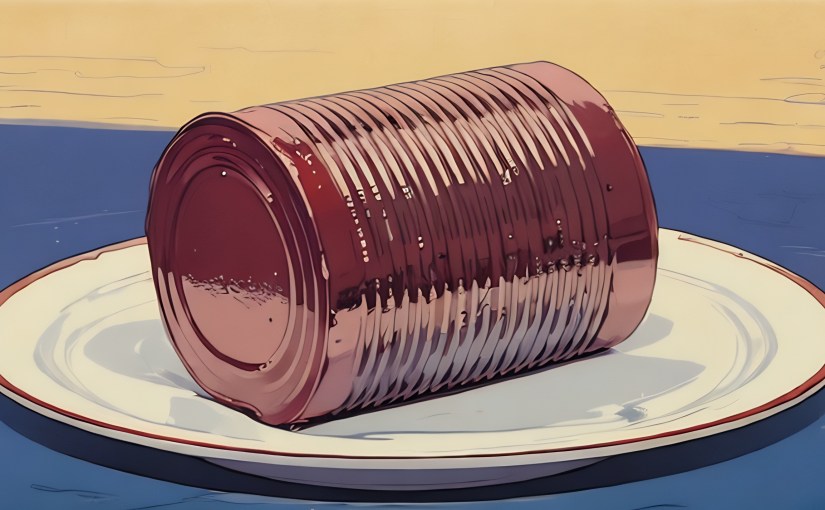
But by now the replacement still was 179 years old itself, and had made hundreds of barrels of clear corn whiskey, and might as well have been the one from Scotland. For all Vernon knew, that one probably ended up floating to the same shore his 7th great-grandfather had, and some islander was making whiskey in it to this day, and spinning some colorful yarn about how he came to own it.

LOCATION: Georgia; Mississippi
PERIOD: 1741-1920
DRAMATIS PERSONAE: Maclen Rainey (1713-1765); Lonsom Raney (1828-1923); Royal Raney (1868-1939); Vernon Raney (1911-1997).


Copper Pot Still
(F. D. Leone, Jr.)

The rosy dawn crawls above the tree line
As Vernon slowly comes awake
Vernon! Get a move on;
Tend to the fire, for heaven sake.
Their second week at the still site,
Took em some days to find the spot.
Hidden near clean cold water,
But now the still was finally up.

Fast minutes of hard work,
Then slow hours of doing nothing;
Listenin’ to the birdsong and the wind,
Layin’ under live oak trees; napping.
Samplin’ the brew from time to time,
Tossin’ the heads and tails.
That still’s pretty old, ain’t it, grampa?
Royal took a deep breath and then exhaled.

That still; now there’s a story;
Vernon, I’m gonna tell you the truth,
But don’t you go an’ tell nobody,
Cept th’ son you deed the recipe to.
One of your ancient ancestors,
Brought that still here in 1741;
I was told it came all th’ way from Scotland,
But that ain’t exactly where it come from.

Black pools of water stood by the still;
A steady rain pierced the soft moonlight.
Damn this rain, Royal hissed,
I’m too old for this whiskey life.
Some check the proof with a gadget,
But I always just shook the jar;
When the beads are big an’ pop an’ dance on the surface;
A trained eye will git it right on the mark.

A copper pot was all Maclen Rainey took
Aboard a tall ship bound for this land.
Overnight a typhoon blew up;
Ship and still were never seen again.
Mac held onto a steamer trunk for three days,
Until ashore he and it were tossed.
The first thing he did was find a tradesman,
Who could build a still for the one he lost.

My grandpa, Lonsom, swore it was Haiti;
A Freanchman livin’ at the ship yard,
Who turned the copper sheets for this still;
Each Raney son would leave his mark.
The only thing to consider is,
A Rainey got here with a copper pot;
And began runnin’ untaxed whiskey,
Nine generations on, we still ain’t stopped.

So, pap, is it all a lie?
Vern, what’s true? What’s real?
The importance of family lore,
Aint if it’s fact, but how it makes us feel.
What endows a thing with meaning,
Is a history that’s been transformed;
If this pot is in fact not the first one,
It’s history, too, was lost in a storm.

Near dawn they heard dogs below;
Down the mountain distant dogbark.
Then fadin’ off when they coursed out,
Along some rocky draw in the dark.
Later they brought the truck around to the still site,
Loaded jars and pot into the bed;
Vernon was silent as they worked,
Thinkin’ bout all Royal Raney’d said.

© 2023 Frank David Leone, Jr./Highway 80 Music (ASCAP). The songs and stories on the Highway 80 Stories website are works of fiction. Names, characters, businesses, places, events, locales, and incidents are either the products of the author’s imagination or used in a fictitious manner. Any resemblance to actual persons, living or dead, or actual events is purely coincidental.

“Mama’s Thanksgiving”


LOCATION: Shreveport, Louisiana.
PERIOD: Thanksgiving, 1950s-1984.
DRAMATIS PERSONAE: Lue Ellen Knox (1900-1979); Benjamin MacCrae (1896-1969); John Henry MacCrae (1937); Alice MacCrae (1931); Benjamin John “B.J.” MacCrae (1967); Margaret Casey MacCrae (1970); Stephen Baker MacCrae (1972); Ann Ellen Martin (1963); Sarah Meredith Martin (1965); Jason MacCrae Martin (1970).


Five years after the death of their mother her children, John Henry MacCrae (1937) and Alice MacCrae Martin (1931), are talking about Thanksgiving, 1984.  They begin to reminisce about their parents and life growing up, and plan on making a meal just like the one their mother used to make when they were all at home.

This conversation is the first in which they confront the reality of their mother’s reclusive behavior after their father’s death from a sudden heart attack in 1969, her prescription pain medication addiction, and finally taking her own life in 1979.


MAMA’S THANKSGIVING
(F. D. Leone, Jr.)

This year let’s make Thanksgiving,
Like Mama used to do:
Turkey and cornbread dressing,
And rice dressing too,
English peas with pearl onions,
Spiced peaches and candied yams,
Cranberry sauce on a plate,
With th’ outline of the can.
 
I loved Shreveport in November,
Clay pigeons at The Place with Daddy;
You would ride Big Red,
I’d do my best on Lady.
I remember playing catch with him,
In the soft glow of sunset;
The only sound you could hear,
Was th’ pop of th’ ball in’ th’ mitt.
 
After Daddy in died,
Mama wasn’t the same no more;
She complained of a back pain,
That she never had before.
She got some pills from Dr. Thomas,
And took to her bed;
She went into a haze and hardly came out, 
No matter what we said.

But she loved her grandkids,
For them, she really tried;
They’re the only ones who could
Touch her right mind.
But even they could tell,
Somethin’ wasn’t right with gramaw;
They would get upset those times,
When she didn’t know ’em at all.
 
I spoke to mama that week,
But didn’t get a clue;
Where she was headin’,
Or what she would do.
Over those last ten years,
She lived in her memories.
Was in th’ kitchen when the phone rang;
It was Aunt Emmalee.
 
This year let’s make Thanksgiving,
Like Mama used to do:
Turkey and cornbread dressing,
And rice dressing too.
English peas with pearl onions,
Spiced peaches and candied yams,
Cranberry sauce on a plate,
With th’ outline of the can.

© 2023 Frank David Leone, Jr./Highway 80 Music (ASCAP). The songs and stories on the Highway 80 Stories website are works of fiction. Names, characters, businesses, places, events, locales, and incidents are either the products of the author’s imagination or used in a fictitious manner. Any resemblance to actual persons, living or dead, or actual events is purely coincidental.

“Three Loves of Lue Ellen Knox”


LOCATION: Texarkana, Arkansas; Shreveport, Louisiana.
PERIOD
: 1919-1979
DRAMATIS PERSONAE: Lue Ellen Knox (1900-1979); Johnny “Jack” Stone (1899-1973); Richard Wesley Bryant (1885-1930); Benjamin MacCrae (1896-1969).


Lue Ellen Knox, Texarkana native, met Johnny “Jack” Stone in 1919 at a dance given for the soldiers returning from having served in World War I. She and Johnny had a night of romance and continued their affair for a few weeks. But it ultimately fizzled out, leaving Johnny feeling rejected and disappointed.

Almost a decade later, December of 1928, Lue Ellen started dating Richard Wesley Bryant, fifteen years her senior. Wesley was the oldest son of a wealthy Shreveport family, in the oil and gas business, and he was very wealthy. He had previously been married but his wife had died several years prior to their meeting. Wesley wooed Lue Ellen with expensive gifts, jewelry, furs,, haute couture, and was on the verge of proposing to Lue Ellen when the stock market crashed in October, 1929, leaving Wesley near bankruptcy. Shortly after breaking off their engagement, Wesley lept to his death, unable to face the shame of being broke and consequent loss of social standing.

Again, almost a decade later, spring of 1938, Lue Ellen came into contact with a navy man just back from the sea, retired, Benjamin MacCrae. He was a romantic and charmed her with a single red rose each day. They fell truly in love and their marriage lasted for thirty years before Ben suffered a fatal heart attack in 1969.

Lue Ellen lived on, alone, for another ten years but finally succumbed to her depression, and loneliness, and took her own life, at age 79, holding a photograph of Ben and with a bundle of dried roses by her side having lived a full life and loved three men.


THREE LOVES OF LUE ELLEN KNOX
(F.D. Leone, Jr.)

A bundle of dried roses by her side,
The night Lue Ellen Knox died.
Once, she was a happy bride;
Twice, happiness was stolen from her.
In her life, Lue Ellen loved three men:
Johnny, Wesley, and Ben.
After tonight she won’t love again;
That part of her story is over.

Johnny was just back from The Great War,
When he met Lue at a “coming home” dance.
Lips brush a cheek, fingertips touch an arm;
Summer kisses under rice paper lamps.
Johnny needed someone, he was haunted,
He thought Lue was who he wanted,
But Johnny ended up disappointed;
Their love flared hot then it was over.

Wesley was wealthy and older;
Since his wife died his heart had grown colder.
Lue Ellen made the embers smoulder;
Wesley felt like a new man.
He used his money to impress:
Cartier bracelet, Chanel evening dress.
On one knee he asked Lue Ellen to say yes;
The market crashed; Wesley was ruined.

Ben sent Lulu a rose every day,
Home from the sea he captured her heart.
A small wedding was planned for May;
Honeymoon in the Ozarks.
Ben loved Lulu from the day they met,
For thirty years they shared the same bed.
Then suddenly her Ben was dead;
Their time together seemed cut short.

A bundle of dried roses by her side,
It’s been ten years since Ben died.
She remembered her three loves and cried;
It had all gone by so fast.
With Ben’s photograph in her hand,
Whiskey and pills on the bedstand;
The last few months Lue Ellen planned,
To say goodbye to it all at last.
 
Ben’s death, the last cruel twist of fate;
Third time around Lue Ellen found true love.
The other two were not mistakes;
Each one perfect, for what it was.
Whiskey spilled as her head collapsed;
A few pills scattered as her hand relaxed.
The final curtain closed on her third act;
Lulu is with Ben forever after.

© 2023 Frank David Leone, Jr./Highway 80 Music (ASCAP). The songs and stories on the Highway 80 Stories website are works of fiction. Names, characters, businesses, places, events, locales, and incidents are either the products of the author’s imagination or used in a fictitious manner. Any resemblance to actual persons, living or dead, or actual events is purely coincidental.