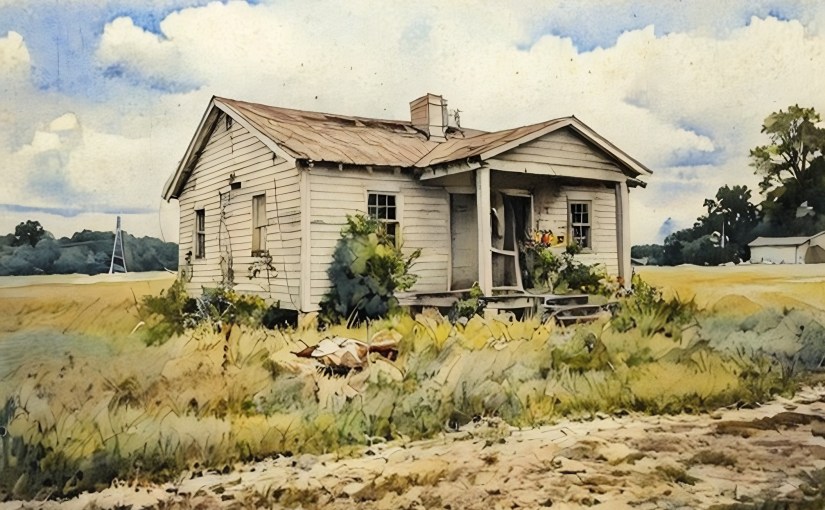
“Ransom Raney”


LOCATION: North Georgia
PERIOD: 1848-1906
DRAMATIS PERSONAE: Ransom Raney (1848-1905)


Ransom Raney (1848-1905) was the oldest son born to Lonsom Raney (1828-1923) and was the first child born to the Raney family on their new mountain home in North Georgia after moving from southwestern North Carolina. Originally from Scotland the Raneys were one of many families who were encouraged to move from southern Scotland to northern Ireland, the Ulster region.

These people have been called Scots-Irish and made up a significant number of the immigrants to America in the 17th and 18th centuries. They brought with them much of their way of life, including distilling whiskey in copper stills, with the idea that this was their right, one for which they would not tolerate any infringement from government.

Scots-Irish tended to be impetuous and hotheaded, having been marginalized back in Ulster, they defied any easy definition. In fact, they bristled at others’ labels for them—”Irish,” “Irish Presbyterians,” “Northern Irish,” or even “Wild Irish.”  Already twice transplanted, they had acquired a migratory habit. Once acquired, such habits are liable to persist; when the constraints of government caught up with them, these wayfarers often chose to move on.

This trait did not evaporate once they were in America and often they would keep moving west, keeping just ahead of civilization and legal constraints on their way of life.

This song is about three things: 1) the resilient nature of the Scots-Irish of the Appalachian mountains, 2) making whiskey and in general living off the land, and 3) fighting to preserve their way of life, not as part of a larger cause but for fiercely personal reasons.


RANSOM RANEY
(F. D. Leone, Jr.)

This is the tale of a mountain man
Lot of grit, lot of sand
Ransom Raney’s his name
From Scotland his people came

He was Lonsom Raney’s oldest son
1848 he was born
Stood at his daddy’s right hand
Taught to be a mountain man

Keep your mouth shut, your head down
Live off what comes from the ground
Make your shine, dig ginseng root
Live your own truth

When he was fifteen he went to war
Butternut was his uniform
Fought for what he could understand
Get the blue basterds off his land

Chickamauga; Second Vicksburg
Mansfield was the call he heard
But Ransom slipped away
From the fighting of the blue and grey

His year was up so he went back home
Grateful to get through it whole
In the winter of ’64
Ransom Raney was done with war

Back at the farm what he found
It had been burned to the ground
His daddy rebuilt the barn
While the ground was still warm

Lonsom had buried his copper still
Set it back up on same hill
The first batch after the war
Was his best he swore

The Raneys are a real hard bunch
Won’t be stopped, not by much
A war ain’t nearly enough
The Raneys are a hard bunch

Ransom Raney loved one wife
She gave his seven children life
He taught his two eldest sons
To do what their grandpa done

He lived long enough to see
A brand new century
He was satisfied
In 1905 he died

Ransom Raney stood alone
But he could be counted on
When you needed a friend
Against flatlanders or gov’mint men

© 2019 Frank David Leone, Jr./Highway 80 Music (ASCAP). The songs and stories on the Highway 80 Stories website are works of fiction. Names, characters, businesses, places, events, locales, and incidents are either the products of the author’s imagination or used in a fictitious manner. Any resemblance to actual persons, living or dead, or actual events is purely coincidental.
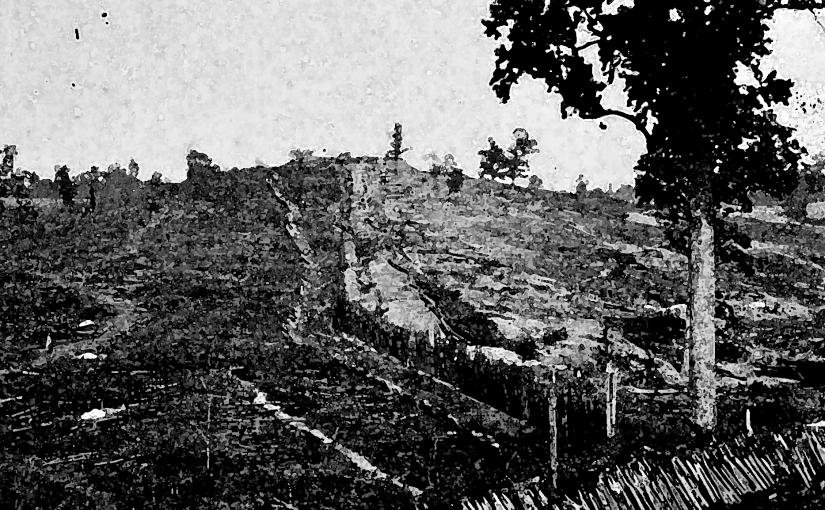
“Lying In Bed”


LOCATION: North Georgia
PERIOD: 1868-1874
DRAMATIS PERSONAE: Lonsom Raney (1828-1923); Ransom Raney (1847-1929) and Isaac “Ike” Raney (1848-1874); Eleanor “Ella” McLemore (1848-1874); Charles McLemore (1824-1904)


Lonsom Raney (1828-1923) had two sons, Ransom (1847-1929) and Isaac “Ike” (1848-1874).  Ransom, as the oldest, was heir to the copper pot his grandfather had brought from Scotland and the Raney whiskey recipe and Ike was called to preach.  Ransom was hard, a mountain man who spent his time in the woods making whisky and hunting, trapping, and fishing, and a silent brooding hard man.  Ike was his opposite and idealistic.

The next farm over was the McLemore place.  Charles McLemore (1824-1904) had a daughter, Eleanor “Ella” McLemore (1848-1874), who was a sweet and beautiful young girl.  Charles had often thought that of all the Raney boys, Ike was the best husband material for his daughter.  For one thing, Ike was not involved in the Raney family moonshine business, and he was religious as well.

So Charlie McLemore made sure to find ways to get his daughter and Ike Raney together. And Ella and Ike Raney began to court, and eventually married in 1869.

They were happy for a while, Charlie built them a nice cabin, and a church for Ike to preach in. But Ella found herself fascinated by Ike’s brother Ransom, who was very different from her husband, who at times she tought of as weak.

Over time, this fascination matured into a romantic infatuation.  Ransom Raney was a man, and could see that Ella was ripe for the picking, and without any thought of his brother proceeded to lure her into the sin of adultery.

Ike was simple, honest, but no fool.  He could tell that someething wasn’t right at his home, between himself and his wife.  Ella would spend more and more time “taking walks” and one day Ike followed her.

The rest is told in the song.


LYING IN BED
(F. D. Leone, Jr.)

After this winter it’s nice to see some green
The season could be turning to spring
But there’s something I can’t shake from my head
It’s a feeling she been lying in bed

When I met her she had an innocent smile
In the ways of the world she was but a child
But she grew up fast and it all went to her head
Now I’m feeling she been lying in bed

Lying in bed
Lying in bed
My soul is filled with a cold dread
Can’t put my finger on it
Ain’t nothing she said
Just a feeling she been lying in bed

I saw her getting close to my brother Ransom
She always said she thought he was handsome
It wasn’t something that I misread
It’s a feeling she been lying in bed

I ain’t real sure what I will do
I sure don’t like being played for a fool
Then an idea came busting in my head
I told the Sheriff I left her lying in bed

Lying in bed
Lying in bed
My soul is filled with a cold dread
Can’t put my finger on it
Ain’t nothing she said
Just a feeling she been lying in bed

They’re gonna hang me a week from today
I won’t have any last words to say
But when we meet in hell and we’re both dead
I’ll tell her we’re here ’cause she was lying in bed

© 2022 Frank David Leone, Jr./Highway 80 Music (ASCAP). The songs and stories on the Highway 80 Stories website are works of fiction. Names, characters, businesses, places, events, locales, and incidents are either the products of the author’s imagination or used in a fictitious manner. Any resemblance to actual persons, living or dead, or actual events is purely coincidental.
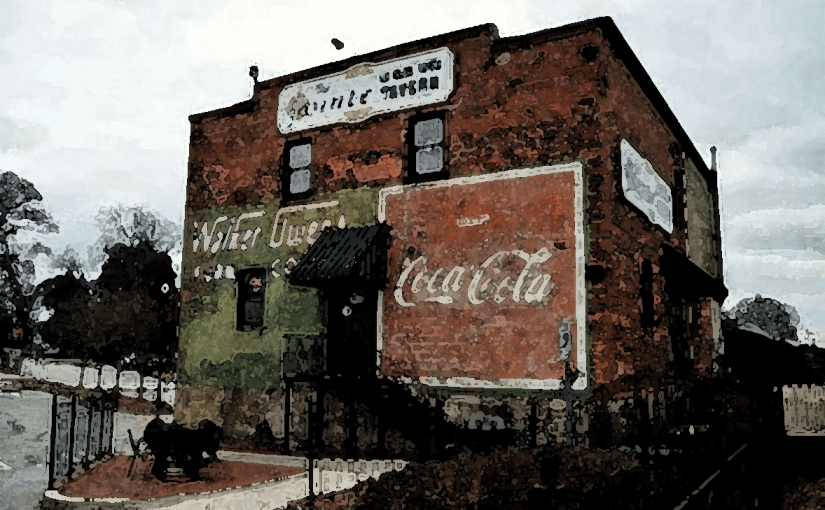
“Lonsom Raney 1828”


LOCATION: North Georgia
PERIOD: 1828-1923
DRAMATIS PERSONAE: Lonsom Raney (1828-1923); Ransom Raney (1847-1929); Royal Raney (1868-1939);Virgil Raney (1885); Vernon Raney (1911-1993)


Lonsom Raney is the son of Scots-Irish immigrants to this country in the early 18th century. Originally the family spelled their name “Rainey” but Lonsom chose to drop the “i” and spell his name “Raney”.

In Colonial America, a whiskey-making tradition came ready-made with the arrival of Scots-Irish settlers from Northern Ireland’s Ulster region, beginning in the 1700s. They brought with them their taste for the drink and an understanding of how to make it. Lonsom Raney’s grandfather had always made his own whisky back in Scotland, and brought his still with him wherever he moved: first to Ireland then across the ocean to Virginia.

When Lonsom was a child, moonshine doubled as a cough suppressant and sore-throat treatment. To get little ones to tolerate whiskey, adults added something special to the cup: “It was pretty common with everybody in the mountains to put the old-fashioned peppermint-stick candy in it,” says Vernon Raney, Lonsom’s great-great-grandson.

Lonsom claimed to drink corn whiskey nearly every day of his life, often telling anyone in his vicinity, that moonshine was the only thing that kept him alive. He started making it while still a child. “I went to helpin’ my daddy make likker when I wuddn’t but nine years old,” he told Vernon. “My daddy just let me go to the still with him and I watched him and learnt it myself.”

Over the years, the law mostly left the Raneys alone. But Lonsom wasn’t always lucky. On at least four occasions, he served time in jail and in prison for violating liquor laws and evading taxes. But as it turned out, being locked up wasn’t bad for business. “That’s a good place to get customers,” Vernon said of his great-great-granddad’s time behind bars. “He would just take orders and fill them when he got out.”

Lonsom Raney died in 1923 at the age of 95. He had four descendants who carried on the Raney whisky tradition: Ransom (son), Royal (grandson), Virgil (great-grandson) and Vernon (great-great-grandson). Vernon would marry Molly Motts, who would later transition their bootlegging business into a drug enterprise (see songs “’57 Fleetwood to Memphis” and “Molly on the Mountain“).


LONSOM RANEY 1828
(F. D. Leone, Jr.)

1828 Lonsom Raney was born
Had a copper still an’ made clear corn
His great-granddad brought it from Scotland
Hid it in the hills on this Georgia mountain

Help’d his daddy make likker, Lonsom told
When he wuddn’t but nine years old
They’d load the wagon right at the still
Run that shine all through those hills

“Let me be, my sons and me
I’m just doing what I can
Let me be, my boys ‘n’ me
I’m just livin’ off the land”

He made it himself when his daddy died
Drank corn whiskey every day of his life
Claimed moonshine was what kept him alive
Lonsom Raney lived to ninety-five

“Let me be, my sons and me
I’m just doing what I can
Let me be, my boys ‘n’ me
I’m just livin’ off the land”

Five generations used that still
From Ransom to Royal, then Virgil
Lonsom died in nineteen twenty-three
Now it’s Vernon’s time with the recipe

“Let me be, my sons and me
I’m just doing what I can
Let me be, th’ boys ‘n’ me
I’m just livin’ off the land
I’m just doing what I can
Lemme be free Mr. Gov’mint man”

© 2017 Frank David Leone, Jr./Highway 80 Music (ASCAP). The songs and stories on the Highway 80 Stories website are works of fiction. Names, characters, businesses, places, events, locales, and incidents are either the products of the author’s imagination or used in a fictitious manner. Any resemblance to actual persons, living or dead, or actual events is purely coincidental.

“Feel Like Dirt”


LOCATION: Midland, Texas; Conyers, Georgia
PERIOD: 1981
DRAMATIS PERSONAE: Ruby Jones Robison (1955) ; Darrel Haynes (1951)


Ruby Jones Robison (1955) is Pearl Robison’s aunt, her father’s sister. Ruby met Darrel Haynes (1951) at Texas Tech in Lubbock, TX, and they were quickly married settling into a house in Midland in 1977 where Darrel had gotten a job at Baker Oil right out of college.

They were happy for a few years, but when they lost their first child, a girl, it broke the marriage up. Ruby was 32 in 1981 when she decided to leave Darrell and go back to Conyers, Georgia, her hometown.


FEEL LIKE DIRT
(F. D. Leone, Jr.)

She got on the Greyhound with her suitcase
And her little patent leather bag
Had two Cokes, a package of peanuts,
And a fifth of Ancient Age
 
She nursed that bottle all across Texas,
But she was sober when she crossed the Georgia line, in fact
Lord, she cried those first few weeks
But she didn’t look back; couldn’t look back
 
It was either kill the man or leave
Killin’ was more trouble than he was worth
Gettin’ on that bus was a relief
First time in a long time she didn’t feel like dirt
 
She left everything in the house
And nothing of herself behind
Dropped her keys on the kitchen table
Along with the reason why
 
It was a matchbook she’d found in his jeans
There was a heart with a phone number inside
All those loads of laundry
The dreams she compromised
 
It was either kill the man or leave
Killin’ was more trouble than he was worth
Gettin’ on that bus was a relief
First time in a long time she didn’t feel like dirt
 
She got on the Greyhound with her suitcase
And her little patent leather bag
Had two Cokes, a package of peanuts,
And a fifth of Ancient Age

© 2018 Frank David Leone, Jr./Highway 80 Music (ASCAP). The songs and stories on the Highway 80 Stories website are works of fiction. Names, characters, businesses, places, events, locales, and incidents are either the products of the author’s imagination or used in a fictitious manner. Any resemblance to actual persons, living or dead, or actual events is purely coincidental.

“A River Runnin’ Wild”


LOCATION: North Georgia mountains
PERIOD: Early 1933
DRAMATIS PERSONAE: Clara Sprague Robison (1911-1993); Johnny Campbell (1905-1944)


This story takes place in the north Georgia mountains, early 1933.  Clara Sprague Robison (1911-1993) sees her future husband, Johnny Campbell (1905-1944), at church one Sunday.  Clara had met Johnny before, but only briefly, and she knew he lived off the mountain. The fact that he came to her church, as opposed to the one he regularly attended, was significant to her, letting her know that he made the trip specifically to see her.

Clara is the great-grandaunt of Pearl Robison. Clara and Johnny would have three children, Marcus, Nora, and Emily, before Johnny is killed in WWII.


A RIVER RUNNIN’ WILD
(F. D. Leone, Jr.)

Johnny came to Clara’s church that Sunday,
Him on the mountain was a surprise
She’d have to walk right past him
Lord she thought she just might die

She seen the look in his eye
Like there was no one, just them two
Something rose up in her heart
Like a river runnin’ wild busting loose

Johnny touched his new wool cap
As Clara hurried past him up the steps
All through the preachin’ she felt his eyes
On the back of her neck

She seen the look in his eye
Like there was no one, just them two
Something rose up in her heart
Like a river runnin’ wild busting loose

Soon as the service was over
Clara felt her face burnin’ red
Johnny took her hand, they went walkin’
She couldn’t tell you a word of what they said

She seen the look in his eye
Like there was no one, just them two
Something rose up in her heart
Like a river runnin’ wild busting loose

© 2018 Frank David Leone, Jr./Highway 80 Music (ASCAP). The songs and stories on the Highway 80 Stories website are works of fiction. Names, characters, businesses, places, events, locales, and incidents are either the products of the author’s imagination or used in a fictitious manner. Any resemblance to actual persons, living or dead, or actual events is purely coincidental.

“The Black Belt”


LOCATION: Marengo County, Alabama
PERIOD: 1965
DRAMATIS PERSONAE: Billy Joe Sparks (1930-1999); Mason Sparks (1899-1956); Mary Hooper (1932); Archie Lee Sparks (1815-1887); Harold Lamont Sparks (1842-1901); Mason Sparks (1899-1956)


Billy Joe Sparks (1930-1999) was thirty-five when this song is set.  His family has been share-cropping the same land for five generations going back to his G-G-Grandfather, Archie Lee Sparks (1815-1887).  This land was rich, dark, and provided a decent living for all those generations of the Spaks family.

So, during the fifties and sixties when the Civil Rights Movement began to fill the newspapers and finally reaching Marengo County, Alabama, certain resentments appeared in Billy Joe’s mind.

Billy Joe’s G-Grandfather, Harold Lamont Sparks (1842-1901), fought in the Civil war, and was among the first members of the Ku Klux Klan, ridding along  with Nathan Bedfor Forrest – never surrendering to the Yankees. And his father Mason Sparks (1899-1956) was killed in a KKK raid in 1956, and Billy Joe absorbed all of this history, although he did not think of himself as a racist.


THE BLACK BELT
(F. D. Leone, Jr.)

The Black Belt is known for the richest dirt
But it’s drenched in a history of hurt
Cotton is king and defines life round here
Row after row under the gun of an overseer
The Black Belt runs across this whole state
The Alabama River carries tons of freight
Down to Mobile and the markets cross the seas
The Black Belt reaches 360 degrees

The Black Belt got its name from the color of the soil
But also by the color of the skin of those who toil
Lincoln freed the slaves in 1863
But a hundred years later looks ’bout the same to me

I’m white and poor as they come
I ain’t got nothin’ but I ain’t dumb
I know that just by being white I’ve have more
Than what a better black man can ever hope for

The Black Belt got its name from the color of the soil
But also by the color of the skin of those who toil
Lincoln freed the slaves in1863
But a hundred years later looks about the same to me
A hundred years later looks about the same to me

© 2022 Frank David Leone, Jr./Highway 80 Music (ASCAP). The songs and stories on the Highway 80 Stories website are works of fiction. Names, characters, businesses, places, events, locales, and incidents are either the products of the author’s imagination or used in a fictitious manner. Any resemblance to actual persons, living or dead, or actual events is purely coincidental.
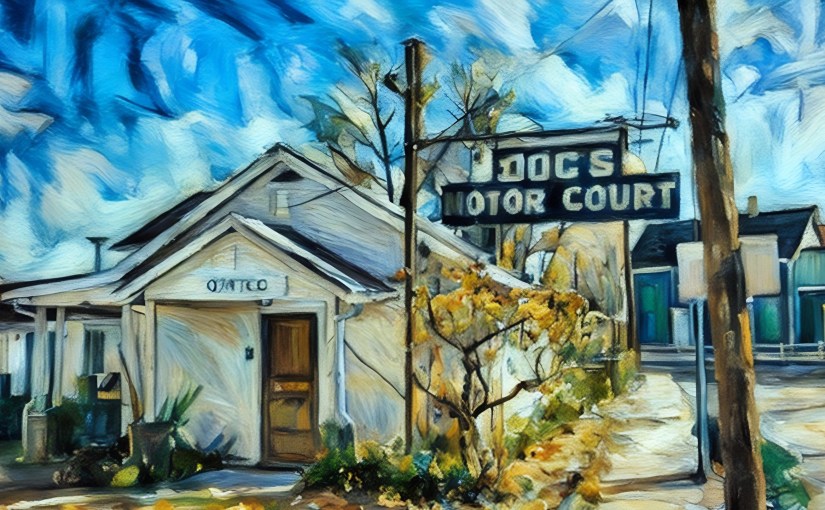
“Magomry”


LOCATION: Montgomery County, Alabama, along US 80
PERIOD: 1923
DRAMATIS PERSONAE: Maclin Hooper (1877-1955), Lamar Hooper (1907-1969)


Mac Hooper was a tenant farmer in Montgomery County, Alabama, growing cotton, corn, and sorghum. He depended upon his son, Lamar, to help with the farm work, but Lamar hated farm work and couldn’t wait to take off for the nearest city, Montgomery which was about 50 miles down Highway 80 East.

Lamar Hooper was Levi Hooper’s grandfather.


MAGOMERY
(F. D. Leone, Jr.)

I been dreamin’ about Magomry
This stinkin’ farm is his, and he can have it
My hands are calloused, and ugly
I want my own life, that’s all I’m askin’
I’m sixteen and I made a choice
It’s branded on my heart, and in my soul
I’ve had my fill of my father’s voice
There’s a fire in me, I can’t control
 
Magomry is just down the road 
Where I wanna be, where I need to go 
Gonna get out from under my old man
Magomry is the answer to who I am
 
I guess my dad once had dreams
Somewhere along the way he give up on them
Now he looks around for someone to blame
And I sure don’t want to end up like him
In Magomry the first thing I’ll do
I take a long walk down those wide sunny streets
I’m sure in a week or two
Get me a good job and it’ll be sweet
 
Magomry is just down the road 
Where I wanna be, where I need to go 
Gonna get out from under my old man
Magomry is the answer to who I am
Gonna get out while I still can
Magomry is the answer to who I am
 
My father left all his dreams behind
He’s doing his best to kill mine too
When I see that city limit sign
My dreams will start, coming true

© 2022 Frank David Leone, Jr./Highway 80 Music (ASCAP). The songs and stories on the Highway 80 Stories website are works of fiction. Names, characters, businesses, places, events, locales, and incidents are either the products of the author’s imagination or used in a fictitious manner. Any resemblance to actual persons, living or dead, or actual events is purely coincidental.

“Tuscaloosa”


LOCATION: Montgomery County, Alabama; Tuscaloosa.
PERIOD: 1928-1931
DRAMATIS PERSONAE: Lamar Hooper (1907-1969); Katherine George (1910-1994)


Lamar Hooper grew up on a farm in Montgomery County Alabama, but was a restless teenager whop left home at 15 and went to the “big city” of Montgomery.  After a few years he met a young lady, Katherine George, and they began dating. But Katherine was also restless, and she would often take off for parts unknown.

This song is about one of her escapades in Tuscaloosa, where life was a bit more exciting, what with the college there and plenty of young folk, who were living the life in the Jazz Age.

Lamar would dutifully trail after Katherine.

Lamar and Katherine hung around Tuscaloosa, where their romance blossomed and they fell deeply in love.  Eventually they would would return to Montgomery and their more conventional lifestyle.  These little adventures would cease once the Depression hit, when merely surviving took all their energies and attention.

They married in 1931, and had three children, the oldest, Leon Hooper (1933-1975) was the father of Levi Hooper (1973) (more of whom can be learned about in several other Highway 80 songs).

By the time Leon was born Lamar and Katherine had relocated to Jackson, Mississippi, in the constant pursuit of employment and a better life.


TUSCALOOSA
(F. D. Leone, Jr.)

8th of May,
Katherine fled,
Tuscaloosa.
I coulda stayed,
Hit the road instead;
Tuscaloosa.
A place, a time,
The scene of a crime;
It all remains,
In my head;
Tuscaloosa.

Keep my pride
Hidden away;
Thought I knew her.
Dawn sky;
Iron grey,
Tuscaloosa.
I wonder if Katherine was,
Ever, really, in love?
Overnight,
Frost on the clay;
Tuscaloosa.

Downhill;
A road alone,
Don’ wanna lose her.
Whippoorwill’s
Lonesome song;
Tuscaloosa.
Sun’s going down,
Another dirt road town.
I’ll drive until,
She’s too far gone;
Tuscaloosa.

White line,
Leads to a door;
Straight to her.
City sign,
Ten miles more;
Tuscaloosa.
An ashtray was left,
Full of lipstick tipped cigarettes;
In our two-lane
Motel court;
Tuscaloosa.

© 2023 Frank David Leone, Jr./Highway 80 Music (ASCAP). The songs and stories on the Highway 80 Stories website are works of fiction. Names, characters, businesses, places, events, locales, and incidents are either the products of the author’s imagination or used in a fictitious manner. Any resemblance to actual persons, living or dead, or actual events is purely coincidental.

“Lamar and Katherine Fall in Love”


LOCATION: Tuscaloosa, Montgomery, Alabama
PERIOD: 1928-1931
DRAMATIS PERSONAE: Katherine George (1910); Lamar Hooper (1907-1969)


After Katherine pulled one of her disappearing acts, Lamar followed and found her in Tuscaloosa.  She’d been partying with a bunch of college kids, living life large. This was 1928, and for a couple of years, this was their life which was typical during the “Jazz Age.”

But since all good things must come to an end, so did this in October 1929, and The Depression.

Kathy and Lamar did what most young people do when trouble finds them: they went home, to Montgomery.  There Lamar went to work at his father’s mill, and Katherine settled into the life as wife and mother.


LAMAR AND KATHERINE FALL IN LOVE
(F. D. Leone, Jr.)

Lamar finally found Katherine;
On a barge, partyin’
Been goin’ for a couple of weeks;
It was nineteen and twenty eight;
Th’ height of the Jazz Age;
They hardly stop’d to eat or sleep.
Ain’ the way it’s spose to happen, but it did;
They fell in love.

Hung ‘roun Tuscaloosa awhile
Livin’ large, goin’ wild;
Drinkin’ too much, makin’ new friends.
Katherine led and Lamar tagged along,
Out every night dusk to dawn;
Burning their candle at both ends.
They were young, just a coupla kids;
When they fell in love.

You don’t choose,
The one who’ll break your heart;
All you can do,
Is play a little part.
Tha’s why they call it fallin’ when it does;
You’re in love.

Right about then the Depression hit,
These two kids hit the skids;
So they went back home to Magomry.
Lamar got a job at his daddy’s mill,
They lived in a little house on a hill;
Settled down and started a family.
Just the way it’s spose to happen, and it did;
They’re in love.

Lamar made a little bootleg shine,
But didn’t drink at all this time;
Katherine was known for her fig preserves.
She called him Pop, he called her Mother;
Had one child after another,
After three Kath still had her curves.
They were young, but no longer kids;
And they were in love.

You don’t choose,
The one who’ll break your heart;
All you can do,
Is play a little part.
Tha’s why they call it fallin’ when it does;
You’re in love.

© 2025 Frank David Leone, Jr./Highway 80 Music (ASCAP). The songs and stories on the Highway 80 Stories website are works of fiction. Names, characters, businesses, places, events, locales, and incidents are either the products of the author’s imagination or used in a fictitious manner. Any resemblance to actual persons, living or dead, or actual events is purely coincidental.

“Tuskegee”


LOCATION: Tuskegee, Alabama
PERIOD: 1933-1963
DRAMATIS PERSONAE: Luther Harper (1898-1963); Louise Stoner (1900-1953)


The Tuskegee Syphilis Study was a study conducted between 1932 and 1972 by the United States Public Health Service (PHS) and the Centers for Disease Control and Prevention (CDC) on a group of nearly 400 African American men with syphilis. The purpose of the study was to observe the effects of the disease when untreated, though by the end of the study medical advancements meant it was entirely treatable. The men were not informed of the nature of the experiment, and more than 100 died as a result.

Luther Harper was one of these men. He contracted the disease while serving in the Navy in the Pacific islands.  Ironically he did not die from it, although he accidentally infected his wife who did succumb to the disease.


TUSKEGEE
(F. D. Leone, Jr.)

Luther picked at the scab on his palm
As he softly chanted the 23rd psalm
He’d been at his hand with his pocketknife
Making the marks of the crucified Christ
Luther reads his Bible everyday
Calls it reading but he just stares at the page
A sister lady taught him from the book
She also got him work as a fry cook

That was before Tuskegee
March 23rd, 1933
Which is why that psalm is the one he knew
Luther honed his blade on the sole of his shoe

The doctors said they could heal him
But Luther believed they would kill him
His father’d said you can’t trust a white man
Luther softly hummed and dug at his hand
He relied on his wife, sweet Louise
She died this year from his disease
Luther wonders why her, and not him
He recites the words to his psalm again

That was after Tuskegee
March 23rd, 1953
Which is why that psalm is the one he sang
Luther used his blade and climbed into the pain

Luther picked at the scab on his palm
His wife had always been like a balm
He lived ten more years but succumbed to the disease
The last word on his lips was Louise
He cursed himself, the doctors, and Tuskegee
But the last word on his lips was Louise

© 2022 Frank David Leone, Jr./Highway 80 Music (ASCAP). The songs and stories on the Highway 80 Stories website are works of fiction. Names, characters, businesses, places, events, locales, and incidents are either the products of the author’s imagination or used in a fictitious manner. Any resemblance to actual persons, living or dead, or actual events is purely coincidental.