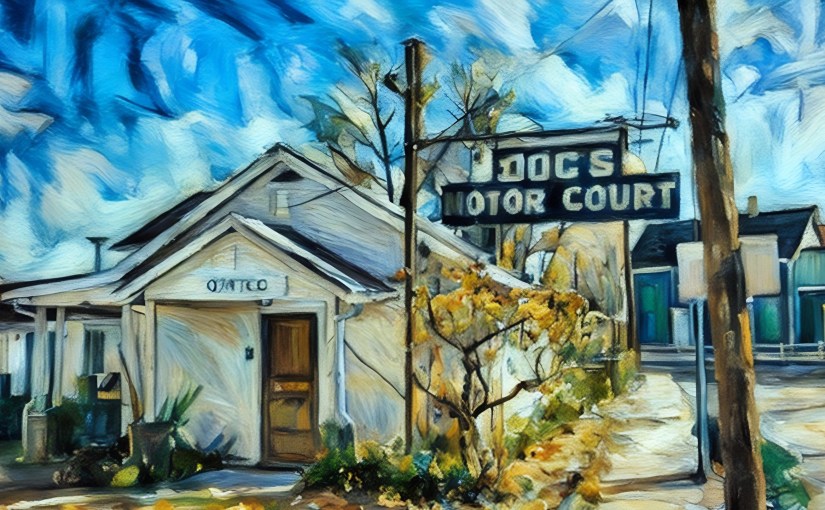
“Tuscaloosa”


LOCATION: Montgomery County, Alabama; Tuscaloosa.
PERIOD: 1928-1931
DRAMATIS PERSONAE: Lamar Hooper (1907-1969); Katherine George (1910-1994)


Lamar Hooper grew up on a farm in Montgomery County Alabama, but was a restless teenager whop left home at 15 and went to the “big city” of Montgomery.  After a few years he met a young lady, Katherine George, and they began dating. But Katherine was also restless, and she would often take off for parts unknown.

This song is about one of her escapades in Tuscaloosa, where life was a bit more exciting, what with the college there and plenty of young folk, who were living the life in the Jazz Age.

Lamar would dutifully trail after Katherine.

Lamar and Katherine hung around Tuscaloosa, where their romance blossomed and they fell deeply in love.  Eventually they would would return to Montgomery and their more conventional lifestyle.  These little adventures would cease once the Depression hit, when merely surviving took all their energies and attention.

They married in 1931, and had three children, the oldest, Leon Hooper (1933-1975) was the father of Levi Hooper (1973) (more of whom can be learned about in several other Highway 80 songs).

By the time Leon was born Lamar and Katherine had relocated to Jackson, Mississippi, in the constant pursuit of employment and a better life.


TUSCALOOSA
(F. D. Leone, Jr.)

8th of May,
Katherine fled,
Tuscaloosa.
I coulda stayed,
Hit the road instead;
Tuscaloosa.
A place, a time,
The scene of a crime;
It all remains,
In my head;
Tuscaloosa.

Keep my pride
Hidden away;
Thought I knew her.
Dawn sky;
Iron grey,
Tuscaloosa.
I wonder if Katherine was,
Ever, really, in love?
Overnight,
Frost on the clay;
Tuscaloosa.

Downhill;
A road alone,
Don’ wanna lose her.
Whippoorwill’s
Lonesome song;
Tuscaloosa.
Sun’s going down,
Another dirt road town.
I’ll drive until,
She’s too far gone;
Tuscaloosa.

White line,
Leads to a door;
Straight to her.
City sign,
Ten miles more;
Tuscaloosa.
An ashtray was left,
Full of lipstick tipped cigarettes;
In our two-lane
Motel court;
Tuscaloosa.

© 2023 Frank David Leone, Jr./Highway 80 Music (ASCAP). The songs and stories on the Highway 80 Stories website are works of fiction. Names, characters, businesses, places, events, locales, and incidents are either the products of the author’s imagination or used in a fictitious manner. Any resemblance to actual persons, living or dead, or actual events is purely coincidental.

“Lamar and Katherine Fall in Love”


LOCATION: Tuscaloosa, Montgomery, Alabama
PERIOD: 1928-1931
DRAMATIS PERSONAE: Katherine George (1910); Lamar Hooper (1907-1969)


After Katherine pulled one of her disappearing acts, Lamar followed and found her in Tuscaloosa.  She’d been partying with a bunch of college kids, living life large. This was 1928, and for a couple of years, this was their life which was typical during the “Jazz Age.”

But since all good things must come to an end, so did this in October 1929, and The Depression.

Kathy and Lamar did what most young people do when trouble finds them: they went home, to Montgomery.  There Lamar went to work at his father’s mill, and Katherine settled into the life as wife and mother.


LAMAR AND KATHERINE FALL IN LOVE
(F. D. Leone, Jr.)

Lamar finally found Katherine;
On a barge, partyin’
Been goin’ for a couple of weeks;
It was nineteen and twenty eight;
Th’ height of the Jazz Age;
They hardly stop’d to eat or sleep.
Ain’ the way it’s spose to happen, but it did;
They fell in love.

Hung ‘roun Tuscaloosa awhile
Livin’ large, goin’ wild;
Drinkin’ too much, makin’ new friends.
Katherine led and Lamar tagged along,
Out every night dusk to dawn;
Burning their candle at both ends.
They were young, just a coupla kids;
When they fell in love.

You don’t choose,
The one who’ll break your heart;
All you can do,
Is play a little part.
Tha’s why they call it fallin’ when it does;
You’re in love.

Right about then the Depression hit,
These two kids hit the skids;
So they went back home to Magomry.
Lamar got a job at his daddy’s mill,
They lived in a little house on a hill;
Settled down and started a family.
Just the way it’s spose to happen, and it did;
They’re in love.

Lamar made a little bootleg shine,
But didn’t drink at all this time;
Katherine was known for her fig preserves.
She called him Pop, he called her Mother;
Had one child after another,
After three Kath still had her curves.
They were young, but no longer kids;
And they were in love.

You don’t choose,
The one who’ll break your heart;
All you can do,
Is play a little part.
Tha’s why they call it fallin’ when it does;
You’re in love.

© 2025 Frank David Leone, Jr./Highway 80 Music (ASCAP). The songs and stories on the Highway 80 Stories website are works of fiction. Names, characters, businesses, places, events, locales, and incidents are either the products of the author’s imagination or used in a fictitious manner. Any resemblance to actual persons, living or dead, or actual events is purely coincidental.
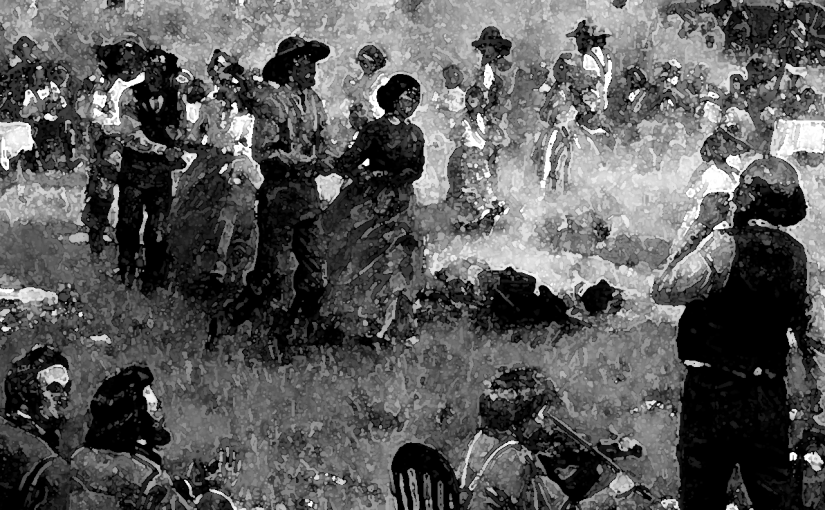
“Tuskegee”


LOCATION: Tuskegee, Alabama
PERIOD: 1933-1963
DRAMATIS PERSONAE: Luther Harper (1898-1963); Louise Stoner (1900-1953)


The Tuskegee Syphilis Study was a study conducted between 1932 and 1972 by the United States Public Health Service (PHS) and the Centers for Disease Control and Prevention (CDC) on a group of nearly 400 African American men with syphilis. The purpose of the study was to observe the effects of the disease when untreated, though by the end of the study medical advancements meant it was entirely treatable. The men were not informed of the nature of the experiment, and more than 100 died as a result.

Luther Harper was one of these men. He contracted the disease while serving in the Navy in the Pacific islands.  Ironically he did not die from it, although he accidentally infected his wife who did succumb to the disease.


TUSKEGEE
(F. D. Leone, Jr.)

Luther picked at the scab on his palm
As he softly chanted the 23rd psalm
He’d been at his hand with his pocketknife
Making the marks of the crucified Christ
Luther reads his Bible everyday
Calls it reading but he just stares at the page
A sister lady taught him from the book
She also got him work as a fry cook

That was before Tuskegee
March 23rd, 1933
Which is why that psalm is the one he knew
Luther honed his blade on the sole of his shoe

The doctors said they could heal him
But Luther believed they would kill him
His father’d said you can’t trust a white man
Luther softly hummed and dug at his hand
He relied on his wife, sweet Louise
She died this year from his disease
Luther wonders why her, and not him
He recites the words to his psalm again

That was after Tuskegee
March 23rd, 1953
Which is why that psalm is the one he sang
Luther used his blade and climbed into the pain

Luther picked at the scab on his palm
His wife had always been like a balm
He lived ten more years but succumbed to the disease
The last word on his lips was Louise
He cursed himself, the doctors, and Tuskegee
But the last word on his lips was Louise

© 2022 Frank David Leone, Jr./Highway 80 Music (ASCAP). The songs and stories on the Highway 80 Stories website are works of fiction. Names, characters, businesses, places, events, locales, and incidents are either the products of the author’s imagination or used in a fictitious manner. Any resemblance to actual persons, living or dead, or actual events is purely coincidental.

“The Langfords and the Littlejohns”


LOCATION: North Carolina Mountains
PERIOD: 1900s
DRAMATIS PERSONAE: George Littlejohn (1896-1944); Anse Littlejohn (1871-1961); Emily Langford (1900-1977); Elijah “Lige” Langford (1874-1925)


George Littlejohn, the “lone white sheep in a family of black,” was the son of Anse Littlejohn.  While his father, and brothers, were hard-nosed, severe and difficult to get along with North Carolinians, George was pretty much the opposite.  However, he was a strong individual, a quality which allowed him to defy his father and marry Emily Langford, the daughter of a strict Presbyterian family.

George and Emily left North Carolina and ended up in Mississippi, they were the great grandparents of Levi Hooper.


THE LANGFORDS AND THE LITTLEJOHNS
(F. D. Leone, Jr.)

The Littlejohns were ner-do-well
Soon as tell you hello as “go to hell”
The whole bunch was on’ry and mean
They’d fight for the least little thing
The Langfords on the other hand
Were a church-goin’, peace-lovin’ clan
When Emily turned sixteen
She was George Littlejohn’s dream

When George Littlejohn came to court
Lige Langford wouldn’t open his door
George stayed on the porch all night
Just a-singin’ in the yellow moonlight
Next mornin’ he was still there
Snorin’ in the rockin’ chair
Alma kicked him and said “come on in”
Emily hid a sly little grin

The Littlejohns were ner-do-well
Soon as tell you hello as “go to hell”
The whole bunch was on’ry and mean
They’d fight for the least little thing
The Langfords on the other hand
Were a church-goin’, peace-lovin’ clan
When Emily turned sixteen
She was George Littlejohn’s dream

Now George wasn’t like the rest
Emily brought out his best
The lone white sheep in a fam’ly of black
She made sure he kept comin’ back
At the weddin’ Lige stood next to Anse
They drank, laughed and shook hands
When Em’ly married George Littlejohn
The two fam’lies were joined into one
When Em’ly married George Littlejohn
Those two fam’lies became one

The Littlejohns were ner-do-well
Soon as tell you hello as “go to hell”
The whole bunch was on’ry and mean
They’d fight for the least little thing
The Langfords on the other hand
Were a church-goin’, peace-lovin’ clan
When Emily turned sixteen
She was George Littlejohn’s dream

© 2018 Frank David Leone, Jr./Highway 80 Music (ASCAP). The songs and stories on the Highway 80 Stories website are works of fiction. Names, characters, businesses, places, events, locales, and incidents are either the products of the author’s imagination or used in a fictitious manner. Any resemblance to actual persons, living or dead, or actual events is purely coincidental.

“Rosalie”


LOCATION: Mobile, Alabama
PERIOD: 1980s-90s
DRAMATIS PERSONAE: Rosalie Broussard (1967); Tullison “Tully” Tate (1965-1993)


Rosalie Broussard Tate has a history of running away from any relationship she is in.  This time she has run from her marriage leaving her husband Tully Tate and their twin girls at home.


ROSALIE
(F. D. Leone, Jr.)

In a cocktail lounge in Mobile
Just about closing time
Empty shot glass on her table
Rosalie shuts her eyes

Tully would always find her
Bring her home in the past
Rosalie looks around her
Guess he gave up at last

Anytime anyone loves her
Soon she’ll be gone
To the dim lights of a barroom
Where she feels she belongs
Mistrusting human kindness
She’d rather be alone
Telling herself she’s free
Rosalie, ah, Rosalie

She’d like to kick the habit
Always choosing to run
Since she was sixteen
It’s what she’s relied upon

There’s a devil lying to her
Whispering in her ear
She wants to ignore it, but
It’s the strongest voice she hears

Anytime anyone loves her
Soon she’ll be gone
To the dim lights of a barroom
Where she feels she belongs
Mistrusting human kindness
She’d rather be alone
Telling herself she’s free
Rosalie, ah, Rosalie

© 2018 Frank David Leone, Jr./Highway 80 Music (ASCAP). The songs and stories on the Highway 80 Stories website are works of fiction. Names, characters, businesses, places, events, locales, and incidents are either the products of the author’s imagination or used in a fictitious manner. Any resemblance to actual persons, living or dead, or actual events is purely coincidental.

“Rosa Parks”


LOCATION: Montgomery, Alabama
PERIOD: 1950s
DRAMATIS PERSONAE: Rosa Louise McCauley Parks (1913–2005)


Rosa Louise McCauley Parks (February 4, 1913 – October 24, 2005) was an American activist in the civil rights movement best known for her pivotal role in the Montgomery bus boycott. The United States Congress has honored her as “the first lady of civil rights” and “the mother of the freedom movement”. Parks became a NAACP activist in 1943, participating in several high-profile civil rights campaigns. On December 1, 1955, in Montgomery, Alabama, Parks rejected bus driver James F. Blake’s order to vacate a row of four seats in the “colored” section in favor of a White passenger, once the “White” section was filled.

Parks was not the first person to resist bus segregation, but the National Association for the Advancement of Colored People (NAACP) believed that she was the best candidate for seeing through a court challenge after her arrest for civil disobedience in violating Alabama segregation laws, and she helped inspire the Black community to boycott the Montgomery buses for over a year. The case became bogged down in the state courts, but the federal Montgomery bus lawsuit Browder v. Gayle resulted in a November 1956 decision that bus segregation is unconstitutional under the Equal Protection Clause of the 14th Amendment to the U.S. Constitution. (Wikipedia)


ROSA PARKS
(F. D. Leone, Jr.)

She was born in 1913, Jim Crow Alabama
Her mama was a teacher, her daddy slung a hammer
She couldn’t ride the bus to school ’cause she wasn’t white
A quiet girl, taught to be polite – Rosa Parks
1955 Montgomery city buses had two tiers
Whites sat up front and blacks in the rear
One day the seats for whites, they were all taken
If you thought they’d ride standin’ up you’d be mistaken – Rosa Parks

The driver told Rosa to give a white man her seat
But she was tired of giving in, jus’ sat ‘n’ grit her teeth
The police were called and they hauled Rosa in
She had broke the law, but the law was a sin – Rosa Parks

The whole community refused to ride the bus
Their boycott carried on for thirteen months
They drove their own cars along the same bus line
Picking up and making sure folks got to work on time – Rosa Parks
Rosa’s name is the one we know but there were many others
Preachers, treachers, fathers and mothers
The case made its way through the courts to decide
And when they did it was the day Jim Crow died – Rosa Parks

It took one woman who refused to be moved
And marches and sit-ins, before things improved
This battle has gone on 400 years and more
There are battles still to fight in this civil war – Rosa Parks

She was born in nineteen-thirteen, Jim Crow Alabama
Her mama was a teacher, her daddy slung a hammer
Rosa Parks, Rosa Parks, Rosa Parks

© 2022 Frank David Leone, Jr./Highway 80 Music (ASCAP). The songs and stories on the Highway 80 Stories website are works of fiction. Names, characters, businesses, places, events, locales, and incidents are either the products of the author’s imagination or used in a fictitious manner. Any resemblance to actual persons, living or dead, or actual events is purely coincidental. Image By Gene Herrick for the Associated Press; restored by Adam Cuerden – https://collections.si.edu/search/detail/edanmdm:npg_NPG.2013.76?q=record_ID%3Dnpg_NPG.2013.76, Public Domain, https://commons.wikimedia.org/w/index.php?curid=81795628

“Riding Shotgun in Phenix City”


LOCATION: Phenix City, Alabama
PERIOD: 2002
DRAMATIS PERSONAE: Josh Tate Campbell (1985); Sally Anderson(1985-2002)


Josh Tate Campbell (1985), Tully Tate’s nephew, the son of his sister Ruth, was born in 1985 in Phenix City, Alabama.  This song is a coming of age story, describing Josh’s first two loves: his girlfriend Sally Anderson and his car, a 1978 Chevelle.

Josh and Sally met in high school and were best friends which developed into their first experience with love.  As soon as he could Josh saved up and bought a 1978 Chevelle, which he worked on and got running.  With his new drivers license in hand he and Sally would go driving on Highway 80 outside of Phenix City.

Until the summer night that changed Josh’s life.


RIDING SHOTGUN IN PHENIX CITY
(F. D. Leone, Jr.)

Phenix City, Alabama
We were in high school
Talked like we were slick
Walked like we were cool

I got my drivers license
Summer of 2001
Bought a green ’78 Chevelle
You rode shotgun

Didn’t know how brief
Our time would be
That summer was sweet
You rode shotgun with me

We rolled the windows down
Laughin’ in the wind
I’ve never loved anyone
Like I loved you then

Never knew what hit us
80 at Evans Road
A little cross stands at that corner
The Chevelle was sold

Didn’t know how brief
Our time would be
That summer was sweet
You rode shotgun with me
That summer was sweet
You rode shotgun with me

Phenix City, Alabama
We were in high school

© 2020 Frank David Leone, Jr./Highway 80 Music (ASCAP). The songs and stories on the Highway 80 Stories website are works of fiction. Names, characters, businesses, places, events, locales, and incidents are either the products of the author’s imagination or used in a fictitious manner. Any resemblance to actual persons, living or dead, or actual events is purely coincidental.

“Lowndes County”


LOCATION: Lowndesboro, Alabama
PERIOD: 1933
DRAMATIS PERSONAE: Lamar Hooper (1907-1969); Lowndnes County Sheriff; Lowndes County General Sessions Court Judge; teenage girl at jail


This song takes place in 1933, during the depth of the Depression in North Alabama. Lamar Hooper, Levi Hooper’s grandfather, was born on Sand Mountain and when he was in his early 30s chose to go south to look for work. He walked to the nearest road and then put up his thumb hoping for a ride.

It wasn’t long before a truck picked him up and brought him all to way to Lowndes County in the central part of the state. However, that night he got into a little trouble in Lowndesboro, a small town on Highway 80.


LOWNDES COUNTY
(F. D. Leone, Jr.)

Sand Mountain’s where I’m from
Traveling South on my thumb
Until I heard a jail door slam
In Lowndes County, Alabam’

I’d just been there a week or two
What they said I done, I did not do
They picked me up Saturday night
Charged me for damage and a fight

I told them it was self-defense
What I said made no difference
They held me over for trial,
“Be a few days,” they smiled

The Judge was deaf to my plea
“Son, you look guilty to me”
Thirty dollars or thirty days
Up to you, it’s all the same”

“Thirty dollars I ain’t got
I might as well sit in jail and rot”
Just came south to look for work
Never thought things’d be worse

Teenage girl brought me a plate
Then sat and watched as I ate
A biscuit and slice of ham
She even gave me some strawberry jam

Slipped the fork back through the bars
Said she’d come around after dark
If I could get myself free
She just might run away with me

Sheriff came to check my cell door
Said, “One day done, 29 more
Get some rest tomorrow you’ll work”
I fingered that fork under my shirt

They call this place Alabam’
But Hell is surely where I am
I forgot why I chose to come
Never should’ve left Sand Mountain

Don’t know why I chose to come
Never should’ve left Sand Mountain

© 2020 Frank David Leone, Jr./Highway 80 Music (ASCAP). The songs and stories on the Highway 80 Stories website are works of fiction. Names, characters, businesses, places, events, locales, and incidents are either the products of the author’s imagination or used in a fictitious manner. Any resemblance to actual persons, living or dead, or actual events is purely coincidental.
“King Cotton”


LOCATION: Thomas William Monroe (1812-1909)
PERIOD: 1890s
DRAMATIS PERSONAE: Tullison Tate (1866-1938); Jessie “Crawford” (1828-1905); Thomas William Monroe (1812-1909); Celsie Monroe (1844-1936)


It’s July 1899 and Tullison Tate (1866-1938) is sitting in his wagon, loaded with cotton, in line waiting for it to be ginned.  The Monroe family has owned most of this Perry County, Alabama, town’s businesses including the gin. Tully’s grandmother was a slave from a neighboring plantation, Jessie “Crawford” (1828-1905), who was impregnated by Thomas William Monroe (1812-1909), producing a mixed blood daughter, Celsie in 1844, Tully’s mother.  Tully’s status in the community is as complicated as his blood.


KING COTTON
(F. D. Leone, Jr.)

Line of wagons filled with cotton
Moving up one by one
Line ends at Tommy, Jr.
Ol’ man Monroe’s son

Monroe owns the gin, an’ smith
The bank, an’ the store
It’s been a Monroe town
Since before The War

Heard ’em say cotton is king
Well, I ain’ seen one yet
The more I work, all it seems
The more I get in debt

Price of cotton keeps fallin’
Soon it won’t make sense to plant
Most are still plantin’ and pickin’
A few walked off their land

Sittin’ in a wagon of cotton
Won’t get ginned ’til ‘roun’ four
Tommy says what I got comin’
Less my bill at the store

Heard ’em say cotton is king …

They call me Monroe’s Tully
Makin’ sure I know my place
Tom Monroe is my granddaddy
But my grandma was a slave

© 2018 Frank David Leone, Jr./Highway 80 Music (ASCAP). The songs and stories on the Highway 80 Stories website are works of fiction. Names, characters, businesses, places, events, locales, and incidents are either the products of the author’s imagination or used in a fictitious manner. Any resemblance to actual persons, living or dead, or actual events is purely coincidental.

“Sweetheart of Mine”


LOCATION: Mississippi outside of Vicksburg
PERIOD: 1947-48
DRAMATIS PERSONAE: Beauchamp Raney (1917-1949); Bess Baldwin (1920-1948)


Beauchamp Raney (1917-1949) was one of the middle children of Virgil Raney (1885-1959) and Hazel Tate (1886-1964).  His oldest brother, Vernon Raney (1911-1993) was the son who carried on the whiskey making tradition.  However, they all helped, and Beau was smart, resourceful, and one of the more valuable members of the family business.  However, he did not marry well.

His wife was 19 when they got married, and liked to go out and party, whereas Beau preferred staying close to home except those times when he and Vernon had to move the liquor.  One thing led to another and Bess found herself entangled with a wealthy cotton planter, and she lost her head in this adulterous relationship.

Little did she know how Beau would react.


SWEETHEART OF MINE
(F. D. Leone, Jr.)

Sweetheart of mine
Good mornin’
Next time you see me
You better run
You broke my heart
My sweet darlin’
Next time I see you
I’ll have a gun

By the time you see me
Be too late believe me
In my hand will be my .45
Sweetheart of mine

Your new sugar
I’ll leave alone
It ain’t his fault
I don’t blame him
Cheated and lied
Now you’re gone
Treated our vows
Like you never made ’em

Last thing you’ll see will be me
Shoot you where your heart should be
Watch the life leave your lyin’ eyes
Sweetheart of mine

You will learn
That I won’t let you
Walk over me
Like I was dirt
Be one time
Since I met you
That I will get
The last word

By the time you see me
Be too late believe me
In my hand will be my .45
Sweetheart of mine

Last thing you’ll see will be me
Shoot you where your heart should be
Watch the life leave your lyin’ eyes
Sweetheart of mine

© 2025 Frank David Leone, Jr./Highway 80 Music (ASCAP). The songs and stories on the Highway 80 Stories website are works of fiction. Names, characters, businesses, places, events, locales, and incidents are either the products of the author’s imagination or used in a fictitious manner. Any resemblance to actual persons, living or dead, or actual events is purely coincidental.