“Between Here and Gone”


LOCATION: Macon, Georgia
PERIOD: January, 2010
DRAMATIS PERSONAE: Pearl Boone Robison (1973)


Pearl Robison comes from a fractured family line going back before the Civil War, and her life has carved a jagged line as well. She is related through her father, Jason Jones Robison (1946- ) to Ruby Robison (1843-1933), who was the sister of Marcus Walsh Robison (1836-1897) Pearl’s great-great-great-grandfather. Ruby Robison was a young prostitute in Shreveport who gave birth to a Civil War soldier’s child, the first Pearl Robison (see songs, “Fannin Street” and “Levi Motts is My Name“).

In 1973 Pearl Robison was born in Conyers, Georgia but we first meet Pearl when she is managing a dollar store in Macon. One January day in 2010, sitting in her car before opening up, she decides to leave town and head west on U.S. 80.


BETWEEN HERE AND GONE
(F. D. Leone, Jr.)

No one dreams of bein’ manager at Dollar Town
But life happens, there’s worse around
A stick of spearmint’ll hide whiskey on her breath
Might as well open up she’s out of cigarettes

Snowed eight inches overnight the air is crystal clear
They’ll be buying extra bread and eggs and beer
Just sittin’ and thinkin’ in her car out there alone
She’s stranded between here and gone

She could just drive away free as the breeze
Start over somewhere, just leave
Don’t matter no more what’s right or wrong
She’s stranded between here and gone

Checking her makeup she sees a new grey hair
She don’ know that woman who returns her stare
The day’s first shopper pulls in the parking lot
She still has time for one more shot

There’s nothing in this town for her to stay
She used to find little things that kept that thought away
Like goin’ to the Blue Bonnet for a lemon custard cone
She’s stranded between here and gone

She could just drive away free as the breeze
Start over somewhere, just leave
Don’t matter no more what’s right or wrong
She’s stranded between here and gone

© 2017 Frank David Leone, Jr./Highway 80 Music (ASCAP). The songs and stories on the Highway 80 Stories website are works of fiction. Names, characters, businesses, places, events, locales, and incidents are either the products of the author’s imagination or used in a fictitious manner. Any resemblance to actual persons, living or dead, or actual events is purely coincidental.


“Levi Motts Is My Name”


LOCATION: Northwest Louisiana
PERIOD: 1864
DRAMATIS PERSONAE: Levi Motts (1843-1864); Coleman Broussard (1842-1910); Ruby Robison (1845-1933); Pearl Robison (1864-1944)


Mustering out of Monroe, Louisiana Levi and his cousin Coleman Broussard joined up with in Colonel Henry Gray’s brigade, the Louisiana Gray’s. It did not take them long to find their way to the burgeoning red light district of Shreveport. There Levi met and took up with one of the young sporting girls there, Ruby Robison. Cole was also smitten and Ruby seeing Levi for what he was, a rake and leaky vessel for her to place her future, encouraged Cole in his romantic dreams. They were a inseparable trio, the two kinsmen and the beautiful and fragile young whore hedging her bets, so to speak.

Despite Coleman’s obvious romantic aspirations, Ruby couldn’t deny her stronger feelings for Levi. Defying the conventions of the time she and Levi made plans for marriage as soon as the war was over. However, the Louisiana Grays were called up to confront the Union troops already marching towards Louisiana after conquering Vicksburg. Gray’s brigade is one of the units in Gen. Robert Taylor’s army tasked with stopping the Trans-Mississippi Campaign of Nathaniel Bank’s invading force at Mansfield.

While the Battle of Mansfield was a Confederate victory, Levi Motts was one of only about a hundred Southern men who died there on April 8, 1864. When he went into battle, Levi knew that Ruby was pregnant with their child. This child, a girl Ruby named Pearl, is born in late December of 1864. Because of her illegitimate status Pearl chose to use the name Robison for most of her life.


LEVI MOTTS IS MY NAME
(F. D. Leone, Jr.)

Levi Motts is my name
Come from Northwest Louisiana
I joined up with Colonel Gray
He said be ready to march today
Don’t know when I’ll be back again
If this war will ever end

Ruby Robison is my gal
Keeps a room down in the bottoms
We talked of gettin’ out of there
Make a new life anywhere
Don’t know when I’ll be back again
If this war will ever end

Ruby wrote me a letter
We were waitin’ outside Mansfield
Wrote there’s a baby on the way
We fought the Yankees April Eighth
Don’t know when I’ll be back again
If this war will ever end

Levi Motts is my name
Come from Northwest Louisiana
Lead ball went through my neck
That afternoon I bled to death
Don’t know when I’ll be back again
If this war will ever end

© 2017 Frank David Leone, Jr./Highway 80 Music (ASCAP). The songs and stories on the Highway 80 Stories website are works of fiction. Names, characters, businesses, places, events, locales, and incidents are either the products of the author’s imagination or used in a fictitious manner. Any resemblance to actual persons, living or dead, or actual events is purely coincidental.
“Pearl and Jake”


LOCATION: Shreveport, Louisiana; Fort Worth, Texas
PERIOD: January, 2010-May, 2015
DRAMATIS PERSONAE: Pearl Boone Robison (1973); Jacob “Jake” Tyler McLemore (1959).


In 1973 Pearl Robison was born in Conyers, Georgia but we first meet Pearl when she is managing a dollar store in Macon. One January day in 2010, sitting in her car before opening up, she decides to leave town and head west on U.S. 80 (see song, “Between Here and Gone“).

She ends up in Shreveport, Louisiana, when she stops at an all night diner and Jake McLemore enters her life. They live together for five years before Pearl’s wanderlust overtakes her again and she leaves, this time heading for Fort Worth (see song, “Pearl + Jake“). She does not know at the time that she is pregnant, but when she discovers this fact, she waits almost two years before deciding it is best to let Jake know he is a father (see song “Terrell”)

She gives birth in 2015 to a baby girl whom she names Sadie Jo Robison, after her parents, Jason Jones Robison and Sadie Boone. Pearl and Jake get married in 2018 and raise Sadie Jo together.


PEARL AND JAKE
(F. D. Leone, Jr.)

Snowed all day in Macon when Pearl left for the last time
Al’bam, Mizsippy, Luziana; Georgia felt far enough behind
Creosote, cottonseed, Shree’port – hit her like a cinder block
Lights of an all-nite diner; Pearl coasted to a stop

Jake behind the counter, white apron little paper hat
Slid some coffee before her, quiet as an alley cat
Pearl pulled a pint from somewhere, tipped it over her cup
Jake lit a cigarette; the sun came up

Lovin’ her is what he meant to do
Even if it broke his heart in two
He played life like a game of horseshoes
Ah, but, lovin’ her was what he meant to do

Jake bought this diner after selling McLemore’s
Pearl was stranded in Macon managing a dollar store
They met on Jewella Avenue both lookin’ for a new start
Jake gave her some food and every one of his scars

Lovin’ her is what he meant to do
Even if it broke his heart in two
He played life like a game of horseshoes
Ah, but, lovin’ her was what he meant to do

Jake didn’t want to come home stinkin’ of cigarettes, beer and perfume
Five years passed by as he walked from room to empty room
Pearl was runnin’ away that first day he met her
She’d been leavin’ ever since, Jake finally found a way to let her

© 2018 Frank David Leone, Jr./Highway 80 Music (ASCAP). The songs and stories on the Highway 80 Stories website are works of fiction. Names, characters, businesses, places, events, locales, and incidents are either the products of the author’s imagination or used in a fictitious manner. Any resemblance to actual persons, living or dead, or actual events is purely coincidental.

“The Laughing Man at the Door”


LOCATION: Monroe, Louisiana
PERIOD: 1970s-1990s
DRAMATIS PERSONAE: James “Jamie” Lamar Halladay (1973); Frank Halladay (1938-1993); Ann Marie Halliday (1974); Lee Ann Lucas (1953)


James “Jamie” Lamar Halladay was born in Monroe, Louisiana, in 1973. His father was a musician, guitar player, Frank Halladay, who played in a series of bands, traveling Texas, Louisiana and eventually Nashville. By the time Jamie was four, Frank Halladay stopped living with the family, which also included Jamie’s younger sister, Ann Marie, although not out of their lives altogether. He would show up on birthdays and Christmas, when he could.

James Charles Halladay (1913-1995), Jamie Halladay’s grandfather, was a fighter pilot who served with distinction in the Army Air Corps during WWII. He learned to fly as a crop dusting pilot for the Huff Daland Dusters, as part of the eradication of the boll weevil. This company, moved from Macon Georgia to Monroe Louisiana, in 1925 but Charlie didn’t hire on until 1933, but stayed with the company as it became a regional commercial carrier, which eventually became Delta Airlines.

Hi son Frank showed a talent for music early on and learned to play the guitar listening to the Grand Ole Opry and especially Hank Williams when he was still pretty small. While in high school he started a band with some of his friends and they got pretty good. Good enough to become the backup band for Webb Pierce and played on the Louisiana Hayride.

It while he was playing with Webb Pierce that Frank met the woman who was to eventually become his wife and Jamie’s mother, Lee Ann Lucas. But while Frank and Lee Ann were in love and did get married, the itinerant lifestyle of a musician did not make for a stable home life and the marriage failed. Frank tried to see his kids as much as he could, but was not a regular presence in their lives.

Nevertheless, he did have an impact on Jamie’s life.

On his twelfth birthday, Frank gave Jamie a guitar and taught him a few chords, but that was just the start for Jamie. He eventually got good enough to move to Nashville and get some gigs there playing behind country stars. He ended up breaking into the studio scene and became a member of the “A list” players, i.e. first call musicians for recording sessions.

It was while he was living in Nashville that Jamie began visiting a bar, McLemore’s, and became friends with the owner Jake McLemore (see song “McLemore’s“). In 2003, he would marry Jake’s daughter, Mercedes “Mercy”, and have a son whom he named Jacob Frank, after Jake and his father.


THE LAUGHING MAN AT THE DOOR
(F. D. Leone, Jr.)

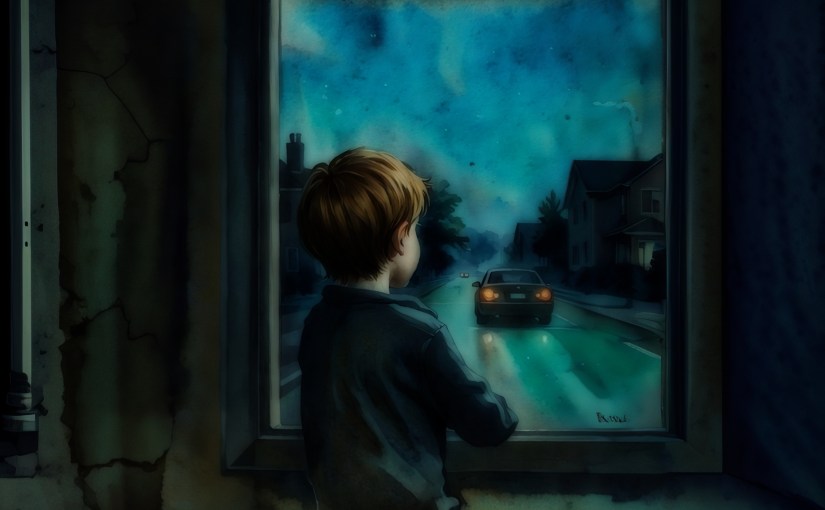
In Monroe, Louisiana, standing at a window
A four year old sees his father drive away
Cowboy hat on his head, six gun on his hip
Jamie waves goodbye until his next birthday

Say goodbye to a man you hardly know
As tail lights disappear down the road
Say goodbye, watch him go
On a gray December day in Monroe

His daddy plays guitar in a traveling country band
And don’ live with them in Monroe anymore
Jamie has a sister, eighteen months old
Who don’t remember the laughing man at the door

Say goodbye to a man you hardly know
As tail lights disappear down the road
Say goodbye, watch him go
On a gray December day in Monroe

When Jamie turned twelve his dad gave him a guitar
Showed him where to put his fingers for his first chord
His dad died in ’93, when Jamie was nineteen
But who played better than the laughing man at the door

Say goodbye to a man you hardly know
As tail lights disappear down the road
Say goodbye, watch him go
On a gray December day in Monroe

© 2018 Frank David Leone, Jr./Highway 80 Music (ASCAP). The songs and stories on the Highway 80 Stories website are works of fiction. Names, characters, businesses, places, events, locales, and incidents are either the products of the author’s imagination or used in a fictitious manner. Any resemblance to actual persons, living or dead, or actual events is purely coincidental.

“Fannin Street”


LOCATION: Shreveport, Louisiana: St. Paul’s Bottoms
PERIOD: 1860s
DRAMATIS PERSONAE: Ruby Robison (1845-1933); Levi Motts (1845-1864); Coleman Broussard (1842-1910); Pearl Robison (1864-1936); Lucas Broussard (1866-1934)


Ruby Robison (1845-1933), young prostitute on Fannin Street; has daughter, Pearl, with Confederate soldier Levi Motts. After learning that Levi is killed at the Battle of Mansfield in April, 1864, Ruby marries his cousin Coleman Broussard and has four other children.

Ruby came to Shreveport during the Civil War, perhaps with Union troops up the Red River from New Orleans following the occupation of that city. Born in Ireland in 1845, her family may have been among the large numbers of Irish immigrants who sought refuge in America during the potato famines of the mid-nineteenth century. She most likely resorted to prostitution as a means of survival.

Ruby had a room in one of the dozens of brothels in downtown Shreveport area around Fannin Street, but her life took an unexpected turn when she met Levi Motts. Ruby and Levi began to have serious feelings for each other and Levi swore that he would find a way to get her out of the life she’d known as a prostitute. But the war got in the way, sending Levi off to fight and die in the Battle of Mansfield (see songs, “Fannin Street” and “Levi Motts is My Name“).

Ruby had let Levi know of her pregnancy and she gave birth to a daughter in 1865, whom she named Pearl. Levi’s cousin, Coleman Broussard chose to marry Ruby and they had four children together. Their first son, Lucas was the great-grandfather of Mike “Sarge” Broussard.

Ruby lived to age of 88, living to see not only her daughter grow up, get married, and have children of her own, but well into the lives of her great-grandchildren.


FANNIN STREET
(F. D. Leone, Jr.)

On Fannin Street, Fannin Street
There’s a room upstairs for the men she meets
She’s not theirs and never was,
Just what she does
On Fannin Street

There was one boy, fine and sweet
Not like the rest of Fannin Street
The only one she ever loved
In the room above
Fannin Street

On Fannin Street, Fannin Street
There’s a room upstairs for the men she meets
She’s not theirs and never was,
Just what she does
On Fannin Street

The boy he said he’d take her away
From the life she led one day
He left for Mansfield to the restless beat
Of Marching feet
In columns of grey

On Fannin Street, Fannin Street
There’s a room upstairs for the men she meets
She’s not theirs and never was,
Just what she does
On Fannin Street

In her room alone Ruby Robison
Heard that the Rebels had won
She went to Mansfield but there she cried
For the baby inside
And the boy who was gone

On Fannin Street, Fannin Street
There’s a room upstairs for the men she meets
She’s not theirs and never was,
Just what she does
On Fannin Street

© 2017 Frank David Leone, Jr./Highway 80 Music (ASCAP). The songs and stories on the Highway 80 Stories website are works of fiction. Names, characters, businesses, places, events, locales, and incidents are either the products of the author’s imagination or used in a fictitious manner. Any resemblance to actual persons, living or dead, or actual events is purely coincidental.

“1951”


LOCATION: Shreveport & Bossier, Louisiana
PERIOD: 1950s-2016
DRAMATIS PERSONAE: Luther Lee McLemore (1951); Agnes Tyler (1920-2005); Dorothy “DiDi” Baxter (1952); Charlie McLemore (1973); Sarah McLemore (1975)


Luther Lee McLemore was Jake McLemore‘s older brother. Born in 1951, Luther came of age during the turbulent period of the Sixties. This song has him looking back on those times in 2019 as a retired mailman living in his hometown, Shreveport, Louisiana.

Luther’s most vivid memories are from his teenage years, living through the assassinations of JFK, Martin Luther King and Bobby Kennedy, and the Vietnam War. However, Lyndon Johnson had created draft deferments for anyone in college, as well as a variety of minor medical conditions which could qualify as an exemption. This policy ultimately meant that while most Middle Class young men eligible for the draft had several avenues to avoid service, those from less affluent families were caught up in the war.

Luther was just young enough that his four years in college effectively placed him out of range of the draft, since by 1973 the US was deescalating the war effort, bringing soldiers home instead of sending more over.

After he graduated, Luther worked a number of dead-end jobs, but eventually took and passed the civil service exam. In 1976 he began working as a postman, which he did for the next forty years, retiring in 2016. But those forty years seem like a blur, overshadowed by his formative years during the Sixties.


1951
(F. D. Leone, Jr.)

My name is Luther McLemore
1951 is the year I was born
It made me who I am
Taught to say, “no, sir” and “yes, ma’am”

Was eleven in ’63
Saw my mother cryin’ at the TV
Mama said someone shot the president
I didn’t know then what it meant

Was in high school in ’68
The streets were filled with so much hate
They killed Martin Luther King
Then Bobby Kennedy, and a dream

Graduated in ’69
A man from the army tried to get me to sign
But I was lucky and got in a university
Plenty of others weren’t lucky like me

’76 I took the civil service exam
A post office in Bossier hired me as a mailman
Loved one woman, we had a couple of kids
But by ’88, we’d hit the skids

I’m retired now, living in Shreveport
I like a beer, sitting on my porch
Last forty years seem like a blur
Mostly I think about how things were
Last forty years seem like a blur
Mostly I think about how things were

© 2020 Frank David Leone, Jr./Highway 80 Music (ASCAP). The songs and stories on the Highway 80 Stories website are works of fiction. Names, characters, businesses, places, events, locales, and incidents are either the products of the author’s imagination or used in a fictitious manner. Any resemblance to actual persons, living or dead, or actual events is purely coincidental.
“The River and Jake”


LOCATION: Northwest Louisiana; north of Shreveport; Red River
PERIOD: 2015
DRAMATIS PERSONAE: Jacob “Jake” Tyler McLemore (1959); Pearl Boone Robison (1973)


An American historian in the 19th century described the frontier vanguard in the following words:

“Thus the backwoodsmen lived on the clearings they had hewed out of the everlasting forest; a grim, stern people, strong and simple, powerful for good and evil, swayed by gusts of stormy passion, the love of freedom rooted in their hearts’ core. Their lives were harsh and narrow; they gained their bread by their blood and sweat, in the unending struggle with the wild ruggedness of nature. They suffered terrible injuries at the hands of the red men, and on their foes they waged a terrible warfare in return. They were relentless, revengeful, suspicious, knowing neither ruth nor pity; they were also upright, resolute, and fearless, loyal to their friends, and devoted to their country. In spite of their many failings, they were of all men the best fitted to conquer the wilderness and hold it against all comers.

The Anglo-American 18th-century frontier, like that of the Spanish, was one of war. The word “Texan” was not yet part of the English language. But in the bloody hills of Kentucky and on the middle border of Tennessee the type of man was already made. ”

These were the McLemores who left Tennessee for Texas.

It didn’t take long for Jake to become bored with retirement, and he bought a diner in Shreveport where Pearl Robison happened to enter one day in January 2010 (see song, “Pearl + Jake“). For five years Jake and Pearl had a turbulent romantic relationship, before Pearl took to the road again (see song “Hit the Road“), heading west on U.S. 80, leaving Jake heart broken at 56.

Jake loved to fish, and to take his mind off Pearl, he’d go to the river and see if they were biting.


THE RIVER AND JAKE
(F. D. Leone, Jr.)

Long as I can remember
When Jake was sad he would go
On down to The River
With some bait and a pole

It’s the place he wants to be
When he needs to be alone
Jake’s gone down to The River
Every day since Pearl’s been gone

You can ask him where they’re biting
Or what he used for bait
Just don’t ask him anything about her
That’s between The River and Jake

Soon his mind will grow empty
With each cast he’ll forget
All the worries he brought with him
They’ll all fade with the sunset

You can ask him where they’re biting
Or what he used for bait
Just don’t ask him anything about her
That’s between The River and Jake

© 2017 Frank David Leone, Jr./Highway 80 Music (ASCAP). The songs and stories on the Highway 80 Stories website are works of fiction. Names, characters, businesses, places, events, locales, and incidents are either the products of the author’s imagination or used in a fictitious manner. Any resemblance to actual persons, living or dead, or actual events is purely coincidental.

“Blinkin’ Back a Tear”


LOCATION: Odessa, Texas
PERIOD: 1977
DRAMATIS PERSONAE: Jacob “Christmas” McLemore (1818-1863); Jacob Mac McLemore (1879-1977); Jake McLemore (1959).


Jacob Mac McLemore made and lost more money than any of the McLemore men. When he was fifteen he heard about the 1894 oil strike in East Texas. He started at the bottom working any job he could get, eventually learning enough to strike out on his own.

Jacob Mac McLemore never knew his father, who had been an outlaw-gunslinger who died a few months before he was born. Sam Summers McLemore (1852-1878) never even knew the 16-year old whore, Sally McCune, he was living with was pregnant when he went out in the street to face a younger and what turned out to be faster boy. Jacob was raised by Sally, who eventually was able to quit the life and lived out her days running a boarding house in Fort Worth. There’s some who say it was more than a boarding house, but others deny those rumors.

Indians found oil seeping from the soils of Texas long before the first Europeans arrived. They told explorers that the fluid had medicinal values. The first record of Europeans using crude oil, however, was for the caulking of boats in 1543 by survivors of the DeSoto expedition near Sabine Pass.

Melrose, in Nacogdoches County, was the site in 1866 of the first drilled well to produce oil in Texas. Other oil was found in crudely dug wells in Bexar County in 1889 and in Hardin County in 1893. But it was not until June 9, 1894, that Texas had a major discovery. This occurred in the drilling of a water well for the city of Corsicana. Oil caused that well to be abandoned, but a company formed in 1895 drilled several producing oil wells.

Jacob Mac was 15 when the Corsicana oil came in, and for the next sixty years he chased strikes all over Texas and Louisiana. He might make some money here, then invest it somewhere else only to see his investment evaporate in the dusty Texas wind.

Jacob was married and divorced four times, the last near the end of his life and the one which really broke him. Of the four marriages, only the first produced any children, one boy, Lee Allen (1903-1989), and a girl, Aurelia. Lee Allen was Jake McLemore’s grandfather.

If you were to ask those who knew him, what they would tell you about Jacob Mac McLemore was that, first and foremost, he was a decent man whose word was his bond. No one ever knew him to brag or lie and that he never made a deal that he did not keep, and usually made his partners money.

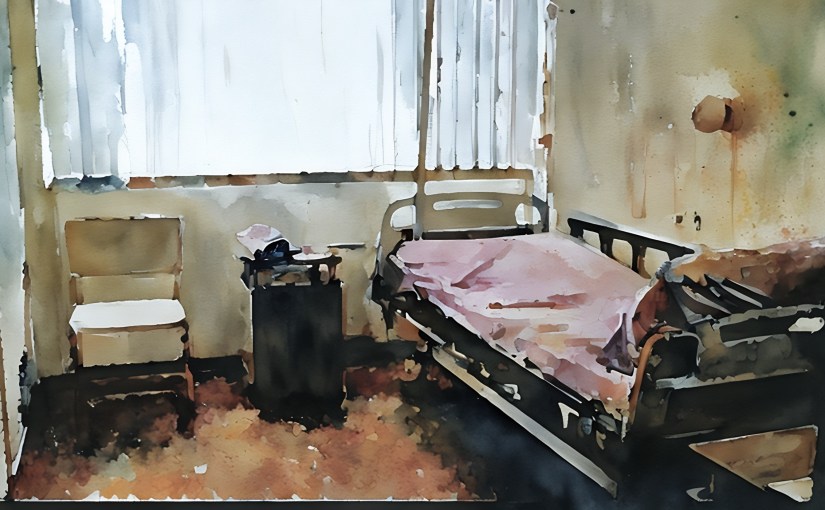
He died at the age of 98, dying peacefully in his sleep in an Odessa, Texas hospital room with his great-grandson, Jake, by his side. You might say that Jacob Mac lived an interesting life, but despite not enjoying consistent good luck he was always in good humor and very good company.


BLINKIN’ BACK A TEAR
(F. D. Leone, Jr.)

Just before his great-grandpa went in
The hospital for the last time
He told Jake the stories of their kin
A life that was all but left behind

Clear whiskey, flatfoot dancing at jamborees
Frontier women and the men they loved
One by one he handed down his memories
Jake was eighteen, couldn’t get enough

Under a clear blue West Texas sky
A bluetick hound layin’ at his feet
A single tear in the corner of Jake’s eye
He blinked it back from fallin’ down his cheek

Owen McLemore was born in 1791
In Tennessee he married Anabel
Before she died she gave him seven sons
He went to Texas then he went to hell

Owen’s great-grandson was Jake’s namesake
He made some money chasin’ the oil boom
There wuddn’t be nothin’ left for Jake
‘Cept this empty hospital room

Under a clear blue West Texas sky
A bluetick hound layin’ at his feet
A single tear in the corner of Jake’s eye
He blinked it back from fallin’ down his cheek

© 2018 Frank David Leone, Jr./Highway 80 Music (ASCAP). The songs and stories on the Highway 80 Stories website are works of fiction. Names, characters, businesses, places, events, locales, and incidents are either the products of the author’s imagination or used in a fictitious manner. Any resemblance to actual persons, living or dead, or actual events is purely coincidental.

“Hosston to Bastrop”


LOCATION: North Louisiana: Hosston, Springhill, Coushatta, Powhattan
PERIOD: 1990s
DRAMATIS PERSONAE: Tullison “Tully” Tate (1965-2013); Rosalie Broussard (1967); Sonny Tate (1936-1980)


Tully’s father was country singer Sonny Tate. Tully married Rosalie Broussard (born Vivian, LA; father, Mike “Sarge” Broussard) who was an unstable woman and runs off repeatedly from the family home. Initially after his marriage Tully and Rosalie lived in Mobile, Alabama but then they moved with their twin girls to Hosston, Louisiana. There he works at the Springhill pulp paper mill driving a timber truck and reconnects with his boyhood friends the Broussard and Thibodaux families.

Tully is a decent, hard-working, family man but who also likes to drink and party on occasion. His primary worry in life is his wife, Rosalie, who will disappear from time to time, leaving the twins unsupervised. For a while, Tully would track her down and bring her back home until, finally, he gives up and let’s her go.

Although his job in Springhill ended when they shut down the paper mill, he and his girls remained in Hosston until his death in 2013 after a short illness.


HOSSTON TO BASTROP
(F. D. Leone, Jr.)

I used to make my living driving a log truck
Hauling timber for the pulp paper mill
Take Highway 2, Hosston to Bastrop
Double back and unload at Springhill

The paper mill shut down, jobs all dried up
That stink it made, naw we sure don’t miss
Hear they gonna bring in a cross tie plant
Now we can smell them creosote pits

A case of beer on a Friday night
Fill a washtub with boiled shrimp and ice
We sure like get drunk and try to dance
We may be way up north but it’s still Louisian’

Gets real hot ’round here in the summer
August heat will melt the asphalt
Didn’t even hurt Randy Butcher when he got run’d over
His head was hard, the road was soft

A case of beer on a Friday night
Fill a washtub with boiled shrimp and ice
We sure like get drunk and try to dance
We may be way up north but it’s still Louisian’

Like to take my truck out One-Fifty-Seven
Stop at the Shongaloo Dairy Cup
Three-Seventy-One to Coushatta, then One to Powhatan
Just drive around where my daddy grew up

A case of beer on a Friday night
Fill a washtub with boiled shrimp and ice
We sure like get drunk and try to dance
We may be way up north but it’s still Louisian’

Betty Broussard brought her fiddle and bow
Someone gave a washboard to Greg Thibodeaux,
We sure like get drunk and try to dance
We may be way up north but it’s still Louisian’

© 2017 Frank David Leone, Jr./Highway 80 Music (ASCAP). The songs and stories on the Highway 80 Stories website are works of fiction. Names, characters, businesses, places, events, locales, and incidents are either the products of the author’s imagination or used in a fictitious manner. Any resemblance to actual persons, living or dead, or actual events is purely coincidental.

“Casper Cowan”


LOCATION: East Texas
PERIOD: 1950s-1980s
DRAMATIS PERSONAE: Casper Cowan (1951-1988); Annabel Wash (1955); Dalton Wash (1952)


Casper “Cap” Cowan (1951-1988) came from an upper-class Catholic family in East Texas.  He received a complete Catholic education, was an altar boy, the whole nine yards.  But as soon as he got his drivers license and drove himself, supposedly to mass, he avoided going to the early mass and told his family he would go to the 11:00 mass.  Of course, he never did.

He also rebelled against his expected role in the family business, oil development, nor did he do well in school, and in general, was thought of as a failure within his extended family.

He began to drink at a young age, repeatedly got in trouble with the law, married a girl, Annabel Wash (1955), from the wrong side of the tracks, whose brother, Dalton Wash (1952), was Cap’s best friend.

His behavior embarrassed and disappointed his family to the point when they sought advice from their priest, family doctors, and even psychiatrists.  Whose collective advice was to look into mental health for Cap, essentially to cure his alcohol problem which they saw as driving his behavioral dysfunction.

This help manifested itself into committing Cap to a psychiatric clinic that specialized in addiction and substance abuse. This was an upscale facility offering a variety of treatments, including electroconvulsive therapy (ECT).

After these treatments, Cap began hallucinating, the Bible and his religious background began to surface more alarmingly.  He quoted biblical verse, fragments from the Catholic mass and prayers, experienced visions, saw signs in everything, thought himself damned and beyond the grace of God.

Although his friend, Dalton tried to help him, Cap succumbed to his depression and frustration of feeling his mind was out of his control. He took his own life, at the age of 37, from a gunshot wound to the head.


CASPER COWAN
(F. D. Leone, Jr.)

My name is Dalton Wash,
Casper Cowan was my best friend;
He married my sister; he was a drunk.
Neither sat well with his kin.
The Cowans was highfallutin Catholic,
They told him, they were through;
Put him in a psych ward; the priest assured them,
“It was the right thing to do.”

They strapped him to a gurney,
On his head placed electrodes.
Shot a current through his brain;
Cap suffered some kind of overload.

My grandpa was a Pentacostal preacher,
Spoke in tongues; handled snakes.
One Sunday he was bit and it killed him;
Not for lack of faith.
Cap had been an altar boy,
He’d flash back to the Mass.
Whisper prayers in Latin,
Then just quit, and then laugh.

After those treatments,
Cap wasn’t the same.
Raving verses from the bible;
Believed he bore the mark of Cain.

In the madhouse the walls were stained,
With pain of a hundred years.
Naked pipes overhead,
Rusted from a thousand tears.
Cap wore a thousand-yard stare;
Spoke of visions and signs.
He said, “I am the offspring of the serpent.”
He saw phantoms, spectres, of all kinds.

“Hail Mary of Magdalene,
Most blessed advocate.
Holy Mary, pray for my sins;
Now and at the hour of my death.”

Came a point when all Cap thought about,
Was taking membership among the dead.
“This is my body, here is my blood,
Drink the wine, eat the bread.”
He surveys the face in the mirror,
Let his jaw go slack.
His hand trembles with the razor;
His vision dims to black.

They found him on the bed,
On the wall a spattered bloodstain.
The ceiling was flecked with red;
Victim of a fractured brain.

© 2025 Frank David Leone, Jr./Highway 80 Music (ASCAP). The songs and stories on the Highway 80 Stories website are works of fiction. Names, characters, businesses, places, events, locales, and incidents are either the products of the author’s imagination or used in a fictitious manner. Any resemblance to actual persons, living or dead, or actual events is purely coincidental.