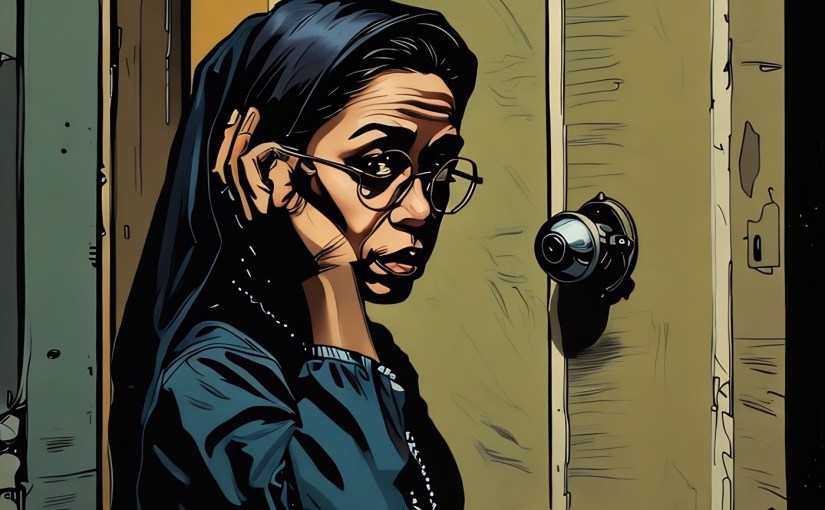
“Them Hardin Boys”


LOCATION: Southwest Texas, northern Mexico, New Mexico, Arizona.
PERIOD: May-August, 1944.
DRAMATIS PERSONAE: John Farley Hardin (1927-2020); Henry Adams Hardin (1928-2015); a Mexican pig drover; a Negro conjure woman; a hobo; a cougar; a wolf.


Henry Adams Hardin (1927-2015) and John Farley Hardin (1926-2020) were first cousins, born into an old Scots-Irish family. The Hardins were Texans, by way of Tennessee, and before that Appalachia, and before that they came from Scotland and Ireland.

The Scots-Irish were fiercely independent and stubborn. They were more likely to sell out and move farther into the frontier than assimilate. As soon as the bankers and lawyers entered their country, they were likely to pack up and move west. These two youngsters, John and Henry Hardin, were continuing the same pattern of their people which had been the norm for generations.

When he turned 18, John told his younger cousin Henry, that since they had been too young to join up to fight in the war, they should take off on an adventure of their own. “Let’s ride west,” (in this part of Texas, in 1944, the horse was still the primary mode of transportation) “and see what’s out there.”

So, early one morning in May they rode off before anyone was up, just before dawn, heading southwest.

The first town they came to was El Paso, the big city that their parents had planned on settling in, but events dictated that they settle in Van Horn, about 120 miles. A half day’s ride, they crossed the river and had lunch; rode further south and made camp that night in Mexico.

Their journey took them back across the river into Texas, through Sierra Blanca; Las Cruces, NM; Deming; Lordsburg; Douglas, AZ; Bisbee; Tombstone; Benson. And finally, three months later, they rode into Tucson, dusty with an injured wolf on the back of John’s horse.

Along the way they encounter a philosophical Mexican pig drover, a mysterious Negro fortune teller, a soured itinerant ragman, and are adopted by a wolf who ends up saving their lives from a cougar, and they his.


THEM HARDIN BOYS
(F. D. Leone, Jr.)

Was a cool May morning when they set out
John got Henry up before full light.
“Let’s go if we’re going – before they’re awake.”
“Okay, just let me get my eyes right.”
Dawn was behind them as they trotted off,
Heading southwest to the Rio Grande.
They crossed at midday; stopped for lunch;
Over biscuits and bacon they made a plan.
 
A pig drover welcomed them to Mexico:
“Los cerdos son un misterio,
¿Qué puede saber uno de uno?
Un cerdo es un cerdo.”

“John, what was that fella saying’?”
“That he’s never understood a hog.”
“Well hell, why would he want to?”
They spurred their horses into a jog.
 
They rode through the heat of the afternoon,
Quiet save for the spat of the Henry’s snuff.
The constant clop and chink of the horses;
A pretty sound as there ever was.
“John, do you ever think of God?”
“No; well, some. With the seasons.” 
“John, that fella back there,
Do you think we met him for a reason?”
 
“Henry, have you seen that lobo off behind,
Been following us these few miles?”
Yeah, I seen him, sometimes;
Last night his eyes were two tiny fires.”
Within the hour the weather cooled;
Drops of rain fell the size of small stones.
They could smell the wet earth and horses,
The wet leather … they rode on.

The path took them through a locust wood;
Huge bean pods hung more and more.
A small glade, a raw board shack,
A rotted porch; they knock on the door.
“Come in here,” she said and stood aside;
She was scarce four feet tall and coal black.
Assorted bowls, candlesticks, a table;
“Set down,” she instructed; they sat.
 
Her eyes were not more than two cracks,
A face carved from matte black wax. 
She raised her arms.  To speak? Perhaps.
“Death arrives, you survive.” Then, thunderclaps.
That night they were awakened by lobo’s growl;
Sensing danger the boys sat up upright.
Fierce howling, yapping, snapping of teeth;
Dawn, a dead puma; lobo bloody, but alive.
 
John craddled the wolf behind his saddle,
“Strange, lobo beatin’ puma one-on-one.”
“Johnny, do you resent missing the war?”
“Waste of time; we were too young.”
Two fishermen passed along the river path;
Under the bridge an ancient hobo;
He sat scowling upon the new day. 
As they approach, his story is told.
 
“I went down this river in aught one;
With a carnival for two year I run.
In Georgia we seen a fella hung;
Damned us all for the crime he never done.” 
“I seen strange things in my time;
Seen that cyclone come through; took my breath.
I seen all I want to see; know all I want to know.
Today, I just look forward to death.”

© 2025 Frank David Leone, Jr./Highway 80 Music (ASCAP). The songs and stories on the Highway 80 Stories website are works of fiction. Names, characters, businesses, places, events, locales, and incidents are either the products of the author’s imagination or used in a fictitious manner. Any resemblance to actual persons, living or dead, or actual events is purely coincidental.


“Homer and April, Virgil and June”


LOCATION: Texas: Big Spring, Van Horn, Mexico
PERIOD: 1925-1944
DRAMATIS PERSONAE: Homer Hardin (1902-1985); Virgil Hardin (1902-1992); April Johnson (1907-1986); June johnson (1907-1988); John Farley Hardin (1927-2020); Henry Adams Hardin (1928-2015).


Twin brothers, Homer (1902-1985) and Virgil Hardin (1902-1992) married twin sisters, April (1907-1986) and June Johnson (1907-1988). This was 1925 in west Texas. However, their forebears had come a long way to get here.

They had come from the northeast, across the Appalachian mountains. They came from the Atlantic seaboard and before that, from Ireland and Scotland. They took up land and built one-and two-room cabins and left them unpainted.  Married among themselves, produced children, and added more rooms as needed, and did not paint them either.

Their descendants planted cotton and corn in the bottom land and in hidden hollers made whiskey from the corn and traded or sold what they did not drink. Some went still further west into Texas, where they found life freer, but harsher.

These were the Scots-Irish, who were accustomed to moving on when times got rough, starting over, and creating new lives in the unsettled frontier. Rejecting civilization as represented by lawyers and bankers, and above all, any form of government.

In the case of the Hardins and Johnsons, after they married, they enjoyed about four years of prosperity before the Great Depression hit Big Spring, Texas. And like generations of Scots-Irish before them,  they took all their belongings and went looking for a better life with a cow and two pigs.

They were heading to El Paso, the largest town in their region, but did not make it. Circumstances forced them to stop in Van Horn, Texas, a little northeast of El Paso.

Here they started over and made a hard-scrabble subsistence life there. However, once they were old enough, the two oldest boys, John and Henry, decided to strike out on their own and try their luck further west.  Repeating the same generations-old pattern of their people.


HOMER AND APRIL, VIRGIL AND JUNE
(F. D. Leone, Jr.)

May of nineteen and twenty-five;
Them Hardin twins married the Johnson girls,
Homer and April, Virgil and June.
The world was their oyster, their love the pearl.
First few years were happy and carefree,
Both couples were with children blessed.
Then the Depression hit Big Spring;
They loaded up two wagons and they left.
 
Dusk that first day one wagon broke down. 
A bent old man came limping up the road,
“They’s worse weather a-coming;
Hard weather. Be foretold.”
That night high winds, driving rain;
Hail bounced upon the ground like small pale eggs.
The women sought shelter under a wagon;
The horses moaned on the trembling legs.
 
It was peaceful in the morning after the storm,
The women began collecting their scattered goods.
Their food was all ruined, so Virgil took the gun:
Headed to a small stand of cottonwoods.
The horses were skittish, the wagons soggy,
Virg had got a rabbit; they ate, then headed out.
April and June started singing from a hymnbook;
Despite what they’d been through, they remained unbowed.
 
When they started out they hoped to make El Paso,
But only got as far as Van Horn.
Homer and Virgil scouted around,
Found some land they thought might make a decent farm.
They built two cabins, side by side;
Added more rooms with each new child.
No matter how hard they worked each year,
On that harsh land, fortune never smiled.
 
The two oldest boys were growing restless,
In the summer of 19 and 44.
They were old enough to have an adventure,
But still too young to be called off to war.
They left with no warning, well before dawn;
Crossed the Rio Grande, and rode still further west.
At dusk they eyed the sun in its setting;
The western sky a bloody red.

© 2025 Frank David Leone, Jr./Highway 80 Music (ASCAP). The songs and stories on the Highway 80 Stories website are works of fiction. Names, characters, businesses, places, events, locales, and incidents are either the products of the author’s imagination or used in a fictitious manner. Any resemblance to actual persons, living or dead, or actual events is purely coincidental.

“From Burden to Bowden”


LOCATION: Dallas County, Texas
PERIOD: 1850s-2010s
DRAMATIS PERSONAE: Henry Baxter (Burden) “Bowden” (1833-1915); Bertha Caldwell (1835-1918); Alan Edward Burden (1850-1916); Archibald Edward Burden (1802-1859); Margaret Alice Bowden (1918); Earl Walker (1996).


Henry Baxter (Burden) “Bowden” (1833-1915) was a thorn in the side of his family, especially his father and older brother. During the years before the Civil War Henry began to find meaning in the Abolitionist Movement, and became politically activated in that direction. This of course rubbed the rest of his family and neighbors the wrong way. While the majority of Southerners were strongly in favor of maintaining slavery, most were too poor to own slaves themselves, but as a matter of pride in their region they would fight to preserve the institution.

Things came to a head when Henry inlisted in a Union regiment and actually went to war against his family and state. His company saw a lot of action, and he fought at Gettysburg where he lost his arm.

The song begins with one of his later descendants, Earl Walker (1996), describing how his grandmother, Margaret Alice Bowden (1918), ended up with Henry’s wooden arm prothesis which, for some reason, they had kept and passed down through the family.


FROM BURDEN TO BOWDEN
(F. D. Leone, Jr.)

Grandma kept that wood arm in the attic;
We used to take it out on Halloween; run around with it.
Was told it was worth some money by a Dallas appraiser;
The army gave him that one; he was buried with a better one he got later.
Funny after all this time, how things turn out;
The Bowdens were a big deal in Texas, I don’t misdoubt.

First heard of Henry when I was a child,
Told he didn’t talk much, never smiled.
Stand-offish, had gotten above his raising.
Had some queer ideas, like going to hear a-coupla Yankees debating;
He’d wander off with a book, on his own;
One day he just spoke up, said “slavery’s wrong.”

The Burdens was poor, had no slaves, didn’t much care;
Only fought cause them blue bellies had come down there.
After it was done, they never forgave or forgot;
The Burdens cursed Henry, cuz it was for the North that he had fought.
When Henry lost his arm his daddy claimed,
“You can bet it was a Burden that blew th’ arm away.”

Married Bertha Caldwell; they had a bunch of kids;
Ten or twelve, a big number like that, they did.
Took the whole bunch to Texas,1885 or 6;
His grandson got into oil; they got pretty rich.
Strange thing was, after Henry changed his name,
You’d a-thot they been happy? Nah; was just more ashamed.

At the Gettysburg reunion old enemies embraced;
Henry’s nephew, Alan, only showed up to spit in his face.
Them Burdens could carry a grudge; quick to take offense;
Specially if it was some kin of theirs; Henry made no amends.
That was long ago, a hundred years by now;
Just some stories I been told, anyhow …

© 2025 Frank David Leone, Jr./Highway 80 Music (ASCAP). The songs and stories on the Highway 80 Stories website are works of fiction. Names, characters, businesses, places, events, locales, and incidents are either the products of the author’s imagination or used in a fictitious manner. Any resemblance to actual persons, living or dead, or actual events is purely coincidental.

“The Burden Family Blues”


LOCATION: Northern Ireland; Virginia; Boston; New York City; Tennessee; Marengo County, Mississippi; Dallas, Texas.
PERIOD: 1617-1978
DRAMATIS PERSONAE: Owen Tucker “Tick” Burden (1937-2019); Albert Burden (1910-1978); Joseph Charles Burden (1848-1910); Alan Edward Burden (1850-1916); Owen Burden (1879-1954); Henry Baxter (Burden) “Bowden” (1829-1883); Charles Joseph Burden (1825-1896); Edward Burden (1802-1859); Charles Owen Burden (1776-1861); Albert Peter Burden (1737-1798); Betty Akins (Burden) (1759-1822); Peter Albert Burden (1682-1749);  Edmund Owen Burden (1639-1714); Samuel Peter Burden (1617-1656)


Tick Burden wakes up in jail after a DUI which occurred on December 15, 1978. The rest of the story regresses (in 40 year spans) back to the 17th century when the first Burden ancestor emigrated from Northern Ireland to America:

Samuel Peter Burden (1617-1656) grows up with his father who had joined a sailing mission with Sir Walter Raleigh in 1618.  Sam leaves northern Ireland in 1635 sailing to American.  Landing in Virginia it wasn’t long before he met and married a young Scottish girl. They have a son, Edmund Owen Burden (1639-1714) in 1639, who is the first American born Burden ancestor.

Edmund Owen Burden (1639-1714) moved with his family to the Boston area, and as a young man he happened to be in town when the Quaker evnagelist Mary Dyer was being hanged.  At that time, despite the Puritans leaving England due to religious persecution, they themselves were intolerant of Quakerism, which was outlawed at the time.  Mary Dyer was arrested, convicted of violating the ban on Quakerism, and hanged either onMay 31st or June 1st in 1658.

Peter Albert Burden (1682-1749) the next Burden in the line ran off from Boston to New York hoping to be taken on a sialing ship, looking for adventure.  He managed to get hired on the Adventure Galley, William Kidd’s ship headed for Africa.  Kidd saw that the pirates he was attempting to police were taking home more ricches than he was, and he decided to turn traitor against the King and became a notrious pirate himself.  eventually he was hanged for his crimes.  By that time Peter had abandoned his dsailing ambitions and remained on dry land for the rest of his life.

Albert Peter Burden (1737-1798) is caught up in the fervor of rebellion from England at the time of Founding Fathers.  When he is in his late ’30s he joins up the militia and serves under several generals.  In 1778 his division is under general command of George Washing in New Jersey. The battle of Monmouth, also known as the Battle of Monmouth Court House, was fought near Monmouth Court House in modern-day Freehold Borough, New Jersey, on June 28, 1778, during the American Revolutionary War. After the battle, an American victory, Albert takes a few minutes and writes a letter home.

Henry Baxter (Burden) “Bowden” (1829-1883) does not agree with the rest of his family on the question of slavery.  As a consequence he changes his last name from Burden to Bowden and identifies as an abolitionist. He eventually joins up to fight on the Union side, potentially against his own brothers.  Henry loses an arm at Gettysburg, ending his military career, and settling down in Texas.

Joseph Charles Burden (1848-1910); Alan Edward Burden (1850-1916); Owen Burden (1879-1954) Owen Burden, son of Alan, and nephew of Joe, volunteers and fights in teh Apanish-American War of 1898.  While his father and uncle are making whiskey, they discuss the logic of Owen’s decision to go to war in a cause they don’t entirely understand.

Albert Burden (1910-1978) is in Texas and happens into a saloon on the night of the championship boxing match between Max Schmeling and Joe Louis. They were to fight twice, Schmeling winning the first in 1936 and losing the second in 1938. The two fights came to embody the broader political and social conflict of the time. As the most significant African American athlete of his age and the most successful black fighter since Jack Johnson, Louis was a focal point for African American interest in the 1930s. Moreover, as a contest between representatives of the United States and Nazi Germany during the 1930s, the fights came to symbolize the struggle between democracy and fascism.

Louis and Schmeling developed a friendship outside the ring, which endured until Louis’ death on April 12, 1981.  Schmeling reportedly covered a part of the costs of Louis’ funeral, at which he was a pallbearer. Schmeling died 24 years later on February 2, 2005, at the age of 99. Both Louis and Schmeling are members of the International Boxing Hall of Fame.

This bring us up to 1978 when Albert dies at the same time Tick, his son, is sitting in a Dallas jail cell after his DUI.


THE BURDEN FAMILY BLUES
(F. D. Leone, Jr.)

Face down on a cold concrete floor;
Tick Burden inhales ammonia and vomit.
Coming to in a Dallas county jail cell;
Pats his pockets for keys and wallet.
“Burden: get up, you made bail.”
His brother-in-law hands him a six-pack.
“I need to get my truck out of impound?”
“Your pa’s dead; Allie said to bring you back.”

A slender cheroot clamped in his jaw,
Albert Burden crossed to the bar.
Took a handful of silver dollars
Spread them out in the shape of a star.
The big fight was on the radio,
June, 1938, a title bout.
“Max shoulda retired; he’s old and  slow.”
“Th’ young buck’s gonna lay a beatin’ on the Kraut.”

“Why’d Owen go an’ fight with Yankees?”
“Aw, Alan, y’know, do his bit.
Anyway there ain’t no more blue and gray,
We’re just Americans, and all that shit.”
July 1898, making Missipy moonshine;
Hardly moving, hardly talking, they just sat.
“Joe, where’n the hell is Cuba anyway?”
Joe shook the jar, turned, and spat.

Henry changed his name to Bowden from Burden,
Because he was an abolitionist.
1858 he heard Lincoln and Douglas;
For the Union side he would enlist.
His father Edward and his brother Charles,
Would forever curse his fake name.
Henry Bowden lost an arn at Gettysburg;
“A Burden ball got ‘im,” his father liked to claim.

“1778, June, Monmouth:
Dear Betty, the Redcoats have faded back.
I was with Greene, our cannons were jumping;
We held our line against each British attack.
Must admit I was scared half to death,
And prayed for my return to you and Charles.
I’m proud to have served with such men;
General Washington handed out cigars.”

Peter Burden ran off to New York,
Looking to join the crew of a sailing ship.
William Kidd took him on the Adventure Galley;
They sailed to Africa on his first trip.
1698 Kidd stood for King and country,
But switched sides to a pirate life of crime.
1701 he had a rope around his neck;
Peter kept to dry land till the day he died.

1658 Mary Dyer came to Boston,
To preach the Quaker faith.
She was arrested in New Haven,
Hanged the 31st of May.
Edmund Burden was among the onlookers,
Swore he’d no more be a Christian.
If Puritans could murder a Quaker,
Then to all preaching he would not listen.

1617 Samuel Burden was born;
The next year his father sailed with Walter Raleigh.
Never to be heard from again;
Samuel Peter Burden grew up without a daddy.
1635 he sailed to America,
Settled in Virginia, and wed a Socttish girl.
They had a son in 1639;
The first Burden born in the New World.

© 2025 Frank David Leone, Jr./Highway 80 Music (ASCAP). The songs and stories on the Highway 80 Stories website are works of fiction. Names, characters, businesses, places, events, locales, and incidents are either the products of the author’s imagination or used in a fictitious manner. Any resemblance to actual persons, living or dead, or actual events is purely coincidental.

“Sally & Tater Sell the Candlelite”

Owen Tucker “Tick” Burden (1937-2019) abandoned his common law wife, Alma Tate (1940-1978), as soon as he heard that she was pregnant and did not return for going on twenty years, ten years after Alma had died. His son, Tucker Tate Burden (1968), Tick and Alma’s son, was then about 20 and working as a bartender in his grandmama’s tavern, the Candlelite Inn. The boy’s mother, called him Tucker but his father called him Tate, or affectionately, Tater. The boy preferred Tuck.

As soon as Tick Burden showed back up at the Candlelite, as was his nature began acting like some kind of boss, so Tuck, something of a chip off the old block, decided to do a runner, much like his father had done twenty years previous. And he too did not return from nearly twenty years which by that time, his grandmama was dead and Tick had been running the Candlelite all that time.

Tick’s long time waitress, Sally Ann Kirk (1972), and the sweetheart of all the male patrons of the Candlelite, always dreamed of inheriting the bar from Tick as some point, so she stuck around all that time. However, she and Tick had never been anything other than friends, Tick acting as a kind of stand-in father figure.

When Tucker came back, one night after drinking about half a bottle of whiskey, he decided to burn down the Candlelite. He didn’t much care if he burned up his father either. But just about when he was going to light the fire, Sally came out and they stood face to face, and that was all it took for them to feel they were destined for each other.

Tater and Sally fell into each others arms, began living as if they were married, and had two kids. Sally’s long time dream finally came true when Tick died in 2019, and she and Tater took over the bar. They went ahead and legalized their union, sold the Candlelite soon after and bought a nice house in Abilene, Texas – about 160 miles west, further down Highway 80 – where they raised their two children: Owen Edgar Burden (2009) and Ann Burden (2011), and grew old together.


LOCATION: Arlington, Texas; Abilene, Texas.
PERIOD: 2008-2019
DRAMATIS PERSONAE: Tucker Tate Burden (1968); Sally Ann Kirk (1972); Owen Tucker “Tick” Burden (1937-2019), Alma Tate (1940-1978).


SALLY & TATER SELL THE CANDLELITE
(F. D. Leone, Jr.)

Summer air thick as molasses;
Moon hanging’ low around midnight.
Bottle of whiskey, box of matches,
Tater crept up to the Candelite.
Sally Kirk, a cute little thing;
The men all say she still looks alright.
Twenty years she held on to a dream;
While waiting tables at the Candlelite.

Tick Burden often talks about his past;
About his life, the ups and downs.
When he spoke of his son Sally asked,
“How come Tater don’t come around?”
Tick was sitting alone at the bar,
Going over that night’s receipts.
Outside there’s a passing car;
A soft rain falls on empty streets.

Tate  poured the whiskey along the black wall,
Burning down the bar was the plan.
Threw the bottle like he throwed a football;
Cursed the match that bit his hand.
That same night, pretty late,
Sally was bringing out the trash.
She came face to face with Tate;
He froze, holding a lit match.

Neon shadows in the parking lot;
Iridescent puddles pink, green, and blue.
Tater cursed and let the match drop,
“Tick talked about a son, is that you?”
Ten more years the Candlelite was well lit,
Till Tick Burden died in 2019.
Sally and Tate decided to sell it,
Buy a big house in Abilene.

© 2024 Frank David Leone, Jr./Highway 80 Music (ASCAP). The songs and stories on the Highway 80 Stories website are works of fiction. Names, characters, businesses, places, events, locales, and incidents are either the products of the author’s imagination or used in a fictitious manner. Any resemblance to actual persons, living or dead, or actual events is purely coincidental.

“Henrietta, Alma, and Tucker”

In the wake of being abandoned, pregnant, by her lover Tick Burden, Alma Tate begins the hard road of her life. Struggling with being dominated by an overbearing and judgmental mother, Henrietta Tate, who could not help but make Alam feel like a failure in her choice of a father for her child, Alma’s life becomes one of working menial jobs in her mother’s bar/restaurant and drinking.

Tucker Tate is born without a father and the only information he gets is what he is told mostly by his grandmother, which does not paint a positive image of the man who contributed to his existence. Nevertheless, Tucker begins to grow up reasonably happy until he is confronted with his mother’s accidental suicide when he is ten years old.

As soon as Tucker is old enough his grandmother puts him to work in the bar, serving drinks to a regular cohort of local characters and drunks until one day his father returns andimmediately begins to order him around.

Tick Burden is unrepentant, and belligerent, which brings Tucker to the moment he chooses to escape this growing hellish life. This throws the two protaganists, Henrietta and Tick, (ironically the two poles of oppression and disappointment in both Alma’s and Tuckers lives) into business together at the Candlelite Inn.

Tick takes over the day-to-day management of the business while Henrietta retreats into the past and dementia until finally passing away at 86.


LOCATION: Dallas, Texas
PERIOD: 1968-2008
DRAMATIS PERSONAE: Alma Tate (1940-1978); Tucker Tate (1968); Tick Burden (1937-2019); Henrietta Tate (1922-2008).


HENRIETTA, ALMA, AND TUCKER
(F. D. Leone, Jr.)

It was 4pm on a Wednesday afternoon,
When Alma realized that Tick was gone.
She walked in a daze from room to room;
Then sat down with the fact she was alone.
She hated that her mama had been right,
And waited for the told-you-so.
The seed Tick had planted that fateful night,
Was the one good thing he did before he’d go.

The violent night Tucker was born,
Outside strong wind and thunder.
Between pangs of labor and the storm,
Alma looked around with childlike wonder.
Then, a hunger.

The rain had stopped, the sky was gray,
The moon was a ghost.
Alma felt herself slowly fading away;
Poured a drink and tossed it down her throat.
Tucker Tate grew up to be a man;
Never knew his father just what he was told.
Not much by his mother mostly from his gran;
He was the issue of a broken mold.

Tucker tended bar in his grandma’s place,
He was setting up to an almost empty room.
A man with a worn but familiar face,
Swaggered into the dark saloon.
Tucker met his father that afternoon.

Late September rain on the roof,
The Candlelite Inn on Highway 80.
Tick Burden hollered from a corner booth;
“Boy, bring a drink to your daddy.”
Tucker Tate disappeared that night,
Grabbed a eastbound freight and was gone.
His grandma stared out the backdoor of the Candlelite,
At her daughter Alma’s gravestone.

Alma had succumbed to drink and depression,
Ten years ago that June.
She’d finally run out of any reason;
And laid down her mop and broom,
A last breath alone, in her room.

Henrietta held on and persevered,
With Tick’s help, the bar stayed open
He ran the Candlelite for the next 20 years;
While Henrietta grew old and broken.
She obsessed over habit and routine,
Against her will, her mind rebelled.
Spent her time with mem’ries and things unseen,
Nothing else really mattered at all.

Old age had freed her from conceit,
And desires of the flesh.
With some reluctance, almost deceit,
She watched her scrapbook flare into ash;
It all ended with a flash.

© 2024 Frank David Leone, Jr./Highway 80 Music (ASCAP). The songs and stories on the Highway 80 Stories website are works of fiction. Names, characters, businesses, places, events, locales, and incidents are either the products of the author’s imagination or used in a fictitious manner. Any resemblance to actual persons, living or dead, or actual events is purely coincidental.
“Tick Burden’s Dream”

Tucker “Tick” Burden (1937-2019) came from an old Texas family, of Scottish descent. The patriarch Charles Owen Burden (1776-1834) came to America in 1800 at the age of 24, at a time of high confidence after defeating the great British Empire. His son, Edward Burden (1802-1836), produced Tick’s great-great-grandfather who retained the name whereas his brother, Henry Baxter Bowden (1829-1863), altered it to Bowden so that he would avoid the obvious negative association with the name Burden.

This created a schism among the family with the Burdens (the smaller branch) hardly socializing with the Bowdens.

Tick grew up in relative comfort, his father Albert Burden (1910-1986) having had a successful career as a cattle agent, not raising them himself but arranging auctions and large stock sales in North Central Texas.

However, from an early age, Tick was a dreamer and ne’er-do-well. As soon as he could Tick ran off, working only when he had to at various menial jobs: day laborer, miner, even an itinerant gambler for a short while. He enlisted in the army to avoid criminal charges but then deserted four months later.

He went north and got involved with a bootlegger, learning how to distill moonshine in the process, which came in handy. However, he missed Texas and made his way back south, getting a job in a tavern outside of Dallas on Highway 80.

The owner, Henrietta Tate (1916-2008), was a widow woman with a daughter, Alma Tate (1940-1978), a few years younger than Tick, who was around 30 by this time. Tick must have appeared dashing to the young and inexperienced girl who fell for him, and gave herself to him, getting herself pregnant. As soon as Tick heard the girl’s naive romantic dreams of running off, he did what he always did when he found himself facing consequences he would rather not, run.

Tick’s story is told in two parts, the second half of the song tells in straight-forward fashion Tick’s life up to the point of him abandoning Alma. The first half describes Tick on the road (presumably after he runs from the Tates), experiencing some cryptic dreams and ending up at a cemetery, either physically at Alma’s grave or dreaming he was.


LOCATION: Texas; Oklahoma, Missouri, Illinois
PERIOD: 1950s-1980s
DRAMATIS PERSONAE: Tucker “Tick” Burden (1937-2019); Henrietta Tate (1916-2008); Alma Tate (1940-1978).


TICK BURDEN’S DREAM
(F. D. Leone, Jr.)

My name is Tick Burden, got a hobo soul;
Cutting’ and running has taken a toll.
One did love me, but I chose a train to ride;
Been ten years since that one died.

Grey moon above me, skirted by a cloud;
I trudge through the’ mist, and overgrown ground.
Come to a bridge, crawl underneath;
A storm gathers darkly; I go to sleep.

Seven gray sisters, all in a row;
Whisper foreign words, I do not know.
When I awake the rain has stopped;
The air is electric, humid and hot.

Thunder shakes the ground, lightning zigzags;
On my tongue I can taste something like brass.
Seven grey sisters, all dressed in blue;
The dream nags at me like a pebble in my shoe.

I’m standing at a grave, among ancient headstones,
Praying for forgiveness from one who is gone.
The living carry death, until the final surrender;
The void is not a curse, the dead do not remember.

Toppled markers look like melted candle wax;
I sit bolt upright as a tree limb snaps.
Somewhere in the dark, a banjo and fiddle;
Haunted midnight music, the hour of the devil.

I look up the slope to a wet yellow sedge,
And see a grove where went I can lay my head.
I dream of a black snake coiled at my feet;
Three eggs in its belly; my journey’s almost complete.

The seven blue sisters appear to glow,
Phantoms dancing like ghoulish scarecrows;
Chanting strange curses with crooked fingers raised,
They mock me with their laughter; I run from this place.

He ran to Oklahoma and then Missouri,
Crossed to Illinois on a Mississippi ferry.
A bootlegger in Chicago and Detroit;
Sold moonshine whiskey in a Negro juke joint.

A gambler, prospector, hired out on day labor;
Enlisted in the army; deserted four months later.
Lived on cheap food, endless coffee, and cigarettes;
His clothes smelled of whiskey, tobacco, and sweat.

Late summer sun, August turns to September,
Cooling days fade like coal fire embers.
A job at a tavern out on old Highway 80,
Run by a widow, a Dallas Jew lady.

That’s when he met Henrietta and Alma Tate;
The violent summer of 1968.
Alma was the daughter, an only child, like he;
She left scented notes in the hollow of a tree.

His idea of love came from a magazine;
Alma’s eyes followed him, but he had never seen.
One night she gave herself for him to cherish;
Then spoke suddenly and wildly of marriage.

She pleaded that they could run off together;
Dreamed of a life far away from her mother;
Spoke of the child in her belly and there placed his hand;
A cold fear gripped him; and so, Tick Burden ran.

The grade crested where the northbound freights slowed,
To a crawling gait so that a man could grab ahold.
Tick reached for a boxcar and held the ladder fast;
In an icy rain the gray sisters stood as he passed.

His name was Tick Burden, a vagabond;
Seen most of this country and places beyond.
Slept uncertain under willow and pin oak,
Came and went like autumn woodsmoke.

© 2024 Frank David Leone, Jr./Highway 80 Music (ASCAP). The songs and stories on the Highway 80 Stories website are works of fiction. Names, characters, businesses, places, events, locales, and incidents are either the products of the author’s imagination or used in a fictitious manner. Any resemblance to actual persons, living or dead, or actual events is purely coincidental.
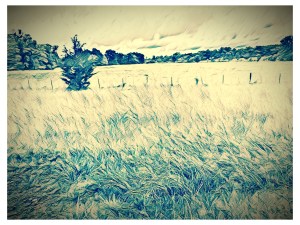
Demopolis, Alabama

Demopolis is the largest city in Marengo County, in west-central Alabama. The population was 7,162 at the 2020 census.

The city lies at the confluence of the Black Warrior River and Tombigbee River. It is situated atop a cliff composed of the Demopolis Chalk Formation, known locally as White Bluff, on the east bank of the Tombigbee. It is at the center of Alabama’s Canebrake region and is also within the Black Belt region.

Demopolis was founded in the early 1800s after the fall of Napoleon’s empire. It was named by a group of French expatriates, a mix of exiled Bonapartists and other French refugees who had settled in the United States after the overthrow of the colonial government in Saint-Domingue by enslaved workers. Napoleon had sent troops there in a last attempt to regain control of the island, but they were defeated, largely by high mortality due to yellow fever.

The name, meaning in Greek “the People’s City” or “City of the People”, was chosen to honor the democratic ideals behind the endeavor. First settled in 1817, it is one of the oldest continuous settlements in the interior of Alabama. French colonists had founded Mobile on the coast in the early 18th century. Demopolis was incorporated on December 11, 1821. (From Wikipedia, the free encyclopedia, Creative Commons Attribution-ShareAlike License 4.0)

“Getting Sober in Dallas”

Louanne Bowden came from an old money section of Dallas. Her family was one of a couple of dozen Texas people whose history in Texas go back before statehood. The Bowden money originally came from cattle, but then oil, her father was an executive in the petroleum industry, and Louanne grew up in comfort. Louanne’s rebellion took the form of a bad marriage to Ronnie Raney, whom she met while at Ole Miss.

Ronnie Raney would show up at football games with a few gallons of moonshine whiskey, which his family sold all around Mississippi. He’d fill pint bottles for the college boys, $5 each; and usually sold out before the game was over.

Ronnie Raney was no good, and would often drink and when Louanne would say something that got him riled up, he’d hit her. Still she left school and followed him to Vicksburg where they rented a shotgun house.

One evening, she’d finally had enough of his drinking and violence, and shot him dead. She never denied it, and was convicted and sent to prison, sentenced to 20 years. However, after serving 12, a judge commuted her sentence to time served, ruling what she’d done was justified homicide. The catalyst to this decision was the death of Louanne’s grandmother, and because of the time of the season, and this particular judge feeling generous allowed mercy to inform the better part of his judgment.


She came back home when her grandmother died, but couldn’t fit back in the society of Highland Park, and began drinking pretty heavily.

Charlie Bennett was four years older than Louanne, and had gone to the same high school. He was a star football player and went to University of Texas on a full athletic scholarship. However during his third game, he suffered a career ending knee injury. It was at this point that Charlie began partying, drinking, and in general drowning his frustration and grief over his lost football future, and performed poorly at school. However, he managed to graduate with a business administration degree, and ended up in Dallas, as a former high school star, selling cars at one of the larger Chevrolet dealerships.

He married his high school girlfriend, and they promptly had two children, two boys two years apart. Although Charlie was fairly successful as a car salesman, his drinking only got worse, leading finally to tragic results. One day, he was supposed to pick up his sons at school. Charlie was in no condition to drive, and after picking up the boys, crossed the double line, and plowing into a moving truck going 60 mph.


Charlie emerged from the accident with minor injuries, however the boys were seriously injured, the youngest one dying from his injuries. This effectively ended his marriage, and sent Charlie to prison. After serving five years he was ready when an old high school friend suggested that Charlie accompany him to an A.A. meeting.


LOCATION: Dallas, Texas
PERIOD: 2005-2016
DRAMATIS PERSONAE: Louanne Bowden Raney (1967); Rita Daley (1962); Charles Bennett (1963); Ronnie Raney (1962-2001)


GETTING SOBER IN DALLAS
(F. D. Leone, Jr.)

(2015)
Springtime in Highland Park,

The scent of new mown grass.
Every night Louanne comes home drunk;
Her mama’s been on her ass.
“Rita, bourbon rocks, splash of water.”
“Louanne, I done made last call.”
“You do know I been to prison for murder.”
“Hon, you’ve had enough, that’s all.”

Louanne unsteady as she arose
“Girl, tomorrow I’ll get my tab.”
“You sure you can make it home alone?
Why not let me call you a cab?”
“Naw, I’ll get her home, just gimme a minute.”
Louanne turned an’ snarled, “who the hell are you?”
“Lu, hon, you know Charlie; Charlie Bennett.”
“Yeah, okay, Charlie – Charlie who?”

(2005)
Lush green lawns turn to brown;

No rain for weeks, 100 plus degrees.
Ten months back, Charles was let out;
He’s in sweating in bed, alone with his disease.
Thinking about his glory days,
Football star; high school fame.
Texas gave him a full ride to play;
Blew his knee out his third game.

He married his high school sweetheart,
They had two sons in three years.
You can find him every night in a bar,
Replaying each touchdown and how they cheered.
He don’t remember the wreck;
Just his youngest son did not survive.
His marriage ended before his five year stretch;
He’s picking up the pieces of a broken life.

(2015)
The week before Halloween,

Louanne poured her whiskey down the drain.
The day after Thanksgiving,
She picked up a chip for 30 days.
She had found a nearby meeting,
Highland Park Presbyterian.
Louanne hears herself start talking,
“I’m a drunk, my name’s Louanne.”

“Ronnie would drink and then beat me;
For some years I let him.
Then one night I got th’ gun while he was eatin’,
I shot him; should’ve just left him.”
“Spent 12 years in a Mississippi prison,
Til some judge decided to let me go.
Said what I done was within reason;
My grandma’s funeral brought me home.”

(2016)
January morning, cold and raining,

Slowly turning to sleet.
The peace is shattered by a tree limb breakin’;
Louanne hears it from across the street.
Used to be Louanne would sit on the porch,
With a bottle of booze and a stick of pot.
Now the dawn sounds reinforce,
For Louanne the presence of God.

In a booth across from each other;
Louanne and Charlie sit face to face.
Charles has five years sober,
Louanne’s coming up on 90 days.
Two lives intersect,
According to some hidden plan;
Living one day at a time, not the next;
Sober in Dallas, Charlie and Louanne.

© 2024 Frank David Leone, Jr./Highway 80 Music (ASCAP). The songs and stories on the Highway 80 Stories website are works of fiction. Names, characters, businesses, places, events, locales, and incidents are either the products of the author’s imagination or used in a fictitious manner. Any resemblance to actual persons, living or dead, or actual events is purely coincidental.

“Buyin’ Wood in Gwinnett County”


LOCATION: Gwinnett County, Georgia, the foothills of the Georgia Appalachian mountains.
PERIOD: Fall, 2011
DRAMATIS PERSONAE: Wade Wainwright (1975); Ruth Ann Robison (1950); Billy Wainwright (1949);  Charlie Cooper (1974)

Wade Wainwright (1975), son of Ruth Ann Robison and Billy Wainwright, meets Charlie Cooper (1974), son of Keith Cooper (1949-2018) and Mildred Mason (1950). And they fight over the purchase of wood and hay.

The Robison family was from Conyers, Georgia, later Macon; and the Cooper family was from Jackson, Mississippi. Wade Wainwright is the one with the gun and Charlie Cooper is the one trying to buy wood. Charlie was the nephew of Lucy Bess Cooper (1980-2015).


BUYIN’ WOOD IN GWINNETT COUNTY
(F. D. Leone, Jr.)

“Say, Bud, that firewood back there;
Is it yours? Is it up for grabs?
“Fifty dollars a rick; cut this year.”
“For wood that green, seems a lot to ask.”
“Take it or leave it, no difference to me.”
“I might could fit a rick in my truck.”
“Cash in hand; no guarantee.”
“Will you, at least, help me load it up?”

“I will for an extry twenty dollar.”
“Neighbor, I’m just askin’ for some help.”
“You ain’t no kin of mine, as I remember.”
“Well, I guess I’ll load it my own self.
“I could also use a little hay
But, I’m afraid to ask how much a bale.”
“Hunderd dollar; you haul it away.”
“Friend, you must not care to make a sale.”

“Like it or lump it, all the same to me;
No one asked you to come here a-lookin'”
“No need for you to get so uppidy;
I’m startin’ to think you’re a little crooked.”
“On second thought, I won’t need that wood.”
“Suit yourself, it’s fine where it is.”
“I’ll be damned, you ain’t no good”
“Friend, you don’t want none of this.”

“Hold on, why’d you pull a gun?”
“Get down the road if you know what’s best.”
“Okay, okay, I’m leavin’, I’m done.”
“You goddam asshole, here’s a load of lead.”
“Shit, you shot me in the butt;
I’m bleedin’, oh God – I was just askin’!”
“You better keep your mouth shut;
Get off my land; you’re trepassin’.”

Jumped in my truck, tore out of there;
Got a good mind to take him to the law.
Ain’t no point goin’ to the sherf,
I don’t know nothin’ ’bout him at all.
He’s prob’ly picked up ‘n’ left
That prob’ly wasn’t even his wood.
Guys like him don’t make no sense
I need a doctor, he shot me good.

© 2022 Frank David Leone, Jr./Highway 80 Music (ASCAP). The songs and stories on the Highway 80 Stories website are works of fiction. Names, characters, businesses, places, events, locales, and incidents are either the products of the author’s imagination or used in a fictitious manner. Any resemblance to actual persons, living or dead, or actual events is purely coincidental.