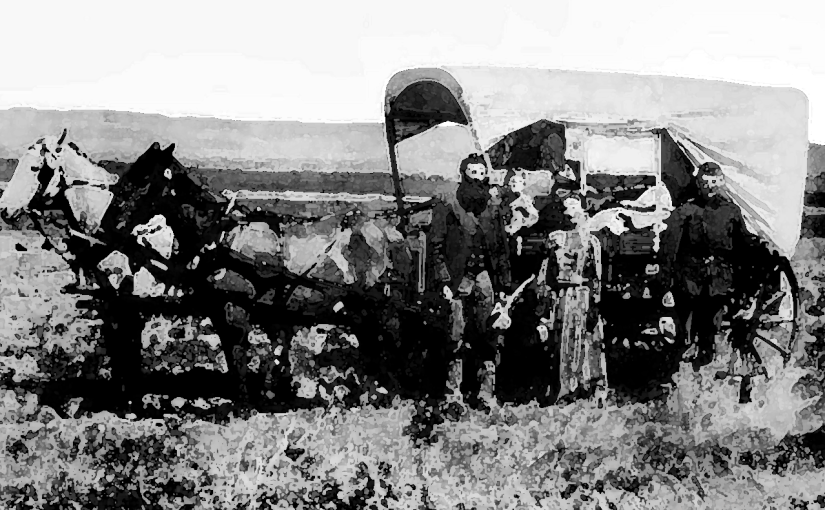
Louanne Murphy Bowden (1967- )

Louanne Murphy Bowden (1967- ) comes from an old Texas family, descendants of Archibald Edward Burden (1802-1859), one of The Old Three Hundred and the first Burden to live in Texas.

The name Burden was changed to Bowden by Henry Baxter (Burden) Bowden (1829-1913) because he did not share his family’s politics prior to and during ther Civil War.  Feelings ran high during this period and Henry thought it best to make a clean break with the Burdens.

The Bowdens became quite wealthy during the first decade of the 20th century when Louanne’s great-great-grandfather, Jonus Caldwell Bowden (1860-1914), struck oil on his ranch, before dying of a stroke.  The ranch and oil wells went to his son, James Neal Bowden (1889-1961), who proved himself more than a competent steward of the family’s burgeoning wealth.

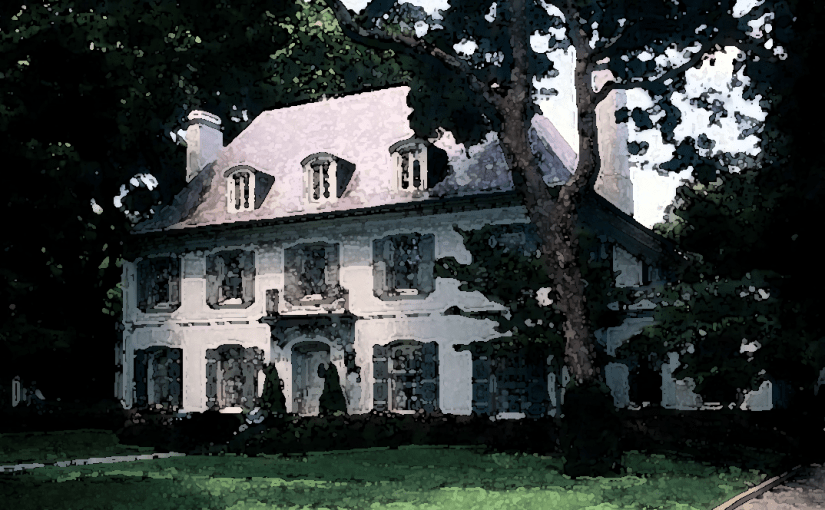
By the time Louanne was born the family had been living for decades in Dallas, the “old-money” part of town, Highland Park.  As was true for many kids who grew up during the Seventies, of privilege, Louanne’s idea of rebellion centered upon hanging out with kids from “the wrong side of the tracks”, and in general, frustrating her parents’ ideas about whom she ought to date, i.e. a nice boy from the club.  When it came time for Louanne to go off to college, she chose the University of Mississippi in Oxford because she had heard from some friends in Baton Rouge that it was an even bigger party school than LSU (see song, “Louanne in Vicksburg“).

In her first semester at Ol’ Miss, Louanne met a good-looking fellow, Ronnie Raney, who definitely was not a boy from the club, and not even enrolled at the university.  His main preoccupation appeared to be selling quality weed to fraternity boys.  One thing led to another and soon Louanne and Ronnie began dating, ending up with Louanne unofficially dropping out of school and moving to Vicksburg with him.

Louanne did not fully appreciate what she was getting into, since unbeknownst to her, Ronnie’s little pot business was only the tip of the criminal iceberg run by Ronnie’s mother, Molly Raney.  The Raney family led by Molly had a strong hold on the political and judicial levers of power in Warren County, and in fact, exerted influence and received protection from prosecution from Natchez to Memphis.

Shotgun House VicksburgFor a while Louanne partnered with Ronnie in the marijuana distribution enterprise, but her main occupation was managing the bar owned by the Raney family.  However, after few years, even getting married to Ronnie, she got tired of Ronnie’s habit of becoming violent when he’d had too much to drink, which was often.  She finally found the nerve to shoot him while he sat at their dinner table eating a slice of chess pie with a beer (see song, “One Time Too Many“).

She did not even attempt to flee the jurisdiction nor avoid prosecution for this crime.  She was well aware that Ronnie’s older brother, Lonnie, sheriff of the county, would make sure that her justifiable homicide defense at trial would not convince the jury.  In short order Louanne was found guilty of second degree murder and sentenced to twenty years to be served at the Central Mississippi Correctional Facility.

While at CMCF, Louanne developed an exemplary record of good behavior including mentoring several other young female prisoners.  For example, about half way through her sentence, a young woman, Lucy Cooper, was sent to CMCF on a drug charge, given eighteen months.  Lucy was a funny, bright, and street smart but fragile woman who simply could not do the time for her crime.  Despite being taken under Louanne’s wing, Lucy became increasingly more and more despondent, eventually suiciding from an overdose – within weeks of her release (see song, “When Louanne Met Lucy in Prison“).

LouannePSNot long after this tragedy Louanne’s case was reviewed by a judge who ruled that hers was a case of justified homicide and her sentence was commuted to time served. These events coincided with the death of her grandmother in 2015, when she was released after serving about 60% of her original sentence.  She returned to Texas for her grandmother’s funeral and remained there with her mother, to live once again in Highland Park, however, now in somewhat reduced grandeur (see song, “A Waxahachie Funeral“).

“Louanne in Vicksburg”


Louanne Murphy Bowden (1967- ) comes from an old Texas family, descendants of Archibald Edward Burden (1802-1859), one of The Old Three Hundred and the first Burden to live in Texas.

The name Burden was changed to Bowden by Henry Baxter (Burden) Bowden (1829-1913) because he did not share his family’s politics prior to and during ther Civil War.  Feelings ran high during this period and Henry thought it best to make a clean break with the Burdens.

The Bowdens became quite wealthy during the first decade of the 20th century when Louanne’s great-great-grandfather, Jonus Caldwell Bowden (1860-1914), struck oil on his ranch, before dying of a stroke. The ranch and oil wells went to his son, James Neal Bowden (1889-1961), who proved himself more than a competent steward of the family’s burgeoning wealth.

By the time Louanne was born the family had been living for decades in Dallas, the “old-money” part of town, Highland Park. As was true for many kids who grew up during the Seventies, of privilege, Louanne’s idea of rebellion centered upon hanging out with kids from “the wrong side of the tracks”, and in general, frustrating her parents’ ideas about whom she ought to date, i.e. a nice boy from the club. When it came time for Louanne to go off to college, she chose the University of Mississippi in Oxford because she had heard from some friends in Baton Rouge that it was an even bigger party school than LSU (see song, “Louanne in Vicksburg“).

In her first semester at Ol’ Miss, Louanne met a good-looking fellow, Ronnie Raney, who definitely was not a boy from the club, and not even enrolled at the university. His main preoccupation appeared to be selling quality weed to fraternity boys. One thing led to another and soon Louanne and Ronnie began dating, ending up with Louanne unofficially dropping out of school and moving to Vicksburg with him.

Louanne did not fully appreciate what she was getting into, since unbeknownst to her, Ronnie’s little pot business was only the tip of the criminal iceberg run by Ronnie’s mother, Molly Raney. The Raney family led by Molly had a strong hold on the political and judicial levers of power in Warren County, and in fact, exerted influence and received protection from prosecution from Natchez to Memphis.

For a while Louanne partnered with Ronnie in the marijuana distribution enterprise, but her main occupation was managing the bar owned by the Raney family. However, after few years, even getting married to Ronnie, she got tired of Ronnie’s habit of becoming violent when he’d had too much to drink, which was often. She finally found the nerve to shoot him while he sat at their dinner table eating a slice of chess pie with a beer (see song, “One Time Too Many“).

She did not even attempt to flee the jurisdiction nor avoid prosecution for this crime. She was well aware that Ronnie’s older brother, Lonnie, sheriff of the county, would make sure that her justifiable homicide defense at trial would not convince the jury. In short order Louanne was found guilty of second degree murder and sentenced to twenty years to be served at the Central Mississippi Correctional Facility.

While at CMCF, Louanne developed an exemplary record of good behavior including mentoring several other young female prisoners. For example, about half way through her sentence, a young woman, Lucy Cooper, was sent to CMCF on a drug charge, given eighteen months. Lucy was a funny, bright, and street smart but fragile woman who simply could not do the time for her crime. Despite being taken under Louanne’s wing, Lucy became increasingly more and more despondent, eventually suiciding from an overdose – within weeks of her release (see song, “When Louanne Met Lucy in Prison“).

Not long after this tragedy Louanne’s case was reviewed by a judge who ruled that hers was a case of justified homicide and her sentence was commuted to time served. These events coincided with the death of her grandmother in 2015, when she was released after serving about 60% of her original sentence. She returned to Texas for her grandmother’s funeral and remained there with her mother, to live once again in Highland Park, however, now in somewhat reduced grandeur (see song, “A Waxahachie Funeral“).



LOUANNE IN VICKSBURG
(F. D. Leone, Jr.)

Louanne came from Dallas money
A mansion in Highland Park
Brought julips to her daddy on the veranda
While fireflies flickered in the dark
A summer of magnolia ‘n’ mimosa
Sweet perfume on the heavy August air
Louanne left for college, Oxford Mi’sippy
Ronnie Raney was what she’d find there

When you don’t hear what momma says
And don’t think daddy knows best
If nothin’ is all they’re owed
You’re headed down your own road

Ronnie Raney was the perfect antidote
For Louanne’s Highland Park innocence
They traded Ol’ Miss for a shotgun house in Vicksburg
With no thought to consequence
Molly Raney was Ronnie’s mother
His brother Lonnie was shurf
The Raneys sold drugs from Natchez to Memphis
You get in their way, you got hurt

When you don’t hear what momma says
And don’t think daddy knows best
If nothin’ is all they’re owed
You’re headed down your own road

November and an iron sky
Fields of skeleton cotton and corn
Louanne was tryin’ to drive back to Dallas
To the one she was when she was born
At a Pak-a-Sak this side of Waskom
Standing at the Texas line
Drizzlin’ rain fallin’ steady since she left Monroe
She ain’t ready to leave Vicksburg behind

© 2017 Frank David Leone, Jr./Highway 80 Music (ASCAP). The songs and stories on the Highway 80 Stories website are works of fiction. Names, characters, businesses, places, events, locales, and incidents are either the products of the author’s imagination or used in a fictitious manner. Any resemblance to actual persons, living or dead, or actual events is purely coincidental.

Highland Park, Dallas

(Information taken from Wikipedia)

Highland Park is a town in central Dallas County, Texas, United States. It is among the five wealthiest locations in Texas, and the most affluent suburb of Dallas. The population was 8,564 at the 2010 census. It is located between the Dallas North Tollway and U.S. Route 75 (North Central Expressway), 4 miles (6 km) north of downtown Dallas.

Highland Park is bordered on the south, east and west by Dallas and on the north by the city of University Park. Highland Park and University Park together comprise the Park Cities, an enclave of Dallas.

Addresses in Highland Park may use either “Dallas, Texas” or “Highland Park, Texas” as the city designation, although the United States Postal Service prefers the use of the “Dallas, Texas” designation for the sake of simplicity. The same is true for mail sent to University Park.

The land now known as Highland Park was bought in 1889 by a group of investors from Philadelphia, Pennsylvania, known as the Philadelphia Place Land Association, for an average price of $377 an acre, with a total of $500,000. Henry Exall, an agent, intended to develop the land along Turtle Creek as Philadelphia Place, exclusive housing based on parkland areas in Philadelphia. He laid gravel roads, and dammed Turtle Creek, forming Exall Lake, before the Panic of 1893 brought a blow to his fortunes, halting development. Afterwards, he began a horse breeding farm. In the 1890s, Exall Lake was a common picnic destination for Dallas residents.

Highland Park 2


In 1906, John S. Armstrong (the former partner of Thomas Marsalis, the developer of Oak Cliff), sold his meatpacking business and invested his money in a portion of the former Philadelphia Place land, to develop it under the name of Highland Park. He chose this name as it was located on high land that overlooked downtown Dallas. Wilbur David Cook, the landscape designer who had planned Beverly Hills, California, and George E. Kessler, who had previously planned Fair Park and most of downtown Dallas, were hired to design its layout in 1907. Notably, twenty percent of the original land was set aside for parks. A second development in Highland Park was developed in 1910.

In 1913, Highland Park petitioned Dallas for annexation, but was refused. The 500 residents voted to incorporate on November 29, 1913, and incorporation was granted in 1915, when its population was 1,100. The first mayor of Highland Park was W. A. Fraser. A third and fourth development were added to the town in 1915 and 1917, respectively. In 1919, the city of Dallas sought to annex Highland Park, beginning a lengthy controversy that lasted until 1945. J. W. Bartholow led the fight to resist the annexation. The final major land development occurred in 1924. In 1931, Highland Park Village was constructed, the first shopping center of its kind in the United States. The distinctive Moorish Style ornamental metalwork and lighting in Highland Park Village were created by Potter Art Metal Studios, a 90-year-old custom metalwork company still in existence today.

Because of its location near Dallas, Highland Park had, by the early 1930s, developed a moderately large (8,400) population, with a few businesses. Eventually the school districts and newspapers of Highland Park and University Park were combined. In the 1940s, after the failure to annex Highland Park, Dallas began annexing the land surrounding it. Reaching a population high of just under 13,000 in the late 1950s, Highland Park afterwards grew only by building houses on the remaining vacant lots, and by the destruction of old buildings. Since 1990, Highland Park has maintained strict zoning ordinances. Known for its quality housing, the town still has many parks running along Turtle Creek and is home to the Dallas Country Club.

Highland Park became somewhat famous in the early 1980s when the popular television show Dallas used to shoot on location there. From the Netflix original show, House of Cards, main character Claire Underwood (played by Robin Wright) grew up in Highland Park.

“One Time Too Many”


LOCATION: Vicksburg, Mississippi
PERIOD: 1985-2004
DRAMATIS PERSONAE: Louanne Murray Bowden (1967); Ronnie Raney (1962-2004)


In a disastrous act of rebellion from her upper crust background, Louanne Bowden began dating and ultimately married Ronnie Raney whom sehe met while attending the University of Mississippi in Oxford.

The Raney family under the leadership of matriarch Molly Motts Raney transitioned from bootlegging moonshine whiskey to distributing marijuana, pills and eventually funding methamphetamine labs. Ronnie was the second oldest son, acting as his mother’s right hand operations manager, his older brother Lonnie was sheriff of Warren County, offering protection for the entire enterprise.

After suffering years of Ronnie drunken abuse, Louanne and finding no relief from the corrupt legal system in Warren County, took matters into her own hands and shot Ronnie with a deer rifle as he sat at the kitchen table eating a slice of her homemade peach pie.

Although she knew she was justified in killing him, she fatalistically accepted her conviction of murder and the twenty year sentence that went with it. Only much later was she vindicated and released for time served.


ONE TIME TOO MANY
(F. D. Leone, Jr.)

She’d like to fix up her dinette
Yellow wallpaper with nosegays
A hard wood floor would do the trick
Those stains’ll take more than paint
 
A buzzer spoils this daydream
Lights out and the bars clang shut
It’ll have to wait twenty years
This cell is where she’ll stay put
 
She’d had enough
Taken too much
He treated her rough one time too many
She did the crime
She’ll do the time
Regrets? No, she don’t have any
 
She brought him his beer and a slice of pie
Then shot him with his deer gun
It was worth it just to see him surprised
Once he realized just what she’d done
 
She’d had enough
Taken too much
He treated her rough one time too many
She did the crime
She’ll do the time
Regrets? No, she don’t have any
 
His brother was sheriff of Warren County
There was no doubt the fix was in
A jury of his peers showed no mercy
But if she could she’d do it again
 
She’d had enough
Taken too much
He treated her rough one time too many
She did the crime
She’ll do the time
Regrets? No, she don’t have any

© 2017 Frank David Leone, Jr./Highway 80 Music (ASCAP). The songs and stories on the Highway 80 Stories website are works of fiction. Names, characters, businesses, places, events, locales, and incidents are either the products of the author’s imagination or used in a fictitious manner. Any resemblance to actual persons, living or dead, or actual events is purely coincidental.

“When Louanne Met Lucy in Prison”


LOCATION: Mississippi Penitentiary for Women, Rankin County, MIssissippi
PERIOD: 2015
DRAMATIS PERSONAE: Lucy Bess Cooper (1980-2015); Louanne Murray Bowden (1967)


Louanne Bowden was sent to the Mississippi Penitentiary for Women after being convicted of murdering her husband, Ronnie Raney (see song, “One Time Too Many“). Prison was an unlikely place for someone of Louanne’s background to end up, but there she was (see song, “Louanne in Vicksburg“). The fact that she killed Ronnie as a result of his constant physical abuse did not mitigate the verdict. Only years later would her case be reviewed and she would be released for time served when the charge was changed from murder to justifiable homicide (see song “A Waxahachie Funeral“).

However, while Louanne was serving her twenty year sentence Lucy Cooper was also sent to this prison on an 18 month sentence for distribution of controlled substance, marijuana. Although Lucy put up a brash and strong front, she was in fact a fragile woman, unable to cope with life behind bars. Shortly before being considered and most likely to be released on parole, a little shy of 12 months into her sentence, Lucy succumbed to depression and killed herself with an heroin overdose (see also song, “Levi and Lucy“).


WHEN LOUANNE MET LUCY IN PRISON
(F. D. Leone, Jr.)

When Louanne met Lucy in prison
Lou was halfway through her twenty
For killin’ Ronnie Raney
Who hit her once too many
Lucy would talk all about Levi
In words tender and soft
It was old friends and old sins
Got Lucy caught

Ain’t that how it is sometimes?
You’re on the verge of change
Life sends you the same ol’ same

They gave Lucy eighteen months
Easy time for most but for Lucy hard
Day by day she faded away
Behind stone walls and steel bars
Louanne tried to keep an eye on Lucy
Easy in there to come to harm
August night when they found her
Needle was still in Lucy’s arm

Ain’t that how it is sometimes …

Louanne got word to Levi
Said it best she knew how
Lucy only had six weeks left
She ain’ never gettin’ out
Levi read that letter and then
Put it in his dresser drawer
Got drunk in Vicksburg went a little further
Did a little more

© 2017 Frank David Leone, Jr./Highway 80 Music (ASCAP). The songs and stories on the Highway 80 Stories website are works of fiction. Names, characters, businesses, places, events, locales, and incidents are either the products of the author’s imagination or used in a fictitious manner. Any resemblance to actual persons, living or dead, or actual events is purely coincidental.

Parchman Farm (Mississippi State Penitentiary)

(Information taken from Wikipedia)

Mississippi State Penitentiary (MSP), also known as Parchman Farm, is a prison farm, the oldest prison, and the only maximum security prison for men in the state of Mississippi.

Begun with four stockades in 1901, the Mississippi Department of Corrections facility was constructed largely by state prisoners. It is located on about 28 square miles (73 km2) in unincorporated Sunflower County, in the Mississippi Delta region.

It has beds for 4,840 inmates. Inmates work on the prison farm and in manufacturing workshops. It holds male offenders classified at all custody levels—A and B custody (minimum and medium security) and C and D custody (maximum security). It also houses the male death row—all male offenders sentenced to death in Mississippi are held in MSP’s Unit 29—and the state execution chamber.

Female prisoners are not usually assigned to MSP; Central Mississippi Correctional Facility (CMFC), also the location of the female death row, is the only state prison in Mississippi designated as a place for female prisoners.

CMCF opened in January 1986 with a capacity of 667 prisoners. CMCF was the first prison facility of the Mississippi Department of Corrections outside of the Mississippi State Penitentiary (MSP) in Sunflower County. Upon the opening of CMCF, female prisoners were transferred from MSP to CMCF; previously women were held in MSP Camp 25.

Nellie Phelps (1855-1922)

Eleanor “Nellie” Davis (1923-2007) was Louanne Bowden’s paternal grandmother.  She was named Eleanor and called Nellie for her own great-grandmother, Nellie Phelps (1855-1922).  Nellie Phelps had died the year prior to Louanne’s grandmother’s birth.

The Phelps family had come from England to America in the 1690s, the first Phelps born in Pennsylvania was William Phelps (1721).  From Pennsylvania the family went to Tennessee and began farming.  Nellie Phelps had two brothers, Burch and Jethro (“Jed”).  Their parents, were another William Phelps (1834-1872) and his wife Martha Massey (1835-1862).  Martha died when Nellie was eight, probably from some kind of “heart sickness” after Burch, their oldest, had died from a fever.  She had never been happy on the frontier anyway, and just went to bed one day and never got up.

Nellie and her brother Jed were left with their father to tend to the farm, which they did for nearly a decade before William, too, got sick with consumption.  He died when Nellie was 17 and Jed only sixteen (see song “I Didn’t Know What Else to Do”).  When Nellie got married the next year to Robert Abbott, they and Jed all went to Texas where the Abbotts had a nice sized ranch.

Nellie lived a long life in Texas, but Jed died young, only 32, as a Texas Ranger in the Indian wars.

Waxahachie, Texas

(Information taken from Wikipedia)

Waxahachie was founded in August 1850 as the seat of the newly established Ellis County on a donated tract of land given by early settler Emory W. Rogers, a native of Lawrence County, Alabama, who migrated to Texas in 1839. It was incorporated on April 28, 1871, and in 1875 the state legislature granted investors the right to operate a rail line from Waxahachie Tap Railroad to Garrett, Texas, which greatly increased the population of Waxahachie.

From 1902 to 1942, Waxahachie was the 2nd home of Trinity University, which was a Presbyterian-affiliated institution founded in 1869. Then-Trinity’s main administration and classroom building is today the Farmer Administration Building of Southwestern Assemblies of God University. Trinity’s present-day location is San Antonio.

Waxahachie was the home of Constance Maddox Haynes (1928-2015), Louanne Borden‘s maternal grandmother, and the only member of her extended family to which she had a special closeness. Louanne’s release from prison coincided with Constance Haynes’s funeral in Waxahachie.

In the mid-1980s Waxahachie became popular with the movie industry.

The majority of Tender Mercies, a 1983 film about a country western singer, was filmed in Waxahachie. The 1984 film Places in the Heart starring Sally Field was also filmed in Waxahachie. The 1985 film The Trip to Bountiful starring Geraldine Page was also filmed in Waxahachie.

“A Waxahachie Funeral”


LOCATION: Whitfield MIssissippi; Waxahachie, Texas
PERIOD: 2015
DRAMATIS PERSONAE: Louanne Murray Bowden (1967); Constance Maddox Haynes (1913-2015, 102); Helen Haynes Murray (1947)


While at CMCF, Louanne developed an exemplary record of good behavior including mentoring several other young female prisoners. For example, about half way through her sentence, a young woman, Lucy Cooper, was sent to CMCF on a drug charge, given eighteen months. Lucy was a funny, bright, and street smart but fragile woman who simply could not do the time for her crime. Despite being taken under Louanne’s wing, Lucy became increasingly more and more despondent, eventually suiciding from an overdose – within weeks of her release (see song, “When Louanne Met Lucy in Prison“).

Not long after this tragedy Louanne’s case was reviewed by a judge who ruled that hers was a case of justified homicide and her sentence was commuted to time served. These events coincided with the death of her grandmother in 2015, when she was released after serving about 60% of her original sentence. She returned to Texas for her grandmother’s funeral and remained there with her mother, to live once again in Highland Park, however, now in somewhat reduced grandeur.


A Waxahachie Funeral
(F. D. Leone, Jr.)

A call from that charity lawyer,
Words like “justifiable homicide”.
She heard him say the phrase “time served”;
Then a thirty hour Greyhound ride.
Twelve years in, Louanne walked out of prison;
In a blue dress and a brand new pair of shoes.
Destination: a Waxahachie funeral;
Her grandma dead at a hunderd ‘n’ two.

Standin’ with her people among weathered stones;
Stiff new shoes powdered with red dirt.
Back home to witness a tough ol’ Texas woman,
Laid into a plot of Texas earth.

Her daddy died five years before;
That was a funeral Louanne had to miss.
It’s just her and her Neiman Marcus mother,
Left behind to make some sense of this.
They climb inside a shiny black Lincoln;
Go back to that big old empty house.
Their polite Highland Park friends,
Don’t know how to talk to her now.

Standin’ with her people among weathered stones;
Stiff new shoes powdered with red dirt.
Back home to witness a tough ol’ Texas woman,
Laid into a plot of Texas earth.

Louanne and momma sit in the kitchen;
Mute and surrounded by their ghosts.
They stare across a walnut table;
A cup of coffee and a slice of melba toast.
Louanne remembers another August;
That magic summer when she turned eighteen.
When her life seemed so full of promise;
Magnolias and September dreams.

Standin’ with her people among weathered stones;
Stiff new shoes powdered with red dirt.
Back home to witness a tough ol’ Texas woman,
Laid into a plot of Texas earth.

© 2018 Frank David Leone, Jr./Highway 80 Music (ASCAP). The songs and stories on the Highway 80 Stories website are works of fiction. Names, characters, businesses, places, events, locales, and incidents are either the products of the author’s imagination or used in a fictitious manner. Any resemblance to actual persons, living or dead, or actual events is purely coincidental.