“The Ballad of Cunn’l Cooper”


LOCATION: Russell County, Alabama; Columbus, GA; Girard, AL
PERIOD: 1850s-1960s
DRAMATIS PERSONAE: Roy Cooper (1794-1858); Mary O’Neill (1801-1826); Edith Carter (1799-1872); Frank Roy “Th’ Cunn’l” Cooper (1823-1865); Luther “Sonny Ray” Cooper (1827-1876); Lucas Keith Cooper (1887-1965); Henry Barbour (1848-1924); Charles Thomas Barbour (1933-1955).


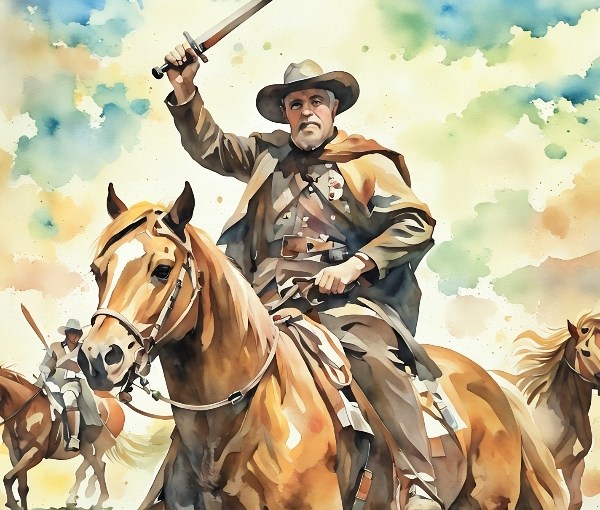
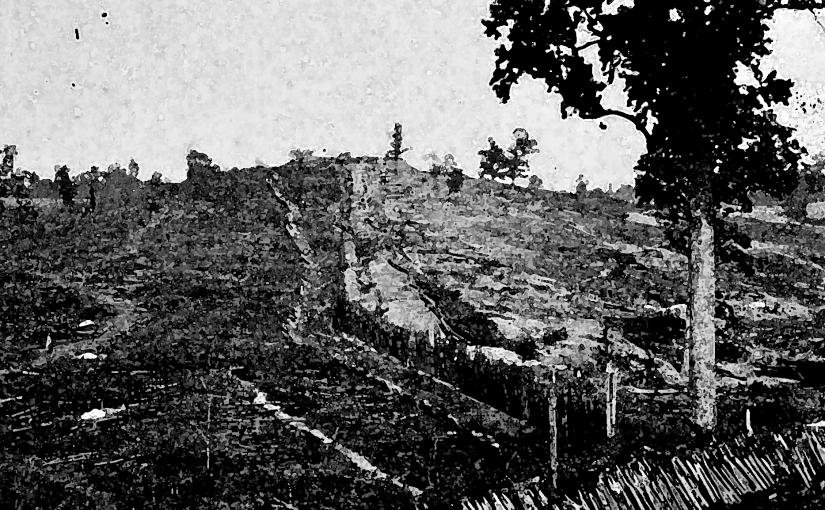
Henry Barbour was part Black and part Catawba Indian was brought as a slave to eastern Alabama by his owner Frank Roy “Th’ Cunn’l” Cooper. Cooper fought and died in the last battle of the War Between the States, which took place near the 14th Street Bridge across the Chattahoochee River on April 16th, 1865. The news of Lee’s surrender at Appomattox a week earlier had not reached Alabama yet.

Th’ Cunn’l was a contractor and builder, and Barbour was his labor foreman, constructing most of the first houses of Columbus, Georgia and Girard, Alabama. After Th ‘Cunn’l’s death, Barbour provided for his widow as long as she lived.

During Reconstruction, Barbour served in the Alabama legislature as a representative from Russell County. Over his former owner’s grave, Barbour erected a shaft with an inscription stating that the stone was placed by Henry Barbour in lasting remembrance of the love and gratitude he felt for his lost friend and former master.

Roy Cooper (1794-1858), Th’ Cunn’l’s father, had a second wife, Edith Carter (1799-1872), who he married after his first wife, Mary O’Neill (1801-1826), died giving birth to his second son, Lucas Neil Cooper (1826-1901).  This second family would produce Frank’s half brother, Luther “Sonny Ray” Cooper (1827-1876).

“Sonny Ray”  rode with Bedford Forrest, and together after the war, they were early members of the Ku Klux Klan (KKK), which was formed by six veterans of the Confederate Army in Pulaski, Tennessee, during the spring of 1866.  Two years after Appomattox, Forrest was reincarnated as grand wizard of the Ku Klux Klan. As the Klan’s first national leader, he became the Lost Cause of the Confederacy’s avenging angel, galvanizing a loose collection of boyish secret social clubs into a reactionary instrument of terror.

But their activities were mostly limited to harassing Federal troops attempting to enforce the new laws of Reconstruction (1865-1877). Forrest also hoped to persuade black voters that returning to their pre-war state of bondage was in their best interest.

Because of the essentially ungovernability of the larger membership of the KKK, and a number of what Forrest thought of as counterproductive violent attacks and lynchings, he announced the dissolution of the organization, and officially left the group. The Klan remained mostly dormant until the early 1910s.

This second iteration of the Klan was the first to use cross burnings and standardized white-hooded robes. The KKK of the 1920s had a nationwide membership in the millions and reflected a cross-section of the native born white Protestant population. The third and current Klan formed in the mid 20th century, was largely a reaction to the growing civil rights movement. It used murder and bombings to achieve its aims.

Each  generation of the Cooper family, after  Lucas “Sonny Ray” Cooper were sympathetic to the Klan,imbibed it’s racist ideology, and were mostly white supremacists.  It was Sonny Ray’s great-grandson, Lucas “Sonny Boy” Cooper (1935-1965), who would be among the mob that lynched Henry Barbour’s great-grandson, Charles Thomas Barbour (1933-1955) in 1955.

Ten years later, the narrator of this song, Lucas Keith Cooper (1887-1965), would confront Sonny Boy. They would fight, both dying from their wounds – 100 years to the day of the death of Frank Roy Cooper.


THE BALLAD OF CUNN’L COOPER
(F. D. Leone, Jr.)

My name is Lucas Cooper;
I died in 1965.
Hundred years from the day,
My grandpa Frank died.
Th’ Cunn’l was killed,
16th of April.
The last battle of the war,
A final betrayal.
 
Way down;
Way down.
Soldier fights a cause lost,
On bloody Southern ground.
Way down;
Way down.
All the rest is talk,
An empty sound; way down.
 
Henry Barbour was a slave;
Part Black, part Catawba Injun.
Worked for Th’ Cunn’l,
Supervising construction.
Provided for his widow,
Long as she was livin’.
Carved grandpa’s tombstone,
With a loving inscription.
 
Way down;
Way down.
Folks will surprise you,
Step out from the crowd.
Way down;
Way down.
Stand beside you,
On common ground; way down.

Grandpa had a half-brother,
Cut from a different cloth.
Th’ Cunn’l was a Christian;
Luther had no god or law.
That’s what he passed down,
Till it produced the one,
Who was in the mob that hanged,
Henry Barbour’s great-grandson.
 
Way down;
Way down.
Destiny foretold,
Around a neck a noose is wound.
Way down;
Way down.
History is a long road,
Twisting around; way down.
 
That fella, Sonny Boy Cooper,
Lived ’til 1965.
When he stumbled cross my path;
We fought; we died.
Sank like lead,
The die had been cast.
The past ain’t dead,
It ain’t even past.
 
Way down;
Way down.
Our stars crossed;
In an Alabama town.
Way down;
Way down.
Battles had been fought,
Been lost; been found; way down.

© 2025 Frank David Leone, Jr./Highway 80 Music (ASCAP). The songs and stories on the Highway 80 Stories website are works of fiction. Names, characters, businesses, places, events, locales, and incidents are either the products of the author’s imagination or used in a fictitious manner. Any resemblance to actual persons, living or dead, or actual events is purely coincidental.

“Dirty Dog World”


LOCATION: East Texas; Shreveport, Louisiana
PERIOD: 1815-1889
DRAMATIS PERSONAE: Earland McLemore (1816-ca. 1861); Leeland McLemore (1816-1889); Owen McLemore (1791-1868); Doak Walker (1820-1905).


Earland McLemore (1816-1864) and Leeland McLemore (1816-1889) were twins, tow of seven sons of Owen McLemore (1791-1868) and Anabel March (1796-1832) who died in childbirth with the youngest son at age 36.

Earl was one minute older than Lee and lorded this over his very slightly younger brother. This was the start of intense jealousy on the part of Lee, who as the song begins, fantasizes about killing his twin brother.

Although they look identical, it was not hard to tell them apart since their personalities were opposite: Earl out-going, charismatic, and with many friends; Lee moody, stand-offish, and a loner.

While Earl mixed well with other men, he didn’t always display good judgment being too quick to trust someone and become the best of friends and even going into business with a man he hardly knew.  This is what happened when Doak Walker (1820-1905) came to Texas to collect a string of ponies to sell to the Confederate army in 1861.

While Earl joined up with Walker with no hesitation, Lee was skeptical and watched from the sidelines, a position he was comfortable taking since it had been his habit from the time he was a small boy.  Some how, at some point, the partnership went sour, and it was assumed that Doak Walker killed Earl McLemore, although there was no actual proof.  Earl’s body was not found until near the end of the war in 1864.

In 1889, his approaching last days, Lee told the story, if he is to be believed, how Doak Walker murdered his brother. Lee, who had fantasized about that very thing since he was a young boy, admitted to nothing, leaving judgment in the hands of a Higher Authority.


DIRTY DOG WORLD
(F. D. Leone, Jr.)

Three shots pierce a gray winter morn;
The McLemore twins hunting at dawn;
Snow geese on the river, a cold steady rain.
One minute older, Earl made much of it;
All his life, Lee put up with that shit;
Raised his barrel at Earl’s head then dropped his aim.
 
Owen McLemore had seven living sons;
All except the youngest one;
They lost him when he was two years old.
His mama Anabel died in childbirth;
Mother and son buried in Tennessee dirt;
Owen took the rest to Texas and a bitter household.
 
It’s a dirty dog world,
Round a trigger a finger curls.
We are only as free,
As the secrets we keep.
 
The western sky black with a thunderhead;
Chink of bridle, drum of hoof tread;
Rain by nightfall, if the desert don’t drink it up.
Lee and Earl joined up after the Alamo;
To rip Texas from the grasp of Mexico;
Like the other young and strong Texas patriots.
 
Earl moved easy among the other men;
Joking and jostling, everyone his friend;
Lee kept to himself, separate from the rest.
Staring at Earl’s back Lee fantasized;
To remove Earl from his life;
A cold rage burned deep in his dark breast.

It’s a dirty dog world,
Round a trigger a finger curls.
We are only as free,
As the secrets we keep.
 
Doak Walker came with horses from Arkansas;
Sell ’em to the Feds, against the law;
This was 1861, April or May.
Doak and Earl hit it off when they met;
Lee didn’ trust Walker far as he could spit;
But Earl went on and threw in with Doak Walker anyway.
 
They never found Earl’s body ’til ’64;
A Tennessee cornfield at the end of the war;
Three .44 slugs blackened Earl’s bloody chest.
Lee swore to it in 1889;
To a Shreveport judge, just before he died;
“Doak Walker done it,” if you believe him, well, that’s what Lee said.
 
It’s a dirty dog world,
Round a trigger a finger curls.
We are only as free,
As the secrets we keep.

© 2023 Frank David Leone, Jr./Highway 80 Music (ASCAP). The songs and stories on the Highway 80 Stories website are works of fiction. Names, characters, businesses, places, events, locales, and incidents are either the products of the author’s imagination or used in a fictitious manner. Any resemblance to actual persons, living or dead, or actual events is purely coincidental.

“Ransom Raney”


LOCATION: North Georgia
PERIOD: 1848-1906
DRAMATIS PERSONAE: Ransom Raney (1848-1905)


Ransom Raney (1848-1905) was the oldest son born to Lonsom Raney (1828-1923) and was the first child born to the Raney family on their new mountain home in North Georgia after moving from southwestern North Carolina. Originally from Scotland the Raneys were one of many families who were encouraged to move from southern Scotland to northern Ireland, the Ulster region.

These people have been called Scots-Irish and made up a significant number of the immigrants to America in the 17th and 18th centuries. They brought with them much of their way of life, including distilling whiskey in copper stills, with the idea that this was their right, one for which they would not tolerate any infringement from government.

Scots-Irish tended to be impetuous and hotheaded, having been marginalized back in Ulster, they defied any easy definition. In fact, they bristled at others’ labels for them—”Irish,” “Irish Presbyterians,” “Northern Irish,” or even “Wild Irish.”  Already twice transplanted, they had acquired a migratory habit. Once acquired, such habits are liable to persist; when the constraints of government caught up with them, these wayfarers often chose to move on.

This trait did not evaporate once they were in America and often they would keep moving west, keeping just ahead of civilization and legal constraints on their way of life.

This song is about three things: 1) the resilient nature of the Scots-Irish of the Appalachian mountains, 2) making whiskey and in general living off the land, and 3) fighting to preserve their way of life, not as part of a larger cause but for fiercely personal reasons.


RANSOM RANEY
(F. D. Leone, Jr.)

This is the tale of a mountain man
Lot of grit, lot of sand
Ransom Raney’s his name
From Scotland his people came

He was Lonsom Raney’s oldest son
1848 he was born
Stood at his daddy’s right hand
Taught to be a mountain man

Keep your mouth shut, your head down
Live off what comes from the ground
Make your shine, dig ginseng root
Live your own truth

When he was fifteen he went to war
Butternut was his uniform
Fought for what he could understand
Get the blue basterds off his land

Chickamauga; Second Vicksburg
Mansfield was the call he heard
But Ransom slipped away
From the fighting of the blue and grey

His year was up so he went back home
Grateful to get through it whole
In the winter of ’64
Ransom Raney was done with war

Back at the farm what he found
It had been burned to the ground
His daddy rebuilt the barn
While the ground was still warm

Lonsom had buried his copper still
Set it back up on same hill
The first batch after the war
Was his best he swore

The Raneys are a real hard bunch
Won’t be stopped, not by much
A war ain’t nearly enough
The Raneys are a hard bunch

Ransom Raney loved one wife
She gave his seven children life
He taught his two eldest sons
To do what their grandpa done

He lived long enough to see
A brand new century
He was satisfied
In 1905 he died

Ransom Raney stood alone
But he could be counted on
When you needed a friend
Against flatlanders or gov’mint men

© 2019 Frank David Leone, Jr./Highway 80 Music (ASCAP). The songs and stories on the Highway 80 Stories website are works of fiction. Names, characters, businesses, places, events, locales, and incidents are either the products of the author’s imagination or used in a fictitious manner. Any resemblance to actual persons, living or dead, or actual events is purely coincidental.

“Levi, Ruby, and Cole”


LOCATION: Northwest Louisiana
PERIOD: 1860s
DRAMATIS PERSONAE: Levi Motts (1843-1864); Ruby Robison (1845-1933 ); Coleman Broussard (1842-1910)


Levi Motts and Coleman Broussard were cousins, and each one loved Ruby Robison and she loved them both, as well. Levi and Cole were Confederates, and fought at Mansfield. But Levi died that afternoon, leaving Ruby and Cole to carry on together.


LEVI, RUBY, AND COLE
(F. D. Leone, Jr.)

Cole was strong and steady
Straight as a rail
Levi was born ready
Always raisin’ hell
Ruby loved Levi all the way
But Cole was who she chose
Levi might grow up some day
But, who knows

Ruby knew Cole loved her
But Levi charmed her heart
Cole was down to earth
Levi sparkled like a star

The War broke this trio up
Only one came back home
Ruby had two loves
Levi and Cole

Cole knew he and Ruby
Would never have
The kind of magic love
She and Levi had
Just taking care of her
For Cole, it was enough
He ain’ the apple of her youth
But theirs was also love

Ruby knew Cole loved her
But Levi charmed her heart
Cole was down to earth
Levi sparkled like a star

© 2018 Frank David Leone, Jr./Highway 80 Music (ASCAP). The songs and stories on the Highway 80 Stories website are works of fiction. Names, characters, businesses, places, events, locales, and incidents are either the products of the author’s imagination or used in a fictitious manner. Any resemblance to actual persons, living or dead, or actual events is purely coincidental.

“Levi Motts Is My Name”


LOCATION: Northwest Louisiana
PERIOD: 1864
DRAMATIS PERSONAE: Levi Motts (1843-1864); Coleman Broussard (1842-1910); Ruby Robison (1845-1933); Pearl Robison (1864-1944)


Mustering out of Monroe, Louisiana Levi and his cousin Coleman Broussard joined up with in Colonel Henry Gray’s brigade, the Louisiana Gray’s. It did not take them long to find their way to the burgeoning red light district of Shreveport. There Levi met and took up with one of the young sporting girls there, Ruby Robison. Cole was also smitten and Ruby seeing Levi for what he was, a rake and leaky vessel for her to place her future, encouraged Cole in his romantic dreams. They were a inseparable trio, the two kinsmen and the beautiful and fragile young whore hedging her bets, so to speak.

Despite Coleman’s obvious romantic aspirations, Ruby couldn’t deny her stronger feelings for Levi. Defying the conventions of the time she and Levi made plans for marriage as soon as the war was over. However, the Louisiana Grays were called up to confront the Union troops already marching towards Louisiana after conquering Vicksburg. Gray’s brigade is one of the units in Gen. Robert Taylor’s army tasked with stopping the Trans-Mississippi Campaign of Nathaniel Bank’s invading force at Mansfield.

While the Battle of Mansfield was a Confederate victory, Levi Motts was one of only about a hundred Southern men who died there on April 8, 1864. When he went into battle, Levi knew that Ruby was pregnant with their child. This child, a girl Ruby named Pearl, is born in late December of 1864. Because of her illegitimate status Pearl chose to use the name Robison for most of her life.


LEVI MOTTS IS MY NAME
(F. D. Leone, Jr.)

Levi Motts is my name
Come from Northwest Louisiana
I joined up with Colonel Gray
He said be ready to march today
Don’t know when I’ll be back again
If this war will ever end

Ruby Robison is my gal
Keeps a room down in the bottoms
We talked of gettin’ out of there
Make a new life anywhere
Don’t know when I’ll be back again
If this war will ever end

Ruby wrote me a letter
We were waitin’ outside Mansfield
Wrote there’s a baby on the way
We fought the Yankees April Eighth
Don’t know when I’ll be back again
If this war will ever end

Levi Motts is my name
Come from Northwest Louisiana
Lead ball went through my neck
That afternoon I bled to death
Don’t know when I’ll be back again
If this war will ever end

© 2017 Frank David Leone, Jr./Highway 80 Music (ASCAP). The songs and stories on the Highway 80 Stories website are works of fiction. Names, characters, businesses, places, events, locales, and incidents are either the products of the author’s imagination or used in a fictitious manner. Any resemblance to actual persons, living or dead, or actual events is purely coincidental.

“Fannin Street”


LOCATION: Shreveport, Louisiana: St. Paul’s Bottoms
PERIOD: 1860s
DRAMATIS PERSONAE: Ruby Robison (1845-1933); Levi Motts (1845-1864); Coleman Broussard (1842-1910); Pearl Robison (1864-1936); Lucas Broussard (1866-1934)


Ruby Robison (1845-1933), young prostitute on Fannin Street; has daughter, Pearl, with Confederate soldier Levi Motts. After learning that Levi is killed at the Battle of Mansfield in April, 1864, Ruby marries his cousin Coleman Broussard and has four other children.

Ruby came to Shreveport during the Civil War, perhaps with Union troops up the Red River from New Orleans following the occupation of that city. Born in Ireland in 1845, her family may have been among the large numbers of Irish immigrants who sought refuge in America during the potato famines of the mid-nineteenth century. She most likely resorted to prostitution as a means of survival.

Ruby had a room in one of the dozens of brothels in downtown Shreveport area around Fannin Street, but her life took an unexpected turn when she met Levi Motts. Ruby and Levi began to have serious feelings for each other and Levi swore that he would find a way to get her out of the life she’d known as a prostitute. But the war got in the way, sending Levi off to fight and die in the Battle of Mansfield (see songs, “Fannin Street” and “Levi Motts is My Name“).

Ruby had let Levi know of her pregnancy and she gave birth to a daughter in 1865, whom she named Pearl. Levi’s cousin, Coleman Broussard chose to marry Ruby and they had four children together. Their first son, Lucas was the great-grandfather of Mike “Sarge” Broussard.

Ruby lived to age of 88, living to see not only her daughter grow up, get married, and have children of her own, but well into the lives of her great-grandchildren.


FANNIN STREET
(F. D. Leone, Jr.)

On Fannin Street, Fannin Street
There’s a room upstairs for the men she meets
She’s not theirs and never was,
Just what she does
On Fannin Street

There was one boy, fine and sweet
Not like the rest of Fannin Street
The only one she ever loved
In the room above
Fannin Street

On Fannin Street, Fannin Street
There’s a room upstairs for the men she meets
She’s not theirs and never was,
Just what she does
On Fannin Street

The boy he said he’d take her away
From the life she led one day
He left for Mansfield to the restless beat
Of Marching feet
In columns of grey

On Fannin Street, Fannin Street
There’s a room upstairs for the men she meets
She’s not theirs and never was,
Just what she does
On Fannin Street

In her room alone Ruby Robison
Heard that the Rebels had won
She went to Mansfield but there she cried
For the baby inside
And the boy who was gone

On Fannin Street, Fannin Street
There’s a room upstairs for the men she meets
She’s not theirs and never was,
Just what she does
On Fannin Street

© 2017 Frank David Leone, Jr./Highway 80 Music (ASCAP). The songs and stories on the Highway 80 Stories website are works of fiction. Names, characters, businesses, places, events, locales, and incidents are either the products of the author’s imagination or used in a fictitious manner. Any resemblance to actual persons, living or dead, or actual events is purely coincidental.

“From Burden to Bowden”


LOCATION: Dallas County, Texas
PERIOD: 1850s-2010s
DRAMATIS PERSONAE: Henry Baxter (Burden) “Bowden” (1833-1915); Bertha Caldwell (1835-1918); Alan Edward Burden (1850-1916); Archibald Edward Burden (1802-1859); Margaret Alice Bowden (1918); Earl Walker (1996).


Henry Baxter (Burden) “Bowden” (1833-1915) was a thorn in the side of his family, especially his father and older brother. During the years before the Civil War Henry began to find meaning in the Abolitionist Movement, and became politically activated in that direction. This of course rubbed the rest of his family and neighbors the wrong way. While the majority of Southerners were strongly in favor of maintaining slavery, most were too poor to own slaves themselves, but as a matter of pride in their region they would fight to preserve the institution.

Things came to a head when Henry inlisted in a Union regiment and actually went to war against his family and state. His company saw a lot of action, and he fought at Gettysburg where he lost his arm.

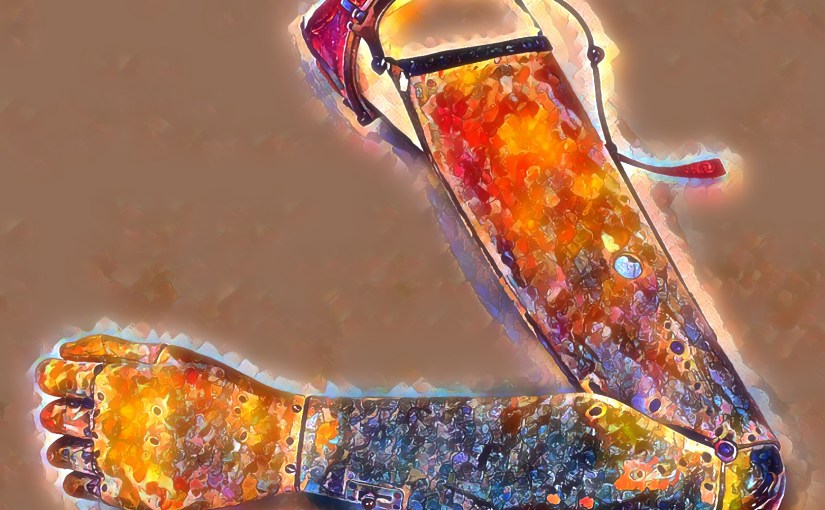
The song begins with one of his later descendants, Earl Walker (1996), describing how his grandmother, Margaret Alice Bowden (1918), ended up with Henry’s wooden arm prothesis which, for some reason, they had kept and passed down through the family.


FROM BURDEN TO BOWDEN
(F. D. Leone, Jr.)

Grandma kept that wood arm in the attic;
We used to take it out on Halloween; run around with it.
Was told it was worth some money by a Dallas appraiser;
The army gave him that one; he was buried with a better one he got later.
Funny after all this time, how things turn out;
The Bowdens were a big deal in Texas, I don’t misdoubt.

First heard of Henry when I was a child,
Told he didn’t talk much, never smiled.
Stand-offish, had gotten above his raising.
Had some queer ideas, like going to hear a-coupla Yankees debating;
He’d wander off with a book, on his own;
One day he just spoke up, said “slavery’s wrong.”

The Burdens was poor, had no slaves, didn’t much care;
Only fought cause them blue bellies had come down there.
After it was done, they never forgave or forgot;
The Burdens cursed Henry, cuz it was for the North that he had fought.
When Henry lost his arm his daddy claimed,
“You can bet it was a Burden that blew th’ arm away.”

Married Bertha Caldwell; they had a bunch of kids;
Ten or twelve, a big number like that, they did.
Took the whole bunch to Texas,1885 or 6;
His grandson got into oil; they got pretty rich.
Strange thing was, after Henry changed his name,
You’d a-thot they been happy? Nah; was just more ashamed.

At the Gettysburg reunion old enemies embraced;
Henry’s nephew, Alan, only showed up to spit in his face.
Them Burdens could carry a grudge; quick to take offense;
Specially if it was some kin of theirs; Henry made no amends.
That was long ago, a hundred years by now;
Just some stories I been told, anyhow …

© 2025 Frank David Leone, Jr./Highway 80 Music (ASCAP). The songs and stories on the Highway 80 Stories website are works of fiction. Names, characters, businesses, places, events, locales, and incidents are either the products of the author’s imagination or used in a fictitious manner. Any resemblance to actual persons, living or dead, or actual events is purely coincidental.

The Raney Family, Part 2

Vernon Raney (1910-1997)

Vernon was the first Raney to grow to adulthood in Mississippi, the rest of the Raney family settled in north Georgia as early as 1748 when Thomas Rainey, Lonsom’s grandfather was born (Lonsom would later change the spelling, dropping the “i” from the name).

The first Raney, Lonegan, a Scots-Irish immigrant, entered colonial America in 1741 at Virginia as an indentured servant. As soon as he was released from his labor, five years later, he traveled, with his pregnant wife, through the Appalachian mountains eventually settling in the north Georgia mountains. His first son, Thomas, was born in a small log cabin in December 1748. The Raney family always made whiskey and in fact the copper bowl still they used was brought to America by Lonegan (see song, “Lonsom Raney 1828“).

Vernon made one major change in the moonshine, he began to age it in oak barrels, producing a more refined product which he sold to Memphis big shots at a premium price. Vernon remained a bachelor until the age of 49 when he married Molly Motts, just 23 years old, and pregnant with their first son, Lonsom, or Lonnie as he was known.

Molly Raney was an ambitious young woman, seeing that the bootlegging business was doomed as liquor laws were repealed making it easy to purchase whiskey. She also realized that the younger generation was interested in marijuana and other recreational drugs. Her oldest, Lonnie, became the county sheriff, the other son, Ronnie became Maggie’s right hand man in their drug distribution business. Molly oversaw the entire distribution network as Ronnie handled the day-to-day operations. They moved large amounts of pot, pills, and narcotics all through Mississippi and Memphis, with Lonnie responsible for insulating the enterprise from law enforcement (see song, “Louanne in Vicksburg“).

Over the decades from 1957 through the ‘70s Vernon became more and more detached from day-to-day reality, turning a blind eye to Molly’s drug business while he continued to make small batches of his whiskey and selling a little but mainly giving it away to a group of his old friends who would gather at his old mountain cabin drinking, playing cards or dominoes; smoking cigars or spitting tobacco juice on pot-bellied stove and telling tall tales.

In the spring of 1997, at the age of 87 Vernon Raney died in his sleep after producing the last of his tobacco gold whiskey.


’57 Fleetwood to Memphis
(F. D. Leone, Jr.)

Vernon took pride in his small batch corn whiskey
Made it in his great-great-granddaddy‘s copper bowl
He would age it five years in oak barrels
It came out tobacco gold

He sold it to Memphis judges and politicians
Hundred dollar bottles in back alley deals
Come a long way from his great-great-granddaddy
And those Ulster hills

On and on and on and on it goes
They are tryin’ to get somewhere
On and on and on and on it goes
They just know they ain’ quite there

1741 his people came to Virginia
Indentured servants just tryin’ to stay alive
Seven long years they learned one hard lesson
Do what you have to: survive

On and on and on and on it goes
They are tryin’ to get somewhere
On and on and on and on it goes
They just know they ain’ quite there

Vern drove a ’57 Fleetwood to Memphis
Tailgate riding low with gallon cans and Mason jars
Coming back empty he’d open up that Caddy
Just to hear the V8 roar

On and on and on and on it goes
They are tryin’ to get somewhere
On and on and on and on it goes
They just know they ain’ quite there

© 2017 Frank David Leone, Jr./Highway 80 Music (ASCAP). The songs and stories on the Highway 80 Stories website are works of fiction. Names, characters, businesses, places, events, locales, and incidents are either the products of the author’s imagination or used in a fictitious manner. Any resemblance to actual persons, living or dead, or actual events is purely coincidental.


Vernon Raney and Molly Motts

Vernon Raney was 49 years old when he met Molly Motts, and didn’t need to get married, but that is just what he ended up doing; to a girl less than half his age.

The Raney family were bootleggers, had been making clear whiskey for more than a century before Vernon took over the still (see song, “Lonsom Raney 1828“). He made a change, though, from the family recipe, he began to age the distilled product in charred oak barrels, turning the clear shine to a golden tobacco color, and mellowing the taste considerably (see song, “’57 Fleetwood to Memphis“).

Molly Motts, from Delta, Louisiana, just across the river from Vicksburg, was a precocious young woman, who was looking for any way out of Delta when she met Vernon at a party on the Mississippi bank of the river, just outside Vicksburg (see song, “When Molly Motts Married Vernon Raney“).

Long story short, Vernon and Molly got married; Molly took over the moonshine business and turned it into a drug enterprise. With the help of her two sons, they established a distribution network from Natchez to Memphis (see songs, “Louanne in Vicksburg” and “Molly on the Mountain“).

You could say that Vernon never knew what he was getting into when he married Molly, but then again, he was never known to say a cross word about Molly or their life together.


Vernon and Molly
(F. D. Leone, Jr.)

Vernon had his whiskey business
And his V-8 coupe
But he felt something was missing
He wasn’t sure just what to do
Wasn’t sure what to do

There was a party at the river
Vernon drove by real slow
Molly was tall and slender
He felt something inside let go
Something inside let go

Vernon was old enough to be her daddy
Molly was wiser than her years
She wanted more than what a small town could deliver
Vernon was her ticket out of there
Her ticket out of there

Once a month he went to Memphis
Delivering a load of shine
He did okay with his whiskey business
And showed Molly a real good time
They had a real good time

They were always seen together
Then her belly began to show
Vernon said let’s put it on paper
She said I’m ready, let’s go
I’m ready, let’s go

Vernon was old enough to be her daddy
Molly was wiser than her years
She wanted more than what a small town could deliver
Vernon was her ticket out of there
Her ticket out of there

Molly gave him three kids
Two sons and a daughter
She had plans beyond his
Vernon never fought her
He never fought her

Molly took over the business
Began selling pot and more
Vernon stopped going to Memphis
Spent his time down at the store

Vernon was old enough to be her daddy
Molly was wiser than her years
She wanted more than what a small town could deliver
Vernon was her ticket out of there
Her ticket out of there

© 2019 Frank David Leone, Jr./Highway 80 Music (ASCAP). The songs and stories on the Highway 80 Stories website are works of fiction. Names, characters, businesses, places, events, locales, and incidents are either the products of the author’s imagination or used in a fictitious manner. Any resemblance to actual persons, living or dead, or actual events is purely coincidental.


Margaret “Molly” Motts (1937-2015)

Molly Motts was sexually molested by her step-father in Delta, Louisiana from the age of 12. But Molly is resilient and refuses to identify herself as a victim. As soon as she was grown up enough she crossed the river to Vicksburg and attracted the attention of a prominent Mississippi man, Vernon Raney. Molly marries him and over time becomes the matriarchal figure of the Raney family whose criminal enterprises began with bootlegging and under Molly’s leadership branched out into marijuana and pills.


Molly’s Got a Secret
(F. D. Leone, Jr.)

Molly’s got a secret, a deep dark secret
She ain’t told, but don’t know if she can keep it
It’s burn’d a hole in her heart, all the way up to the skin
Once it’s out, it can’t be put back again

She’s protected him for so long
She knows he hurt her, knows it was wrong
She still feels guilty all the same
Even though she knows he’s the only one to blame

Molly’s got a secret, a deep dark secret
She ain’t told, but don’t know if she can keep it
It’s burn’d a hole in her heart, all the way up to the skin
Once it’s out, it can’t be put back again

Molly’s got a secret from years before
She can’t forget it, can’t live with it no more
She drinks a little too much, laughs a little too loud
When his name comes up she don’t wanna be around

Molly’s got a secret, a deep dark secret
She ain’t told, but don’t know if she can keep it
It’s burn’d a hole in her heart, all the way up to the skin
Once it’s out, it can’t be put back again

First chance she got she put Delta behind her
Won’t let what that man did define her
What happened in Delta she’s buried it deep
Her skin is thicker now, it’s a secret she can keep

Molly’s got a secret, a deep dark secret
She ain’t told, but don’t know if she can keep it
It’s burn’d a hole in her heart, all the way up to the skin
Once it’s out, it can’t be put back again

© 2019 Frank David Leone, Jr./Highway 80 Music (ASCAP). The songs and stories on the Highway 80 Stories website are works of fiction. Names, characters, businesses, places, events, locales, and incidents are either the products of the author’s imagination or used in a fictitious manner. Any resemblance to actual persons, living or dead, or actual events is purely coincidental.


Otis Odom (1914-1960)

Donald Motts (1911-1977) and Bessie Ferguson (1914-1966) married in 1928, and then had a daughter, Molly, in 1931. However by this time Donald had begun an affair with another woman, and ended his marriage to Bessie shortly after Molly was born.

Not long after, Bessie married Otis Odom (1914-1960), a decent enough guy, but one with a nasty streak. Bessie thought he was a good man,. to raise a daughter by another man as his own. And because of this she was prone to accept behavior from Otis that otherwise would be unacceptable. Hence she looked the other way when she had suspicions that Otis paid a little too much attention to Molly as she grew older.

As soon as she was old enough, around the age of 15 or 16, Molly ran away from home in Delta, Louisiana, across the river to Vicksburg, Mississippi. Here she attracted the attention of one of the larger land-owners, Vernon Raney (1910-1997). The Raneys were an old Mississippi family, known primarily for their moonshine, but also as a large farming family.

Vernon loved Molly dearly and when she told him of the abuse she had suffered from Otis Odom, Vernon knew immediately that he would kill Odom, which he did in August, 1960.


When Vernon Raney Put Otis Odom Down
(F. D. Leone, Jr.)

When Vernon learned about,
How Molly had been abused;
He swore to himself what he’d do.
He knew the one who done it,
Though it could not be proved;
He was sure, Molly told the truth.
Was an August afternoon,
Molly and Vern at the river;
When she began to talk.
Vernon did not interrupt her,
Just let Molly surrender
The whole sordid story as they walked.

Then she just stopped talkin’,
They stood at the shore;
The still air held her last words.
They turned for home and supper,
The scratch of knife and fork;
Was the only sound that they heard.
Vernon asked around Vicksburg,
Got the dope on Otis Odom;
He’d choose the right time and place.
Make it look like self defense,
Wouldn’t take much to goad him;
Knowin’ Otis, he’d wanna save face.

Vernon cleaned his .45,
Said, “I’ll be gone an hour;”
Set his jaw, an’ walked out to his truck.
Molly finished washin’ dishes,
It was full dark now;
Sat down wi’ th’ corn she’d set aside to husk.
Vern caught up with Odom,
At a dive bar in Vicksburg;
Vern smiled at his good luck.
“You’re Otis Odom, ain’t ya?”
“Yep, since my birth;”
“I’ve got somp’n for ya in my truck.”

Vern followed Otis out,
Grabbed a hay hook on some lumber;
Split th’ bastard’s skull in two.
Pulled Odom to his truck,
Chained him to the bumper;
Dragged th’ body to the bayou.
Tossed the hay hook out th’ windah,
Put his truck in reverse;
Then jus’ sat there, the engine runnin’.
After two weeks of lookin’,
Vern talked t’ th’ Shurf;
“This August heat sure is somp’n’.”

© 2023 Frank David Leone, Jr./Highway 80 Music (ASCAP). The songs and stories on the Highway 80 Stories website are works of fiction. Names, characters, businesses, places, events, locales, and incidents are either the products of the author’s imagination or used in a fictitious manner. Any resemblance to actual persons, living or dead, or actual events is purely coincidental.


Molly Motts Raney Looks Back With Regret

Molly Motts was born in Delta, Louisiana, a tiny hamlet at the Louisiana-Mississippi border, just across the river from Vicksburg. Because of a difficult home life, she often dreamed of getting out of Delta. Vicksburg just across the river looked like a dream garden to her and she thought she’d do anything to get there. She did: marrying Vernon Raney, bootlegger, more than twice her age; but a good husband to her (see song, “When Molly Motts Married Vernon Raney“) .

They had three children, Lonnie, Ronnie and Ginny. Molly was an ambitious girl and decided early on to piggy-back a drug distribution business onto Vernon’s already prospering bootlegging enterprise (see song, “’57 Fleetwood to Memphis“).

Despite the repeal of Prohibition in 1933, many states continued to outlaw alcohol for several more decades. But bootleg whiskey began going out of style in the mid-‘60s, by which time liquor by the drink had become legal in most states, and there was less and less demand for moonshine except out of nostalgia. Transitioning, first, to marijuana and then harder drugs, seemed to make good business sense to Molly.

Molly got her oldest son, Lonnie elected sheriff as a way to offer protection to her and her second son, Ronnie, as they operating the drug business with little interference from law enforcement. This they did and quickly established a lucrative distribution network of dealers from Natchez to Memphis (see song, “Louanne in Vicksburg“).

Molly lived to see both of her sons die violent deaths: Ronnie was murdered by his wife, Louanne Bowden, and Lonnie was killed in a stand-off with U.S. Marshalls and DEA agents. As the drug network wound down, Molly grew into her role as grandmother to Ginny’s children, living a quiet life in Vicksburg.

The second summer after they were married, Vernon built Molly a small cabin in the north Georgia mountains, on a section of the old Raney homestead (see song “Lonsom Raney 1828“). Molly would often go there as a retreat. This song describes her last visit there, when she looks back on her life and contemplates the impact on her family of the choices she has made.


Molly On the Mountain
(F. D. Leone, Jr.)

Molly was at her cabin on the mountain
Thinking ‘bout her life, and all she’d done
A jelly glass of Vernon’s tobacco whiskey
Sparkled in the late October sun
She thought back to the day she married Vernon Raney
Not yet 21, June of ‘58
Three months pregnant, walking down the aisle
To a man more than twice her age

Molly on the mountain, don’t wanna come down
Molly on the mountain, don’t wanna be found
Molly on the mountain, gonna leave it all behind
Molly on the mountain, knows it’s time

The cabin had a chill, she built a fire
With the last of the wood Lonnie’d split
Lonnie’s gone, his brother Ronnie too
Molly blamed herself for all of it
She’d grown harder through the years from that life
Harder, than she could describe
The pot and drugs, the men she fought, some she killed
All she’d ever done was survive

Molly on the mountain, don’t wanna come down
Molly on the mountain, don’t wanna be found
Molly on the mountain, gonna leave it all behind
Molly on the mountain, knows it’s time

Ginny was the one who turned out okay
Molly sure loves those three grandkids
She made sure to keep Ginny away from it all
That’s one good thing that she did
Lonnie’s Donald and Vern, went to East Mississippi
Took off when things got hot in Vicksburg
They’re selling pills and meth to the kids at Starkville
That’s what they learned from her

Molly on the mountain, don’t wanna come down
Molly on the mountain, don’t wanna be found
Molly on the mountain, gonna leave it all behind
Molly on the mountain, knows it’s time

Molly’s great grandma, Mamie, was a conjure woman
She knew plants for curing or killing dead
Mamie passed it down to Molly’s grandpa Motts
That’s where Molly got it, was what they said
Molly pressed the jelly glass against her cheek
It was time to drink that whiskey down
She looked into the woods, found that old maple tree
Watched a yellow leaf drift to the ground

Molly on the mountain, don’t wanna come down
Molly on the mountain, don’t wanna be found
Molly on the mountain, gonna leave it all behind
Molly on the mountain, knows it’s time

© 2019 Frank David Leone, Jr./Highway 80 Music (ASCAP). The songs and stories on the Highway 80 Stories website are works of fiction. Names, characters, businesses, places, events, locales, and incidents are either the products of the author’s imagination or used in a fictitious manner. Any resemblance to actual persons, living or dead, or actual events is purely coincidental.


Forrest Patton (1930-1963)

Charlotte Raney Patton (1902-1994) was the only daughter of Wyatt Raney (1874-1934) and Belinda Barnes (1880-1902), who died giving birth to Charlotte.  Wyatt raised her alone and would tell her stories about the South including the Civil War, or as he called it, The War of Yankee Aggression.  Wyatt was embittered because of the losses he’d suffered in his life: the loss of his leg in the Spanish American War; the loss of his closest cousin August Raney; the loss of his wife in childbirth.  Then his son enlisted in WWI against his father’s wishes, only to be killed in action in 1918.

Charlotte married James “Jackson” Patton (1892-1963) in 1919. The name of Nathan Bedford Forrest was revered in the Patton home. James’s grandmother, Margaret Mary Forrest (1848-1878), was the daughter of Jesse Anderson Forrest (1834-1889), the brother of Nathan Bedford Forrest, making Nathan James’s great-granduncle.

Jesse Anderson Forrest was an American slave trader, Confederate cavalry colonel, livery stable owner, and cotton plantation owner of Tennessee and Arkansas. Before the war, the Forrest brothers were engaged in the slave trade at Memphis and up and down the Mississippi River. Jesse Forrest fought alongside his brother Lt. Gen. Nathan Bedford Forrest in the American Civil War, as well as under command of other Confederates such as Gideon J. Pillow.

James and Charlotte named their three sons after Nathan B. Forrest: Nathan Patton (1920-1987); Bedford Patton (1922-1979); Forrest Patton (1930-1963), and named their daughter Jessica, or as she was called, Jessie, after the great-grandfather.

However, their youngest son, Forrest was closer to his mother’s side of the family, the Raneys, and joined up with them in their bootleg whiskey business. But all the Pattons were true sons of the South, and this song is about that culture and the specific kind of character it produced.


SONS OF DIXIE
(F. D. Leone, Jr.)

By now they’d set up in Mi’sippy
Charlotte and her sons
Jack Patton was on a oil rig
Off the coast of Galveston
She named ’em for a mystic kin
Shrouded in tales of glory
Nathan, ‘n’ Bedford, ‘n’ Forrest
The subject of this story
Look away, look away
Sons of Dixie be not dismayed

Oh, there was a sister, too
But she don’t figure in this tale
Naw, Forrest is the where things went
But tonight he’s in a Vicksburg jail
No need to wonder what he did
Same as always: a still and shine
His name may’ve been Patton
But he’s a Raney by design
Look away, look away
Sons of Dixie be not dismayed

Same silent stubborn look
Same native competence
Making money outside the law
For a Raney just common sense
He was marked ‘n’ carried with him
A not so hidden indelible scar:
Like all southerners, th’ only Americans
Who ever lost a war
Look away, look away
Sons of Dixie be not dismayed

Like every southern boy Forrest held
In his sacred memory
Th’ hour before Pickett’s charge
When there was still a dream of victory
His shoulder held a permanent chip
An ancestral grudge against mankind
Bound by an old fraternal feud
His side the one maligned
Look away, look away
Sons of Dixie be not dismayed

He loved brawling, believed in God
Feared the fire of hell
Living outside the bonds of men
Closed in a personal citadel
He was born with the Depression
Came of age with bebop and beatniks
Fast cars and fast women
And always whiskey … if the shoe fits …
Look away, look away
Sons of Dixie be not dismayed

And the shoe fit very well
It’s one that’s well-worn
It’s all the Raneys held on to
Long after family ties were torn
But tonight he’s iin a Vicksburg cell
Smoking, lazy on the cot
Waiting for someone to come with bail
Maybe they would, prob’ly not
Look away, look away
Sons of Dixie be not dismayed

© 2023 Frank David Leone, Jr./Highway 80 Music (ASCAP). The songs and stories on the Highway 80 Stories website are works of fiction. Names, characters, businesses, places, events, locales, and incidents are either the products of the author’s imagination or used in a fictitious manner. Any resemblance to actual persons, living or dead, or actual events is purely coincidental.


Donald Raney (1978) and Vern Raney (1980)

The lineage of Crawford Harper and the Donald and Vern Raney, is a little complicated. They were distantly related to each other, although they did not know it at the time of the events described in this song. In order to set the stage we have to go back to Alabama, before the Civil war.

Celsie Crawford Monroe (1844-1936) was born into slavery but was freed by Will Monroe, her father, a wealthy white planter, in 1863 as a result of Abraham Lincoln’s Emancipation Proclamation.

Celsie’s mother, Jessie Crawford (1828-1905), was a slave from a neighboring plantation of whom Will Monroe had grown quite fond. Monroe made sure Jessie was provided for and also insisted that she be freed in 1863 by paying off her owner Carson Crawford.

Celsie was what was called a “yellow gal”, and quite beautiful. Once she was freed at age 19, Celsie began seeing a white man, Joshua Tate (1828-1867), and their relationship developed into a common law marriage, although the possibility of such a union being recognized was not possible at the time. They had one child, a son, Tullison Tate, “Monroe’s Tully” (see song “King Cotton“).

In 1872 Celsie’s first actual marriage was to a African-American man, Jesse Harper (1850-1922), and Celsie and Jesse enjoyed a long and happy union, raising four children, seven grandchildren, and many great-grandchildren. However, Celsie’s oldest child, Tully, was raised by his spinster Aunt Ruth, his father’s sister.

Donald and Vernon Raney were distant descendants of Tully Tate, his daughter marrying Virgil Raney, whose son Vernon was Donald and Vernon’s grandfather. Their father Lonnie Raney, had been a crooked Warren County sheriff, who was killed in a shootout with U.S. Marshalls, during a drug raid. The Raneys were descendants of Lonsom Raney, longtime moonshiner in North Georgia (see song “Lonsom Raney 1828“).

Lonnie’s generation of Raneys had become major players in the drug trade stretching from Memphis to Natchez, with Lonnie’s mother Molly Motts Raney acting as matriarch of the family drug enterprise (see songs “When Molly Motts Married Vernon Raney” and “Louanne in Vicksburg“). Donald and Vernon were Molly’s grandchildren, who were trying to carry on the family business, albeit on a much smaller scale, in Meridian, Mississippi.

One of Celsie Monroe’s great-grandchildren, William Crawford Harper (1942-2001), had marched from Selma to Montgomery in 1965 (see song “Crossin’ the Edmund Pettus Bridge“). Crawford Harper was Willie’s grandson, and this song describes the events of Crawford’s first summer home from college, when he visited his grandpa in Meridian, Mississippi.


Meridian
(F. D. Leone, Jr.)

Crawford Harper was in Starkville
Mississippi State
He’d be the first in the Harper family
Who might graduate

His Grandpa Willie lived in Meridian
Crawford spent the summer, wanting to earn
He’d heard about two fellas with a business
That’s how Crawford met Donald and Vern

The Raneys were from North Georgia
Moonshiners back in the hills
When they came down off that mountain
They were selling pot and pills

When Crawford met up with the Raneys
Vern gave him a duffle bag full of meth
Told him how much money to deliver
Crawford could keep the rest

One night Grandpa Willie found his stash
Asked him, “where’d you get this money?”
Crawford said, “don’t worry, old man,
I got it working for somebody”

Willie Harper had marched at Selma
Five miles from the same plantation
Where his ancestor had been a slave
Going back six generations

Willie asked, if that somebody
Might be named Donald and Vern
Crawford grabbed his duffel bag
Told him, “it ain’t none of your concern”

But see, Willie’d had a visit
From the Raneys late one night
Crawford owed them money
That had to be made right

Willie Harper was a welder
Vern said, “you’re gonna have a partner”
Willie looked at him with stone cold eyes
Said, “only name on that sign is Harper”

Under his welding gloves
Willie kept his service forty-five
He told Vern, “if you think I won’t use it,
You’re in for a surprise”

When Crawford came home, his grandpa told him
“The Raneys won’t be ‘round no more”
He took that duffel bag and torched it
Into a pile of ashes on the floor

Crawford Harper was back in Starkville
Mississippi State
He was the first in the Harper family
To graduate

© 2019 Frank David Leone, Jr./Highway 80 Music (ASCAP). The songs and stories on the Highway 80 Stories website are works of fiction. Names, characters, businesses, places, events, locales, and incidents are either the products of the author’s imagination or used in a fictitious manner. Any resemblance to actual persons, living or dead, or actual events is purely coincidental.


The songs in the second part of the Raney family:

’57 Fleetwood to Memphis
Vernon and Molly
Molly’s Got a Secret
When Vernon Raney Put Otis Odum Down
Molly On The Mountain
Meridian

Related songs:

Louanne in Vicksburg
When Louanne Met Lucy in Prison

“Sons of Dixie”


LOCATION: Vicksburg, Mississippi
PERIOD: 1919-1963
DRAMATIS PERSONAE: Charlotte Raney Patton (1902-1994); Wyatt Raney (1874-1934); Belinda Barnes (1880-1902); James “Jackson” Patton (1892-1963); Margaret Mary Forrest (1848-1878); Jesse Anderson Forrest (1834-1889); Nathan Bedford Forrest (1821-1877); Nathan Patton (1920-1987); Bedford Patton  (1922-1979); Forrest Patton (1930-1963)


Charlotte Raney Patton (1902-1994) was the only daughter of Wyatt Raney (1874-1934) and Belinda Barnes (1880-1902), who died giving birth to Charlotte.  Wyatt raised her alone and would tell her stories about the South including the Civil War, or as he called it, The War of Yankee Aggression.  Wyatt was embittered because of the losses he’d suffered in his life: the loss of his leg in the Spanish American War; the loss of his closest cousin August Raney; the loss of his wife in childbirth.  Then his son enlisted in WWI against his father’s wishes, only to be killed in action in 1918.

Charlotte married James “Jackson” Patton (1892-1963) in 1919. The name of Nathan Bedford Forrest was revered in the Patton home. James’s grandmother, Margaret Mary Forrest (1848-1878), was the daughter of Jesse Anderson Forrest (1834-1889), the brother of Nathan Bedford Forrest, making Nathan James’s great-granduncle.

Jesse Anderson Forrest was an American slave trader, Confederate cavalry colonel, livery stable owner, and cotton plantation owner of Tennessee and Arkansas. Before the war, the Forrest brothers were engaged in the slave trade at Memphis and up and down the Mississippi River. Jesse Forrest fought alongside his brother Lt. Gen. Nathan Bedford Forrest in the American Civil War, as well as under command of other Confederates such as Gideon J. Pillow.

James and Charlotte named their three sons after Nathan B. Forrest: Nathan Patton (1920-1987); Bedford Patton (1922-1979); Forrest Patton (1930-1963), and named their daughter Jessica, or as she was called, Jessie, after the great-grandfather.

However, their youngest son, Forrest was closer to his mother’s side of the family, the Raneys, and joined up with them in their bootleg whiskey business. But all the Pattons were true sons of the South, and this song is about that culture and the specific kind of character it produced.


SONS OF DIXIE
(F. D. Leone, Jr.)

By now they’d set up in Mi’sippy
Charlotte and her sons
Jack Patton was on a oil rig
Off the coast of Galveston
She named ’em for a mystic kin
Shrouded in tales of glory
Nathan, ‘n’ Bedford, ‘n’ Forrest
The subject of this story
Look away, look away
Sons of Dixie be not dismayed

Oh, there was a sister, too
But she don’t figure in this tale
Naw, Forrest is the where things went
But tonight he’s in a Vicksburg jail
No need to wonder what he did
Same as always: a still and shine
His name may’ve been Patton
But he’s a Raney by design
Look away, look away
Sons of Dixie be not dismayed

Same silent stubborn look
Same native competence
Making money outside the law
For a Raney just common sense
He was marked ‘n’ carried with him
A not so hidden indelible scar:
Like all southerners, th’ only Americans
Who ever lost a war
Look away, look away
Sons of Dixie be not dismayed

Like every southern boy Forrest held
In his sacred memory
Th’ hour before Pickett’s charge
When there was still a dream of victory
His shoulder held a permanent chip
An ancestral grudge against mankind
Bound by an old fraternal feud
His side the one maligned
Look away, look away
Sons of Dixie be not dismayed

He loved brawling, believed in God
Feared the fire of hell
Living outside the bonds of men
Closed in a personal citadel
He was born with the Depression
Came of age with bebop and beatniks
Fast cars and fast women
And always whiskey … if the shoe fits …
Look away, look away
Sons of Dixie be not dismayed

And the shoe fit very well
It’s one that’s well-worn
It’s all the Raneys held on to
Long after family ties were torn
But tonight he’s iin a Vicksburg cell
Smoking, lazy on the cot
Waiting for someone to come with bail
Maybe they would, prob’ly not
Look away, look away
Sons of Dixie be not dismayed

© 2023 Frank David Leone, Jr./Highway 80 Music (ASCAP). The songs and stories on the Highway 80 Stories website are works of fiction. Names, characters, businesses, places, events, locales, and incidents are either the products of the author’s imagination or used in a fictitious manner. Any resemblance to actual persons, living or dead, or actual events is purely coincidental.

“Ransom Raney”

Ransom Raney (1848-1905) was the oldest son born to Lonsom Raney (1828-1923) and was the first child born to the Raney family on their new mountain home in North Georgia after moving from southwestern North Carolina. Originally from Scotland the Raneys were one of many families who were encouraged to move from southern Scotland to northern Ireland, the Ulster region.

These people have been called Scots-Irish and made up a significant number of the immigrants to America in the 17th and 18th centuries. They brought with them much of their way of life, including distilling whiskey in copper stills, with the idea that this was their right, one for which they would not tolerate any infringement from government.

Scots-Irish tended to be impetuous and hotheaded, having been marginalized back in Ulster, they defied any easy definition. In fact, they bristled at others’ labels for them—”Irish,” “Irish Presbyterians,” “Northern Irish,” or even “Wild Irish.”  Already twice transplanted, they had acquired a migratory habit. Once acquired, such habits are liable to persist; when the constraints of government caught up with them, these wayfarers often chose to move on.

This trait did not evaporate once they were in America and often they would keep moving west, keeping just ahead of civilization and legal constraints on their way of life.

This song is about three things: 1) the resilient nature of the Scots-Irish of the Appalachian mountains, 2) making whiskey and in general living off the land, and 3) fighting to preserve their way of life, not as part of a larger cause but for fiercely personal reasons.

RANSOM RANEY
(F.D. Leone, Jr.)

This is the tale of a mountain man
Lot of grit, lot of sand
Ransom Raney’s his name
From Scotland his people came

He was Lonsom Raney’s oldest son
1848 he was born
Stood at his daddy’s right hand
Taught to be a mountain man

Keep your mouth shut, your head down
Live off what comes from the ground
Make your shine, dig ginseng root
Live your own truth

When he was fifteen he went to war
Butternut was his uniform
Fought for what he could understand
Get the blue basterds off his land

Chickamauga; Second Vicksburg
Mansfield was the call he heard
But Ransom slipped away
From the fighting of the blue and grey

His year was up so he went back home
Grateful to get through it whole
In the winter of ’64
Ransom Raney was done with war

Back at the farm what he found
It had been burned to the ground
His daddy rebuilt the barn
While the ground was still warm

Lonsom had buried his copper still
Set it back up on same hill
The first batch after the war
Was his best he swore

The Raneys are a real hard bunch
Won’t be stopped, not by much
A war ain’t nearly enough
The Raneys are a hard bunch

Ransom Raney loved one wife
She gave his seven children life
He taught his two eldest sons
To do what their grandpa done

He lived long enough to see
A brand new century
He was satisfied
In 1905 he died

Ransom Raney stood alone
But he could be counted on
When you needed a friend
Against flatlanders or gov’mint men

© 2019 Frank David Leone, Jr./Highway 80 Music (ASCAP). The songs and stories on the Highway 80 Stories website are works of fiction. Names, characters, businesses, places, events, locales, and incidents are either the products of the author’s imagination or used in a fictitious manner. Any resemblance to actual persons, living or dead, or actual events is purely coincidental.