“D.W. Washington”


LOCATION: Vivian, Louisiana
PERIOD: 1968-2011
DRAMATIS PERSONAE: D.W. Washington (1949-2011); Mike “Sarge” Broussard (1948-2014); Marie Martin Broussard (1950-1981)


Dwight Wayne Washington was born and spent his early life in Detroit, Michigan. He was drafted into the Army in 1967 when he turned 18 and was sent to Vietnam.  Eventually he was assigned to the 515th Transportation Company in Cam Ranh Bay under Sergeant Mike Broussard.  Here he learned just about all there was to know about repairing cars and motors.

Instead of going back to Detroit, D.W. decided to move to Vivian and continued to work for Mike in his filling station and auto repair shop for the next 40 years.  D.W. and Mike were best friends despite D.W.’s tendency to get drunk most weekends forcing Mike to drive by his house on Monday morning and get him up for another week of work.

MIke married his high school girlfriend and they had a good life until she got cancer.  When she realized that no matter what the doctors told her, she wasn’t going to get better.  And she didn’t want to continue treatments which left her debilitated and took over her life. She decided to take control and she would decide how and when she would end the misery.

However, MIke was adamantly opposed to giving up. He wanted to try everything possible to keep Marie alive.  But she wasn’t having it, although she kept her worst thoughts from Mike, she confided in D.W.  She asked him when the time came she needed his help to get it done.  Reluctantly he agreed, feeling that she needed him more than what his loyalty to Mike might call for.

It all happened exactly like Marie planned, and Mike was bitter for years, but turned his anger away from Marie and held D.W. responsible.  They didn’t speak for a very long time.

Then D.W. began losing his grip on reality, the doctors called it dementia, maybe Alzheimers.  When he heard about this, Mike set aside the grudge he’d been holding onto and the two friends spent D.W.’s last days together, sharing a few beers and memories.

D.W. died in 2011 shortly before his sixty-fifth birthday from congestive heart failure (see song “Out on Cross Lake”).


D.W. WASHINGTON
(F. D. Leone, Jr.)

I wanna tell you about my friend Sarge
We met each other in Vietnam
His real name was Mike Broussard
D.W. Washington is who I am

Sarge was white and I am black
But we were the best of friends
Did our tours and we came back
To a one pump station in Vivian

We ran that shop him and me
Just fought once in over forty years
It had to do with his wife Marie
Of the two sides I chose hers

She needed me more than him
Well Sarge didn’t see it like that
But I saved his life back in ‘Nam
That’s the only reason he came back

Figured I didn’t owe him a thing
Ah, but Marie needed my help
She couldn’t take anymore of that cancer pain
Couldn’t do what she wanted by herself

So the truth is I saved his life
Helped her to slip away
Sarge blamed me for his wife
Right up to my dying day

I can still see him under the hood
Chewing on a ten cent cigar
I’d do it all the same, yes I would
My best friend was still Sarge

© 2017 Frank David Leone, Jr./Highway 80 Music (ASCAP). The songs and stories on the Highway 80 Stories website are works of fiction. Names, characters, businesses, places, events, locales, and incidents are either the products of the author’s imagination or used in a fictitious manner. Any resemblance to actual persons, living or dead, or actual events is purely coincidental.

“Barrow”


LOCATION: Texas and Louisiana
PERIOD: 1931-1934
DRAMATIS PERSONAE: Bonnie Elizabeth Parker (1910-1934); Clyde Chestnut “Champion” Barrow (1909–1934)


Clyde Barrow and Bonnie Parker captured the imagination of Depression era America. Although their actual success at crime was a far cry from the myth, people were starving to be distracted from the dire reality of the dust bowl and economic devastation.

For about three years, 1931-1934, the “Barrow Gang” traveled Texas, Oklahoma and Missouri attempting to rob banks but more often small grocery stores or filling stations. Clyde was blamed for murders he didn’t commit. Criminal masterminds they were not, but the newspapers built them up into larger-than-life characters; publishing photographs of the couple that had been found at an abandoned hideout.

The portrayal in the press of Bonnie and Clyde was sometimes at odds with the reality of their life on the road, especially for Bonnie Parker. She was present at 100 or more felonies during the two years that she was Barrow’s companion, although she was not the cigar-smoking, machine gun-wielding killer depicted in the newspapers, newsreels, and pulp detective magazines of the day.

In May 1934 Frank Hamer, a legendary Texas Ranger, assembled a well-armed posse around Gibsland, Louisiana on Louisiana SR 154, not far from US 80, and they put over a hundred slugs into their bodies, bringing an end to their short but exciting run.


BARROW
(F. D. Leone, Jr.)

He grew up a poor boy in Texas
A little smarter than the rest, and restless
He looked around and didn’t see no justice
The cards were stacked against a poor man
Told himself he’d not be poor again

She had honey golden hair and was so cute
Got away with anything she’d do
Loved the movies and said she’d be in one too
The dreams of a poor girl ain’t free
But nothin’ could dent her belief

He stole cars and robbed grocery stores
Then bigger crimes that could not be ignored
Killed a lawman, when they sent him down he swore
They’d never take him alive again
He’d die before he went back to the pen

When she met him she sure liked his flash
For a time they ran wild and fast
But even they knew it couldn’t last
A Texas Ranger was on their trail
Said he’d chase ‘em all the way to hell

Blamed for crimes they didn’t even commit
Magazines and newsreels reported it
Didn’t matter if the facts didn’t fit
That Ranger was closin’ in
There was just one way it could end

1934 saw widespread trouble
Folks started rooting for the fugitive couple
The Law staked ’em out with a lot of muscle
They never really had a chance
Those bullets sure made ’em dance

© 20195 Frank David Leone, Jr./Highway 80 Music (ASCAP). The songs and stories on the Highway 80 Stories website are works of fiction. Names, characters, businesses, places, events, locales, and incidents are either the products of the author’s imagination or used in a fictitious manner. Any resemblance to actual persons, living or dead, or actual events is purely coincidental.
“Down 80 East”


LOCATION: Vicksburg, Mississippi
PERIOD: 2015
DRAMATIS PERSONAE: Levi Hooper (1973); Lucy Cooper (1980-2015)


Upon hearing of Lucy Cooper‘s death while in prison, Levi Hooper went on a bender. Getting in his truck and driving through Mississippi: Greenwood, Greenville, Vicksburg and even into Louisiana. He drank until drunk in small bars along the way (see songs, “When Louanne Met Lucy in Prison” and “Levi After Lucy“).

This behavior was certainly unusual for Levi, normally a down-to-earth, church-going man who spent much of his spare time helping his mother, Mildred Motts Hooper, with her house and business. She had turned her home into a thrift shop a year after her husband passed on (see song, “Mildred’s House of Values“).

This drinking road trip only lasted a little over a week, but it was enough for Levi’s mother, to become concerned. So it was with relief that he finally came home, and things returned to normal without Levi offering up any explanation as to the reason for his absence.


DOWN 80 EAST
(F. D. Leone, Jr.)

Levi woke up on the wrong side of the road
Sitting on the side of 80 East
Last thing he remembered was stumbling out that old church
Pressing a wrinkled twenty on the priest

Time to go back, runnin’ wild has run its course
He can’t run away from the grief
He needs a shave, a strong cup of coffee
Time to go back, down 80 East

He don’t understand why Lucy did what she did
She was so close to getting her parole
But this drinking and running has gone on long enough
What he’s looking for ain’t down this road

Time to go back, runnin’ wild has run its course
He can’t run away from the grief
He needs a shave, a strong cup of coffee
Time to go back, down 80 East

All along Levi thought it too good to be true
Doubted he and Lucy would last
But it looked like she was headed in the right direction
In the end she just ran out of gas

Time to go back, runnin’ wild has run its course
He can’t run away from the grief
He needs a shave, a strong cup of coffee
Time to go back, down 80 East

© 2019 Frank David Leone, Jr./Highway 80 Music (ASCAP). The songs and stories on the Highway 80 Stories website are works of fiction. Names, characters, businesses, places, events, locales, and incidents are either the products of the author’s imagination or used in a fictitious manner. Any resemblance to actual persons, living or dead, or actual events is purely coincidental.
“Sadie Jo”


LOCATION: Terrell, Texas, Shreveport, Louisiana
PERIOD: 2015-2019
DRAMATIS PERSONAE: Jacob “Jake” Tyler McLemore (1959); Pearl Boone Robison (1973); Sadie Jo Robison McLemore (2015)


It didn’t take long for Jake to become bored with retirement, and he bought a diner in Shreveport where Pearl Robison happened to enter one day in January 2010 (see song, “Pearl and Jake”). For five years Jake and Pearl had a turbulent romantic relationship,  before Pearl took to the road again (see song “Hit the Road”), heading west on U.S. 80, leaving Jake heartbroken at 56  (see songs, “The River and Jake” and “The Red River Flows”).

Unbeknownst to him Pearl was pregnant when she left, and gave birth to a daughter, Sadie Jo Robison.  Pearl initially had no intention of letting Jake know about this child, but she eventually did tell Jake (see song “Terrell”), however, nearly two years after she had left Shreveport.  Jake immediately proposed to Pearl, and they got married and moved back to Shreveport to raise Sadie Jo together.


SADIE JO
(F. D. Leone, Jr.)

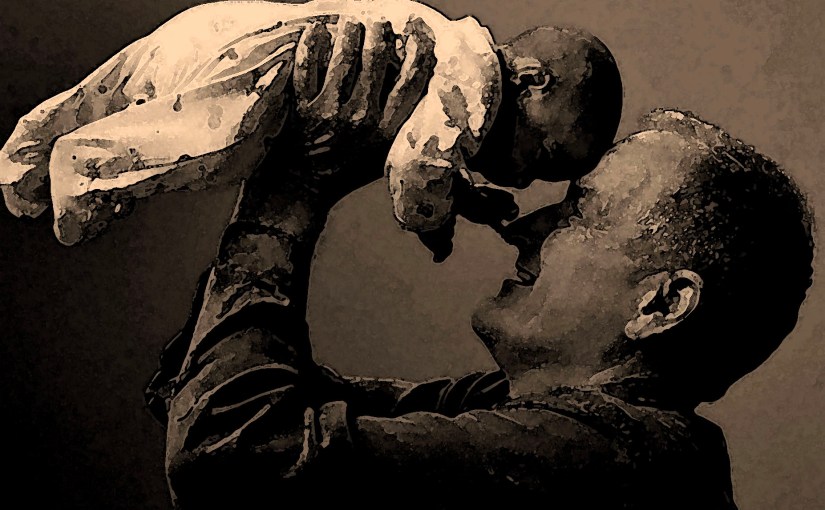
Sadie Jo, I love you so
For the rest of my days, I’ll keep you safe,
Watching you grow
Your mama, Pearl, and my baby girl
Everything is brand new since you
Entered my world

Lost my first wife
To a damn drunk
He blew through a light
In a rusted out truck

I lost my son
In a pointless war
What your mama done, she gave me a someone
To love once more

Sadie Jo, I love you so
For the rest of my days, I’ll keep you safe,
Watching you grow
Your mama, Pearl, and my baby girl
Everything is brand new since you
Entered my world

I’m a tough old cob
To be a new daddy now
Wanna do a better job
This time around

A new baby and wife
Were not in my plans
I thank God every night for blessing my life
With this second chance

Sadie Jo, I love you so
For the rest of my days, I’ll keep you safe,
Watching you grow
Your mama, Pearl, and my baby girl
Everything is brand new since you
Entered my world

© 2019 Frank David Leone, Jr./Highway 80 Music (ASCAP). The songs and stories on the Highway 80 Stories website are works of fiction. Names, characters, businesses, places, events, locales, and incidents are either the products of the author’s imagination or used in a fictitious manner. Any resemblance to actual persons, living or dead, or actual events is purely coincidental.

“Oil City”


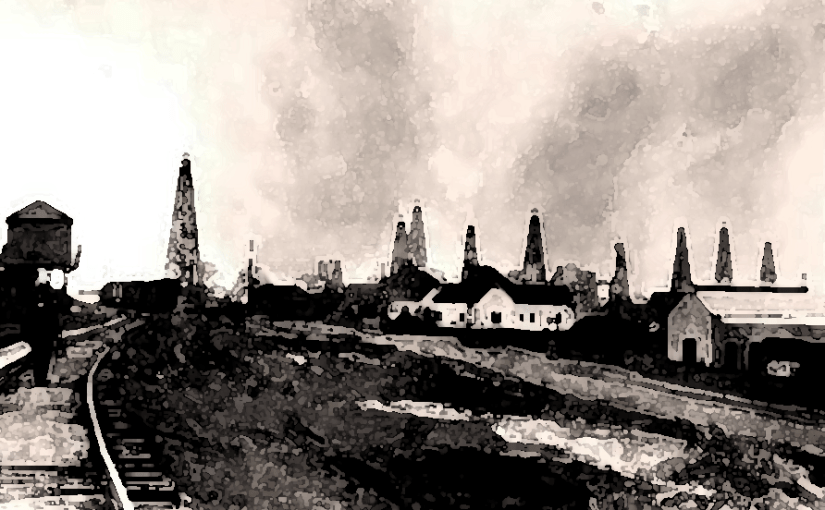
Charles Taylor McLemore (1921-2001), Jacob “Jake” Tyler McLemore’s (1959) father, talks about growing up in his hometown of Oil City, Louisiana. During the first decades of the 20th century oil was discovered in Texas and Louisiana and until the Depression forced the speculation to pause, fortunes were made and lost. Oil City and the McLemore family were a small part of that history.

Jacob “Mac” McLemore (1879-1977) made and lost more money than any of the McLemore men. When he was fifteen he heard about the 1894 oil strike in East Texas. He started at the bottom working any job he could get, eventually learning enough to strike out on his own.

Jacob Mac McLemore never knew his father, who had been an outlaw-gunslinger who died a few months before he was born.  Sam Summers McLemore (1852-1878) never even knew the 16-year old whore, Sally McCune, he was living with was pregnant when he went out in the street to face a younger and what turned out to be faster boy.  Jacob was raised by Sally, who eventually was able to quit the life and lived out her days running a boarding house in Fort Worth.   There’s some who say it was more than a boarding house, but others deny those rumors.

Indians found oil seeping from the soils of Texas long before the first Europeans arrived. They told explorers that the fluid had medicinal values. The first record of Europeans using crude oil, however, was for the caulking of boats in 1543 by survivors of the DeSoto expedition near Sabine Pass.

Melrose, in Nacogdoches County, was the site in 1866 of the first drilled well to produce oil in Texas. Other oil was found in crudely dug wells in Bexar County in 1889 and in Hardin County in 1893. But it was not until June 9, 1894, that Texas had a major discovery. This occurred in the drilling of a water well for the city of Corsicana. Oil caused that well to be abandoned, but a company formed in 1895 drilled several producing oil wells.

Jacob Mac was 15 when the Corsicana oil came in, and for the next sixty years he chased strikes all over Texas and Louisiana. He might make some money here, then invest it somewhere else only to see his investment evaporate in the dusty Texas wind.

Jacob was married and divorced four times, the last near the end of his life and the one which really broke him. Of the four marriages, only the first produced any children, one boy, Lee Allen (1903-1989), and a girl, Aurelia.  Lee Allen was Jake McLemore’s grandfather.

If you were to ask those who knew him, what they would tell you about Jacob Mac McLemore was that, first and foremost, he was a decent man whose word was his bond. No one ever knew him to brag or lie and that he never made a deal that he did not keep, and usually made his partners money.

He died at the age of 98, dying peacefully in his sleep in an Odessa, Texas hospital room with his great-grandson, Jake, by his side. You might say that Jacob Mac lived an interesting life, but despite not enjoying consistent good luck he was always in good humor and very good company.


OIL CITY
(F. D. Leone, Jr.)

Oil City is my home
Ain’ pretty but I belong
Grey and gritty, right or wrong
Oil City is my home

Aught-five oil came from the ground
Oil City was a wildcat town
Wooden sidewalks and hitching posts
Boom towns ain’ got no ghosts

Aught-six grandpa McLemore
Had a little money but wanted more
Oil City was where grandpa came
Gamblin’ on the big oil game

Oil City is my home
Ain’ pretty but I belong
Grey and gritty, right or wrong
Oil City is my home
Oil City is my home …

Few years pass and the fever died
Were other towns, other strikes
1917 it almost burned down
The whores all left town

Dad went to work at J.M Guffey
We stayed in Oil City
Grandpa went broke in the Depression
Kept chasin’ oil, died in Odessa

© 2018 Frank David Leone, Jr./Highway 80 Music (ASCAP). The songs and stories on the Highway 80 Stories website are works of fiction. Names, characters, businesses, places, events, locales, and incidents are either the products of the author’s imagination or used in a fictitious manner. Any resemblance to actual persons, living or dead, or actual events is purely coincidental.
“My Pocketknife”


It took a couple of years longer than in other towns, but The Great Depression finally hit Oil City, Louisiana in 1932. The price of oil plummeted and work ground to a stop. They capped the wells and hauled the rigs away, to wait for better times. In 1934, out of all other options, Lee Allen McLemore and his thirteen year old son Charlie hit the road looking for work, and like many others head west to California.

Jake McLemore’s father was Charles Taylor “Charlie” McLemore.

Charlie grew up during the depression, traveling with his father, Lee Allen, on trains, with other hobos, with the putative goal of finding work. When the crash hit the oil industry, it took longer than for most other industries, but eventually the bottom fell out of the oil business in 1932. The wells were capped and the rigs hauled away, leaving the men who had depended upon the work stranded in small oil patch towns with no other opportunities for work. Many of them joined the large numbers of itinerant men riding the rails. Some looked for work but many had given up and made do as best they could.

But when we think of hobos riding in boxcars we don’t usually think of children doing the same thing. But when families had no money, little food and nothing on the horizon, they simply sent their children away to fend for themselves, as best they could.

“At the height of the Depression, as many as a million teenagers traveled the rails looking for work and community, moving in vagabond packs and living in hobo jungles, finding both charity and brutality in the broken-back cities of America. They crowded the cars and hid down in the tenders where the coal and water were stored; they squeezed between cars and clung atop their bucking roofs. In 1932, about 75 percent of the nearly six hundred thousand transients on the Southern Pacific line through Texas, New Mexico, and Arizona were under the age of twenty-five.”

“Fathers, and sometimes sons, stayed in the network of “jungles” along the route, tucked amid the timber and hidden from view. Each camp had its own division of labor—one person went into town to find a potato for soup while another brought salt or an extra spoon. Pots and pans hung from tree branches; crude shelters were made from cardboard or tin scrap and sometimes built up in the trees. Pocketknives were like gold in the jungles. Blades were “hired out” in exchange for soap or a bowl of stew. In a pinch, a knife could be traded for a pair of shoes or sold for cash. Men cooked possums and jackrabbits caught in snares along the brush lines and traded their hides for food.” (Mealer, Bryan. The Kings of Big Spring: God, Oil, and One Family’s Search for the American Dream. 2018.)

This was the kind of life Charlie McLemore lived during his childhood.

Charlie and his father worked picking cotton in California for a few weeks and also fruit when they could. They managed to work just enough to feed themselves, as well as, put a little aside. Eventually they got back to Oil City just as things were starting to come back.

By the time World War II started, and a need for oil exploded, Charlie was in his late teens. His father got work immediately at a refinery and from then on, the Lee McLemore family did okay.

Charlie went into the oil business as well, but oil was not the only resource product that supported the Oil City economy. Natural gas was even more abundant and Charlie got a job at United Gas Corporation, headquartered in Shreveport, Louisiana, and moved his family there in 1960 a year after Jake was born.

Charlie worked at United Gas and survived the hostile takeover by Pennzoil in 1968, and became part of the management of Pennzoil United, Inc. He did pretty well, well enough to send his son Jake to Vanderbilt University in Nashville.

Retiring at the age of 70 in 1991, Charlie lived long enough to see Jake get married and have children. Charles Taylor McLemore died in 2001 at the age of 80 from a heart attack a few months before 9/11, and several years before his grandson Lee’s death in 2004 in Iraq.

Despite surviving the Great Depression by riding the rails with his father, he was among the generation that experienced the economic boom after WWII. Charlie McLemore saw nothing in his lifetime that undermined his faith in the American Dream. A dream he lived out to the fullest.


MY POCKETKNIFE
(F. D. Leone, Jr.)

Charlie and his father crawl up the embankment
Hidden by the bend they crouch and wait
The train’ll have to slow down maybe just enough
With any luck they’ll grab that freight

Charlie and his father left Oil City at dawn
Somethin’ called The Depression had arrived
Work was for the takin’ out in California
Pickin’ cotton under sunny skies

Long as I have my pocketknife
I’ll be alright, be alright
I can make it through the coldest night
Long as I have my pocketknife

Charlie and his father join a migrant army
Ride the rails with tramps an’ hoboes
Tent camps were jungles, danger everywhere
Do your best to hang on to your coat

Charlie and his father dodge a railroad bull
Hidin’ in the tender ’til he’s gone
A man was crumpled in the corner, frozen overnight
It’s a damp and cold L.A. dawn

Long as I have my pocketknife
I’ll be alright, be alright
I can make it through the coldest night
Long as I have my pocketknife

© 2018 Frank David Leone, Jr./Highway 80 Music (ASCAP). The songs and stories on the Highway 80 Stories website are works of fiction. Names, characters, businesses, places, events, locales, and incidents are either the products of the author’s imagination or used in a fictitious manner. Any resemblance to actual persons, living or dead, or actual events is purely coincidental.

“Levi, Ruby, and Cole”


LOCATION: Northwest Louisiana
PERIOD: 1860s
DRAMATIS PERSONAE: Levi Motts (1843-1864); Ruby Robison (1845-1933 ); Coleman Broussard (1842-1910)


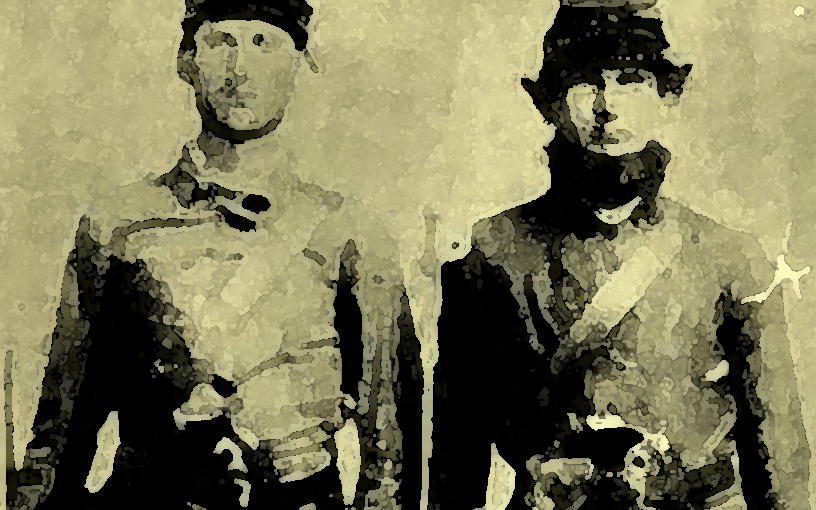
Levi Motts and Coleman Broussard were cousins, and each one loved Ruby Robison and she loved them both, as well. Levi and Cole were Confederates, and fought at Mansfield. But Levi died that afternoon, leaving Ruby and Cole to carry on together.


LEVI, RUBY, AND COLE
(F. D. Leone, Jr.)

Cole was strong and steady
Straight as a rail
Levi was born ready
Always raisin’ hell
Ruby loved Levi all the way
But Cole was who she chose
Levi might grow up some day
But, who knows

Ruby knew Cole loved her
But Levi charmed her heart
Cole was down to earth
Levi sparkled like a star

The War broke this trio up
Only one came back home
Ruby had two loves
Levi and Cole

Cole knew he and Ruby
Would never have
The kind of magic love
She and Levi had
Just taking care of her
For Cole, it was enough
He ain’ the apple of her youth
But theirs was also love

Ruby knew Cole loved her
But Levi charmed her heart
Cole was down to earth
Levi sparkled like a star

© 2018 Frank David Leone, Jr./Highway 80 Music (ASCAP). The songs and stories on the Highway 80 Stories website are works of fiction. Names, characters, businesses, places, events, locales, and incidents are either the products of the author’s imagination or used in a fictitious manner. Any resemblance to actual persons, living or dead, or actual events is purely coincidental.
“Levi Motts Is My Name”


LOCATION: Northwest Louisiana
PERIOD: 1864
DRAMATIS PERSONAE: Levi Motts (1843-1864); Coleman Broussard (1842-1910); Ruby Robison (1845-1933); Pearl Robison (1864-1944)


Mustering out of Monroe, Louisiana Levi and his cousin Coleman Broussard joined up with in Colonel Henry Gray’s brigade, the Louisiana Gray’s. It did not take them long to find their way to the burgeoning red light district of Shreveport. There Levi met and took up with one of the young sporting girls there, Ruby Robison. Cole was also smitten and Ruby seeing Levi for what he was, a rake and leaky vessel for her to place her future, encouraged Cole in his romantic dreams. They were a inseparable trio, the two kinsmen and the beautiful and fragile young whore hedging her bets, so to speak.

Despite Coleman’s obvious romantic aspirations, Ruby couldn’t deny her stronger feelings for Levi. Defying the conventions of the time she and Levi made plans for marriage as soon as the war was over. However, the Louisiana Grays were called up to confront the Union troops already marching towards Louisiana after conquering Vicksburg. Gray’s brigade is one of the units in Gen. Robert Taylor’s army tasked with stopping the Trans-Mississippi Campaign of Nathaniel Bank’s invading force at Mansfield.

While the Battle of Mansfield was a Confederate victory, Levi Motts was one of only about a hundred Southern men who died there on April 8, 1864. When he went into battle, Levi knew that Ruby was pregnant with their child. This child, a girl Ruby named Pearl, is born in late December of 1864. Because of her illegitimate status Pearl chose to use the name Robison for most of her life.


LEVI MOTTS IS MY NAME
(F. D. Leone, Jr.)

Levi Motts is my name
Come from Northwest Louisiana
I joined up with Colonel Gray
He said be ready to march today
Don’t know when I’ll be back again
If this war will ever end

Ruby Robison is my gal
Keeps a room down in the bottoms
We talked of gettin’ out of there
Make a new life anywhere
Don’t know when I’ll be back again
If this war will ever end

Ruby wrote me a letter
We were waitin’ outside Mansfield
Wrote there’s a baby on the way
We fought the Yankees April Eighth
Don’t know when I’ll be back again
If this war will ever end

Levi Motts is my name
Come from Northwest Louisiana
Lead ball went through my neck
That afternoon I bled to death
Don’t know when I’ll be back again
If this war will ever end

© 2017 Frank David Leone, Jr./Highway 80 Music (ASCAP). The songs and stories on the Highway 80 Stories website are works of fiction. Names, characters, businesses, places, events, locales, and incidents are either the products of the author’s imagination or used in a fictitious manner. Any resemblance to actual persons, living or dead, or actual events is purely coincidental.

“The Laughing Man at the Door”


LOCATION: Monroe, Louisiana
PERIOD: 1970s-1990s
DRAMATIS PERSONAE: James “Jamie” Lamar Halladay (1973); Frank Halladay (1938-1993); Ann Marie Halliday (1974); Lee Ann Lucas (1953)


James “Jamie” Lamar Halladay was born in Monroe, Louisiana, in 1973. His father was a musician, guitar player, Frank Halladay, who played in a series of bands, traveling Texas, Louisiana and eventually Nashville. By the time Jamie was four, Frank Halladay stopped living with the family, which also included Jamie’s younger sister, Ann Marie, although not out of their lives altogether. He would show up on birthdays and Christmas, when he could.

James Charles Halladay (1913-1995), Jamie Halladay’s grandfather, was a fighter pilot who served with distinction in the Army Air Corps during WWII. He learned to fly as a crop dusting pilot for the Huff Daland Dusters, as part of the eradication of the boll weevil. This company, moved from Macon Georgia to Monroe Louisiana, in 1925 but Charlie didn’t hire on until 1933, but stayed with the company as it became a regional commercial carrier, which eventually became Delta Airlines.

Hi son Frank showed a talent for music early on and learned to play the guitar listening to the Grand Ole Opry and especially Hank Williams when he was still pretty small. While in high school he started a band with some of his friends and they got pretty good. Good enough to become the backup band for Webb Pierce and played on the Louisiana Hayride.

It while he was playing with Webb Pierce that Frank met the woman who was to eventually become his wife and Jamie’s mother, Lee Ann Lucas. But while Frank and Lee Ann were in love and did get married, the itinerant lifestyle of a musician did not make for a stable home life and the marriage failed. Frank tried to see his kids as much as he could, but was not a regular presence in their lives.

Nevertheless, he did have an impact on Jamie’s life.

On his twelfth birthday, Frank gave Jamie a guitar and taught him a few chords, but that was just the start for Jamie. He eventually got good enough to move to Nashville and get some gigs there playing behind country stars. He ended up breaking into the studio scene and became a member of the “A list” players, i.e. first call musicians for recording sessions.

It was while he was living in Nashville that Jamie began visiting a bar, McLemore’s, and became friends with the owner Jake McLemore (see song “McLemore’s“). In 2003, he would marry Jake’s daughter, Mercedes “Mercy”, and have a son whom he named Jacob Frank, after Jake and his father.


THE LAUGHING MAN AT THE DOOR
(F. D. Leone, Jr.)

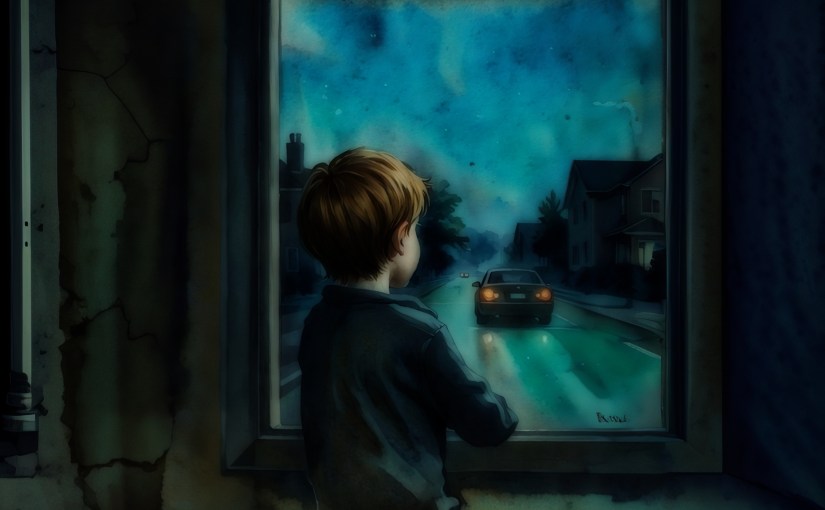
In Monroe, Louisiana, standing at a window
A four year old sees his father drive away
Cowboy hat on his head, six gun on his hip
Jamie waves goodbye until his next birthday

Say goodbye to a man you hardly know
As tail lights disappear down the road
Say goodbye, watch him go
On a gray December day in Monroe

His daddy plays guitar in a traveling country band
And don’ live with them in Monroe anymore
Jamie has a sister, eighteen months old
Who don’t remember the laughing man at the door

Say goodbye to a man you hardly know
As tail lights disappear down the road
Say goodbye, watch him go
On a gray December day in Monroe

When Jamie turned twelve his dad gave him a guitar
Showed him where to put his fingers for his first chord
His dad died in ’93, when Jamie was nineteen
But who played better than the laughing man at the door

Say goodbye to a man you hardly know
As tail lights disappear down the road
Say goodbye, watch him go
On a gray December day in Monroe

© 2018 Frank David Leone, Jr./Highway 80 Music (ASCAP). The songs and stories on the Highway 80 Stories website are works of fiction. Names, characters, businesses, places, events, locales, and incidents are either the products of the author’s imagination or used in a fictitious manner. Any resemblance to actual persons, living or dead, or actual events is purely coincidental.

“Fannin Street”


LOCATION: Shreveport, Louisiana: St. Paul’s Bottoms
PERIOD: 1860s
DRAMATIS PERSONAE: Ruby Robison (1845-1933); Levi Motts (1845-1864); Coleman Broussard (1842-1910); Pearl Robison (1864-1936); Lucas Broussard (1866-1934)


Ruby Robison (1845-1933), young prostitute on Fannin Street; has daughter, Pearl, with Confederate soldier Levi Motts. After learning that Levi is killed at the Battle of Mansfield in April, 1864, Ruby marries his cousin Coleman Broussard and has four other children.

Ruby came to Shreveport during the Civil War, perhaps with Union troops up the Red River from New Orleans following the occupation of that city. Born in Ireland in 1845, her family may have been among the large numbers of Irish immigrants who sought refuge in America during the potato famines of the mid-nineteenth century. She most likely resorted to prostitution as a means of survival.

Ruby had a room in one of the dozens of brothels in downtown Shreveport area around Fannin Street, but her life took an unexpected turn when she met Levi Motts. Ruby and Levi began to have serious feelings for each other and Levi swore that he would find a way to get her out of the life she’d known as a prostitute. But the war got in the way, sending Levi off to fight and die in the Battle of Mansfield (see songs, “Fannin Street” and “Levi Motts is My Name“).

Ruby had let Levi know of her pregnancy and she gave birth to a daughter in 1865, whom she named Pearl. Levi’s cousin, Coleman Broussard chose to marry Ruby and they had four children together. Their first son, Lucas was the great-grandfather of Mike “Sarge” Broussard.

Ruby lived to age of 88, living to see not only her daughter grow up, get married, and have children of her own, but well into the lives of her great-grandchildren.


FANNIN STREET
(F. D. Leone, Jr.)

On Fannin Street, Fannin Street
There’s a room upstairs for the men she meets
She’s not theirs and never was,
Just what she does
On Fannin Street

There was one boy, fine and sweet
Not like the rest of Fannin Street
The only one she ever loved
In the room above
Fannin Street

On Fannin Street, Fannin Street
There’s a room upstairs for the men she meets
She’s not theirs and never was,
Just what she does
On Fannin Street

The boy he said he’d take her away
From the life she led one day
He left for Mansfield to the restless beat
Of Marching feet
In columns of grey

On Fannin Street, Fannin Street
There’s a room upstairs for the men she meets
She’s not theirs and never was,
Just what she does
On Fannin Street

In her room alone Ruby Robison
Heard that the Rebels had won
She went to Mansfield but there she cried
For the baby inside
And the boy who was gone

On Fannin Street, Fannin Street
There’s a room upstairs for the men she meets
She’s not theirs and never was,
Just what she does
On Fannin Street

© 2017 Frank David Leone, Jr./Highway 80 Music (ASCAP). The songs and stories on the Highway 80 Stories website are works of fiction. Names, characters, businesses, places, events, locales, and incidents are either the products of the author’s imagination or used in a fictitious manner. Any resemblance to actual persons, living or dead, or actual events is purely coincidental.