“Sally Ann”


LOCATION: Rural Northwestern Louisiana
PERIOD: 1870s-1880s
DRAMATIS PERSONAE: Sally Ann Gray (1863-1954); Cristina “Cris” Fulco (1841-1922); Alfonso “Al” Graziano (Gray) (1832-1918); Samuel “Spooner” Magee (1826-1982).


You wouldn’t know it from her name, but Sally Ann Gray was full-bloodied Sicilian. Her father’s family had anglicized their Italian name of Graziano to Gray upon first emigrating to England in the 17th century, which was quite common. Her mother and father entered America at the port of New Orleans in 1859 shortly after they were married in Cefalu, a town on the northern coast of Sicily.

Sally inherited the immigrant dream of carving out a better life and dreamed of escaping the suffocating small town in northwestern Louisiana where the family ended up, and going west. A common ambition, but in her case, one supplied to her by an older friend of her father’s who filled her head with fancy images of San Francisco.


SALLY ANN
(F. D. Leone, Jr.)

Sally Ann had dreams she never talked about;
Dreams that would take her far away.
Livin’ in the shadow, of what she could only imagine.
She had grown accustomed to doing without;
Sleepwalkin’, in a kind of daze.
Still, she believed in magic that could suddenly happen.

It kept her yearnin’ heart strong;
It kept her just barely keepin’ on,
A tiny voice whispers, “believe, and it’s yours.”

Sally saw it in her mother’s immigrant eyes;
Who stood on a shore in Sicily,
Starin’ at th’ ocean thirstin’ for a second start.
Askin’ only for a chance at a better life;
Tradin’ all she knew for mystery;
Riskin’ all on somethin’ that seemed so far.

Goin’ where dreamers belong;
Hopin’ for a beckonin’ song;
A tiny voice whispers, “this can be yours.”

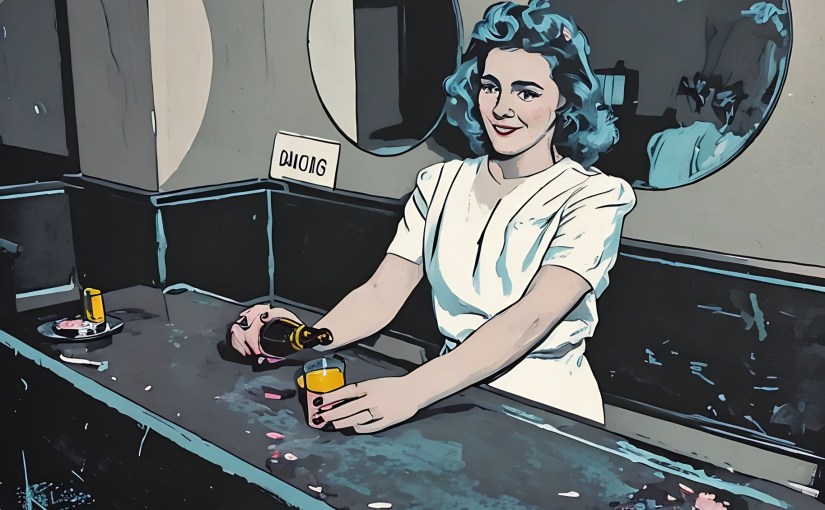
Sally Ann worked in a bar, th’ Faded Rose;
She would leap at th’ first chance to escape,
Th’ same old, same old, ev’ry night and mornin’.
One evenin’ as she was just about to close,
Spooner talked about his dream place;
That bar, that night, Sally saw California.

Where she was sure she could belong;
Where she’d hear a welcomin’ song,
A tiny voice whispers, “believe, and it’s yours.”

But Spoon was old and might not ever follow through,
Sally Ann would not be denied;
Some how, some way, she’d end up west.
Even if it all went bust, her heart had been tattoo’d;
Then Spooner said, “Sal, let’s go; let’s ride.”
Th’ best day of her life was th’ next day; they left.

Findin’ where she could belong;
It was there, drawin’ her on,
A tiny voice whispers, “this will be yours.”
A burstin’ heart beatin’ strong;
Finally to start, movin’ on.
Right then, right there, God’s green earth was hers.

David Leone: guitar, vocal
Tammy Rogers: fiddle

Related songs in chronological order:
“Ballad of Black Jack Kelley and Spooner Magee”
“Sally Ann”
“A Day in the Life of Spooner Magee”
“L’Maison d’Amour”
“Aftermath”

© 2023 Frank David Leone, Jr./Highway 80 Music (ASCAP). The songs and stories on the Highway 80 Stories website are works of fiction. Names, characters, businesses, places, events, locales, and incidents are either the products of the author’s imagination or used in a fictitious manner. Any resemblance to actual persons, living or dead, or actual events is purely coincidental.

“L’Maison d’Amour”

Location: San Francisco
Period: 1879-1886
Dramatis personae: Sally Ann Gray; patrons of brothel.


After Sally Ann and Spooner made it out to San Francisco, Spooner went back to Louisiana after a month or so, but Sally Ann stayed behind.

Initially she got work in a bar/brothel as a bartender, something she had been back home.  The madam, Marie LaBlanc, another Louisiana transplant, took Sally under her wing, and eventually gave her more and more responsibilities until Sally Ann was essentially her second in command.  While she did do some work as a prostitute, early on, over time she maneuvered herself more and more into management and took over upon Marie’s death, who had been killed by an obsessively jealous patron.

Sally spent seven years in San Francisco, and this song describes a typical night in which she verbally spars with a regular customer, who, while she fends of his advances, she acknowledges that he is certainly not the worst kind of man who visits the “house of love”.


L’MAISON D’AMOUR
(F. D. Leone, Jr.)

“Sally gal
Come over here
Sit in my lap
Whisper in my ear.
You know I love you,
Like a daughter;
Not like those other fellas,
Who don’t treat you like they oughta.”

“Harvey, get on,
You ol’ pervert;
You don’ smell good,
An ‘ need to change your shirt.
“Sally gal,
You used t’ be so prim ‘n’ proper;
You were as green,
As a grasshopper.”

“Didn’t take you long,
Before you learned th’ ropes;
Now you give us crusty buzzards,
Th’ straight dope;
Sally gal,
Come on ‘n’ sit in my lap.
Aw now, girl,
Don’t look at me like that.”

Next mornin’ now;
Outside a soft grey drizzle.
Sally is wonderin’,
How a dream can fizzle.
No time for that, no, no no;
No second or third thoughts.
Sally don’ waste time,
Dwellin’ on what she lost.

One by one,
Her girls come downstairs,
As usual, complainin’;
Sally silently swears.
She’s still young ‘n’ pretty,
But not a girl no more.
She’s th’ madam now:
L’maison d’amour.

Well, ol’ Harvey,
He ain’ so bad,
Better’n most of ’em;
He makes her laugh.
“Mary, ya’ll get started, and
Wash your coffee cups.
Get yourselves together, b’fore
They start showin’ up.”


CREDITS:
David Leone: guitar, vocal
Tammy Rogers: fiddle

Related songs in chronological order:
“Ballad of Black Jack Kelley and Spooner Magee”
“Sally Ann”
“A Day in the Life of Spooner Magee”
“L’Maison d’Amour”
“Aftermath”

© 2023 Frank David Leone, Jr./Highway 80 Music (ASCAP). The songs and stories on the Highway 80 Stories website are works of fiction. Names, characters, businesses, places, events, locales, and incidents are either the products of the author’s imagination or used in a fictitious manner. Any resemblance to actual persons, living or dead, or actual events is purely coincidental.

“The Ballad of Black Jack Kelley and Spooner Magee”


LOCATION: North Central Louisiana
PERIOD: 1849
DRAMATIS PERSONAE: “Black” Jack Kelley (1824-1872); Sam “Spooner” Magee (1826-1882); the Stranger.


Jack Kelley (1824-1872) married into the Magee family, marrying Margaret Magee (1824-1896) in 1841. Jack and her brother, Spooner Magee (1826-1882), became best friends and would often go hunting together as well as drinking and getting into a variety of mishaps and adventures.

The Kelleys and Magees were also related through marriage.  Spooner Magee’s mother was Sarah Motts (1805-1890), whose brother Lucas Motts (1792-1822) married Rachel Ross (1799-1877). After Rachel was widowed in 1822 she re-married in 1824 to Stephen Kelley (1797-1866) who was Jack Kelley’s father. So, Spooner and Margaret were half-cousins to Jack, if such a term exists.

On the night this song describes, Jack and Spooner were at a local watering hole when Jack offers Spooner the idea of going out to California, this was 1849 when the gold rush was the rage. However, Jack proposed that they not try their luck at gold prospecting, instead to open a general mercantile storefront and sell necessaries to those with a greedier nature. Jack thought it more reliably lucrative, as he says, “fleecing the suckers.”

But while this discussion was taking place, of which Spooner remained unconvinced of the venture, a stranger interrupted them and the night took a somewhat violent and unfortunate detour.

Jack and Spoon never did make it out to California. In fact, the idea was never broached again.


BALLAD OF BLACK JACK KELLEY AND SPOONER MAGEE
(F. D. Leone, Jr.)

Black Jack and Spooner; Red Ball Saloon:
“There’s gold in Californy, let’s go, Spoon.”
“Californy is a long way, why not just Shreveport?”
“Cuz there ain’t no gold in Shreveport, just whiskey, an’ whores.”
“Hey bud, come over here, set us up again:
Two whiskeys for me, and a beer for my friend.
Let’s find a table, Spoon, an’ talk some more;
A quiet little corner, there, away from the door.”

“Jack, I dunno, I ain’t grasped it jes’ yet,
It all sounds to me awful far-fetched.”
“Spoon, it’s a simple plan, just grab a’hold;
Those busters jump at any little whisper of gold.
They need their spade and pan to feed the fever dream.
Spoon, we’ll start a store; fleece those suckers clean.
“We won’t do any panning, that’s to much like work.
Won’t get rich as miners, but make a fortune as clerks.”

The Stranger walked in and interrupted them;
He had trouble written all over him.
“Friends, you look like a couple of sportin’ blokes,”
He sat right down and asked, “do you mind if I smoke?”
“Not if you’ll share one of them fine cigars.
What’re you drinkin’? I was jus’ headed to the bar.”
“Whiskey. I couldn’t help but overhear
Your extravagant plan of gettin’ rich on the frontier.”

“Frankly, son, y’all don’t appear to have the grit
To execute your plan and make a go of it.”
“Fella, you sound schooled so you oughta know
You can’t take the measure of a man by the cut of his clothes.”
“Brother, it ain’t your clothes that give you away,
It’s how you been actin’ and little things you say.”
“Well, I’ve had enough of your jawin’; best you move on,
Before I give you some choice words to chew on.”

“Neighbor, you’re foolish and I think you’re crude,
You’re a little off key and need to change your tune.
I don’t tolerate behavior that I find rude.
There’s your words, freshly chewed.”
“Mister, now you’ve gone and made me mad,
An’ I hope fancy words ain’t all you have.”
Jack kicked back his chair and threw two quick jabs.
The Stranger dodged ‘em both and that’s when Jack saw the badge.

Jes ‘bout that time Spooner went for the door
He didn’t look, Jack was with him, he was sure.
When he got home and Jack was nowhere about,
He went down to the jail house and bailed Jack out.
After this, Jack’s gold talk came to an end;
He never spoke of California to Spooner again.
They remained good buddies, despite this interlude;
But, Jack improved his manners and was hardly ever rude.

David Leone: guitar, vocal
Tammy Rogers: fiddle

Related songs in chronological order:
“Ballad of Black Jack Kelley and Spooner Magee”
“Sally Ann”
“A Day in the Life of Spooner Magee”
“L’Maison d’Amour”
“Aftermath”

© 2023 Frank David Leone, Jr./Highway 80 Music (ASCAP). The songs and stories on the Highway 80 Stories website are works of fiction. Names, characters, businesses, places, events, locales, and incidents are either the products of the author’s imagination or used in a fictitious manner. Any resemblance to actual persons, living or dead, or actual events is purely coincidental.
“Elegy for Dred Scot Lee”


LOCATION: Bossier City, Louisiana; Shreveport, Louisiana
PERIOD: 1903-2023
DRAMATIS PERSONAE: Joy Brown; Dred Scot Lee; Gaither Luther Motts (1883-1971); Earl “Dooky” Ford


From 1882 to 1968, 4,743 lynchings occurred in the U.S., according to records maintained by NAACP. Other accounts, including the Equal Justice Initiative’s extensive report on lynching, count slightly different numbers, but it’s impossible to know for certain how many lynchings occurred because there was no formal tracking. Many historians believe the true number is underreported.

The highest number of lynchings during that time period occurred in Mississippi, with 581 recorded. Georgia was second with 531, and Texas was third with 493. Lynchings did not occur in every state. There are no recorded lynchings in Arizona, Idaho, Maine, Nevada, South Dakota, Vermont, and Wisconsin.

Black people were the primary victims of lynching: 3,446, or about 72 percent of the people lynched, were Black. But they weren’t the only victims of lynching. Some white people were lynched for helping Black people or for being anti-lynching. Immigrants from Mexico, China, Australia, and other countries were also lynched. [Staff writer NAACP. “History of Lynching in America”. In NAACP History Explained. Web. Retrieved on May 9, 2023, from https://naacp.org/find-resources/history-explained/history-lynching-america.%5D

Joy Brown met Dred Scot Lee in 1903 when they happen to share a Coke.  At this time it was prohibited to drink after a black person, hence the existence of separate water fountains, and so, drinking from the same bottle was quite rebellious. They began to see each other, meeting in secret and hiding their friendship. And, it was only a friendship.

However, Joy did experience sexual intercourse when she was raped by her maternal uncle, Gaither Motts. It was obvious to her parents that Joy had been attacked, and after some intense questioning Joy admitted to having been raped. But instead of accusing her uncle, her mother’s brother, she named Dred – a defenseless negro boy.

During the Jim row era, a negro was often lynched for merely looking at a white woman.  It was assumed any negro, even a boy, accused of rape was certain to be hung – which Dred was.

His body was left for two days. People took pictures, and some had post cards made up which were mailed to friends and family across the country. Until finally, his mama had him cut him down and buried in a nearby field behind her house. They put a wooden cross to mark his grave but after his mama died, no one tended the grave and it was not long before there was nothing left to mark his grave.

Feeling ashamed over being raped and guilty for accusing an innocent negro boy, Joy dropped out of school and began drinking and doing anything to blot the entire chain of events out of her mind. Her uncle too, regretted his crime and that an innocent black boy was killed for it. But kept his secret for nearly 70 years until his death in 1971.

Joy went to Shreveport, and found herself on Fannin Street and became a working girl and heroin addict. Joy was taken over by a pimp, Dooky Ford, who as was his custom, also raped her. But this time, Joy was already pregnant with Gaither’s child.

Dooky let her know that as long as she was pregnant, her duties in the brothel would not include seeing clients. But Dooky told her, “If you can’t fuck you got to clean and cook.” Which she did, happily. However, when the child was born, a boy, she decided that she had to get away from there. She drowned the boy in the bathtub and in remorse intentionally overdosed herself.

More than 100 years later, and after being petitioned for decades by his family, the governor of Louisiana pardoned Dred Scot Lee. Pardoned is not accurate since Dred had not actually been convicted of raping Joy Brown. But it was a long overdue attempt to wash the stain off Dred Scot Lee’s name, as well as trying to retrieve some dignity for the people of north Louisiana.

A slate plaque was erected at the site of his hanging, a nondescript field outside of Bossier on Highway 80. On the stone were carved these words: “Dred Scot Lee / Hung in 1896 / For something he never done / He was 15.”


ELEGY FOR DRED SCOT LEE
(F. D. Leone, Jr.)

Bossier City nineteen-aught-three
Joy Brown met Dred Scot Lee
Forbidden love never seemed so right
They saw each other despite the risk
Only when they wouldn’t be missed
‘Cuz Dred was black and Joy was white

It began when they shared a Coke
The glacial ice was broke
They crossed a line and could not go back
When her lips touched where Dred’s had been
She felt a thrill, a first taste of sin
Their lives were changed with that one act

Joy was ashamed about who had raped her
Never said it was Uncle Gaither
She named the only negro boy she knew
Silhouetted in the setting sun
For two days Dred Scot Lee hung
And into a darkness Joy withdrew

Fannin Street, nineteen-aught-four
Dooky turned Joy into a whore
When her belly began to swell up
Dooky said, “if you can’t earn on your back,
You have to pick up the slack
Changin’ chamber pots, pushin’ a mop”

Gaither’s boy looked at Joy and laughed
Then she drowned him in his bath
Lit a candle and stared at the flame
The water was cold, the boy was blue
She boiled double junk in her spoon
Thought of what Gaither done and who she named

Before he died at age eighty-eight
Gaither had to set the record straight
Finally tell the truth about Joy
Slowly in a shaky scrawl
He wrote his story, told it all
“It was me who raped that girl, not that nigra boy”

Gaither despised the man he’d been
Did what he could to make amends
For the rape and his role in the mob
Donated the money he had saved
What he owed could not be paid
He did his best to get right with God

Bossier City twenty-twenty-three
A marker was placed beneath a tree
These words were carved into the slate:
“Here Dred Scot Lee was hung
For something he never done
Lynching Number 328

© 2025 Frank David Leone, Jr./Highway 80 Music (ASCAP). The songs and stories on the Highway 80 Stories website are works of fiction. Names, characters, businesses, places, events, locales, and incidents are either the products of the author’s imagination or used in a fictitious manner. Any resemblance to actual persons, living or dead, or actual events is purely coincidental.
“Jess Harper Returns to Macon”


LOCATION: San Francisco, California; Macon, Georgia
PERIOD: 1967-2007
DRAMATIS PERSONAE: Jess Harper (1949); Dooley Johnson (1949-2007)


Jess Harper (1949) and Dooley Johnson (1949) grew up in Macon, Georgia in the 1950s. During this decade the civil rights movement was gathering momentum, but it would still take a decade or more before a change in consciousness, especially in the South, would coalesce and the culture would begin to change. This process was helped along by the participation of progressive Southern intellectuals, like the family that produced Dooley Johnson, who offered their support to African American leaders by writing editorials, raising money and pressuring local elected officials.

Dooley and Jess met in grade school and grown up together forming a close friendship which by the time they were teenagers deepened into a romantic relationship. However, interracial dating was considered taboo, particularly in Macon, Georgia, in the Sixties.

Jess was 18 in 1967, the Summer of Love, and had heard about all the exciting things going on in California, Haight-Ashbury, and elsewhere. She desired to escape the claustrophobic racism of Georgia and the lure of California was strong. Despite her young love for Dooley she reluctantly began to believe that their relationship was doomed and chose instead to try her luck in San Francisco. This song is a flashback to the day she left Macon soon after graduating from high school.

Dooley who had been interested in history as a small child, reading about the early settlement of Georgia and forming a critical opinion about the treatment of Native Americans as well as the racial reality of his state. Dooley remained in Georgia where he pursued a degree in history eventually earning a doctorate and becoming a tenured professor of history at Mercer University in Macon.

Jess spent two years just hanging out in San Francisco until she learned that the University of California-Berkeley had created an African American Studies program. She realized that this is what she wanted to do with her life and enrolled in 1970.

She kept up on news from Macon through her mother, and when she learned of Dooley’s death in 2007 she made the long trip back to Macon for his funeral.


JESS HARPER RETURNS TO MACON
(F. D. Leone, Jr.)

Jess Harper threw some clothes into a suitcase
Took what she could but left a lot behind
She’s been thinking ‘bout leaving Macon
Got an early start ‘fore she changed her mind
She didn’t tell nobody not even her mama
Just got on 80 heading west
She’ll try and call Dooley from Alabama
The first chance that she gets

Her mama said they were asking for trouble
She could love a black boy just as easy as one who’s white
Plenty of Georgia don’t like to see a mixed couple
Jess began to think her mama was right

Jess met Dooley Johnson in first grade
They’ve been best friends ever since
He opened up her mind to new things
Like no other boy ever did
When Dooley was sixteen and had his license
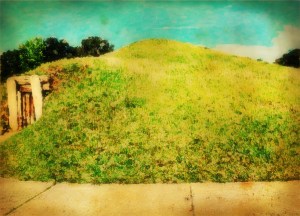
He took Jess to see the Indian mounds
Left there by the great Mississippian people
A thousand years before the white man was around

Many nights Dooley told Jess stories
About the Choctaw and the Creek and their fate
Dooley’s family’s been in Georgia for generations
Jess knows Dooley’ll never leave this state

Jess pulls off the highway at Columbus
Stands at the river as a warm rain starts to fall
Her destination remains undecided
Dooley never did get that call
Forty years will pass before Jess returns to Macon
From California back to the land of her birth
In his Georgia drawl Jess hears Dooley talking
As they lower his body into the blood-red earth

© 2020 Frank David Leone, Jr./Highway 80 Music (ASCAP). The songs and stories on the Highway 80 Stories website are works of fiction. Names, characters, businesses, places, events, locales, and incidents are either the products of the author’s imagination or used in a fictitious manner. Any resemblance to actual persons, living or dead, or actual events is purely coincidental.

“Vernon and Molly”


LOCATION: Vicksburg, MIssissippi
PERIOD: 1950s-1980s
DRAMATIS PERSONAE: Vernon Raney (1903-1987); Molly Motts (1931-2014); Lonnie Raney (1958-2006); Ronnie Raney (1962-2004); Ginny Raney (1966- )


Vernon Raney was 49 years old when he met Molly Motts, and didn’t need to get married, but that is just what he ended up doing; to a girl less than half his age.

The Raney family were bootleggers, had been making clear whiskey for more than a century before Vernon took over the still (see song, “Lonsom Raney 1828“). He made a change, though, from the family recipe, he began to age the distilled product in charred oak barrels, turning the clear shine to a golden tobacco color, and mellowing the taste considerably (see song, “’57 Fleetwood to Memphis“).

Molly Motts, from Delta, Louisiana, just across the river from Vicksburg, was a precocious young woman, who was looking for any way out of Delta when she met Vernon at a party on the Mississippi bank of the river, just outside Vicksburg (see song, “When Molly Motts Married Vernon Raney“).

Long story short, Vernon and Molly got married; Molly took over the moonshine business and turned it into a drug enterprise. With the help of her two sons, they established a distribution network from Natchez to Memphis (see songs, “Louanne in Vicksburg” and “Molly on the Mountain“).

You could say that Vernon never knew what he was getting into when he married Molly, but then again, he was never known to say a cross word about Molly or their life together.


VERNON AND MOLLY
(F. D. Leone, Jr.)

Vernon had his whiskey business
And his V-8 coupe
But he felt something was missing
He wasn’t sure just what to do
Wasn’t sure what to do

There was a party at the river
Vernon drove by real slow
Molly was tall and slender
He felt something inside let go
Something inside let go

Vernon was old enough to be her daddy
Molly was wiser than her years
She wanted more than what a small town could deliver
Vernon was her ticket out of there
Her ticket out of there

Once a month he went to Memphis
Delivering a load of shine
He did okay with his whiskey business
And showed Molly a real good time
They had a real good time

They were always seen together
Then her belly began to show
Vernon said let’s put it on paper
She said I’m ready, let’s go
I’m ready, let’s go

Vernon was old enough to be her daddy
Molly was wiser than her years
She wanted more than what a small town could deliver
Vernon was her ticket out of there
Her ticket out of there

Molly gave him three kids
Two sons and a daughter
She had plans beyond his
Vernon never fought her
He never fought her

Molly took over the business
Began selling pot and more
Vernon stopped going to Memphis
Spent his time down at the store

Vernon was old enough to be her daddy
Molly was wiser than her years
She wanted more than what a small town could deliver
Vernon was her ticket out of there
Her ticket out of there

© 2019 Frank David Leone, Jr./Highway 80 Music (ASCAP). The songs and stories on the Highway 80 Stories website are works of fiction. Names, characters, businesses, places, events, locales, and incidents are either the products of the author’s imagination or used in a fictitious manner. Any resemblance to actual persons, living or dead, or actual events is purely coincidental.
“Molly on the Mountain”


LOCATION: Vicksburg, MIssissippi and surrounding area
PERIOD: 1943-2014
DRAMATIS PERSONAE: Molly Motts (1931-2014); Lonnie Raney (1958-2006); Ronnie Raney (1962-2004); Ginny Raney (1966- ); Vernon Raney (1903-1987)


Molly Motts was born in Delta, Louisiana, a tiny hamlet at the Louisiana-Mississippi border, just across the river from Vicksburg. Because of a difficult home life, she often dreamed of getting out of Delta. Vicksburg just across the river looked like a dream garden to her and she thought she’d do anything to get there. She did: marrying Vernon Raney, bootlegger, more than twice her age; but a good husband to her (see song, “When Molly Motts Married Vernon Raney“) .

They had three children, Lonnie, Ronnie and Ginny. Molly was an ambitious girl and decided early on to piggy-back a drug distribution business onto Vernon’s already prospering bootlegging enterprise (see song, “’57 Fleetwood to Memphis“).

Despite the repeal of Prohibition in 1933, many states continued to outlaw alcohol for several more decades. But bootleg whiskey began going out of style in the mid-‘60s, by which time liquor by the drink had become legal in most states, and there was less and less demand for moonshine except out of nostalgia. Transitioning, first, to marijuana and then harder drugs, seemed to make good business sense to Molly.

Molly got her oldest son, Lonnie elected sheriff as a way to offer protection to her and her second son, Ronnie, as they operating the drug business with little interference from law enforcement. This they did and quickly established a lucrative distribution network of dealers from Natchez to Memphis (see song, “Louanne in Vicksburg“).

Molly lived to see both of her sons die violent deaths: Ronnie was murdered by his wife, Louanne Bowden, and Lonnie was killed in a stand-off with U.S. Marshalls and DEA agents. As the drug network wound down, Molly grew into her role as grandmother to Ginny’s children, living a quiet life in Vicksburg.

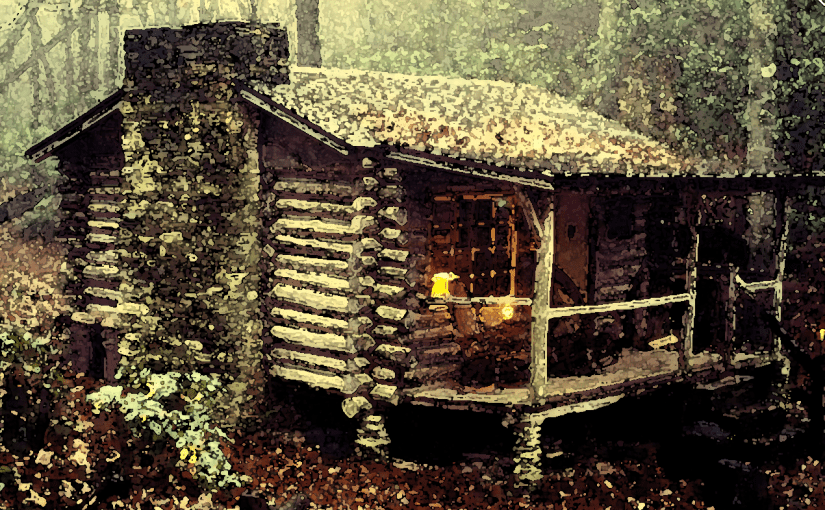
The second summer after they were married, Vernon built Molly a small cabin in the north Georgia mountains, on a section of the old Raney homestead (see song “Lonsom Raney 1828“). Molly would often go there as a retreat. This song describes her last visit there, when she looks back on her life and contemplates the impact on her family of the choices she has made.


MOLLY ON THE MOUNTAIN
(F. D. Leone, Jr.)

Molly was at her cabin on the mountain
Thinking ‘bout her life, and all she’d done
A jelly glass of Vernon’s tobacco whiskey
Sparkled in the late October sun
She thought back to the day she married Vernon Raney
Not yet 21, June of ‘58
Three months pregnant, walking down the aisle
To a man more than twice her age

Molly on the mountain, don’t wanna come down
Molly on the mountain, don’t wanna be found
Molly on the mountain, gonna leave it all behind
Molly on the mountain, knows it’s time

The cabin had a chill, she built a fire
With the last of the wood Lonnie’d split
Lonnie’s gone, his brother Ronnie too
Molly blamed herself for all of it
She’d grown harder through the years from that life
Harder, than she could describe
The pot and drugs, the men she fought, some she killed
All she’d ever done was survive

Molly on the mountain, don’t wanna come down
Molly on the mountain, don’t wanna be found
Molly on the mountain, gonna leave it all behind
Molly on the mountain, knows it’s time

Ginny was the one who turned out okay
Molly sure loves those three grandkids
She made sure to keep Ginny away from it all
That’s one good thing that she did
Lonnie’s Donald and Vern, went to East Mississippi
Took off when things got hot in Vicksburg
They’re selling pills and meth to the kids at Starkville
That’s what they learned from her

Molly on the mountain, don’t wanna come down
Molly on the mountain, don’t wanna be found
Molly on the mountain, gonna leave it all behind
Molly on the mountain, knows it’s time

Molly’s great grandma, Mamie, was a conjure woman
She knew plants for curing or killing dead
Mamie passed it down to Molly’s grandpa Motts
That’s where Molly got it, was what they said
Molly pressed the jelly glass against her cheek
It was time to drink that whiskey down
She looked into the woods, found that old maple tree
Watched a yellow leaf drift to the ground

Molly on the mountain, don’t wanna come down
Molly on the mountain, don’t wanna be found
Molly on the mountain, gonna leave it all behind
Molly on the mountain, knows it’s time

© 2019 Frank David Leone, Jr./Highway 80 Music (ASCAP). The songs and stories on the Highway 80 Stories website are works of fiction. Names, characters, businesses, places, events, locales, and incidents are either the products of the author’s imagination or used in a fictitious manner. Any resemblance to actual persons, living or dead, or actual events is purely coincidental.

“Molly’s Got a Secret”


LOCATION: Delta, Louisiana; Vicksburg, Mississippi
PERIOD: 1943-2014
DRAMATIS PERSONAE: Molly Motts (1931-2014); Lamar Odom (1914-1960); Bessie Ferguson (1914-1966); Donald Motts  (1911-1977); Vernon Raney (1903-1987)


Molly Motts was sexually molested by her step-father in Delta, Louisiana from the age of 12. But Molly is resilient and refuses to identify herself as a victim. As soon as she was grown up enough she crossed the river to Vicksburg and attracted the attention of a prominent Mississippi man, Vernon Raney. Molly marries him and over time becomes the matriarchal figure of the Raney family whose criminal enterprises began with bootlegging and under Molly’s leadership branched out into marijuana and pills.


MOLLY’S GOT A SECRET
(F. D. Leone, Jr.)

Molly’s got a secret, a deep dark secret
She ain’t told, but don’t know if she can keep it
It’s burn’d a hole in her heart, all the way up to the skin
Once it’s out, it can’t be put back again

She’s protected him for so long
She knows he hurt her, knows it was wrong
She still feels guilty all the same
Even though she knows he’s the only one to blame

Molly’s got a secret, a deep dark secret
She ain’t told, but don’t know if she can keep it
It’s burn’d a hole in her heart, all the way up to the skin
Once it’s out, it can’t be put back again

Molly’s got a secret from years before
She can’t forget it, can’t live with it no more
She drinks a little too much, laughs a little too loud
When his name comes up she don’t wanna be around

Molly’s got a secret, a deep dark secret
She ain’t told, but don’t know if she can keep it
It’s burn’d a hole in her heart, all the way up to the skin
Once it’s out, it can’t be put back again

First chance she got she put Delta behind her
Won’t let what that man did define her
What happened in Delta she’s buried it deep
Her skin is thicker now, it’s a secret she can keep

Molly’s got a secret, a deep dark secret
She ain’t told, but don’t know if she can keep it
It’s burn’d a hole in her heart, all the way up to the skin
Once it’s out, it can’t be put back again

© 2019 Frank David Leone, Jr./Highway 80 Music (ASCAP). The songs and stories on the Highway 80 Stories website are works of fiction. Names, characters, businesses, places, events, locales, and incidents are either the products of the author’s imagination or used in a fictitious manner. Any resemblance to actual persons, living or dead, or actual events is purely coincidental.

Tullison Monroe Tate (1866-1948)

Tullison Monroe “Tully”Tate was the direct descendant of the major landowner and planter of Perry County Alabama, Thomas William Monroe but was not considered an heir because he was an illegitimate offspring.  Tully was just another cotton sharecropper, on his grandfather’s land with no more status than any other black farmer  in Alabama around the turn of the 20th century.  The reason he was not acknowledged as a true Monroe heir was not simply because he was born outside of marriage, but more importantly, because his grandmother was a slave whom Will Monroe had impregnated in 1844.  The result of this miscegenation was Tully’s mother Celsie Monroe.

Celsie was briefly married to a white man, Joshua Tate, and Tully was their only child before separating. Josh Tate was unusual for that time, he was sympathetic to the plight of negroes and his marriage to Celsie was one of love.  After the war the years of Reconstruction were hardly less violent than the war itself. Joshua Tate wished to see the local political power elites toppled and sought to help the Republican elect suitable progressive candidates, including whenever possible negro men.  And he was shot down in 1867 at one of these elections when he confronted a mob that was attempting to control who was allowed to vote.

Tully was a cotton farmer whose status within the community was complicated by the fact of his heritage, which everyone knew, calling him Monroe’s Tully (see song “King Cotton“). After leaving Tully’s father, Celsie would go on to marry Mingo Harper, also a former slave, and they would have four other children, two of whom would play a not insignificant role in the civil rights struggles of the 1950s and ’60s.

Tully Tate would marry Pearl Robison, the daughter of Ruby Robison and Levi Motts resulting in the birth of Hazel Tate.  Hazel would in turn marry Virgil Raney, descendant of Lonsom Raney producing a son, Vernon Raney, husband of Molly Motts. This created the complicated reality that Tullison Monroe Tate’s mixed blood ran through the various strands of the Tate, Raney, Motts and Robison families.

Almost exactly one century later there would be another Tully Tate, the son of a country singer in Louisiana.

“Levi Motts Is My Name”

LEVI MOTTS IS MY NAME
(F.D. Leone, Jr.)

Levi Motts is my name
Come from Northwest Louisiana
I joined up with Colonel Gray
He said be ready to march today
Don’t know when I’ll be back again
If this war will ever end

Ruby Robison is my gal
Keeps a room down in the bottoms
We talked of gettin’ out of there
Make a new life anywhere
Don’t know when I’ll be back again
If this war will ever end

Ruby wrote me a letter
We were waitin’ outside Mansfield
Wrote there’s a baby on the way
We fought the Yankees April Eighth
Don’t know when I’ll be back again
If this war will ever end

Levi Motts is my name
Come from Northwest Louisiana
Lead ball went through my neck
That afternoon I bled to death
Don’t know when I’ll be back again
If this war will ever end

© 2017 Frank David Leone, Jr./Highway 80 Music (ASCAP). The songs and stories on the Highway 80 Stories website are works of fiction. Names, characters, businesses, places, events, locales, and incidents are either the products of the author’s imagination or used in a fictitious manner. Any resemblance to actual persons, living or dead, or actual events is purely coincidental.