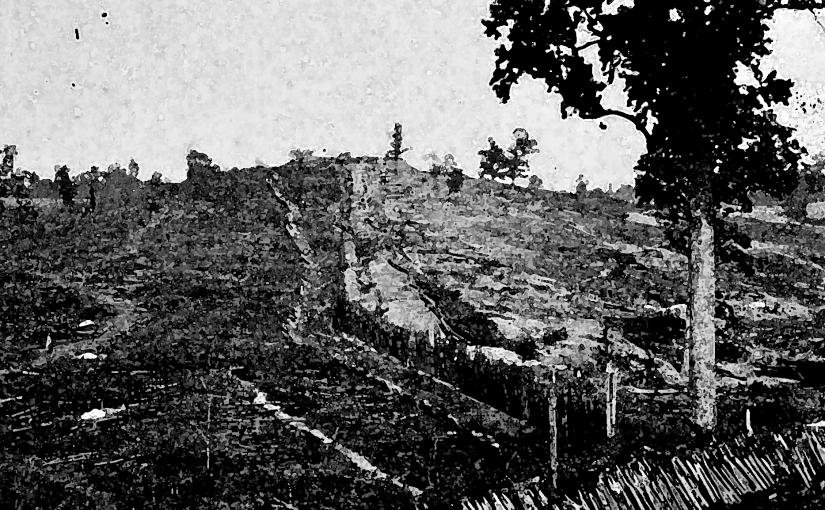
“William Joseph Holmes”

This is the tale of two uncles.

Belinda Barnes (1880-1902) was a little different from the other girls of her country, something of a tomboy. But she was a pretty girl nonetheless. Her uncle William Joseph “Billy Joe” Holmes (1866-1893), her mother’s younger brother, at first showed her attention in a good way: taking her fishing, giving her little gifts, and in general making her feel special. Until that day when he took her riding in his fancy buggy out on the lonely roads and raped her.

The sent Belinda inward, quiet, and sullen. She worked even harder to tamp down her good looks, and told no one about what had happened.

But it did not go unnoticed by her other uncle, her father’s older brother, Campall “Camp” Barnes (1862-1943). He had told her that she should be herself no matter if that meant being different. He told her she was fine just as she was, but he also began to worry about her when she got so quiet and stand-offish. Because she had always felt close to him, she finally told him about what had happened. Camp was angered by the actions of Billy Joe Holmes, whom he knew from around the way.

The Raney family were well-known whiskey producers, and Billy Joe was often found hanging around the still, getting drunk and cutting up. Billy Joe Holmes was an unsavory character, not well-liked, and in fact considered “off” even for these parts. Camp Barnes knew what had to be done.

North Georgia, which was part of the Appalachian culture, had not much official law. People policed themselves, and meted out justice according to an age-old code of behavior. There was an idea that some men just needed killing.


LOCATION: Opelika, Alabama, north Georgia hills.
PERIOD: 1892-1893
DRAMATIS PERSONAE: William Joseph “Billy Joe” Holmes (1866-1893); Belinda Barnes (1880-1902); Campall “”Camp”” Barnes (1862-1943).


WILLIAM JOSEPH HOLMES
(F. D. Leone, Jr.)

Was livin’ in Opelika, Alabama;
Billy Joe Holmes was born in the Georgia hills.
Younger brother of Belinda Barnes’s mama;
Each year he’d come home; see to his bills.

Somethin’ bout him didn’t seem right;
Folks round here always said so.
He was wound a little too tight;
Had to watch your back around Billy Joe.

It happened when his niece was twelve,
He drug her innocence through the mud.
Uncle Billy warned Belinda not to tell;
A rusty stain on the buggy seat was her blood.

That’s when she began dressing down,
Didn’t want to be a pretty girl no more.
Would sulk off when Billy Joe came around;
Wouldn’t take the candy he brought from the store.

Rougher than a corn cob.
Darker than a depot stove.
Wilder than a mad dog.
Louder than a murder of crows.

William Joseph Holmes;
William Joseph Holmes.
His grave’s unknown;
There’s no tombstone,
For William Joseph Holmes.

Belinda’s favorite uncle was on her daddy’s side;
“Nothin’ wrong with being different,” he taught her.
When Belinda was ten her daddy died;
Camp Barnes treated Belinda like a daughter.

He asked her why she’d been so quiet,
That’s when she told him about uncle Billy.
Belinda looked at Campall and cried,
“Uncle Camp he made me feel so filthy.”

Everybody knew what Billy Joe liked;
He’d be found at either of two spots.
Campall made sure his fish knife,
Was in the bottom of his tackle box.

Sure enough Billy was at the Raney still site;
There he was, a-laughin’ and braggin’.
Billy Joe disappeared after that Sairdy night;
Sunday morning Camp washed out his wagon.

Rougher than a corn cob.
Darker than a depot stove.
Wilder than a mad dog.
Louder than a murder of crows.

William Joseph Holmes;
William Joseph Holmes.
His grave’s unknown;
There’s no tombstone,
For William Joseph Holmes.

© 2024 Frank David Leone, Jr./Highway 80 Music (ASCAP). The songs and stories on the Highway 80 Stories website are works of fiction. Names, characters, businesses, places, events, locales, and incidents are either the products of the author’s imagination or used in a fictitious manner. Any resemblance to actual persons, living or dead, or actual events is purely coincidental.
“Winter Turns To Spring”


LOCATION: North Georgia hills
PERIOD: 1892-1900
DRAMATIS PERSONAE: Belinda Barnes (1880-1902); Wyatt Raney (1874-1934); Billy Joe Holmes (1866-1932); Ransom Raney (1847-1929); August Raney (1875-1898).


Belinda Barnes (1880-1902) grew up in the north Georgia hills and loved the outdoors. She was something of a tomboy, and was considered a little strange by her community. Because she felt ostracized she ended up spending most of the days alone, walking the hills, doing a little hunting and fishing, and generally living as most boys her age did.

An unfortunate event occurred in which she was molested by her uncle (her mother’s younger brother), Billy Joe Holmes (1866-1932), which only served to cause her to retreat further inward. But since by now her sexuality had been awakened, albeit in a negative fashion, she still began seeking out experiences with other men

This continued for a few years until she met a young man from a neighboring family, Wyatt Raney (1874-1934).

After being orphaned, Wyatt was taken in by his uncle, Ransom Raney (1847-1929), and spent most of his time with his cousin, August Raney (1875-1898). They hunted in the Fannin County, Georgia hills, until they were old enough at which time they both enlisted and fought in the 1898 Mexican-American War.  At the Battle of San Juan Hill both cousins were wounded, Wyatt losing a leg, but August dying from his wound.

Wyatt went home to Georgia and married his sweetheart, Belinda and they had two children, Charles and Charlotte. After losingBelinda during the birth of his daughter, Wyatt retreated from the world, until his death in 1934.


WINTER TURNS INTO SPRING
(F. D. Leone, Jr.)

Belinda Barnes wasn’t like other girls;
Folks called her a tomboy,
Said she looked like a farm boy.
Wore a hunting cap, boots and overalls;
Could get the best of any boy her size.
There was a sadness behind her eyes.
She kept hidden a soft tender side,
She yearned to be touched;
Just not in her uncle’s truck.

Winter turns to spring
Barren trees will be green
Midnight will see the dawn
We press on

A cold hard look kept most folks at bay;
But she would lay with any man, anywhere;
People talked; but Belinda didn’t seem to care.
Then she met a boy who could really see her,
He saw her demons and tamed ’em quiet.
Belinda let her guard down with Wyatt.
The Raneys were rough mountain bootleg people;
Wyatt worried about Belinda.
Would they accept her; befriend her.

Winter turns to spring
Barren trees will be green
Midnight will see the dawn
We press on

When he was one, Wyatt was orphaned; 
They hung his father for killin’ his mother.
Raised by his uncle, his cousin Augie, like a brother.
Then, 1898 and San Juan Hill,
Wyatt and August chose to enlist;
The Raneys said, “fightin’ for Yankees was foolish.”
A cannonball took Wyatt’s leg;
Augie came back home to be buried.
Belinda and Wyatt married.
 
Winter turns to spring
Barren trees will be green
Midnight will see the dawn
We press on
 
They had two kids, Charles and Charlotte
But Belinda? Wyatt lost her,
Giving birth to his daughter.
1918 Charles went to war;
Wyatt did his best to dissuade him,
But Charlie would not obey him.
Wyatt closed his eyes, went home and raised his daughter.
Instead of honor, Charlie found death;
Wyatt cursed God with his last breath.
 
Winter turns to spring
Barren trees will be green
Midnight will see the dawn
We press on

© 2024 Frank David Leone, Jr./Highway 80 Music (ASCAP). The songs and stories on the Highway 80 Stories website are works of fiction. Names, characters, businesses, places, events, locales, and incidents are either the products of the author’s imagination or used in a fictitious manner. Any resemblance to actual persons, living or dead, or actual events is purely coincidental.
“The North Georgia Hills”

Wyatt Raney (1874-1934) was the son of Isaac “Ike” Raney (1848-1874) and Martha “Mattie” McLemore (1848-1874). He was orphaned when his father murdered his mother because of jealousy.

After being orphaned, Wyatt moved in with his uncle, Ransom Raney (1847-1929), and spent most of his time with his cousin, August Raney (1875-1898). They hunted in the Fannin County, Georgia hills, until they were old enough at which time they both enlisted and fought in the 1898 Mexican-American War. At the Battle of San Juan Hill both cousins were wounded, Wyatt losing a leg, but August dying from his wound.

Wyatt went home to Georgia and married his sweetheart, Belinda Barnes (1880-1902) and they had two children, Charles and Charlotte. When Charles was old enough he joined up to fight in World War I, but by that time Wyatt had seen the folly in war, and did not understand his son’s desire to run off and fight. Wyatt’s fears were fulfilled when Charles was killed, and buried along with other Raney dead.

After losing his wife during the birth of his daughter, Wyatt retreated from the world, until his death in 1934, using his last words and breath to curse God.


LOCATION: Fannin County, north Georgia
PERIOD: 1874-1934
DRAMATIS PERSONAE: Wyatt Raney (1874-1934); Isaac “Ike” Raney (1848-1874); Martha “Mattie” McLemore (1848-1874; Belinda Barnes (1880-1902)


THE NORTH GEORGIA HILLS
(F. D. Leone, Jr.)

He ain’t Joe Hill;
He ain’t John Henry.
Just a hillbilly,
With a long mem’ry.
He don’t carry a grudge,
Ain’t about getting even.
When his mind is made up,
You better believe him.

He’s Scots-Irish,
A code from the old hills.
Tobacco and ginseng root;
Runnin’ whiskey stills.
His grampaw taught him the life;
Lonsom said, “you, grandson,
If they bring a knife;
You bring a gun.”

The north Georgia hills;
Brown November fields.
His people came from Scotland,
Across the Appalachian mountains,
To the north Georgia hills;
The north Georgia hills.

The law hung his father,
For killin’ his mother.
Orphaned by violence;
Hi anger smolders.
His people are bootleggers,
Living outside the law.
He barely knows his letters;
Don’t slow him down at all.

The north Georgia hills;
Brown November fields.
His people came from Scotland,
Across the Appalachian mountains,
To the north Georgia hills;
The north Georgia hills.

© 2024 Frank David Leone, Jr./Highway 80 Music (ASCAP). The songs and stories on the Highway 80 Stories website are works of fiction. Names, characters, businesses, places, events, locales, and incidents are either the products of the author’s imagination or used in a fictitious manner. Any resemblance to actual persons, living or dead, or actual events is purely coincidental.

“Sweetheart of Mine”


LOCATION: Mississippi outside of Vicksburg
PERIOD: 1947-48
DRAMATIS PERSONAE: Beauchamp Raney (1917-1949); Bess Baldwin (1920-1948)


Beauchamp Raney was one of the middle children of Virgil Raney and Hazel Tate. His oldest brother, Vernon was the son who carried on the whiskey making tradition. However, they all helped, and Beau was smart, resourceful, and one of the more valuable members of the family business. However, he did not marry well.

His wife was 19 when they got married, and liked to go out and party, whereas Beau preferred staying close to home except those times when he and Vernon had to move the liquor. One thing led to another and Bess found herself entangled with a wealthy cotton planter, and she lost her head in this adulterous relationship.

Little did she know how Beau would react.


SWEETHEART OF MINE
(F. D. Leone, Jr.)

Sweetheart of mine
Good mornin’
Next time you see me
You better run
You broke my heart
My sweet darlin’
Next time I see you
I’ll have a gun

By the time you see me
Be too late believe me
In my hand will be my .45
Sweetheart of mine

Your new sugar
I’ll leave alone
It ain’t his fault
I don’t blame him
Cheated and lied
Now you’re gone
Treated our vows
Like you never made ’em

Last thing you’ll see will be me
Shoot you where your heart should be
Watch the life leave your lyin’ eyes
Sweetheart of mine

You will learn
That I won’t let you
Walk over me
Like I was dirt
Be one time
Since I met you
That I will get
The last word

By the time you see me
Be too late believe me
In my hand will be my .45
Sweetheart of mine

Last thing you’ll see will be me
Shoot you where your heart should be
Watch the life leave your lyin’ eyes
Sweetheart of mine

© 2023 Frank David Leone, Jr./Highway 80 Music (ASCAP). The songs and stories on the Highway 80 Stories website are works of fiction. Names, characters, businesses, places, events, locales, and incidents are either the products of the author’s imagination or used in a fictitious manner. Any resemblance to actual persons, living or dead, or actual events is purely coincidental.

“When Vernon Raney Put Otis Odom Down”


LOCATION: Delta, Louisiana; Warren County, Mississippi; Vicksburg.
PERIOD: 1960
DRAMATIS PERSONAE: Molly Motts (1931-2014); Vernon Raney (1910-1997); Otis Odom (1914-1960); Donald Motts (1911-1977); Bessie Ferguson (1914-1966).


Donald Motts (1911-1977) and Bessie Ferguson (1914-1966) married in 1928, and then had a daughter, Molly, in 1931. However by this time Donald had begun an affair with another woman, and ended his marriage to Bessie shortly after Molly was born.

Not long after, Bessie married Otis Odom (1914-1960), a decent enough guy, but one with a nasty streak. Bessie thought he was a good man,. to raise a daughter by another man as his own. And because of this she was prone to accept behavior from Otis that otherwise would be unacceptable. Hence she looked the other way when she had suspicions that Otis paid a little too much attention to Molly as she grew older.

As soon as she was old enough, around the age of 15 or 16, Molly ran away from home in Delta, Louisiana, across the river to Vicksburg, Mississippi. Here she attracted the attention of one of the larger land-owners, Vernon Raney (1910-1997). The Raneys were an old Mississippi family, known primarily for their moonshine, but also as a large farming family.

Vernon loved Molly dearly and when she told him of the abuse she had suffered from Otis Odom, Vernon knew immediately that he would kill Odom, which he did in August, 1960.


WHEN VERNON RANEY PUT OTIS ODUM DOWN
(F. D. Leone, Jr.)

When Vernon learned about,
How Molly had been abused;
He swore to himself what he’d do.
He knew the one who done it,
Though it could not be proved;
He was sure, Molly told the truth.
Was an August afternoon,
Molly and Vern at the river;
When she began to talk.
Vernon did not interrupt her,
Just let Molly surrender
The whole sordid story as they walked.

Then she just stopped talkin’,
They stood at the shore;
The still air held her last words.
They turned for home and supper,
The scratch of knife and fork;
Was the only sound that they heard.
Vernon asked around Vicksburg,
Got the dope on Otis Odom;
He’d choose the right time and place.
Make it look like self defense,
Wouldn’t take much to goad him;
Knowin’ Otis, he’d wanna save face.

Vernon cleaned his .45,
Said, “I’ll be gone an hour;”
Set his jaw, an’ walked out to his truck.
Molly finished washin’ dishes,
It was full dark now;
Sat down wi’ th’ corn she’d set aside to husk.
Vern caught up with Odom,
At a dive bar in Vicksburg;
Vern smiled at his good luck.
“You’re Otis Odom, ain’t ya?”
“Yep, since my birth;”
“I’ve got somp’n for ya in my truck.”

Vern followed Otis out,
Grabbed a hay hook on some lumber;
Split th’ bastard’s skull in two.
Pulled Odom to his truck,
Chained him to the bumper;
Dragged th’ body to the bayou.
Tossed the hay hook out th’ windah,
Put his truck in reverse;
Then jus’ sat there, the engine runnin’.
After two weeks of lookin’,
Vern talked t’ th’ Shurf;
“This August heat sure is somp’n’.”

© 2023 Frank David Leone, Jr./Highway 80 Music (ASCAP). The songs and stories on the Highway 80 Stories website are works of fiction. Names, characters, businesses, places, events, locales, and incidents are either the products of the author’s imagination or used in a fictitious manner. Any resemblance to actual persons, living or dead, or actual events is purely coincidental.
“Copper Pot Still”

Lonsom Raney (1828-1923) learned how to make whiskey from his father Andrew Rainey (1799-1852), who in turn had learned from his father Macgregor “Mac” Raney (1765-1810). Family lore holds that they all used the same copper still that had been built by some even earlier Raney patriarch. Supposedly, this very copper pot had come to America with Maclen Rainey (1713-1765) in 1741 when he was 28 years of age. At least that was the story Lonsom had always swore to.

But there’s a bit more to this story, since Maclen and that copper pot were separated at sea when their ship was lost in a storm. Maclen hung on to a steamer trunk for three days until he and the trunk found land, as Lonsom told the story, it was Haiti, but who really knows. Lonsom never let the true facts hobble a good story.Because whiskey making was deep in the Raney blood, Maclen made sure to find a replacement for the lost ancestral still before he acquired passage on a freighter bound for Virginia. Which he did.
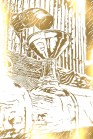
Now Vernon heard the truth from his grandfather Royal Raney (1868-1939) while they were in the woods cooking up another batch of their moonshine one crisp cool October morning.
But by now the replacement still was 179 years old itself, and had made hundreds of barrels of clear corn whiskey, and might as well have been the one from Scotland. For all Vernon knew, that one probably ended up floating to the same shore his 7th great-grandfather had, and some islander was making whiskey in it to this day, and spinning some colorful yarn about how he came to own it.

LOCATION: Georgia; Mississippi
PERIOD: 1741-1920
DRAMATIS PERSONAE: Maclen Rainey (1713-1765); Lonsom Raney (1828-1923); Royal Raney (1868-1939); Vernon Raney (1911-1997).


Copper Pot Still
(F. D. Leone, Jr.)

The rosy dawn crawls above the tree line
As Vernon slowly comes awake
Vernon! Get a move on;
Tend to the fire, for heaven sake.
Their second week at the still site,
Took em some days to find the spot.
Hidden near clean cold water,
But now the still was finally up.

Fast minutes of hard work,
Then slow hours of doing nothing;
Listenin’ to the birdsong and the wind,
Layin’ under live oak trees; napping.
Samplin’ the brew from time to time,
Tossin’ the heads and tails.
That still’s pretty old, ain’t it, grampa?
Royal took a deep breath and then exhaled.

That still; now there’s a story;
Vernon, I’m gonna tell you the truth,
But don’t you go an’ tell nobody,
Cept th’ son you deed the recipe to.
One of your ancient ancestors,
Brought that still here in 1741;
I was told it came all th’ way from Scotland,
But that ain’t exactly where it come from.

Black pools of water stood by the still;
A steady rain pierced the soft moonlight.
Damn this rain, Royal hissed,
I’m too old for this whiskey life.
Some check the proof with a gadget,
But I always just shook the jar;
When the beads are big an’ pop an’ dance on the surface;
A trained eye will git it right on the mark.

A copper pot was all Maclen Rainey took
Aboard a tall ship bound for this land.
Overnight a typhoon blew up;
Ship and still were never seen again.
Mac held onto a steamer trunk for three days,
Until ashore he and it were tossed.
The first thing he did was find a tradesman,
Who could build a still for the one he lost.

My grandpa, Lonsom, swore it was Haiti;
A Freanchman livin’ at the ship yard,
Who turned the copper sheets for this still;
Each Raney son would leave his mark.
The only thing to consider is,
A Rainey got here with a copper pot;
And began runnin’ untaxed whiskey,
Nine generations on, we still ain’t stopped.

So, pap, is it all a lie?
Vern, what’s true? What’s real?
The importance of family lore,
Aint if it’s fact, but how it makes us feel.
What endows a thing with meaning,
Is a history that’s been transformed;
If this pot is in fact not the first one,
It’s history, too, was lost in a storm.

Near dawn they heard dogs below;
Down the mountain distant dogbark.
Then fadin’ off when they coursed out,
Along some rocky draw in the dark.
Later they brought the truck around to the still site,
Loaded jars and pot into the bed;
Vernon was silent as they worked,
Thinkin’ bout all Royal Raney’d said.

© 2023 Frank David Leone, Jr./Highway 80 Music (ASCAP). The songs and stories on the Highway 80 Stories website are works of fiction. Names, characters, businesses, places, events, locales, and incidents are either the products of the author’s imagination or used in a fictitious manner. Any resemblance to actual persons, living or dead, or actual events is purely coincidental.

“The Orphan Son”


LOCATION: North Georgia
PERIOD: 1874-1934
DRAMATIS PERSONAE: Wyatt Raney (1874-1934); Isaac “Ike” Raney (1848-1874); Eleanor “Ella” McLemore (1848-1874);Ransom Raney (1848-1905)


Wyatt Raney (1874-1934) was the son of Isaac “Ike” Raney (1848-1874) and Martha “Mattie” McLemore (1848-1874).  He was orphaned when his father murdered his mother because of jealousy.

After being orphaned, Wyatt was taken in by his uncle, Ransom Raney (1847-1929), and spent most of his time with his cousin, August Raney (1875-1898). They hunted in the Fannin County, Georgia hills, until they were old enough at which time they both enlisted and fought in the 1898 Mexican-American War.  At the Battle of San Juan Hill both cousins were wounded, Wyatt losing a leg, but August dying from his wound.

Wyatt went home to Georgia and married his sweetheart, Belinda Barnes (1880-1902) and they had two children, Charles and Charlotte. When Charles was old enough he joined up to fight in World War I, but by that time Wyatt had seen the folly in war, and did not understand his son’s desire to run off and fight.  Wyatt’s fears were fulfilled when Charles was killed, and buried along with other Raney dead.

After losing his wife during the birth of his daughter, Wyatt retreated from the world, until his death in 1934, using his last words and breath to curse God.

THE ORPHAN SON
(F. D. Leone, Jr.)

My name is Wyatt Raney
I’m an orphan son
They hanged my Pa for killing Ma
When I was a child of one
Raised by my uncle Ransom
Some said he was really my Pa
That talk made Pa angry
Was why he shot my Ma
I’m an orphan son

Grew up with my cousin August
In the Fannin County hills
Up and down the hollers
We honed our hunting skills
Spring we went for turkey
Deer in the fall
Summers we’d help wi’ th’ whiskey
Th’ most fun of all

I’m an orphan son
Orphaned by a gun
I am but one
An orphan son

1898 me and August
Fought at San Juan Hill
I lost my left leg
But August he was killed
I limped back to Georgia
To Belinda I’d left behind
Our first son Charles was born
In 1899
I’m an orphan son

Charles was just like Ransom
He was his grandpa’s son
Spending weeks out hunting
Always with his gun
That stubborn Raney streak
Just like Ransom and Pa
Brothers, fathers, ‘n’ bad blood
Like a natural law

I’m an orphan son
Orphaned by a gun
I am but one
An orphan son

Charles joined up in ’17
What was he was fighting for
After Vicksburg and Gettysburg
Where’s the glory in war
He’s buried there on the hill
Another Raney sacrifice
My forebears fought for honor
And were proud to pay the price
I’m an orphan son

When I came into this world
Death defined my life
When my daughter Charlotte was born
I lost my wife
1934 and I’m tired
Ready to leave this world behind
If there’s a god in heaven
He’s deaf, dumb, and blind

I’m an orphan son
Orphaned by a gun
I am but one
An orphan son

.© 2022 Frank David Leone, Jr./Highway 80 Music (ASCAP). The songs and stories on the Highway 80 Stories website are works of fiction. Names, characters, businesses, places, events, locales, and incidents are either the products of the author’s imagination or used in a fictitious manner. Any resemblance to actual persons, living or dead, or actual events is purely coincidental.

“Jess Harper Returns to Macon”


LOCATION: San Francisco, California; Macon, Georgia
PERIOD: 1967-2007
DRAMATIS PERSONAE: Jess Harper (1949); Dooley Johnson (1949-2007)


Jess Harper (1949) and Dooley Johnson (1949) grew up in Macon, Georgia in the 1950s. During this decade the civil rights movement was gathering momentum, but it would still take a decade or more before a change in consciousness, especially in the South, would coalesce and the culture would begin to change. This process was helped along by the participation of progressive Southern intellectuals, like the family that produced Dooley Johnson, who offered their support to African American leaders by writing editorials, raising money and pressuring local elected officials.

Dooley and Jess met in grade school and grown up together forming a close friendship which by the time they were teenagers deepened into a romantic relationship. However, interracial dating was considered taboo, particularly in Macon, Georgia, in the Sixties.

Jess was 18 in 1967, the Summer of Love, and had heard about all the exciting things going on in California, Haight-Ashbury, and elsewhere. She desired to escape the claustrophobic racism of Georgia and the lure of California was strong. Despite her young love for Dooley she reluctantly began to believe that their relationship was doomed and chose instead to try her luck in San Francisco. This song is a flashback to the day she left Macon soon after graduating from high school.

Dooley who had been interested in history as a small child, reading about the early settlement of Georgia and forming a critical opinion about the treatment of Native Americans as well as the racial reality of his state. Dooley remained in Georgia where he pursued a degree in history eventually earning a doctorate and becoming a tenured professor of history at Mercer University in Macon.

Jess spent two years just hanging out in San Francisco until she learned that the University of California-Berkeley had created an African American Studies program. She realized that this is what she wanted to do with her life and enrolled in 1970.

She kept up on news from Macon through her mother, and when she learned of Dooley’s death in 2007 she made the long trip back to Macon for his funeral.


JESS HARPER RETURNS TO MACON
(F. D. Leone, Jr.)

Jess Harper threw some clothes into a suitcase
Took what she could but left a lot behind
She’s been thinking ‘bout leaving Macon
Got an early start ‘fore she changed her mind
She didn’t tell nobody not even her mama
Just got on 80 heading west
She’ll try and call Dooley from Alabama
The first chance that she gets

Her mama said they were asking for trouble
She could love a black boy just as easy as one who’s white
Plenty of Georgia don’t like to see a mixed couple
Jess began to think her mama was right

Jess met Dooley Johnson in first grade
They’ve been best friends ever since
He opened up her mind to new things
Like no other boy ever did
When Dooley was sixteen and had his license
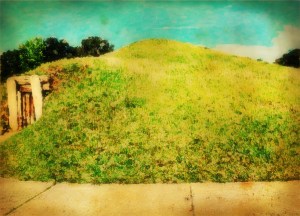
He took Jess to see the Indian mounds
Left there by the great Mississippian people
A thousand years before the white man was around

Many nights Dooley told Jess stories
About the Choctaw and the Creek and their fate
Dooley’s family’s been in Georgia for generations
Jess knows Dooley’ll never leave this state

Jess pulls off the highway at Columbus
Stands at the river as a warm rain starts to fall
Her destination remains undecided
Dooley never did get that call
Forty years will pass before Jess returns to Macon
From California back to the land of her birth
In his Georgia drawl Jess hears Dooley talking
As they lower his body into the blood-red earth

© 2020 Frank David Leone, Jr./Highway 80 Music (ASCAP). The songs and stories on the Highway 80 Stories website are works of fiction. Names, characters, businesses, places, events, locales, and incidents are either the products of the author’s imagination or used in a fictitious manner. Any resemblance to actual persons, living or dead, or actual events is purely coincidental.

“Vernon and Molly”


LOCATION: Vicksburg, MIssissippi
PERIOD: 1950s-1980s
DRAMATIS PERSONAE: Vernon Raney (1903-1987); Molly Motts (1931-2014); Lonnie Raney (1958-2006); Ronnie Raney (1962-2004); Ginny Raney (1966- )


Vernon Raney was 49 years old when he met Molly Motts, and didn’t need to get married, but that is just what he ended up doing; to a girl less than half his age.

The Raney family were bootleggers, had been making clear whiskey for more than a century before Vernon took over the still (see song, “Lonsom Raney 1828“). He made a change, though, from the family recipe, he began to age the distilled product in charred oak barrels, turning the clear shine to a golden tobacco color, and mellowing the taste considerably (see song, “’57 Fleetwood to Memphis“).

Molly Motts, from Delta, Louisiana, just across the river from Vicksburg, was a precocious young woman, who was looking for any way out of Delta when she met Vernon at a party on the Mississippi bank of the river, just outside Vicksburg (see song, “When Molly Motts Married Vernon Raney“).

Long story short, Vernon and Molly got married; Molly took over the moonshine business and turned it into a drug enterprise. With the help of her two sons, they established a distribution network from Natchez to Memphis (see songs, “Louanne in Vicksburg” and “Molly on the Mountain“).

You could say that Vernon never knew what he was getting into when he married Molly, but then again, he was never known to say a cross word about Molly or their life together.


VERNON AND MOLLY
(F. D. Leone, Jr.)

Vernon had his whiskey business
And his V-8 coupe
But he felt something was missing
He wasn’t sure just what to do
Wasn’t sure what to do

There was a party at the river
Vernon drove by real slow
Molly was tall and slender
He felt something inside let go
Something inside let go

Vernon was old enough to be her daddy
Molly was wiser than her years
She wanted more than what a small town could deliver
Vernon was her ticket out of there
Her ticket out of there

Once a month he went to Memphis
Delivering a load of shine
He did okay with his whiskey business
And showed Molly a real good time
They had a real good time

They were always seen together
Then her belly began to show
Vernon said let’s put it on paper
She said I’m ready, let’s go
I’m ready, let’s go

Vernon was old enough to be her daddy
Molly was wiser than her years
She wanted more than what a small town could deliver
Vernon was her ticket out of there
Her ticket out of there

Molly gave him three kids
Two sons and a daughter
She had plans beyond his
Vernon never fought her
He never fought her

Molly took over the business
Began selling pot and more
Vernon stopped going to Memphis
Spent his time down at the store

Vernon was old enough to be her daddy
Molly was wiser than her years
She wanted more than what a small town could deliver
Vernon was her ticket out of there
Her ticket out of there

© 2019 Frank David Leone, Jr./Highway 80 Music (ASCAP). The songs and stories on the Highway 80 Stories website are works of fiction. Names, characters, businesses, places, events, locales, and incidents are either the products of the author’s imagination or used in a fictitious manner. Any resemblance to actual persons, living or dead, or actual events is purely coincidental.

“Ransom Raney”

Ransom Raney (1848-1905) was the oldest son born to Lonsom Raney (1828-1923) and was the first child born to the Raney family on their new mountain home in North Georgia after moving from southwestern North Carolina. Originally from Scotland the Raneys were one of many families who were encouraged to move from southern Scotland to northern Ireland, the Ulster region.

These people have been called Scots-Irish and made up a significant number of the immigrants to America in the 17th and 18th centuries. They brought with them much of their way of life, including distilling whiskey in copper stills, with the idea that this was their right, one for which they would not tolerate any infringement from government.

Scots-Irish tended to be impetuous and hotheaded, having been marginalized back in Ulster, they defied any easy definition. In fact, they bristled at others’ labels for them—”Irish,” “Irish Presbyterians,” “Northern Irish,” or even “Wild Irish.”  Already twice transplanted, they had acquired a migratory habit. Once acquired, such habits are liable to persist; when the constraints of government caught up with them, these wayfarers often chose to move on.

This trait did not evaporate once they were in America and often they would keep moving west, keeping just ahead of civilization and legal constraints on their way of life.

This song is about three things: 1) the resilient nature of the Scots-Irish of the Appalachian mountains, 2) making whiskey and in general living off the land, and 3) fighting to preserve their way of life, not as part of a larger cause but for fiercely personal reasons.

RANSOM RANEY
(F.D. Leone, Jr.)

This is the tale of a mountain man
Lot of grit, lot of sand
Ransom Raney’s his name
From Scotland his people came

He was Lonsom Raney’s oldest son
1848 he was born
Stood at his daddy’s right hand
Taught to be a mountain man

Keep your mouth shut, your head down
Live off what comes from the ground
Make your shine, dig ginseng root
Live your own truth

When he was fifteen he went to war
Butternut was his uniform
Fought for what he could understand
Get the blue basterds off his land

Chickamauga; Second Vicksburg
Mansfield was the call he heard
But Ransom slipped away
From the fighting of the blue and grey

His year was up so he went back home
Grateful to get through it whole
In the winter of ’64
Ransom Raney was done with war

Back at the farm what he found
It had been burned to the ground
His daddy rebuilt the barn
While the ground was still warm

Lonsom had buried his copper still
Set it back up on same hill
The first batch after the war
Was his best he swore

The Raneys are a real hard bunch
Won’t be stopped, not by much
A war ain’t nearly enough
The Raneys are a hard bunch

Ransom Raney loved one wife
She gave his seven children life
He taught his two eldest sons
To do what their grandpa done

He lived long enough to see
A brand new century
He was satisfied
In 1905 he died

Ransom Raney stood alone
But he could be counted on
When you needed a friend
Against flatlanders or gov’mint men

© 2019 Frank David Leone, Jr./Highway 80 Music (ASCAP). The songs and stories on the Highway 80 Stories website are works of fiction. Names, characters, businesses, places, events, locales, and incidents are either the products of the author’s imagination or used in a fictitious manner. Any resemblance to actual persons, living or dead, or actual events is purely coincidental.