“To Pay the Debt”


LOCATION: Alabama; Texas
PERIOD: 1955-2015
DRAMATIS PERSONAE: Frank Roy “Th’ Cunn’l” Cooper (1823-1865); Luther “Luth” Cooper (1827-1876); Charles “Charlie” Cooper  (1918-2015); Lucas Keith Cooper (1897-1965); Luther “Sonny Boy” Cooper (1925-1965); Henry Barbour (1848-1924); Charles Thomas Barbour (1933-1955).


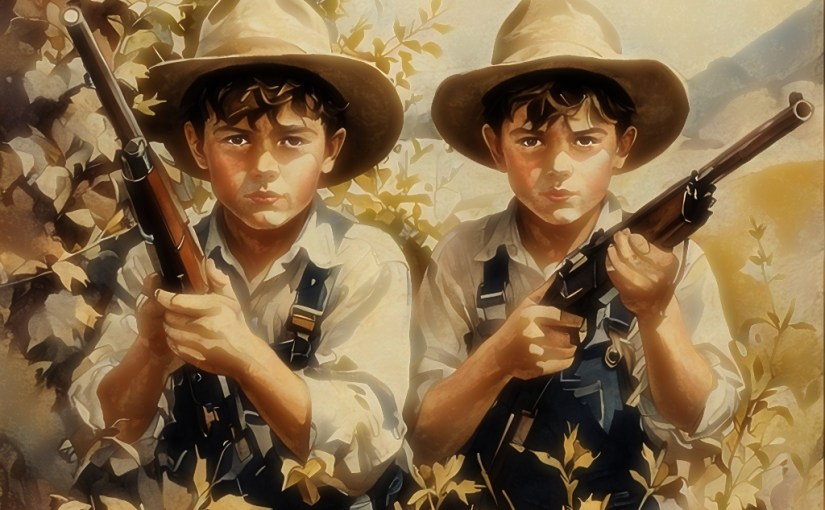
Charles “Charlie” Cooper  (1918-2013) was the oldest remaining link to a Cooper family dispute tht had raged for 100 years.  The patriarch of the family was Frank Roy “Th’ Cunn’l” Cooper (1823-1865), who fought and died in the Civil War.  He’d owned a slave, Henry Barbour (1848-1924), who was treated not as a slave but as Frank Cooper’s partner and trusted aide.  Cooper was an engineer, architect, and builder and Henry served as his construction foreman, overseeing all the work.

Frank Cooper was killed in the last battle of the war on April 14, 1865, a week after Lee surrendered at Appomattox, however word had not gotten to the western theater and fighting had continued. After Frank’s death, Henry managed the plantation, the various businesses, and supported Frank’s widow until she died.  Henry Barbour also erected a memorial gravestone, with the inscription “placed in lasting remembrance of the love and gratitude he felt for his lost friend and former master.”

Frank Cooper had a half brother, same father – different mother, Luther “Luth” Cooper (1827-1876).  Luth was nothing like Frank: intolerant, angry, resentful, and a racist – essentially the opposite of Frank Cooper.  Three generations later, Luther’s toxic line of the Cooper family would produce Luther “Sonny Boy” Cooper (1925-1965) who would unwittingly be among the mob that lynched Henry Barbour’s great-grandson, Charles Thomas Barbour (1933-1955) on the night of July 10, 1955.

A decade later, 100 years to the day that Frank Cooper died in the last battle of the Civil war, Lucas Cooper, who knew the whole history of the Barbour family and their importance to the Coopers, fought and killed Sonny Cooper, his cousin, as well as dying himself in the struggle.


TO PAY THE DEBT
(F. D. Leone, Jr.)

“I’m old and ornery, got a lot to say;
Be ninety-seven on my next birthday.
Went to prison, twenty-five to life;
Sheriff claimed I shot my wife.”

“After forty I was paroled,
By then I was seventy years old.
That’s when I chose to make my exit,
Left Alabama for West Texas.”

“Frank & Luther Cooper were half brothers,
But were nothing like each other.
Frank, The Cunn’l, was Luther’s opposite;
Luther resentful, The Cunn’l tolerant.”

“Henry Barbour was Cunn’l Cooper’s slave;
Cunn’l treated Henry equal all his days.
My daddy Lucas knew the good Henry done;
And how a Cooper killed his great-grandson.”

The cards have been dealt,
The devil took the bet;
It’s way too late today …
To pay the debt.

“Luth’s great-grandson Sonny was no good;
Ran around in a sheet and hood.
I’m going back to 1955,
That July night Charlie Barbour died.”

“He was lynched by the Klan,
Just because he was a black man.
My cousin Sonny drank whiskey to forget;
Some secrets can’t be kept.”

“Daddy swore to avenge Charlie’s death,
And he did when he got the chance.
He met Sonny on the 14th Street bridge;
Daddy was both jury and judge.”

“They fought and both tumbled down,
Into rushing water muddy brown.
Two Coopers lived; two Coopers died;
April 14, 1965.”

The cards have been dealt,
The devil took the bet;
It’s way too late today …
To pay the debt.

© 2025 Frank David Leone, Jr./Highway 80 Music (ASCAP). The songs and stories on the Highway 80 Stories website are works of fiction. Names, characters, businesses, places, events, locales, and incidents are either the products of the author’s imagination or used in a fictitious manner. Any resemblance to actual persons, living or dead, or actual events is purely coincidental.

“Jay Cowan Comes of Age”


LOCATION: Longview, Texas
PERIOD: 1974-2025
DRAMATIS PERSONAE: Jasper “Jay” Cowan (1974); Jasper Cowan (1937-2025); Amy Casper (1928-1951); Casper “Cap” Cowan (1951-1988); Hugh Cowan (1925-2001).


Jasper “Jay” Cowan (1974) was haunted his entire life by two things: his father’s suicide and the information told to him by his namesake Jasper Cowan (1937-2025).

Casper Cowan’s mother, Amy Casper (1928-1951), died giving birth to him, causing his father, Hugh Cowan (1925-2001), to resent the innocent child and treat him in monstrous fashion his entire life.  Hugh’s youngest brother, Jasper Cowan (1937-2025), who is Jay Cowan’s namesake and at whose funeral the song begins, recounts the series of events which led to Casper’s suicide.

Jasper witnessed his brother’s abuse of his nephew, culminating with Casper being sent to a sanitarium for alcoholism and given electroshock therapy, which left him mentally unstable, and even worse off than he was as a mere alcoholic.

Eventually, after years of hallucinations and other forms of mental dementia, Casper committed suicide.

Casper’s son, named for his favorite uncle Jasper, is told most of this by his great-uncle the same day of his father’s funeral.  The memory of that funeral came back to Jay at this great-uncle’s funeral and burial.


JAY COWAN COMES OF AGE
(F. D. Leone, Jr.)

We buried Jasper Cowan,
My great-uncle and namesake.
He lived a long good life,
Died in his sleep, at ninety-eight.
I thought of the day,
My daddy was laid in the ground.
Uncle Jasper came around,
And just started talking.
 
“My brother blamed your father,
For your grandma’s death in childbirth,
He never let up on the boy;
Cap got involved with the church.
Your grandpa made fun of him,
His crucifix and rosary beads;
Called him a little prissy priest,
My brother could be a sumbitch.”
 
“He basically disowned his son;
Those doctors he sent Cap to,
Let him deny what he was doing;
It was torture what they put Cap through.
He wasn’t the same after that,
Cap had always been soft,
After those treatments, just lost;
Then we lost him completely.”

“Your father left a note;
I picked it up and put it in my pocket.
The sheriff wouldn’t approve,
But I didn’t want your mama to see it.
It was a lot of Catholic nonsense:
Martyrs and saints,
There was even snakes;
I thought it best to just take it.”
 
I’ve been going to my daddy’s grave,
Spending time with him.
As far as the Cowan’s?
Well, I want nothing to do with them.
But, I’ll visit Uncle Jasper’s too,
And just stand there with them;
I’ll never forget ’em,
Then get busy livin’, not dyin’.

© 2025 Frank David Leone, Jr./Highway 80 Music (ASCAP). The songs and stories on the Highway 80 Stories website are works of fiction. Names, characters, businesses, places, events, locales, and incidents are either the products of the author’s imagination or used in a fictitious manner. Any resemblance to actual persons, living or dead, or actual events is purely coincidental.

“Dirty Dog World”


LOCATION: East Texas; Shreveport, Louisiana
PERIOD: 1815-1889
DRAMATIS PERSONAE: Earland McLemore (1816-ca. 1861); Leeland McLemore (1816-1889); Owen McLemore (1791-1868); Doak Walker (1820-1905).


Earland McLemore (1816-1864) and Leeland McLemore (1816-1889) were twins, tow of seven sons of Owen McLemore (1791-1868) and Anabel March (1796-1832) who died in childbirth with the youngest son at age 36.

Earl was one minute older than Lee and lorded this over his very slightly younger brother. This was the start of intense jealousy on the part of Lee, who as the song begins, fantasizes about killing his twin brother.

Although they look identical, it was not hard to tell them apart since their personalities were opposite: Earl out-going, charismatic, and with many friends; Lee moody, stand-offish, and a loner.

While Earl mixed well with other men, he didn’t always display good judgment being too quick to trust someone and become the best of friends and even going into business with a man he hardly knew.  This is what happened when Doak Walker (1820-1905) came to Texas to collect a string of ponies to sell to the Confederate army in 1861.

While Earl joined up with Walker with no hesitation, Lee was skeptical and watched from the sidelines, a position he was comfortable taking since it had been his habit from the time he was a small boy.  Some how, at some point, the partnership went sour, and it was assumed that Doak Walker killed Earl McLemore, although there was no actual proof.  Earl’s body was not found until near the end of the war in 1864.

In 1889, his approaching last days, Lee told the story, if he is to be believed, how Doak Walker murdered his brother. Lee, who had fantasized about that very thing since he was a young boy, admitted to nothing, leaving judgment in the hands of a Higher Authority.


DIRTY DOG WORLD
(F. D. Leone, Jr.)

Three shots pierce a gray winter morn;
The McLemore twins hunting at dawn;
Snow geese on the river, a cold steady rain.
One minute older, Earl made much of it;
All his life, Lee put up with that shit;
Raised his barrel at Earl’s head then dropped his aim.
 
Owen McLemore had seven living sons;
All except the youngest one;
They lost him when he was two years old.
His mama Anabel died in childbirth;
Mother and son buried in Tennessee dirt;
Owen took the rest to Texas and a bitter household.
 
It’s a dirty dog world,
Round a trigger a finger curls.
We are only as free,
As the secrets we keep.
 
The western sky black with a thunderhead;
Chink of bridle, drum of hoof tread;
Rain by nightfall, if the desert don’t drink it up.
Lee and Earl joined up after the Alamo;
To rip Texas from the grasp of Mexico;
Like the other young and strong Texas patriots.
 
Earl moved easy among the other men;
Joking and jostling, everyone his friend;
Lee kept to himself, separate from the rest.
Staring at Earl’s back Lee fantasized;
To remove Earl from his life;
A cold rage burned deep in his dark breast.

It’s a dirty dog world,
Round a trigger a finger curls.
We are only as free,
As the secrets we keep.
 
Doak Walker came with horses from Arkansas;
Sell ’em to the Feds, against the law;
This was 1861, April or May.
Doak and Earl hit it off when they met;
Lee didn’ trust Walker far as he could spit;
But Earl went on and threw in with Doak Walker anyway.
 
They never found Earl’s body ’til ’64;
A Tennessee cornfield at the end of the war;
Three .44 slugs blackened Earl’s bloody chest.
Lee swore to it in 1889;
To a Shreveport judge, just before he died;
“Doak Walker done it,” if you believe him, well, that’s what Lee said.
 
It’s a dirty dog world,
Round a trigger a finger curls.
We are only as free,
As the secrets we keep.

© 2023 Frank David Leone, Jr./Highway 80 Music (ASCAP). The songs and stories on the Highway 80 Stories website are works of fiction. Names, characters, businesses, places, events, locales, and incidents are either the products of the author’s imagination or used in a fictitious manner. Any resemblance to actual persons, living or dead, or actual events is purely coincidental.
“Barrow”


LOCATION: Texas and Louisiana
PERIOD: 1931-1934
DRAMATIS PERSONAE: Bonnie Elizabeth Parker (1910-1934); Clyde Chestnut “Champion” Barrow (1909–1934)


Clyde Barrow and Bonnie Parker captured the imagination of Depression era America. Although their actual success at crime was a far cry from the myth, people were starving to be distracted from the dire reality of the dust bowl and economic devastation.

For about three years, 1931-1934, the “Barrow Gang” traveled Texas, Oklahoma and Missouri attempting to rob banks but more often small grocery stores or filling stations. Clyde was blamed for murders he didn’t commit. Criminal masterminds they were not, but the newspapers built them up into larger-than-life characters; publishing photographs of the couple that had been found at an abandoned hideout.

The portrayal in the press of Bonnie and Clyde was sometimes at odds with the reality of their life on the road, especially for Bonnie Parker. She was present at 100 or more felonies during the two years that she was Barrow’s companion, although she was not the cigar-smoking, machine gun-wielding killer depicted in the newspapers, newsreels, and pulp detective magazines of the day.

In May 1934 Frank Hamer, a legendary Texas Ranger, assembled a well-armed posse around Gibsland, Louisiana on Louisiana SR 154, not far from US 80, and they put over a hundred slugs into their bodies, bringing an end to their short but exciting run.


BARROW
(F. D. Leone, Jr.)

He grew up a poor boy in Texas
A little smarter than the rest, and restless
He looked around and didn’t see no justice
The cards were stacked against a poor man
Told himself he’d not be poor again

She had honey golden hair and was so cute
Got away with anything she’d do
Loved the movies and said she’d be in one too
The dreams of a poor girl ain’t free
But nothin’ could dent her belief

He stole cars and robbed grocery stores
Then bigger crimes that could not be ignored
Killed a lawman, when they sent him down he swore
They’d never take him alive again
He’d die before he went back to the pen

When she met him she sure liked his flash
For a time they ran wild and fast
But even they knew it couldn’t last
A Texas Ranger was on their trail
Said he’d chase ‘em all the way to hell

Blamed for crimes they didn’t even commit
Magazines and newsreels reported it
Didn’t matter if the facts didn’t fit
That Ranger was closin’ in
There was just one way it could end

1934 saw widespread trouble
Folks started rooting for the fugitive couple
The Law staked ’em out with a lot of muscle
They never really had a chance
Those bullets sure made ’em dance

© 20195 Frank David Leone, Jr./Highway 80 Music (ASCAP). The songs and stories on the Highway 80 Stories website are works of fiction. Names, characters, businesses, places, events, locales, and incidents are either the products of the author’s imagination or used in a fictitious manner. Any resemblance to actual persons, living or dead, or actual events is purely coincidental.
“Feel Like Dirt”


LOCATION: Midland, Texas; Conyers, Georgia
PERIOD: 1981
DRAMATIS PERSONAE: Ruby Jones Robison (1955) ; Darrel Haynes (1951)


Ruby Jones Robison (1955) is Pearl Robison’s aunt, her father’s sister. Ruby met Darrel Haynes (1951) at Texas Tech in Lubbock, TX, and they were quickly married settling into a house in Midland in 1977 where Darrel had gotten a job at Baker Oil right out of college.

They were happy for a few years, but when they lost their first child, a girl, it broke the marriage up. Ruby was 32 in 1981 when she decided to leave Darrell and go back to Conyers, Georgia, her hometown.


FEEL LIKE DIRT
(F. D. Leone, Jr.)

She got on the Greyhound with her suitcase
And her little patent leather bag
Had two Cokes, a package of peanuts,
And a fifth of Ancient Age
 
She nursed that bottle all across Texas,
But she was sober when she crossed the Georgia line, in fact
Lord, she cried those first few weeks
But she didn’t look back; couldn’t look back
 
It was either kill the man or leave
Killin’ was more trouble than he was worth
Gettin’ on that bus was a relief
First time in a long time she didn’t feel like dirt
 
She left everything in the house
And nothing of herself behind
Dropped her keys on the kitchen table
Along with the reason why
 
It was a matchbook she’d found in his jeans
There was a heart with a phone number inside
All those loads of laundry
The dreams she compromised
 
It was either kill the man or leave
Killin’ was more trouble than he was worth
Gettin’ on that bus was a relief
First time in a long time she didn’t feel like dirt
 
She got on the Greyhound with her suitcase
And her little patent leather bag
Had two Cokes, a package of peanuts,
And a fifth of Ancient Age

© 2018 Frank David Leone, Jr./Highway 80 Music (ASCAP). The songs and stories on the Highway 80 Stories website are works of fiction. Names, characters, businesses, places, events, locales, and incidents are either the products of the author’s imagination or used in a fictitious manner. Any resemblance to actual persons, living or dead, or actual events is purely coincidental.

“Sadie Jo”


LOCATION: Terrell, Texas, Shreveport, Louisiana
PERIOD: 2015-2019
DRAMATIS PERSONAE: Jacob “Jake” Tyler McLemore (1959); Pearl Boone Robison (1973); Sadie Jo Robison McLemore (2015)


It didn’t take long for Jake to become bored with retirement, and he bought a diner in Shreveport where Pearl Robison happened to enter one day in January 2010 (see song, “Pearl and Jake”). For five years Jake and Pearl had a turbulent romantic relationship,  before Pearl took to the road again (see song “Hit the Road”), heading west on U.S. 80, leaving Jake heartbroken at 56  (see songs, “The River and Jake” and “The Red River Flows”).

Unbeknownst to him Pearl was pregnant when she left, and gave birth to a daughter, Sadie Jo Robison.  Pearl initially had no intention of letting Jake know about this child, but she eventually did tell Jake (see song “Terrell”), however, nearly two years after she had left Shreveport.  Jake immediately proposed to Pearl, and they got married and moved back to Shreveport to raise Sadie Jo together.


SADIE JO
(F. D. Leone, Jr.)

Sadie Jo, I love you so
For the rest of my days, I’ll keep you safe,
Watching you grow
Your mama, Pearl, and my baby girl
Everything is brand new since you
Entered my world

Lost my first wife
To a damn drunk
He blew through a light
In a rusted out truck

I lost my son
In a pointless war
What your mama done, she gave me a someone
To love once more

Sadie Jo, I love you so
For the rest of my days, I’ll keep you safe,
Watching you grow
Your mama, Pearl, and my baby girl
Everything is brand new since you
Entered my world

I’m a tough old cob
To be a new daddy now
Wanna do a better job
This time around

A new baby and wife
Were not in my plans
I thank God every night for blessing my life
With this second chance

Sadie Jo, I love you so
For the rest of my days, I’ll keep you safe,
Watching you grow
Your mama, Pearl, and my baby girl
Everything is brand new since you
Entered my world

© 2019 Frank David Leone, Jr./Highway 80 Music (ASCAP). The songs and stories on the Highway 80 Stories website are works of fiction. Names, characters, businesses, places, events, locales, and incidents are either the products of the author’s imagination or used in a fictitious manner. Any resemblance to actual persons, living or dead, or actual events is purely coincidental.

“The Ballad of Sam McLemore”


LOCATION: West Texas
PERIOD: 1870s
DRAMATIS PERSONAE: Sam Summers McLemore (1852-1878); Sally McCune Cummings (1854-1912); Jacob “Mac” McLemore (1879-1977)


Sam Summers McLemore (1852-1878) lived a violent and short life as an outlaw and gunfighter in Texas.  His father fought and died in the Civil War, leaving Sam at age 12 without much direction.  He occupied his time by practicing drawing and shooting the pistol that he inherited from his father.

At age 18 he was part of a cattle drive, and when some of the wranglers went into town, he was called out for cheating at cards.  He wasn’t cheating but had to defend his honor and killed his first man.  From then on, he found himself having to kill more men who challenged him (see song “The Ballad of Sam McLemore“).

Being a gunfighter was never clearly articulated in his mind, but his life took on a momentum of its own, with him being thrust in the position of defending himself from those who wished to make their own reputations.  For the better part of a decade he lived this kind of life, before taking up with a young prostitute, Sally McCune, rooming with her in the saloon/brothel in West Texas where she worked.

His last fight took place in the dusty street outside this saloon, when he was outgunned by a younger gunslinger and died on that street, age 26.  He did not know it at the time but Sally was carrying his child, Jacob Mac McLemore.

Sally would joke that since her father, a hard shell Baptist minister, was named Horace it was only natural that she took to whorin’.  But once she had the boy, she swore that she’d get out of that life and raise him up right.  And this she did, eventually owning and operating a boarding house in Fort Worth.  This is where Jacob grew up, until he turned 15 and took off for Corsicana when he heard about the oil strike there in 1894.


THE BALLAD OF SAM MCLEMORE
(F. D. Leone, Jr.)

He can’t say how it started
One day he killed a man
It was in self defense
Still they called him the devil’s hand
 
That one became ten
Songs were sung in saloons
He couldn’t hang up his gun
There was always something to prove
 
No wife no home no one that he could trust
A gunslinger can’t outrun his fame
He’s called out, draws and falls down in the dust
Shot by a boy who wants to make a name
 
At first it was thrilling
He was fast as the wind
Those who challenged him
Wouldn’t challenge no one again
 
Then he was older, they were bolder
And knew he wasn’t as fast
He was still tough but all bluff
A shadow of his past
 
No wife no home no one that he could trust
A gunslinger can’t outrun his fame
He’s called out, draws and falls down in the dust
Shot by a boy who wants to make a name

© 2018 Frank David Leone, Jr./Highway 80 Music (ASCAP). The songs and stories on the Highway 80 Stories website are works of fiction. Names, characters, businesses, places, events, locales, and incidents are either the products of the author’s imagination or used in a fictitious manner. Any resemblance to actual persons, living or dead, or actual events is purely coincidental.

“My Anabel”


LOCATION: Tennessee; Texas
PERIOD: 1754-1868
DRAMATIS PERSONAE: Owen McLemore (1791-1868); Anabel March (1796-1832)


The memory of his wife, Anabel, is kindled by an old friend’s letter that Owen McLemore has kept all these years. Alone and peering into the West Texas prairie he relives the grief of his wife’s passing, and friends and a life lost to time.

Owen McLemore was born in Tennessee, but his family originally came from Ulster Ireland, Scots-Irish, landing in North Carolina in the mid-18th century. Owen’s grandfather, Allen McLemore came to North Carolina as a young boy in 1754, he stayed there acquiring some land not far from his father’s farm and also lived as a sustenance farmer. His son, Jason was the McLemore who left North Carolina , crossing the Appalachian mountains and making his way to middle Tennessee by 1788.

Owen McLemore was born in 1791, the second child to Jason and wife Lucy; a girl had been born in 1789, but only lived a few months. Owen grew up on his father farm and learned everything he needed to become a farmer himself before marrying Anabel March in 1812. Together they worked a sustenance farm in Tennessee and began to build seeing their first son Allen McLemore come into the world on Christmas Day 1812.

Anabel gave birth to six other sons: Jason (1813-1876); twins Edward (1815-1861) and Leeland (1815-1887); Jacob (1818-1863); Donald (1824-1884) and Arthur (1832-1834), before dying in 1832. After Donald’s death in 1834 the family migrated to West Texas where Owen died in 1868 at the age of 77 (see songs “Blinkin’ Back a Tear”).


MY ANABEL
(F. D. Leone, Jr.)

It’s a cold December day
The light is slowly sinkin’ away
What I feel I can’t hardly tell
Oh Anabel, my Anabel

Holdin’ a letter from an old friend
Golden leaves dance in the wind
Somethin’ broke in me, aw hell
Oh Anabel, my Anabel

Piece of paper creased and soft
Watery lines almost worn off
Raindrops spittin’ in an empty well
Oh Anabel, my Anabel

That dusty road is still the same
The prairie wind still carries a name
The tolling of a distant steeple’s knell
Oh Anabel, my Anabel

© 2018 Frank David Leone, Jr./Highway 80 Music (ASCAP). The songs and stories on the Highway 80 Stories website are works of fiction. Names, characters, businesses, places, events, locales, and incidents are either the products of the author’s imagination or used in a fictitious manner. Any resemblance to actual persons, living or dead, or actual events is purely coincidental.
“Missouri”


LOCATION: Texarkana, Texas
PERIOD: 1930s
DRAMATIS PERSONAE: Levi Lester Motts (1909-1999); Julia Taylor (1909-1931); Joshua Taylor (1877-1945)


During the 1920s and ’30s the boll weevil devastated the cotton crop in several Southern states along the Highway 80 corridor.  Many farmers gave up and left their farms since the weevil appeared to be impervious to all attempts to drive it out or kill it off.  Ironically the thing that finally caused the weevil to move on, was a widespread drought in 1930, which farmers did not see as much of a savior.  After the drought the Great Depression caused the remaining farmers who had managed to survive the weevil, as well as the drought, to be threatened yet again with economic collapse.

The West offered a virgin land, a territory full of promise.  The allure was irresistible for some men who uprooted themselves and often their entire families to try their luck “out West”.

Levi Luther Motts’ great-uncle was Levi Motts (1843-1864).


MISSOURI
(F. D. Leone, Jr.)

There’s land in Missouri
I’ve heard tell it’s rich and dark
Ain’ nothin’ for me ’round here
I’d like to make a brand new start

Boll weevil killed my cotton
What drove him off was a drought
I’ve had enough of Texarkana
I’m thinkin’ hard of movin’ out

To Missouri – I’ll head west
Where a man can start fresh
I won’t rest until I’ve left
To Missouri I’m bound

Ol’ man Taylor thinks I’m lazy
Says soon it’s bound to rain
I should stick it out and make a crop
No matter where I go it’ll be the same

Since my Julie took sick and died
I’ve got no reason to stay
Texarkana is for Taylor
As for me, I’ll move away

To Missouri – I’ll head west
Where a man can start fresh
I won’t rest until I’ve left
To Missouri I’m bound

© 2019 Frank David Leone, Jr./Highway 80 Music (ASCAP). The songs and stories on the Highway 80 Stories website are works of fiction. Names, characters, businesses, places, events, locales, and incidents are either the products of the author’s imagination or used in a fictitious manner. Any resemblance to actual persons, living or dead, or actual events is purely coincidental.

“Love in the Afternoon”


LOCATION: Tyler, Texas
PERIOD: 1915-1931
DRAMATIS PERSONAE: Lillian Cobb (1894-1986); Walter Murphy (1889-1966); William MacLachlan (1894-1984)


Lillian Cobb’s marriage to Walter Murphy was not a happy one. It is not surprising since from the outset, Lillian reluctantly married Walter, her father’s choice, while at the time being in love with William MacLachlan, the prospective son-in-law her father would never accept (see song, “The Butterfly of Tyler”).

Walter Murphy was a successful businessman, parlaying his law degree into a series of successful business ventures with some of his clients. He had built a large mansion in Waxahachie, Texas, for his wife and children: Peter his oldest son born in 1917, Nora in 1920 and his youngest Andrew in 1928, following two miscarriages in between the last two.

Walter did not know that his wife Lillian, after ten faithful years, had ultimately been unfaithful to him, with William MacLachlan, with whom she had remained in love since the outset of their marriage.

Things got worse for Walter and Lillian when his fortune was devastated in the Great Depression. With their wealth gone, Lillian and Walter could no longer sustain the fiction of their marriage, and it happened that during one of their many arguments Lillian flung Willy MacLachlan in Walter’s face. They were divorced in 1931, Lillian retaining custody of their three kids.

Lillian and Willy had a small private wedding without delay, but ironically, without the excitement that their illicit affair had produced, the routine of day-to-day married life had the effect of cooling their romance somewhat. However, they remained married since there was always warm affection, and they had two children, in addition to Lillian’s three from her former marriage.


LOVE IN THE AFTERNOON
(F. D. Leone, Jr.)

They’d meet in the house her husband built
But never in her bedroom
She didn’t second-guess, felt no guilt
Love in the afternoon
 
Told herself she’d earned this happiness
She didn’t choose her husband, he was her father’s groom
After ten faithful years she had a dalliance
Love in the afternoon
 
It happened by accident
On one of her trips back home they fell together
Eyebrows were raised, there were comments
But it was no surprise those two were lovers
 
Her marriage had grown cold over the years
The papers were drawn up very soon
Down the road for her it was crystal clear
Love in the afternoon
 
The lovers cast their lot in the marriage game
But sadly the blush was off the bloom
Their life became routine and was not the same
As love in the afternoon
 
It happened by accident
On one of her trips back home they fell together
Eyebrows were raised, there were comments
But it was no surprise those two were lovers
 
They’d meet in the house her husband built
But never in her bedroom
She didn’t second-guess, felt no guilt
Love in the afternoon

© 2019 Frank David Leone, Jr./Highway 80 Music (ASCAP). The songs and stories on the Highway 80 Stories website are works of fiction. Names, characters, businesses, places, events, locales, and incidents are either the products of the author’s imagination or used in a fictitious manner. Any resemblance to actual persons, living or dead, or actual events is purely coincidental.