“On the Road To Old Mexico”


LOCATION: Texas; Mexico
PERIOD: 1919
DRAMATIS PERSONAE: Homer Hardin (1902-1985); Virgil Hardin (1902-1992); Henry “Mack” Adams (1850-1919); Mamie Adams (1884-1970); John Henry Hardin (1878-1949)


Homer and Virgil Hardin lived with their maternal grandfather on his ranch in West Texas. Ten years previously, their parents divorced and their father moved to town, whom they saw occasionally; but they hadn’t seen their mother since she moved to San Antonio shortly after the divorce.

Their grandfather was the oldest of eight boys and the only one to live past the age of twenty-five. That was in eighteen sixty-six. In that same year the first cattle were driven through what was still Bexar County and across the north end of the ranch and on to Fort Sumner and Denver.

He was a crusty old cob, but a good man, and he had taught them the important things about being a man. This song takes place in 1919 after this grandfather passed on. Homer and Virgil’s mother did not want to live on the ranch, nor to even keep it, and put it up for sale.

This was when they decided to go down to Mexico and have an adventure.


ON THE ROAD TO OLD MEXICO
(F. D. Leone, Jr.)

Ever think about dyin?
Yeah, some. You?
Think there’s a heaven?
People think what they want to.
Why you think she sold granpa’s land?
Guess she preferred city livin’.
For some, a West Texas cattle ranch,
Ain’t the next best thing to heaven.

My name’s Homer Hardin,
Our ma’s been gone bout ten years.
She left this place an’ us like we was nothin;
Granpa, Virg, an’ me been here.
Then after granpa had died,
She sold his ranch lock, stock, an’ barrel;
That’s what caused me and Virg to decide,
To grab our horses and saddles.
On the road to Old Mexico.

They rode all day and the day after,
South through dusty flatland;
Distant mesas capped with cedar;
They had direction, but no plan.
Hom, why you think she left pa?
Guess her feelin’ for him ‘n’ us had dimmed.
Couldn’t he convince her to call it off?
Naw, he signed whatever she put in front of him.

Virg took a coal from the fire,
And lit a cigarette.
The sparks rose red among the stars;
Their two forms, a silhouette.
Virgil grinned;, damn we done it for sure,
You think they’ll be huntin’ us?
I don’t know. What for?
Just seemed too easy, I guess.
On the road to Old Mexico.

If Pa hadn’t run off when he was small,
We’d of been born in Tennessee.
“We” wouldnt of been born at all.
Why, Hom? That’s crazy.
Cause our mama’s from San Angelo,
And he never would’ve met her.
He’d of met somebody an’ so’d she … So?
Would not’ve been “us” they had in Tennessee or Texas.

Wonder what they’re doin’ back home?
Homer leaned, spat, and looked around;
Probably havin’ the biggest time they’ve known.
Probably struck oil; pickin’ out new cars in town.
Ever get ill at ease, Virgil said.
I don’t know. Whaddya mean?
Y’know, jus’ something youve misread.
Sure. Like a place you ain’t spose to be?
On the road to Old Mexico.

They dismounted, uncinched their saddles;
Sat down beside a copse of willows;
Ate Vienna sausages and crackers;
Feelin’ like a-cupla cowboy heros.
Beneath a silver moon the water shimmered;
They rode across naked and cold.
The horses arose from the river,
Think they got Vienna sausages in Mexico?

They looked back at the country they’d left.
Got dressed in slience, no more chatting.
Put their horses into a gallop,
Hats in the air, laughin’.
Sat their horses in the moonlight,
Goddamn, you know where we’re at?
They paused in the cool of the night;
Then rode south into scrubland, dry and flat.
On the road to Old Mexico.

© 2023 Frank David Leone, Jr./Highway 80 Music (ASCAP). The songs and stories on the Highway 80 Stories website are works of fiction. Names, characters, businesses, places, events, locales, and incidents are either the products of the author’s imagination or used in a fictitious manner. Any resemblance to actual persons, living or dead, or actual events is purely coincidental.

“L’Maison d’Amour”

Location: San Francisco
Period: 1879-1886
Dramatis personae: Sally Ann Gray; patrons of brothel.


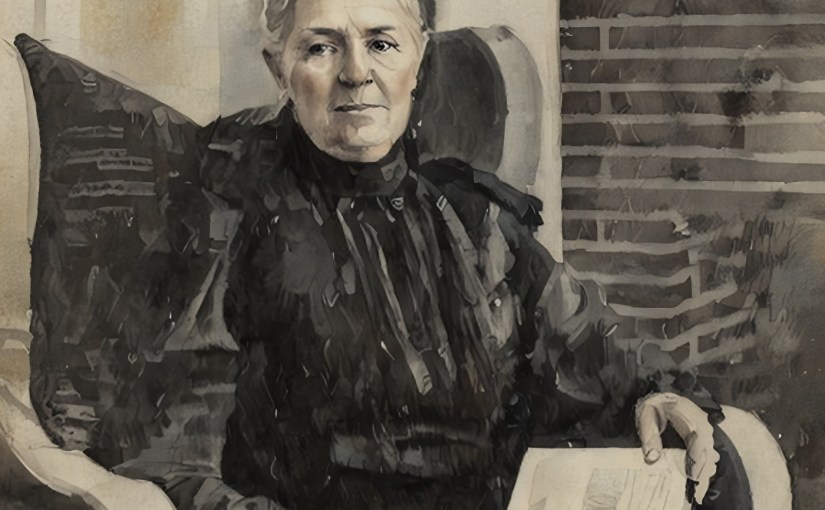
After Sally Ann and Spooner made it out to San Francisco, Spooner went back to Louisiana after a month or so, but Sally Ann stayed behind.

Initially she got work in a bar/brothel as a bartender, something she had been back home.  The madam, Marie LaBlanc, another Louisiana transplant, took Sally under her wing, and eventually gave her more and more responsibilities until Sally Ann was essentially her second in command.  While she did do some work as a prostitute, early on, over time she maneuvered herself more and more into management and took over upon Marie’s death, who had been killed by an obsessively jealous patron.

Sally spent seven years in San Francisco, and this song describes a typical night in which she verbally spars with a regular customer, who, while she fends of his advances, she acknowledges that he is certainly not the worst kind of man who visits the “house of love”.


L’MAISON D’AMOUR
(F. D. Leone, Jr.)

“Sally gal
Come over here
Sit in my lap
Whisper in my ear.
You know I love you,
Like a daughter;
Not like those other fellas,
Who don’t treat you like they oughta.”

“Harvey, get on,
You ol’ pervert;
You don’ smell good,
An ‘ need to change your shirt.
“Sally gal,
You used t’ be so prim ‘n’ proper;
You were as green,
As a grasshopper.”

“Didn’t take you long,
Before you learned th’ ropes;
Now you give us crusty buzzards,
Th’ straight dope;
Sally gal,
Come on ‘n’ sit in my lap.
Aw now, girl,
Don’t look at me like that.”

Next mornin’ now;
Outside a soft grey drizzle.
Sally is wonderin’,
How a dream can fizzle.
No time for that, no, no no;
No second or third thoughts.
Sally don’ waste time,
Dwellin’ on what she lost.

One by one,
Her girls come downstairs,
As usual, complainin’;
Sally silently swears.
She’s still young ‘n’ pretty,
But not a girl no more.
She’s th’ madam now:
L’maison d’amour.

Well, ol’ Harvey,
He ain’ so bad,
Better’n most of ’em;
He makes her laugh.
“Mary, ya’ll get started, and
Wash your coffee cups.
Get yourselves together, b’fore
They start showin’ up.”


CREDITS:
David Leone: guitar, vocal
Tammy Rogers: fiddle

Related songs in chronological order:
“Ballad of Black Jack Kelley and Spooner Magee”
“Sally Ann”
“A Day in the Life of Spooner Magee”
“L’Maison d’Amour”
“Aftermath”

© 2023 Frank David Leone, Jr./Highway 80 Music (ASCAP). The songs and stories on the Highway 80 Stories website are works of fiction. Names, characters, businesses, places, events, locales, and incidents are either the products of the author’s imagination or used in a fictitious manner. Any resemblance to actual persons, living or dead, or actual events is purely coincidental.

“Savannah, 1903”


LOCATION: Savannah, Georgia
PERIOD: 1903-1904
DRAMATIS PERSONAE: Lucas Wilson Robison (1859-1918); Nora Corbyn Sprague (1876-1955); Isaac “Ike” Jones (1834-1925)


When Nora Sprague Robison was 27 years old, she noticed a hard cyst on her face.  She thought it would resolve itself, but it only got harder.  She went to her doctor in Savannah who wanted to surgically remove it, since he was afraid it might become cancerous otherwise.  The Robison family was an old Georgia clan, and there was an old veteran of the Civil War, Isaac “Ike” Jones, who would visit from time to time, he possessed a trove of stories about Lucas’s father, the “Cunnel.”

Ike lived about five miles outside of town in a crude cabin in the hills surrounding Savannah.  He regularly would walk into town, and would stop at the Robison house.  Nora usually had two things for him: chewing tobacco and two complete sets of clothes.  On Ike’s most recent visit, he happened to see  “the wen” on her face: “I will come back in a week to look at it, and when it’s ripe, I’ll dose it twice with my salve.  It will fall off after the second dose, abot ten days.”

Of course, Lucas doesn’t put any stock in Ike’s folk remedies, and insisted, supported by Doc Brady, that Nora ought to see a real doctor, someone who knows about cancer.  So they go to Atlanta for a consult.

Source material for this song includes the novels, Flags in the Dust: The complete text of Faulkner’s third novel, which appeared in a cut version as Sartoris (Vintage International) by William Faulkner; and Stegner W. A. Williams T. T. & Watkins T. H. (2007). Crossing to safety. Random House Publishing Group.


SAVANNAH, 1903
(F. D. Leone, Jr.)

It was supposed to be just a routine visit,
Let Doc Brady look at her cheek;
“Ike Jones said he can cure it.”
Doc smiled, “let’s have a peek.
Naw, Nora, we won’t let ol’ Ike
Put his dope on this wart;
His salve is fine for livestock an’ th’ like,
But we won’t let him reach this far.”

“I can have it out this afternoon,
You’ll never know it was ever there.
But we best do something pretty soon;
Left untreated it could come to cancer.”
That was the last day she was happy,
Th’ last time Nora’s life was carefree.
She bought a bag a peppermint candy;
Savannah, 1903.

“Nora, you’re stubborn as a settin’ hen,
I don’t waste time hurtin’ folks;”
Ike patted his salve onto the wen,
With small practiced strokes.
“It’ll turn black tomorrah,
Long’s it’s black, it’s workin’.
Don’ put no water
On yo’ face befo’ mawnin’.”

“In ten days I’ll come back
To apply another dose;
On the ninth day of July,
Thereabouts, it’ll drop off.”
After old man Jones had left,
Nora touched the spot, but softly;
Rememberin’ what Ike had said:
Savannah, 1903.

Her husband, Lucas, and Doc Brady,
Put Nora on the train to Atlanta;
And sat her down to wait in the lobby,
Of th’ expert Brady’d found on cancer.
He marched through the door briskly,
“Havin’ lunch downtown, can’t delay;
Sir, are you the patient? Are you ready?”
“No. You’re to see my wife today”

“What’s that on her face?” he demands,
As he touched the dark smudge on her cheek.
The thing came off in his hand;
Exposing baby pink skin beneath.
On the train that evening Nora squint her eye,
“What’s today’s date, tell me?”
“The ninth,” Lucas answered, “of July?”
Savannah, 1903.

© 2023 Frank David Leone, Jr./Highway 80 Music (ASCAP). The songs and stories on the Highway 80 Stories website are works of fiction. Names, characters, businesses, places, events, locales, and incidents are either the products of the author’s imagination or used in a fictitious manner. Any resemblance to actual persons, living or dead, or actual events is purely coincidental.
“The Ballad of Black Jack Kelley and Spooner Magee”


LOCATION: North Central Louisiana
PERIOD: 1849
DRAMATIS PERSONAE: “Black” Jack Kelley (1824-1872); Sam “Spooner” Magee (1826-1882); the Stranger.


Jack Kelley (1824-1872) married into the Magee family, marrying Margaret Magee (1824-1896) in 1841. Jack and her brother, Spooner Magee (1826-1882), became best friends and would often go hunting together as well as drinking and getting into a variety of mishaps and adventures.

The Kelleys and Magees were also related through marriage.  Spooner Magee’s mother was Sarah Motts (1805-1890), whose brother Lucas Motts (1792-1822) married Rachel Ross (1799-1877). After Rachel was widowed in 1822 she re-married in 1824 to Stephen Kelley (1797-1866) who was Jack Kelley’s father. So, Spooner and Margaret were half-cousins to Jack, if such a term exists.

On the night this song describes, Jack and Spooner were at a local watering hole when Jack offers Spooner the idea of going out to California, this was 1849 when the gold rush was the rage. However, Jack proposed that they not try their luck at gold prospecting, instead to open a general mercantile storefront and sell necessaries to those with a greedier nature. Jack thought it more reliably lucrative, as he says, “fleecing the suckers.”

But while this discussion was taking place, of which Spooner remained unconvinced of the venture, a stranger interrupted them and the night took a somewhat violent and unfortunate detour.

Jack and Spoon never did make it out to California. In fact, the idea was never broached again.


BALLAD OF BLACK JACK KELLEY AND SPOONER MAGEE
(F. D. Leone, Jr.)

Black Jack and Spooner; Red Ball Saloon:
“There’s gold in Californy, let’s go, Spoon.”
“Californy is a long way, why not just Shreveport?”
“Cuz there ain’t no gold in Shreveport, just whiskey, an’ whores.”
“Hey bud, come over here, set us up again:
Two whiskeys for me, and a beer for my friend.
Let’s find a table, Spoon, an’ talk some more;
A quiet little corner, there, away from the door.”

“Jack, I dunno, I ain’t grasped it jes’ yet,
It all sounds to me awful far-fetched.”
“Spoon, it’s a simple plan, just grab a’hold;
Those busters jump at any little whisper of gold.
They need their spade and pan to feed the fever dream.
Spoon, we’ll start a store; fleece those suckers clean.
“We won’t do any panning, that’s to much like work.
Won’t get rich as miners, but make a fortune as clerks.”

The Stranger walked in and interrupted them;
He had trouble written all over him.
“Friends, you look like a couple of sportin’ blokes,”
He sat right down and asked, “do you mind if I smoke?”
“Not if you’ll share one of them fine cigars.
What’re you drinkin’? I was jus’ headed to the bar.”
“Whiskey. I couldn’t help but overhear
Your extravagant plan of gettin’ rich on the frontier.”

“Frankly, son, y’all don’t appear to have the grit
To execute your plan and make a go of it.”
“Fella, you sound schooled so you oughta know
You can’t take the measure of a man by the cut of his clothes.”
“Brother, it ain’t your clothes that give you away,
It’s how you been actin’ and little things you say.”
“Well, I’ve had enough of your jawin’; best you move on,
Before I give you some choice words to chew on.”

“Neighbor, you’re foolish and I think you’re crude,
You’re a little off key and need to change your tune.
I don’t tolerate behavior that I find rude.
There’s your words, freshly chewed.”
“Mister, now you’ve gone and made me mad,
An’ I hope fancy words ain’t all you have.”
Jack kicked back his chair and threw two quick jabs.
The Stranger dodged ‘em both and that’s when Jack saw the badge.

Jes ‘bout that time Spooner went for the door
He didn’t look, Jack was with him, he was sure.
When he got home and Jack was nowhere about,
He went down to the jail house and bailed Jack out.
After this, Jack’s gold talk came to an end;
He never spoke of California to Spooner again.
They remained good buddies, despite this interlude;
But, Jack improved his manners and was hardly ever rude.

David Leone: guitar, vocal
Tammy Rogers: fiddle

Related songs in chronological order:
“Ballad of Black Jack Kelley and Spooner Magee”
“Sally Ann”
“A Day in the Life of Spooner Magee”
“L’Maison d’Amour”
“Aftermath”

© 2023 Frank David Leone, Jr./Highway 80 Music (ASCAP). The songs and stories on the Highway 80 Stories website are works of fiction. Names, characters, businesses, places, events, locales, and incidents are either the products of the author’s imagination or used in a fictitious manner. Any resemblance to actual persons, living or dead, or actual events is purely coincidental.

“Tuscaloosa”

Location: Montgomery County, Alabama; Tuscaloosa.
Period: 1928-1931
Dramatis personae: Lamar Hooper (1907-1969); Katherine George (1910)


Lamar Hooper grew up on a farm in Montgomery County Alabama, but was a restless teenager who left home at 15 and went to the “big city” of Montgomery (see song “Magomery“). After a few years he met a young lady, Katherine George, and they began dating. But Katherine was also restless, and she would often take off for parts unknown.

This song is about one of her escapades in Tuscaloosa, where life was a bit more exciting, what with the college there and plenty of young folk, who were living the life in the Jazz Age.

Lamar would dutifully trail after Katherine.

Lamar and Katherine hung around Tuscaloosa, where their romance blossomed and they fell deeply in love. Eventually they would would return to Montgomery and their more conventional lifestyle. These little adventures would cease once the Depression hit, when merely surviving took all their energies and attention.

They married in 1931, and had three children, the oldest, Leon Hooper (1933-1975) was the father of Levi Hooper (1973) (more of whom can be learned about in several other Highway 80 songs: “Levi & Lucy“; Levi After Lucy).

By the time Leon was born Lamar and Katherine had relocated to Jackson, Mississippi, in the constant pursuit of employment and a better life.


TUSCALOOSA
(F. D. Leone, Jr.)

8th of May,
Katherine fled,
Tuscaloosa.
I coulda stayed,
Hit the road instead;
Tuscaloosa.
A place, a time,
The scene of a crime;
It all remains,
In my head;
Tuscaloosa.

Keep my pride
Hidden away;
Thought I knew her.
Dawn sky;
Iron grey,
Tuscaloosa.
I wonder if Katherine was,
Ever, really, in love?
Overnight,
Frost on the clay;
Tuscaloosa.

Downhill;
A road alone,
Don’ wanna lose her.
Whippoorwill’s
Lonesome song;
Tuscaloosa.
Sun’s going down,
Another dirt road town.
I’ll drive until,
She’s too far gone;
Tuscaloosa.

White line,
Leads to a door;
Straight to her.
City sign,
Ten miles more;
Tuscaloosa.
An ashtray was left,
Full of lipstick tipped cigarettes;
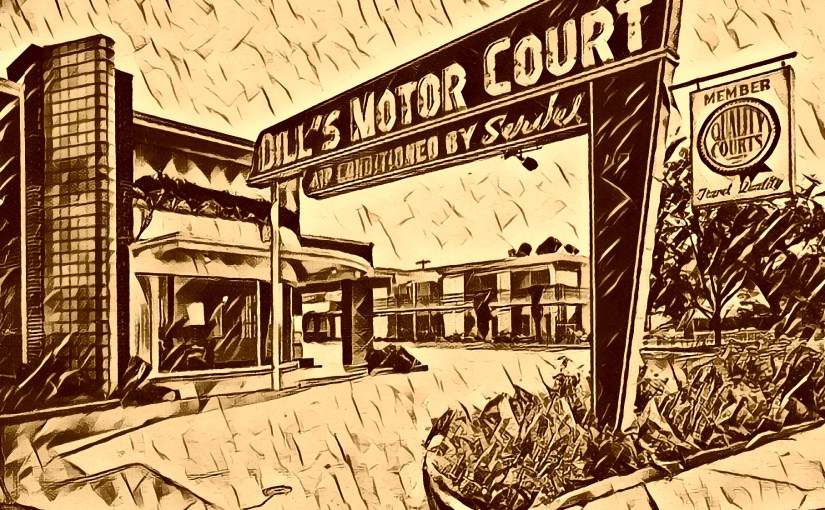
In our two-lane
Motel court;
Tuscaloosa.

© 2023 Frank David Leone, Jr./Highway 80 Music (ASCAP). The songs and stories on the Highway 80 Stories website are works of fiction. Names, characters, businesses, places, events, locales, and incidents are either the products of the author’s imagination or used in a fictitious manner. Any resemblance to actual persons, living or dead, or actual events is purely coincidental.

“My Brother Ransom”


LOCATION: North Georgia
PERIOD: 1864-1874
DRAMATIS PERSONAE: Ransom Raney (1847-1929); Isaac “Ike” Raney (1848-1874); Ella McLemore (1848-1874)


Ransom Raney (1847-1929) and Isaac “Ike” Raney (1848-1874) were the oldest sons of Lonsom Raney (1828-1923), the patriarch of the Raney family and moonshine dynasty. As Ike used to say, ‘me and Ransom are like Abel and Cain.’

Where Ransom loved to outdoors hunting and fishing, Ike was a farmer and was dedicated to raising a fine crop of corn and beans. But Ransom was somewhat of a bully and looked down on farming, seeing it as less manly than hunting. He would show this disrespect by harming Ike’s field by dragging one of his dead deers through the crop.

As this went on Ike knew he had to put some distance between himself and Ransom, so he built a little cabin and staked off a nice sized field on the river side of the Raney land, which covered a sizable acreage. After getting his farm going, and a couple of years, in 1869, Ike married Ella McLemore (1848-1874) a beautiful and innocently shy young woman.

Initially things went well, Ella enjoyed life at the farm despite the seclusion and did not feel lonely. And when they had their first two children, Charles (1871) and Charlotte (1873), even the solitude was improved. But eventually she began to want more.

Although she did love Ike, his personality was quiet, soft, and even passive. As a farmer he long ago accepted the vicissitudes of weather with an equanimity that she did not quite understand. It was almost like he accepted failure too easily. Ransom on the other hand was strong, and in control of the forces in his life. She found his roughness very attractive. Soon she was fantasizing about a closer relationship with her brother-in-law.

Ella’s desire did not go unnoticed by Ransom, who saw how easily he could destroy Ike simply by letting nature take its course.

Over those first four years, Ella and Ike grew further and further apart. Ella continued to do her chores, cooking, cleaning, and bearing children. She always had a meal waiting for Ike when he came in from the field, but often would not sit at the table with him, excusing herself with the excuse she wanted to walk around the property. Ike knew she had come from a large family and no doubt missed the companionship of her siblings. He indulged her in these walks, but when they began to happen more frequently he became suspicious.

One day he decided to follow her to satisfy his curiosity about where she went. To his horror, he followed her to the river where Ransom had set up one of his deer blinds. Ike, hiding some brush, watched as they embraced, and then entered the small shack. Ike was devastated and trudged home despondent not knowing how to respond.

He wanted to give it time in order to see if Ella would come to her senses, or if Ransom would grow tired of her. Ransom was not known to sustain long involvements with women. Usually he sought the company of prostitutes, those who could make no claim on him. And maybe he thought that as a married woman, neither would Ella.

However, they continued to see each other, even as Ella was pregnant with Ike’s third child.

This was too much for Ike. He waited until after she gave birth, and wanted to give her one last chance to come back to him, completely, before he did or said something he could not take back. However, she went back to Ransom and Ike made his decision.


MY BROTHER RANSOM
(F. D. Leone, Jr.)

My brother Ransom was older than me
He’d inherit Grandpa’s recipe
We both helped Pap make our shine
Ransom was ten, I was nine
Handed down, father to son
Our copper pot came all the way from Scotland
Family is everything to us
Blood is only thing you can trust
Ransom liked to hunt and fish
Chewed ginseng like licorice
He was rough and pretty wild
My brother Ransom was a mountain child

Each year I’d plow a patch of land
Squash and beans the work of my hands
Ransom might come back with a buck he’d killed
Drag that carcass through my plowed field
Ransom looked at my farmin’ with disdain
He and I were Abel and Cain
If I stayed I knew we’d come to fight
I had to move and did one night
For a few years I did fine
Worked the land and made it mine
I married Ella and brought her home
But Ransom wouldn’t leave her alone

Ella was a sweet, innocent child
Melt your heart with her mysterious smile
I was never sure what she saw in me
I guess for her I was security
But Ransom was always there
Like a shadow everywhere
Her softness was drawn to his strength
Her eyes followed wherever he went
Ella changed bit by bit
She became remote and distant
I gave her time hoping it would pass
I didn’t know how or what to ask

Side by side in bed we lay like logs
I couldn’t name it but something was wrong
She told me it was all in my head
But I didn’t believe a word she said
It got so we would hardly talk
She spent time taking long walks
One day I thought I’d spy out where she went
And discover her devilment
There’s a river that borders my land
Where Ransom built a deer stand
Could that really be her destination
Why that place in all of creation?

The answer was soon to be known
Ransom drank her in like she was all his own
She ran and leapt into his arms
And offered him every one of her charms
I stood there rooted like a tree
Afraid of what I might see
I watched her walk into his shack
And with a bitter heart I turned back
Best place for thinking is behind a plow
I sure had things to think about now
How would I act, what could I ask?
Too late to stop her from slippin’ from my grasp

She came home to the same routine
Living the lie as if I’d never seen
What I saw was seared on my brain
When I close my eyes the images remain
Ransom needed me for a whiskey run
I wouldn’t let on I knew what they’d done
Knowing Ransom he’d not feel any guilt
He wasn’t one to cry over spilt milk
Back home I got my rat gun
I shot Ella, that’s what I done
Sent for the sheriff and waited there
Never denied what I did to her

I was hanged in 1874
I killed my wife for acting a whore
Not Ransom; it was her I shot
Ransom was blood, and she was not

.© 2022 Frank David Leone, Jr./Highway 80 Music (ASCAP). The songs and stories on the Highway 80 Stories website are works of fiction. Names, characters, businesses, places, events, locales, and incidents are either the products of the author’s imagination or used in a fictitious manner. Any resemblance to actual persons, living or dead, or actual events is purely coincidental.

“Sing With th’ Devil in Hell”


LOCATION: Farmland in Macon-Bibb County, Georgia
PERIOD: 1872-1933
DRAMATIS PERSONAE: Bethuel “Buel” Sutton (1874-1956); May “Maysee” Sutton (1872-1879); Silas Sutton (1845-1924); Zachary Sutton (1823-1889); Richard McQuayle (1836-1933)


Richard “Slick Dick” McQuayle came from a prominent land-owning family in central Georgia. He was the heir of over 50,000 acres of rich farming land which he had partialed out to several sharecropping families. One of which was the Sutton family: Zachary (“Pap”), Silas (“Pa), and their five children/grandchildren, of four boys, Zach, Jr., Lucas, Levi, Bethuiel, and one daughter, Maysee, named for her mother’s family, the Mays.

(The Sutton’s were distant kin to Pearl Robison (see songs “Between Here and Gone” and “Pearl and Jake“).)

From all accounts Dick McQuayle was a bully and misanthrope, who ruled over his sharecroppers with an iron fist.

Zachary Sutton and McQuayle often butted heads, and this song is about a case where the Sutton’s were unable to pay the third of the harvest to McQuayle and he told them to get off his land if they couldn’t raise a decent crop. He underscored this command by saying that if they didn’t get off his land quick enough he’d burn them out.

The Suttons were hard scrabble folk and had no intention of abandoning the farm they’d worked for at least three generations under successive McQuayles. They didn’t put much stock in Slick Dick’s threat.

Their second youngest, Maysee, was a dreamy child. She loved to read books of adventure and fantasy, which she would do in her “secret place” in the hayloft of the barn. It was a quiet place where she could read unobserved and unbothered by her three older brothers. Her younger brother, Bethuel, was her favorite, and she often took him along with her into the woods for story-telling, and just poking around.

However, Dick McQuayle’s threat was not idle, and when the Suttons failed to pay him his share of the harvest, he did indeed pay a visit to the farm when he knew they would be out in the field and the barn (he thought) abandoned, which he proceeded to set ablaze. Not knowing that Maysee was reading in the loft, he pushed the door shut and closed the latch, making it harder to enter and save.

Bethuel grew up hating McQuayle for murdering his sister (a murder for which Dick McQuayle was never convicted) – swearing to himself that one day he would exact revenge. For thirty years, he lived with this oath, his passion for justice only getting stronger with each passing decade.


SING WITH THE DEVIL IN HELL
(F. D. Leone, Jr.)

Shotgun shells
In my vest
Tonight Richard McQuayle
Will meet his death
Blood feud
Decades old
My resolve is shrewd
My blood is cold

His belly out
Thumbs in his bib
Wanted us out
Burnt the corn crib

Pap was a poor man
Him and Pa
Farmed McQuayle land
Who made their own law
My sister, Maysee
We’d run to the trees
Eyes wide with stories
Sacred mysteries

How hard we worked
The crop still failed
Didn’t pay the third
We owed to McQuayle

Might of been sincere
Claimed he didn’t know
The loft was where
Lil’ Maysee would go
A private nook
Away from the boys
With her book
Away from the noise

Burnt up
Along with the corn
McQuayle’ll know what
When you burn a barn

The start of a tale
Tonight it’ll end
Richard McQuayle
Will meet my friend
Pap’s 12 gauge
It’s old but it works
Buck shot sprayed
Across his night shirt

Tonight, I swear,
Richard McQuayle
Gonna send you there
To sing with th’ Devil in Hell

Night air blazes
Black powder smell
Justice for Maysee, and
Slick Dick McQuayle

.© 2023 Frank David Leone, Jr./Highway 80 Music (ASCAP). The songs and stories on the Highway 80 Stories website are works of fiction. Names, characters, businesses, places, events, locales, and incidents are either the products of the author’s imagination or used in a fictitious manner. Any resemblance to actual persons, living or dead, or actual events is purely coincidental.
“The Orphan Son”


LOCATION: North Georgia
PERIOD: 1874-1934
DRAMATIS PERSONAE: Wyatt Raney (1874-1934); Isaac “Ike” Raney (1848-1874); Eleanor “Ella” McLemore (1848-1874);Ransom Raney (1848-1905)


Wyatt Raney (1874-1934) was the son of Isaac “Ike” Raney (1848-1874) and Martha “Mattie” McLemore (1848-1874).  He was orphaned when his father murdered his mother because of jealousy.

After being orphaned, Wyatt was taken in by his uncle, Ransom Raney (1847-1929), and spent most of his time with his cousin, August Raney (1875-1898). They hunted in the Fannin County, Georgia hills, until they were old enough at which time they both enlisted and fought in the 1898 Mexican-American War.  At the Battle of San Juan Hill both cousins were wounded, Wyatt losing a leg, but August dying from his wound.

Wyatt went home to Georgia and married his sweetheart, Belinda Barnes (1880-1902) and they had two children, Charles and Charlotte. When Charles was old enough he joined up to fight in World War I, but by that time Wyatt had seen the folly in war, and did not understand his son’s desire to run off and fight.  Wyatt’s fears were fulfilled when Charles was killed, and buried along with other Raney dead.

After losing his wife during the birth of his daughter, Wyatt retreated from the world, until his death in 1934, using his last words and breath to curse God.

THE ORPHAN SON
(F. D. Leone, Jr.)

My name is Wyatt Raney
I’m an orphan son
They hanged my Pa for killing Ma
When I was a child of one
Raised by my uncle Ransom
Some said he was really my Pa
That talk made Pa angry
Was why he shot my Ma
I’m an orphan son

Grew up with my cousin August
In the Fannin County hills
Up and down the hollers
We honed our hunting skills
Spring we went for turkey
Deer in the fall
Summers we’d help wi’ th’ whiskey
Th’ most fun of all

I’m an orphan son
Orphaned by a gun
I am but one
An orphan son

1898 me and August
Fought at San Juan Hill
I lost my left leg
But August he was killed
I limped back to Georgia
To Belinda I’d left behind
Our first son Charles was born
In 1899
I’m an orphan son

Charles was just like Ransom
He was his grandpa’s son
Spending weeks out hunting
Always with his gun
That stubborn Raney streak
Just like Ransom and Pa
Brothers, fathers, ‘n’ bad blood
Like a natural law

I’m an orphan son
Orphaned by a gun
I am but one
An orphan son

Charles joined up in ’17
What was he was fighting for
After Vicksburg and Gettysburg
Where’s the glory in war
He’s buried there on the hill
Another Raney sacrifice
My forebears fought for honor
And were proud to pay the price
I’m an orphan son

When I came into this world
Death defined my life
When my daughter Charlotte was born
I lost my wife
1934 and I’m tired
Ready to leave this world behind
If there’s a god in heaven
He’s deaf, dumb, and blind

I’m an orphan son
Orphaned by a gun
I am but one
An orphan son

.© 2022 Frank David Leone, Jr./Highway 80 Music (ASCAP). The songs and stories on the Highway 80 Stories website are works of fiction. Names, characters, businesses, places, events, locales, and incidents are either the products of the author’s imagination or used in a fictitious manner. Any resemblance to actual persons, living or dead, or actual events is purely coincidental.

“Texarkana 1984”


LOCATION: Texarkana, Arkansas; Shreveport, Louisiana; Dallas, Texas
PERIOD: 1980s
DRAMATIS PERSONAE:  Maxine “Maxie” Broussard; Lily Broussard; Rocky Rhodes; Duane Dickson (1949)


Maxine “Maxie” Broussard was the younger sister of Mike “Sarge” Broussard. Mike and Maxie were born and grew up in Vivian, Louisiana, but when their parents separated Maxie went with her mother to Texarkana, Arkansas. Lily was born, unplanned, the result of a one night stand with a guy, Rocky Rhodes, she hardly wanted, and never saw again, meaning she raised Lily by herself. When Lily was 15, they left Texarkana and went to Shreveport, then Dallas where this story takes place.


TEXARKANA 1984
(F. D. Leone, Jr.)

The shoulder pads from her mama’s jacket
Lily stuffed into her bra
Fixed her hair, and did her makeup
Left no trace of Arkansas
In a little black sequined clutch,
She had a condom she’d kept there f’months
She was fifteen, but so much more
Texarkana 1984

When her mama, Maxine, met Duane
She thought he might be her ticket out
He promised her Dallas, then claimed
“I wanna try Shreveport for now”
Maxine did the one thing she knew
She an’ Lily left in Duane’s Subaru
Hell bent for Dallas in a thunderstorm
Texarkana 1984

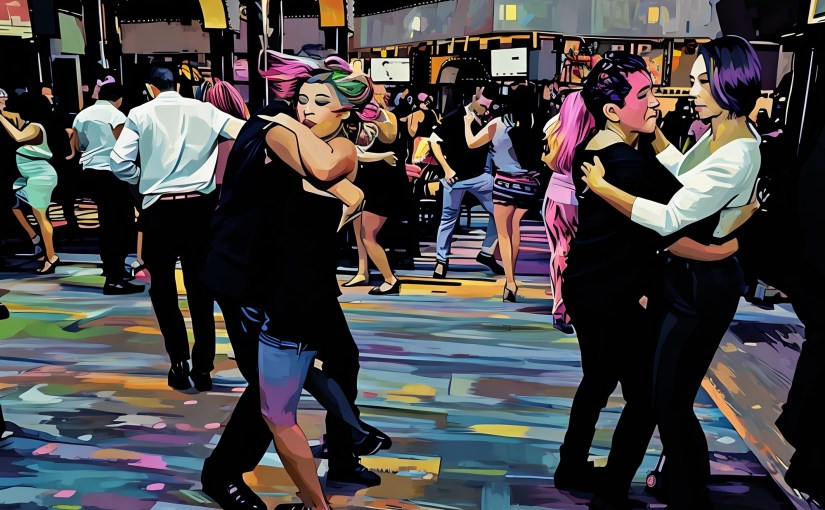
Jésus could mambo and cha-cha-cha
He had all the right moves
The salsa girls cooed ooh-la-la
Jésus was black satin smooth
He saw Lily swaying by the bandstand
Danced over and took her by the hand
They were magic on the disco floor
Texarkana 1984

Duane, who Maxine left behind
Came to Dallas for his Subaru
How hard could Maxine be to find?
Duane was nobody’s stooge
Maxine was workin’ at a Deep Ellum bar
That’s where Duane saw his car
His luck was improvin’ for sure
Texarkana 1984

Duane staked out Maxine
Tailed her everywhere she’d go
Took notes on her routine
Where she went, what she did, he’d know
He showed up at the salsa club
Drank too much to build his courage up
He wasn’t sure like he was before
Texarkana 1984

Jésus was standing in the way
This Latin guy might give him trouble
Duane was just about to make his play
When Maxine sat down at his table
She said “Duane, here, take your keys,
I’m sorry, but I just had to leave.
I dreamed of this and so much more.”
Texarkana 1984

Maxine dealt blackjack in Reno, Nevada
Jésus and Lily ran the salsa club
Duane had a car lot in Texarkana
Sold the Subaru for $500 bucks
Their dreams partly came true
Funny, how they sometimes do
One by one they knew the score
Texarkana 1984
They got about what they bargained for
Texarkana 1984

.© 2022 Frank David Leone, Jr./Highway 80 Music (ASCAP). The songs and stories on the Highway 80 Stories website are works of fiction. Names, characters, businesses, places, events, locales, and incidents are either the products of the author’s imagination or used in a fictitious manner. Any resemblance to actual persons, living or dead, or actual events is purely coincidental.

“Elegy for Dred Scot Lee”


LOCATION: Bossier City, Louisiana; Shreveport, Louisiana
PERIOD: 1903-2023
DRAMATIS PERSONAE: Joy Brown; Dred Scot Lee; Gaither Luther Motts (1883-1971); Earl “Dooky” Ford


From 1882 to 1968, 4,743 lynchings occurred in the U.S., according to records maintained by NAACP. Other accounts, including the Equal Justice Initiative’s extensive report on lynching, count slightly different numbers, but it’s impossible to know for certain how many lynchings occurred because there was no formal tracking. Many historians believe the true number is underreported.

The highest number of lynchings during that time period occurred in Mississippi, with 581 recorded. Georgia was second with 531, and Texas was third with 493. Lynchings did not occur in every state. There are no recorded lynchings in Arizona, Idaho, Maine, Nevada, South Dakota, Vermont, and Wisconsin.

Black people were the primary victims of lynching: 3,446, or about 72 percent of the people lynched, were Black. But they weren’t the only victims of lynching. Some white people were lynched for helping Black people or for being anti-lynching. Immigrants from Mexico, China, Australia, and other countries were also lynched. [Staff writer NAACP. “History of Lynching in America”. In NAACP History Explained. Web. Retrieved on May 9, 2023, from https://naacp.org/find-resources/history-explained/history-lynching-america.%5D

Joy Brown met Dred Scot Lee in 1903 when they happen to share a Coke.  At this time it was prohibited to drink after a black person, hence the existence of separate water fountains, and so, drinking from the same bottle was quite rebellious. They began to see each other, meeting in secret and hiding their friendship. And, it was only a friendship.

However, Joy did experience sexual intercourse when she was raped by her maternal uncle, Gaither Motts. It was obvious to her parents that Joy had been attacked, and after some intense questioning Joy admitted to having been raped. But instead of accusing her uncle, her mother’s brother, she named Dred – a defenseless negro boy.

During the Jim row era, a negro was often lynched for merely looking at a white woman.  It was assumed any negro, even a boy, accused of rape was certain to be hung – which Dred was.

His body was left for two days. People took pictures, and some had post cards made up which were mailed to friends and family across the country. Until finally, his mama had him cut him down and buried in a nearby field behind her house. They put a wooden cross to mark his grave but after his mama died, no one tended the grave and it was not long before there was nothing left to mark his grave.

Feeling ashamed over being raped and guilty for accusing an innocent negro boy, Joy dropped out of school and began drinking and doing anything to blot the entire chain of events out of her mind. Her uncle too, regretted his crime and that an innocent black boy was killed for it. But kept his secret for nearly 70 years until his death in 1971.

Joy went to Shreveport, and found herself on Fannin Street and became a working girl and heroin addict. Joy was taken over by a pimp, Dooky Ford, who as was his custom, also raped her. But this time, Joy was already pregnant with Gaither’s child.

Dooky let her know that as long as she was pregnant, her duties in the brothel would not include seeing clients. But Dooky told her, “If you can’t fuck you got to clean and cook.” Which she did, happily. However, when the child was born, a boy, she decided that she had to get away from there. She drowned the boy in the bathtub and in remorse intentionally overdosed herself.

More than 100 years later, and after being petitioned for decades by his family, the governor of Louisiana pardoned Dred Scot Lee. Pardoned is not accurate since Dred had not actually been convicted of raping Joy Brown. But it was a long overdue attempt to wash the stain off Dred Scot Lee’s name, as well as trying to retrieve some dignity for the people of north Louisiana.

A slate plaque was erected at the site of his hanging, a nondescript field outside of Bossier on Highway 80. On the stone were carved these words: “Dred Scot Lee / Hung in 1896 / For something he never done / He was 15.”


ELEGY FOR DRED SCOT LEE
(F. D. Leone, Jr.)

Bossier City nineteen-aught-three
Joy Brown met Dred Scot Lee
Forbidden love never seemed so right
They saw each other despite the risk
Only when they wouldn’t be missed
‘Cuz Dred was black and Joy was white

It began when they shared a Coke
The glacial ice was broke
They crossed a line and could not go back
When her lips touched where Dred’s had been
She felt a thrill, a first taste of sin
Their lives were changed with that one act

Joy was ashamed about who had raped her
Never said it was Uncle Gaither
She named the only negro boy she knew
Silhouetted in the setting sun
For two days Dred Scot Lee hung
And into a darkness Joy withdrew

Fannin Street, nineteen-aught-four
Dooky turned Joy into a whore
When her belly began to swell up
Dooky said, “if you can’t earn on your back,
You have to pick up the slack
Changin’ chamber pots, pushin’ a mop”

Gaither’s boy looked at Joy and laughed
Then she drowned him in his bath
Lit a candle and stared at the flame
The water was cold, the boy was blue
She boiled double junk in her spoon
Thought of what Gaither done and who she named

Before he died at age eighty-eight
Gaither had to set the record straight
Finally tell the truth about Joy
Slowly in a shaky scrawl
He wrote his story, told it all
“It was me who raped that girl, not that nigra boy”

Gaither despised the man he’d been
Did what he could to make amends
For the rape and his role in the mob
Donated the money he had saved
What he owed could not be paid
He did his best to get right with God

Bossier City twenty-twenty-three
A marker was placed beneath a tree
These words were carved into the slate:
“Here Dred Scot Lee was hung
For something he never done
Lynching Number 328

© 2025 Frank David Leone, Jr./Highway 80 Music (ASCAP). The songs and stories on the Highway 80 Stories website are works of fiction. Names, characters, businesses, places, events, locales, and incidents are either the products of the author’s imagination or used in a fictitious manner. Any resemblance to actual persons, living or dead, or actual events is purely coincidental.