“Go West”


LOCATION: Big Spring, Texas
PERIOD: 1903
DRAMATIS PERSONAE: John Henry Hardin (1878-1949); “Henry Adams Hardin (1926-2015); John Farley Hardin (1927-2020)


Homer and Virgil Hardin were distant relatives of Louanne Bowden, on her mama’s grandma’s side.   They typified a certain mindset among the American pioneers: ruthless independence and no need for civilization. For a while, the kind of life they desired could still be found by leaving the settled towns and cities and going further west.


GO WEST
(F. D. Leone, Jr.)

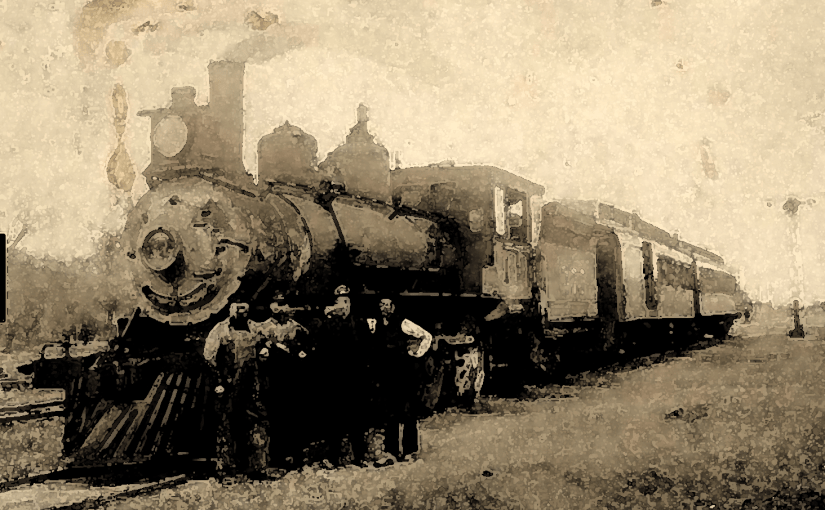
John Henry Hardin was an engineer
Railroading for the T&P
He had a good wife and two ornery sons
This would’ve been about nineteen and aught-three

The Hardins come from North Carolina
Alabama, then Texas in eighteen-seventy-nine
They would move on about every ten years
Leaving progress: the lawyers and the bankers behind

And go west, hoping to stay free
Even if it meant a harder life
Go west, hanging on to liberty
Life ain’t worth living otherwise

Homer and Virgil were John Henry’s sons
They were dyed-in-the-wool true Hardins, them two
Stuck there in Big Spring, standing at the tracks
Staring and waiting for the coal train to blow through

Each had a nickel in his pocket
Earned that mornin’ from chopping two cords of wood
When they were younger they’d put ’em on the track
But they been saving their nickels to get out for good

And go west, hoping to stay free
Even if it meant a harder life
Go west, hanging on to liberty
Life ain’t worth living otherwise

© 2019 Frank David Leone, Jr./Highway 80 Music (ASCAP). The songs and stories on the Highway 80 Stories website are works of fiction. Names, characters, businesses, places, events, locales, and incidents are either the products of the author’s imagination or used in a fictitious manner. Any resemblance to actual persons, living or dead, or actual events is purely coincidental.

“Butterfly of Tyler”


LOCATION: Tyler, Texas
PERIOD: 1916-1986
DRAMATIS PERSONAE: Lillian Cobb (1894-1986); Walter Murphy (1889-1966); Peter Cobb Murphy (1917-1999); Helen Haynes Murphy (1947)


In the early decades of the twentieth century, upper class Southern families, in many ways, still lived by a code of behavior that reflected antebellum values.  Young men and women socialized at the frequent balls and dinners held at the large homes among the wealthy Southern families. Lillian Cobb was often the prettiest girl there and enjoyed the attention of most of the eligible young men, who would crowd around her, filling her dance card. She was described by some as a butterfly, flitting from partner to partner.

A vestige of what was a 19th century value system, fathers controlled whom their daughters saw socially and ultimately married.  It was unusual for a daughter in her early twenties, or more likely eighteen or nineteen, to defy her father in her choice for a husband.  Lillian Cobb’s father was no different, and she was a product of a culture which strictly prohibited her from choosing a romantic partner from outside her family’s social strata or someone whose reputation had been seriously tarnished.

In the 1910s and 1920s, prior to the Great Depression, this society was peopled by men who did not inherit their wealth but had grown rich in industry or one of the professions, doctor or lawyer.  This was especially true for East Texas towns such as Tyler, where much of the new wealth came from oil and gas production. But there were still the old money families, and these two classes, the newly rich and the old guard, made up one upper social class.

In the case of Lillian Cobb, she fell in love with the irresponsible but dashing son of a Texas family whose roots went deep, back before statehood.

William MacLachlan was the second oldest son of Andrew MacLachlan, patriarch of an old family whose money derived from huge land holdings and cattle.  Andrew had never allowed drilling on any of his land, considering it a blight on the landscape.  Cattle were living things, warm bodies which you raised from birth and fed and took care of for several years.

Andrew’s son William, Willy his friends called him, was a Romantic youth, whose mind was filled with the poetry of John Keats and Robert Browning, and ideas about manhood coming out of novels of Walter Scott.  He had aspirations to write, himself, and filled composition books with his poetry.  A couple of times Willy bound these poems into folios, adding some ink and watercolor drawings, which he then gave to Lillian as his form of courtship.

Willy had dropped out the University of Texas, living off his family without any clear direction for earning his own way, or plans for the future other than bumming around Europe.  Willy was known to drink copious amounts of whiskey, something else which would not endear him to any of the Tyler aristocracy.

William MacLachlan was just the kind of boy Randolph Cobb, Lillian’s father, would never approve of for his daughter. And he did every thing in his power to thwart any ideas of marriage between his daughter and Willy MacLachlan.

By contrast Walter Murphy was in his final year at University of Texas law school, with a promising future assured.  Lillian might have been in love with the dreamy Willy, but her father knew to whom he was going place his daughter’s hand in marriage.

Lillian Cobb (1894-1986) married Walter Murphy (1889-1966) in 1916, gave birth to Peter Cobb Murphy (1917-1999). Peter C. Murphy was father to Helen Haynes Murphy (1947), Louann Bowden’s mother.


BUTTERFLY OF TYLER
(F. D. Leone, Jr.)

There had been a round of parties
For Lillian Cobb’s upcoming wedding day
She spent the night before crying in her room
That 1916 Saturday in May

A great-aunt on her daddy’s side
Sat with her, they talked the night away
“I’ll tell your father to call this wedding off”
“You mustn’t do that; it’s too late.”

The butterfly of Tyler
Flitting on her careless wings
Young men would crowd beside her
A vision fading into a dream

Any other girl would have been thrilled
Walter Murphy was the catch of the year
But he was not who Lillian had set her eye
Her father refused the one she held dear

So she cried for the good times that would be no more
For the names that had filled her dance card
For all the twilight parties and the one
Who lives still in her heart

The butterfly of Tyler
Flitting on her careless wings
Young men would crowd beside her
A vision fading into a dream

© 2020 Frank David Leone, Jr./Highway 80 Music (ASCAP). The songs and stories on the Highway 80 Stories website are works of fiction. Names, characters, businesses, places, events, locales, and incidents are either the products of the author’s imagination or used in a fictitious manner. Any resemblance to actual persons, living or dead, or actual events is purely coincidental.

“I Didn’t Know What Else To Do”


LOCATION: Texas
PERIOD: 1856-1888
DRAMATIS PERSONAE: Jedadiah Phelps (1856-1888?); Nellie Phelps (1855-1922)


Jed Phelps was the younger brother of Nellie Phelps, the grandmother of Earl Bowden’s maternal grandmother.  Earl Bowden was Louanne Bowden’s father, which makes Jed Phelps her great-great-great-granduncle.

By the time Jed was six he’d lost his older brother Burch and his mother.  Ten years later his father died leaving his sister and him alone on the family farm in Tennessee.  Nellie married Robert Dorsey the son of a wealthy Texas rancher when she was 17, in 1873.  Dorsey brought Nellie and Jed with him back to his family’s Texas ranch, which was rather large.  Dorsey land stretched between what would become the future cities of Monahans and Abilene.

Abilene was established by cattlemen such as Charles Dorsey, Bob’s father, as a stock shipping point on the Texas and Pacific Railway in 1881. Monahans grew up around a deep water well dug a few years later when the railroad surveyors discovered that the lack of water for the laying crew and their animals would slow down construction of the rail.  Monahans’ digging of a water well produced an abundance of good water and the town would thrive.

Jed was a disgruntled young man, at sixteen he didn’t much like being bossed around by Bob Dorsey.  Having an active imagination Jed dreamed of joining the Texas Rangers whose fame of heroic deeds fighting the Indians and Mexicans he’d heard all about in the bunkhouse.  And so, that’s what he did as soon as he turned nineteen.

But by then the Indians had been run off and the Mexicans no longer posed much of a threat.  Mainly the Rangers were a mercenary band supporting the ranchers whose barbed wire fences were an obstacle for the old cattle drovers accustomed to driving their herds north unobstructed.

There had been a fence war raging between the cattlemen taking large herds across Texas to places like Kansas City and the ranchers who tried to preserve the integrity of their ranches.  This conflict eventually petered out when the railroad was completed since it made no sense to drive the herds north when they could much easier be loaded onto a train.

Disenchanted with this life, in 1888 Jed decided to return to Tennessee and the family  farm to see what was there.  More disappointment awaited him, and so he rode off again, never to be heard from again (see song “A Rusted Plow“).


I DIDN’T KNOW WHAT ELSE TO DO
(F. D. Leone, Jr.)

Got the lantern, walked out to the barn
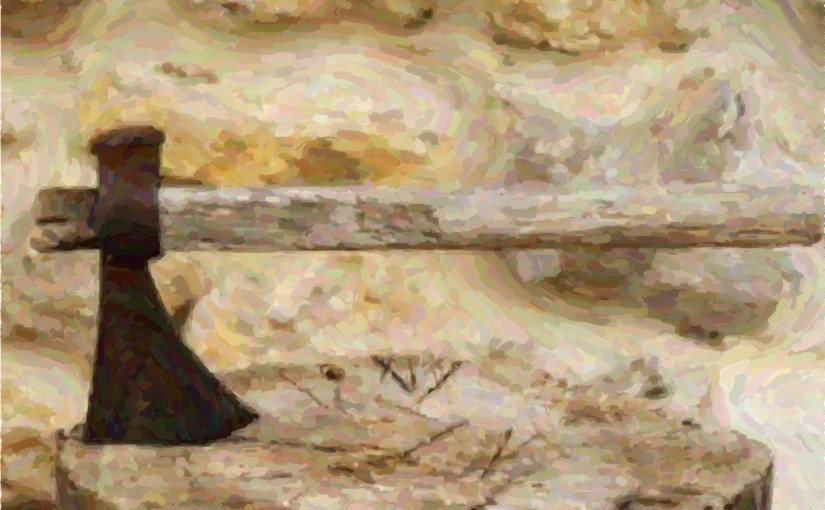
Raised the axe, split a log in two
Much as I hated splitin’ wood
I didn’t know what else to do
 
Wasn’t that long ago that Pa could lift
Hunderd pound sack under each arm
He looked tiny now under all those quilts
Still, Nellie couldn’t keep him warm
 
Was about six when we lost Burch
Can’t hardly see his face at all
Ma went to bed and never got back up
Now ten years later, looks like it’s Pa
 
The torn wood smelled green and sour
I started feelin’ pretty loose and relaxed
I’m sixteen and figure it’ll fall to me
Even if he got better Pa won’t ever be back
 
I looked up, Nellie was on the porch
Asked her, “How’s he?” She said, “Pa’s dead.”
We buried Pa next to Ma and Burch
I found a field stone and set it at th’ head
 
I swung the axe it stuck in the wood
Raised it again split that log in two
We had plenty wood already in the shed
I didn’t know what else to do

© 2018 Frank David Leone, Jr./Highway 80 Music (ASCAP). The songs and stories on the Highway 80 Stories website are works of fiction. Names, characters, businesses, places, events, locales, and incidents are either the products of the author’s imagination or used in a fictitious manner. Any resemblance to actual persons, living or dead, or actual events is purely coincidental.
“A Rusted Plow”


LOCATION: Texas
PERIOD: 1872-1888
DRAMATIS PERSONAE: Jethro “Jed” Phelps (1856-1888, 32); Nellie Phelps (1855-1922, 67); William Phelps (1834-1872); Martha Massey (1835-1862)


Jed Phelps describes life after his Pa died: His sister Nellie marries a Texas rancher who brings them all to his ranch and puts sixteen year old Jed to work. However, after a few years Jed doesn’t take to ranchin’. He’d heard heroic stories about the Texas Rangers and joins up. When that isn’t all he dreamed it’d be, he decides to go back to their farm in Tennessee only to find something less than he expected.

His family never jnew what happened to Jed, whether he died, or just never came home or even contacted them.


A RUSTED PLOW
(F. D. Leone, Jr.)

After Pa died Nellie married Bob Dorsey
Brought us to Texas to the biggest ranch I seen
Had me punchin’ cows and breakin’ horses
So I joined the Rangers when I turned nineteen
I’d heard about the Indian Wars
But by then the Kiowa were off the plains
We were so good they don’t need us no more
‘Cept to chase off a few fence cuttin’ gangs

Things ain’t how I want to remember
The truth ain’ what I want to hear
I gotta leave the past behind, it’s better
Than seein’ what’s waitin’ for me there

1888 I went back to Tennessee
Wondered how the ol’ homestead looked now
Rode for a week and what greeted me
Was a crow sittin’ on a rusted plow
I found the block where I split wood
The barn was all but fallin’ down
Squattin’ on my heels, chewin’ a cheroot
Thinkin’ how Pa had been so proud

Things ain’t how I want to remember
The truth ain’ what I want to hear
I gotta leave the past behind, it’s better
Than seein’ what’s waitin’ for me there

Went around back, found those graves
Cleaned them up straightened the stones
A part of me kinda wished we had stayed
But I can’t get back what’s long gone
Spose I got what I came for
It’s sure all that’s here to be found
I’ll ride away come back no more
Not for any crow sittin’ on a rusted plow
I’ll ride away come back no more
Not for no crow sittin’ on a rusted plow

© 2018 Frank David Leone, Jr./Highway 80 Music (ASCAP). The songs and stories on the Highway 80 Stories website are works of fiction. Names, characters, businesses, places, events, locales, and incidents are either the products of the author’s imagination or used in a fictitious manner. Any resemblance to actual persons, living or dead, or actual events is purely coincidental.
“Blinkin’ Back a Tear”


LOCATION: Odessa, Texas
PERIOD: 1977
DRAMATIS PERSONAE: Jacob “Christmas” McLemore (1818-1863); Jacob Mac McLemore (1879-1977); Jake McLemore (1959).


Jacob Mac McLemore made and lost more money than any of the McLemore men. When he was fifteen he heard about the 1894 oil strike in East Texas. He started at the bottom working any job he could get, eventually learning enough to strike out on his own.

Jacob Mac McLemore never knew his father, who had been an outlaw-gunslinger who died a few months before he was born. Sam Summers McLemore (1852-1878) never even knew the 16-year old whore, Sally McCune, he was living with was pregnant when he went out in the street to face a younger and what turned out to be faster boy. Jacob was raised by Sally, who eventually was able to quit the life and lived out her days running a boarding house in Fort Worth. There’s some who say it was more than a boarding house, but others deny those rumors.

Indians found oil seeping from the soils of Texas long before the first Europeans arrived. They told explorers that the fluid had medicinal values. The first record of Europeans using crude oil, however, was for the caulking of boats in 1543 by survivors of the DeSoto expedition near Sabine Pass.

Melrose, in Nacogdoches County, was the site in 1866 of the first drilled well to produce oil in Texas. Other oil was found in crudely dug wells in Bexar County in 1889 and in Hardin County in 1893. But it was not until June 9, 1894, that Texas had a major discovery. This occurred in the drilling of a water well for the city of Corsicana. Oil caused that well to be abandoned, but a company formed in 1895 drilled several producing oil wells.

Jacob Mac was 15 when the Corsicana oil came in, and for the next sixty years he chased strikes all over Texas and Louisiana. He might make some money here, then invest it somewhere else only to see his investment evaporate in the dusty Texas wind.

Jacob was married and divorced four times, the last near the end of his life and the one which really broke him. Of the four marriages, only the first produced any children, one boy, Lee Allen (1903-1989), and a girl, Aurelia. Lee Allen was Jake McLemore’s grandfather.

If you were to ask those who knew him, what they would tell you about Jacob Mac McLemore was that, first and foremost, he was a decent man whose word was his bond. No one ever knew him to brag or lie and that he never made a deal that he did not keep, and usually made his partners money.

He died at the age of 98, dying peacefully in his sleep in an Odessa, Texas hospital room with his great-grandson, Jake, by his side. You might say that Jacob Mac lived an interesting life, but despite not enjoying consistent good luck he was always in good humor and very good company.


BLINKIN’ BACK A TEAR
(F. D. Leone, Jr.)

Just before his great-grandpa went in
The hospital for the last time
He told Jake the stories of their kin
A life that was all but left behind

Clear whiskey, flatfoot dancing at jamborees
Frontier women and the men they loved
One by one he handed down his memories
Jake was eighteen, couldn’t get enough

Under a clear blue West Texas sky
A bluetick hound layin’ at his feet
A single tear in the corner of Jake’s eye
He blinked it back from fallin’ down his cheek

Owen McLemore was born in 1791
In Tennessee he married Anabel
Before she died she gave him seven sons
He went to Texas then he went to hell

Owen’s great-grandson was Jake’s namesake
He made some money chasin’ the oil boom
There wuddn’t be nothin’ left for Jake
‘Cept this empty hospital room

Under a clear blue West Texas sky
A bluetick hound layin’ at his feet
A single tear in the corner of Jake’s eye
He blinked it back from fallin’ down his cheek

© 2018 Frank David Leone, Jr./Highway 80 Music (ASCAP). The songs and stories on the Highway 80 Stories website are works of fiction. Names, characters, businesses, places, events, locales, and incidents are either the products of the author’s imagination or used in a fictitious manner. Any resemblance to actual persons, living or dead, or actual events is purely coincidental.
“Casper Cowan”


LOCATION: East Texas
PERIOD: 1950s-1980s
DRAMATIS PERSONAE: Casper Cowan (1951-1988); Annabel Wash (1955); Dalton Wash (1952)


Casper “Cap” Cowan (1951-1988) came from an upper-class Catholic family in East Texas.  He received a complete Catholic education, was an altar boy, the whole nine yards.  But as soon as he got his drivers license and drove himself, supposedly to mass, he avoided going to the early mass and told his family he would go to the 11:00 mass.  Of course, he never did.

He also rebelled against his expected role in the family business, oil development, nor did he do well in school, and in general, was thought of as a failure within his extended family.

He began to drink at a young age, repeatedly got in trouble with the law, married a girl, Annabel Wash (1955), from the wrong side of the tracks, whose brother, Dalton Wash (1952), was Cap’s best friend.

His behavior embarrassed and disappointed his family to the point when they sought advice from their priest, family doctors, and even psychiatrists.  Whose collective advice was to look into mental health for Cap, essentially to cure his alcohol problem which they saw as driving his behavioral dysfunction.

This help manifested itself into committing Cap to a psychiatric clinic that specialized in addiction and substance abuse. This was an upscale facility offering a variety of treatments, including electroconvulsive therapy (ECT).

After these treatments, Cap began hallucinating, the Bible and his religious background began to surface more alarmingly.  He quoted biblical verse, fragments from the Catholic mass and prayers, experienced visions, saw signs in everything, thought himself damned and beyond the grace of God.

Although his friend, Dalton tried to help him, Cap succumbed to his depression and frustration of feeling his mind was out of his control. He took his own life, at the age of 37, from a gunshot wound to the head.


CASPER COWAN
(F. D. Leone, Jr.)

My name is Dalton Wash,
Casper Cowan was my best friend;
He married my sister; he was a drunk.
Neither sat well with his kin.
The Cowans was highfallutin Catholic,
They told him, they were through;
Put him in a psych ward; the priest assured them,
“It was the right thing to do.”

They strapped him to a gurney,
On his head placed electrodes.
Shot a current through his brain;
Cap suffered some kind of overload.

My grandpa was a Pentacostal preacher,
Spoke in tongues; handled snakes.
One Sunday he was bit and it killed him;
Not for lack of faith.
Cap had been an altar boy,
He’d flash back to the Mass.
Whisper prayers in Latin,
Then just quit, and then laugh.

After those treatments,
Cap wasn’t the same.
Raving verses from the bible;
Believed he bore the mark of Cain.

In the madhouse the walls were stained,
With pain of a hundred years.
Naked pipes overhead,
Rusted from a thousand tears.
Cap wore a thousand-yard stare;
Spoke of visions and signs.
He said, “I am the offspring of the serpent.”
He saw phantoms, spectres, of all kinds.

“Hail Mary of Magdalene,
Most blessed advocate.
Holy Mary, pray for my sins;
Now and at the hour of my death.”

Came a point when all Cap thought about,
Was taking membership among the dead.
“This is my body, here is my blood,
Drink the wine, eat the bread.”
He surveys the face in the mirror,
Let his jaw go slack.
His hand trembles with the razor;
His vision dims to black.

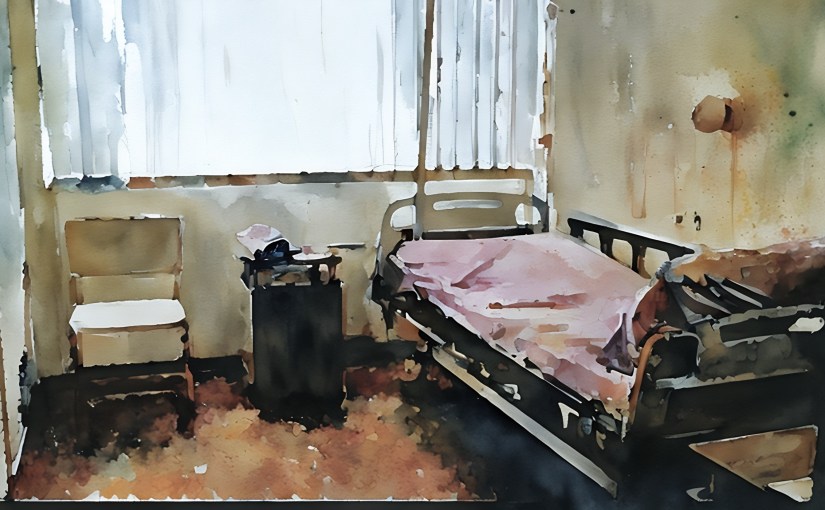
They found him on the bed,
On the wall a spattered bloodstain.
The ceiling was flecked with red;
Victim of a fractured brain.

© 2025 Frank David Leone, Jr./Highway 80 Music (ASCAP). The songs and stories on the Highway 80 Stories website are works of fiction. Names, characters, businesses, places, events, locales, and incidents are either the products of the author’s imagination or used in a fictitious manner. Any resemblance to actual persons, living or dead, or actual events is purely coincidental.

“Them Hardin Boys”


LOCATION: Southwest Texas, northern Mexico, New Mexico, Arizona.
PERIOD: May-August, 1944.
DRAMATIS PERSONAE: John Farley Hardin (1927-2020); Henry Adams Hardin (1928-2015); a Mexican pig drover; a Negro conjure woman; a hobo; a cougar; a wolf.


Henry Adams Hardin (1927-2015) and John Farley Hardin (1926-2020) were first cousins, born into an old Scots-Irish family. The Hardins were Texans, by way of Tennessee, and before that Appalachia, and before that they came from Scotland and Ireland.

The Scots-Irish were fiercely independent and stubborn. They were more likely to sell out and move farther into the frontier than assimilate. As soon as the bankers and lawyers entered their country, they were likely to pack up and move west. These two youngsters, John and Henry Hardin, were continuing the same pattern of their people which had been the norm for generations.

When he turned 18, John told his younger cousin Henry, that since they had been too young to join up to fight in the war, they should take off on an adventure of their own. “Let’s ride west,” (in this part of Texas, in 1944, the horse was still the primary mode of transportation) “and see what’s out there.”

So, early one morning in May they rode off before anyone was up, just before dawn, heading southwest.

The first town they came to was El Paso, the big city that their parents had planned on settling in, but events dictated that they settle in Van Horn, about 120 miles. A half day’s ride, they crossed the river and had lunch; rode further south and made camp that night in Mexico.

Their journey took them back across the river into Texas, through Sierra Blanca; Las Cruces, NM; Deming; Lordsburg; Douglas, AZ; Bisbee; Tombstone; Benson. And finally, three months later, they rode into Tucson, dusty with an injured wolf on the back of John’s horse.

Along the way they encounter a philosophical Mexican pig drover, a mysterious Negro fortune teller, a soured itinerant ragman, and are adopted by a wolf who ends up saving their lives from a cougar, and they his.


THEM HARDIN BOYS
(F. D. Leone, Jr.)

Was a cool May morning when they set out
John got Henry up before full light.
“Let’s go if we’re going – before they’re awake.”
“Okay, just let me get my eyes right.”
Dawn was behind them as they trotted off,
Heading southwest to the Rio Grande.
They crossed at midday; stopped for lunch;
Over biscuits and bacon they made a plan.
 
A pig drover welcomed them to Mexico:
“Los cerdos son un misterio,
¿Qué puede saber uno de uno?
Un cerdo es un cerdo.”

“John, what was that fella saying’?”
“That he’s never understood a hog.”
“Well hell, why would he want to?”
They spurred their horses into a jog.
 
They rode through the heat of the afternoon,
Quiet save for the spat of the Henry’s snuff.
The constant clop and chink of the horses;
A pretty sound as there ever was.
“John, do you ever think of God?”
“No; well, some. With the seasons.” 
“John, that fella back there,
Do you think we met him for a reason?”
 
“Henry, have you seen that lobo off behind,
Been following us these few miles?”
Yeah, I seen him, sometimes;
Last night his eyes were two tiny fires.”
Within the hour the weather cooled;
Drops of rain fell the size of small stones.
They could smell the wet earth and horses,
The wet leather … they rode on.

The path took them through a locust wood;
Huge bean pods hung more and more.
A small glade, a raw board shack,
A rotted porch; they knock on the door.
“Come in here,” she said and stood aside;
She was scarce four feet tall and coal black.
Assorted bowls, candlesticks, a table;
“Set down,” she instructed; they sat.
 
Her eyes were not more than two cracks,
A face carved from matte black wax. 
She raised her arms.  To speak? Perhaps.
“Death arrives, you survive.” Then, thunderclaps.
That night they were awakened by lobo’s growl;
Sensing danger the boys sat up upright.
Fierce howling, yapping, snapping of teeth;
Dawn, a dead puma; lobo bloody, but alive.
 
John craddled the wolf behind his saddle,
“Strange, lobo beatin’ puma one-on-one.”
“Johnny, do you resent missing the war?”
“Waste of time; we were too young.”
Two fishermen passed along the river path;
Under the bridge an ancient hobo;
He sat scowling upon the new day. 
As they approach, his story is told.
 
“I went down this river in aught one;
With a carnival for two year I run.
In Georgia we seen a fella hung;
Damned us all for the crime he never done.” 
“I seen strange things in my time;
Seen that cyclone come through; took my breath.
I seen all I want to see; know all I want to know.
Today, I just look forward to death.”

© 2025 Frank David Leone, Jr./Highway 80 Music (ASCAP). The songs and stories on the Highway 80 Stories website are works of fiction. Names, characters, businesses, places, events, locales, and incidents are either the products of the author’s imagination or used in a fictitious manner. Any resemblance to actual persons, living or dead, or actual events is purely coincidental.
“Homer and April, Virgil and June”


LOCATION: Texas: Big Spring, Van Horn, Mexico
PERIOD: 1925-1944
DRAMATIS PERSONAE: Homer Hardin (1902-1985); Virgil Hardin (1902-1992); April Johnson (1907-1986); June johnson (1907-1988); John Farley Hardin (1927-2020); Henry Adams Hardin (1928-2015).


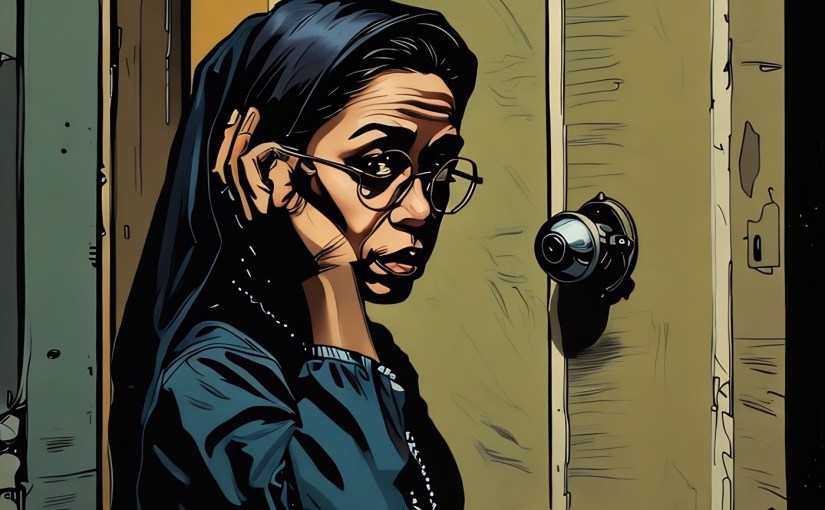
Twin brothers, Homer (1902-1985) and Virgil Hardin (1902-1992) married twin sisters, April (1907-1986) and June Johnson (1907-1988). This was 1925 in west Texas. However, their forebears had come a long way to get here.

They had come from the northeast, across the Appalachian mountains. They came from the Atlantic seaboard and before that, from Ireland and Scotland. They took up land and built one-and two-room cabins and left them unpainted.  Married among themselves, produced children, and added more rooms as needed, and did not paint them either.

Their descendants planted cotton and corn in the bottom land and in hidden hollers made whiskey from the corn and traded or sold what they did not drink. Some went still further west into Texas, where they found life freer, but harsher.

These were the Scots-Irish, who were accustomed to moving on when times got rough, starting over, and creating new lives in the unsettled frontier. Rejecting civilization as represented by lawyers and bankers, and above all, any form of government.

In the case of the Hardins and Johnsons, after they married, they enjoyed about four years of prosperity before the Great Depression hit Big Spring, Texas. And like generations of Scots-Irish before them,  they took all their belongings and went looking for a better life with a cow and two pigs.

They were heading to El Paso, the largest town in their region, but did not make it. Circumstances forced them to stop in Van Horn, Texas, a little northeast of El Paso.

Here they started over and made a hard-scrabble subsistence life there. However, once they were old enough, the two oldest boys, John and Henry, decided to strike out on their own and try their luck further west.  Repeating the same generations-old pattern of their people.


HOMER AND APRIL, VIRGIL AND JUNE
(F. D. Leone, Jr.)

May of nineteen and twenty-five;
Them Hardin twins married the Johnson girls,
Homer and April, Virgil and June.
The world was their oyster, their love the pearl.
First few years were happy and carefree,
Both couples were with children blessed.
Then the Depression hit Big Spring;
They loaded up two wagons and they left.
 
Dusk that first day one wagon broke down. 
A bent old man came limping up the road,
“They’s worse weather a-coming;
Hard weather. Be foretold.”
That night high winds, driving rain;
Hail bounced upon the ground like small pale eggs.
The women sought shelter under a wagon;
The horses moaned on the trembling legs.
 
It was peaceful in the morning after the storm,
The women began collecting their scattered goods.
Their food was all ruined, so Virgil took the gun:
Headed to a small stand of cottonwoods.
The horses were skittish, the wagons soggy,
Virg had got a rabbit; they ate, then headed out.
April and June started singing from a hymnbook;
Despite what they’d been through, they remained unbowed.
 
When they started out they hoped to make El Paso,
But only got as far as Van Horn.
Homer and Virgil scouted around,
Found some land they thought might make a decent farm.
They built two cabins, side by side;
Added more rooms with each new child.
No matter how hard they worked each year,
On that harsh land, fortune never smiled.
 
The two oldest boys were growing restless,
In the summer of 19 and 44.
They were old enough to have an adventure,
But still too young to be called off to war.
They left with no warning, well before dawn;
Crossed the Rio Grande, and rode still further west.
At dusk they eyed the sun in its setting;
The western sky a bloody red.

© 2025 Frank David Leone, Jr./Highway 80 Music (ASCAP). The songs and stories on the Highway 80 Stories website are works of fiction. Names, characters, businesses, places, events, locales, and incidents are either the products of the author’s imagination or used in a fictitious manner. Any resemblance to actual persons, living or dead, or actual events is purely coincidental.

“From Burden to Bowden”


LOCATION: Dallas County, Texas
PERIOD: 1850s-2010s
DRAMATIS PERSONAE: Henry Baxter (Burden) “Bowden” (1833-1915); Bertha Caldwell (1835-1918); Alan Edward Burden (1850-1916); Archibald Edward Burden (1802-1859); Margaret Alice Bowden (1918); Earl Walker (1996).


Henry Baxter (Burden) “Bowden” (1833-1915) was a thorn in the side of his family, especially his father and older brother. During the years before the Civil War Henry began to find meaning in the Abolitionist Movement, and became politically activated in that direction. This of course rubbed the rest of his family and neighbors the wrong way. While the majority of Southerners were strongly in favor of maintaining slavery, most were too poor to own slaves themselves, but as a matter of pride in their region they would fight to preserve the institution.

Things came to a head when Henry inlisted in a Union regiment and actually went to war against his family and state. His company saw a lot of action, and he fought at Gettysburg where he lost his arm.

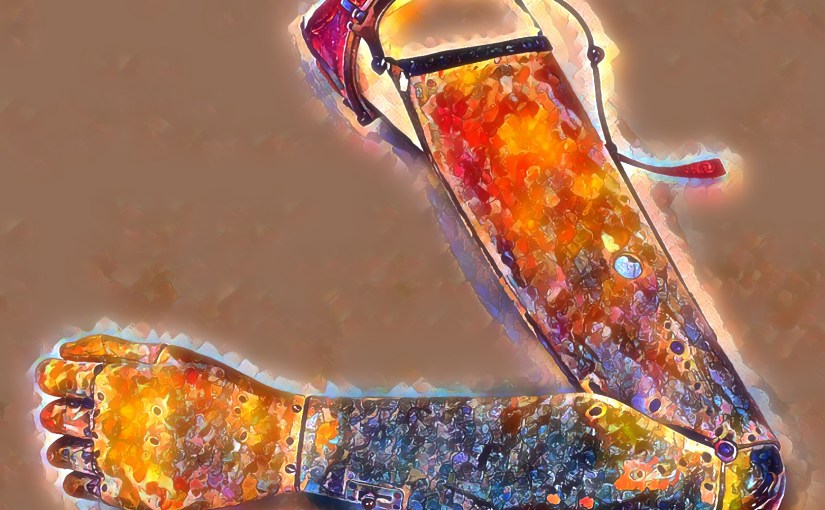
The song begins with one of his later descendants, Earl Walker (1996), describing how his grandmother, Margaret Alice Bowden (1918), ended up with Henry’s wooden arm prothesis which, for some reason, they had kept and passed down through the family.


FROM BURDEN TO BOWDEN
(F. D. Leone, Jr.)

Grandma kept that wood arm in the attic;
We used to take it out on Halloween; run around with it.
Was told it was worth some money by a Dallas appraiser;
The army gave him that one; he was buried with a better one he got later.
Funny after all this time, how things turn out;
The Bowdens were a big deal in Texas, I don’t misdoubt.

First heard of Henry when I was a child,
Told he didn’t talk much, never smiled.
Stand-offish, had gotten above his raising.
Had some queer ideas, like going to hear a-coupla Yankees debating;
He’d wander off with a book, on his own;
One day he just spoke up, said “slavery’s wrong.”

The Burdens was poor, had no slaves, didn’t much care;
Only fought cause them blue bellies had come down there.
After it was done, they never forgave or forgot;
The Burdens cursed Henry, cuz it was for the North that he had fought.
When Henry lost his arm his daddy claimed,
“You can bet it was a Burden that blew th’ arm away.”

Married Bertha Caldwell; they had a bunch of kids;
Ten or twelve, a big number like that, they did.
Took the whole bunch to Texas,1885 or 6;
His grandson got into oil; they got pretty rich.
Strange thing was, after Henry changed his name,
You’d a-thot they been happy? Nah; was just more ashamed.

At the Gettysburg reunion old enemies embraced;
Henry’s nephew, Alan, only showed up to spit in his face.
Them Burdens could carry a grudge; quick to take offense;
Specially if it was some kin of theirs; Henry made no amends.
That was long ago, a hundred years by now;
Just some stories I been told, anyhow …

© 2025 Frank David Leone, Jr./Highway 80 Music (ASCAP). The songs and stories on the Highway 80 Stories website are works of fiction. Names, characters, businesses, places, events, locales, and incidents are either the products of the author’s imagination or used in a fictitious manner. Any resemblance to actual persons, living or dead, or actual events is purely coincidental.
“The Burden Family Blues”


LOCATION: Northern Ireland; Virginia; Boston; New York City; Tennessee; Marengo County, Mississippi; Dallas, Texas.
PERIOD: 1617-1978
DRAMATIS PERSONAE: Owen Tucker “Tick” Burden (1937-2019); Albert Burden (1910-1978); Joseph Charles Burden (1848-1910); Alan Edward Burden (1850-1916); Owen Burden (1879-1954); Henry Baxter (Burden) “Bowden” (1829-1883); Charles Joseph Burden (1825-1896); Edward Burden (1802-1859); Charles Owen Burden (1776-1861); Albert Peter Burden (1737-1798); Betty Akins (Burden) (1759-1822); Peter Albert Burden (1682-1749);  Edmund Owen Burden (1639-1714); Samuel Peter Burden (1617-1656)


Tick Burden wakes up in jail after a DUI which occurred on December 15, 1978. The rest of the story regresses (in 40 year spans) back to the 17th century when the first Burden ancestor emigrated from Northern Ireland to America:

Samuel Peter Burden (1617-1656) grows up with his father who had joined a sailing mission with Sir Walter Raleigh in 1618.  Sam leaves northern Ireland in 1635 sailing to American.  Landing in Virginia it wasn’t long before he met and married a young Scottish girl. They have a son, Edmund Owen Burden (1639-1714) in 1639, who is the first American born Burden ancestor.

Edmund Owen Burden (1639-1714) moved with his family to the Boston area, and as a young man he happened to be in town when the Quaker evnagelist Mary Dyer was being hanged.  At that time, despite the Puritans leaving England due to religious persecution, they themselves were intolerant of Quakerism, which was outlawed at the time.  Mary Dyer was arrested, convicted of violating the ban on Quakerism, and hanged either onMay 31st or June 1st in 1658.

Peter Albert Burden (1682-1749) the next Burden in the line ran off from Boston to New York hoping to be taken on a sialing ship, looking for adventure.  He managed to get hired on the Adventure Galley, William Kidd’s ship headed for Africa.  Kidd saw that the pirates he was attempting to police were taking home more ricches than he was, and he decided to turn traitor against the King and became a notrious pirate himself.  eventually he was hanged for his crimes.  By that time Peter had abandoned his dsailing ambitions and remained on dry land for the rest of his life.

Albert Peter Burden (1737-1798) is caught up in the fervor of rebellion from England at the time of Founding Fathers.  When he is in his late ’30s he joins up the militia and serves under several generals.  In 1778 his division is under general command of George Washing in New Jersey. The battle of Monmouth, also known as the Battle of Monmouth Court House, was fought near Monmouth Court House in modern-day Freehold Borough, New Jersey, on June 28, 1778, during the American Revolutionary War. After the battle, an American victory, Albert takes a few minutes and writes a letter home.

Henry Baxter (Burden) “Bowden” (1829-1883) does not agree with the rest of his family on the question of slavery.  As a consequence he changes his last name from Burden to Bowden and identifies as an abolitionist. He eventually joins up to fight on the Union side, potentially against his own brothers.  Henry loses an arm at Gettysburg, ending his military career, and settling down in Texas.

Joseph Charles Burden (1848-1910); Alan Edward Burden (1850-1916); Owen Burden (1879-1954) Owen Burden, son of Alan, and nephew of Joe, volunteers and fights in teh Apanish-American War of 1898.  While his father and uncle are making whiskey, they discuss the logic of Owen’s decision to go to war in a cause they don’t entirely understand.

Albert Burden (1910-1978) is in Texas and happens into a saloon on the night of the championship boxing match between Max Schmeling and Joe Louis. They were to fight twice, Schmeling winning the first in 1936 and losing the second in 1938. The two fights came to embody the broader political and social conflict of the time. As the most significant African American athlete of his age and the most successful black fighter since Jack Johnson, Louis was a focal point for African American interest in the 1930s. Moreover, as a contest between representatives of the United States and Nazi Germany during the 1930s, the fights came to symbolize the struggle between democracy and fascism.

Louis and Schmeling developed a friendship outside the ring, which endured until Louis’ death on April 12, 1981.  Schmeling reportedly covered a part of the costs of Louis’ funeral, at which he was a pallbearer. Schmeling died 24 years later on February 2, 2005, at the age of 99. Both Louis and Schmeling are members of the International Boxing Hall of Fame.

This bring us up to 1978 when Albert dies at the same time Tick, his son, is sitting in a Dallas jail cell after his DUI.


THE BURDEN FAMILY BLUES
(F. D. Leone, Jr.)

Face down on a cold concrete floor;
Tick Burden inhales ammonia and vomit.
Coming to in a Dallas county jail cell;
Pats his pockets for keys and wallet.
“Burden: get up, you made bail.”
His brother-in-law hands him a six-pack.
“I need to get my truck out of impound?”
“Your pa’s dead; Allie said to bring you back.”

A slender cheroot clamped in his jaw,
Albert Burden crossed to the bar.
Took a handful of silver dollars
Spread them out in the shape of a star.
The big fight was on the radio,
June, 1938, a title bout.
“Max shoulda retired; he’s old and  slow.”
“Th’ young buck’s gonna lay a beatin’ on the Kraut.”

“Why’d Owen go an’ fight with Yankees?”
“Aw, Alan, y’know, do his bit.
Anyway there ain’t no more blue and gray,
We’re just Americans, and all that shit.”
July 1898, making Missipy moonshine;
Hardly moving, hardly talking, they just sat.
“Joe, where’n the hell is Cuba anyway?”
Joe shook the jar, turned, and spat.

Henry changed his name to Bowden from Burden,
Because he was an abolitionist.
1858 he heard Lincoln and Douglas;
For the Union side he would enlist.
His father Edward and his brother Charles,
Would forever curse his fake name.
Henry Bowden lost an arn at Gettysburg;
“A Burden ball got ‘im,” his father liked to claim.

“1778, June, Monmouth:
Dear Betty, the Redcoats have faded back.
I was with Greene, our cannons were jumping;
We held our line against each British attack.
Must admit I was scared half to death,
And prayed for my return to you and Charles.
I’m proud to have served with such men;
General Washington handed out cigars.”

Peter Burden ran off to New York,
Looking to join the crew of a sailing ship.
William Kidd took him on the Adventure Galley;
They sailed to Africa on his first trip.
1698 Kidd stood for King and country,
But switched sides to a pirate life of crime.
1701 he had a rope around his neck;
Peter kept to dry land till the day he died.

1658 Mary Dyer came to Boston,
To preach the Quaker faith.
She was arrested in New Haven,
Hanged the 31st of May.
Edmund Burden was among the onlookers,
Swore he’d no more be a Christian.
If Puritans could murder a Quaker,
Then to all preaching he would not listen.

1617 Samuel Burden was born;
The next year his father sailed with Walter Raleigh.
Never to be heard from again;
Samuel Peter Burden grew up without a daddy.
1635 he sailed to America,
Settled in Virginia, and wed a Socttish girl.
They had a son in 1639;
The first Burden born in the New World.

© 2025 Frank David Leone, Jr./Highway 80 Music (ASCAP). The songs and stories on the Highway 80 Stories website are works of fiction. Names, characters, businesses, places, events, locales, and incidents are either the products of the author’s imagination or used in a fictitious manner. Any resemblance to actual persons, living or dead, or actual events is purely coincidental.